


 Claim Ownership
The Disciplined Traders Podcast - Master the Market. Build Wealth. Stay Disciplined
Subscribed: 48Played: 987
Subscribe

© Brian Montes
Description
The Disciplined Traders Podcast is your guide to mastering the mindset, strategies, and systems behind successful trading and wealth building. Hosted by Brian Montes, we break down swing trading, market insights, cashflow creation, passive income, and even crypto opportunities — all through the lens of disciplined, repeatable processes. Whether you’re a beginner or a seasoned trader, each episode equips you with actionable tools to make smarter decisions and build lasting financial freedom.
80 Episodes
Reverse
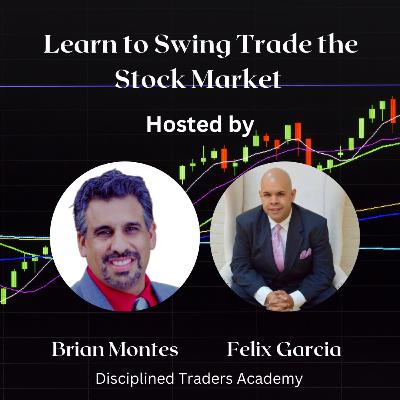
Most traders are taught to fear volatility—but volatility isn’t the real danger.In this episode of the Learn to Swing Trade the Stock Market Podcast, Brian Montes explains why he does not trade stocks using leverage or margin, and why conflating volatility with risk is one of the most expensive mistakes retail traders make.You’ll learn the critical difference between volatility and risk, how margin trading introduces hidden dangers like forced liquidation and time compression, and why disciplined swing traders actually benefit from volatility when trading without leverage.If you’re swing trading, building a growth portfolio, or trying to trade consistently without blowing up your account, this episode will fundamentally change how you think about risk management.Volatility creates opportunity, not danger.Risk comes from over-leverage, not price movementMargin removes your margin of error and compresses your time horizonBrokers—not traders—control leveraged positions during volatility spikesSurvival is the first edge in tradingConsistency beats intensity every timeIf this episode helped reframe how you think about risk and volatility:👉 Follow the podcast so you don’t miss future episodes👉 Leave a review—it helps more traders find real education👉 Download the DTA A+ Setup Checklist and start trading with clarity, not leverage. https://bit.ly/3Z0gWe9Remember:The goal isn’t to trade more.It’s to trade long enough to let the edge compound.
Most traders don’t lose money because they can’t read charts.They lose money because they trade without context.In this episode of Learn to Swing Trade the Market, we break down the four stages of a stock’s cycle and explain why understanding market structure is one of the most critical skills a swing trader can develop.Every stock moves through the same four stages—accumulation, markup, distribution, and decline. The problem? Most traders don’t know how to identify which stage they’re in, so they apply the wrong strategy at the wrong time.This episode gives you a clear framework to stop chasing, stop forcing trades, and start aligning your strategy with how the market actually moves.What You’ll Learn in This EpisodeThe four stages of a stock’s market cycle are explained in plain EnglishHow institutions operate inside each stage—and why retail traders get trappedWhy Stage 2 (markup) is where most A+ swing trades liveHow to avoid giving profits back during distributionWhen cash is a position and not trading is the right decisionHow DTA traders use structure and process to build consistent cash flowUse the A+ Trade Setup Checklist to Trade With DisciplineUnderstanding the four stages is only the first step.Execution requires rules.That’s why DTA traders use the A+ Trade Setup Checklist—a simple, repeatable process designed to confirm:Structure supports the tradeRisk is clearly defined before entryIf a setup doesn’t pass the checklist, it doesn’t get traded.👉 Download the DTA A+ Trade Setup Checklist using the link below. https://bit.ly/3Z0gWe9Print it. Use it. Hold yourself accountable.Questions? Email Brian at brian.montes@icloud.comEnjoying the Podcast? Help Us GrowIf this episode helped clarify how markets actually move, we’d appreciate your support.Follow the podcast so you don’t miss future episodesLike this episode to help it reach more tradersLeave a review and share what you’re learning—it helps more than you thinkYour feedback helps us keep delivering clear, no-hype trading education to the community.
Most swing traders are taught to grow their accounts.But account growth doesn’t equal freedom.In this episode of the DTA Podcast, we introduce cash flow trading — a structured approach that helps swing traders consistently extract money from the market instead of letting profits sit on a screen.Cash flow trading shifts the question from:“How big can I grow my account?” to “How reliably can my trading pay me?”This mindset shift affects trade selection, risk management, and trader psychology — and it’s the missing link between profitability and actually improving your life through trading.What cash flow trading really is (and what it isn’t)Why most profitable traders still feel stuckThe difference between growth trading and income tradingHow planned withdrawals improve discipline and consistency In This Episode, You’ll Learn:What cash flow trading really is (and what it isn’t)Why most profitable traders still feel stuckThe difference between growth trading and income tradingHow planned withdrawals improve discipline and consistencyIf you’re done trading for “someday” and ready to get paid on purpose, this episode is your starting point.👉 Subscribe to the DTA Podcast👉 Download the DTA A+ Trade Set Up Checklist resource in the show notes - https://bit.ly/3Z0gWe9👉 Join DTA and start building a trading system designed for your life - https://bit.ly/3Mm41N9Because profits don’t change your life.Cash flow does.Question - email Brian at brian.montes@icloud.comFollow Brian on X - @dtamethod
In this episode of the Learn to Swing Trade the Stock Market Podcast, we break down what UVXY really is, why it confuses so many traders, and how swing traders can use it as a powerful top-down indicator to understand market conditions, avoid getting blindsided, and time entries with more precision.If you’ve ever wondered why UVXY spikes out of nowhere… why it bleeds lower most of the time… or whether you should use it in your swing trading strategy, this episode clears it up with simple, actionable insights.What UVXY actually tracks (and why most traders misunderstand it)Why does UVXY behave differently from the VIXHow UVXY reveals hidden volatility before major market pullbacksHow to use UVXY to confirm trend strength in SPY, QQQ, and leading sectorsHow UVXY helps identify market turning points and reversal conditionsPractical ways to incorporate UVXY into your daily top-down routineThe biggest mistakes traders make with UVXY — and how to avoid themThis is a must-listen for swing traders looking to sharpen their market read and reduce blindside losses.Looking for a way to choose the A+ swing trade set-ups? Download the FREE DTA A+ Swing Trade checklist - https://bit.ly/3Z0gWe9
In today’s episode, Brian breaks down one of the biggest market shifts swing traders have seen in years: the end of Quantitative Tightening (QT). After three years of the Federal Reserve draining ~$95B/month from the financial system, liquidity is finally coming back — and this changes everything. Brian explains, in simple terms, how the end of QT affects volatility, trend formation, overnight risk, small-cap momentum, and the overall environment for 3–10-day swing trades. If you’ve been frustrated by stop-runs, fakeouts, and sloppy price action… this episode is your roadmap into a cleaner, calmer, more trend-friendly market.What You’ll Learn:Why the end of QT reduce those sudden, blindside market flushesHow increased liquidity stabilizes volatility and improves chart qualityWhy trends should start sticking again instead of reversing instantlyWhat the end of QT means for small caps, biotech, and the Russell 2000How overnight gap-down risk changes in a higher-liquidity environmentThe macro shift that makes swing trading feel more like 2020–2021 or 2023How to position yourself for a more “normal,” follow-through-driven marketReady to trade with clarity and confidence? Download the DTA A+ Swing Trade Checklist and make sure every setup meets your high-probability criteria. Stop guessing, start executing, and capture more clean swings.Download your free checklist here⬇️https://bit.ly/3Z0gWe9If you found this episode valuable, share it with a trader who needs clarity. And make sure to subscribe so you don’t miss the next breakdown of the market environment.Follow Brian on X - @dtamethod
In this episode of the Learn to Swing Trade the Stock Market podcast, host Brian Montes discusses identifying trade opportunities and emphasizes the importance of sector analysis. He uses Ralph Lauren as a case study to illustrate how to identify stocks gaining momentum in a choppy market. The conversation covers the significance of volume, the top-down trading strategy, and the necessity of being selective in trade choices. Brian also highlights the importance of maintaining a favorable risk-reward ratio in trading.Look for opportunities outside of common stocks.Sector analysis is crucial for swing trading.Not every trade will be a winner; patience is key.Winning trades should outpace losing trades in percentages.Utilize sector ETFs to guide trading decisions.Ralph Lauren serves as a strong example of a trade opportunity.Volume is a critical factor in confirming trade setups.Be selective in a choppy market to find viable trades.The holiday season typically boosts retail sector performance.Use the Discipline Trader Academy's checklist to improve your trading outcomes.If you found the episode valuable, please subscribe to the podcast and leave a review! Have a question? Email Brian at brian.montes@icloud.comNeed the DTA A+ Swing Trade Set-Up Checklist? Download it for free -> https://bit.ly/3Z0gWe9
In this episode of the DTA Podcast, we break down a proven strategy to accelerate your wealth-building:Using swing trading as a cash flow engine to fund a long-term dividend portfolio — the only true form of passive income.If you’ve been looking for a clear, sustainable path to financial freedom, this episode gives you the full blueprint.Why Swing Trading Is the Ideal Cash Flow GeneratorHow swing trading creates consistent short-term profitsWhy part-time traders can outperform with a rules-based systemThe role of risk management in long-term wealth buildingWhy swing trading works better than day trading for most peopleLearn the exact process for turning trading profits into long-term wealth:Trading account → Cash flow → Dividend portfolioHow to siphon profits without draining growthWhy most traders lose money by recycling profits into new risksThe concept of “graduating” money into long-term assetsWe unpack:The difference between passive income vs business income disguised as passive incomeWhy dividends are consistent, automated, and backed by real company cash flowThe compounding effect of dividend reinvestmentHow dividend income becomes a second paycheck over time A Step-by-Step Blueprint to Build Your SystemBuild a rules-based systemReinforce consistency and emotional disciplineSet up a monthly profit funnel into dividend ETFs or dividend-growth stocksTrack the compounding of your dividend income streamWe truly hope you enjoyed this episode. If this episode helped you understand the connection between swing trading and passive income, leave a review! It helps more traders find the show.Connect With UsX: @DTAMethodGet Your Free DTA A+ Set Up Checklist - https://bit.ly/3Z0gWe9Join DTA - https://bit.ly/3Mm41N9
In this episode of the Disciplined Traders Academy Podcast, we break down today’s U.S. stock market sell-off and explore the key factors driving volatility. Whether you’re a swing trader, scalper, or long-term investor, understanding the forces behind market moves is essential for making disciplined, profitable trades.We cover:Major market moves: Dow, S&P 500, Nasdaq, and the tech/AI sell-offPost-shutdown momentum fading and what it means for tradersFederal Reserve rate-cut expectations and their impact on growth stocksValuation pressure in AI and high-growth tech namesWhat to watch next: jobs, inflation, Fed signals, and earningsLearn how to position yourself strategically in volatile markets and capitalize on opportunities amid uncertainty.Tune in to trade with clarity, confidence, and discipline.If you are looking for daily clarity, elite prep, disciplined execution, and community accountability, join us in the Disciplined Traders Academy & Community - https://bit.ly/3Mm41N9Need a framework to identify A+ set-ups? We have you covered! Download our FREE DTA A+ Set Up Checklist - https://bit.ly/3Z0gWe9Be sure to subscribe to the podcast so you never miss an episode. Even better, leave us a review and your feedback!
In this conversation, Brian Montes discusses the dual nature of reading charts in trading, emphasizing the blend of art and science. He emphasizes the importance of distinguishing between normal pullbacks and broken trends to protect capital and refine trading strategies.Key takeaways from this episode: Reading charts is part art.Understanding market trends is crucial for traders.Differentiating between pullbacks and broken trends is essential.Protecting capital should be a priority in trading.Improving trades requires a keen analysis of market movements.Asking the right questions can lead to better trading decisions.Recognizing a pause versus a trend reversal is key.Traders should continuously educate themselves on market dynamics.The emotional aspect of trading can influence decisions.Strategic thinking is vital for successful trading.Connect with Brian MontesIG - https://bit.ly/4hYNSMxDTA Academy & Community - https://bit.ly/3Mm41N9Download your free DTA A+ Set-Up Checklist - https://bit.ly/3Z0gWe9If you like our podcast, be sure to subscribe so you never miss an episode. Be sure to leave a review as well!
In this episode of the Learn to Swing Trade the Stock Market podcast, host Brian Montes breaks down the powerful connection between inflation, hurdle rates, and the purchasing power of the dollar.Most people measure success by how much their portfolio or savings account grows — but few stop to ask: Is my money actually keeping up with inflation?Brian explains why understanding your personal hurdle rate — the minimum rate of return you need to maintain or grow real wealth — is the foundation of sound investing and business decision-making.You’ll learn how to calculate your hurdle rate, how inflation quietly erodes real returns, and how to position your money to stay ahead of the weakening dollar.Whether you’re a retail investor, entrepreneur, or financial professional, this episode gives you the mindset and math to make smarter, inflation-aware decisions.Key Topics CoveredWhat inflation really means for your purchasing powerThe hidden “inflation tax” on your savings and investmentsHow to calculate your personal hurdle rateWhy nominal returns can be deceiving — and real returns are what matterThe historical decline of the U.S. dollar’s valueHow to use hurdle rates to evaluate stocks, bonds, or business opportunities Connect with Brian MontesIG - https://bit.ly/4hYNSMxDisciplined Traders Academy - https://bit.ly/3Mm41N9Download the FREE DTA A+ Trade Set-Up Checklist - https://bit.ly/3Z0gWe9
Are you trading too much and losing more than you think? Discover the mental, financial, and emotional toll of overtrading—and how to protect your account.In this episode, Brian dives deep into the 7 hidden costs of overtrading that can quietly destroy your trading performance, confidence, and growth.Overtrading isn’t just about losing money—it affects your mental focus, decision-making, learning process, and even your time. If you’re struggling to stick to your trading plan or find yourself taking too many trades, this episode is a must-listen.Brian discusses: Mental Fatigue – How trading too much exhausts your brain and slows reaction times.Blurry Focus – Why scattered attention leads to missed signals and suboptimal trades.Lower Quality Decisions – How overtrading weakens judgment and breaks your rules.Drain of Capital – Small losses pile up quickly and erode your account.Lost Learning – Skipping journaling and trade reviews slows skill growth.Confidence Collapse – Taking unnecessary trades chips away at your self-belief.Time Theft – Why chasing lower-quality setups dilutes your system and steals precious time.By understanding these hidden costs, you can trade smarter, protect your capital, and improve your long-term performance.If you found this episode helpful, subscribe to the Learn to Swing Trade the Stock Market podcast, leave a review, and share it with a fellow trader who might be overtrading without realizing it.Bonus! As promised, here is the link to the DTA A+ Trade SetUp Checklist - https://bit.ly/3Z0gWe9Ready to take your swing trading to a whole new level? Check out the Disciplined Traders Academy & Community - https://bit.ly/3Mm41N9
In this episode, Brian Montes discusses the recent dramatic sell-off in the stock market, analyzing the factors that led to the decline and emphasizing the importance of having a solid trading system.He examines market sentiment, geopolitical risks, and the importance of position sizing and stop-losses in swing trading. The conversation provides valuable insights for new traders on how to navigate volatility and maintain discipline in their trading strategies.Brian discusses:The recent sell-off was triggered by geopolitical risks and overbought conditions.Market sentiment can shift rapidly, resulting in significant volatility.Having a trading system is crucial for managing risk during market downturns.Position sizing should remain consistent regardless of market conditions.Stop losses are essential for protecting against large losses.Taking profits along the way can help ensure overall trade profitability.It's important to step away from trading after a significant loss to regain perspective.Market internals were weak prior to the sell-off, indicating underlying issues.Gold and cryptocurrencies also reacted negatively to the market sell-off.Traders should remain disciplined and adhere to their trading systems during volatile periods.Ready to join a community of other like-minded traders? Check out the Disciplined Traders Academy & Community - https://bit.ly/3Mm41N9Want access to our Free DTA A+ Trade Set-Up Checklist? Here you go! https://bit.ly/3Z0gWe9
When a stock reaches all-time highs, most new traders hesitate — assuming it’s “too late” to enter.In this episode, Brian Montes breaks down a structured approach to analyzing breakout stocks, using volume confirmation, consolidation structure, relative strength, and the 1.618 Fibonacci Extension to identify sustainable upside potential.Learn how to move from emotion-based trading to structured technical analysis, so you can confidently trade in price discovery territory — where real market leaders are born.In this episode, we discuss -Why all-time highs signal strength, not exhaustion.How to confirm a breakout using volume analysis.Understanding pullbacks and retests for optimal entries.The role of relative strength in identifying market leaders.How to apply the Fibonacci Extension Tool to project price targets — including the 1.618 extension zone.Common mistakes traders make when analyzing breakouts.A real-world look at stocks like NVDA to see how new highs often lead to bigger moves.Technical Tools DiscussedVolume Profile & Breakout ConfirmationSupport/Resistance Flip (Retest Setup)Relative Strength LineFibonacci Extension Tool (1.0, 1.272, 1.618 levels)Trend Structure and Consolidation PatternsConnect with Brian Montes📸 Instagram: @disciplinedtradersacademy🌐 Website: https://bit.ly/3Mm41N9Download your FREE DTA A+ Set Up Checklist - https://bit.ly/3Z0gWe9Don't forget to subscribe, like, and leave a 5-star review!
Think a bull market is just one long, straight climb? Think again. 🐂 In this episode of the Disciplined Traders Academy Podcast, we break down why pullbacks and consolidation aren’t obstacles—they’re your secret weapons as a swing trader.You’ll discover:What pullbacks and consolidations really mean for your tradesWhy market pauses are essential for a healthy uptrendHow to time your entries for better risk-reward setupsTricks to validate trends before committing your capitalWhether you’re just starting out in swing trading or looking to refine your strategy, this episode shows you how to embrace the natural rhythm of the market instead of fighting it.Ready to start your journey to becoming a consistently profitable swing trader. Join us at The Disciplined Traders Academy and Community - https://bit.ly/3Mm41N9Looking for a checklist to identify A+ set-ups? Download our free DTA A+ Set-ups checklist - https://bit.ly/3Z0gWe9Follow us on Instagram - @disciplinedtradersacademy
Quadruple Witching may sound mysterious, but it’s a very real event that impacts the stock market four times a year — on the third Friday of March, June, September, and December.In this episode of the Learn to Swing Trade the Stock Market Podcast, we break down:What Quadruple Witching is and why it happensHow it impacts market volatility, volume, and price actionWhy swing traders often see false breakouts on these daysThe best way to prepare and trade around Quadruple WitchingYou’ll learn how to recognize when price action is driven by real market conviction versus derivative expirations and institutional repositioning. Most importantly, you’ll walk away with strategies to protect your swing trades and even find opportunities after the dust settles.If you’ve ever been confused by sudden spikes in volume or “fake moves” on certain Fridays, this episode will give you the clarity you need.👉 Subscribe to the DTA Podcast so you never miss an episode. https://apple.co/446R4hQ👉 Share this with another trader who needs to understand Quadruple Witching.Want a proven framework to identify high-quality swing trade setups? Download the DTA A+ Setup Checklist — your step-by-step guide to filtering out noise and only trading the best opportunities. https://bit.ly/3Z0gWe9
Welcome to the first of a series of episodes designed to give you a foundation for swing trading. Are you new to trading and feeling overwhelmed by YouTube rabbit holes, endless indicators, and conflicting advice? In this episode of the Swing Trading Foundations Podcast, we break down exactly what swing trading is, why it’s perfect for part-time traders, and how to avoid the most common beginner mistakes.You’ll learn:✅ What swing trading is and how it compares to day trading and investing✅ The 3 pillars of successful swing trading: technical skills, risk management, and mindset✅ The biggest mistakes new traders make (and how to avoid them)✅ A simple roadmap to start trading with clarity and confidenceIf you’ve ever wondered how to start swing trading as a beginner, this episode will give you the exact foundation you need to begin your trading journey.Resources & Links Mentioned in This Episode:📘 Join the waitlist for the Swing Trading Foundations Course → https://bit.ly/4pxjfRq📝 Free resource: The Disciplined Traders A+ SetUp Checklist -> https://bit.ly/3Z0gWe9💬 Question - Email Brian at brian.montes@icloud.com
In this episode, we dive into one of the most important — and most ignored — parts of swing trading: position sizing. If you want to stay in the game long enough to actually win, you need to control your downside. That’s exactly what this episode is about.Why position sizing matters more than your stock picks.The 1–2% rule and how it protects your account.The difference between capital invested vs. risk taken.The exact formula you can use to size every trade.Common mistakes new traders make with position sizing. Example:Account size = $10,000Risk = 1% = $100Entry = $50Stop = $48Risk per share = $2Position Size = $100 ÷ $2 = 50 shares The Position Sizing Formula: Position Size = (Account Size × Risk %) ÷ (Entry Price – Stop Price)Every great swing trader has a process. The DTA A+ Swing Trading Checklist is the same one our community uses to keep trades disciplined, repeatable, and consistent. Grab your checklist and make it part of your routine.https://bit.ly/3Z0gWe9
One of the most important skills every swing trader must master is identifying support and resistance levels. These levels show you exactly where price is likely to react, bounce, or stall—and that makes them critical for planning high-quality trades.In this episode of Learn to Swing Trade the Stock Market, I’ll break down:✅ What support really means and how to spot it✅ How to recognize resistance and why it acts like a ceiling on price✅ The role of support and resistance in entries, exits, and stop placement✅ Simple techniques for marking key levels on your charts✅ Why support and resistance zones give you an edge over “random” tradesBy the end of this lesson, you’ll understand how to recognize these levels with confidence and use them to structure your swing trades more effectively.📥 Free Resource: Don’t forget to grab your free DTA A+ Swing Trade Checklist here → https://bit.ly/3Z0gWe9
As a swing trader, one of the biggest decisions you’ll face is whether to trade from a set watchlist of stocks or to scan for new opportunities every day. Both strategies can be effective, but each has its own set of pros and cons that will influence how you approach the market.In this episode of "Learn to Swing Trade the Stock Market," we break down the advantages and disadvantages of trading from a set watchlist versus scanning for new stock setups. You’ll learn how each method impacts your efficiency, confidence, and ability to catch the strongest moves in the market.Here’s what you’ll discover in today’s episode:✅ 4 key pros and 3 major cons of trading from a set watchlist✅ Why scanning for new swing trade opportunities can keep you aligned with market leadership✅ The hidden risks of relying too heavily on either method✅ A hybrid approach that combines the best of both strategies✅ How to decide which approach fits your trading style and personalityRegardless of which method you prefer, the most important aspect is adhering to high-quality A+ setups. That’s why we created the Disciplined Traders Academy A+ Set-Up Checklist. This free resource will help you filter out noise, avoid mediocre trades, and focus only on setups that give you the highest probability of success.👉 Download your free A+ Set-Up Checklist here: https://bit.ly/3Z0gWe9Whether you’re a brand-new trader building your first watchlist or a more experienced swing trader scanning the market nightly, this episode will give you the clarity you need to align your trading process with your goals.
Wondering, “Is this stock going up or down, and can I trust that move?” In this episode of Learn to Swing Trade the Stock Market, we break down the fundamentals of trend recognition—one of the most important skills every swing trader must master.You’ll learn:How to identify uptrends, downtrends, and sideways rangesWhy recognizing higher highs and higher lows (or lower highs and lower lows) mattersHow to use trendlines and moving averages for trend confirmationSimple ways to avoid common trend misreads that cost traders moneyRecognizing trend strength can be the difference between riding a winning trade or getting chopped up in sideways action. By the end of this episode, you’ll have a clear process for identifying and confirming trends with confidence.📥 Free Download: Grab your A+ Swing Trade Setup Checklist now: https://bit.ly/3Z0gWe9Question: Email Brian at brian.montes@icloud.comReady to amplify your swing trading success? Join the Disciplined Traders Academy & Community - https://bit.ly/3Mm41N9

Comments

Download from Google Play

Download from App Store
 United States