



 Claim Ownership
The Driverless Digest Podcast
Subscribed: 6Played: 191
Subscribe

© Harry Campbell
Description
Covering the intersection of autonomy x rideshare, and the business of AVs.
www.thedriverlessdigest.com
www.thedriverlessdigest.com
70 Episodes
Reverse

Listen to this episode on Apple Podcasts, YouTube, Spotify, and Substack. Transcripts are also available by clicking on the “transcripts” button in the top right corner of this post on the app/web version. You can also access them from the email version by clicking here.In today’s episode, I’m speaking with Markus Villig, founder and CEO of Bolt. Markus shares how he built the company into a global mobility platform, why cost efficiency is central to its business, and why he wants to navigate the autonomous vehicle transition before taking Bolt public.We dive into Bolt’s AV strategy, including its partnerships with autonomous driving developers and automakers, and why the company plans to own and operate robotaxi fleets initially. Markus explains how Bolt’s existing customer base, operational experience, and relationships with European regulators could help it bring autonomous vehicles to market.The conversation explores Europe’s unique regulatory and technical hurdles, the value of small-scale deployments, and why Bolt favors a handful of deep AV partnerships. We also discuss how human drivers and robotaxis could coexist, why Markus believes AVs can serve unmet demand, and how policymakers and labor advocates might respond.Finally, we look at Bolt’s target of 100,000 robotaxis by 2035, why Markus sees that figure as a starting point, and how vehicle supply and manufacturing standardization could determine the pace of AV adoption.Chapters* (00:00) Introduction to Markus Villig* (01:25) Introduction to Bolt, their services, mission and footprint* (03:20) Profitability and Bolt’s strategy to go public* (03:50) Why autonomous vehicles can’t disrupt Bolt’s business in the near term* (06:08) Where Bolt’s revenue comes from and why the U.S. rideshare market is ripe for disruption* (07:25) Bolt’s AV strategy and its role in the autonomous future* (09:10) Does Bolt plan to develop AV technology in-house?* (11:20) Bolt’s approach to AV partnerships and fleet operations* (14:12) The peculiarities of the European mobility market and the barriers to entry for AVs* (15:50) The challenges to widespread AV deployment in Europe* (17:00) How close are we to fully driverless AV deployments in Europe?* (17:40) Is there value in deploying AVs on a limited scale in Europe?* (18:20) Bolt’s biggest hurdles in bringing AVs to market in Europe* (19:57) Why Bolt favors a handful of deep AV partnerships* (21:30) How Bolt picks its AV partners* (22:05) The future of human drivers and how they could coexist with AV fleets on Bolt’s network* (23:40) How European policymakers could respond to an increase in rideshare supply as AVs enter the market* (25:00) How could labor advocates push back as AVs roll out?* (26:35) Bolt’s target of 100,000 robotaxis by 2035* (27:40) How the AV industry could overcome vehicle supply constraints* (29:25) If Markus could change one thing with a snap of his fingers to accelerate AV adoption, what would it be?* (30:08) Conclusion and final thoughtsNotes/Links:* You can find Markus Villig on LinkedIn/X.* Bolt’s website (link).-Harry This is a public episode. If you would like to discuss this with other subscribers or get access to bonus episodes, visit www.thedriverlessdigest.com

Listen to this episode on Apple Podcasts, YouTube, Spotify, and Substack. Transcripts are also available by clicking on the “transcripts” button in the top right corner of this post on the app/web version. You can also access them from the email version by clicking here.In today’s episode, I’m speaking with Jason Fiber, CEO of Virewirx. Jason introduces the company and its background in wireless technology, explaining how its VX60 wireless platform compares to other connectivity options and where it fits into autonomous vehicle operations.We dive into the data demands of AV fleets, from how much information vehicles need to upload to why moving that data efficiently becomes increasingly important as fleets grow. Jason discusses how Virewirx approaches those challenges and how faster data transfers can fit alongside charging and other depot operations to reduce turnaround times and improve vehicle utilization.The conversation also explores the factors that influence depot locations, the partners and operators Virewirx works with, and when high-speed data transfer becomes critical during AV development and deployment. We discuss how faster access to vehicle data could benefit cities through incident and hazard reporting.Finally, we look beyond robotaxis to other industries that could benefit from Virewirx’s technology and discuss what’s next for the company.Chapters* (00:00) Introduction to Jason Fiber* (01:38) Introduction to Virewirx and its background* (03:10) Understanding Virewirx’s business and wireless technology* (04:25) Virewirx’s VX60 platform and how it compares to 5G and other wireless technologies* (06:30) The benefits of Virewirx’s VX60 wireless platform* (07:40) How much data do AVs need to upload?* (09:48) Scaling wireless capacity as AV fleets grow* (11:30) Why data is so critical to AV fleet scaling* (13:50) How faster AV data transfers could help cities with incident and hazard reporting* (15:29) Integrating data transfers with depot operations to reduce turnaround times and improve utilization* (18:00) What factors influence AV depot locations?* (20:37) Virewirx’s typical partners and who benefits most from their tech* (22:18) When does high-speed data transfer become critical for AV development and deployment?* (24:05) Beyond robotaxis: Other applications for Virewirx’s technology* (28:12) Overcoming data bottlenecks in AV fleet expansion* (29:25) What’s next for Virewirx?* (31:00) Conclusion and final thoughtsNotes/Links:* You can find Jason Fiber on LinkedIn.* Virewirx’s website (link).-Harry This is a public episode. If you would like to discuss this with other subscribers or get access to bonus episodes, visit www.thedriverlessdigest.com
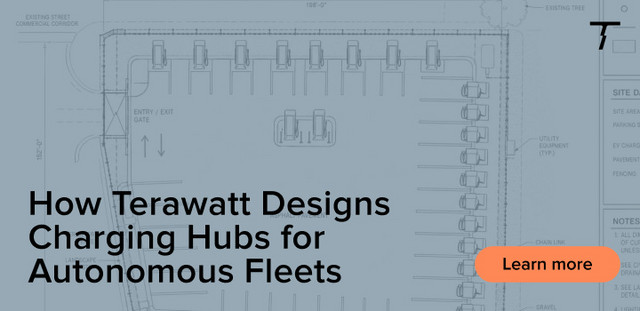
This week’s edition is brought to you by Terawatt – purpose-built charging for autonomous vehicle fleets.Listen to this episode on Apple Podcasts, YouTube, Spotify, and Substack. Transcripts are also available by clicking on the “transcripts” button in the top right corner of this post on the app/web version. You can also access them from the email version by clicking here.In today’s episode, I’m speaking with Keller Cliffton, Co-Founder and CEO of Zipline. Keller shares how the company got its early start in Rwanda, the challenges of building an autonomous logistics system, and how meeting patients who relied on the service helped keep the team going. We then explore Zipline’s expansion across healthcare, retail, and food delivery, including its work with Walmart, Chipotle, and Cleveland Clinic.Keller explains how Zipline’s aircraft, delivery droids, and charging infrastructure work together, how restaurants join the network, and why safety and quiet operation are central to the experience. We discuss its Uber Eats partnership and goal of scaling to a million deliveries a day, how faster and less expensive delivery could change ordering habits, and how a wider delivery radius could help restaurants reach more customers and rethink their locations.Finally, we look at how drones fit alongside human couriers and other delivery options, Zipline’s U.S. expansion plans, and the manufacturing and operational challenges of scaling. Keller explains how working with the FAA differs from the regulatory landscape for robotaxis and shares his vision for infrastructure that reduces traffic and pollution while giving more space back to people.Chapters* (00:00) Introduction to Keller Cliffton* (02:16) Zipline’s origins and its first deployments* (03:24) What kept Keller going through Zipline’s early challenges* (05:32) Zipline’s current footprint across healthcare, retail, and food delivery* (07:40) How Walmart and restaurant partnerships are driving U.S. growth* (09:50) Balancing delivery volume, margins, and different use cases* (10:39) How the Zipline experience works from ordering to arrival* (13:14) How charging sites serve retailers and restaurants* (15:39) How Zipline’s aircraft and delivery droid work together* (17:34) Addressing noise, safety, and community concerns* (19:59) How restaurants load orders for automated pickup* (21:25) Zipline’s Uber Eats partnership and the goal of a million deliveries a day* (24:42) What matters most: delivery speed, cost, predictability, or safety?* (26:58) How a 10-mile delivery radius expands customer reach* (28:04) How drones fit alongside human couriers and sidewalk robots* (30:42) How drone delivery could reshape restaurant locations and operations* (33:47) Zipline’s expansion plans and what it takes to launch in new cities* (35:50) How FAA regulation shapes Zipline’s nationwide rollout* (38:24) Keller’s vision for the future of delivery and infrastructure* (40:48) Conclusion and final thoughtsDesigning Charging Hubs for Autonomous FleetsWe are excited to partner with Terawatt this week, one of the leading charging infrastructure providers. To learn more about Terawatt’s nationwide real estate portfolio and track record of cutting cost per mile for AV fleet operators, reach out to Peter Cohen at [email protected]/Links:* You can find Keller Cliffton on LinkedIn/X.* Zipline’s website (link).* Zipline and Uber’s partnership, mentioned at the 21:33 timestamp (link).-Harry This is a public episode. If you would like to discuss this with other subscribers or get access to bonus episodes, visit www.thedriverlessdigest.com

Listen to this episode on Apple Podcasts, YouTube, Spotify, and Substack. Transcripts are also available by clicking on the “transcripts” button in the top right corner of this post on the app/web version. You can also access them from the email version by clicking here.Join panelists at the Urban Autonomy Summit in Austin as they discuss how autonomy is expanding beyond robotaxis into trucking and group transportation, and what it will take to scale these services safely. This panel featured Armir Harris (CEO, CharterUP), Kaylee Nix (Head of Communications, Bot Auto), Derrick Nueman (Vice President of Investor Relations, PlusAI), and Evan O’Brien (Director of Enterprise Growth, Empiric Earth), and was moderated by Nicole Cobler (Austin Reporter, Axios).The conversation explores where autonomous trucks and shuttles can deliver the most value, from middle-mile freight routes to overnight shifts that are difficult to staff. Panelists discuss how investor expectations are shifting toward deployments and viable business models, how customer demand shapes route selection, and why trucking requires different data and testing than robotaxis. They also examine the role of real-world driving data in preparing for edge cases, how companies measure safety beyond miles driven, and what it takes to address labor concerns and build public trust as autonomous transportation expands.Chapters* (00:00) Introduction* (03:05) Where Autonomous Trucks and Shuttles Deliver the Most Value* (07:58) Filling Hard-to-Staff Routes and Overnight Shifts* (10:41) What Investors Want From AV Companies* (12:40) Using Real-World Data to Prepare for Edge Cases* (14:14) How Trucking and Robotaxi Data Needs Differ* (16:38) Choosing Routes for Autonomous Trucking* (18:12) Building Public Trust and Addressing Labor Concerns* (22:57) Measuring AV Safety Beyond Miles Driven* (26:54) Which Parts of Autonomous Transportation Will Scale Fastest?- Harry This is a public episode. If you would like to discuss this with other subscribers or get access to bonus episodes, visit www.thedriverlessdigest.com

Listen to this episode on Apple Podcasts, YouTube, Spotify, and Substack. Transcripts are also available by clicking on the “transcripts” button in the top right corner of this post on the app/web version. You can also access them from the email version by clicking here.Join panelists at the Urban Autonomy Summit in Austin as they discuss the charging infrastructure behind robotaxi fleets, how cities are supporting deployment, and what AV growth means for rideshare drivers. This panel featured Brandon Sellers (VP of Marketing, Gridwise), Ted Silverman (Chief Operating Officer, LPRI), Sloane Perras (Chief Administrative Officer, Voltera), and Rachel Castignoli (Senior Consultant, Transportation and Public Works, City of Austin), and was moderated by Jonah Bliss (Co-Founder, Curbivore & Urban Autonomy Summit).The conversation explores what goes into building an AV charging hub, from securing power and navigating permits to choosing locations that keep vehicles close to rider demand. Panelists discuss Austin’s approach to road safety and neighborhood concerns, how robotaxi competition is affecting rideshare platform fees and driver earnings, and how human drivers are adapting through longer trips, premium services, and peak demand. They also examine jobs in depot operations and infrastructure development, the challenges of converting existing parking facilities into charging hubs, and the need for better education and accessibility as AV services expand.Chapters* (00:00) Introduction* (01:52) Inside an AV Charging Hub* (03:52) Permitting and Power Challenges* (05:28) Choosing Charging Sites Around Demand* (09:35) How Robotaxis Are Changing Rideshare Competition* (11:03) Working With Cities to Expand AV Infrastructure* (13:36) Austin’s Approach to Safety and Community Concerns* (18:30) How Robotaxis Are Affecting Driver Earnings* (20:12) How Human Drivers Can Adapt* (21:57) Job Creation and the Workforce Behind AVs* (24:41) Converting Parking Lots Into Charging Hubs* (26:11) What Needs to Change to Accelerate AV Adoption?- Harry This is a public episode. If you would like to discuss this with other subscribers or get access to bonus episodes, visit www.thedriverlessdigest.com

Comments

Download from Google Play

Download from App Store
 United States