


 Claim Ownership
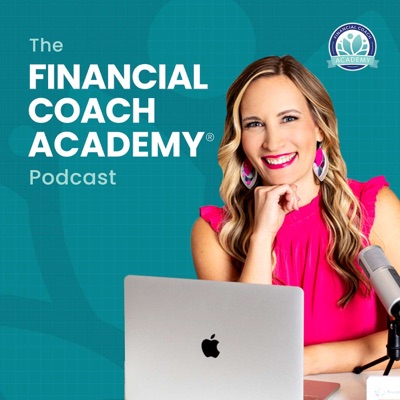
The Financial Coach Academy® Podcast
Subscribed: 64Played: 2,430
Subscribe

© 2025 The Financial Coach Academy® Podcast
Description
A weekly educational podcast from the founder of The Financial Coach Academy®, Kelsa Dickey, that will teach you how to create and grow a profitable financial coaching business that you LOVE and are proud of. At The Financial Coach Academy®, we are passionate about helping you create the business of YOUR dreams – whether that’s a side hustle, part time gig, or 6+ figure company. Get ready to elevate your success!!
167 Episodes
Reverse
You've got a client who's ready to work with you—they've paid for their first session and now you're feeling those pre-session nerves. Sound familiar? In this episode, we talk about what's really going on in your client's mind when they show up for that first paid session (hint: they're probably more nervous than you are). I share the exact structure I use to make sure every client leaves their first session feeling heard, hopeful, and clear on their next steps. From creating a warm welcome...
A client is tearing up about their debt in your first session together. You're feeling good about the progress you're making. Then weeks later, when you use the MeaningFirst Method™ to explore what getting out of debt would mean to them, they say something you didn’t expect: "Even if I were debt free, I'd still be worried about my income. I wouldn't feel much different." How do you respond in that moment? This is the kind of real coaching scenario that makes or breaks buy-in. What you say...
What if the way you're asking clients about their goals is actually making it harder for them to follow through? Most coaches ask what their client wants to accomplish, get an answer like "I want to get out of debt" or "I want to save more," and then move straight into strategy. Goal identified, check. Time to build the plan. But here's what's missing: connection. Not your connection to their goal, THEIR connection to it. People don't take action because they have a goal. They take acti...
Knowing what to say in a coaching session is one thing. Knowing when to say it, how to pace it, and what to listen for underneath the words… that's where real coaching happens. In this episode, we’re walking you through a coaching session breakdown, pulling back the curtain on the decisions made in real time during last week’s The Client Seat episode. You'll hear what Kelsa was tracking, which threads she chose to follow, when she stayed quiet, and why certain moments mattered more than oth...
Welcome to our first Client Seat episode, because even coaches need coaches. Mary Ann Stenquist teaches people how to break the shop-regret-shame cycle. She's a spending coach who helps ambitious women align their spending with their values instead of their impulses. She knows money. She teaches it. She coaches on it. And she's stuck. For four years, Mary Ann has been caught in a cycle: fund the emergency savings, drain it when something happens, rebuild it, drain it again. The ...
You've identified the problem. You understand the instinct gap. Now it's time to fix it. In the first two episodes of this series, we talked about why financial content isn't creating change and introduced the conative mind, the missing piece that explains why people don't take action even when they know what to do. We showed you how your natural way of taking action as a financial professional is likely very different from your clients' instincts, and how that mismatch creates friction. ...
You've given your clients the tools. You've shared the knowledge. They say they understand. They even seem motivated. But then nothing changes. This is the knowing-doing disconnect, and in this episode, we're showing you why it happens. In part one of this series, we talked about how more financial content exists than ever before, yet people are more financially stressed than ever. We walked through why financial literacy alone isn't enough to create lasting change. Today, we're introduci...
Financial content is everywhere. Personal finance is the second most talked about topic on the internet. And yet, people are more stressed about money than ever before. American household debt sits at an all-time high of $18.4 trillion and the personal savings rate hit 1.4% in July 2025, the lowest in history. Something isn't working. You've seen it with your own clients: they nod along, say they understand, maybe even seem motivated. But then nothing changes. They show up to the next ses...
You didn't start your coaching business to become a marketing expert. But marketing is how you get visible and attract the right clients. Without it, even talented coaches struggle to fill their practice and create the impact they want. The good news? Boosting your marketing doesn't require a complete overhaul or endless hours. With focused adjustments to what you're already doing, you can start seeing better results. In this video, I'm sharing 14 marketing strategies we used in our most rece...
Financial coaching isn't about giving better advice. Most of your clients already know they should spend less than they earn. They know they need an emergency fund. They've heard the standard recommendations before. So why aren't they making progress? The gap isn't information. It's follow-through. And follow-through doesn't come from another spreadsheet or a clearer explanation of compound interest. It comes from something entirely different: helping clients shift how they see themselves, ...
People will tell you they want financial literacy. They'll say they need to understand their numbers better, get organized, learn the right steps. And those things matter, of course they do. But here's what I've learned after almost two decades of doing this work: knowledge isn't the problem anymore. We're drowning in financial education. Books, podcasts, TikToks, workplace programs. If information were the answer, credit card balances wouldn't be at an all-time high right now. ...
Most coaches struggle to talk about their work in a way that makes people want to invest. They know they're getting clients results, but when it comes to marketing, something feels off. They're not sure if they should talk about financial coaching or focus on what actually happens for their clients. This struggle is costing coaches clients every single day. For over 10 years, I fully embraced that what I created was transformation for people. Then the coaching industry exploded and "transfor...
“Should I add tax prep to my coaching business? What about investment management or insurance?” I hear this question from coaches all the time, especially when they're looking to grow their revenue. You see other financial professionals offering multiple services and it makes sense—more services should mean more income, right? Here's what I've learned after working with hundreds of coaches: adding a new service is like starting a whole new business. You need different marketing, different s...
First things first, friends: Imposter syndrome is not a thought: “I am an imposter” or a feeling: “I feel like a fake.” It’s a circumstance. And if we want to overcome it, we need to understand it…which means clearly identifying it for what it is, which removes SOME of imposter syndrome’s power. Think of imposter syndrome as the monster behind your closet door: you sit there, covers pulled up to your chin, staring at it the door. In your mind, the monster (aka, imposter syndrome) keeps gett...
You hang up from that Q&A call thinking you really connected with that person. They'd be so great to work with. You know you can help them. The conversation went great. And then it's crickets. They didn't give you an answer on the call. They said they'd think about it and get back to you. But then that person ghosted you or just fell off the face of the planet. Does this sound familiar? It's so frustrating, and you're really left wondering what went wrong. Why didn't they say yes? Did ...
We've been watching talented, capable financial coaches hold themselves back from doing their best work, and it has nothing to do with skills or caring. They'll create a freebie but never really put it out there. Someone asks about their coaching, but they don't follow up. They get invited to present at a workshop but decide “now's not the right time.” It's not that they don't want the results on the other side. It's not that they're not capable, even if it feels a little scary. So why aren...
There's a question that keeps coming up from coaches, and honestly, it's one that can make or break your business if you get the timing wrong. Should you start a group coaching program or membership? The appeal is obvious—leverage your time, help more people, bring in more revenue for your time. What's not to love, right? But there's a reason why some coaches launch group programs and absolutely crush it, while others spend weeks building something only to have one person sign up. And the ...
There's something missing in your coaching business, and it's probably not what you think. You've got the big stuff figured out—your coaching skills, your programs, maybe even your marketing. But there are four smaller things that many coaches overlook, and without them, something always feels a little off. These four missing pieces might seem small on the surface. You might even wonder if you really need them. But when they're not there, your business feels harder than it should be. Progre...
Philip Taylor started FinCon because he was tired of talking to his spouse about business ideas that didn't quite land. He needed someone to really riff off of, someone who understood the mission. His first WordPress conference back in 2004 validated him as an entrepreneur in a way he didn't expect. The relationships he formed there? He still relies on some of them today. Philip gets real about walking into rooms where you don't know anyone and why that awkwardness might actually be the poin...
When Debbie White says coaches don't need to be louder or slicker to stand out, she means something that might feel backwards at first. After spending 20 years launching brands like Starbucks and building multiple seven-figure businesses, she's watched too many coaches try to sound like marketers instead of humans. The problem? People buy from people, not from polished marketing speak. And right now, there's so much formulaic content out there that it all sounds the same. Your ideal clients ...


Download from Google Play

Download from App Store
 United States
This was dope!! lots of juicy tips. I am so doing the testimonial part. I thought about the strategy of using one testimonial in multiple posts but i was not clear on exactly to do. You just gave me the secret sauce. Thank you.