


 Claim Ownership
The Freight Show
Subscribed: 2Played: 29
Subscribe
© 2026 Vooma
Description
The Freight Show brings stories of freight and logistics leaders who’ve shaped the industry. Through in-depth conversations, we explore their journeys, the challenges they’ve overcome, and the insights that have driven their success. Each episode uncovers the lessons, strategies, and wisdom of these freight leaders.
34 Episodes
Reverse
A missed appointment can trigger fees, and a late part can stop a production line. A lot of the talk around the broker of the future still skips past that and assumes the account manager is on the way out, with the work running end to end through an AI bot. Noah Cepela doesn't buy it, at least not for the freight where if it goes wrong, a lot of dominoes fall.Noah is SVP of Analytics and Insights at MODE Global. He spent most of his career on the shipper side of the data problem, starting at BridgeNet Solutions in 2005 and 2006 in small-package freight audit and pay, back when 50% gain-share deals were common and a Walmart delivery could still get billed a residential surcharge because the address files were out of sync. BridgeNet grew into all-mode work with healthcare shippers like Stryker and Welch Allyn, was acquired by BDP in 2017, and built global managed trans with follow-the-sun control towers in Asia and Europe. He left in 2024 and joined Mode a little over a year ago to put that same data-foundation thinking inside a brokerage.He and Jesse get into why shippers still follow a trusted account manager from one company to the next, why automotive freight and tight appointments still need someone who will go into the trench with you, and how to keep that person in the relationship without making them a bottleneck who takes days to reply when the shipper could have typed the question and gotten an answer.What you'll learn:- Why freight is still a human-touch business: Noah's view that the broker who lasts keeps the account manager in the middle and uses technology to make that person faster, not to replace them- Why shippers still follow a trusted account manager: when that person left for another company, the freight often followed, and Noah says that pattern is still in the market- Where the relationship still matters: low-stakes, race-to-the-bottom freight can run with less touch, but automotive and other sensitive freight has tight appointments, fees, and a lot of fallout if a shipment misses- What trust looks like on a bad shipment: not a full handhold, but someone who will go into the trench with you, work it out, and still be there after- How to thread the needle on service: shippers want a real point of contact, and they also want answers in seconds, not a bogged-down account manager who takes a few days to reply- Why end-to-end managed trans is shifting: the work shippers can now do themselves is peeling off, and what still gets outsourced is smaller pockets like capacity, cluster bids, and admin- How shippers are already running their own analytics: a logistics manager with Databricks or Snowflake can prompt a pricing regression model to take into carrier negotiations, which is one reason visibility tools have become table stakes- What Noah is building at Mode: a unified data foundation so people on the desk can see predictive rating and capacity without clicking into different systems- What he is focused on next: helping desk-level users, including people who are not tech-forward, get the busywork out of the way so they can spend time on the freight that needs a humanTime-stamped highlights:- (01:04) Intro: Jesse welcomes Noah to The Freight Show- (01:35) Noah's start at BridgeNet in 2005-2006, in small-package freight audit and pay- (02:08) Catching residential surcharges on Walmart shipments when carrier address files were out of sync- (02:49) Growing through healthcare and medical devices, including Stryker and Welch Allyn- (03:22) BDP acquires BridgeNet in 2017 and keeps it as a neutral data arm- (04:30) Expanding from US parcel into LTL, truckload, and all-mode work, then offices in Asia and Europe- (05:44) Early freight audit as a gain-share model, including 50% deals that are now pennies on the dollar- (07:25) Global managed trans and follow-the-sun control towers from order to cash- (08:10) Air-chartering a part so it hits Budapest on time and a production line doesn't stop- (09:32) Why managed trans sales cycles run long: too many stakeholders, UAT, and shippers without a modern data foundation- (11:42) Why end-to-end managed trans is shifting toward smaller pockets like capacity, cluster bids, and admin- (13:12) Visibility tools become table stakes, and shippers start prompting their own predictive pricing- (14:53) Noah's role at Mode: SVP of Analytics and Insights, hired to build a unified data foundation- (18:41) The broker of the future: still a human-touch business, accelerated by technology- (19:42) Why Noah doesn't see an end-to-end AI-bot world in ten years, and why account managers still move freight- (21:09) Tight appointments, fees, and going into the trench together on sensitive freight- (23:27) Jesse on wanting a real point of contact and fast answers, without waiting days for a person- (25:07) "I want an account manager, but I don't want a bogged down account manager that takes a few days to reply"- (26:28) From spreadsheet armies at BridgeNet to prompting inside a governed data ecosystem- (27:22) Going from a prompt to a business plan to execution in a timeframe that used to take weeks- (30:24) Shippers running more mini-bids, cluster bids, and regional bids- (35:14) Putting people on building the capacity network instead of rinsing bid lists- (36:55) No net-new demand surprise: growing through market share and share of wallet- (40:43) Mode's agent-based model, and why sharing capacity across independent agencies takes real work- (44:09) Using unified data for agent-by-agent growth conversations- (46:52) Double-clicking a number on the screen and rerunning the report while you're still talking- (48:38) Noah's focus for the next year: helping desk-level users get the busywork out of the wayGuest:Noah Cepela - SVP of Analytics and Insights, MODE GlobalNoah joined Mode a little over a year ago to build a unified data foundation for the brokerage. Before that he spent nearly two decades at BridgeNet Solutions, starting in small-package freight audit and pay in 2005-2006, helping the company grow into all-mode work and, after BDP acquired it in 2017, into global managed transportation with control towers in Asia and Europe. He left in 2024. That shipper-side view of data, audit, and high-stakes freight is what he is now trying to put to work for Mode's operators and agents.
Most operators who want back into freight brokerage would start a new company. Andrew Silver thinks that's the slow way to do it. Building a carrier network takes years no matter how good you are, and in a post-Montgomery world, a broker that opened two weeks ago has a hard time getting a shipper to take the call.Andrew co-founded MoLo Solutions in 2017 with the goal of building a top 5 brokerage, ran it on execution rules he learned at Coyote, and sold the company to ArcBest. He's spent the last three and a half years sitting out a non-compete and hosting The Freight Pod. With that non-compete now ending, he's lining up a private equity-backed acquisition of an existing broker. In this conversation, Andrew explains why he'd rather buy than build, why he's open to a company of anywhere from 40 to 1,300 people in any mode, and why he's more confident today than he was in 2017 that he can build a top 5 company.He also talks about the 360 review that showed him how his perfectionism was landing on his team, how MoLo used one food and beverage account to build its carrier network, why he trusts carriers first knowing he'll sometimes get burned, and why he thinks Montgomery and AI will push a lot of brokerage owners to sell over the next year.What you'll learn:- Why buying beats building for Andrew's next brokerage: skipping the two to three years it takes to go from zero to $200M and to build a carrier network you can quote off- Why new brokers struggle after Montgomery: shippers now weigh compliance, process, and carrier network strength, and a brand-new company rarely has any of them- What made MoLo grow: clear rules around customer commitments like 95% tender acceptance and 97% on-time, so every RFP was a conversation about growing the account- Why contract freight builds the network: how MoLo did $25-30M a year with one food and beverage shipper to get density on its lanes, even when individual loads lost money- Why "just do what Coyote did" usually fails: covering every load is the simple part, and companies that copied it without treating carriers like customers fell apart- How to get reps to take less margin: using storytelling to tie execution at 13% instead of 18% to growth, promotions, and raises- Andrew's definition of culture: put a new hire between 10 tenured reps and they'll end up acting like the people on either side of them, whatever you trained them on- Trust first with carriers: paying over spot on contract lanes to build loyalty, and how to handle a carrier who walks when the market tightens- Why Andrew expects a wave of brokerage M&A: Montgomery liability and uncertainty about AI are giving owners of 10 to 30-year-old businesses reasons to sellTime-stamped highlights:- (00:02) Intro: Jesse on launching The Freight Show when The Freight Pod already existed- (02:42) Three and a half years out of work and why Andrew started The Freight Pod- (04:59) The relationships the podcast built that he didn't expect- (07:02) Andrew's default operating mode: intense, competitive, and reactive- (09:12) The 2020 360 review with his executive coach- (10:42) Perfectionist or asshole: how a demand for excellence lands on a team- (12:18) Why a brokerage mistake always reaches the customer- (14:55) System vs. culture: guardrails and ground rules around commitments- (15:53) The asset-based broker that wouldn't cover a load under 20% margin- (16:50) The conflict between margin and execution- (17:21) Using stories to get reps to accept 13% instead of 18% margins- (22:03) The 11th person in the row: Andrew's definition of culture- (24:02) Why the real differentiator is what happens on the floor- (25:40) What MoLo did right: 95% tender acceptance and 97% on-time- (27:39) Why the concept is simple and the execution is hard- (29:11) The food and beverage account that was about building a network- (30:38) Why "just do what you did at Coyote" often failed- (31:29) AI bots don't have throats to choke- (34:12) Managing the contract vs. spot split through the cycle- (36:06) Why Andrew never called a customer just to raise rates 25%- (37:30) Trust first: the LA to Phoenix carrier example- (40:04) What to do when a carrier breaks the deal- (41:29) What's changed in brokerage over the last 10 to 15 years- (42:29) The three customers: carriers, shippers, and employees- (44:26) Build from scratch or buy?- (46:24) Why a new broker is a hard sell in a post-Montgomery world- (47:21) Open to any mode, as long as it can become a top 5 broker- (48:43) Why brokerage owners should be scared, and why deals are coming- (53:26) "Someone's gotta move the freight": over-investing in protection until there's clarity- (55:49) Why no one in brokerage is an AI expert yet, and the coming consolidation- (59:00) The Rich Products story: 120 loads in a month at age 22- (01:04:05) Buying with private equity, from 40 people to 1,300- (01:05:31) What Andrew wants the business to feel like 12 months from nowGuest:Andrew Silver — Co-founder and Former CEO, MoLo Solutions; Host, The Freight PodAndrew co-founded MoLo Solutions in 2017 and grew it into a major contract-focused freight brokerage before selling it to ArcBest. Before MoLo, he spent years at Coyote Logistics, where he started building his book in his early 20s. He now hosts The Freight Pod and is preparing to return to brokerage by acquiring an existing broker with private equity backing.
The Friday before the Fourth of July this year, nobody could find a truck. By Monday there were trucks everywhere and no loads, and spot conversion at EASE Logistics fell by more than half overnight. What Ken Adamo's pricing team did over the following week says a lot about how a modern brokerage finds the market when it moves out from under them.Ken spent seven years at DAT talking about the freight market from the stage before joining EASE, and now he lives with his own predictions every day. In this conversation he explains why API and bot pricing now show you a competitor's move the same morning instead of a month later, why a "no" teaches a pricing model far less than a "yes," and why he'd rather start a lane low and work up than start high and work down. He also gets into how EASE treats conversion, margin, and model accuracy as one triangle, and why, at a lot of brokerages, bots convert three to four times better than human reps.On the market side, Ken breaks down why this cycle is supply-driven rather than demand-driven, what Delilah's Law and the Montgomery decision could mean for small carriers and offshore dispatch, and why he thinks big asset carriers with brokerage arms come out ahead.What you'll learn:How to price your way out of a cliff: what happened to conversion, margin, and model accuracy at EASE the Monday after the Fourth, and how chasing the market down led to seven straight days of spot recordsWhy you start low and work up: loads bunch between $0 and about $2 a mile with a long tail out to $7 or $8, so pricing high first can leave you losing for days before you find the marketWhy a "no" is a weak signal: brokers don't know their cost when they sell, and only a win tells you what the load actually cost to buyThe pricing triangle: how conversion, margin, and model accuracy fit together, and why rate tools get you in the zone but can't land you inside a 3-5% margin businessWhy bots out-convert humans: people are good at avoiding losers and bad at capturing upside, and what that means for algorithmic pricing at scaleHow to keep humans in the loop: an operator's call to take 5% off the model took a Midwest commodity shipper from 1 in 15 wins to 6 in 15, while a pricing test on light loads got burned on reefersWhat Ken didn't see from the DAT side: drop vs. live load, why the ninth load on a lane prices differently than the first, and the one-month sabbatical he wishes he'd takenWhy capacity is measured in hours and miles, not trucks: how an 8-10% shift reshapes rates, and where English proficiency, non-domiciled CDLs, and Delilah's Law fit inWhat Montgomery means for brokers and carriers: the drift toward a 12-month authority standard, conditional ratings, and why scale winsTime-stamped highlights:(00:00) Intro: Ken on talking about the market for seven years, then having to go live it(01:10) Why demand is the more powerful lever in freight: COVID, fracking, and the busy Omicron February(02:06) The Fourth of July cliff: hair on fire the Friday before, trucks everywhere and no loads on Monday(02:51) How freight reaches a broker through the routing guide, explained as a dinner with no reservation(04:15) A fragmented market: data centers, heavy industrial, and flatbed fracking are strong while retail is soft(05:25) Why retail demand is weak: beverage alcohol, lifestyle shifts, $4.50 gas, and locked-in mortgage rates(07:09) The freight calendar, and why Costco's shelves tell you when freight is about to pick up(08:38) Blitz weeks, hurricanes, and weather as bumps on the curve(09:47) Capacity is measured in hours and miles, and what the ELD mandate taught us about an 8-10% shift(10:44) English proficiency, non-domiciled CDLs, and the crackdown on truck driving schools(13:07) Delilah's Law: proficiency testing at issuance and a ban on offshore dispatch(15:34) What the Montgomery decision means for small and new carriers(16:56) EASE's driver standards, and why more brokers are now fishing in their pond(17:51) Conditional ratings and a heyday for carrier vetting companies(19:57) Why big carriers with brokerage arms win: insurance, compliance, and Schneider's orange boxes(22:37) How recent policy pushes the industry toward bigger brokerages(23:50) What Ken got right after leaving DAT: data is king at any broker size(24:54) Waking up with seven to ten of a shipper's 10 daily Fontana to Sparks loads because a competitor saw the market move first(26:00) The one-month sabbatical he wishes he'd taken, drop vs. live load, and the ninth load on a lane(28:17) "Capital B brokerage" and the triangle of conversion, margin, and pricing accuracy(29:16) After the Fourth: conversion down more than 50%, chasing the market, and seven straight days of spot records(30:56) "You can't price like a coward," and why you start low and work up(32:22) Why a "no" signal is so much less rich than a "yes" in a 3-5% margin business(34:17) Model accuracy, DAT's weekly benchmark report, and why an 11 AM same-day pickup isn't a 3 PM one(36:11) The problem of operating too well, and brokers who hand back loads that go against them(37:46) Sales, ops, and pricing as three functions, and managing to gross margin dollars(40:08) Ken's contrarian view: algorithmic pricing and strong relationships can coexist at scale(43:02) Bots vs. humans: why bots convert three to four times better(45:06) Keeping humans in the loop, and the 5% test that took a shipper from 1 in 15 wins to 6 in 15(47:03) Experimentation, and the light-load pricing test that failed on reefers(48:55) What Uber teaches about price, and what $100 more on every load would mean for a brokerage(50:38) Shipments per employee per day, and running EASE with under 200 people(55:20) Can boutique brokers compete? Incumbency in RFPs and brokers built around one shipper(57:00) What Ken is excited about over the next 12 monthsGuest:Ken Adamo, Chief Strategy Officer, EASE LogisticsKen spent seven years at DAT Freight & Analytics, where he talked to brokers about freight market data and pricing from the stage. Before DAT, he worked inside a brokerage doing several hundred million dollars a year. As Chief Strategy Officer at EASE Logistics, he's back on the operating side, working with the company's pricing and operations teams on spot and algorithmic pricing.
Forty-one years is a long time to run one software company. Tom McLeod started McLeod Software in 1985, five years after deregulation blew open an industry that had been run like a public utility, and he's still at the helm today with 550 employees, no outside investors, and a product line that just went through a complete revamp. In the mid-80s, dozens of small software companies were all trying to build the operations platform for trucking. McLeod rose above the fray by the mid-90s, and Tom has a clear view of why.That view matters right now because he sees the same pattern playing out again. Dozens of AI companies are springing up to serve transportation, the way dozens of software companies did forty years ago, and Tom's read is that the winners will be decided by the same things: focus, picking the right customers, and not promising more than you can deliver and service. In this conversation he walks through the early years selling the first 50 systems himself, the decision to exit the brokerage software market for several years in order to win trucking first, how a group of 30 to 35 customers shaped the PowerBroker rewrite through biweekly sprint demos, and why he views freight brokers as America's secret weapon for an efficient transportation system.He also gets into why every attempt at a vertical technology stack in freight has failed, how McLeod is using AI inside its own development, testing, and support teams, and the one piece of advice he'd give any founder entering the market today.What you'll learn:- Why deregulation created the software industry for trucking: how the end of franchise rights in 1980 turned manual, utility-style carriers into companies with a reason to get efficient- Why brokers are the secret weapon of US freight: how a shipper's top-20 carrier list runs out and a broker's hundreds of carrier relationships fill the gap- The case for focus over reach: why McLeod stepped away from brokerage software for years to win trucking first, then came back with PowerBroker in 2006- How to run a customer advisory process that actually steers the roadmap: why one customer's input is a trap, and how 30 to 35 companies watching sprint demos every two weeks reshaped the product- Why fragmentation protects incumbents: how dozens of niche markets inside trucking make it hard for new entrants, and how configurability and an API answer that- Why the vertical stack never works in freight: the mid-90s competitor that fell behind on integrations, and how mobile comm providers started bringing McLeod their customers- How AI fits the 40-year arc of trucking software: why eliminating the manual work behind 40 to 50 percent of ops emails is the same job as automating the freight bill- What building without outside capital made possible: the luxury of time, the long view, and the one loan McLeod ever took- Tom's formula for AI vendors entering freight: focus, pick the right customers, don't outkick your coverage, sell a ton, and build great productTime-stamped highlights:- (00:00) Intro: 41 years of McLeod Software- (01:01) Deregulation, turbulence, and why disruption creates opportunity- (01:31) What trucking looked like under regulation: franchise rights to haul freight and the flood of new carriers after 1980- (02:28) Dozens of software startups in the mid-80s and the parallel to today's AI field- (04:10) Why incumbents ran manual operations: regulated like a utility, entitled to a 15 percent profit- (05:14) Early customers who ran both trucking and brokerage, and the first two TIA lifetime achievement winners- (06:14) Brokers as America's secret weapon and why shippers keep a top-20 list- (07:38) Exiting the brokerage software market for several years to focus on trucking- (08:36) The complete product rewrite and the launch of PowerBroker in 2006- (10:44) What trucking and brokerage systems share and why separate teams build the operations tools- (13:25) What separated McLeod from the pack: focus, blocking and tackling, and the long-term view- (14:23) Choosing an industry that couldn't be offshored- (14:52) Building a development feedback loop with customers and an advisory council- (15:50) Growing through the late 90s with zero unemployment in the computer field- (16:49) Why you can't let a single customer drive the roadmap- (17:46) 30 to 35 companies watching sprint demos every two weeks during the PowerBroker rewrite- (18:45) How customers flip McLeod's internal development priorities- (20:27) Niche markets inside trucking and why they make it hard for new players to attack- (22:40) Focusing on flatbed, van, and refrigerated while adding configurability for liquid, heavy haul, and bulk- (26:02) The API and how customers build bolt-on solutions- (28:22) Tom's view on AI: the same job as eliminating the typed freight bill and driver paycheck- (29:48) Why 40 to 50 percent of ops emails require manual work- (30:46) Dozens of AI startups and the greenfield of the mid-80s- (32:31) Why vertical technology stacks haven't worked in freight- (33:01) The mid-90s competitor that fell behind on integrations and how mobile comm providers brought McLeod customers- (35:30) The goal to demonstrate how to best use AI in a transportation operations product- (36:58) How McLeod uses AI internally: developers, cybersecurity, testing, and 300 new knowledge base documents- (39:42) Why McLeod never took venture capital, or as it was called then, vulture capital- (41:07) The luxury of time and how it made long-term decisions easier- (41:36) The one time McLeod borrowed money: the product rewrite during the 2001 recession- (43:04) What keeps Tom energized after 41 years and 550 employees- (44:34) From sales to programming, and selling the first 50 systems himself- (46:57) Tom's advice for AI vendors entering freight: focus and pick the right customers- (48:26) Why PE groups are learning the value of sales orgs, and the problem of overestimated TAMs- (49:24) Don't outkick your coverage: why services matter as much as the product- (49:52) Why getting an AI prompt to 70, 80, 90 percent is easy and the rest takes time- (51:32) See you in Nashville at the 2026 McLeod User ConferenceGuest:Tom McLeod — President, McLeod SoftwareTom founded McLeod Software in 1985 and has led it for 41 years, growing it from a startup selling its first systems by hand into a 550-person company with a leading transportation management platform for carriers and brokers. He began his career in sales before moving into programming in the early 80s, and sold McLeod's first 50 systems himself. He has never taken outside investment, and today he is leading the company through a full revamp of its product line and the integration of AI across its products and operations.
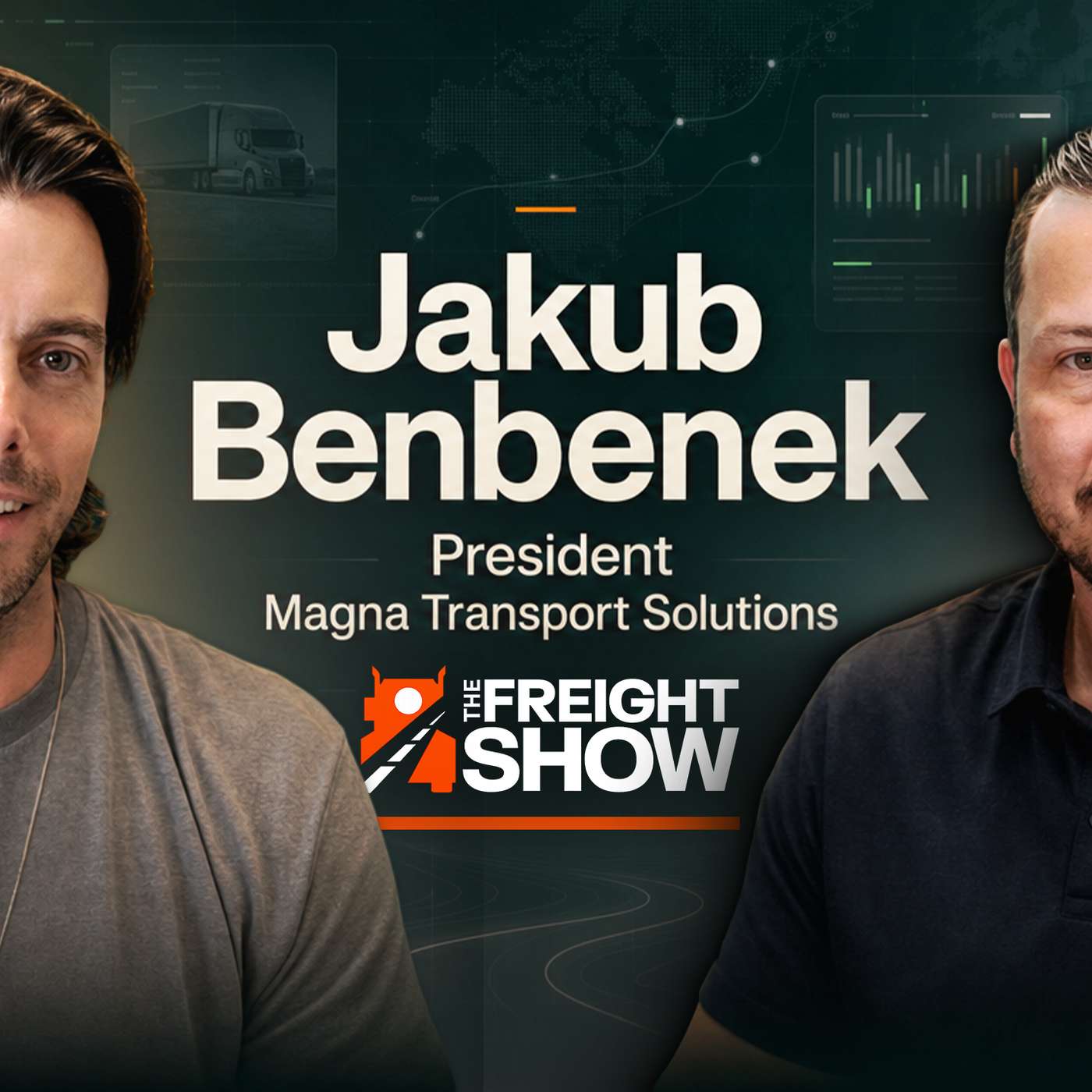
Every broker on the phone is pitching service. Jacob Benbenek has a harder proof point than most: Magna has never had a fraud incident in 14 years of business, and his carrier reps get paid on loads that lose money exactly as if they made a hundred dollars. Ask him how a small team stays disciplined on a hard-to-cover load at 4:30 on a Friday, and the answer starts with how people get paid, not with a compliance tool.Jacob spent ten years on big brokerage floors before he started Magna, a Chicago boutique focused on dry van freight in the lower 48 east of the Mississippi. He sat in a parking lot for an hour before he could make himself walk in and resign, took a massive pay cut, and started with three partners, four computers, and a spreadsheet of shippers pulled off Google over the weekend. The first load was Woodchuck hard cider. Fourteen years on he has bought out the last of his partners and built a shop that goes after just-in-time enterprise freight against brokers many times its size.In this conversation, Jacob explains the pay structure that gets a $1,000 losing load worked like a $100 winner, why the preferred carrier at $1,300 beats the unknown carrier at $1,200 every time, and the smell tests his team ran on carriers years before RMIS and Highway existed. He also gets into the rule that every new hire tracks loads for their first three to six months, the check call policy he wrote at the start that still runs alongside the tracking pings, and why the one-to-two-hour gap between a load being sold and a driver being verified is where most shipments actually fail.What you'll learn:- Why Magna pays carrier reps on losing loads: how treating a $1,000 loss like a $100 win removes the incentive to slap a shaky carrier on a load and walk out the door- How incentives connect to fraud: Jacob's view that most fraud and most mistakes come from "pushing sausages through the factory too fast," and why five or ten seconds of qualifying prevents a catastrophe- What fraud prevention looked like before the compliance tools: the running list of red flags, license plate and ID photos, and the smell tests every rep is trained on- Why every new hire tracks loads for three to six months: how the rule teaches internal communication, what to look for, and why Jacob says Magna operates differently from a big floor- Why tracking tech doesn't replace the check call: the policy Jacob wrote at the start, why a ping an hour out doesn't mean on time, and the sold-to-verified gap where shipments fail- How a boutique competes for enterprise freight: the case for just-in-time shippers working with a team that gives the same high-level touch all day and into after hours- Why "be really good at something" beats a hundred offerings: how Magna picked dry van east of the Mississippi and stopped chasing the customers who email 50 brokers at once- What the market transition looks like from a boutique: rebids, spot activity down, and why Jacob says the years of building through the down market are paying off now- Who succeeds at Magna: the Chicago Public Schools teacher who came in through operations and became the best account executive on the floor, and what "take ownership" means day to dayTime-stamped highlights:- (00:00) Intro: everything has been rebid, new pricing is in, and spot activity is down across the board- (01:54) Why Jacob says the market transition was necessary and how Magna balanced contract freight against spot- (04:10) The customer Magna wants: sophisticated enterprise accounts, not five or six loads a week- (05:20) What "boutique" means in practice: an owner on the floor every day and the inefficiencies Jacob took out of the big-floor model- (08:48) The decision to leave a stable job, the massive pay cut, and an hour sitting in a parking lot before resigning- (10:29) "There was nothing wrong with my path, but I knew it wasn't my path"- (11:13) Four computers in a small room and calling shippers sourced off Google- (12:23) Three partners, a buyout three years ago, and the first load: Woodchuck hard cider- (12:52) Two or three loads on the board, no carriers willing to work with them, and the Centralia auto-rack account that started the mojo- (14:43) Alone in the office for nine hours on a snowy day, calling off a spreadsheet- (16:02) The pitch that won early freight: knowing the region and the seasonality, not name-dropping former employers- (17:57) Why a just-in-time enterprise shipper is a bad fit for a huge shop- (18:57) Payless versus Gucci, and why the operations team is not data entry- (21:20) Refusing to be on an email with 50 brokers, and picking dry van in the lower 48 east of the Mississippi- (24:00) The rule: every new hire tracks loads for three to six months, no matter their experience- (27:04) What new hires learn: internal notes on every shipper and receiver, and reading between the lines- (29:13) Who does well at Magna: extremely hard-working, hungry people who love teams- (30:19) Low turnover, three or four interviews, and spotting a whatever-it-takes attitude- (31:19) The Chicago Public Schools teacher who became Magna's best account executive- (35:18) Team structure: carrier, operations, tracking, and outsourced night tracking- (36:16) The check call policy Jacob wrote at the start, and why reporting a pickup after the actual time is a failure- (38:17) Qualifying the load properly and the one-to-two-hour gap between sold and verified where shipments fail- (40:17) "Old school stuff" and why understanding the pulse of the market every morning is how you make money- (42:58) Everybody preaches service; how Magna gets the shot to prove it- (45:07) Fourteen years fraud-free: the red-flag list, license plate and ID photos, and smell tests before compliance tools existed- (47:00) "Pushing sausages through the factory too fast" and the five or ten seconds that prevent a catastrophe- (48:38) Why carrier reps get paid on losing loads as if they made $100- (49:38) Every load gets worked like a winner, and why the bottom line is what matters- (50:55) The preferred carrier at $1,300 over the unknown at $1,200, and why cutting corners doesn't go farGuest:Jacob Benbenek — President, MagnaJacob spent ten years at two large brokerages before starting Magna in Chicago with three partners, buying out the last of them three years ago. Magna is a boutique 3PL focused on dry van freight in the lower 48 east of the Mississippi, built around just-in-time enterprise shippers in manufacturing and beverage. Fourteen years in, he is still on the floor every day, and the company has never had a fraud incident.

Comments

Download from Google Play

Download from App Store
 United States