


 Claim Ownership
The Frontier Psychiatrists
Subscribed: 8Played: 129
Subscribe

© The Frontier Psychiatrists
Description
The Frontier Psychiatrists Substack has this companion podcast. Owen Scott Muir, M.D. is a writer, physician, scientist, and podcaster, bringing content about healthcare that is personal, weird, and less boring than most of the things you’ve heard. Subscribe at https://thefrontierpsychiatrists.substack.com/
thefrontierpsychiatrists.substack.com
thefrontierpsychiatrists.substack.com
104 Episodes
Reverse

I’m a fan of a good interview, especially when there is breaking news to discuss. Ways to measure the brain, including EEG, have been news on this newsletter for some time. We’ve had Universal Brain at our RAMHT events. I gave 256 lead EEG from EGI (part of Magstim) on my head just the other week in the office. I’ve written about our work with PRISM EEG-fMRI neurofeedback before. Heck, I’ve even published a little on novel cases myself.I’ve interviewed Dave DeCaprio, president of Firefly Neuroscience, right here on The Frontier Psychiatrists:Today’s video is the podcast version of the column from Friday…for those who enjoy a watch or a listen, I present…this podcast! This is a public episode. If you'd like to discuss this with other subscribers or get access to bonus episodes, visit thefrontierpsychiatrists.substack.com/subscribe
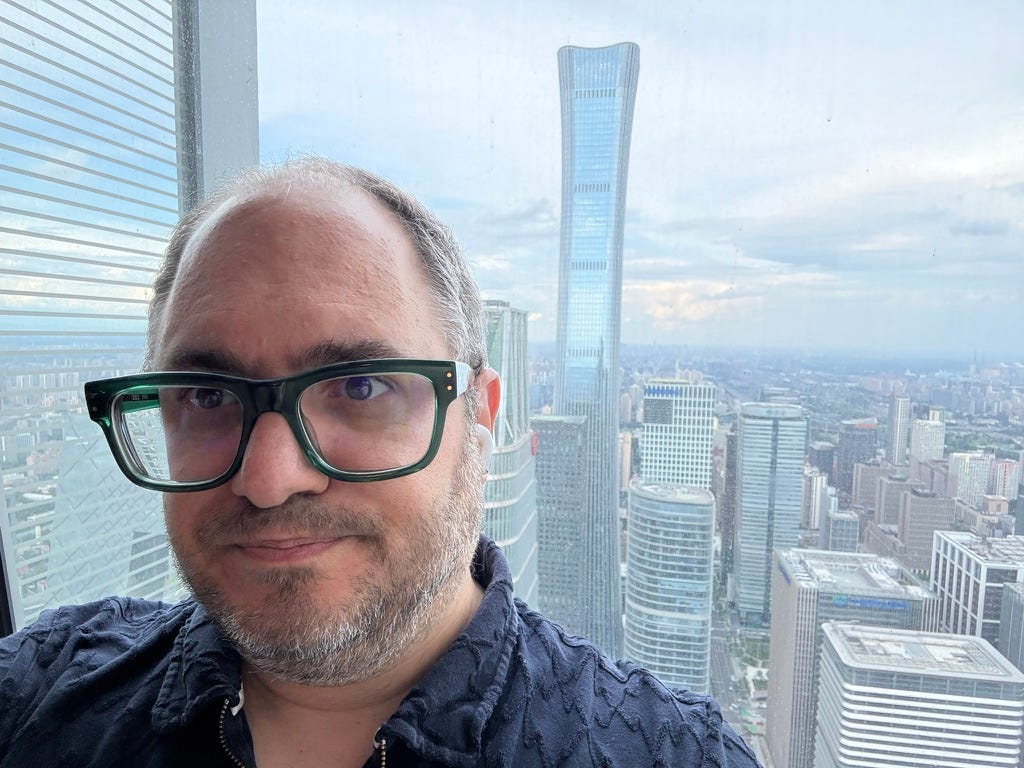
Dear readers, I’ve been a sceptic for too long. It’s easy to be sceptical as a psychiatrist—the flowers will be lour’d upon you! I’ve been using Graymatter’s Health PRISM EEG-fMRI neurofeedback system for a few years, it’s true. There are EEG leads on there. I saw a lot of EEG-related technology in Beijing. It’s possible I’m looking at an EEG in this very photo from my hotel room in China, below:But have I been measuring the brain with EEG regularly? Well, no, again! I’ve been content with my fancy fMRI scans alone, for SAINT, and giant brain healing magnets at set frequencies, like deep TMS with SWIFT.There are even videos of me talking about TMS, like this one below, with friends like Colleen Hanlon from BrainsWay, and heroic patients who chose to speak publicly, too.But one thing I haven’t routinely done is measure the brain itself as part of clinical care, as companies like Firefly Neuroscience are making possible. That may need to change, is the outcome in my personal brain as a result of this interview. I speak, at length, with Dave Decaprio, their president and COO.The EVOKE system provides multimodal analysis of brain function, including Quantitative EEG and Event-Related Potentials. From the Firefly website:At Firefly Neuroscience, our technology is built to measure and interpret brain function in a clinically meaningful way. The Evoke™ system combines quantitative EEG (qEEG) and event-related potentials (ERP) to capture both baseline brain activity and cognitive response during structured tasks.This data is analyzed against a proprietary normative database of over 191,000 EEG and ERP sessions, allowing clinicians to evaluate patterns relative to age-matched expectations and track changes over time. The result is a structured, interpretable view of brain function that can be used alongside clinical evaluation to support earlier insight, more informed treatment decisions, and a clearer understanding of patient progress.I haven’t used it in clinical practice yet, but Dave makes a compelling case, and at this point I think it’s only a matter of time. Brain Medicine, as an emerging specialty, brings change. That change needs to be measured. EEG might be one such tool.I hope you enjoy today’s podcast! And thanks to Sharena Rice, PhD, William M. Sauve, MD, along with Dave, for their guest spots.—OwenAnnouncements: * You can Join The Frontier Psychiatrists LIVE at Psych Congress 2026. Get your tickets now!* You can buy a copy of my IRL in print book on Amazon, Inessential Pharmacology. It’s got a lot of good reviews, and one “one star” review, which, in the spirit of transparency, I will excerpt for you:The author has taken a collection of drug leaflets from pharmaceutical companies and woven them together with underwhelming lackluster commentary and memes. He intended to create an engaging reading experience, however, this aim should have been clearly stated, should have been made explicitly clear in the book description. He wanted to have fun writing it and wanted readers to have fun reading it. Now, having missed the return window, I find myself stuck with a book that feels more tedious than enjoyable.Don’t miss the return window if you hate my work! Good advice for us all. This is a public episode. If you'd like to discuss this with other subscribers or get access to bonus episodes, visit thefrontierpsychiatrists.substack.com/subscribe
Thank you to everyone who tuned into our live video! Join Jeremy the therapist and I for our next live video in the app.As a brief aside, I have found that social media, when actually used to be Social, used to be a wonderful tool. I met Jeremy on Clubhouse, and we've never actually gotten to spend time together in person. I do think the synchronous communication allowed by Clubhouse, and by Substack Live, and others, in which you actually get to have a conversation, is as good as a phone call. My relationship with Jeremy has been fruitful, help change the way I think, and has led to a lot of great collaborations. I could say similar things about a number of other people, such as my friend and collaborator Burton Tabaac—we met on Twitter spaces, talking about NFTs, and have gone on write almost a dozen scientific papers together. I think the trick to being social is to actually be social. And one of the best ways to genuinely socialize is to work on something together. This newsletter is one example of a giant excuse to be social and connect with other people. I'm a writer, and I get to collaborate with other writers. I get to create something out of thin air with colleagues like Jeremy, Rob Glatter, Awais Aftab, Lila , Michelle Bernabe, RN , David Carreon, MD, and many more. Do something together, it's a great way to keep a friendship going. These kinds of friendships are more important and more nourishing than you can imagine over time, and doing something together—separated by space and even time— is still better than not doing that. When we get older, we get kids, we get a family, we get a house, we get a car accident to deal with, we have physical disabilities, we gain all sorts of problems that make it a lot harder than just playing with Legos together in person. But I think it makes a lot of sense to do things together. This video is one example of me doing something with a friend that we hope the rest of the world will get something out of. But I can't recommend it strongly enough as a component of a full, healthy life.But you know what, hanging out in person is cool too. Please join us for a live in-person event for readers of this newsletter and all of our friends in San Francisco on May 16. I think I'm going to do more of these, because I need more excuses to spend time with people in real life. The Live-Action Version of this Newsletter, RAMHT 2026 SF, is coming up on May 16th, 2026!Get a ticket now—it’s free if you ask. Just email us at [email protected] for your free code. This is a public episode. If you'd like to discuss this with other subscribers or get access to bonus episodes, visit thefrontierpsychiatrists.substack.com/subscribe

Hi. I haven’t done a podcast in too long, so here is one!I’m introducing Brain Medicine. I’ve written about its ascendancy in the news this week.For those who’d like to read something today, I suggest this article about understanding Narcissistic Personality Disorder, in Prevention magazine, also published this week.For those about to listen to a quick podcast to start out their run, I offer the above. Also, I went to a flower show:Something for everyone!Advertising Moments: Inessential PharmacologyI have a new, PHYSICAL, IN-PRINT book available for purchase. Inessential Pharmacology is available from Amazon (affiliate link), in both hardback and paperback. Kindle ebook version is also available.RAMHT 2026 SF is coming up on May 16th, 2026!Get a ticket now—also, it’s free if you’re an APA (the psychiatric one) member. Just email us at [email protected] for your free code. This is a public episode. If you'd like to discuss this with other subscribers or get access to bonus episodes, visit thefrontierpsychiatrists.substack.com/subscribe
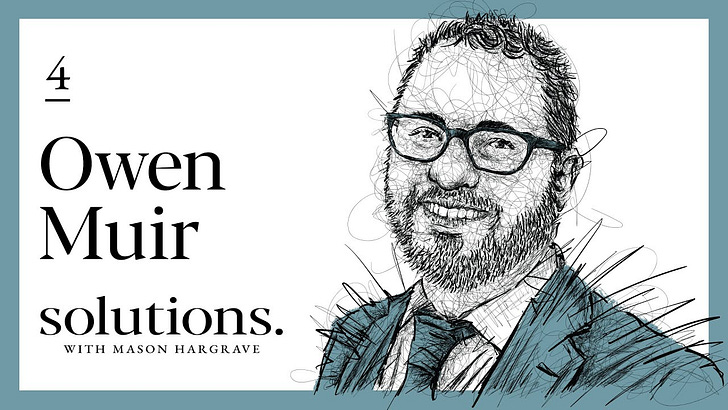
One of the things I like about being on the Internet is that I get to meet the actual humans! There are people I've had real relationships with over many years, and some of them I've just never gotten to see in person yet. Making content on the Internet helps connect you to other people making content on the Internet, and if you're good at making friends, sometimes you can make a new friend. One such friend is featured in this podcast, and it's Annalisa Hanson—she is a therapist, who made some great content on TikTok, and then we hopped on the phone because we were such mutual fans, and then she joined me here on the podcast. Another guest on this episode is Dr. Mason Hargrave, we are also Clubhouse, and then he invited me to record a podcast in what was his apartment at the time. It's a classic.Today’s conversation grew out of a phone call with Annalisa and subsequent calls with Brandon In, Mason, Ahmed Tahseen, and my daughter Quinn.We “delve” into AI chatbots as a source of relationship advice. It’s quite the cautionary tale.The music is by Owen Muir, with some tunes a gift from my friend John Vanderslice. This is a public episode. If you'd like to discuss this with other subscribers or get access to bonus episodes, visit thefrontierpsychiatrists.substack.com/subscribe

Comments

Download from Google Play

Download from App Store
 United States