


 Claim Ownership
The Health Coach Impact
Subscribed: 1Played: 2
Subscribe

© 2025
Description
Welcome to The Health Coach Impact, the official podcast of HCANZA (Health Coaches Australia and New Zealand Association).
Each episode brings you expert conversations, practical strategies, and real-world insights to elevate your health and wellness coaching practice. Discover how to deepen client trust, grow your professional skills, and stay informed about accreditation, ethics, and industry standards.
Whether you're an experienced coach, a new graduate, or a health professional expanding into coaching, you'll find the tools and inspiration you need to make a greater impact.
HCANZA is committed to empowering our members and advancing the profession across Australia and New Zealand. Join us—and be part of the change.
Each episode brings you expert conversations, practical strategies, and real-world insights to elevate your health and wellness coaching practice. Discover how to deepen client trust, grow your professional skills, and stay informed about accreditation, ethics, and industry standards.
Whether you're an experienced coach, a new graduate, or a health professional expanding into coaching, you'll find the tools and inspiration you need to make a greater impact.
HCANZA is committed to empowering our members and advancing the profession across Australia and New Zealand. Join us—and be part of the change.
10 Episodes
Reverse
In this episode, Shivaun Conn is joined by Roni Beauchamp, CEO of the Australasian Society of Lifestyle Medicine (ASLM), to explore the principles of lifestyle medicine, the importance of multidisciplinary care, and why health coaching has such an important role to play in supporting sustainable behaviour change. Roni shares her journey from government and public policy into preventative health and lifestyle medicine, and explains how ASLM brings together health professionals from a wide range of disciplines around a common goal: helping people get well and stay well. We explore the six pillars of lifestyle medicine; healthy eating, movement, sleep, stress management, avoiding risky substances and behaviours, and social connection, and why these foundations need to sit alongside conventional medicine as part of a more holistic approach to health and chronic disease. The conversation also examines the critical gap between knowing what to do and actually making lasting change. While clinicians can diagnose, prescribe and recommend lifestyle changes, health coaches bring a different skill set to the healthcare team, using behaviour change strategies, motivational interviewing, goal setting, accountability and ongoing support to help people turn health advice into meaningful action. Roni discusses the opportunities for greater integration of health coaches within multidisciplinary healthcare teams, what Australia can learn from New Zealand's approach, and why stronger connections between accredited health coaches and organisations such as ASLM can help build understanding of the profession and its value within healthcare. For health coaches, clinicians and other health professionals interested in prevention, behaviour change and collaborative care, this episode offers an insightful look at how lifestyle medicine and health coaching can work together to help people create healthier lives, and sustain those changes over time. Guest Bio: Roni Beauchamp is CEO of the Australasian Society of Lifestyle Medicine (ASLM), a role she has held since July 2022. Prior to joining ASLM, Roni was Director of Operations, Heart Health, with the National Heart Foundation of Australia, having worked in several roles with the Heart Foundation over eight years. Her professional interests include public policy, strategy and leadership, as well as a deep interest in the human psyche and its impact on behaviour change for health reasons. Originally from the NSW Snowy Mountains and then the Victorian Alps, she maintains a strong interest in improving health outcomes for people outside the major metropolitan areas, and for those who are disadvantaged in any way. Prior to moving to the not for profit sector in 2013, Roni worked in a range of senior and executive roles in local and state government across Victoria. She holds a Master of Public Policy and Strategic Management. How to get in touch with HCANZA Facebook HCANZA Exclusive Group: www.facebook.com/groups/hcanzaexclusiveaccess Facebook HCANZA Page: https://www.facebook.com/HCANZA/ Linkedin HCANZA PAge: https://www.linkedin.com/company/hcanza Youtube HCANZA Page: https://www.youtube.com/@HCANZA Instagram HCANZA Page: https://www.instagram.com/hcanza.healthcoaches Linktree: https://linktr.ee/hcanza How to get in touch with the guest: LinkedIn: https://www.linkedin.com/in/roni-beauchamp-92846b8/ Website: https://lifestylemedicine.org.au

In this episode, Sharon Curtain is joined by John Stevens, Associate Professor of Lifestyle Medicine at Southern Cross University, who talks about the power of shared medical appointments (SMAs) and his experience using SMAs as a culturally competent and appropriate way of improving access to, and the quality of, primary healthcare services for Aboriginal and Torres Strait Islander peoples. John's journey took him from a first hand experience of chronic disease in nursing to academia and his discovery of lifestyle medicine, which led him to advocate for shared medical appointments (SMAs) over the past 15 years. Many clinicians would like to provide lifestyle guidance but lack time in standard 10-15 minute consultations. SMAs address this challenge of care, providing a model where individual consultations are conducted sequentially in a group setting, typically with 8-15 patients, led by a provider and facilitator. This approach improves the patient experience and enhances health outcomes, helping patients feel heard, reducing information overload, and allowing them to ask questions they might not think to ask in one-on-one consultations. It reduces repetition of education for clinicians, and can be cost-effective for practices. There are many benefits of shared medical appointments, and can be incredibly effective for marginalised communities and chronic disease management. John has many success stories of using SMAs in Aboriginal health services. Traditional one-on-one consultations had high no-show rates but shared medical appointments improved engagement and trust. Health Coaches are ideal facilitators as they draw wisdom from the group and evoke discussion to identify barriers and promote implementation. While the concept is simple, the setup and preparation are crucial for success.Successful implementation requires proper training, design, and integration across the entire practice team. Over 2,000 clinicians have been trained in SMAs, and the momentum is shifting as healthcare providers recognize the benefits of this approach. There are a number of options for training in SMAs, as well as useful resources. Adopting this evidence-based method more widely in healthcare settings offers a different model to 1:1 or group education, and Read more about SMAs here https://www.racgp.org.au/afp/2014/march/shared-medical-appointments https://www1.racgp.org.au/ajgp/2018/january-february/programmed-shared-medical-appointments-1 Innovative models of care case study https://www.health.gov.au/sites/default/files/2024-09/case-study-snowy-valleys-shared-medical-appointment-model.pdf Shared Medical Appointment Toolkit for General Practice https://bsphn.org.au/documents/2024_01_25_sharedmedicalappointmentstoolkit_03-pdf.pdf Shared Medical appointment training: https://lifestylemedicine.org.au/shared-medical-appointments/ About John Stevens: Associate Professor of Lifestyle Medicine at Southern Cross University, registered nurse, medical sociologist, and a co-founder of the Australasian Society of Lifestyle Medicine (ASLM). He has decades of health and academic experience, driving the Lifestyle Medicine movement forward in Australia. How to contact John: linkedin.com/in/john-stevens-26635a84 How to connect with HCANZA Facebook HCANZA Exclusive Group: www.facebook.com/groups/hcanzaexclusiveaccess Facebook HCANZA Page: https://www.facebook.com/HCANZA/ Linkedin HCANZA PAge: https://www.linkedin.com/company/hcanza Youtube HCANZA Page: https://www.youtube.com/@HCANZA Instagram HCANZA: https://www.instagram.com/hcanza.healthcoaches/

Episode Description: In this episode, Sharon Curtain, Dietitian, health coach, Director of Accredited Health Coaching Australia, and Board Member of HCANZA, is joined by Ben Harris, Director of Policy and Research at Private Healthcare Australia, the peak body representing Australia's private health insurers. Ben shares his perspective on where health coaching fits within Australia's healthcare system and why prevention, chronic disease management, and person-centred care will play an increasingly important role in the future of healthcare. Drawing on his experience in health policy, economics, government, and the private health sector, Ben explains why Australia's healthcare system continues to focus heavily on acute care, despite growing evidence that prevention and early intervention can improve health outcomes and reduce long-term costs. We explore the challenges of funding preventative health initiatives, the limitations of a fee-for-service healthcare model, and the opportunities for health coaches to support people living with chronic conditions. Ben highlights the unique role health coaches play in helping individuals navigate barriers to change, build sustainable healthy habits, and connect health goals with what matters most in their lives. The conversation also examines the growing recognition of health coaching within private health programs, the importance of professional standards and accreditation, and the challenges of integrating health coaching into established healthcare funding models. Finally, we discuss what is needed for health coaching to become more widely recognised across Australia and New Zealand, including stronger evidence, greater public awareness, continued advocacy, and a growing workforce of professionally trained and accredited health coaches. Health Coaches Australia and New Zealand Association (HCANZA) has established the professional competencies, standards, and scope of practice for accredited health coaches across Australia and New Zealand, supporting the delivery of safe, ethical, and evidence-informed coaching that helps individuals achieve meaningful and lasting health outcomes. Guest Bio: Ben Harris Director Policy and Research at Private Healthcare Australia Greater Melbourne Area Private Healthcare Australia Ben Harris is Director of Policy and Research at Private Healthcare Australia, the peak body representing the country's private health insurance industry. An economist by training, Ben has built his career across government and the not-for-profit sector, specialising in health and social policy. In his current role, he works at the intersection of industry, government, and regulation—leveraging data, research, and academic insights to inform policy and advocate for better outcomes for both consumers and the healthcare system. He collaborates closely with government and key stakeholders to shape evidence-based solutions that strengthen the sector. Ben is also the author of several policy papers, including Is Medicare Fair? and Australia's Mental and Physical Health Tracker, reflecting his ongoing contribution to national conversations around healthcare policy and reform. How to get in touch with HCANZA Facebook HCANZA Exclusive Group: www.facebook.com/groups/hcanzaexclusiveaccess Facebook HCANZA Page: https://www.facebook.com/HCANZA/ Linkedin HCANZA PAge: https://www.linkedin.com/company/hcanza Youtube HCANZA Page: https://www.youtube.com/@HCANZA Instagram HCANZA Page: https://www.instagram.com/hcanza.healthcoaches Linktree: https://linktr.ee/hcanza How to get in touch with the guest: LinkedIn: linkedin.com/in/ben-harris-pha

In this episode, Sharon Curtain, Dietitian, health coach,director of Accredited Health Coaching Australia, and Board member of HCANZA is joined by David Codyre, a psychiatrist who works with Tamaki Health, a network of clinics providing team-based primary care services to populations in high-needs areas of Auckland, NZ Dr David Codyre shares how health coaching is transforming primary care in New Zealand. Drawing on over 20 years of experience in mental health and system design, David explains how traditional models—short GP consultations and referral-based services—have struggled to meet the needs of patients, particularly those with complex or chronic conditions. We explore the shift to an integrated, team-based approach, where health coaches, mental health practitioners, and community support workers are embedded directly within general practice. This model allows patients to receive support in the moment—when they are most ready—leading to significantly higher engagement and better health outcomes. David highlights the unique role of health coaches in bridging the gap between knowing and doing. By focusing on what matters to the patient, addressing barriers, and supporting small, achievable behaviour changes, health coaches are helping people better manage long-term conditions and improve their overall wellbeing. The conversation also explores the impact on clinicians. With health coaches as part of the team, GPs and nurses report reduced pressure, increased job satisfaction, and a renewed sense of effectiveness in their work. Finally, we discuss what Australia can learn from New Zealand's experience—including the importance of integration, ongoing support, and rethinking how primary care teams work together. Health Coaches Australia New Zealand Association has developed the competencies and scope of practice for health coaches in Australia and New Zealand. Tāmaki Health has been reappointed as a national provider of Health Coach training for the Integrated Primary Mental Health and Addiction (IPMHA) programme, recognising five years of successful delivery across Aotearoa New Zealand. Their program has met the high standards of the HCANZA accreditation program, meaning their coaches are eligible for professional membership with HCANZA. Guest Bio: David is a psychiatrist with 35 years experience working in the community and primary mental health sector in New Zealand, in a range of clinical and leadership roles. Since 2012 David has been Clinical Director, Wellness Support, with Tamaki Health, a network of clinics providing team-based primary care services to populations in high-needs areas of Auckland, NZ. He is currently seconded half time as Clinical Director of Tū Whakaruruhau (the Auckland Wellbeing Collaborative), supporting implementation of the "Access and Choice" IPMHA programme, integrating HIPs, Health Coaches, and NGO support, into all GP clinics in Auckland. David is also Lead Psychiatrist to Whakarongorau, the National Telehealth Service – the home of 1737 "Need to Talk", the Depression Helpline, Drug/Alcohol Helpline, and Gambling Helpline. How to Contact David: LinkedIn: linkedin.com/in/david-codyre-4679b320 Website: whakarongorau.nz tamakihealth.co.nz aklwellbeingcollab.co.nz Email: [email protected] How to get in touch with HCANZA: Facebook HCANZA Exclusive Group: www.facebook.com/groups/hcanzaexclusiveaccess Facebook HCANZA Page: https://www.facebook.com/HCANZA/ LinkedIn HCANZA Page: https://www.linkedin.com/company/hcanza Youtube HCANZA Page: https://www.youtube.com/@HCANZA Instagram HCANZA Page: https://www.instagram.com/hcanza.healthcoaches Linktree: https://linktr.ee/hcanza
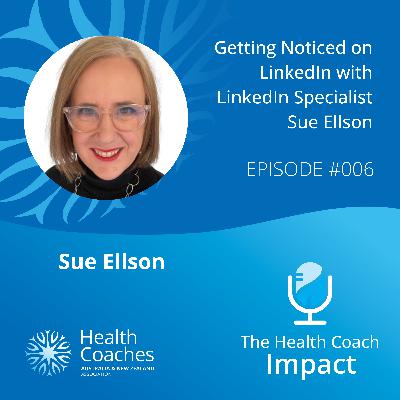
Episode Description: How visible are you as a health coach — and more importantly, how easily can you be found? In this episode of The Health Coach Impact, we're joined by Sue Ellson, LinkedIn specialist, author, educator, and early adopter of the platform since 2003. Sue shares practical, strategic insights into how health coaches can use LinkedIn to strengthen professional credibility, improve searchability, and build long-term visibility in a deliberate and sustainable way. We explore what makes LinkedIn different from other social media platforms, why optimising your profile is essential, and how newsletters, articles, events, and thoughtful engagement can help you grow influence without becoming "salesy." Sue also breaks down the difference between personal profiles and company pages, how to systemise your presence (without automating), and why professional visibility is about relationships, not quick pitches. Whether you're newly accredited, building your private practice, or refining your professional footprint, this episode offers practical guidance to help you be seen, trusted, and found — with clarity and confidence. Guest Bio: Sue Ellson is an Independent LinkedIn Specialist, author, educator, practitioner and consultant. She is also a gigster, a person who uses technology to attract aligned gigs and a former banker. Sue provides teaching, training, speaking and consulting services to individuals, small, medium and large businesses, corporates, schools, universities, associations and government in Australia and overseas. She is the author of five non-fiction books on the topics of LinkedIn, Careers, Business, Hyper Local Marketing and Gigsters. Sue is also the Founder of Newcomers Network and has been featured in over 1,000 publications and 135+ appearances on television, radio, podcasts and audio shows. Resources: How to get in touch with Sue: LinkedIn: https://www.linkedin.com/in/sueellson Website: https://sueellson.comFacebook: https://www.facebook.com/sueellson2 Instagram: https://www.instagram.com/sueellson Substack: https://substack.com/@sueellson TikTok: https://www.tiktok.com/@sueellson YouTube: https://www.youtube.com/@sueellson X / Twitter: https://x.com/sueellson Sign up to her free monthly newsletter at https://sueellson.com/newsletters View free webinar slides and recordings at https://sueellson.com/webinars-and-recordings Learn more about her services and pricing at https://sueellson.com/services-and-pricing Contact her via https://sueellson.com/contact How to get in touch with HCANZA: Facebook HCANZA Exclusive Group: www.facebook.com/groups/hcanzaexclusiveaccess Facebook HCANZA Page: https://www.facebook.com/HCANZA/ LinkedIn HCANZA Page: https://www.linkedin.com/company/hcanza Youtube HCANZA Page: https://www.youtube.com/@HCANZA Instagram HCANZA Page: https://www.instagram.com/hcanza.healthcoaches Linktree: https://linktr.ee/hcanza

Comments

Download from Google Play

Download from App Store
 United States