


 Claim Ownership
The Hummingbird Collective
Subscribed: 1Played: 1
Subscribe

© Sarah Noble
Description
THE HUMMINGBIRD COLLECTIVE: Lifting the illusion of insignificance, one drop at a time. 💧
The world feels heavy, but you are not powerless. Inspired by the legend of the tiny hummingbird who refused to stand still while the forest burned, this podcast is an invitation to discover the "hummingbird" in all of us. Hosted by Sarah Noble, storyteller and Head of Global Engagement at the Caux Foundation, we explore how individual actions—no matter how small—create collective change.
SEASON ONE: STORIES IN MOTION In our inaugural season, we explore the art of listening and speaking across our differences. Moving beyond the headlines to find the human heart underneath, we share narratives of crossing borders and building community to remind ourselves that we are more similar than we are different.
WHAT TO EXPECT:
💧 HUMAN STORIES: Real stories of people finding power and purpose in unexpected places.
💧 INTERCULTURAL DIALOGUE: Authentic conversations that bridge divides and reduce polarization.
💧 BE THE CHANGE: Every episode ends with a tangible practice—a simple step you can take immediately to create ripples of kindness in your own life.
Whether you are 8 or 80, a lifelong activist, or just starting out, you belong here. Subscribe and let’s be the change—together.
This podcast series is co-produced by the Caux Initiatives of Change Foundation, supported through the participation of Sarah Noble in the Youth for Peace: UNESCO Intercultural Leadership Programme (2025-2026). Guests speak from their own experience and perspective, which may not reflect the views of the show or its partners.
Hosted on Ausha. See ausha.co/privacy-policy for more information.
10 Episodes
Reverse

What if changing a conflict begins not with changing someone else’s mind, but with questioning the assumptions we bring to it? And what becomes possible when we stop treating people as the problem? In this episode of Hummingbird Collective, Sarah Noble speaks with mediator, peacebuilder, lawyer, and theologian Dr. David Anderson Hooker about the narratives that shape our relationships, institutions, and sense of what is possible.Drawing on more than 35 years of experience, David explores why sharing our stories can bring us closer without necessarily transforming the conditions that divide us. He offers a different starting point: rather than requiring everyone to agree on the past, ask what each person needs to thrive in a shared future. From the systems we inherit to the assumptions we carry into an everyday meeting, this conversation explores how small changes can open space for greater flourishing—and why that work needs patience, practice, and grace.👤 ABOUT THE GUESTDr. David Anderson Hooker is a mediator, peacebuilder, lawyer, and theologian with more than 35 years of experience working with communities, governments, and civil society around the world.Beginning his career in minority mental health before moving through public policy and law, David developed a practice focused on the narratives beneath conflict. In this conversation, he introduces Transformative Community Conferencing, an approach that helps communities identify limiting narratives and cultivate ways of living together that support everyone’s flourishing.IN THIS EPISODEStories and narratives: Why sharing experiences can build connection without necessarily changing the systems around us.The narratives we inherit: How assumptions about identity, power, and whose lives matter become embedded in everyday life.A narrative of a shared future: Why everyone need not share the same perspective to commit to one another’s thriving.A space for grace: How to invite people into new habits without expecting instant transformation.Small acts of change: Why testing an ordinary assumption can reshape how we approach one another.KEY QUOTES“The people aren’t the problem. The problem is the problem.” — David Anderson Hooker“You can change the course of your life just one degree.” — David Anderson Hooker“Narrative change doesn’t happen overnight.” — David Anderson HookerBE THE CHANGEDavid’s invitation: Test your assumptions.Before sitting down for a meal or a meeting, pause to check whether your chair will hold you. Use that simple gesture as a reminder: something that feels certain is still an assumption.Then bring that curiosity into your relationships. Instead of assuming you know someone’s motives or hidden agenda, ask yourself:What am I assuming about this person?What else might explain what they said or did?How could I explore that rather than treat my interpretation as fact?The practice is small, but its invitation is profound: approach people with curiosity rather than certainty.💧 JOIN THE CONVERSATIONShare your drops of water: #HummingbirdCollectiveThe Hummingbird Collective is co-produced by the Caux Initiatives of Change Foundation. Guests speak from their own experience and perspective, which may not reflect the views of the show or its partners.Hosted on Ausha. See ausha.co/privacy-policy for more information.

How do we create when everything around us feels like it’s breaking apart? And what role does the artistic process play in moments of deep rupture? Recorded live at the Geneva Peace Forum 2026, this episode explores hope as a creative act, the science of arts and healing, and what it takes to truly see one another, through two very different journeys: from the Broadway stage to the World Health Organization, and from an engineering desk in Morocco to a camera that refuses to look away.👤 ABOUT THE GUESTSChristopher Bailey is Co-Founding Director of the Jameel Arts & Health Lab and founder of the Arts and Health Programme at the World Health Organization. He began as an actor and playwright on Broadway before moving into global health, first at The Rockefeller Foundation and then at WHO.Seif Kousmate is a Moroccan visual artist and self-taught photographer whose practice is built on trust, long-term relationships, and the responsibility of representation. His work spans from the reconciliation process in Rwanda to the dignity of communities across Africa. His latest project, Men Versus Fathers, was nominated for the Prix Elysée 2025.KEY QUOTES“Creation is not a retreat from a broken world, but it is one of the ways that we begin to repair it.” — Sarah Noble“I don’t think art can solve the conflict. But I think art can bring people together and give them the opportunity to see each other.” — Seif Kousmate“Hope, particularly when there’s very little reason to be hopeful, is essentially a creative act.” — Christopher BaileyBE THE CHANGESeif: Pay attention and take your time. Listen, observe, and seek to understand before rushing to change a situation.Christopher: Make time for creative expression, or engage with art as an audience member, two to three times a week. Research suggests this can reduce the likelihood of clinical depression by 50%.🔗 LINKS & RESOURCESJameel Arts & Health Lab: https://www.jameelartshealthlab.orgSeif Kousmate — Men Versus Fathers: https://www.seifkousmate.com/Gowen Gallery: https://www.gowen.art/WHO Report on the Health Benefits of the Arts (2019): https://www.jameelartshealthlab.org/research/research-projects/2019-who-reportGeneva Peace Forum: https://genevapeaceforum.chHummingbird Collective: https://thehummingbirdcollective.org💧 JOIN THE CONVERSATIONShare your drops of water: #HummingbirdCollectiveThe Hummingbird Collective is co-produced by the Caux Initiatives of Change Foundation. This episode was recorded live at the Geneva Peace Forum 2026, co-organised with the Geneva Peacebuilding Platform (GPP) and hosted in partnership with the Gowen Gallery. Guests speak from their own experience and perspective, which may not reflect the views of the show or its partners.Hosted on Ausha. See ausha.co/privacy-policy for more information.
A season finale about three things any of us can do today to be the change we want to see in the world.There is a legend about a hummingbird. The forest is on fire. The large animals stand at the edge, watching, paralysed by the scale of what they see. The tiny hummingbird flies back and forth to the stream, carrying one drop of water at a time. When the other animals tell her it's pointless — that she can't possibly make a difference — she says: I'm doing the best I can.Wangari Maathai, the Kenyan Nobel Peace Prize laureate, told that story as a call to action. Not a call to solve everything. A call to start. To carry your drop. To refuse the paralysis that comes from believing the fire is too big and you are too small.That legend is the heart of this podcast. And this finale is its first season's answer.Over the course of Season 1 — Stories in Motion — five guests shared their drops of water across conflict, displacement, and circumstances that should have stopped them. Each episode ended with the same question: what is one thing any of us can do today? This finale sits with what all of those answers had in common. What they gave us — collectively, across five very different lives — are three practices. Not theories. Not aspirations. Things you can start today, in your family, your workplace, your community, wherever the fire is closest to you. The hummingbird doesn't put out the fire alone. But the hummingbird starts. And that single drop is what makes it possible for others to start too.💧 The three Be The Change actionsListen to understand. Not to respond. Not to fix. Not to offer. Listen to why people say what they say.Look for what we share. We live in a world that is very good at showing us what divides us. Looking for what unites us instead is a choice. A daily practice. And it is possible.Just start. Start talking about something when no one else is. That is all. Make it acceptable for others to do the same. You do not need permission. You do not need certainty. You just need your drop.🔗 Links & resourcesThe Hummingbird Collective: thehummingbirdcollective.orgSeason 1 episodes: thehummingbirdcollective.org/episodesCaux Initiatives of Change Foundation: caux.ch👤 About the hostSarah Noble is Head of Global Engagement, Creative Peacebuilding and Inner Development at the Caux Initiatives of Change Foundation. The Hummingbird Collective is her answer to the voice that says: what could I possibly do?📋 Share your reflectionFive questions. Your responses help us understand what's shifting — and make the case for more stories like this one. 👉 https://forms.gle/mf8MVX3cUsqYECrL9💧 Join the conversationWhich drop did you carry this season? Share it: #HummingbirdCollectiveThe Hummingbird Collective is co-produced by the Caux Initiatives of Change Foundation, supported through Sarah Noble's participation in the Youth for Peace: UNESCO Intercultural Leadership Programme (2025–2026). Guests speak from their own experience and perspective, which may not reflect the views of the show or its partners.Hosted on Ausha. See ausha.co/privacy-policy for more information.
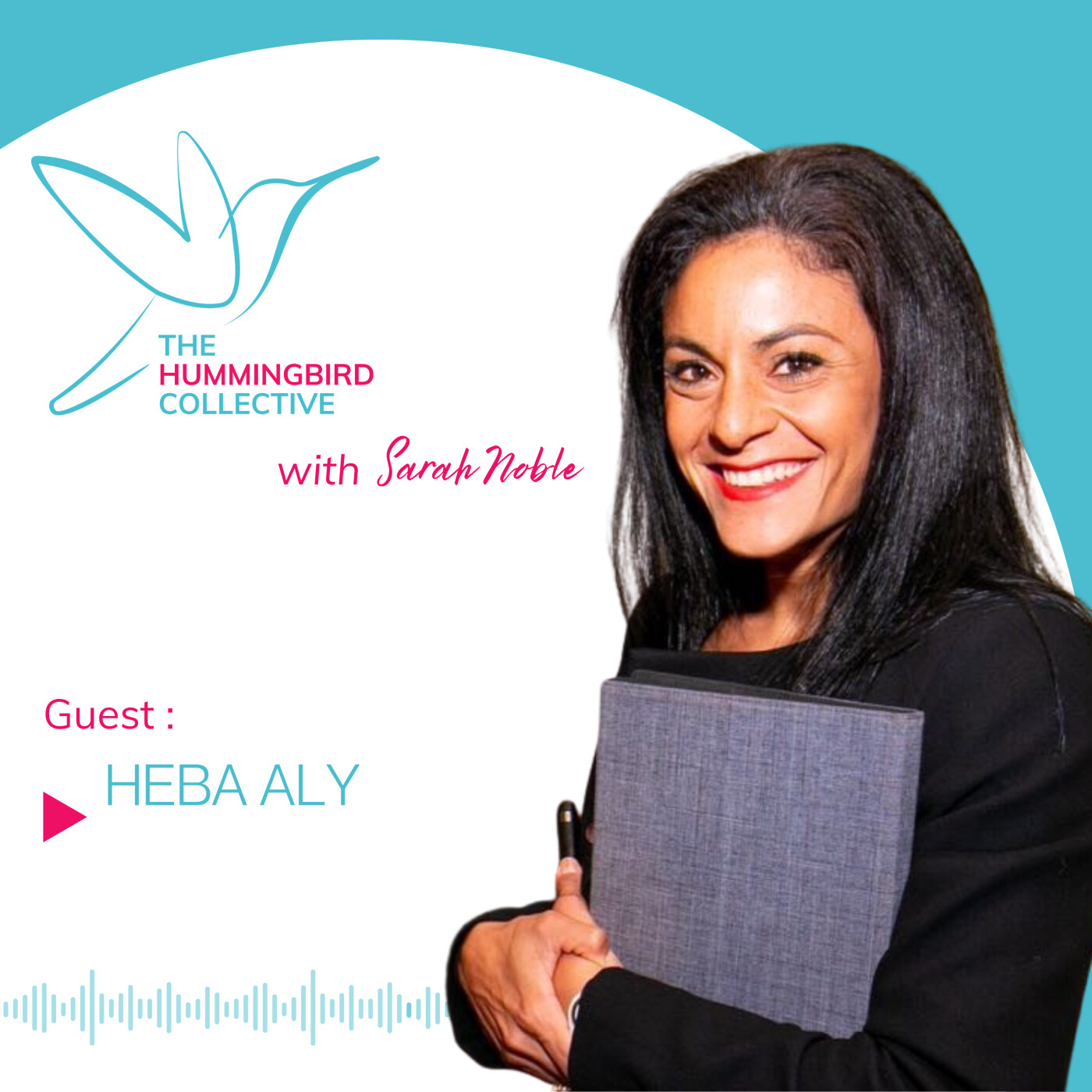
A story about the UN Charter clause no one has ever used, the common ground hiding beneath our deepest differences, and why refusing to stop dreaming might be the most defiant act left.The UN Charter was written in 1945 — before the internet, before climate science, before most of the world had a seat at the table. One third of the world was still colonized when those rules were drafted. And buried inside them is a clause that has never once been used: a mechanism to review and update the Charter itself.Heba Aly spent a decade reporting from conflict zones, then led one of the world's foremost humanitarian newsrooms. And then she decided that bearing witness wasn't enough. This conversation follows that turning point. It's about Article 109, the untouched clause that could open a global conversation about new rules for a new world.But underneath that, it's about something quieter and more universal: how we find common ground when everything feels intractable.Heba tells a story in this episode about two people fighting over an orange, each certain they want the same thing — only to discover they each needed a different part of it. That story is, in many ways, the whole method. Whether you are mediating between nations or trying to understand why your neighbour voted differently than you did, the path forward starts the same way: go one layer deeper. Beneath the position is an interest. Beneath the interest is usually a fear. And beneath the fear — almost always — is something we share.She also shares what she has learned about change: that it requires three things to be true at once — dissatisfaction with what exists, a shared vision for what could be, and belief that a path forward is real. And that even inside the largest bureaucracies in the world, it is a handful of individual human beings, willing to commit and believe, who carry a movement through.The work is long. The odds feel steep. And somewhere in a Pacific island going underwater, or a city living under bombing the Security Council cannot stop, someone is waiting for the rules to catch up. This episode is for everyone who hasn't given up on imagining otherwise. 🔗 LINKS & RESOURCESArticle 109 Movement: article109.orgUN Charter, un.org/en/about-us/un-charter/full-text 👤 ABOUT THE GUESTHeba Aly is an Egyptian-Canadian journalist and advocate for global governance reform. After a decade reporting from conflict zones and years leading The New Humanitarian, she became Director of Article 109 — a growing international movement backed by former heads of state working to activate an untouched clause in the UN Charter and make the world's most important institution fit for the world we actually live in.📋 SHARE YOUR REFLECTION Five questions. Your responses help us make the case for more stories like this one 👉 https://forms.gle/mf8MVX3cUsqYECrL9💧 JOIN THE CONVERSATION Share your drops: #HummingbirdCollectiveThe Hummingbird Collective is co-produced by the Caux Initiatives of Change Foundation, supported through Sarah Noble's participation in the Youth for Peace: UNESCO Intercultural Leadership Programme (2025–2026). Guests speak from their own experience and perspective, which may not reflect the views of the show or its partners.Hosted on Ausha. See ausha.co/privacy-policy for more information.
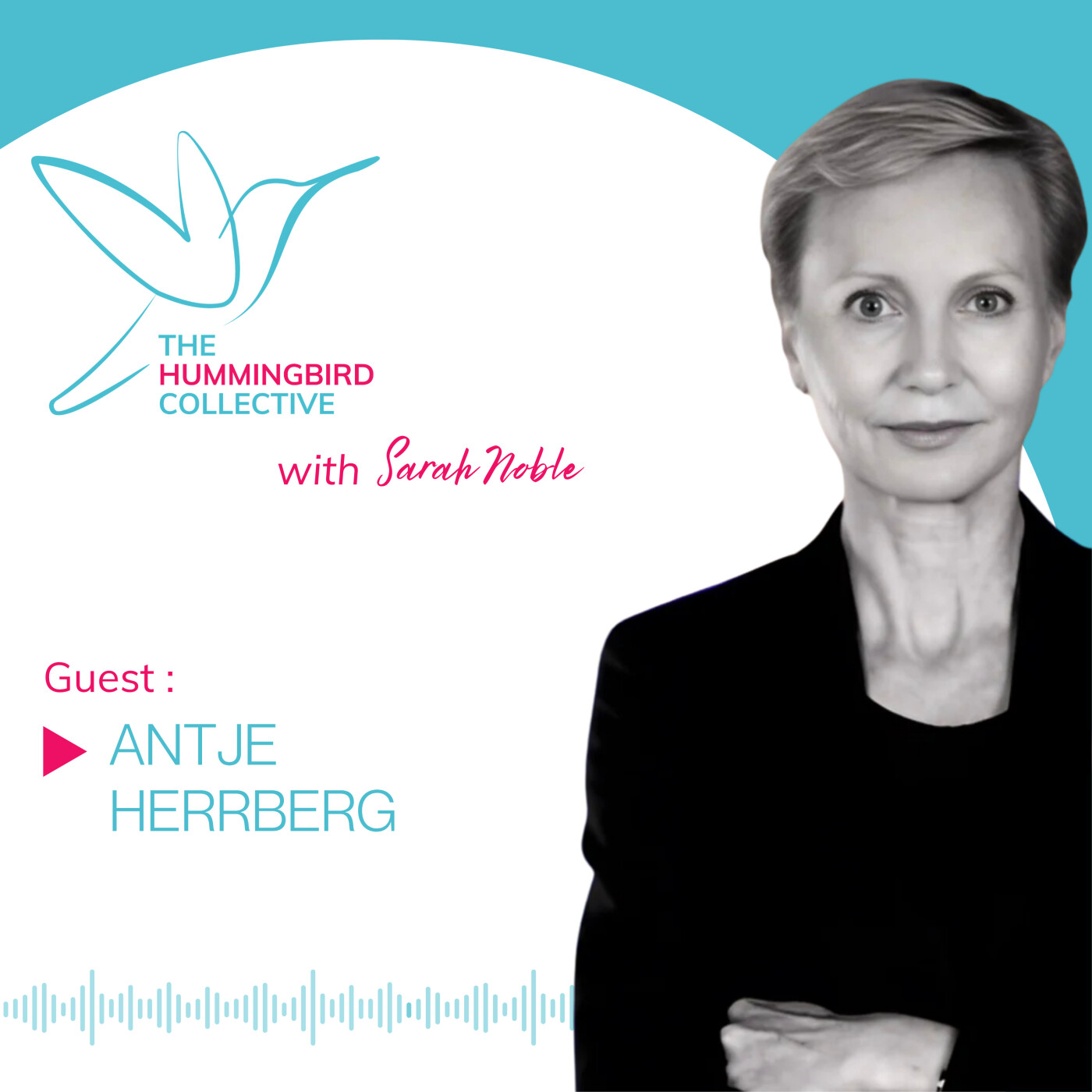
A story about stepping into rooms full of hatred, asking for weapons to be left at the door, and what 25 years of peacemaking reveals about the conversations we have every day.Violent conflict is at its highest point in decades. Antje has spent more than two decades facilitating dialogue between adversaries in Tunisia, the DRC, Ukraine, Yemen, the Caucasus, Indonesia, and beyond — working alongside the EU and the UN. Her research focuses on the blind spots in conflict work: what gets overlooked precisely when the stakes are highest.At its heart, mediation is an act of intercultural dialogue — the art of speaking and listening across the deepest human differences. True intercultural dialogue doesn't begin with technique; it begins with the willingness to be changed by what you hear. Antje has spent her career in that space, and what she's learned there applies far beyond the negotiation room.She shares what it took to ask armed men to leave their weapons at the door. She talks about the early mistake of trying to take emotion out of a room — and what she learned when nobody called her back. And she maps three blind spots in peace work: the illusion of neutrality, the obsession with process over relationship, and the pressure to reach a solution before the dialogue has done its work.Her two drops for the rest of us: peace doesn't start in a negotiation room — it starts in how we show up. And the next time someone says something that stings, ask not what they said, but why.🔗 LINKS & RESOURCES Antje's podcast:Masterpeace👤 ABOUT THE GUEST Antje Herrberg has spent over 25 years at the intersection of conflict mediation and political transition, facilitating dialogue between adversaries in some of the world's most complex conflicts. She has worked within and alongside the European Union and the United Nations, and her research focuses on the blind spots in conflict work — what gets overlooked in moments of tension and decision. She shares these insights through writing and her podcast, Masterpiece.📋 SHARE YOUR REFLECTION Five questions. Your responses help us make the case for more stories like this one 👉 https://forms.gle/mf8MVX3cUsqYECrL9💧 JOIN THE CONVERSATION Share your drops: #HummingbirdCollective Subscribe for more stories of everyday courageThe Hummingbird Collective is co-produced by the Caux Initiatives of Change Foundation, supported through Sarah Noble's participation in the Youth for Peace: UNESCO Intercultural Leadership Programme (2025–2026). Guests speak from their own experience and perspective, which may not reflect the views of the show or its partners.Hosted on Ausha. See ausha.co/privacy-policy for more information.

Comments

Download from Google Play

Download from App Store
 United States