



 Claim Ownership
The India FinTech Diaries
Subscribed: 56Played: 396
Subscribe

© Hemant Kshirsagar & Elroy Serrao
Description
India Fintech Diaries is a bi-weekly (ish) podcast that peeks at the fast, “wild-west” world of Fintechs in India. The world’s most populous democracy is at the cusp of massive technological and demographic change that will forever change the way we relate to financial services and their providers. In each episode, your hosts Hemant Kshirsagar and Elroy Serrao, demystify the world of Fintech for you by exploring ideas, innovations, startups and the personalities that are shaping India’s Fintech Landscape. Join them for a wild ride into the world of Indian Fintech!!!
103 Episodes
Reverse

When we talk about India’s Digital Public Infrastructure, three names usually come to mind: Aadhaar, UPI and Account Aggregator.But that is only the visible layer.Underneath sits a much broader collection of digital building blocks for identity, payments, data sharing and verifiable credentials—and increasingly, these ideas are being adapted for countries well beyond India.In this episode of India FinTech Diaries, we speak with Kamya Chandra, CEO and Co-founder of the Center for Digital Public Infrastructure (CDPI), about the evolution of India’s DPI journey and what it takes to translate that thinking to other countries.Kamya brings a fascinating perspective to the conversation, having worked on India's Account Aggregator framework and DEPA, at the World Bank, and now with CDPI. Key Themes from the Episode🏗️ DPI Is Much Bigger Than Aadhaar and UPIIndia's digital infrastructure is made up of numerous interconnected building blocks across identity, payments and data sharing. Many of the most important ones are largely invisible to consumers. 🤝 The Hardest Part Isn't Always TechnologyKamya argues that the biggest challenge in building Account Aggregator wasn't technology or regulatory resistance—it was getting organisations accustomed to competing to cooperate around shared infrastructure. 💳 India's Credit Problem Is a Data ProblemThe conversation explores how trusted, verifiable credentials can reduce the cost of onboarding and underwriting, potentially making smaller-ticket lending economically viable at scale. 🌍 DPI Can't Simply Be Copy-PastedCDPI's international approach is deliberately designed around existing infrastructure in each country. The objective isn't to recreate Aadhaar or India Stack elsewhere, but to build on what already exists. 🏢 The Next Frontier May Be Enterprise DPIThe principles that made individual digital identities and payments scalable could increasingly be applied to businesses—identity, payments, data sharing and, importantly, delegation. 🤖 AI Needs DPI as Its FoundationOne of the most interesting parts of the conversation is Kamya's argument that AI and DPI shouldn't be thought of as separate worlds. Trusted identity, consent, payments and data-sharing rails could become essential infrastructure for an agentic economy. 🔮 A New Wave of Fintech Innovation Could Be ComingRather than believing that India's fintech opportunity is exhausted, Kamya sees significant potential in combining AI with India's existing DPI to reach populations that remain outside the digital financial system. This is a conversation about much more than fintech. It's about how digital infrastructure gets built, how countries create trust at scale, and what happens when the infrastructure beneath financial services becomes programmable.Contact CDPIWebsite: https://cdpi.dev/X: twitter.com/CentreforDPILinkedIn: https://www.linkedin.com/company/centre-for-dpi/

Most Indians buy insurance with a simple expectation: pay premiums today and receive support when a crisis strikes.But what happens when a claim gets delayed, partially settled, or rejected altogether?In this episode of India FinTech Diaries, we speak with Shilpa Arora, Co-founder & COO of Insurance Samadhan, one of India's largest insurance grievance redressal platforms.Shilpa shares a sobering reality: for many policyholders, the real challenge isn't buying insurance—it's successfully navigating the claims process.From mis-selling and hidden exclusions to complex grievance mechanisms and claim rejections, the conversation reveals why thousands of policyholders struggle to access benefits they believed they had already paid for.Connect with Insurance SamadhanWebsite: https://www.insurancesamadhan.com/X: https://x.com/InsuranceSamad1LinkedIn: https://www.linkedin.com/company/insurancesamadhan

Despite instant UPI payments, real-time notifications, and API-first financial infrastructure becoming normal in India, cross-border payments remain surprisingly broken for many exporters and global-first businesses.In this episode of India FinTech Diaries, we sit down with Anand Balaji, CEO & Co-founder of Xflow, to unpack why international money movement is still plagued by opacity, delays, compliance friction, and fragmented infrastructure.Anand takes us deep into the architecture of modern cross-border payments—from SWIFT and correspondent banking to compliance engines, FX intelligence, and programmable treasury infrastructure.The core argument is simple but powerful:Cross-border payments were designed for access, not experience.And that’s now becoming a major bottleneck for India’s global-first businesses.Key Themes from the Episode🌍 Cross-Border Payments Are Still a Black Box Exporters still struggle with unpredictable settlement times, opaque FX conversion, missing SWIFT messages, and endless compliance workflows.🏗️ SWIFT Solved Access — Not Experience SWIFT was revolutionary for the 1960s, but it was never designed for real-time visibility, transparency, predictable settlement, or modern UX expectations.⚡ Domestic Payments Have Changed User Expectations UPI has fundamentally changed how businesses think about payments. Exporters now expect cross-border flows to feel as seamless as domestic transfers.🧠 Compliance is the Real Infrastructure Layer The biggest bottleneck is no longer money movement itself—it’s AML, KYC, transaction monitoring, and regulatory orchestration at scale.💱 FX Optimization is Becoming Intelligent Xflow is using AI-driven forecasting and programmable FX workflows to help businesses optimize conversion timing rather than just negotiate rates.🔌 Cross-Border Payments is Becoming API Infrastructure Platforms are increasingly embedding payments natively into workflows, much like Shopify Payments runs on Stripe infrastructure.🪙 Stablecoins Are Moving From Theory to Usage While businesses may not yet hold stablecoins as treasury assets, exporters are increasingly seeing demand from global customers who want to pay using them.🔮 The Endgame: Cross-Border Payments That Feel Like UPI The ultimate goal is simple: international payments that are instant, predictable, trackable, and invisible in complexity.Listen in to understand how Fintech is rebooting cross-border payments !!Connect with XFlowWebsite: https://www.xflowpay.com/X: https://x.com/xflowpayLinkedIn: https://www.linkedin.com/company/xflowpay/

In this episode of India FinTech Diaries, we explore a quietly emerging shift in India’s investment landscape: the rise of fixed income as a retail asset class.While equities and mutual funds have become mainstream, fixed income—despite offering predictable returns and portfolio stability—has remained largely inaccessible to individual investors.To unpack this, we speak with Vineet Agarwal, Co-founder of Jiraaf, a platform focused on democratizing access to fixed income investments.The core idea is simple but powerful: enable retail investors to do what institutions and family offices have been doing for decades—invest meaningfully in fixed income products.Contact JiraafWebsite: https://www.jiraaf.com/X: https://x.com/Jiraaf_OfficialLinkedIn: https://www.linkedin.com/company/jiraafofficial/
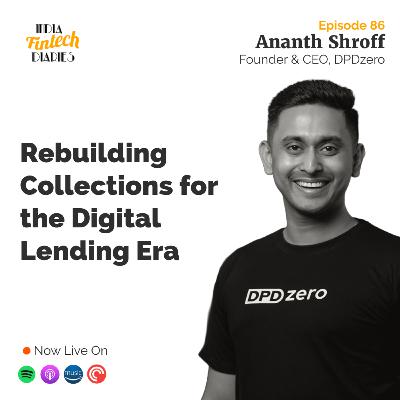
In this episode of India FinTech Diaries, we dive into one of the most under-discussed—but critical—layers of the lending stack: debt collections.As digital lending in India scales rapidly, especially in unsecured credit, the stress is increasingly showing up not in underwriting—but in collections. Traditional systems, built for a low-volume, high-touch world, are now struggling to keep up with instant disbursals and millions of borrowers.To unpack this shift, we speak with Ananth Shroff, Co-founder & CEO of DPDzero, who is reimagining collections as a full-stack, AI-driven infrastructure problem rather than an operational afterthought.Key Themes from the Episode⚡ Lending Has Evolved. Collections Haven’t Loans are now disbursed in seconds—but collections infra is still built for a physical, slow, agency-led world. This mismatch is becoming a bottleneck for growth.🧩 Collections is Still Treated as an Afterthought Despite being core to unit economics, collections is often the “stepchild” of lending—underinvested, fragmented, and operationally inefficient.📉 Unsecured Lending = Rising Stress Signals As digital lending scales, delinquencies are increasingly concentrated in unsecured portfolios—making collections infra mission-critical.🤖 AI + Orchestration > Channels in Silos SMS, WhatsApp, calls, field visits—all exist today, but operate independently. The real unlock is intelligent orchestration across channels, not just adding more touchpoints.🧠 Persona-Based Collections is the Breakthrough Not all defaulters are the same. From supportive to intentional, identifying borrower intent using AI enables better recovery and better borrower experience.⚖️ Compliance + Empathy is the New Standard With RBI tightening norms and social media amplifying borrower voices, collections must balance recovery with dignity and transparency.🔮 The Future: Full-Stack, Intelligence-Driven Collections The next generation of collections platforms will combine AI, operations, compliance, and legal workflows into a single integrated stack.Tune in to understand how to rebuild collections for the digital lending era !!Contact DPDzeroWebsite: https://dpdzero.com/LinkedIn: https://www.linkedin.com/company/dpdzero/X: https://x.com/dpdzero

Comments

Download from Google Play

Download from App Store
 United States