


 Claim Ownership
The Intercept Briefing
Subscribed: 36,042Played: 728,208
Subscribe


© The Intercept
Description
Cut through the noise with The Intercept’s reporters as they tackle the most urgent issues of the moment. The Briefing is a weekly podcast delivering news, incisive political analysis and deep investigative reporting, hosted by The Intercept’s journalists and contributors including Jessica Washington, Akela Lacy, and Jordan Uhl.
Hosted on Acast. See acast.com/privacy for more information.
425 Episodes
Reverse

The reintroduction of wolves to Yellowstone National Park in the 1990s is one of the most celebrated conservation comeback stories in history, thanks to the Endangered Species Act. Recently, however, wolves became a political football in a time of shifting politics in Montana.“It's a barometer. What somebody feels about wolves might tell you what they feel about many other aspects of American political life,” says investigative journalist Ryan Devereaux.This week on The Intercept Briefing, senior editor Ali Gharib and Devereaux discuss the reporting in his new book, “The Hunt: A True Story of Resurrection and Retribution in the West,” which documents how a 2021–2022 hunt became one of the deadliest assaults on Yellowstone’s wolves since the animals were completely wiped out around 100 years ago.“These were groups who gathered around the idea that reintroduction was not only a mistake, but that extirpation was correct and that we should return to the days of a wolf-free West,” says Devereaux.The successful passage of environmental protections in the ’70s had “also spawned a counterrevolution,” he adds. In Donald Trump’s second presidential term, many of those same anti-Endangered Species Act and anti-federal regulation figures now hold powerful positions in the agencies tasked with protecting wildlife and public lands.“A lot of what they planned to do was laid out in Project 2025, the planning document that laid out the blueprint for what Trump 2.0 would look like,” notes Devereaux. “In fact, if you go back and read the Department of Interior section of that document, you'll see that the reintroduction of wolves under the Clinton administration is held up as the shining example of the way in which a network of liberals and environmentalists have ruined the West and the federal government has overstepped its bounds.”Full transcript: https://interc.pt/4zG9AvC Keep our investigations free and fearless at theintercept.com/join. Hosted on Acast. See acast.com/privacy for more information.
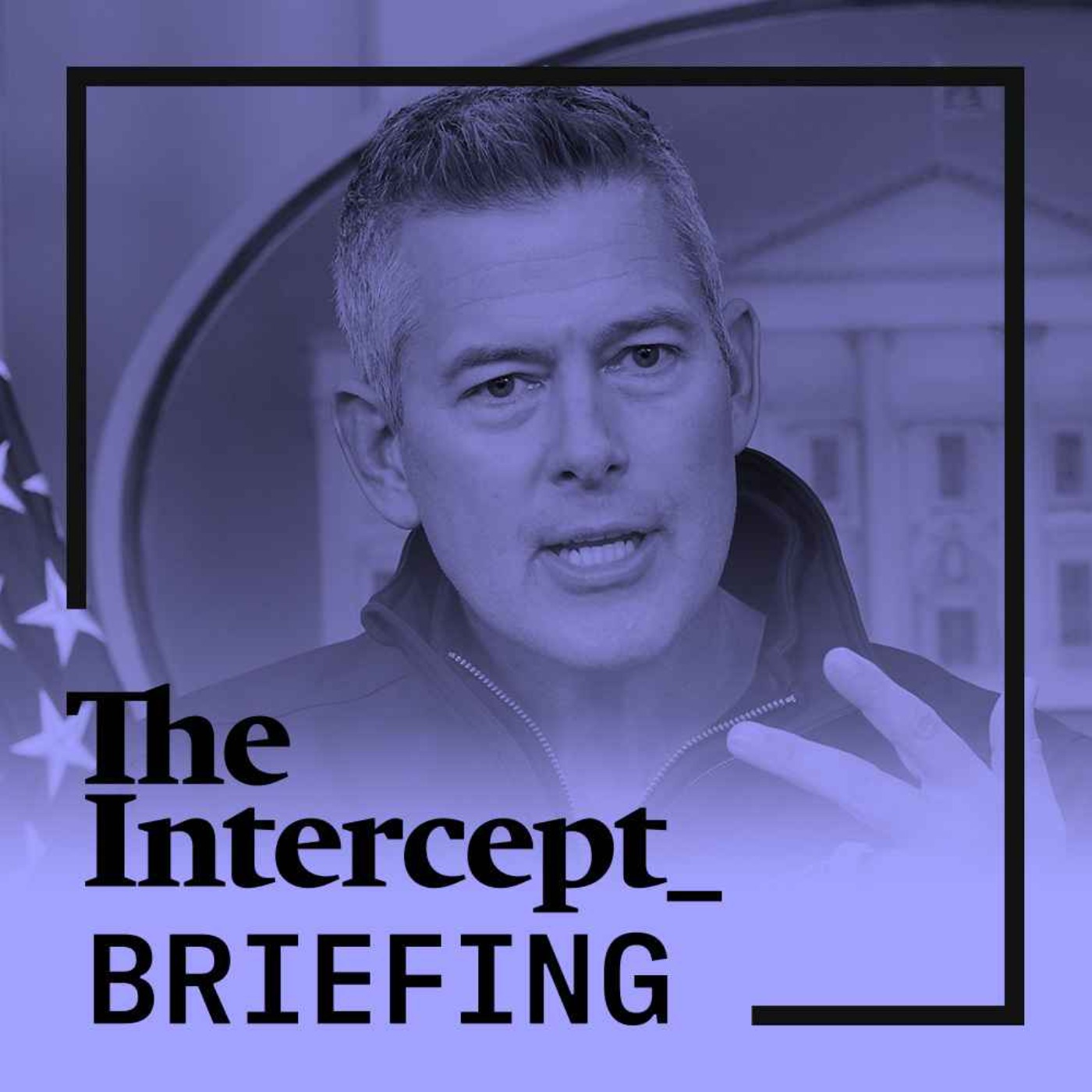
A week after the Federal Aviation Administration issued a nationwide ground stop — disrupting 12,000 flights for an estimated 1.5 million passengers — there are still no answers on what exactly went wrong.Transportation Secretary and former Real World Star Sean Duffy initially claimed that the incident was the result of "instability with air traffic communications and radar feeds,” but has since backtracked. With zero answers to one of the biggest aviation communication crises in recent memory; some speculated that the incident could be the result of the recent implementation of a new artificial intelligence air traffic control program, SMART. The FAA has denied any connection between the new program and the ground stop, and there is no reporting to indicate a connection. However, questions remain about the AI program's safety moving forward — and the Trump administration's ability to manage one of the most complex and potentially deadly functions of our government. “These are deeply unserious people in charge of a highly complex system in which the stakes could not be higher,” says Wise, referring to both President Donald Trump and Secretary Duffy. “Hundreds of thousands of people's lives are in the hands of this system that is being maintained by people who have no idea or interest in how it works.”This week, host Jessica Washington speaks with Jeff Wise, an aviation journalist who writes frequently for New York Magazine, Wired, and others and the host of “Finding MH370,” an investigative podcast about the 2014 disappearance of an Malaysia Airlines flight. He explains why the nationwide ground stop wasn't unprecedented at all, that the air traffic control system isn't as antiquated as you might think, and that the skies of the United States might soon be taken over by delivery drones, if Amazon and Walmart have their way.Washington also speaks with Intercept reporter Noah Hurowitz who was temporarily trapped in Denver during the ground stop along with other attendees of the “What’s Next!” conference, a who's who of moderate Democrats discussing the future of the party. “It was funnier to witness than to be part of,” jokes Hurowitz.He says the moderates at the post-midterms summit were “crafting themselves as the maverick middle,” adding, “What's interesting is that they were also saying that we have to listen to voters. And the lack of any talk of Israel, for example, I think, is evidence of perhaps a selective idea of listening to voters.”Full transcript: https://interc.pt/4zBHku5 Keep our investigations free and fearless at theintercept.com/join. Hosted on Acast. See acast.com/privacy for more information.
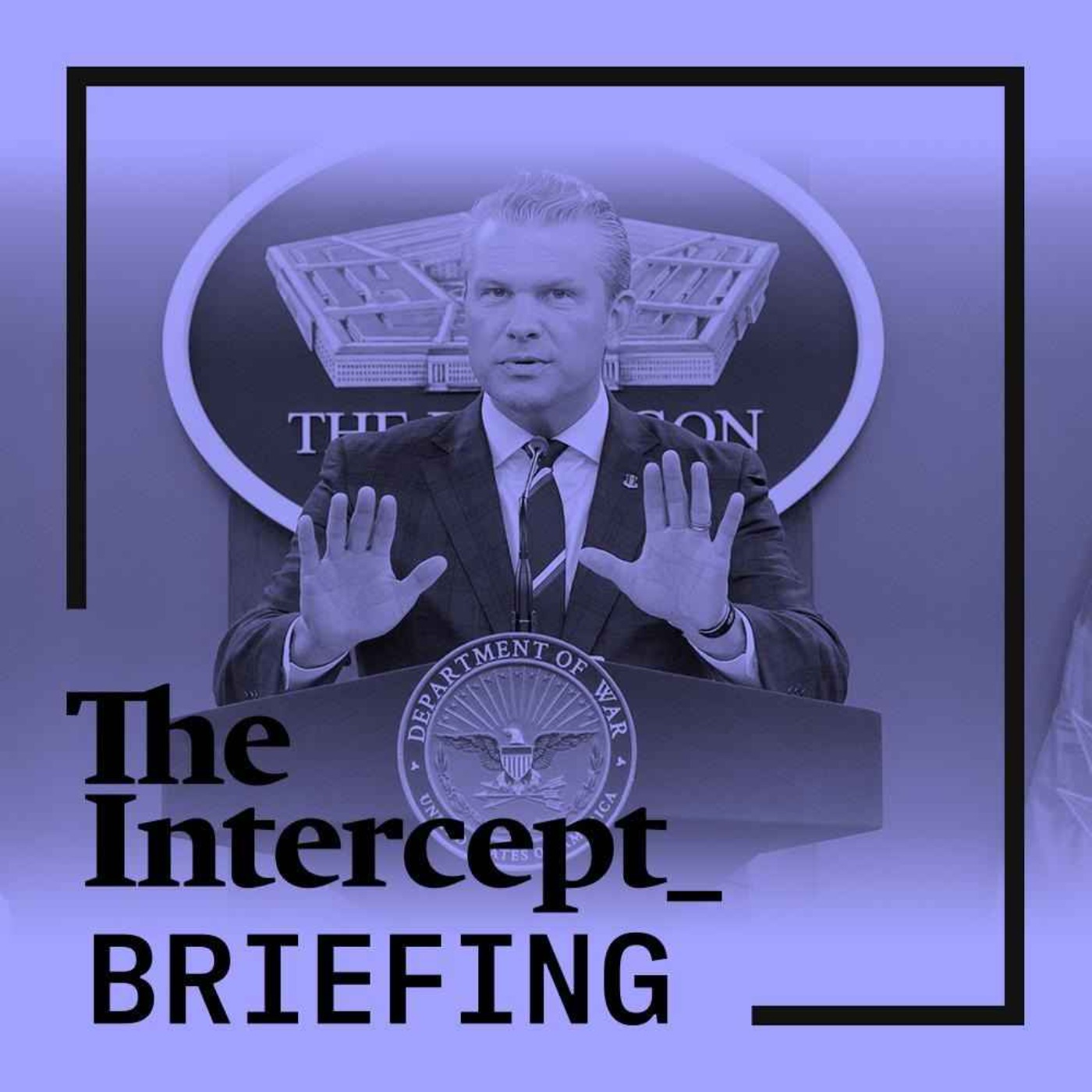
Secretary of Defense Pete Hegseth narrowly avoided impeachment on Tuesday, but his future is anything but secure as an enraged Democratic caucus prepares to take control of both the House and Senate in January.“Tick, tock! Get ready, asshole, because we’re coming,” Congress member-elect Richard Ojeda, D-N.C., warned Hegseth at a press conference on Wednesday. Ojeda told The Intercept that he planned not only to impeach Hegseth but also to bring criminal charges against him.On Tuesday, the House declined to move forward with impeachment proceedings introduced by Rep. Thomas Massie, R-Ky., which accused Hegseth of multiple “high crimes and misdemeanors.” Massie accused Hegseth of illegally waging war against both Iran and Yemen and of overseeing extrajudicial killings in the Caribbean Sea and Pacific Ocean.This week on The Intercept Briefing, co-host Jessica Washington speaks with Nick Turse, Intercept senior national security reporter and editor of Tom Dispatch, about Hegseth’s legacy as “secretary of war.”"Hegseth can spin it any way he likes," says Turse. "He can use the troops as a shield, claiming that indictments of him are indictments of them. But in the end, he's got a lot to answer for on his own, and none of it's because he's doing a good job." Turse adds: "It's because he's committing high crimes."Co-host Jordan Uhl also sits down with musician and guitarist Tom Morello about his decades-long fight against forever wars and his resistance to fascism.“My career has basically been rebellion as self-care,” says Morello. “But in this day and age, every act of art is an act of resistance. Every truth spoken is a light in the gathering darkness. And every song sung has the potential to be a trumpet of a bulwark against the rising tide of authoritarianism to help sound the bell for current and future generations to continue to fight for a more just and peaceful and decent planet.”Full transcript: https://interc.pt/3WH1Pbb Keep our investigations free and fearless at theintercept.com/join. Hosted on Acast. See acast.com/privacy for more information.

The size of the Democrats’ victory Tuesday night shattered records and even the most optimistic expectations, handing the party a governing mandate with a clear demand for change.But what do voters want that change to look like? This week on The Intercept Briefing, politics reporter Jessica Washington and managing editor Maia Hibbett break down Tuesday night’s election and hear from voters in Maine, Michigan, and Texas about what drove them to the polls in the midterms that saw a so-called “blue tsunami.”“The rich get richer, the poor get poorer,” said one voter in Maine. In Michigan, a voter told The Intercept that politics “feels like a game that the rich play sometimes.” A Texas voter expressed anger that President Donald Trump was “spending taxpayer money to renovate the White House and turn it into this gold sanctuary.”Frustration with wealth inequality and money in politics came up again and again in The Intercept’s conversations with voters. So did a desire for more social welfare spending, Medicare for All, freedom for Palestinians — and responses to transphobic and Islamophobic fearmongering on the campaign trail.“When Democrats win so far across the board, you can make an argument that any faction of the Democratic Party has the mandate,” said Hibbett, “because Democrats of all stripes won Tuesday night.”In any case, the results indicated a clear disapproval of the way the Trump administration is governing and the use of fearmongering as a tactic of distraction.“One lesson maybe for Democrats is there's no point in attempting to placate people when it comes to bigotry,” said Washington. “The thing that'll motivate voters is if you can convince them that you're going to make their lives better, not if you can convince them that you're playing the middle on an issue of civil rights.” Full transcript: https://interc.pt/4z7QaQdFor more election coverage you can follow at theintercept.com. Hosted on Acast. See acast.com/privacy for more information.

It’s a superlative achieved again and again: The current election cycle is the most expensive on record, according to AdImpact, likely to be surpassed only by the next one. North of $16 billion have been raised ahead of Tuesday’s looming elections, with ad spending in House and Senate races topping $4 billion. Mega-donors this election season have overwhelmingly backed Republicans with contributions largely flowing from AI, crypto, and online gambling interests.The Intercept tracked how super PAC spending is flowing into the midterms and how growing public skepticism of special-interest money in politics is affecting campaign strategies. Hundreds of candidates are still taking donations from the American Israel Public Affairs Committee and its super PAC, the United Democracy Project, despite public sentiment turning against the pro-Israel lobby.“The data overall reveals that [AIPAC is] still spending a ton of money on a lot of races, and more often than not, their candidates are still winning,” Intercept managing editor Maia Hibbett told The Intercept Briefing. “It is still quite meaningful money.”Artificial intelligence super PACs have also poured tens of millions of dollars into this election cycle, most of it on just a few races in the primaries. The two leading AI super PAC networks, affiliated with OpenAI or Anthropic, dropped a whopping $50.7 million on the primaries, but are noticeably spending much less in the lead-up to the general election, $8.5 million — likely responding to public backlash in the same way that AIPAC has.“The polls are just so startling on the public's transformation on AI and data centers over the last year. ... The entire life cycle of these AI super PACs, which started about a year ago, has followed that evolution of the public's opinion,” said Intercept politics reporter Matt Sledge. “One of the things that's been really interesting in the general election races is ... candidates [trying] to paint themselves as the more pro-AI safety, pro-AI regulation candidate.”This week on the podcast, host Jessica Washington speaks to Hibbett and Sledge about the spending trends in the most expensive election cycle to date and unpack the intended impact.“No matter which party gets control of either or both houses of Congress, there will be a lot of people elected next week who got there on the backs of Big Tech and special interests,” said Hibbett.“They’re backing a lot of people in safe seats who don't really have a tight election,” Sledge added. “The goal may just be to buy themselves a few friends in Congress, because sometimes in Congress, it's just as good to have a few people who can stop regulation as it is to have people who can shape and actually pass laws.” Full transcript: https://interc.pt/4f0HWSB Keep our investigations free and fearless at theintercept.com/join. Hosted on Acast. See acast.com/privacy for more information.

Comments

Download from Google Play

Download from App Store
 United States