


The Jag Show: Podcast Tips, Tricks, and Best Practices
Subscribed: 4Played: 30
Subscribe

© 2021-2026 JAG in Detroit LLC
Description
Podcast and radio veteran Jon "JAG" Gay provides tips, tricks, and best practices for you and your podcast. By day, JAG launches and improves podcasts for financial advisors, small businesses, nonprofits, and corporate communications departments. His company rebranded from JAG in Detroit Podcasts to JAG Podcast Productions in August, 2025.
After 15 years as a radio DJ and program director, and now 8 as a podcast host and producer, he brings over two decades of audio experience and perspective to the podcasting world.
After 15 years as a radio DJ and program director, and now 8 as a podcast host and producer, he brings over two decades of audio experience and perspective to the podcasting world.
203 Episodes
Reverse
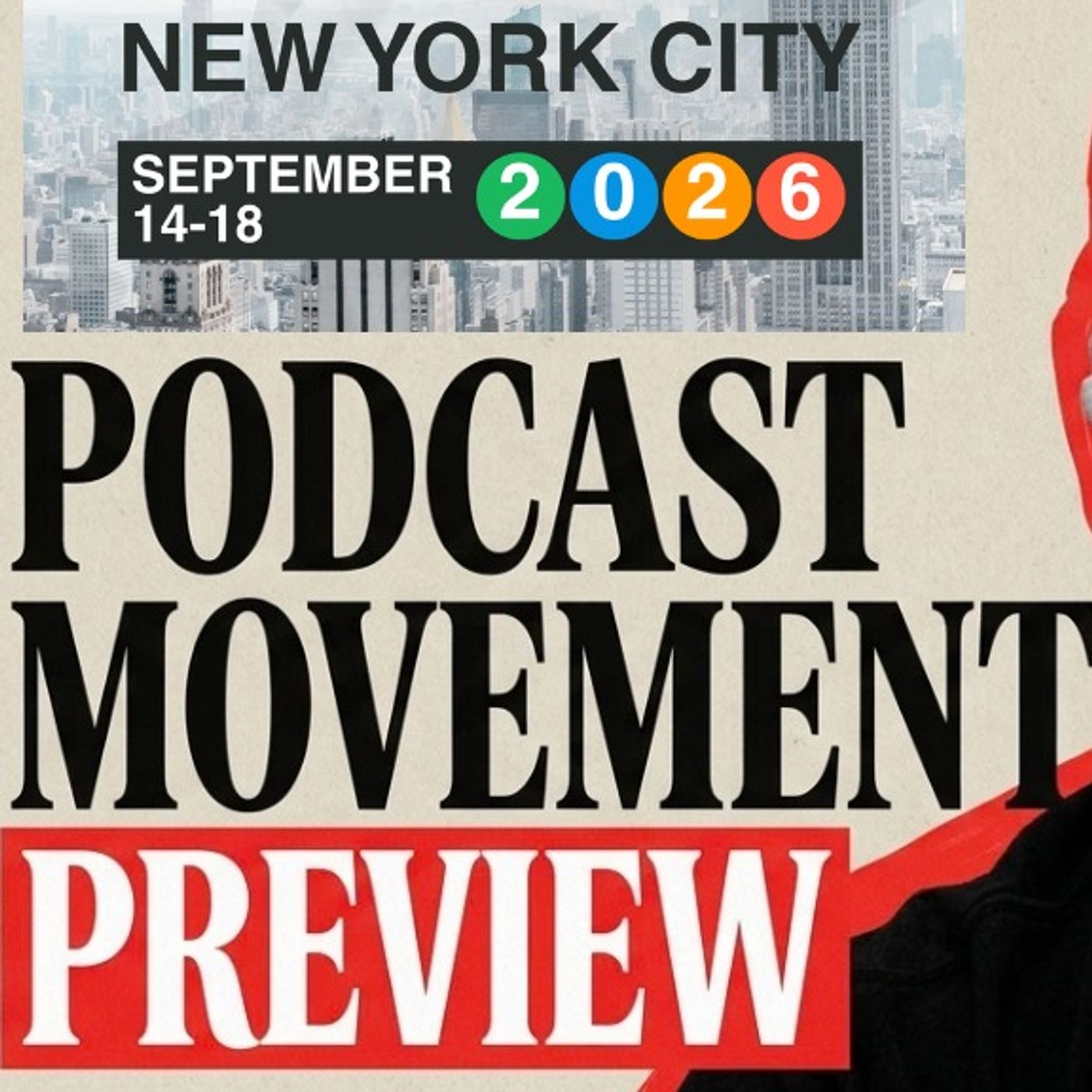
I'm headed to New York this Thursday and Friday for the 2026 version of Podcast Movement.Today, I'm breaking down how the conference has evolved and changed, with separate events for the big industry players and independent creators.And I'm highlighting some of the panels I'm excited to see - from keynotes about stats and "WTF is a podcast" to breakout sessions on everything from community building to thumbnails.More:https://podcastmovement.com/Going to be at Podcast Movement this week? Find me in their SwapCard app! Just search for Jon Gay.
Find jag on social media @JAGPodcastProductions or online at JAGPodcastProductions.com Hosted by Simplecast, an AdsWizz company. See pcm.adswizz.com for information about our collection and use of personal data for advertising.

Most podcasts chase downloads. Jeff Kurkjian built something better - a show people actually return to because it feels personal, consistent, and worth their time. If you're trying to grow a podcast, monetize one, or turn short-form clips into real audience loyalty, this conversation pulls back the curtain.
Jag sits down with Jeff Kurkjian, co-host of Is This a Great Game or What with his father, Hall of Fame baseball writer Tim Kurkjian, to unpack how the show evolved from a weekly baseball conversation into a three-episode-a-week brand with a clear identity and a loyal niche. Jeff reveals why the biggest growth driver was not Apple Podcasts or Spotify - it was repeatable, scroll-stopping video, ruthless consistency, and understanding that discovery starts with attention, not audio.You'll discover:
Why Jeff and Tim decided they were not just a baseball podcast, but a father-son show that happens to talk baseball
How grief, family, and baseball shaped the heart of the show after the loss of Jeff's uncle and the family's ongoing ALS advocacy
The shift from one long weekly episode to a Monday-Tuesday-Thursday cadence that changed everything
Why YouTube completion rate matters more than vanity download numbers
How Jeff approaches clips, hooks, and short-form video so people stop scrolling and start listening
What joining the Foul Territory Network changed behind the scenes, from production support to sponsorship opportunities
Jeff also shares the tools and workflow he uses to produce the show, including Riverside, Ecamm, Adobe Premiere, Adobe Audition, and a Stream Deck, plus his philosophy on what makes podcast marketing actually work: say something real, make it personal, and give listeners a reason to care beyond the topic itself.This episode is essential listening if you're a podcaster, creator, broadcaster, or brand trying to build something that lasts. The message is simple: don’t build for clicks - build for the people who come back.
(00:00) Intro
(03:29) - The origin story of Is This a Great Game or What?
(07:14) - Why the format changed from weekly to three times a week
(10:16) - Building an audience before expecting revenue
(11:00) - Why podcast discovery starts on social media, not apps
(13:54) - What download numbers do and do not tell you
(15:59) - Why the show works as a father son podcast, not just a baseball podcast
(23:20) - Why personal perspective makes expert content more compelling
(24:06) - “We’re only expert on one thing, ourselves”
(25:54) - Joining the Foul Territory Network
(27:51) - How network support helps with production and promotion
(30:35) - Why sponsorships and brand partnerships take time
(33:21) - Advice for podcasters without a team
(36:08) - Why Riverside, Ecamm, and other tools matter
(39:53) - Editing workflow in Premiere, Audition, and podcast hosting
(41:43) - Why podcasting should still be fun
Find jag on social media @JAGPodcastProductions or online at JAGPodcastProductions.com Hosted by Simplecast, an AdsWizz company. See pcm.adswizz.com for information about our collection and use of personal data for advertising.
Podcast scams are everywhere!
In this episode, I break down the biggest red flags podcasters need to watch out for. From sketchy “tech checks” and paid guest spots to fake downloads, review schemes, overpriced equipment deals, and questionable award offers, this isa practical guide to spotting scams before they cost you time, money, or credibility. You’ll also hear why some offers are too good to be true, how scammers use vanity metrics to lure creators in, and what to check before joining a podcast network or paying for promotion.
The scams we break down:
The Tech Check
Appearance fees - given or demanded
A feature on a "big" website
Fake/Bought downloads and reviews
Sponsor Pitches
Steeply discounted equipment
Podcast "Awards"
Podcast Networks
Find jag on social media @JAGPodcastProductions or online at JAGPodcastProductions.com Hosted by Simplecast, an AdsWizz company. See pcm.adswizz.com for information about our collection and use of personal data for advertising.

Reading your guest’s full bio in the opening seconds is killing your podcast’s first impression. Replace that boring lead-in with a sharper hook that sounds natural, builds curiosity, and gets listeners to keep going.If your episodes start with a wall of credentials, job titles, and dates, this one is for you. I explain why the first 30 seconds matter more than almost anything else on a podcast, especially when Apple and Spotify are showing your newest episode first.
You’ll discover:
Why reading a guest bio makes you sound scripted
How to condense a long bio into a bite-sized intro that actually intrigues people
Simple ways to turn bio details into better interview questions
How to tease the most interesting parts of a guest’s story without giving everything away
Why a stronger opening can instantly improve how new listeners perceive your show
I uses a real example (mine!) iof a guest bio packed with radio stations, relocations, layoffs, and a business pivot to show exactly how quickly listeners tune out when you over-explain.
A much better approcah creates mystery, signals relevance, and keeps the conversation moving.This matters because your opening isn’t just an intro, it’s the moment listeners decide whether your show feels polished or amateur. If you’re onboarding new guests, hosting interviews, or producing a show that needs to hook strangers fast, tightening your opening is one of the easiest upgrades you can make.Perfect for podcasters, interview hosts, and producers who want stronger openings without sounding stiff. If you’ve ever wondered how to introduce a guest without boring your audience to death, this episode gives you the fix.
More: https://jagpodcastproductions.com/stop-reading-your-podcast-guest-bios/
Find jag on social media @JAGPodcastProductions or online at JAGPodcastProductions.com Hosted by Simplecast, an AdsWizz company. See pcm.adswizz.com for information about our collection and use of personal data for advertising.
Nobody Cares About Your Podcast Downloads!
Why Your Podcast Downloads Are Overrated (And What Really Matters)
If you host a podcast, you’ve probably checked your download numbers more times than you’d like to admit. It’s natural — those stats feel like proof that something is working. But the truth is, downloads can be misleading. A recent shift in the podcast industry highlights this perfectly. A new trade group, the Alliance for Measurement in Podcasting (AMP) , suggested that downloads are not the best way to measure podcast advertising performance. Instead, they recommend measuring a “play,” meaning someone listens to or watches at least 30 consecutive seconds of an episode. That raises an important question: if someone downloads your episode but never actually listens, what does that number really tell you? For many podcasters, the answer is: not much.
Downloads Are a Vanity Metric
Downloads can feel exciting because they’re easy to count and easy to compare. But they don’t always reflect real engagement. Someone can subscribe to your show, auto-download episodes, and never press play. In other words, a download proves availability, not attention. That’s why downloads are often a vanity metric. They can offer social proof, and they may matter for sponsors or ad-supported shows, but they don’t always tell you whether your content is actually connecting with people.
The Real Goal Is Usually Bigger Than Numbers
Most podcasts aren’t just trying to rack up ad revenue. For many creators, the podcast is a branding tool. It’s a way to build trust, create community, and support business or mission-driven goals. That’s especially true for:
Coaches and consultants
Financial advisors
Nonprofits
Educators
Brands using podcasting to build relationships
If your podcast helps someone trust your expertise, join your community, or become a client, then a smaller audience can still create massive value. A show with 500 deeply engaged listeners can do more for your goals than a show with 50,000 passive downloads.
Community Beats Empty Reach
Think about the kinds of podcasts that create real impact. A show for people living with a serious illness. A podcast that helps families navigate a difficult diagnosis. A series built to educate and support a niche audience.In those cases, success isn’t about chart position. It’s about connection.The biggest wins come from:
Shared resources
Helpful conversations
Emotional support
Long-term trust
Meaningful relationships
That’s the kind of impact downloads alone will never capture.
What You Should Focus on Instead
If downloads aren’t the main thing, what should you measure? Start with the goals of your podcast. If your goal is brand building: Focus on trust, authority, and audience loyalty. If your goal is sales:Look at leads, conversations, and client conversions. If your goal is community:Pay attention to replies, comments, shares, and repeat listeners. If your goal is education: Measure how well listeners understand, apply, and remember your message. The right metric depends on the outcome you actually want.
Final Thought
It’s fine to care about downloads. Everyone likes seeing growth. But don’t let the number on a dashboard distract you from the real purpose of your podcast. The best podcasts don’t just get heard. They get remembered. They get shared. They build something real. So instead of asking, “How many people downloaded this episode?” Ask, “What did this episode make possible?” That’s where the real value is.
Find jag on social media @JAGPodcastProductions or online at JAGPodcastProductions.com Hosted by Simplecast, an AdsWizz company. See pcm.adswizz.com for information about our collection and use of personal data for advertising.

Comments

Download from Google Play

Download from App Store
 United States