


 Claim Ownership
The Kainos Podcast
Subscribed: 9Played: 144
Subscribe

© Alexander Beiner
Description
Kainos tells stories that help people make sense of the world and imagine new futures.
beiner.substack.com
beiner.substack.com
17 Episodes
Reverse

You can also watch this conversation on YouTube or listen on Spotify and Apple Podcasts. I’m thrilled to announce that Riane Eisler will be a teacher on our online course New Ways of Knowing which begins on January 14. As a Christmas gift, we’re offering five 20% off vouchers with the code Chalice at checkout. If you’d like to buy attendance as a Christmas gift, order a ticket for yourself and write to us at info@studiokainos.com. We’ll switch it into the name of the recipient, and schedule an email to the recipient on Christmas Day …or Christmas Eve for our European readers.In 1938, seven-year-old Riane Eisler watched as Gestapo soldiers threw her father down a flight of stairs. It looked like her worst nightmares were about to come true, but then her mother stood up to the Nazis and saved her father. Miraculously, her family survived Kristallnacht and fled to Cuba.Much later, the two poles of the humanity she witnessed that night would lead to a career as a pioneering social scientist. How can it be, she wondered, that human beings can be such monsters and such angels? Is it inevitable for society to be controlled by the most violent and ruthless among us, or is there another paradigm at our fingertips?After training as systems theorist and an attorney, Eisler would go on to author nearly a dozen books, including The Chalice and the Blade in 1987, which became an international sensation and sold half a million copies.The book takes readers back into pre-history to argue that before the rise of ‘might is right’ dominator cultures, many groups of humans lived in what Eisler calls ‘partnership societies.’ Men and women worked together rather than against one another. Children were raised by communities instead of atomised family units. The gap between what we now call rich and poor was far smaller. Some lasted for 1000 years. These societies weren’t perfect, and Eisler doesn’t argue that we should fetishes them or try to return to them. Instead, she presents them as an example of an eternal truth that could well save humanity:It doesn’t have to be this way.I first read The Chalice and the Blade when I was in my early twenties, after coming across Eisler’s work through a series she recorded with Terence McKenna called Man and Woman at the End of History, which I listened to on repeat.Eisler expanded on the fundamental thesis of The Chalice and the Blade over the next three decades, particularly in her 2007 book The Real Wealth of Nations: Creating a Caring Economy and 2019’s Nurturing Our Humanity: How Domination and Partnership Shape Our Brains, Lives, and Future co-authored with neuroscientist Douglas P. Fry, both of which we discuss in more detail in our interview.It’s a real honour to be publishing this, and it’s one of my favourite conversations in years. It reminded me of what I first felt reading The Chalice and the Blade, namely that Eisler’s work points to the same truth that psychedelic experiences so often remind us of: we’re creating much of our own experience. Our lives are contextual and changeable based on how we are socialised, how we think, and the choices we make. We are also, as I argued in Listen to the Land, in deep relationship with geographical and social forces that shape us beyond our control. Even so, human culture, more than any other aspect of reality we encounter in our short time on earth, may be the most malleable, fluid, contextual and alive. Because of that, it’s what we can change most fundamentally in our lifetimes. We have the capacity for tremendous agency in response to our environment.That’s why extractive capitalism isn’t inevitable. It’s why weak, narcissistic leaders aren’t inevitable. It’s why AI superintelligence isn’t inevitable. As I’ve explored on Kainos since we launched at the beginning of the year, particularly in our first documentary Leviathan, the dominator model is reaching the limit of what it can extract, control and mimic. As its emptiness is revealed to more and more people, a space is opening for something new. A kind of society that has never existed before.One step toward getting there is moving beyond meaningless double binds. Polarity certainly isn’t meaningless, but we’ve become tangled in shallow polarities that take us nowhere. Left vs Right. Good vs Bad. Spirit vs Science. What I find so powerful about Eisler’s work is that it points to the polarity beneath so many others we wrestle with day to day: domination and partnership.Will we try to dominate reality, or work in relationship with it? Will we try to force our children to be how we think they should be, or respect their essential expression and evolution? Will we try to overlay our ideologies onto reality in exchange for a fleeting sense of control, or accept that the only real control arises when we let go?Eisler has written extensively on economics and politics, because this is where we see the ugliest expression of domination and our perpetual fight against it. Today, there is a growing recognition in the political sphere that the old distinction of left and right is largely meaningless. The Political Compass model, which maps political leanings against degrees of authoritarianism or freedom rather than fixed ideological points, is an example of this shift. Eisler pioneered this kind of thinking decades ago, and her work is more relevant today than it has ever been. It ties in directly to a lot of the topics we’ve explored on Kainos, including the woke left swinging to the woke right, the rise of authoritarianism, the domination of technocracy and the resistance against it.As I’ve argued, we can’t understand the ‘high weirdness’ and intensity of this era without understanding the deeper psycho-spiritual drivers powering it. Eisler’s work points to these, touching on something much deeper at play than political disagreement. It’s something similar to what I explored in Life’s a Game and the Bad Guys are Winning.Our social dynamics are an expression of our relationship to reality. Our ‘us and them’ politics is an expression of a deeper wound of ‘me and it’. It’s a twisted projection born from the agony of the question: “Do I really belong here?”“Am I part of reality, or a stranger with no power? Am I beautiful, or am I worthless?” If we feel we’re strangers in an alien and uncaring cosmos, we’re left with little choice but to fill the unbearable gap where belonging resides. We have to try and control what can’t be controlled, and if that’s what we’re doing then domination or weaponised victimhood are both viable strategies.But they lead us nowhere, because they are based on illusion. In reality, we’re all part of everything. An idea encapsulated in the Sanskrit phrase, Tat Tvam Asi.You are it. When we stop being strangers in a hostile world, and become interdependent with all its drama and glory, we tend to show up very differently.Between those poles of domination and partnership, connection and separation, there are layers and layers of nuance that we need to explore to move into new paradigms in economics, society and spirituality. Riane and I explored some of these topics in this film, and we’ll keep the conversation going in New Ways of Knowing in January. This is a public episode. If you'd like to discuss this with other subscribers or get access to bonus episodes, visit beiner.substack.com/subscribe
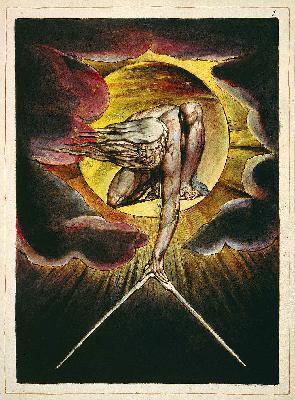
I recently recorded a conversation with writer and philosopher Mark Vernon about his new book Awake!: William Blake and the Power of the Imagination. I enjoyed the book and our conversation a lot, coming away from both with new ideas on how we can imbue culture with visionary imagination, and why Blake’s genius is more important than ever. Mark holds a PhD in ancient philosophy, and our conversation covered a lot of ground, including Gnosticism, non-duality and the confused state of spirituality today. You can watch it here on Substack, on the Kainos YouTube, or listen to the audio on Spotify and Apple Podcasts. Mark has also provided a short excerpt from Awake! below, which ties Blake’s ideas together with some of the themes we’ve surfaced on Kainos, pointing to a surprising synthesis between animism and individualism.As Kainos grows, we’re going to start using different channels for different types of content, including video essays and interviews which you’ll only find on our YouTube and Instagram. We’ll use Substack primarily for written pieces, so subscribe on our other channels to stay up to date. If you want to support Kainos so we can host more conversations like this, and unlock lots of exclusive content, consider joining as a paid subscriber on Substack. This is an edited excerpt from Awake! William Blake and the Power of the Imagination by Mark Vernon (Hurst). Find out more here.Indigenous ways of knowing are today growing in appeal as a way of supplementing or transforming an alienated western worldview with a wisdom of mutuality. However, Indigenous epistemologies also present challenges because they developed before the modern sense of freedom that brings goods, such as the liberty of the individual. The question, then, is whether older ways of knowing can marry newer understandings of the self in order to bring transformed possibilities for the future. William Blake, who knew of Indigenous epistemologies that were discussed in Georgian England, can aid us in this imaginative task. “Indigenous peoples live in relational worldviews,” Melissa Nelson told me. A professor at Arizona State University, whose heritage includes Anishinaabe, Cree, Métis and Norwegian, she researches and preserves the rituals and myths around which Indigenous ways of life are structured. These patterns of organisation are partly practical but hold intelligence, too, joining skills with a lived awareness of the more-than-human.“There is a nurturing quality to the universe that is for us like a natural law, a universal principle that we can tap into: this field of love that is the matrix of the universe,” Nelson continues. Indigenous knowledge therefore invites us to consider the possibility of participating in the world not from assumptions of difference and isolation, but difference and communion.The poetry and insights of William Blake can help us in that imaginative task, which is necessarily not one of adoption but adaption and transformation. For he takes the insights a step further. His aim is to incorporate the freedoms inherent in the western worldview, too.When learning again to discourse with Nature’s powers, a new revelation might become clear. The restored sacred aspect not only re-enchants the world but, when conversing with the subjectivities of “Each rock & each hill, Each fountain & rill, Each herb & each tree, Mountain, hill, Earth & Sea,” as Blake put it, there can be detected something else. Speaking, too, is the eternal source of all transient things: a third, eternal divine dimension.We can be alerted not just to other presences but a shared ground of being and source of all vitality. To recall Blake’s famous phrase: when the doors of perception are cleansed, everything appears not myriad but infinite—the infinite being the one fount of “Each grain of Sand, Every Stone on the Land, Cloud, Meteor & Star.” Heaven is indeed in a wildflower, eternity is indeed in love with the productions of time, because heaven is in the flower, eternity is in the events of time.Blake advises us to enter the transcendent dimension within the immanent world via our imaginations, with words, through the arts, in the sciences. He shows how to make these disciplines a “Fiery Chariot of Contemplative Thought” that can enable us to make “a Friend & Companion of one of these Images of wonder.”In short, Mother Nature does not treat the natural world as her personal fiefdom because what she tends exists at a threshold to the All. “The Vegetable Universe,” Blake explains, meaning the world as seen biologically, “opens like a flower from the Earth’s center: In which is Eternity. It expands in Stars to the Mundane Shell [the sky’s dome]; And there it meets Eternity again, both within and without.” Any finite thing reflects, in some manner or mode, an aspect of the infinite and Blake invites us to consider how Nature always displays more than a kaleidoscope of colour and tumble of activity. When imaginatively speaking with “Rock, Cloud, Mountain”, there can also be felt moving “the Spirit which Lives Eternally.”The divine aspect, implicit in every exchange or encounter, helps foster the shift from possessing to participating, from grasping to communion, because with that larger awareness we are freed from feeling self-concerned, knowing that our life too is held. Thereby, the modern sense of individual liberty is valued and also transformed: the right to personal choice becomes a virtue of mutual self-giving generosity.That awakening might be said to happen in two stages. First, our reception of the world around us is transformed from self-centredness to other-centredness. An example might be what happens when, say, at dusk, a shadowy shape on the roadside turns out to be not a threat but a shrub. In that moment, there is release from self-concerned fear, enabled by self-forgetting attention. Then, that relief might prompt a second stage: a realisation. The shrub shares my path literally and metaphorically, having embarked on a life course, too, and also shares a common wellspring: in a word, God. The awakening is one reason Blake remarked, “A fool sees not the same tree that a wise man sees.”The unfolding liberty maintains one of the great gains of the western worldview, the chance to develop one’s individuality, now known around a divine core, whilst also inspiring a totally changed attitude to transient life. Blake expressed this in the beautiful quatrain entitled “Eternity”.“He who binds to himself a joyDoes the winged life destroy;He who kisses the joy as it fliesLives in eternity’s sun rise.”“Kissing the joy as it flies” is a selfless but individual stance of attention. It takes delight in what passes because that participates with us in the timelessness of all things. The result is that, when enjoyed without possessiveness, the All becomes present. Each becomes part of the one, reflecting the whole in as many refractions. This vision is Blake’s promise. This is a public episode. If you'd like to discuss this with other subscribers or get access to bonus episodes, visit beiner.substack.com/subscribe

Join Alexander and Ari on 28 August at 6pm London time for a private community session on AI filmmaking, the aesthetics of the future and the role of art in shifting culture by signing up as a founding member. Each month, we host group sensemaking sessions, invite guests like Iain McGilchrist and Nora Bateson, and learn new practices together. A year ago, my friend Ari Kuschnir produced an AI film of Donald Trump drinking Ayahuasca. He sent it to me and it blew me away. It was funny, nuanced and beautifully crafted, and we teamed up to promote it. It hit a million views in less than a week, and that was just the beginning. Since then, Ari's AI experiments have been viewed by millions of people around the world, and pioneered a hopeful, imaginative art form that presents political realities we know aren't real, but feel in our hearts could be. He’s also collaborated closely with his partner Schuyler Brown and with writer David Sauvage (who also helped me to develop the early Leviathan scripts) to bring these to life. Ari’s films have been played at concerts by the band James, endorsed by actors like Mark Ruffalo and single-handedly toppled corrupt regimes around the world. OK that last bit was made up... …but maybe if we all imagine hard enough...In our recent Substack Live session, Ari and I talked about why we need art that moves beyond postmodern cynicism and toward hope, beauty and helps us imagine the new. This is a public episode. If you'd like to discuss this with other subscribers or get access to bonus episodes, visit beiner.substack.com/subscribe

 1
1Stephanie Lepp is an award-winning producer, storyteller, and speaker, whose work strives to expand hearts and minds. She’s the former Executive Director at the Institute for Cultural Evolution, a non-profit think tank that addresses political polarization at its cultural roots. Before that, she was the Executive Producer at the Center for Humane Technology, the organization at the heart of the Netflix documentary The Social Dilemma. Today, she leads Synthesis Media, a non-profit production studio devoted to expanding hearts and minds.Stephanie recently delivered a TED Talk about her project Faces of X, which uses a ‘thesis, antithesis, synthesis’ model to help people have better conversations about polarising topics like gender, race and class. We did a Substack Live together to discuss what she’s learned from the project, and how to find new territory together without falling into a mushy middle ground. Stephanie will be hosting a participatory Anti-Debate session for Founding Members on Thursday 21 August at 6pm UK time. We’re in the process of finalising our schedule of guests and facilitators for the rest of the year, with a lot of great people coming in from September. Sign up today if you’d like to join in, participate and skill up. Next up I’m having a conversation with creative producer Ari Kuschnir who’s coming on to discuss how he’s pioneering a new kind of hope-centred AI art. Ari’s films have racked up millions of views over the last year, multiple celebrity endorsements and most importantly, thousands of comments from people sharing how they’ve inspired them to imagine new possibilities. We’ll be discussing the role of art after post-modern cynicism, tensions around AI art, and the power of art to help us imagine new realities in a time of chaos. Check out his most recent viral hit which came out just a few days ago. This is a public episode. If you'd like to discuss this with other subscribers or get access to bonus episodes, visit beiner.substack.com/subscribe

Join Helena Norberg-Hodge, Douglas Rushkoff, John Vervaeke, Nora Bateson, Josh Schrei and more in Sensemaking 102. Navigate complexity and embody new narratives around Tech, Economics, Myth, Power, Systems and Meaning. The live cohort begins on Wednesday, June 11 and the content only option is available throughout the course. McDonalds in the desert. Coca-Cola in the mountains. The International Monetary Fund. The World Bank. The same clothes, the same thoughts, the same ideas recycled through different cultures again and again. Anger at globalisation is one of those rare forces that unites people across the political spectrum. As modern life fractures and frays, it’s become one of the fundamental issues of the era. It lies at the heart of our debates around tariffs, immigration and identity.But what’s the alternative, and is it worth it? Are our lives better when we come back to local community? What do we gain, and what do we lose? Helena Norberg-Hodge is an author and film-maker. She’s one of the leading voices in the localisation movement, and the founder of Local Futures, which is committed to the revitalisation of cultural and biological diversity and the strengthening of local communities and economies worldwide. In 1975, having studied linguistics with Noam Chomsky at MIT, she was invited to accompany a film team to the remote region of Ladakh, or ‘Little Tibet’, which had been sealed off from the outside world and had only recently been opened. Helena became the first Westerner in modern times to master the Ladakhi language, and gained deep insights into the workings of one of the few cultures that remained untouched by the modern world. She went on to write ‘Ancient Futures’ arguing for the importance of localisation, and of rejecting the homogenising forces of global capital. Five decades and several books later, the question of how we come back to ourselves and to local land and culture is more pressing than ever.Leviathan Screenings If you’re looking to find the others and watch our first feature-length documentary Leviathan in real life before our online premiere on the 26th, we have a growing list of screenings happening around the world. You can find the first ones below, with many more to come.Official London Premiere on Thursday, 26 June hosted by Alexander BeinerBerlin Screening on Tuesday, 24 June hosted by WeSpace (with Alexander in person for Q&A) Cape Town Screening on Sunday, 23 June hosted by Daniel ShawBuckfastleigh Screening on Sunday, 23 June hosted by The Moor Imagination Collective Available Soon: Stockholm Screening on Thursday, 26 June hosted by Nora Bateson and Pella Thiel (with Alexander on virtual Q&A)Toronto Screening on Thursday, 26 June hosted by Peter Limberg Tel Aviv Screening on Saturday, 21 June hosted by Michael Fine / FermataBerlin Screening on Saturday, 21 June hosted by Lovers and Leaders Singapore Screening on Saturday, 21 June hosted by Ryan ChengCapetown Screening on Sunday, 22 June hosted by Inet Strydom / Grabouw This is a public episode. If you'd like to discuss this with other subscribers or get access to bonus episodes, visit beiner.substack.com/subscribe
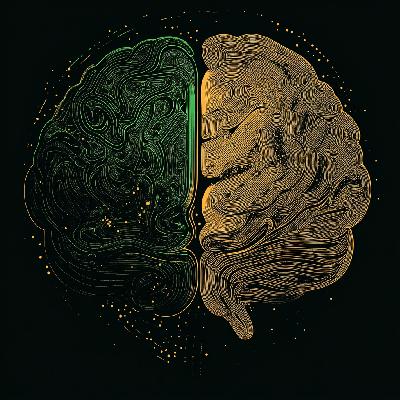
Journey into the deep code of culture in our new online course: Sensemaking 102. Expand your view on what’s happening and why with the help of an amazing faculty and new practices. Connect with like-minded travellers to inquire, question, and embody. Myth. Power. Economics. Tech. Systems. Meaning. Register on studiokainos.com/sensemaking-102What matters most, what we do or how we do it? Which is more real, a relationship or a rock? Our focus at Kainos throughout the spring has been on the polarities driving our cultural, political and spiritual upheaval. Our recent conversation with psychiatrist, philosopher and author Iain McGilchrist was a high point. We discussed Iain’s thoughts on the political and social shifts of recent months, whether AI can become conscious, how to relate authentically to nature, and why constraints create meaning. Kainos Community Members shared scintillating questions and insights, and we left the session buzzing. You can watch it on Substack, or listen to it as a podcast on Spotify or Apple. The conversation helped me develop my recent piece Ocean of Elephants, which turned out to be one of my most polarising in years. I had a feeling it might be, as I was taking a more fixed philosophical position than I normally do. Thanks to everyone who wrote or commented; it’s helped me to hone my thinking and consider new angles.Specifically, I’ve been chewing on the paradox that our capacity for abstraction frees us and traps us at the same time. Imagining new worlds and thinking up new ideas is exactly what we need to respond to the polycrisis. But spending thirty years on the internet has blurred the boundaries between theory and reality, leading many to confuse the two. We’re still figuring out how to balance hyper-abstraction with grounded social action. If we can collectively crack that, we’ll open up a wellspring of creativity and collaboration.We have a community session to discuss this polarity on Monday, 19 May. You can join that, and many sessions like it, by becoming a Kainos Community Member, or you can choose a regular subscription to gain early access to these films and exclusive pieces.It’s About to Get WeirdIt’s probably best I tell you up here that this is a weird piece. It’s been a while since I shared a recommended reading list, and you’ll find that below along with a list of events I think are worth checking out. I’ll also reveal why I’ve decided to limit my Instagram account to exactly 69,000 followers, and then you’ll see various world leaders having cathartic breakdowns. There’s also a cat with a calculator. But before all that, here’s the first teaser poster for our upcoming documentary.The working title was ‘Crossroads’, but as we’ve moved toward completion the right name became clear. It’s now called Leviathan, and the first trailer drops next week, ahead of our online premiere on Substack on 26 June. You might be able to watch it before then. We put out a call a few weeks ago to see who wanted to host a private or public screening, and I was overwhelmed by the response. I’m really grateful for your interest and support, thanks to the 50+ people around the world who have been in touch. We now have plans for screenings in 45 cities around the world. They range from living rooms to theatres, and in a few cases we had people from the same city get in touch and they’ll hopefully be joining forces. We’ll be sharing a list of the larger public screenings soon (and any smaller ones who are open to guests) so you can check if something’s happening near you. Our London premiere will be on the night of the 26th of June and we’ll open tickets for that soon. If you want to host a screening, there’s still time. It can be as small as five people or as large as a few hundred and we’ll provide you with promotional materials and a starter pack with conversation topics and some practices if you want to use them. If you’re interested, just fill out this short form. Josh Schrei of The Emerald is heading to the UK and we’re doing a talk together. Josh is also a guest in Leviathan so the timing worked out beautifully. Two thirds of tickets have been sold already and we’ve still got a month to go, so book here if you’d like to come. Steady State Social MediaI recently hit 69,000 followers on Instagram and decided to stop. I’m sick of feeding the technofeudal machine and the more my account grows, the more money Mark Zuckerberg has to buy luxury perms, yachts and the occasional cup of recreational vacation coffee. Since my Reel went out, several people have tried to insinuate I chose the number 69 out of lewdness. I want to take this opportunity to reassure everyone that I am above that kind of puerile humour, and committed to the very serious work of cultural sensemaking and systems change. With that out of the way, here’s why I’m actually doing it. You might be familiar with the concept of a steady state economy, based on the insight that endless growth on a planet with limited resources is unsustainable. One famous model is Kate Raworth’s Doughnut Economics, which focuses on containing economic activity within the planetary boundaries so that we don’t exceed what the earth can sustain. I was researching it recently for the Mastery of Systems Leadership and I started to wonder whether there’s such a thing as an attentional boundary within the cultural body. If there is, I think we’re already exceeding it. The internet is flooded with content, and the Big Tech companies that rely on commodified attention always want more. More growth, more content, more money for recreational vacation coffee. What if we subvert their endless, predatory hunger by staying within attentional boundaries and focusing on quality instead of quantity? That point for me is exactly 69,000 followers. I arrived at the number through a complex mathematical process I won’t bore you with here. What matters to me is who’s in the 69k, and ensuring everyone is giving as much as they get. In the last week I’ve gone up to 69.1k, which isn’t ideal, so we’re now in the process of bouncing people who aren’t doing anything. If it dips under we’ll have to attract new people. It’s a lot of things to remember at once but we’re getting there.Love Force One Speaking of Instagram, check out Ari Kuschnir’s new AI piece imagining world leaders going through psychological and spiritual awakenings. It’s struck a chord and hit 300k views in a few days. Ari is one of the best AI video artists in the world, and though these pieces are often funny and entertaining, they are also a powerful form of art. He’s described them as a response to post-modern cynicism, because they imagine beautiful but implausible futures without hiding behind irony. I see them as a reminder that the implausible can become real, and that transformation seems impossible until it doesn’t.Recommended Books and Articles There’s an interesting horseshoe effect happening on political spectrum around the topic of bureaucracy. N.S Lyons wrote another good piece on this recently called Managerial Democracy’s Threat to Democracy and Humanity. I read it while reading Ezra Klein and Derek Thompson’s new book Abundance, in which they argue that a history of well-meaning but misguided liberal policies have created a situation in the US where regulations are strangling production and halting the progressive project. Lyons, Klein and Thompson come from very different political tribes, and it’s striking how much energy this issue has right now. They all point to the broken incentives that drive modern democracies. The more bureaucratic a society becomes, the more managers, lawyers, and consultants it needs to keep the system going. In turn, these managers are all incentivised to create more red tape, more convoluted processes and more confusion so that there are more problems to manage.Deconstructing government bureaucracy is central to the Trump White House, and it was a core election issue. This AI edited clip that went around in late 2024 is a good indication of how democracy and excessive bureaucracy have become synonymous to many voters. Setting aside the tactics and perverse incentives of DOGE and the technofeudal partnership of Musk and Trump, I think disassembling excessive bureaucracy is essential for healthy systems change. On one level it just helps us get stuff done. In 2023, Pennsylvania governor Josh Shapiro rebuilt the collapsed I-95 bridge in just 12 days by declaring an emergency in order to circumvent red tape and restrictive regulations. On a deeper level, a rejection of technocratic processes is a rejection of a disconnected way of seeing the world. I’m curious both about bureaucracy as an addiction to abstraction, and a form of spiritual domination. It literally sucks the life out of us; the structural equivalent of a vampire. In fact, the energy vampire Colin Robinson in What We Do In the Shadows has an amazing scene where he feeds by boring people half to death at a city council meeting. I’m working on a piece around this topic, and next on my reading list is David Graeber’s Utopia of Rules, in which he argues that we live in an age of “total bureaucratisation”. I’m also revisiting Franz Kafka’s The Trial and Foucault’s Governmentality. Unrelated to the above but worth reading: Katherine Dee’s excellent piece on the IVF clinic bombing in the US and the ‘Efilist’ movement the bomber belonged to. The Mastery of Systems Leadership In September, Small Giants Academy is launching an 8 month course called Mastery of Systems Leadership. MSL offers a toolkit for a new era, bringing together systems thinking frameworks and real-world case studies of systemic change across sectors, cultures, and forms of capital. It integrates applied philosophy to sharpen our judgment, cognitive flexibility to help us adapt, and embodied learning practices to deepen our awareness.I’m looking forward to co-facilitating, joining some of the most interesting people in systems think

I’m on my way to Australia for a tour hosted by Small Giants Academy! We’re kicking off with a preview screening of the upcoming Kainos documentary ‘Crossroads’ and a talk at the Byron Bay Theatre on Saturday 22nd of March - get your tickets here.Having been ‘woke critical’ since 2016, in recent years I’ve felt increasingly vindicated as mainstream culture has pushed back against the institutionalisation of social justice theory. The publication of the Cass Report in 2024 felt like the straw that broke the camel’s back here in the UK, and I wrote a piece about its implications which I think has stood the test of time.However, I’ve felt increasingly uncomfortable with the recent pushback against DEI and other initiatives in the US. Not because I disagree with the need for reform, but because it feels like a new form of authoritarianism that throws the baby out with the bathwater. So I was relieved to read Helen Pluckrose’s recent articles about the rise of the Woke Right, in which she points out that ‘…a stark division is revealed between those who opposed wokeness primarily because it was authoritarian and being institutionalised and those who opposed it because it was the wrong kind of authoritarian and wanted to institutionalise something else…"As a Classical Liberal and one of the masterminds behind the Grievance Studies Affair, Helen is uniquely placed to make these critiques, and we had a great conversation on Substack Live delving into this topic.You can join conversations like this and participate in the Q&A by signing up as a Founding Member, or get early access as a paid member. This is a public episode. If you'd like to discuss this with other subscribers or get access to bonus episodes, visit beiner.substack.com/subscribe

Thank you Tom Morgan, Ed Prideaux, Chuck Lynd, j juniper, Will hodgins, and many others for tuning into my live video with Abi Millar! Join me for my next live video in the app. This is a public episode. If you'd like to discuss this with other subscribers or get access to bonus episodes, visit beiner.substack.com/subscribe

For the first month of Kainos, Alexander Beiner is having conversations with some of the most important and heterodox voices exploring how to build a more beautiful world. In this conversation with systems theorist, poet and filmmaker Nora Bateson, we explore the new capacities we need to develop to navigate a time of upheaval when we don't know where we're headed. This is a public episode. If you'd like to discuss this with other subscribers or get access to bonus episodes, visit beiner.substack.com/subscribe

There are just two places left for our breathwork and sensemaking course ‘Breathing in Culture’ which begins on 13 November - join here. Trish Blain and I are also offering a free ‘NonOrdinary Sensemaking’ session around the US election on 14 November which you can sign up for here and read more about at the end of this page.In my recent pieces, I’ve been making sense of the US election through the lens of where we get our news from, exploring the growing split between the legacy and alternative media. This has been a big focus of my work since 2016 and I think this election marks a turning point, one the legacy media may never recover from. But even though we now get our news from social media and alternative journalism, we’re also seeing a cultural backlash against our online lives. Jonathan Haidt made waves this year with The Anxious Generation, which looked at the negative impact of social media and screens on children and adolescents. Many of us have been addicted to our phones for years, and I’ve had a lot of conversations recently with people who feel a sense of emptiness and exhaustion in their online lives; it’s certainly something I’ve felt. Two of my favourite thinkers on these issues are Peter Limberg and Katherine Dee, who are my guests in this episode. Peter writes a brilliant Substack (Less Foolish) and heads up a platform called The Stoa, while Katherine is an internet historian and journalist who also writes a great Substack (default.blog) and has written for The Spectator, Unherd and Tablet. They’re running a new series together called Internet Real Life, looking at the changing cultural value of ‘being online’ and the new countercultures that are unplugging from the endless cycle of content creation. They’re also guest teachers on Breathing in Culture (along with Peter Boghossian). Both are full of unique insights into how our online lives are evolving, and how to navigate our fractured media landscape. ‘NonOrdinary Sensemaking: US Election’ with Trish Blain and Alexander BeinerWhether you are thrilled, devastated or somewhere in between about the US election, it’s clear that civil discourse, consensus reality, and non-partisan cooperation have become nearly impossible. And yet, how do we move forward if we can’t work together? In this free session we’ll be offering a space to make sense together using techniques that help us tap into our implicit knowledge, combining Trish Blain’s frameworks with Alexander’s sensemaking techniques to help you reach deeper levels of insight, connect to hope and imagine a ‘Hell, Yeah!’ future in the midst of chaos. To support more audio content and free events on The Bigger Picture, and to access exclusive pieces, please consider becoming a paid subscriber. This is a public episode. If you'd like to discuss this with other subscribers or get access to bonus episodes, visit beiner.substack.com/subscribe

In this episode I speak with Nicola Price who runs the breathwork school Inspirational Breathing. Breathwork has exploded in popularity in recent years, with some people calling it ‘the new yoga’. But what is it exactly, and how can we reconnect to ourselves, come up with new ideas and process emotions just by breathing? I’ve been training as a breathwork facilitator with Inspirational Breathing for the past year, and in November we’re launching a new course, Breathing in Culture, where you’ll have the opportunity to dive into this practice, working with a trained facilitator in small groups for weekly breathing sessions, while developing your own personal breathwork practice. Breathwork is the most effective practice I’ve found for ‘breaking frame’, processing my emotions and gaining perspective on my inner world and the culture. Because it’s such a powerful way to expand perspectives, the course also includes sessions with though-leaders like Peter Boghossian, Katherine Dee and Peter Limberg to provide inspiration and new ideas. To draw on Trish Blain’s Four Forces model, the breathwork fills you with life force to provide Growth energy, while the sensemaking sessions provide Purpose to help you to channel and direct that growth into your life. If you want to learn more, have a listen to my conversation with Nicola or check out Breathing in Culture. This is a public episode. If you'd like to discuss this with other subscribers or get access to bonus episodes, visit beiner.substack.com/subscribe

In this podcast episode, I speak with Trish Blain about her concept of ‘consciousness agility’ and why it can help us move into new territory in our lives. We also talk about what it takes to turn wisdom into action, why collaborating with others can be so difficult, and why creativity isn’t just about artistic expression, but a force that lies at the heart of reality. Trish and I have designed a new process called NonOrdinary Impact, and we’re running a free taster session on Monday 20th of May, which you can sign up for here. NonOrdinary Impact is a process of self-discovery that will help you shift from thinking about a project, or a new step in life, to bringing it into the world. Explore new ways to collaborate, move through blockages around your unique expression, and learn how to harness your creative energy with the support of others doing the same. Paid subscribers get 10% off, and you can also apply for a scholarship place on the course website here. This is a public episode. If you'd like to discuss this with other subscribers or get access to bonus episodes, visit beiner.substack.com/subscribe

The best conversations unravel new threads with every turn of phrase. You’re left with a tapestry, not of answers but of new possibilities. I had a feeling that a dialogue with Josh Schrei might weave that kind of tapestry, and I wasn’t disappointed.If you haven’t heard of his podcast The Emerald, I’d highly recommend it. It’s gained a dedicated following over the last few years, and is as much an endeavour in ‘mythic sensemaking’ as it is an artistic expression. The Emerald “explores the human experience through a vibrant lens of myth, story, and imagination … drawing from a deep well of poetry, lore, and mythos to challenge conventional narratives on politics and public discourse, meditation and mindfulness, art, science, literature, and more.”There are overlaps with Josh’s work and my own, so we covered a lot of terrain; AI, the meaning crisis, the return of ritual, and why an animate worldview might be essential if we’re to make it through the meta-crisis. You can find the episode above, or on the Substack app, Apple podcasts and most other podcasting platforms. Tripping on UtopiaThank you to everyone who read and commented on Nora Bateson’s piece ‘Communication is Sacred’ - it’s had a wonderful reception and felt like a positive way to launch guest pieces on The Bigger Picture. As I mentioned in my introduction to her essay, I’ve also been in touch with Benjamin Breen and he’s sent me a couple of paragraphs to give context in response to Nora’s piece, which you can find below: I wrote Tripping on Utopia because I believe that history has important lessons to impart for anyone interested in the present and future of psychedelics. I did not try to glorify or to condemn any of the historical figures in my book; rather, I wanted to just understand them in the context of their time. The New Yorker’s review of Tripping noted that Margaret Mead and Gregory Bateson were "the most sympathetic figures in the book,” but it also noted that they are presented as part of much wider history which emphasizes the optimism and idealism of early psychedelic researchers during a period of enormous challenges. As I explain in a recent piece for the online magazine Nautilus, one key intervention I make is to retell the history of psychedelic therapy from the perspective of women in the 1940s and 1950s (not only Mead, but also pioneering therapists like Betty Eisner) rather than men in the '60s and '70s. Another goal was simply to understand early psychedelic researchers on their own terms, which meant casting a wide net and thinking deeply about the intellectual foundations of their work. This is why the main theme of the book is utopian yet applied science — an approach that Mead in particular did more than anyone else to elevate in public discourse, and one that informed the work of everyone from the most well known figures in the history of psychedelics (Humphry Osmond, Aldous Huxley) to the less well known (like Eisner). As you can perhaps guess from this summary, Gregory Bateson is an important figure in the history I tell but this is not a biography of him. It’s a comprehensively researched history of the first generation of psychedelic scientists, the product of over five years of daily work and careful research in well over a dozen historical archives. If you’re interested in the science and culture of psychedelics, I think it’s worth your attention. You can buy Tripping on Utopia on the US Amazon here or the UK Amazon here. This is a public episode. If you'd like to discuss this with other subscribers or get access to bonus episodes, visit beiner.substack.com/subscribe

There are only 6 live tickets remaining for my course New Ways of Knowing, which kicks off in less than a week. Join a collective inquiry into the ideas and practices that help us thrive in a time of upheaval, with a world-class faculty and participants from more than 20 countries.Where’s the vital edge in culture today? How do we find art to shove us into the abyss, taboo conversations to open our minds, and shards of wisdom to open our hearts?For Peter Limberg, this is a question we have to take seriously, but a tricky one. In his view, there is no culture any more. Drawing on the idea that we’re living through an era of cultural stagnation, what art critic Ben Davis calls ‘the after-culture’, in this interview he explains why the solution to this predicament may be buried where we least expect it. Many of you will be familiar with Peter’s work; he’s the steward of an in-person and online community called The Stoa, and writer of the brilliant Less Foolish Substack. In my view he’s one of the most creative and incisive voices exploring the meaning crisis, the culture wars and the application of ancient wisdom traditions to the complexity of modern life. He’s also a teacher on New Ways of Knowing, and this marks the third and final instalment in my audio series interviewing faculty. Dive in to find out what it means to make day to day life an artistic practice, new insights from his influential essay ‘The Memetic Tribes of Culture War 2.0’, and how you can drink a Stoic Smile. This is a public episode. If you'd like to discuss this with other subscribers or get access to bonus episodes, visit beiner.substack.com/subscribe
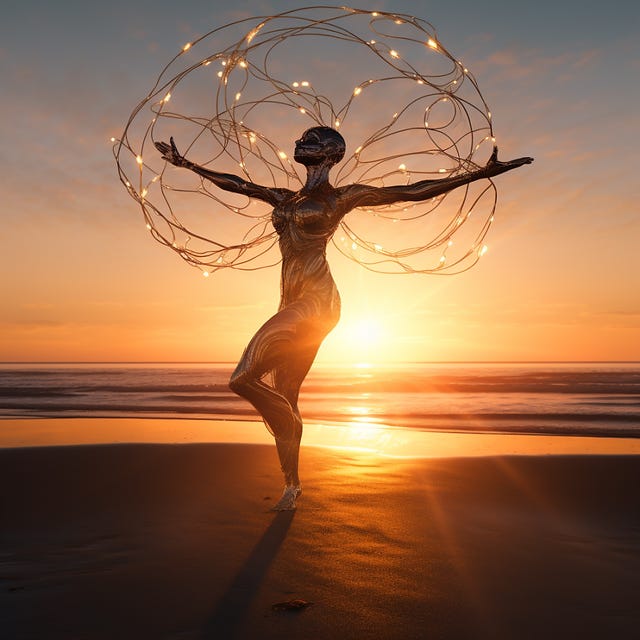
In the 1960’s, communications theorist Marshall McLuhan famously wrote ‘the medium is the message’. Thousands of years before he lived, we were already expressing this idea through our creation myths; myths in which the universe is spoken into being, or danced into form. At a deep level, we’ve always known that how our world is created tells us about what has been created.Today, advanced AI is forcing us to ask what it means when the medium is disconnected from the embodied world; held in distant servers and immortal algorithms. It’s a question that one of the godfathers of AI, Geoffrey Hinton, may be touching on in his research into ‘mortal computing’, in which AI is bound to hardware instead of software. This would mean it learns as a unique individual (with all the energy efficiencies that entails) and dies as one once its hardware is destroyed.This modern research revives an ancient question. If consciousness isn’t expressed through the medium of a body, is it truly alive? This strange overlap of predictive AI, archaic myth, and philosophy weaves a thread that has been fascinating me more every day.It’s part of what drew me to the work of author and poet Sophie Strand, who is my guest this week in one of the most far-ranging and exciting conversations I’ve had all year. We explore these questions and many more, including the difference between written and oral communication, and the role of beauty and poetry in helping us move through the metacrisis.Strand’s work focuses on the intersection of spirituality, storytelling, and ecology. Her first book of essays The Flowering Wand: Rewilding the Sacred Masculine was published in 2022, and her latest book, The Madonna Secret, is an eco-feminist historical fiction reimagining of the gospels and that was published earlier this year. She also writes an excellent Substack.Sophie has a real gift with words and a uniquely lyrical approach to history and contemporary culture. She's also one of the teachers on my upcoming course New Ways of Knowing, where she'll be sharing how myth and poetry can be give us new ways to navigate complexity and tap into a deeper appreciation for the world. The course begins on December 13, and 80% of the live tickets are now sold out. This is the second in a three part audio series with teachers on the course, which will culminate next week in a conversation with the newest faculty member, Peter Limberg, who many of you will know as the creator of The Stoa and writer of the brilliant Less Foolish Substack.After this series, I’ll be returning to my regular features and articles, as well as publishing podcasts like this, and hosting guest writers from early next year. You can find these podcasts on Apple Podcasts as well as listening to them on Substack, and from next year paying subscribers will also be receiving exclusive audio content. This is a public episode. If you'd like to discuss this with other subscribers or get access to bonus episodes, visit beiner.substack.com/subscribe

Everything in our lives, from our relationships down to the cells of our hearts, is a process of combining. Things connect to other things to form relationships that create more than the sum of their parts, and in this way the world emerges. As Nora Bateson puts it in her new book, Combining, nothing we see is ‘just that and nothing more.’ This piece is a combination of words and sound, as I recently recorded a conversation with Bateson, which you can find as an audio podcast above, or on Apple Podcasts and most other podcast platforms. Nora is one of the leading voices in the world of systems change, or what she prefers to call ‘systems learning,’ and Combining is a bracing blend of complexity theory, poetry, mythos and ecology which I’ve been enjoying it immensely. Bateson is also a faculty member on my upcoming course New Ways of Knowing, and as well as Combining and wider questions around how we can influence the systems we’re part of, we also talk about the experiential process of ‘trans-contextual knowing’ she’ll be guiding in her session. Below, I’ve also included a couple of updates, a thank you on the first anniversary of this Substack, and a new guided insight practice for paid subscribers.News and Updates This is the first audio-only piece I’ve released on here, and it was refreshing to return to this format after an extended break. I enjoyed our conversation so much I plan to release more like this in the future, alongside my regular features, essays and reading lists. Coming up next week is a conversation with poet and author Sophie Strand exploring how myth and poetry can help us make sense of complexity. Sophie is another faculty member on New Ways of Knowing, and as well as standalone pieces, these conversations have been inspiring and influencing how I develop the course.In other news, last week I recorded a live Street Epistemology session with Peter Boghossian. Boghossian is one of the authors of How to Have Impossible Conversations, an academic and author focused on finding ways to bridge culture war divides through new forms of dialogue. As this is a key focus of mine too, it was a joy to dialogue and inquire together. If you haven’t heard of the Street Epistemology methodology and are interested in new conversations that move beyond cultural stuckness, I’d highly recommend checking out this video and the wider Street Epistemology scene. One Year of The Bigger Picture I wanted to take this opportunity to say a big thank you to everyone for reading this Substack. November 5th marked one year of The Bigger Picture, and in that time I’ve written 35 features and articles, with over 750,000 views and close to 30,000 subscribers. Transitioning from Rebel Wisdom a year ago was intense, scary and exciting, and I’m massively grateful for all your continued engagement and interest in my work. It’s nearing six months since my book The Bigger Picture was published, and I’m also grateful that so many of you have bought and reviewed it so favourably; the Audible version is currently ranked #2 in the Science & Philosophy category which feels wonderful and mind-boggling. A very special thanks to paying subscribers: without you this Substack wouldn’t be possible. Your support provides me with a regular income and helps me buy essential kit, like the new microphone I used to record my interview with Nora. For paid subscribers this week, I have an updated and improved Sovereignty Meditation. This is a meditation I’ve been developing over the last five years that draws on cognitive science and the wisdom traditions to combine breathwork, concentration, contemplation and journaling into a single practice. It’s one I use personally during intense times, whether that’s dealing with the complexity of life and culture, or preparing for a psychedelic experience. You can also find my video content and other updates on my Instagram, and I’ll be sharing more about my new fiction project and putting a call out for guest writers in the near future. Thanks again for engaging with my work; I hope you enjoy reading it as much as I enjoy writing it. It seems I can’t publish this piece with a paywall and a podcast, Substack wants it to be one or the other - so I’ve changed it and now everyone has access to the paid member meditation Hi everyone, you can find the new Sovereignty Meditation below. As I mention in the audio, the intention of the guide is to help you learn each step of the meditation (Breathwork, Concentration, Mindfulness and Journalling) and then create your own version of it. I use this almost every day and it was inspired in part by John Vervaeke’s work around building ‘an ecology of practices’. Download the Sovereignty Meditation hereThe different practices that make up this meditation are by no means extensive, but I’ve found them to provide a good spectrum of ‘zooming in’ and ‘zooming out’ that give me a more ‘optimal grip’ on myself and the world. I hope you enjoy it - if you have any questions, don’t hesitate to ask in the comments. This is a public episode. If you'd like to discuss this with other subscribers or get access to bonus episodes, visit beiner.substack.com/subscribe
This is a public episode. If you'd like to discuss this with other subscribers or get access to bonus episodes, visit beiner.substack.com/subscribe
Comments


Download from Google Play

Download from App Store
 United States