


 Claim Ownership
The Kubik Report
Subscribed: 11Played: 263
Subscribe

© Copyright 2025 All rights reserved.
Description
My podcast has you in mind. The varied content ranges from news and social issues to the perspectives of experts who may have particularly insightful views and can offer clarity on what is happening around us.
Our content is intended for a general audience, just like a newspaper or magazine with sections for various people, hoping they will also read the areas where they may have a lesser interest. So, follow your interests and discover new ones.
I want our discussions to deepen your faith and service to others, as well as give your life greater purpose and meaning.
I call my podcast The Kubik Report so that it will be easy to remember and find. Just type those words into any browser address bar—and there we are!
Our content is intended for a general audience, just like a newspaper or magazine with sections for various people, hoping they will also read the areas where they may have a lesser interest. So, follow your interests and discover new ones.
I want our discussions to deepen your faith and service to others, as well as give your life greater purpose and meaning.
I call my podcast The Kubik Report so that it will be easy to remember and find. Just type those words into any browser address bar—and there we are!
275 Episodes
Reverse
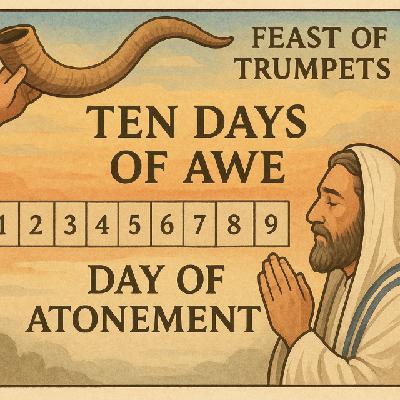
In this episode of The Kubik Report, I present a message originally delivered in Cincinnati on September 28, 2020, examining the deeper meaning of the Day of Atonement and its powerful message of reconciliation.
The biblical Holy Days reveal God’s plan in a remarkable progression. Passover begins with the individual and Christ’s sacrifice for sin. The Day of Atonement expands that picture from personal forgiveness to the restoration of relationships—with God and with one another.
I explore the important difference between forgiveness and reconciliation. Forgiveness can begin with one person, but reconciliation requires both parties to participate in repairing a broken relationship. Restoring trust may require time, patience, humility, and repeated positive actions. This work of reconciliation, I explain, provides a glimpse into the enormous work that will be necessary in the coming Kingdom of God as Christ brings healing to a fractured world.
The episode also examines Jesus Christ’s role as High Priest. A prophet carries God’s message to humanity; a priest represents human needs before God. Because Christ experienced human life and understands our weaknesses, Christians can approach God with confidence, knowing they have a compassionate High Priest.
I also reflect on fasting and repentance. Biblical fasting is not merely going without food or attempting to persuade God to grant our requests. Drawing from Isaiah 58, I emphasize that genuine fasting should change us—loosening the bonds of wickedness and making us more compassionate, generous, and willing to serve others.
Finally, I consider the need for both personal and national repentance, reflecting on my attendance at The Return gathering in Washington, D.C., in 2020.
The Day of Atonement ultimately points beyond forgiveness to something greater: reconciliation, restored relationships, and humanity becoming at one with God.

On this Feast of Trumpets, I reflect on fifty years of Church history in Minneapolis–St. Paul and the enduring faith that sustained the congregation through seasons of growth, hardship, change, and loss.
I begin with the congregation’s founding in 1963 and share my own story of first attending services as a seventeen-year-old in 1965. Although I was raised in a devout Orthodox home, my questions about the Sabbath and other biblical teachings led me toward a deeper, more personal relationship with God. In the Church, I learned to pray from the heart, understand God’s grace and law, and recognize the Kingdom of God as humanity’s great purpose.
Drawing on Acts 14 and Colossians 1, I point to the Apostle Paul as a model of courage, endurance, prayer, and servant leadership, I articulate a vision for a Church centered on Jesus Christ—one that resolves conflict, cares for its members, communicates effectively, welcomes younger generations, and removes the “broken rungs” that keep people from moving toward deeper involvement.
My message concludes with the meaning of the Feast of Trumpets. Jesus Christ will return as King of Kings and Lord of Lords while continuing to serve as humanity’s compassionate High Priest. The Holy Days do not diminish Christ; they reveal His central role in God’s plan—from redemption and the founding of the Church to the resurrection and the coming Kingdom. This anniversary message is a hopeful call to remain faithful, serve others, and endure to the end.

In this episode of The Kubik Report, Victor Kubik sits down with brothers Caleb and Luke Anderson, ages 21 and 19, for a candid conversation about faith, culture, technology, and what it means to be a young Christian in today’s world.
Caleb and Luke describe the point when faith became more than something inherited from their parents and began to develop into personal conviction. They discuss what being “worldly” means from their perspective—not simply being part of modern society, but adopting a mindset centered on immediate gratification rather than biblical values and long-term consequences.
The conversation turns to one of the greatest challenges facing their generation: technology. Social media provides endless stimulation and instant satisfaction, but can it also weaken patience, concentration, meaningful relationships, and the discipline needed for serious Bible study?
Victor, Caleb, and Luke also explore the relationship between young people and the church. How can congregations and ministers build stronger connections with the next generation? Caleb and Luke emphasize personal mentorship, sermons that address issues young people actually face, and meaningful opportunities for youth to serve and contribute.
The brothers also offer reasons for optimism. A generation accustomed to questioning what it sees may be better prepared to recognize misinformation and AI-generated deception.
Finally, Caleb and Luke share practical advice for younger teenagers: choose your friends carefully, build relationships with people you can trust, and make decisions today with an eye toward where they may lead ten years from now.
It’s a thoughtful look at faith through the eyes of two young Christians navigating a rapidly changing world.

In this episode of The Kubik Report, Victor Kubik continues his conversation with Greg Thomas about Benjamin Franklin, exploring the remarkable final chapter of Franklin’s life—his influence on the Constitution, his inventions, his opposition to slavery, and his complex religious beliefs.
At age 81, Franklin was the elder statesman of the Constitutional Convention of 1787. As delegates struggled to overcome deep divisions, Franklin reminded them of the limits of human wisdom and made a striking appeal for daily prayer. He asked how an empire could rise without God's aid if even a sparrow could not fall without His notice. Yet surprisingly, his motion was never brought to a vote.
The discussion also examines Franklin’s extraordinary inventive mind. From bifocals and the lightning rod to the Franklin stove, glass harmonica, flexible catheter, carriage odometer, and even wooden swim fins, Franklin continually searched for practical ways to improve everyday life. He refused to patent his inventions, believing they should benefit everyone.
Greg and Victor also explore a less understood side of Franklin: his religious philosophy. Franklin believed in a God who intervened in human affairs and heard prayer, while questioning traditional Christian doctrines concerning Jesus Christ. He nevertheless deeply respected Jesus' moral teachings and believed religion was essential to maintaining a virtuous society.
Finally, the episode examines Franklin's late-life commitment to abolition. Shortly before his death in 1790, he petitioned Congress to bring an end to slavery—one final example of a remarkable man whose ideas continued evolving throughout his long life.

In this episode of The Kubik Report, Victor Kubik welcomes Greg Thomas back for the latest installment in their series commemorating America’s 250th anniversary by examining the lives, character, and leadership qualities of the nation’s Founding Fathers.
This episode turns to Benjamin Franklin—printer, inventor, writer, statesman, and one of the most remarkable diplomats of the Revolutionary era.
Victor and Greg explore Franklin’s years in Great Britain, where he represented Pennsylvania and other American colonies and worked tirelessly to preserve the relationship between Britain and its increasingly restless colonies. His efforts reveal important lessons about diplomacy, patience, persuasion, and the challenge of finding common ground when political divisions deepen.
The conversation also highlights just how different Franklin’s world was from ours. His first stay in England lasted an astonishing ten years, reminding us of the enormous distances and travel limitations confronting leaders of the 18th century.
Beyond Franklin’s public accomplishments, Victor and Greg consider the importance of personal and spiritual growth. Just as Franklin continued learning throughout his life, we too should be willing to grow in “grace and knowledge,” honestly examining our understanding and allowing experience, maturity, and Scripture to refine our thinking.
It’s another fascinating look at leadership through the life of one of America’s most extraordinary founders.

Comments

Download from Google Play

Download from App Store
 United States