


The Lid is On
Subscribed: 32Played: 423
Subscribe

Description
This flagship podcast series from UN News takes its name from the words that correspondents at UN Headquarters in New York hear each night, at the end of the working day. We highlight the in-depth human stories behind the UN’s work and the way that it touches and impacts ordinary lives around the world.
122 Episodes
Reverse
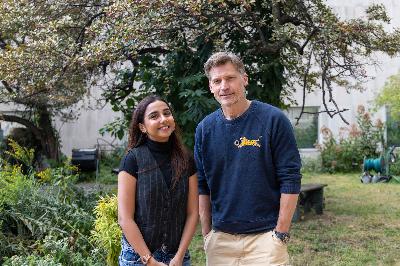
Storytelling has the power to inspire action, and when celebrities and influencers use their platforms for climate advocacy, the impact can reach audiences across the globe.In September at UN Headquarters in New York, actor and UNDP Goodwill Ambassador Nikolaj Coster-Waldau shared his experiences of visiting UN Development Programme (UNDP) initiatives for his Bloomberg TV series, An Optimist’s Guide to the Planet.Joining him in the the SDG Media Zone was UNDP India Youth Climate Champion Prajakta Koli. Moderator Alyssa Hardy, Style Director at Teen Vogue, asked Mr. Coster-Waldau why, despite the severity of the climate crisis, there is still reason to be hopeful.Watch the full SDG Media Zone session here.
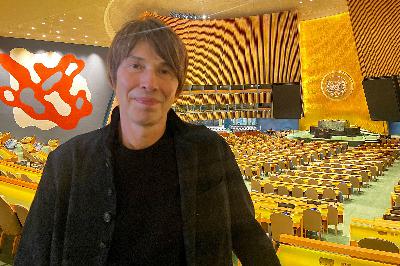
Space exploration and the use of space technology is becoming an increasingly critical part of the global economy, but how can the world ensure its benefits are felt, not just in the developed world but also in poorer and less technologically advanced developing countries?The UN Office for Outer Space Affairs (UNOOSA) was established for that exact reason and more particularly to accelerate sustainable development globally.It has just announced its UN Champion for Space, the internationally acclaimed broadcaster and physicist Professor Brian Cox who’s been speaking to UN News’ Lid is On podcast.
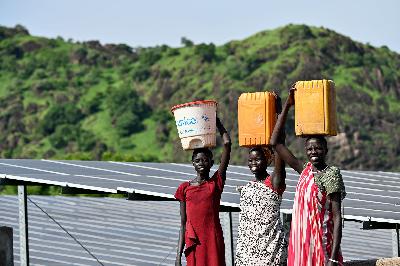
Wind and solar energy are now the cheapest sources of energy, bringing cleaner air, stronger communities, and new economic opportunities. In September at UN Headquarters in New York, the SDG Media Zone hosted a discussion highlighting the momentum of the clean energy transition, and how expanding access to wind and solar can improve public health, create jobs, and accelerate economic growth.The talk featured Jamie Henn of Fossil Free Media, activist and artist Antonique Smith, and Emerson Clark from the Global Wind Energy Council.The moderator, Melina Waling of the Associated Press, asked Mr Clark for his thoughts on the speech made by US President Donald Trump at General Assembly high-level week, in which he declared that climate change is “the greatest con job ever perpetrated on the world.”Watch the full SDG Media Zone session here.Music: "Rise and Shine," Audiobinger
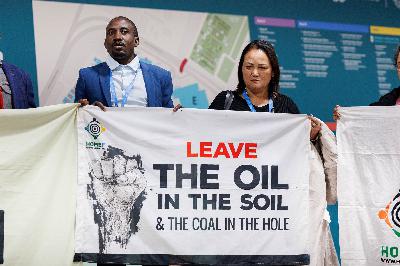
Too often, coordinated misinformation campaigns are amplified and monetized via digital advertising, hampering efforts to address the climate crisis.In the lead up to the November COP30 UN Climate Conference in Belém Brazil, the SDG Media Zone turned the spotlight on this pressing challenge, bringing together UN Senior Adviser on Information Integrity, Charlotte Scaddan; Jacob Dubbins, Co-Chair of the Conscious Advertising Network; and Rupen Desai, Chief Marketing Officer at Una Terra. Watch the full SDG Media Zone session here.Music: "Rise and Shine," Audiobinger
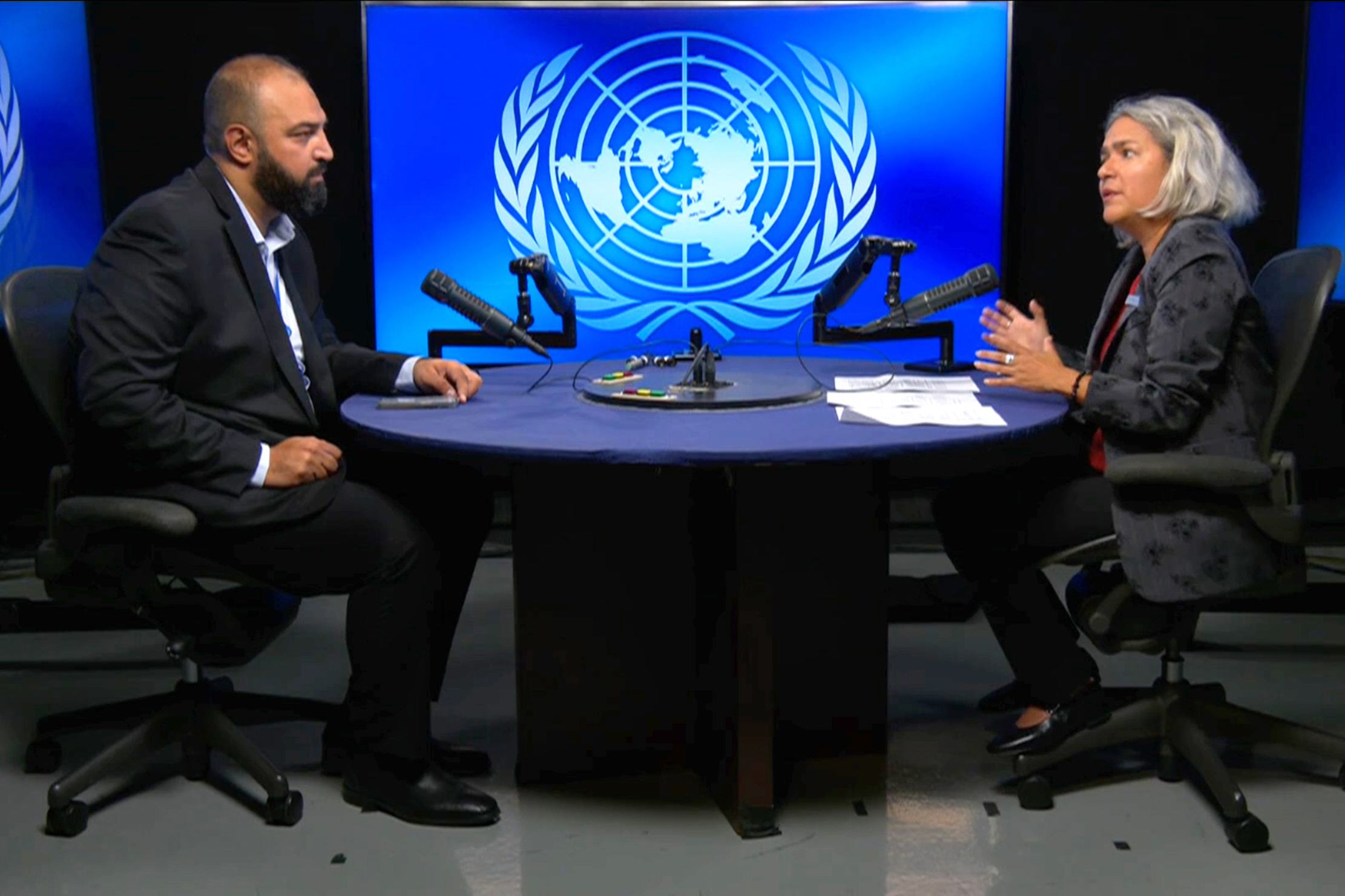
At UN Headquarters in New York, Karla Quintana, head of the Independent Institution on Missing Persons in Syria (IIMP), has warned that time is running out to find the hundreds of thousands who disappeared during the country’s long conflict. “Everyone in Syria knows someone who has gone missing,” Ms. Quintana told UN News.In conversation with Ezzat El-Ferri, she underscored that the search must be Syrian-led and internationally supported, driven by the families who have long fought to learn the truth about their loved ones.Music: ‘Rise and Shine’ by AudiobingerSecretary-General’s September 2025 report on the Independent Institution on Missing Persons in Syria: https://docs.un.org/en/A/80/359

Like many island economies, Dominica experiences high youth unemployment, and recent events, in particular Hurricane Maria and the COVID-19 pandemic, have combined to make the search for work even harder.A UN-backed initiative designed to improve the employment options for young Dominicans, Work Online Dominica, has been successful in helping them to overcome the barriers they face on a small, remote island.Conor Lennon from UN News met aspiring photographer Josiah Johnson, a graduate of the programme, in Dominica’s capital, Roseau, to find out how he, and other young people, have benefited from Work Online Dominica.

Caribbean island nations are vulnerable to a host of extreme weather events, from hurricanes to floods and droughts, that are becoming more dangerous and intense as a result of the climate emergency.UN News met with three of the most prominent young climate activists on Trinidad & Tobago, and learned of their frustration with current environmental legislation, and what they are doing to raise awareness of the crisis.Conor Lennon spoke to Priyanka Lalla, a teenage climate activist and UNICEF Youth Advocate for the eastern Caribbean, Joshua Prentice, a climate and ocean scientist, and Zaafia Alexander the 18-year-old founder of an environmental NGO.

Dominica may have found a solution to cover all of its electricity needs, and even sell electricity abroad, without burning fossil fuels: geothermal energy. This power source is 100 per cent clean, cheap and practically limitless.Conor Lennon from UN News meets Vince Henderson, Dominica’s Minister for Economic Development and Sustainable Energy, and Fred John, CEO of the Dominica Geothermal Development Company to find out if the country really is on its way to a clean energy future.

Small Island Developing States are particularly vulnerable to plastic pollution. As well as coping with a tsunami of waste washes up on their beaches every day, these countries – which are generally highly dependent on imports – generate a large amount of plastic waste of their own, and often struggle to manage it.Plastic pollution has a detrimental effect on the health and livelihoods of people living in small island states, which often lack the means to effectively treat and process it. It’s not great for the economy either: tourists don’t want to hang out on dirty beaches, and marine litter can damage fishing stocks. Conor Lennon from UN News went to Trinidad to see how the UN is working with civil society and the government to not only deal with the waste, but also find a way to reuse it, and take it out of the environment.

In Kosovo, where tensions remain high between the ethnic Albanian and ethnic Serb communities, the United Nations is leading efforts to promote open communication and dialogue.The UN Mission in Kosovo (UNMIK) was established in 1999, well before the declaration of independence in 2008, and today plays a central role in promoting peace and security, and respect for human rights, in a region where memories of the wars of the late Twentieth Century, fought between the countries of the former Yugoslavia, are still fresh for many who suffered directly or lost loved ones.On 22 April, Caroline Ziadeh, the head of UNMIK, briefed the Security Council on the current situation in Kosovo, and the ongoing tensions between the Albanian speaking and ethnic Serb population. After the briefing, she came into the UN News studios to explain that, despite the considerable difficulties, progress in bringing together the two communities is far from impossible.

The Haitian economy may be on its knees, but the gangs that control much of the capital Port-au-Prince seem to have little trouble obtaining guns, mainly from the USA.The country is awash with weapons: according to experts convened by the UN Secretary-General, these “deadly arsenals” mean that gangs have “firepower that exceeds that of the Haitian national police,” and the problem is getting worse.The United Nations Office on Drugs and Crime (UNODC), has reported an increase in the trafficking of increasingly powerful and sophisticated weapons into the country since 2021, such as AK47, AR15 and Galil rifles. Sylvie Bertrand is the UNODC Regional Representative for Central America and the Caribbean and oversees the research teams tasked with documenting the sources, routes and distribution patterns of the illicit firearms fuelling violence in Haiti.She spoke to Felipe de Carvalho from UN News about UNODC strategies to make a significant dent in the flow of arms to the beleaguered country.

April 7 marks three decades since the beginning of the 1994 Genocide against the Tutsi in Rwanda. An almost unimaginable slaughter, which saw an estimated 800,000 people killed in just 100 days, and shocked the world.Eric Eugene Murangwa was a footballer at the time, playing for Rayon Sports, one of the top teams in the country, based in the capital Kigali.As a Tutsi, he was in extreme danger when the genocide began. But, despite being well know, he managed to survive, despite the attempts to kill as many Tutsis as possible. He says that football saved his life.Thirty years on, Eric is living in the UK, working as a genocide education campaigner, and an advocate for sport for development and peace. He shares his extraordinary story of survival with Conor Lennon from UN News.

Now in its thirteenth year, the war in Syria shows no signs of letting up, and several foreign powers are active in the country, including Russia, the US, Turkey and Israel, which has stepped up its bombardments since the 7 October Hamas attacks. The latest report of the United Nations Commission of Inquiry details a marked escalation of violence, over the last six months, and outlines the disastrous consequences for the civilian population: around 13 million have been forced from their homes, and 90 per cent are living poverty. Conor Lennon from UN News asked Hanny Megally, the Deputy Director and Senior Fellow at New York University’s Center on International Cooperation, and a member of the Commission of Inquiry, about the different forces involved in Syria, and the worrying resurgence of the ISIL terror group.

This episode of The Lid Is On focuses on cutting edge online technology, and the UN’s role in making sure that it benefits humanity, rather than causing us harm.Proponents of AI point to the immense benefits these tools could bring to society, but the clamour for robust regulation of AI is growing louder. Similarly, the car industry is forging ahead with plans to ramp up autonomous driving technology, promising a safer future on the roads, but fears surrounding driverless “robot cars” persist.Conor Lennon speaks to some of the government representatives, industry experts and UN officials working to allay these fears, and avoid an online “Wild West”, where criminals and bad actors can roam with impunity.
There was a wealth of stories to follow at high-level week of the UN General Assembly, from the conference on the Israel-Palestine two-State solution, to the ambitious pledges made at the Climate Summit, and the launch of two bodies aimed at finally creating truly inclusive international AI governance.But one theme that shone through was the importance of multilateralism and the work of the United Nations.Conor Lennon and Laura Quinones from UN News break it all down in this special episode of The Lid Is On.Music: Joachim Harris, all rights reserved
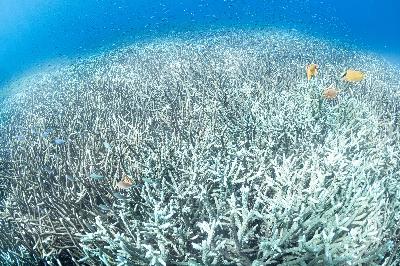
In this episode of The Lid Is On, experts discuss the urgent need to restore the Ocean, which is facing a host of threats that could drive millions of marine life species into extinction and even endanger humanity.The protection of marine biodiversity will be under discussion at the UN Ocean Conference in June, where advocates will join politicians and members of the private sector to share solutions, including legal protections for the high seas, which lie outside national waters.The guests are Peter Thompson, the Secretary General's Envoy for the Ocean, Alfredo Girón, Head of the Ocean Action Agenda at the World Economic Forum, and Minna Epps, who runs the Ocean Program at the International Union for the Conservation of Nature.
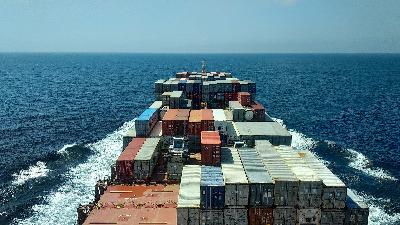
The shipping industry moves 90% of world trade—and produces nearly 3% of global greenhouse gas emissions.In this episode of 'The Lid is On', Arsenio Dominguez, Secretary-General of the International Maritime Organization (IMO), explains how a new UN agreement sets the sector on a path to net zero by 2050, introduces a global carbon pricing plan, and addresses concerns from the world’s most vulnerable economies.Music by Joachim Harris, all rights reserved, Ketsa.
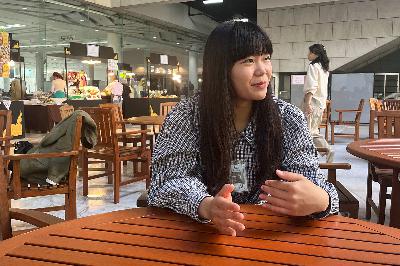
A Thai woman has been talking about how she was tricked into handing over more than $300,000 to a criminal gang that entrapped her in an elaborate scam that began as a supposed case of identity fraud and which led her to believe that she and her family could be facing prison.A new report released by the UN Office on Drugs and Crime (UNODC) says that the transnational organized crime groups in Asia which carry out these types of scams are expanding their operations deeper into the region and beyond.In this episode of The Lid Is On, Laura Gil reports from Bangkok where she met Wannapa Suprasert from Thailand who is currently living and working in the United States.
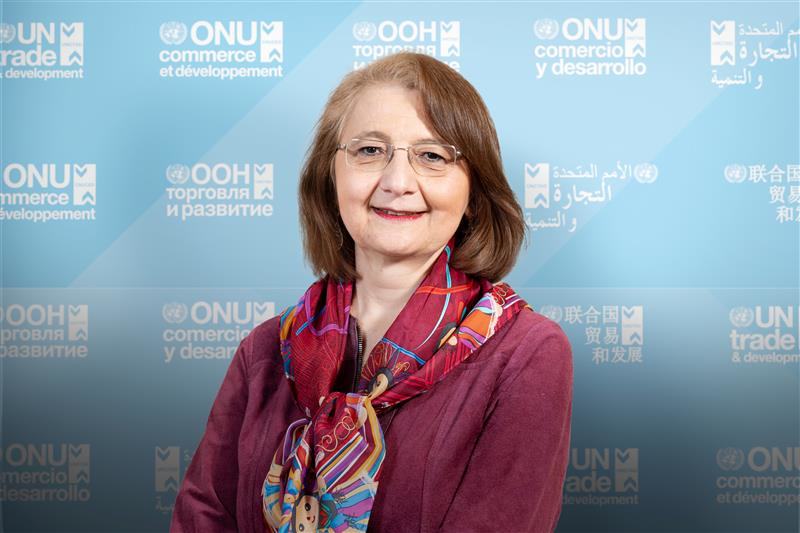
In this episode of The Lid Is On, Conor Lennon from UN News speaks to Luz Maria de la Mora, the Director of the International Trade Division at UNCTAD, about the uncertainty that unilateral tariffs are having on the global trade outlook, and why the consequence could be particularly serious for developing economies.Music by Joachim Harris, all rights reserved
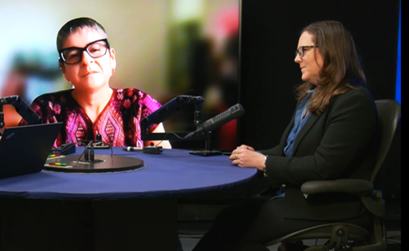
The Beijing Declaration and Platform for Action, a key UN policy document adopted in 1995, has been credited for several major advances for women, from legislation outlawing domestic abuse to inspiring a new wave of young gender justice activists.But despite undeniable progress in gender relations over the past 30 years, inequalities between men and women persist and, in recent years, there has been a notable backlash against the very concepts of feminism.In this episode of The Lid Is On, Conor Lennon from UN News speaks to Laura Turquet, the deputy head of the research and data team at UN Women, and Lydia Alpizar, a Costa Rican feminist activist based in Mexico City, to find out why this renewed attack against feminism is taking place, and what it means for the decades-long fight for gender equality.Music by Joachim Harris, all rights reserved

Comments

Download from Google Play

Download from App Store
 United States