


 Claim Ownership
The Lion and The Sun: A Modern History of Iran
Subscribed: 190Played: 2,183
Subscribe

© 2025 String Studios. All rights reserved.
Description
2025 Signal Award Winner: Best History Podcast | Iran’s history has been a never-ending struggle for liberty and independence. In this podcast,we tell the story of how Iran ended up where it is now and how religion, monarchy, democracy, and nationalism all played important roles in defining the lives of its people. A journey that expands 200 years and reaches through three different political systems. New episodes every other Wednesday.
29 Episodes
Reverse
 3
3Lorem ipsum dolor sit amet, consectetur adipiscing elit, sed do eiusmod tempor incididunt ut labore et dolore magna aliqua.
The post Podcast Episode appeared first on The Lion and The Sun Podcast.
Lorem ipsum dolor sit amet, consectetur adipiscing elit, sed do eiusmod tempor incididunt ut labore et dolore magna aliqua.
The post Podcast Episode 2 appeared first on The Lion and The Sun Podcast.

Welcome to the Lion and the Sun: A Modern History of Iran
New episodes every two weeks on Wednesdays.
The post Trailer appeared first on The Lion and The Sun Podcast.

This is the lion and the sun. A podcast about the modern history of Iran. From the Qajar kings to Pahlavi dynasty and the islamic revolution.
The post Introduction appeared first on The Lion & The Sun.

How a religious ban on tobacco jump-started the fight for Persia’s democracy. The story of the Qajar dynasty, their attempt at auctioning Persia’s resources and how Iranians came together to fight foreign influence and protect their right to smoke.
Episode Summary:
Nasir al-Din Shah and the Qajar dynasty ruled over Persia in the late 19th century. They were known for their lavish lifestyles and giving concessions to foreign powers like Britain and Russia.
Nasir al-Din Shah sold Iran’s entire tobacco industry to Major G.F. Talbot and the Imperial Tobacco Corporation of Persia in 1890. After this deal, the British had monopoly control over Iran’s lucrative tobacco trade.
In the aftermath of this deal, protests against the tobacco concession led by Persian merchants and clerics started. Persians were concerned about foreign control over the economy and the influx of Christian foreigners.
After seeing the anger, Mirza Hassan Shirazi, a powerful Shia marja, issued a fatwa banning tobacco use. This turned public opinion against the deal.
The boycott of tobacco in Iran after the fatwa was issued was successful as everyone stopped smoking immediately. Within a day, tobacco consumption ceased across the country. Even the Shah’s wives in the royal harem refused to smoke.
After 55 days of tobacco protests and boycotts that crippled the tobacco industry, Nasir al-Din Shah agreed to rescind the concession in 1892. However, this was seen as a major failure and sunk Persia further into debt.
Though limited in impact, the tobacco movement was seen as an important early victory against the monarchy and foreign domination. It set the stage for later constitutional and pro-democracy efforts in Iran.
Music:
Difference – Kai Engel
Suspense – Alena Smirnova
Machinery – Kai Engel
Dark Alleys – Kai Engel
February – Kai Engel
Never Ending – Alena Smirnova
For more information, read our blog or follow us on Instagram.
The post Book One – Ep.1: The Fatwah appeared first on The Lion and The Sun Podcast.

What can you do when the king is assassinated, prices are high and the country is in crisis? You demand a parliament. The story of how Persia’s first national assembly (Majlis) was established and how democracy found its way into Iran.
Episode Summary
In this episode, we look at the events of 1906 that catalyzed the Persian Constitutional Revolution. It begins with an assassination. After the death of Nasir Al-Din Shah, his son, Mozaffar takes the throne.
During Mozaffar Al-Din Shah, economic woes plagued Persia. Debt mounted, prices soared due to inflation and trade disruptions from the Russo-Japanese War, and a cholera outbreak devastated the population. Discontent grew among the people.
The spark that ignited widespread protests came in December 1905, when the ruler of Tehran publicly whipped two prominent sugar merchants, accusing them of price gouging. Outraged by this humiliation of respected merchants, bazaar traders launched a strike. Their demands were simple – dismiss the brutal Tehran ruler, fire the Belgian customs administrator Joseph Naus, and establish a “house of justice.”
Initially, the shah refused to buckle. But his son Mohammad Ali Mirza secretly backed the protestors, seeing a chance to bolster his claim as heir. Under this pressure, Mozaffar al-Din Shah dismissed the Tehran ruler and agreed to consider the “house of justice” idea, though Naus remained.
Tensions reached a boiling point during the holy month of Muharram in July 1906. Security forces killed a religious student amid protests over the arrest of an anti-monarchy preacher. This enraged the public, sparking larger demonstrations and deadly clashes with troops in the streets.
Influential clergy like Seyyed Abdullah Behbahani left Tehran in an act of defiance. At first, rebuffed, Behbahani ultimately persuaded British diplomats to grant protesters refuge within the embassy compound. An extraordinary scene unfolded as over 14,000 people streamed into the embassy grounds. They erected a tent city and debated ideas of constitutional government.
What began as a limited strike for modest reforms transformed into something much greater during this “Grand Protest” at the British Embassy. Demands escalated to calls for overthrowing the monarchy and instituting an elected majlis or parliament to draft Iran’s laws.
Faced with the largest popular uprising of his reign, Mozaffar al-Din Shah could no longer resist. On August 5, 1906, he decreed the formation of Iran’s first national consultative assembly (majlis) – a pivotal first step toward democracy.
But this was only the beginning. The new majlis immediately set its sights on rewriting Persia’s constitution to strip power from the monarchy. A fierce power struggle loomed with the heir apparent, who staunchly opposed sharing authority with elected representatives.
Music:
Irsen’s Tale – Kai Engel
Suspense Piano – Serge Quadrado
Sea of Clouds – Kai Engel
Vintage Frames – Kai Engel
Waltzing in the Rye – Kai Engel
Sunset – Kai Engel
For more information, read our blog or follow us on Instagram.
The post Book One – Ep.2: Persian Awakening appeared first on The Lion and The Sun Podcast.

What comes after establishing democracy in a nation? Protecting it at all costs.
In this episode, the ideals of democracy clash with the limitations of Islam and the new Shah maneuvers to undermine the parliament’s authority, even as the people take to the streets to defend their hard-won freedoms.
Episode Summary
In the fall of 1906, after months of strikes and protests, Iranians were able to convince the shah to order the establishment of the country’s very first parliament, the Majlis. This marked a significant moment in Persia’s modern political history. As the Majlis was seen as a major step towards the creation of a more democratic government.
The members of the Majlis set out to create a new constitution for the country. Drawing inspiration from European countries like Belgium and France. However, they had to be careful not to overstep their power and anger the monarchy, leading to deliberate ambiguity in the constitution.
Just as the Majlis was finalizing the draft of the constitution, the ailing Mozaffar-al-din Shah, who had ordered the establishment of the Majlis, passed away. His son, Mohammad Ali Mirza, ascended to the throne. Unlike his father, Mohammad Ali was determined to cancel the newly found Majlis and shut down Persia’s short-lived democracy.
The clash between the Majlis and the new shah came to a head over the amendment to the constitution, which sought to add more provisions and clarity to the original text. Mohammad Ali, recognizing the rift between the religious and secular constitutionalists, exploited it to sow further discord among the members.
As the Majlis was embroiled in internal strife, an assassination attempt on Mohammad Ali Shah further escalated the tensions between the monarchy and the parliament. The shah, fearing for his life, isolated himself, and the infighting among the members of the Majlis increased.
Ultimately, Mohammad Ali Shah made a bold move, ordering martial law and forbidding large gatherings in public places. With the streets emptied, the parliament building left undefended. The Shah was poised to finally put an end to the “Persian Awakening” and the struggle for democracy in Persia.
Music:
Realness – Kai Engel
Royalty free russian music – Dar Golan
Blizzard – Kai Engel
Somnolence – Kai Engel
Take a Look Around You – Kai Engel
For more information, read our blog or follow us on Instagram.
The post Book One – Ep.3: Tale of Two Shahs appeared first on The Lion and The Sun Podcast.

How Mohammad Ali Shah laid siege to the parliament building, ending Iran’s brief experiment with democracy. Discover the story of the Majlis bombardment and the Iranian guerrilla warfare to reclaim their hard-fought freedom.
Follow us on Instagram, TikTok or X (Twitter)For early access to episodes, become a supporter on Patreon.
Episode Summary
On June 2nd, 1908, the Iranian parliament was carrying out its daily activities when the sound of marching soldiers filled the building. Sensing danger, the parliament workers evacuated to the nearby Sepahsalar Mosque to assemble a defence line. A regiment from the Russian-controlled Cossack Brigade, loyal to the monarchy, arrived and launched an assault on the parliament’s forces stationed near the mosque.
Despite the Cossacks’ formidable strength, the initial attack was repelled. Colonel Vladimir Liakhov, the Cossack commander, then deployed a larger force including cavalry, infantry, and artillery cannons. With Mohammad Ali Shah urging him to ensure victory at all costs, the cannons bombarded the parliament building from four surrounding streets.
As smoke filled the air, the parliament speaker attempted to contact the Shah but a cannon strike severed communications. The Cossacks killed and injured the parliament’s defenders, occupied the building, and sent the members fleeing or into hiding. By day’s end, the parliament lay in ruins, marking a swift end to Iran’s era of constitutional democracy under the Qajar dynasty.
In the aftermath, Mohammad Ali Shah’s forces began arresting constitutionalists and critics across the country. However, pockets of resistance emerged, determined to fight back against the monarchy. In the city of Tabriz, the people had been preparing for such a confrontation. Two key figures, Sattar Khan, a former bandit turned revolutionary, and Baqir Khan, a luti (enforcer) leader, rallied the constitutionalist fighters.
Despite being outnumbered, Tabriz’s rebels repelled the monarchy’s initial attempts to crush their uprising. By October 1908, Sattar Khan and Baqir Khan had retaken control of the city, becoming local heroes. Their victory was short-lived as the Cossack Brigade regrouped and laid siege to Tabriz in January 1909, cutting off vital supplies and gradually starving the city’s inhabitants.
In Gilan province, constitutionalists sought help from Caucasus-based Social Democrat groups opposing Russian rule. With their training, Gilan’s merchants and activists, led by Mirza Kuchak Khan, staged an elaborate ruse in February 1909 to oust the monarchy’s ruler, Sardar Afkham. They formed the “Secret Society of Sattar,” aiming to capture the capital, Tehran.
As Tabriz endured the prolonged Cossack siege, the Russian Empire, seeking to restore trade routes, intervened in April 1909 and temporarily lifted the blockade without addressing the rebels’ demands. This stalemate inspired other resistance groups like the nomadic Bakhtiari tribe in southwestern Iran.
In late 1908, Bakhtiari forces, a strong clan from the west of Iran, marched to liberate the city of Isfahan from the monarchy’s rule. After fierce street battles, the Bakhtiari riders took control of key areas in early January 1909, forcing the Shah’s appointed ruler to flee. With news of Gilan’s army marching towards Tehran, the emboldened Bakhtiari rebels prepared to join the ultimate showdown against the Qajar dynasty.
Music:
Written in Inc – Kai Engel
Somnolence – Kai Engel
Between Nothing and Everything – Kai Engel
Somber Descent – Kai Engel
Eglair – Alex Productions
For more information, read our blog or follow us on Instagram.
The post Book One – Ep.4: The Bombardment appeared first on The Lion and The Sun Podcast.

Two constitutionalist armies arrive at the gates of Tehran and Mohammad Ali Shah prepares the capital of Iran for an all-out war. How the battle of Tehran reshaped the future of democracy in Iran and how the country was forced to change in its aftermath.
Follow us on Instagram, TikTok or X (Twitter).For early access to episodes, become a supporter on Patreon.
Episode Summary
After the bombardment of Majlis, the flames of revolution burned across Persia as uprisings erupted against the monarchy of Mohammad Ali Shah. Though he attempted to calm the angry constitutionalists by forming a powerless Grand National Council, his efforts failed to quell the growing discontent.
Two formidable armies took shape – one from the north led by Sepahdar, and another from the west under Sardar Asad Bakhtiary. Their goal was to capture Tehran and reestablish democracy by force.
Fearing the unrest, the British and Russian empires warned the Shah about his tenuous grip on power. Left with no choice, Mohammad Ali Shah reluctantly agreed to reopen parliament. But it was too late. The northern and western constitutionalist forces combined, marching on the capital Tehran with determination.
As constitutionalist armies breached the gates, the battle of Tehran commenced and pitched combat erupted through the streets of Tehran.
After some days, the two armies took control of the city. The defeated Shah took shelter in the Russian embassy and abdicated his throne. In this historic moment, his young son Ahmad Shah was crowned the new monarch under the regency of his uncle Ażod-al-molk.
The second Iranian parliament was reopened in November 1909. After the reopening, Sepahdar became prime minister while Sardar Asad was named interior minister. Heroes like Sattar Khan and Bagher Khan, famed for the Tabriz struggles, arrived to congratulatory crowds.
Music
Power Music Factory
January – Kai Engel
Heart of the Wicked – CJbeards
Sunset- Kai Engel
Somnolence – Kai Engel
Idea. 1 – Kai Engel
The post Book One – Ep.5: Battle of Tehran appeared first on The Lion and The Sun Podcast.

An old king tries to reclaim his throne, the United States sends help for the country’s finances, and Russia invades Iran. The complicated history of Iran and Russia and how the Russian influence impacted Iran’s democracy and crippled its government throughout the years.
Follow us on Instagram, TikTok or X (Twitter).For early access to episodes, become a supporter on Patreon.
Episode Summary
On July 13, 1909, Mohammad Ali Shah abdicated the throne and fled to Russia after the Battle of Tehran. He was granted asylum and a monthly salary. In July 1911, he returned to Iran with an army of Turkmen tribesmen, joined by his brother Salar-ed-Dowleh and Kurdish fighters, aiming to retake Tehran. The government’s response, aided by Bakhtiari riders, forced Mohammad Ali Shah to flee back to Russia.
In the late 19th century, Persia increasingly relied on foreign loans and struggled to modernize its military. Nasir al-Din Shah established the Persian Cossack Brigade, reflecting growing Russian influence. During Mohammad Ali Shah’s reign, Russia’s influence over Persia grew significantly, with the Russian Cossack Brigade serving as his private army and many advisors having Russian ties.
After constitutionalists regained control in Tehran, they reopened parliament and sought to resolve financial issues by hiring William Morgan Shuster, an American lawyer, as Treasurer-General. Shuster’s transparency efforts angered Britain and Russia. When Shuster planned to seize the property of Salar-ed-Dowleh, Russia intervened, demanding Shuster’s dismissal and other conditions.
Nationwide protests ensued, led by Shia cleric Mohammad Kazem Khorasani, who died under mysterious circumstances in December 1911. Russia then occupied northern Persia, including Tabriz, through brutal tactics. Under pressure, the Persian government yielded, dissolved parliament on December 24, 1911, and Shuster and his team resigned and left Persia in January 1912.
Music
Collateral – Kai Engel
From Russia with Love
Sombre Descent – Kai Engel
January – Kai Engel
Highway Chase – Hampus Naeselius
The post Book One – Ep.6: Russian Roulette appeared first on The Lion and The Sun Podcast.

As the great war breaks out in Europe, Persia is turned into the ultimate proxy battleground. The story of the First World War and how British, Russian, and German forces competed for control in Iran.
Follow us on Instagram, TikTok or X (Twitter).For early access to episodes, become a supporter on Patreon.
Episode Summary
On June 28, 1914, Archduke Franz Ferdinand, heir to the Austro-Hungarian throne, was assassinated by Gavrilo Princip who fired the fatal shots that killed Franz Ferdinand and his wife Sophie.
This assassination proved the spark that ignited World War I. Austria-Hungary declared war on Serbia, embroiling Russia, France, Germany, Britain, and their alliances in a devastating global conflict.
Across the border in Persia, after the battle of Tehran, the young Ahmad Shah assumed the throne in July 1914 at just 16 years old. Despite immense pressure, Persia announced neutrality, though its position surrounded by belligerent nations made this neutrality precarious.
Suffering soon followed as various Persian regions fell under military occupation from the proxy wars between Russia, Britain, and the Ottoman Empire. Atrocities by occupiers, displacement of civilians, and disrupted trade and agriculture led to the deadliest famine in the nation’s history.
Germany conducted propaganda efforts to foster Persian nationalism and resentment towards British and Russian interference. A group called the Committee for National Defense, aided by German agents like Wilhelm Wassmuss, formed to resist foreign domination. But Russian advances crushed their efforts.
While in the midst of war, the 1917 Russian Revolution saw the collapse of the Russian Empire. The new Bolshevik regime withdrew from Persia, annulling prior agreements and concessions, offering a glimmer of hope for true Persian sovereignty. However, this vacuum was swiftly filled by Britain, determined to secure its interests – especially Persia’s coveted oil resources.
Music
Shattered Glass – CJbeards
Written in Ink – Kai Engel
Highway Chase – Hampus Naeselius
Deserted City – Kai Engel
Katyusha – Russian Folk Song
The post Book One – Ep.7: The Great War appeared first on The Lion and The Sun Podcast.

The biggest oil field the world had ever seen, a foreign military occupation and a socialist revolution in the north. As Russia’s influence wanes, Britain seizes control of Iran’s newfound oil wealth and expands its influence in the region.
Follow us on Instagram, TikTok or X (Twitter).For early access to episodes, become a supporter on Patreon.
Episode Summary
In the early 20th century, Iran underwent a transformative period centred around the discovery of oil and its far-reaching consequences. The Qajar dynasty, ruling Iran at the time, had a practice of selling concessions to foreign powers. William Knox D’Arcy, an English entrepreneur, capitalized on this in 1901, securing rights to explore for oil in southern Iran.
After years of challenging exploration, D’Arcy’s team, led by George Reynolds, struck oil in Masjed Soleyman in 1908. This discovery led to the formation of the Anglo-Persian Oil Company (APOC), which quickly dominated oil operations in the region. Recognizing oil’s strategic importance, the British government purchased a majority stake in APOC in 1913, a move championed by Winston Churchill.
The city of Abadan was developed rapidly as an oil hub, but with stark inequalities between British and Iranian quarters. As World War I began in 1914, Britain increased its military presence in Iran to protect its oil interests. Percy Sykes established the South Persia Rifles in 1916, adding to the complex military landscape that included the Persian Gendarmerie and Cossack Brigade.
Concurrently, the socialist Jangal movement in the north of the country, led by Mirza Kuchak Khan gained momentum, especially after the 1917 Bolshevik Revolution. With support from the Red Army, the movement briefly declared the Gilan Socialist Republic in 1920, challenging both the central government and British interests.
In 1919, the Anglo-Persian Agreement, championed by British statesman George Curzon, aimed to grant Britain extensive control over Iranian affairs under the guise of a partnership. Despite initial support from some Iranian officials, widespread public opposition led to its cancellation in 1920.
This period set the stage for significant changes in Iran, foreshadowing the rise of Reza Khan and the ultimate fall of the Qajar dynasty.
Music
Forgotten Marches- Kai Engel
Somber Descent – Kai Engel
Somnolence – Kai Engel
Cinematic Epic Orchestra – Alex Productions
The post Book One – Ep.8: APOC appeared first on The Lion and The Sun Podcast.

A new player emerges in Persian politics…How a journalist and a military lieutenant orchestrated the 1921 coup d’état and how Reza Khan gained control of Iran’s military and became an influential player in the government.
Follow us on Instagram, TikTok or X (Twitter).For early access to episodes, become a supporter on Patreon.
Episode Summary
In the early 1920s, Persia faced a period of intense political turmoil following World War I. Amidst this chaos, two figures emerged with plans to reshape Persia’s future: Seyyed Zia al-Din Tabataba’i, a journalist turned political activist, and Reza Khan, a rising military leader from the Cossack Brigade.
On February 21, 1921, these men orchestrated a military coup in Tehran. Reza Khan led 4,000 Cossack soldiers into the capital, while posters declaring martial law appeared throughout the city. The existing government quickly fell, and Ahmad Shah appointed Sayyed Zia as the new prime minister.
Sayyed Zia’s tenure began with promises of reform and appeals to national pride. However, his rule lasted only three months before he was removed from office and exiled, having alienated both the elite and working classes.
While Sayyed Zia’s influence waned, Reza Khan’s power grew. As Minister of War, he unified the country’s military factions under his command. His successes in pushing back foreign influences and quelling internal rebellions won him widespread support.
By October 1923, Reza Khan had become so influential that Ahmad Shah appointed him Prime Minister. This marked a significant shift, as a man of humble origins now held the highest civilian office in the land.
For Reza Khan, however, this was just a stepping stone. He envisioned himself as the undisputed leader who could restore Persia to its former glory.
Music
Christoffer Moe Ditlevsen – Digital Future
Kai Engel – Somnolence
Hampus Naeselius – Highway Chase
Hampus Naeselius – Close Quarters
Christoffer Moe Ditlevsen – Covert Affairs
The post Book One – Ep.9: The Coup appeared first on The Lion and The Sun Podcast.

In the season finale of the podcast, Reza Khan aims for total control, the young shah flees his country and Iran braces itself for a brave new world.
Follow us on Instagram, TikTok or X (Twitter).For early access to episodes, become a supporter on Patreon.
Listen to all book one episodes on our website.
Episode Summary
Persia had been rocked by political instability in the years following World War I. Prime ministers had come and gone, unable to establish a stable government amidst the chaos. However, Reza Khan had emerged as a powerful figure. He leveraged his position to exert his influence over the successive administrations and even Ahmad Shah.
Reza Khan’s ambitious military spending and unwavering demands led to a wheat shortage in the capital, sparking public outrage. This provided an opportunity for Reza Khan’s rivals, such as Mosaddegh and Modarres, to challenge his actions. But Reza Khan navigated the political landscape with skill, eventually securing the position of Prime Minister after Ahmad Shah’s departure.
Inspired by the establishment of the Turkish Republic, Reza Khan launched a campaign to transform Persia into a republic, with himself as the first president. However, this plan faced fierce opposition from the religious faction in the parliament. This was led by Modarres, who feared that Reza Khan’s quest for power will diminish the role of Islam in the country.
The confrontation between Reza Khan and the pro-monarchy forces culminated in a dramatic showdown in the parliament. There, Reza Khan’s bill for a republic was ultimately defeated. Undeterred, Reza Khan regained his footing. Through a series of political maneuvers, he managed to consolidate his power further, effectively becoming the king regent. Reducing the Qajar dynasty to a mere formality.
Reza Khan was determined to remove the Qajar stain from Iran’s history. He moved to establish a new dynasty in his own name, setting the stage for the rise of the Pahlavi dynasty in the next season of the podcast.
Music
Kai Engel – Difference
Kai Engel – Somnolence
Gunnarsson – Granada
Mozart – Lacrimosa
Scott Buckley – The Illusionist
The post Book One – Ep.10: Brave New World appeared first on The Lion and The Sun Podcast.

A defiant Sheikh, a province rich in oil, and Reza Khan’s push to unify a fractured Iran. The story of Arabistan and how one local tribe became the biggest threat to Persia.
This is a special two-part episode of The Lion and the Sun to celebrate reaching 100k downloads. Thank you so much for your support and for listening to our show.
We’ll be back in January 2025 with season 2!
Follow us on Instagram, TikTok or X (Twitter).For early access to episodes, become a supporter on Patreon.
Episode Summary
In 1922, Iran faced a pivotal moment in its history as the country struggled to recover from the devastation of World War I. The weak Qajar dynasty grappled with economic instability and widespread corruption, leaving many regions of Iran operating autonomously.
One such region was Khuzestan. A province stretching from the Zagros Mountains to the Persian Gulf. Despite its harsh climate, Khuzestan held immense value due to its vast oil fields discovered in the early 20th century. This province, often referred to as Arabistan, fell under the control of Sheikh Khaz’al al-Kaʽbi, the powerful leader of the Banu Ka’b tribe.
Sheikh Khaz’al rose to prominence in 1897, inheriting his brother’s wealth and tribal territories. He cultivated strong ties with the British government, which saw Khuzestan as a critical strategic asset. The sheikh’s influence grew dramatically following the discovery of oil in Masjid Soleiman in 1908, transforming the region into Britain’s most valuable holding in Iran.
The British rewarded Khaz’al’s cooperation with shares in the Anglo-Persian Oil Company and knighted him in 1917, granting him the title of Knight Grand Commander of the Order of the Indian Empire. Emboldened by British support, Sheikh Khaz’al began to operate independently from the central Persian government. He refused to pay taxes or provide accounting for the customs duties he collected.
Meanwhile, in Tehran, a significant political shift occurred in 1921 when Reza Khan, a military leader, seized power through a coup. Reza Khan envisioned a unified Iran with a strong central government. He viewed the autonomy of tribal leaders like Sheikh Khaz’al as a threat to national progress and modernization.
The conflict between Reza Khan’s centralization efforts and Sheikh Khaz’al’s entrenched power came to a head in 1922. The cash-strapped central government in Tehran issued a formal request to Sheikh Khaz’al, demanding he settle his long-overdue accounts with the capital. Despite advice from British representatives to reach a compromise, Khaz’al, confident in his position, chose to ignore the government’s demands.
This act of defiance provided Reza Khan with the justification he needed to take action against the powerful sheikh. The stage was set for a showdown between the central government’s vision of a unified Iran and the longstanding autonomy of tribal leaders.
Music
Christoffer Moe Ditlevsen – Path to the Abyss
Piotr Hummel – Demons
Piotr Hummel – Phenomenal
Christoffer Moe Ditlevsen – The Dawning
The post Book One – Special Episode: Arabistan (1) appeared first on The Lion and The Sun Podcast.

Reza Khan’s army marches toward Arabistan, Khaz’al tries to unite local tribes against the government and the battle for Arabistan reaches its breaking point.
This is part two of a special episode of The Lion and the Sun to celebrate reaching 100k downloads. Listen to part one here.
Thank you so much for your support and for listening to our show.
We’ll be back in January 2025 with season 2!
Follow us on Instagram, TikTok or X (Twitter).For early access to episodes, become a supporter on Patreon.
Episode Summary
Sheikh Khaz’al al-Ka’bi had long defied Tehran’s authority, ruling his province autonomously, with British support cemented by the discovery of oil in 1908. This autonomy made Khuzestan, or Arabistan as it was then known, a strategic prize. Reza Khan, driven by a vision of national unity, viewed such tribal independence as a barrier to modernization.
Reza Khan’s ambitions initially faced obstacles, including the fragmented nature of Iran’s armed forces and British interests in the region. But over time, he unified the military, consolidated power, and prepared for his move against Khaz’al. Sensing the threat, Khaz’al sought alliances with other tribes and even appealed to the exiled Qajar king for support, but his influence proved insufficient.
Reza Khan strategically reshuffled his cabinet to neutralize Khaz’al’s allies and launched his campaign. British authorities, recognizing the shifting dynamics, withdrew their support for the sheikh. Left isolated, Khaz’al attempted to negotiate, eventually offering an apology to Reza Khan. However, Reza Khan’s plans were already set in motion, and his army occupied Khuzestan, formally reasserting control and renaming the province from Arabistan back to Khuzestan.
Though the conflict ended without bloodshed, Khaz’al’s autonomy was gone. Reza Khan had achieved his goal of centralizing power, but the victory marked only the beginning of a tense relationship between Iran and the British over control of the region’s oil resources. Khaz’al, placed under house arrest in Tehran, lived out his remaining years in isolation, with occasional visits from Reza Khan, who both respected and neutralized his former rival.
This triumph paved the way for Reza Khan’s future reign as king, setting the stage for new challenges that would emerge in the following years. The episode underscores the intricate interplay of ambition, diplomacy, and power struggles that shaped modern Iran.
Music
Soundridemusic – Stranger
Piotr Hummel – Demons
Kai Engel – Collateral
Piotr Hummel – Phenomenal
Christoffer Moe Ditlevsen – Monarch of Fate
Christoffer Moe Ditlevsen – The Attonement
Christoffer Moe Ditlevsen – Dissemination
The post Book One – Special Episode: Arabistan (2) appeared first on The Lion and The Sun Podcast.
The Qajar dynasty was the embodiment of ineffectiveness. Tyrants incapable of true tyranny.
This is the story of their demise.
Season two of The Lion and the Sun Podcast will start next week. If you’re new to this show, we suggest starting with book one and working your way here! But if you’re not into revisiting the past or are one of our older listeners who has already listened to the previous season, this recap could be a great way for you to catch up with the story.
The Lion and the Sun is a podcast about the modern history of Iran. Its a story of how Iran ended up where it is now and how religion, monarchy, democracy, and nationalism shaped the lives of its people across the 20th century.
Follow us on Instagram, TikTok or X (Twitter).For early access to episodes, become a supporter on Patreon.
The post Book One Recap appeared first on The Lion and The Sun Podcast.

Down with the Qajars. Long Live Reza Shah.
Listen to new chapters from January 29th.
As we’re recording this, Iran is experiencing a wide range of issues.
Both internal turmoil and external conflicts.
But the fascinating thing about this statement is that it doesn’t matter when you’re listening to this podcast. It could be a week from now, a month, or even years.
No matter the time, the above sentence will hold as much truth then as it has now.
Iran is a rather peculiar place. A country with over 2000 years of history that has always been at the center of world events. From the days of the Achaemenid empire and the Persian wars with the Greeks to their Islamic revolution of 1979 and their constant conflict with the West.
Yet, despite this vast history, for many Iranians, no era looms as large as the Pahlavi dynasty. Despite being one of the shortest reigns in Persia’s long history, its legacy remains embedded in the nation’s collective memory.
The last true dynasty to rule Iran.
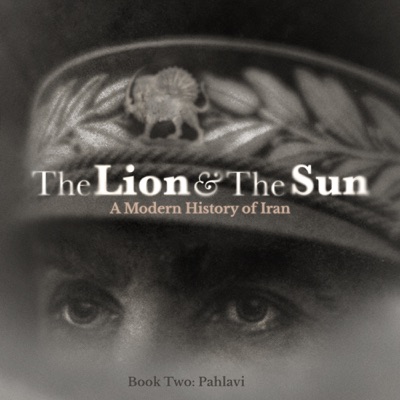
In book two of The Lion and the Sun, we turn our focus to the Pahlavi dynasty and its founder. A man who rose from obscurity, dismantled an ancient monarchy, and declared himself king; establishing a new order under his name.
Loved by some and reviled by others, his influence on the nation is undeniable, shaping its modern identity.
This season, we delve into the life of Reza Shah: his meteoric rise to power, the sweeping changes he brought to Iran, his ruthless pragmatism and his ultimate demise.
The second season of The Lion and the Sun begins on January 29 and new chapters will be released every other week.
You can listen to season one here or on all podcast platforms.
Follow us on Instagram, TikTok or X (Twitter).For early access to episodes, become a supporter on Patreon.
The post Book Two Trailer appeared first on The Lion and The Sun Podcast.

As Iran’s exiled king prepares to return, the parliament grants Prime Minister sweeping powers. With the help of his rivals, Reza Khan sets out to dismantle the century-old Qajar Dynasty.
Book One Recap: Audio, Video
Follow us on Instagram, TikTok or X (Twitter).For early access to episodes, become a supporter on Patreon.
Episode Summary
Reza Khan, a soldier from humble origins, rose to prominence in early 20th-century Iran. He was driven by a desire to restore stability to a country ravaged by years of mismanagement. Initially serving in the Cossack Brigade, he seized control of the military in 1921 through a military coup. His effective governance and ability to unite a fractured army won him support, but his increasing power also attracted opposition. Particularly from Hassan Moddares, a prominent cleric and politician.
In a strategic move, Reza Khan won over Moddares, who, despite being a vocal critic, eventually supported granting Reza Khan the title of Commander-in-Chief. This title, although legally ambiguous, solidified Reza Khan’s hold on power, making him virtually untouchable. Through negotiations, Moddares extracted concessions, including cabinet positions for his allies, and Reza Khan began to realize that the Qajar monarchy, with its weak and ineffective leadership, was no longer a viable institution.
By late 1925, Reza Khan’s momentum was undeniable. He manipulated public sentiment through orchestrated protests, portraying the Qajar monarchs as out-of-touch and ineffective. At the same time, he secured the backing of foreign powers, including the Soviets and Turkey, who were more aligned with his vision for Iran’s future. Reza Khan then turned to parliament, securing a resolution that abolished the Qajar dynasty once and for all, marking the end of a centuries-old era.
With the fall of the Qajars, Reza Khan prepared to establish his own dynasty, paving the way for the birth of Iran’s next monarchy and changing Iran’s political landscape forever.
Music
Franz Schubert – Ständchen, D 889
Kai Engel – From Dreams to Melancholy
Christoffer Moe Ditlevsen – With Tenacity
Christoffer Moe Ditlevsen – Monarch of Fate
Kai Engel – Written in Ink
Christoffer Moe Ditlevsen – Venturing through Tim
The post Book Two – Ep.1: A New Dynasty appeared first on The Lion and The Sun Podcast.

In the aftermath of the parliament’s vote to abolish the Qajar dynasty, Reza Khan and his team lay the groundwork for his ascension to the throne and his official coronation as the new king.
Follow us on Instagram, TikTok or X (Twitter).
For early access to episodes, become a supporter on Patreon.
Episode Summary
On October 31, 1925, with the vote of Iran’s National Consultative Assembly (Majlis) the Qajar dynasty was officially abolished, and Reza Khan became the leader. The transition was marked by the dismissal of the Qajar royal family. This included Mohammad Hassan Mirza, the brother of the last Qajar king. Despite some resistance, the Iranian elite largely accepted the change, though the general populace remained indifferent or unaware of the political shift.Reza Khan made an early effort to gain support by aligning himself with Islamic religious figures.
Reza Khan convened a Constituent Assembly to legitimize his rule. In December 1925, the assembly formalized his ascension to the throne, making the Pahlavi family the new royal house. Internationally, Reza Khan swiftly gained recognition. With Britain, the Soviet Union, and others acknowledging his new regime, tensions with Britain arose over diplomatic precedence. While Reza Khan was tying up loose ends, Ahmad Shah tried to make a case for his return. He wanted to fight against the abolishment, but his claims went nowhere.
In December 1925, the constituent assembly swore Reza Khan in as the king of Persia. His first royal act was to build a new cabinet, appointing trusted figures like Ali Akbar Davar and Abdol Hosein Teimurtash, who would play crucial roles in shaping the early Pahlavi state. Reza Khan’s coronation took place in April 1926 with a simple yet dignified ceremony, signifying the start of a new dynasty.
Music
Kai Engel – Modum
Trevor Kowalski – Down to Minutes
Christoffer Moe Ditlevsen – Consensus
Handel – Sarabande
The post Book Two – Ep.2: Constituent Assembly appeared first on The Lion and The Sun Podcast.


Download from Google Play

Download from App Store
 United States
All these populous diverse ethnic and national identities tied to the political geography of the so-called Iran and your still refer the word Persia, Persian to all those whom have played their part in the country's history. I hope it may have been just an incidental mistake.
❤️