


 Claim Ownership
The Merge (by CodeRabbit)
Subscribed: 0Played: 3
Subscribe

© 2026 CodeRabbit
Description
The Merge by CodeRabbit is a podcast that brings you deep conversations with legendary developers who've shaped the tools we use every day. We explore how artificial intelligence is transforming software development while celebrating the creators and tools that built our foundation. Each episode features intimate discussions about building developer tools, maintaining open source projects, and navigating the evolution of technology.
21 Episodes
Reverse

Which skills will matter most for software engineers as AI takes on more of the coding? Kunal Kushwaha joins The Merge to discuss how developers can stay relevant, what beginners should learn, and where experienced engineers can bring the most value.Kunal shares how contributing to Kubernetes helped him build his career, how he got into developer education, and what he’s learned from running hackathons through WeMakeDevs. We discuss why communication, technical fundamentals, and understanding what users need deserve as much attention as the latest coding tools.We also debate how much engineers should trust AI-generated code. When agents can write and review a pull request, what should the human still check? And who takes responsibility when something breaks?In this episode:• Building experience through open source before landing your first job• Using AI to learn without losing your understanding of the code• Developing product judgment and stronger problem-solving skills• What successful hackathon teams do differently• Reviewing AI-generated code and understanding the risks of a change• Why Kunal recommends learning to run LLMs locally• Practical advice for junior and experienced software engineersKunal Kushwaha is the founder of WeMakeDevs, a CNCF Ambassador, and a GitHub Star.Explore WeMakeDevs and its hackathons:https://www.wemakedevs.org/Learn more about CodeRabbit:https://www.coderabbit.ai/What are you spending more time learning as AI changes your workflow? Share your experience in the comments, and subscribe to The Merge for more conversations with people building software.#SoftwareEngineering #KunalKushwaha #TheMerge

What is Jev AI, and how do you actually use it? TypeSafe's Allie Laabs explains how Jev works as a "smart if statement" for your code, how to find Jev-shaped problems in your app, and why coding agents still get it wrong.Recorded at CodeRabbit HQ in San Francisco during the first Jev hackathon, run by TypeSafe and the AI Collective, just 11 days after launch.Most apps use LLMs the long way: turn program state into a prompt, get text back, then parse that text into a value the code can branch on. Jev skips the text. You send a state (a ticket, a transaction, a tool call) plus typed questions, and you get back a choice, a score, or a yes/no probability. There's nothing to parse, and it can't answer with an option you didn't allow.In this episode of The Merge:→ What Jev AI is and how it's different from an LLM→ Jev use cases: classification, routing, and "gut feeling" logic you couldn't write before→ How to spot where Jev belongs in your code, even if you vibe code→ Speculative prompting: why you should ask every question in one call→ The one-sentence fix Allie gives coding agents when they write Jev code→ Jev vs LLMs: when it's the wrong tool, and when it's the right one→ Generative UI, real-time use cases, and what builders made at the hackathonCHAPTERS0:00 Meet Allie Laabs, DevRel at TypeSafe0:18 Inside the Jev launch2:34 TypeSafe's biggest challenge right now6:16 What is Jev AI? Skipping the text10:10 Jev use cases: smart if statements13:48 Jev use cases that surprised the team17:05 Generative UI and more accessible software20:02 Jev vs LLMs: right tool, wrong tool22:17 How to use Jev: practical tips26:53 Speculative prompting and coding agents30:08 What builders are making at the Jev hackathonLINKS🧠 Jev docs: https://docs.typesafe.ai/introduction⚡ Speculative fan-out pattern: https://docs.typesafe.ai/patterns/fan-out🐰 Try CodeRabbit for AI code reviews: https://coderabbit.ai📚 CodeRabbit path instructions: https://docs.coderabbit.ai/configuration/path-instructionsABOUT THE MERGEThe Merge is CodeRabbit's interview series with the people building the tools developers use, from AI models to coding agents.#JevAI #TypeSafe #AIcoding

AI agents can click, type, and operate software—but how do you know they actually finished the job? Cua co-founder and CEO Francesco Bonacci joins The Merge to discuss computer-use agents, agent evaluation, and the human judgment behind reliable automation.Hendrik Krack and Francesco explore what it takes to give AI agents computers they can work in—and how to check the results. From testing computer controls to evaluating real tasks in KiCad, the conversation examines the gap between an action succeeding and an assignment being complete.Francesco also shares his experiments with bot-driven development through Slack, including a bot CTO and chief of staff, and explains why he stays close to his coding agents to steer their work.In this episode:• Computer-use agents and the infrastructure behind them• Why working tools don’t guarantee successful tasks• Agent evaluation, Cua-Bench, and circuit-design tasks in KiCad• Catching regressions while shipping quickly• Isolated environments and protecting sensitive data• Delegating to bots while retaining human judgment• Why visibility matters: how repeated attempts led to five identical customer emailsWhat task would you trust an AI agent to handle today—and what would you still check yourself? Tell us in the comments.Explore Cua:https://cua.ai/Cua on GitHub:https://github.com/trycua/cuaLearn about computer use:https://cua.ai/docs/concepts/what-is-computer-useExplore CodeRabbit:https://www.coderabbit.ai/The Merge is CodeRabbit’s podcast about the people building the future of software. Subscribe for more conversations with founders, engineers, and open-source builders.#AIAgents #ComputerUse #TheMerge

AI coding is changing software engineering—but when agents can implement the code, what remains uniquely valuable? Kent C. Dodds joins Hendrik Krack on The Merge to discuss open source, coding agents, product engineering, React, Remix, and why the “last software engineer” will be the person who understands what to build.Kent has spent his career teaching web development and working in open source. In this conversation, he explains how AI is making implementation cheaper, why developers need stronger product judgment, and how his agent-to-PR workflow uses CI and CodeRabbit for independent review while he evaluates system design, migrations, and downstream effects.In this episode:• Kent’s path through PayPal, open source, React, Remix, and Epic Web• Why coding agents change the developer’s role• The “last software engineer” thought experiment• Product engineering versus ticket taking• Choosing the right problem before writing code• What junior developers should learn in the AI era• Reviewing systems, not only diffs• Kent’s AI coding workflow with pull requests, CI, and CodeRabbit• Durable skills: judgment, communication, ownership, and feedback loopsLearn more about Kent C. Dodds: https://kentcdodds.com/Epic Product Engineer: https://www.epicproduct.engineer/Epic AI: https://www.epicai.pro/Epic Web: https://www.epicweb.dev/Try CodeRabbit: https://www.coderabbit.ai/What do you think the last valuable software engineer will still do? Share your answer in the comments, and subscribe for more conversations with the builders shaping open source and AI-powered software development.#AICoding #SoftwareEngineering #OpenSource
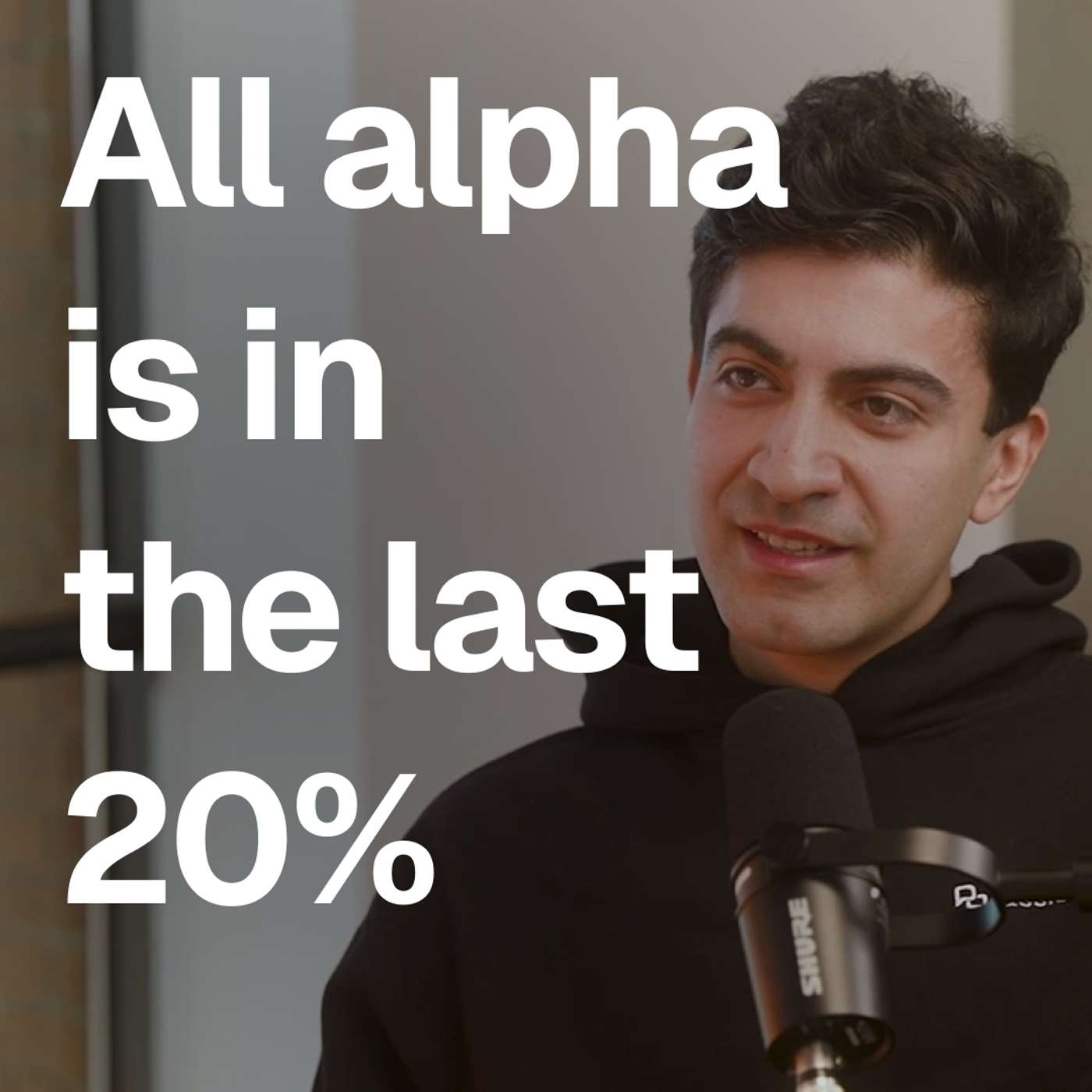
How does a hackathon project become infrastructure for more than 2,000 open-source repositories and reach 1.4 million monthly npm downloads?In this episode of The Merge, Hendrik Krack sits down with Simon Farshid, founder of Assistant UI, to explore what it really takes to build production-ready AI chat for AI agents.Simon explains why the visible chat window is only the surface. Behind it are streaming responses, state management, message editing, attachments, voice, interruptions, agent backends, and the level of polish users now expect from every AI product.The conversation also examines how AI coding agents are changing software engineering. When implementation becomes easier, writing clear specifications, understanding the product, reviewing edge cases, and having good taste become the real competitive advantages.As Simon puts it: “All the alpha is in the remaining 20%.”In this episode:• Why state management is the hardest part of AI chat • How Assistant UI grew from a hackathon project • The future of AI agents and generative interfaces • Why product taste is becoming an essential engineering skill • TypeScript vs. Python for building AI agents • How coding agents are creating more full-stack engineers • Simon’s automated CodeRabbit review and repair loop • How Assistant UI approaches open source and monetization • Why great engineers will lean forward instead of letting AI do everything CHAPTERS00:00 — The 80% trap and the rise of product taste 01:19 — Meet Simon Farshid 01:56 — What is Assistant UI? 02:44 — From hackathon project to startup 03:32 — 2,000 repositories and 1.4M monthly downloads 05:28 — Why building AI chat is harder than it looks 07:23 — Designing a modular open-source product 08:43 — Why taste is the new engineering bottleneck 10:29 — TypeScript vs. Python for AI agents 13:24 — How coding agents are changing engineering teams 16:25 — Building a business around open source 20:38 — The future of AI chat and generative interfaces 23:17 — “They said chat was dead” 27:38 — Generative dashboards and new UI primitives 29:28 — The future role of software developers 30:36 — Running coding agents in a CodeRabbit review loop 34:10 — Lean forward: where the remaining 20% lives 35:57 — Rapid-fire questions Explore Assistant UI:https://www.assistant-ui.com/Assistant UI on GitHub:https://github.com/assistant-ui/assistant-uiTry CodeRabbit:https://www.coderabbit.ai/Subscribe for more conversations with the engineers and founders building the future of software development.#AIAgents #AIChat #AICoding

Comments

Download from Google Play

Download from App Store
 United States