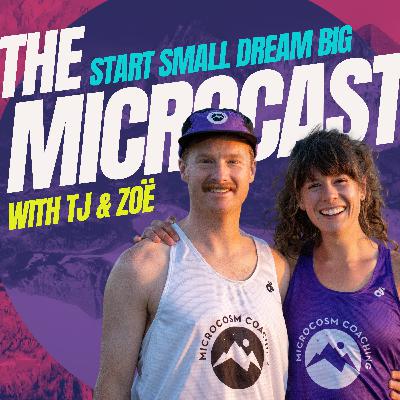
DiscoverThe MicroCast
The MicroCast
Claim Ownership

The MicroCast

Author: Microcosm Coaching

Subscribed: 6Played: 236
Share

Description

The Microcosm Coaching Podcast helps endurance athletes—whether you're a road runner, trail runner, or training for your first marathon or 100-miler—get more out of their training with evidence-based advice, effort-based coaching, and expert mindset support. Hosted by professional coaches and athletes, each episode explores practical strategies for race prep, running recovery, mental performance, and sustainable training. If you want to build fitness, avoid burnout, and find more joy in running, you're in the right place.
207 Episodes
Reverse
We break down the five most important running studies of 2025 and give you a framework for deciding which science actually deserves your attention, and what's just expensive distraction. Plus, we debunk the hype around ketone supplements and Norwegian double threshold training.What We Cover:The "Should I Care" framework for evaluating new researchWhy strict 80/20 polarization isn't magic for recreational athletesHow strength training improved time-to-exhaustion by 35%The fueling gap: marathoners averaged just 22-35g carbs/hour vs. the 60-90g recommendedWhy poor sleepers are 1.78x more likely to get injuredThe single-session spike that increases injury risk by 128%Resources:Tom Ralph's fueling tracking app: https://apps.apple.com/us/app/fuelflow/id6755150914Training PeaksHRV for Training appStudies Referenced:Rosenblatt et al 2025 (Polarized Training)Zanini et al 2025 (Strength Training)de Jong et al 2025 (Sleep)Franson et al 2025 (Injury Risk)Work With Us:One coaching spot available with TJ! Don't wait until January 1 reach out today. Microcosm-coaching.com
We're back after a quick Thanksgiving break to share the running wisdom we wish someone had told us years ago. Drawing on interviews with experienced runners and our own coaching insights, we break down five lessons that could save you years of frustration, injury, and wasted effort.What We Cover:Why the most important quality in an athlete isn't talent, it's showing upHow to incorporate skiing and winter activities into spring race trainingThe truth about consistency vs. intensity (spoiler: consistency wins every time)Why defining yourself by your pace is a trapRecovery isn't optional, it's where adaptation actually happensThe problem with cookie-cutter training plansFinding the balance between passion and obsessionListener Question:"I'm training for a spring 50K but live in Colorado. Can I swap runs for ski days or will I lose my running fitness?"Announcements:Boston Marathon Webinar Series with coaches Skyler and James starting in January. Free for Microcosm clients. Details at microcosm-coaching.com.Connect:Website: microcosm-coaching.comEmail: microcosmcoaching@gmail.comFoothills Community: $10/month (code FOOTHILLS10)
What separates athletes who reach their potential from those who plateau? In this fan-favorite episode, Coach TJ and Zoe break down 11 guiding principles that form the foundation of sustainable athletic growth—from knowing your why to controlling the controllables.But first, we settle the important debates: Pop-Tarts vs. Fig Newtons, why watermelon at aid stations is basically a psy-op, and which race day foods are actually worth reaching for.The 11 Principles:Know your whyCreate your visionCommitment to excellenceGoals as stepping stones (not leaps)Focus on the basicsEasy days easy, hard days hardShift from proving to improvingPractice patience and non-judgmentFeelings can be more informative than numbersStress is stressControl the controllablesCoaching announcement: Multi-sport coaches Zach Russell and Kristin Lane currently have roster spots open. Learn more at microcosm-coaching.comConnect with us:microcosm-coaching.commicrocosmcoaching@gmail.com
Training harder but not getting faster? Dealing with recurring injuries? The problem might be your fuel.Before Thanksgiving, I'm sharing an episode from Your Diet Sucks about RED-S, the energy mismatch that's quietly destroying athletic performance and causing injury after injury.When you chronically undereat for your training load, your body can't adapt. You're doing the work, but not getting the gains. Studies show athletes with RED-S are 4.5x more likely to get bone injuries and miss significantly more training time.Signs You're Underfueling:Training harder but getting slowerStress fractures or injuries that won't healConstantly exhausted despite rest daysLost period (or loss of morning erections in men)Frequent colds and illnessYou can't out-train a calorie deficit. Adequate fueling is how you honor your training. Going into the holidays: eat the food, recover hard, and come back stronger.In this episode: What RED-S is, how it shows up in male athletes (often overlooked), why it prevents adaptation, and how to fuel for actual performance gains, not just more miles.Listen before your holiday meals. Food is fuel. Recovery is where you get faster.
👍 Subscribe for weekly evidence-based training advice💻 Learn more about 1:1 coaching: https://www.microcosm-coaching.com📸 Follow us on Instagram: https://www.instagram.com/microcosmcoaching/Want to run healthier, stay consistent, and finally stop the cycle of overuse injuries? This episode breaks down the five most science-backed strategies for injury prevention, in a way that’s actually useful for real runners balancing work, family, and life. Coaches Zoë and TJ take a broad but evidence-based look at what actually keeps athletes durable: smart load management, strategic strength training, real recovery (not just vibes), targeted mobility, and neuromuscular training.They also cover why foam rolling feels good but isn’t a cure-all, whether gait analysis is worth the money, the truth about minimalist shoes, and how to safely return to training after getting sick. If you’ve been dealing with recurring niggles, you’ll walk away with clear, practical steps to train with more intention and fewer setbacks.Timestamps:00:32 — Intro, snacks, carved-up energy02:10 — Episode overview + why injury prevention matters04:00 — Hot or Not: Foam rolling06:15 — Hot or Not: Knee straps & patellar bands10:40 — Hot or Not: Gait analysis15:30 — Hot or Not: Minimalist/barefoot shoes20:55 — Listener Question: Training while sick + missed workouts32:45 — Introducing Skyler & Kyle (Masters specialists at Microcosm)36:20 — Injury Prevention Strategy #1: Progressive Load Management48:00 — Strategy #2: Strength Training (what actually works)58:45 — Strategy #3: Recovery & Sleep1:06:20 — Strategy #4: Targeted Mobility1:12:10 — Strategy #5: Neuromuscular Training1:17:00 — Putting it all together + hierarchy of what matters most
Want to train smarter, run stronger, and stop second-guessing your training? This episode dives into one of the biggest pitfalls we see as coaches: overthinking. From obsessing over pace and metrics to chasing “perfect” plans, Zoë and TJ break down how overthinking sabotages performance, and how to get back to feeling good, recovering well, and actually getting faster.🎙️ In this episode:The “Overthinking Hall of Fame”: Pace Police, Data Collectors, and Plan PerfectionistsWhy more data doesn’t mean better trainingHow to use RPE and interoception to build true awarenessThe science of simplicity and the power of the minimum effective doseReframing your mindset from proving to improving💻 Learn more about 1:1 coaching with Microcosm Coaching: https://www.microcosm-coaching.com📸 Follow us on Instagram: @microcosmcoaching🎧 Subscribe so you never miss an episode!
Want to train smarter, fuel better, and understand what your body actually needs? This episode unpacks the real science behind endurance training and fueling—no pseudoscience, no gimmicks. We start with a quick announcement about our Boston Marathon 2026 prep webinar (covering pacing, fueling, and course strategy from Hopkinton to Boylston), then move into a “Hot or Not” segment on popular running recovery tools: KT tape, dry needling, cupping, and stretching versus mobility.Next, we tackle a listener question on calf cramps during long races—what causes them, how to respond in the moment, and how to prevent them through smarter training and fueling.Finally, we close with a deep dive into metabolism for runners: ATP production, the limits of fat oxidation, how and why the “crossover point” matters, and why fasted or low-carb approaches can increase injury risk and reduce performance—especially for women.⏱️ Timestamps00:00 – Intro & Boston 2026 webinar invite04:00 – Hot or Not: KT tape, dry needling, cupping, stretching vs. mobility22:00 – Listener Q: Calf cramps—on-course fixes and long-term prevention40:00 – Metabolism 101: fat vs. carb fueling, crossover point, LEA/RED-S risksSubscribe for more evidence-based endurance coaching.Learn about 1:1 coaching at microcosm-coaching.com and follow @microcosmcoaching on Instagram.
If you’re running the 2026 Boston Marathon, don’t miss our Run Your Best Marathon at Boston Webinar Series—four live sessions led by certified Microcosm coaches Skylar Sorokoty and James Nance. Learn how to train for Boston’s unique course, nail your fueling, and feel confident and race-ready by April. Spots are limited, register now!This week, Zoë and TJ are talking about one of the most misunderstood workouts in endurance training: the long run. From pacing and fueling to recovery and race-day readiness, they unpack the real science behind why long runs work—and what most runners get wrong about them.They kick things off with a few Hot or Nots, breaking down three trending supplements in the endurance world: creatine (actually backed by science), nicotine pouches (just... no), and nitric oxide boosters (spoiler: eat your beets, skip the powder). Then, they dive into a listener question about post-ultra burnout, the fear of losing fitness, and how to rebuild motivation after a big race without overdoing it.In the main segment, Zoë and TJ go full science-nerd on what’s happening inside your body during a long run—mitochondrial biogenesis, glycogen supercompensation, fat oxidation, and more. They talk pacing, fueling, hydration, terrain, and recovery, explaining how to get the most from your long runs without wrecking yourself.Whether you’re chasing your first marathon finish or a 100-miler PR, this episode will help you train smarter, not harder.
Want a better year without burning out? Zoë and TJ share a practical, five-step blueprint to use your transition season to set up your best race year—without quitting running or living in the gray zone. You’ll learn how to keep frequency high (with easy intensity), sketch a long-range plan (1–3 A-races, smart tune-ups), match workouts to the right phase, and treat recovery like training so adaptations actually happen. We also tackle Hot-or-Not topics trail runners ask about: super shoes on road workouts, whether a shoe “quiver” really prevents injuries, and the truth about fueling with olive oil or swapping gels for candy. (Short version: practice what you’ll race with, and don’t copy Kilian.) If you’re planning a 50K, 100K, or 100M, you’ll hear when “real/solid” foods can help and why gut training matters. Subscribe for evidence-based coaching you can actually use.
Ever wonder what the difference really is between tempo, steady state, and threshold runs? In this episode of the MicroCast, coaches Zoë and TJ break down the most confusing middle zones in running, and explain how to use them intentionally to build endurance, speed, and confidence.🎙️ You’ll learn:How to identify and feel steady state, tempo, and threshold effortsWhat’s happening physiologically at each intensityCommon training mistakes (like running all your easy runs too hard)How to apply these workouts in your next training cycleWhy effort-based training helps you avoid burnout and improve consistency⏱️ Timestamps00:00 – Intro & “Hot or Not” segment10:30 – Listener Q: What to train for next after a big race25:15 – What’s the difference between steady state, tempo & threshold?40:10 – How to know if you’re doing these workouts right55:00 – Coaching takeaways: how to use intensity intentionally📣 Subscribe to the MicroCast wherever you get your podcasts💻 Learn more about 1:1 coaching: microcosm-coaching.com📸 Follow us on Instagram: @microcosmcoaching
If treadmill season makes you question your fitness — you’re not alone. This week, Coach Zoë and TJ dig into why treadmill running often feels harder than road or trail running, and how to actually use it to your advantage. They’ll unpack the biomechanics, heat buildup, and calibration quirks that make treadmills deceptively tough — and how to dial in effort-based training so you get real aerobic gains (without chasing meaningless numbers).Then they dive into adaptogens — what the science really says about ashwagandha, rhodiola, and all those “stress-busting” mushroom blends — and what actually works for performance and recovery.You’ll walk away with a five-part recovery framework that prioritizes sleep, fueling, and nervous-system regulation over gadgets and gimmicks.Plus: we’re kicking off our Run Your Best Marathon at Boston webinar series — four sessions that walk you through pacing, fueling, taper, and race-day execution with detailed tools and pro-level insight. Whether you’re running Boston or any spring marathon, this series will help you show up calm, confident, and ready to crush it.
🔥 Want to get more out of your training? This episode breaks down the five most important ways to nail your workouts—whether you’re training for a marathon, ultramarathon, or just building consistency. We talk pacing, mindset, and how to avoid the common mistakes that keep runners from improving.Zoë and TJ also tackle big listener questions about injury recovery, identity, and how to keep your fire burning when progress stalls. Plus, our Hot or Not segment covers official race photos, trusting weather forecasts, and whether sleep masks really work for runners.If you’ve ever wondered how to train smarter—not just harder—this episode is packed with practical endurance training tips you can use right away.⏱️ TIMESTAMPS00:00 – Intro & life updates08:30 – Hot or Not: Race photos, forecasts & sleep masks23:10 – Reddit Q&A: Mindset during injury recovery47:22 – Five ways to nail your next workout1:23:00 – Recap & closing thoughts📣 Subscribe so you never miss an episode.💻 Learn more about coaching: https://www.microcosm-coaching.com/📸 Follow us on Instagram: https://www.instagram.com/microcosmcoaching/
This week on the Microcast, Zoë and TJ run through a stack of running myths and training debates—some serious, some a little silly.First up: Hot or Not. Waist lights? Surprisingly useful. StairMasters? A tool, sure, but not a magic bullet. Then we dive into the trend of weighted vests, sled drags, and other “muscular endurance” hacks. They might look hardcore, but do they really help everyday runners, or just the elites?From there, we answer a listener’s Reddit-inspired question: does standing at your desk actually build endurance? (Spoiler: “time on feet” isn’t the same thing as running stress.)Finally, we take on the sacred cow of 3:1 deload cycles. Instead of sticking to the calendar, Zoë and TJ explain why recovery is more personal—and how to spot the real-life signs you’re ready for a down week.Topics: Hot or Not gear, weighted vests, standing desks, deload weeks, recovery cues.Subscribe so you never miss an episode.Work with us: Microcosm Coaching00:00 – Intro & Welcome02:05 – Hot or Not: Waist Lights06:42 – Hot or Not: StairMaster Training10:15 – Weighted Vests & Muscular Endurance: Do They Help Everyday Runners?18:30 – Elites vs. Real Life: What We Can (and Can’t) Borrow22:40 – Reddit Question: Do Standing Desks Build “Time on Feet”?28:12 – Why 3:1 Deload Weeks Are Tradition, Not Science32:55 – Three Signs It’s Time to Back Off37:10 – How to Structure a Smarter Deload Week41:25 – Wrap-Up & Takeaways
What happens when a hundred-mile race turns into a snowstorm survival test? In this episode, Zoë and TJ break down their very different experiences at the Run Rabbit 100 — from a top-five finish in brutal conditions to making the hard call to DNF.You’ll learn how ultrarunners can adjust goals mid-race, why safety should always come before ego, and how to recognize when “excellence” means stopping instead of pushing through. We also dive into ultramarathon-induced corneal edema (yes, your vision really can blur mid-race), hydration mistakes that derail performance, and the mindset shifts that help athletes stay resilient when plans fall apart.🎙️ Topics Covered:Mental flexibility when races don’t go as plannedThe decision-making process behind a DNFWhat corneal edema is and how it happens in ultramarathonsHydration and fueling mistakes to avoidBuilding toughness and resilience through consistent training📣 Subscribe so you never miss an episode.💻 Learn more about 1:1 coaching: microcosm-coaching.com📸 Follow us on Instagram: @microcosmcoaching
🔥 Race week is here! And with it, taper tantrums, heavy legs, and the mental games that can make or break your performance. In this episode, Coach Zoë and TJ share five evidence-based taper strategies to help you arrive fresh, confident, and ready to race.You’ll learn why cutting volume (not everything) is essential, how to keep just enough intensity to stay sharp, why sticking to your weekly rhythm matters, and how to stay specific without wrecking your quads. Most importantly, we dive deep into the mind game: how mental fatigue can add up to 45 minutes to your ultra, and practical ways to externalize choices, simplify logistics, and beat decision fatigue at aid stations.🎙️ In this episode:Taper madness, athlete vs. coach brainDecision fatigue & the “trash → bottles → food → go” mantraWhy overpacking hurts more than it helpsThe five-point taper plan you can actually trust⏱️ TIMESTAMPS00:00 – Welcome + race-week vibes14:00 – Mental fatigue & decision-making22:00 – Aid station systems that save minutes36:00 – The 5-point taper framework44:00 – Final checklist & taper mindset📣 Subscribe so you never miss an episode💻 Learn more about 1:1 coaching: microcosm-coaching.com📸 Follow us on Instagram: @microcosmcoaching
Are ultrarunners at higher risk of colon cancer? Can scrolling before a workout actually make you slower? And is muscle damage( not gut issues) the biggest reason athletes DNF ultras? This episode dives deep into three new studies that every endurance athlete should know about.Zoë and TJ break down the recent New York Times article on colon cancer risk in marathoners and ultrarunners, explaining why the headlines caused panic, what the data really says, and how to think critically about risk. They then discuss surprising new evidence that social media use before training may blunt your skill development and endurance. Finally, they dig into a groundbreaking study on muscle damage in ultras, why durability may matter more than VO₂max, and practical training strategies to keep your legs from blowing up on race day.Scroll to the bottom to see our citations for this episode!⏱️ TIMESTAMPS00:00 – Intro + Run Rabbit taper talk09:42 – Colon cancer study explained28:50 – Social media and mental fatigue in athletes42:00 – Muscle damage vs. GI distress in ultras01:20:15 – Practical training takeaways📣 Subscribe so you never miss an episode💻 Learn more about 1:1 coaching: https://www.microcosm-coaching.com/📸 Follow us: https://www.instagram.com/microcosmcoaching/Citations:American Cancer Society. (2024). Colorectal cancer early detection, diagnosis, and staging. https://www.cancer.org/cancer/colon-rectal-cancer/detection-diagnosis-staging.htmlFreitas-Junior, C. M., da Silva, J. G., Oliveira, D. V., & Melo, G. F. (2025). Pre-training social media use impairs skill efficiency and increases mental fatigue in athletes. European Journal of Sport Science. Advance online publication. https://doi.org/10.1080/17461391.2025.xxxxxMarcora, S. M., Staiano, W., & Manning, V. (2009). Mental fatigue impairs physical performance in humans. Journal of Applied Physiology, 106(3), 857–864. https://doi.org/10.1152/japplphysiol.91324.2008Nyberg, S. T., Batty, G. D., Pentti, J., Virtanen, M., Alfredsson, L., Fransson, E. I., ... & Kivimäki, M. (2018). Cardiorespiratory fitness and cancer risk: Findings from the HUNT study and meta-analysis. British Journal of Sports Medicine, 52(12), 871–878. https://doi.org/10.1136/bjsports-2017-098391Tiller, N. B., & Millet, G. Y. (2025). Muscle damage as a primary predictor of ultramarathon performance: A paradigm shift in endurance research. Sports Medicine. Advance online publication. https://doi.org/10.1007/s40279-025-0xxxVainshelboim, B., Fuchs, D., Kramer, M. R., Lima, R. M., & Arena, R. (2023). Cardiorespiratory fitness and risk of colorectal cancer: A population-based cohort study of 177,709 men. International Journal of Cancer, 153(5), 880–888. https://doi.org/10.1002/ijc.34567Zhu, W., Wadley, A. J., Sculthorpe, N., & Carter, H. (2021). Effects of social media use on swimming performance: The role of mental fatigue. Journal of Sports Sciences, 39(4), 405–412. https://doi.org/10.1080/02640414.2020.1835229
🔥 Wondering how much training volume you really need to get faster, avoid burnout, and stay injury-free? In this episode, Zoë and TJ break down the science and practical strategies behind volume in endurance training, plus why aid station efficiency and fueling myths matter just as much for your ultramarathon success.🎙️ In this episode, your coaches cover:Hot or Not: Car camping before races, pacers, downhill repeats, and “fat adaptation”How to move through aid stations like a Formula One pit stop (and avoid wasting precious minutes)Why training volume drives aerobic fitness — and how to build it safelyRed flags for overtraining and when to dial back your mileageScience-backed principles for progressing volume year over year without injury
🔥 Want to finish your next ultra stronger and avoid the dreaded late-race fade? This episode breaks down five science-backed pacing strategies every runner can use—whether you’re lining up for your first 50K or chasing a 100-mile PR. Drawing on data from UTMB, Western States, and Ultra-Trail Cape Town, Coaches Zoë and TJ share the training and mindset tools that separate strong finishers from blow-ups.🎙️ In this episode, we cover:Hot or Not: stacking two ultras close together, GPS watches vs. RPE, and sodium pre-loadingThe science behind interval design: VO₂ max, threshold, steady state, and strides—made simpleFive proven pacing strategies, including why uphill pace predicts finish time, how to keep pace variation small, and why “don’t bank time, build it” is the rule that saves racesPractical training takeaways: back-to-back long runs, uphill workouts, durability training, and how to pace climbs smarter⏱️ TIMESTAMPS00:00 – Intro & Boot Camp recap08:20 – Hot or Not: racing back-to-back, GPS watches, sodium pre-loading29:15 – Listener question: Is interval design random or scientific?44:10 – The science of pacing ultras: five strategies that work1:13:00 – Training takeaways + coaching insights📣 SUBSCRIBE so you never miss an episode💻 Learn more about 1:1 coaching with Microcosm Coaching: https://www.microcosm-coaching.com📸 Follow us on Instagram: https://www.instagram.com/microcosmcoaching/
Who gets to call themselves an athlete — and how should you fuel like one? In this special crossover episode from Your Diet Sucks, Coach Zoë and registered dietitian Kylee Van Horn tackle common endurance nutrition myths, from carb loading to high-carb fueling in larger bodies, and why “earning” the athlete label is holding runners back.You’ll hear practical tips for training your gut, troubleshooting race-day nausea, and avoiding the pitfalls of constantly changing your fueling plan. Plus: the science behind carbohydrate periodization, why hydration is the foundation of fueling, and how to rethink your athlete identity to train smarter and recover faster.In this episode:High-carb fueling strategies for endurance athletesCarb loading for training vs. race dayGut training and avoiding mid-race stomach shutdownsFueling considerations for larger-bodied runnersWhy everyone who trains is an athlete — and should fuel like one⏱ TIMESTAMPS00:00 – Intro & training updates03:02 – Athlete identity and fueling mindset16:07 – High-carb fueling in larger bodies24:31 – Carb loading & carbohydrate periodization36:22 – What to do when you can’t eat or drink mid-race42:09 – Beam Minerals and electrolyte marketing claims📣 Subscribe so you never miss an episode💻 Learn more about 1:1 coaching with Microcosm: microcosm-coaching.com📸 Follow us on Instagram: @microcosmcoaching
Want to run faster, whether you’re training for a 5K, marathon, or 100-mile ultra? In this episode, Zoë and Coach TJ break down five proven ways to build speed and endurance without burning out. They cover everything from running economy (and why it matters differently for ultras) to practical workouts like strides, hill sprints, VO₂ max intervals, and tempo runs, plus why easy running is essential for performance.You’ll also hear:Why wildfire smoke and high AQI days can crush performance and when to take your training indoorsThe hidden costs of running with poles vs. hiking vs. run-walk strategies on climbsReal-world gear choices like belts, vests, and yes, even frozen Capri Suns⏱ Timestamps00:00 – Adirondacks training recap + gear hot takes12:30 – Wildfire smoke, AQI, and safe training choices25:15 – Running economy: what it is and why it’s different for ultra runners36:10 – 5 ways to build speed: strides, hills, VO₂ max, tempos, and running easySubscribe so you never miss an episode.Learn more about 1:1 coaching: microcosm-coaching.comFollow on Instagram: @microcosmcoaching
loading
Comments