


 Claim Ownership
The Only Constant
Subscribed: 8Played: 110
Subscribe

© Copyright Basico
Description
Tune in to The Only Constant for insights you haven’t heard before - and for deep conversations at the intersection of business, technology, and AI, where the only thing that stays the same is change.
This podcast is for those who prioritize exploration over explanation.
For those who enjoy difficult questions more than easy answers.
For anyone looking to stay ahead and relevant in an age of accelerating change.
Join host Lasse Rindom as he speaks with global thought leaders about how AI and emerging technologies are actually being adopted in enterprise settings. Episodes explore the challenges of scaling generative AI, governing stochastic systems, embedding human-in-the-loop approaches, and confronting ethical trade-offs.
With a focus on pragmatic strategy, past automation lessons, and a touch of business philosophy, this podcast dives deep into how organizations deal with unstructured data, real implementation hurdles, and the messy reality of transformation.
Sponsored by Basico.
Driven by curiosity.
This podcast is for those who prioritize exploration over explanation.
For those who enjoy difficult questions more than easy answers.
For anyone looking to stay ahead and relevant in an age of accelerating change.
Join host Lasse Rindom as he speaks with global thought leaders about how AI and emerging technologies are actually being adopted in enterprise settings. Episodes explore the challenges of scaling generative AI, governing stochastic systems, embedding human-in-the-loop approaches, and confronting ethical trade-offs.
With a focus on pragmatic strategy, past automation lessons, and a touch of business philosophy, this podcast dives deep into how organizations deal with unstructured data, real implementation hurdles, and the messy reality of transformation.
Sponsored by Basico.
Driven by curiosity.
79 Episodes
Reverse

In this episode, Lasse Rindom speaks with Laura Jeffords Greenberg, lawyer, legal tech leader and top voice, educator, and Head of the AI Legal Academy at Wordsmith. Born in Silicon Valley and now based in Europe, Laura brings a unique perspective on how legal work is adapting - and sometimes resisting - the AI wave.
Their conversation dives into both the structural and cultural forces shaping the legal profession:
How in-house lawyers are embracing AI to stop reviewing NDAs and start preventing risk
What happens when you train a junior lawyer on AI - but they’ve never learned what “good” looks like
Legal language vs. code: ambiguity, jurisdictional nuance, and why “best efforts” might not mean what you think
Why Silicon Valley has always hated lawyers - and what it says about the future of regulation and power
This is an episode that goes deep on AI, and on legal, to ask what governs both worlds and what will it mean when they collide.
Do you want to know more about Laura Jeffords Greeberg?:
Laura Jeffords Greenberg is the Head of Wordsmith Academy, where she teaches legal teams how to use AI with clarity, confidence, and curiosity. A former in-house lawyer turned legal-tech educator, she’s trained thousands of lawyers across Europe and North America on practical, safe, everyday AI use.
She’s also recognized as a LinkedIn Top Voice, keynote speaker, and thought leader on legal tech and GenAI.
Laura focuses on bridging the gap between legal expertise and emerging technology, helping legal teams rethink workflows, develop AI literacy, and work with AI as a true colleague.
In this episode, Lasse Rindom speaks with Sune Selsbæk-Reitz, Data and AI Strategist at Demant. Sune has emerged as one of Denmark’s clearest and most skeptical voices in the AI field - not in opposition to generative AI, but in opposition to how uncritically it’s often applied.
The conversation covers a wide arc, but always circles back to human agency, historical perspective, and the need to reinstate critical thinking in digital transformation.
Topics include:
The fluency trap: why we mistake well-written answers for truth
How LLMs amplify what we bring to them - curiosity, clarity, or laziness
The forgotten value of source criticism and scientific theory in AI deployments
Data strategy, governance, and what Sune calls “forever beta”
De-ontological design and building systems that know what they should never do
An episode for anyone who wants to understand not just what AI does, but what it does to us.
Do you want to know more about Sune Selsbæk-Reitz?
Sune Selsbæk-Reitz is a Danish tech philosopher and Data & AI Strategist at Demant, a global hearing healthcare company. His work focuses on bridging data strategy, artificial intelligence, and ethics, ensuring that technology serves human dignity rather than efficiency alone.
He is the creator of the Deontological Design framework, which applies Kantian moral philosophy to AI ethics, and the author of the forthcoming book "Promptism: Fluent Machines, Forgotten Questions, and the Fight for Meaning in the Age of AI." Through his writing, public speaking, and research, he explores how fluency, automation, and convenience shape human thinking and moral responsibility in the age of intelligent systems.
Before joining Demant, Sune worked in the financial sector, leading strategic data initiatives and business transformation projects. He holds a master’s degree in philosophy and history, has written extensively on AI ethics and critical thinking, and is a regular speaker at conferences on responsible AI and the future of human-machine interaction.
In this episode of The Only Constant, Lasse Rindom speaks with Emilie Lundblad - triple Microsoft MVP in AI, Head of AI Center of Excellence at Ambu, and a true specialist with deep roots in econometrics, architecture, and data governance. Together, they explore what it actually takes to work meaningfully with AI in enterprise today.
Key themes from the conversation:
Why critical thinking and clarity of purpose is absolutely essential in AI today
How misalignment in organizations is amplified - not solved - by faster AI tooling
The disappearing middle: Why juniors risk being left behind, and how to accelerate their journey to seniority
Why AI doesn’t reduce complexity - it accelerates it, and what that means for governance and strategy
Why your lack of investment in digital maturity might just come back to haunt you in an AI transformation
Do you want to know more about Emilie Lundblad?
Emilie Lundblad is a three-time Microsoft MVP in AI, a two-time Microsoft Regional Director, and the head of the AI Center of Excellence at AMBU.
With over 15 years of experience in data and artificial intelligence, she helps organizations implement AI safely and responsibly in production.
Emilie is the vice-chair of the Danish Data Science Community, a national board member of the Pioneer Centre for AI, and a board member of Blue Logistics Group.
In this episode, Lasse Rindom speaks with Nandan Mullakara, automation strategist and author, about the future of automation and how AI, RPA, and APIs are evolving - not competing. Their conversation moves from the practical to the philosophical, exploring what happens when orchestration itself becomes intelligent:
Why it’s not AI or RPA, but AI and RPA - and how the “AND operator” mindset might be the real key to modern automation and IT
The difference between legibility and illegibility in business systems, and how AI challenges our instinct to make everything orderly
Why AI doesn’t eliminate work but actually creates more of it - and what that means for digital maturity
The coming tension between control and trust as organizations hand over decisions to machine intelligence
How agentic automation could dissolve the boundaries between processes, people, and systems
It’s a conversation about cycles, complexity, and coexistence - and why, in Nandan’s words, RPA was never born and will never die.
Do you want to know more about Nandan Mullakare?
Nandan Mullakara is a globally recognized leader in AI‑led automation and Agentic AI, ranked among the Top 200 World’s Most Influential Voices in AI by Favikon. He is co‑author of best‑selling books Agentic Artificial Intelligence and Robotic Process Automation Projects, cited widely across academia and industry (Google Scholar). He is featured in Onalytica’s Who’s Who in Automation.
As the founder of Bot Nirvana, Nandan advises enterprises on Agentic AI and Intelligent Automation—from strategy and operating models to measurable outcomes. He also hosts the Bot Nirvana AI & Automation Podcast, ranked among the top shows in its category for pragmatic, practitioner‑first conversations.
Previously, Nandan led Robotic Process Automation (RPA) practice and Application Managed Services (AMS) projects at Fujitsu Americas. He has driven initiatives for global companies such as Honeywell, BCBS, Canon, and Embraer.
His insights and articles have been featured by esteemed outlets including Forbes, Solutions Review, Tech Report, and Packt. Explore interviews on Onalytica, Engatica, Excelcult, Coding over Cocktails, and Kieran Gilmurray.
In this episode of The Only Constant, Lasse Rindom sits down with Serge Belongie, Director of the Pioneer Centre for AI and one of Europe’s leading AI thinkers, for a conversation that cuts through the noise of hype and panic to reach something far more enduring.
Together, they explore:
Why AI isn’t a revolution but a continuation of the march of automation
How the “idiot wind” of hype always blows through history and major technological changes
Why spreadsheets once terrified CEOs the same way large language models now do
The problem of “data washing” and how a biased baby monitor reveals the limits of clean datasets
Why AI should be treated as statistics and software - ordinary technology - until proven otherwise
The dangers of anthropomorphizing chatbots and why friction can be a democratic safeguard
Belongie’s blend of historical analogy, dry humor, and academic precision makes this conversation one of the most illuminating yet and a standout episode of The Only Constant.
About Serge Belongie:
Serge Belongie is a professor of Computer Science at the University of Copenhagen, where he also serves as the head of the Pioneer Centre for Artificial Intelligence (P1).
Previously, he was a professor of Computer Science at Cornell University, an Associate Dean at Cornell Tech, a member of the Visiting Faculty program at Google, and a professor of Computer Science & Engineering at UC San Diego. His research interests include Computer Vision, Machine Learning, Augmented Reality, and Human-in-the-Loop Computing. He is also a co-founder of several companies including Digital Persona and Anchovi Labs.
He is a recipient of the NSF CAREER Award, the Alfred P. Sloan Research Fellowship, the MIT Technology Review “Innovators Under 35” Award, the Stibitz-Wilson Award, the Helmholtz Prize, the Everingham Prize, and the Koenderink Prize for fundamental contributions to the Computer Vision community.
He is a member of the Royal Danish Academy of Sciences and Letters and serves on the board of the European Laboratory for Learning and Intelligent Systems (ELLIS).
In this episode, Lasse Rindom speaks with Elin Hauge - board member, strategist, AI advisor, kickboxer, and part-time law student - about the messy truth behind AI adoption. Their conversation navigates the sharp edges between math, language, risk, and responsibility:
Why understanding the cost of being wrong is central to responsible AI adoption - especially when decisions affect real people
How the confusion matrix reveals the hidden risks leaders rarely factor in
What generative AI really does (and doesn’t do) when it comes to language, meaning, and truth
Why pragmatism - not hype - should guide how companies deploy AI, and why most boards are still unprepared
And yes, how full-contact kickboxing might be the perfect metaphor for tech strategy
A conversation packed with edge, insight, and just the right amount of bruising honesty.
Do you want to know more about Elin Hauge?
Elin has built bridges between data-fuelled technologies and business value for more than 20 years. Through her collaborations with business leaders and tech entrepreneurs, she has developed an exceptional ability to connect business strategy with the application of data-driven technologies, including artificial intelligence. She brings novel perspectives to familiar challenges, persistently demystifying jargon and buzzwords, and consistently remains ahead of the curve with her insights into societal implications, sustainability, regulation, security, and geopolitics.
She approaches her perspectives with a humorous, down-to-earth, and pragmatic mindset, focusing on what is feasible now, what is responsible in both corporate and societal contexts, and what leaders need to understand about data and algorithms to make informed decisions. She then adopts a futurist perspective, looking ahead to potential scenarios and future outcomes, challenging established beliefs and viewpoints.
Her strong and engaging stage presence and her unique ability to tailor her communication style and narrative to specific audiences is highly regarded by her clients and audiences. As a moderator, she adopts a dependable, grounded, and professional approach to clients' needs. Her extensive speaking experience enables her to provide valuable support to clients and speaker line-ups in their preparations, content development, and delivery. She is particularly adept at crafting engaging narratives, infusing scripts with her personal expertise to create a natural and captivating experience. Elin excels at fostering a relaxed yet professional atmosphere, ensuring all participants feel at ease while maintaining high standards. Her collaborative approach, combined with her creative energy and ideas, enhances the flow and impact of events, making her a highly recommended choice for professional events.
Through systematic incorporation of the human perspective, she emphasizes that "it is up to us – the humans – to design the future of technology to be human-more, not human-less." In her talks, she provides tangible and well-grounded recommendations on how to derive real benefits from data-driven technologies, mitigate risks, comply with regulations, and consolidate and leverage data as a valuable business asset.
Acadmically, she holds an MEng in Biophysics and Medical Technology from the Norwegian University of Science and Technology and an MSc in Management Science and Operational Research from Warwick Business School. Recently, she has also commenced law studies to further enhance her ability to connect responsible and accountable business practices with regulatory frameworks. Her strong academic foundation in mathematics and physics, combined with extensive business experience, provides a solid basis for her perspectives on the revolutionary opportunities and complex challenges associated with artificial intelligence and other data-driven technologies.
She also holds several non-executive board positions, serving as chair for the majority of these companies.

In this episode of The Only Constant, Lasse Rindom speaks with Sue Turner, founder of AI Governance and Professor in Practice at the University of Bristol Business School. Their conversation spans both the pragmatic and philosophical dimensions of AI adoption, with key discussions points being:
Why most organisations are stuck in their AI maturity – experimenting without moving to real transformation
The tension between legacy data as both “gold dust” and “an anchor” holding companies back
How humility and a beginner’s mindset are essential for leaders to make sense of AI’s possibilities
The dangers of shadow AI in enterprise software and why transparency from vendors should be mandatory
The risk of letting AI development be driven by a handful of tech giants, and Sue’s call for more democratic, purposeful leadership around AI
It’s a wide-ranging discussion that touches on power, governance, and the sheer speed of technological change.
Do you want to know more about Sue Turner?
Sue Turner is dedicated to using her expertise in AI governance and ethics to inspire people and organisations to use AI with wisdom and integrity.
With both a Law degree and an MSc in Artificial Intelligence and Data Science, she established AI Governance Limited in 2020 to advise businesses and policy makers on pragmatic AI, data ethics and governance issues, and making a positive societal impact. Her Board development clients range from Fortune 100 and FTSE 350 businesses to small charities, and her reach is global through accredited training programmes and being a founder member of the United Nations AI Skills Coalition. She has been rated in the World's Top 100 Women in AI Ethics and was one of the first 14 people globally to be accredited in the Foundations of Independent Audit of AI systems.
She is Professor in Practice for AI and Technologies at the University of Bristol Business School, Board Chair and Non-Executive Director for purpose-driven businesses in regulated industries and has been a Mentor on the Turing Institute’s Skills Policy Awards. Her career spans entrepreneurial private businesses and not-for-profit organisations where she has led significant organisational growth, raised £27 million for charity and collaborated to shift power to help people improve their prospects. She was awarded the OBE in 2021 for Services to Social Justice.
In this episode of The Only Constant, Lasse Rindom speaks with Jason Stanley from ServiceNow - AI expert, sociologist, and someone who actually reads the footnotes. Together, they unravel the real frontiers of AI in enterprise - not in the labs, but in the messy middle where governance, workflows, and risk collide.
Topics covered include:
Why large-scale organisations need more than just great models - they need infrastructure
How agents force a rethink of steerability, auditability, and control in AI systems
The exploding attack surface of GenAI and why prompt injection should be on everyone's mind
What “neuro-symbolic” means and why it matters
Whether augmentation is just displacement in disguise - and what history tells us about it
A discussion into the deep. Into workflows. Into sociology. Into the uncomfortable. Exploring, as usual.
Do you want to know more about Jason Stanley?
Jason Stanley is Head of AI Research Deployment at ServiceNow, leading a team de-risking and finding product value in AI research. Previously he led the company's applied research team working on AI trust and governance.
In the past, he has led research and product teams in technology companies, was an invited expert on AI issues for OECD, served on the Partnership on AI's Expert Group on Human-AI Collaboration and worked on labor market policy for the Government of Canada.
He holds a Ph.D. in Sociology from New York University and social science degrees from Oxford University and Williams College.
In this episode of The Only Constant, Lasse Rindom speaks with retired tech executive and deep thinker Michael Carroll about the coming shift from automation to true agency. They explore what it means when AI no longer just supports decisions, but begins to reason with us - and sometimes, for us.
Highlights include:
What agency really means - and why some AI projects miss the point
The illusion of better decisions through more dashboards
Why discomfort is essential for growth - and what’s lost when AI does the hard things for us
How causal AI could change enterprise architecture from gatekeeping to guidance
Whether AI isolates us from peer groups - or makes us more deeply understood
It’s a conversation that asks more than it answers - which is exactly the point.
Do you want to know more about Mike Carroll?
Mike Carroll grew up on a farm in Ohio, where work began at breakfast and was measured in sunrises, where results were earned with sore muscles and finished with calloused hands. That foundation instilled the discipline of process, respect for time-tested practices, and the belief that lasting value is built, not borrowed. Those lessons carried him from the fields into engineering and later into leadership, shaping a career grounded in both tradition and innovation.
From the mills of Mead’s pulp and paper operations to executive leadership at Georgia-Pacific, he drove transformation at scale by embedding innovation into the core of operations. As Deputy Chairman and CEO at Shepard LTD in the UK, he navigated global markets. At McTech Group, he forged growth with Walmart, Lowe’s, Home Depot, and Kroger. Today he serves as Chief Strategy and Operations Officer at Trek.AI, Research Fellow at LNS Research, and Board Advisor to the Industrial AI Nexus, working with the Chief Architects Network. Alongside these roles, he advises multiple AI startups, mentoring the next generation of leaders shaping the future of intelligence.
Across this journey, Carroll has been recognized as Visionary of the Year by Smart Industry and Innovator of the Year by the Association of Suppliers to the Paper Industry. A sought-after keynote speaker and columnist, he weaves real-world case studies with lyrical storytelling that challenge leaders with a simple question: “What must be true in one year, three years, a decade?” Whether advising boards, guiding innovation councils, or speaking to global audiences, he holds to one conviction, the next industrial revolution will not be won by those who claim to have every answer, but by those willing to seek and bold enough to ask better questions.
In this episode, Lasse Rindom speaks with Jakob Freund, CEO of Camunda, on what it really means to build AI-driven automation that’s enterprise-ready - without losing grip on governance, process integrity, or human responsibility.
Their lively, deep-cutting discussion covers:
The realistic path to AI value - why it’s still about measurable automation, not magic
Jakob’s framework of blending deterministic workflows with dynamic agentic AI
The rise of “enterprise-grade agents” that own processes (not just perform tasks)
How Camunda's orchestration layer became the missing link between structure and AI flexibility
Governance, crumple zones, hallucinations, and who really ends up in jail when the agent fails
Do you want to know more about Jacob Freund?
Jakob is the co-founder and chief executive officer, and is responsible for setting a bold vision and strategy for Camunda. He is also the driving force behind Camunda’s global growth and cohesive company culture. Jakob co-authored the best-selling book, “Real-Life BPMN,” and is a sought-after speaker at technology and industry events. He holds an MSc in computer science from Hochschule für Technik und Wirtschaft Berlin.

In this episode of The Only Constant, Lasse Rindom is joined by Danilo McGarry, global AI leader, board advisor, and host of one of the fastest-growing AI podcasts. Together, they explore the real-world implications of AI transformation - far beyond the hype and fear-driven headlines.
Key discussion points include:
Common misconceptions that derail enterprise AI initiatives
Why AI isn’t “plug and play” - and how purpose, process, and orchestration determine success
Danilo’s three-phase outlook for the future of work, automation, and post-scarcity economics
How generative AI and robotics will shift business models, employment, and even national economies
What boards and executives must do to govern AI responsibly and drive long-term transformation
From rethinking workforce structures to building workflow-driven organizations, this episode offers a grounded and forward-looking perspective on the next decade of AI in business and society.
Do you want to know more about Danilo McGarry?
Danilo McGarry is a leading AI & Digital Transformation expert, advisor, and keynote speaker. His work focuses on transforming organizations through practical AI applications and strategic digital initiatives.
With a proven track record at Fortune 500 companies, Danilo has helped businesses increase valuations by up to 5x. He specializes in transforming companies with tech, especially through the use of Ai and Digital Transformation methodologies.
Danilo has trained over 90,000 consultants, C-suite executives, and board members in the world's largest 10,000 companies across 90+ countries. His insights reach millions of professionals annually through his speaking engagements, socials and publications. His work is studied by over 100 universities around the world and is approved by the PMI institute. Today he runs his own Ai company & advises Fortune 500, FTSE 250 companies and governments around the world.
What makes Danilo truly unique is his rare ability to excel at both the technical and business aspects of AI. While many experts specialize in either technology implementation or business strategy, Danilo bridges this gap. Danilo is one of the few leaders on earth to have successfully designed, built, and scaled AI & Digital Transformation programs for global organizations while simultaneously driving over $2 billion in tangible business value through new products, services, and operational efficiencies - a combination of skills rarely found in a single professional.
In this episode of The Only Constant, host Lasse Rindom speaks with Eric Siegel - author of The AI Playbook and a straight-talking voice in a noisy AI market. Siegel cuts through overpromises, resists crystal-ball fantasies, and reminds listeners that most of AI’s real business value still comes from predictive models, not the latest generative toys.
They discuss:
Why predictive AI remains an untapped differentiator while generative AI is fast becoming a commodity
The “accuracy fallacy” and the danger of chasing perfect certainty
How narrowing scope and adding predictive layers over generative systems can make them viable in high-stakes use cases
Why AGI is, in Siegel’s view, at least 1,000 years away - and why that’s a useful mindset for today’s business leaders
Do you want to know more about Eric Siegel?
Eric Siegel, Ph.D., is a former Columbia University professor who helps companies deploy machine learning. He is the cofounder and CEO of Gooder AI, the founder of the long-running Machine Learning Week conference series, the instructor of the acclaimed online course “Machine Learning Leadership and Practice – End-to-End Mastery,” executive editor of The Machine Learning Times, and a frequent keynote speaker. He wrote the bestselling Predictive Analytics: The Power to Predict Who Will Click, Buy, Lie, or Die, which has been used in courses at hundreds of universities, as well as The AI Playbook: Mastering the Rare Art of Machine Learning Deployment. Eric’s interdisciplinary work bridges the stubborn technology/business gap. At Columbia, he won the Distinguished Faculty award when teaching the graduate computer science courses in ML and AI. Later, he served as a business school professor at UVA Darden. A Forbes contributor, Eric publishes op-eds on analytics and social justice.
Eric has appeared on Bloomberg TV and Radio, BNN (Canada), Israel National Radio, National Geographic Breakthrough, NPR Marketplace, Radio National (Australia), and TheStreet. A Forbes contributor, Eric and his books have been featured in BBC, Big Think, Businessweek, CBS MoneyWatch, Contagious Magazine, The European Business Review, Fast Company, The Financial Times, Fortune, GQ, Harvard Business Review, The Huffington Post, The Los Angeles Times, Luckbox Magazine, MIT Sloan Management Review, The New York Review of Books, The New York Times, Newsweek, Quartz, Salon, The San Francisco Chronicle, Scientific American, The Seattle Post-Intelligencer, Trailblazers with Walter Isaacson, The Wall Street Journal, The Washington Post, and WSJ MarketWatch.
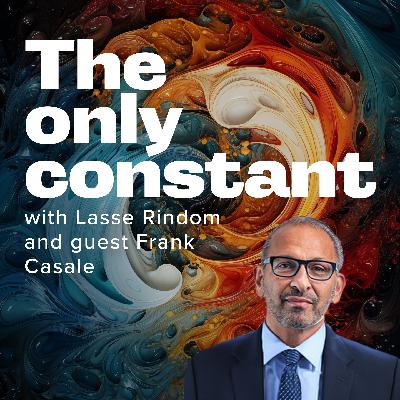
In this episode, Lasse Rindom speaks with Frank Casale - entrepreneur, advisor, and long-time voice in automation and enterprise change. Frank calls himself a “conflicted futurist,” and it shows - in the best way possible. Together, they discuss:
Why most companies say “agentic” but act quarter-to-quarter
How AI isn’t just smart- it’s becoming empathic, and what that unlocks
The real revolution: not tech, but how work gets done
Why the next big wave isn’t just automation, but it’s services powered by digital labor
Frank is sharp, provocative, and uncomfortably honest. If your roadmap still starts with tools, this might rattle your framing
Do you want to know more Frank Casale?
Frank Casale is a veteran in enterprise growth, go-to-market strategy, and emerging tech, best known as the founder of the Institute for Robotic Process Automation & AI, The Outsourcing Institute, and most recently Tranquilla AI - an empathic-AI startup delivering comfort, concierge, and coaching services. With over two decades of experience selling into complex, regulated, and global markets, Frank has helped early-stage and scaling companies break through noise, build trust-based sales pipelines, and close strategic deals with enterprise giants like GM, Citibank, PwC, and IBM. He’s a recognized voice in the automation and AI ecosystem, known for his straight talk, strategic clarity, and ability to spot momentum before it peaks.
As an operator, advisor, and super-connector, Frank opens doors most teams can’t. His global network - spanning over 150,000 professionals and 30,000+ direct LinkedIn connections - includes buyers, investors, alliance partners, and influencers across the U.S., EMEA, and APAC. Whether he’s shaping go-to-market strategies, launching empathic-AI platforms, or speaking on the future of digital labor, Frank’s focus remains consistent: helping tech companies grow faster by building relationships that convert - and by staying two steps ahead of where the market is going.
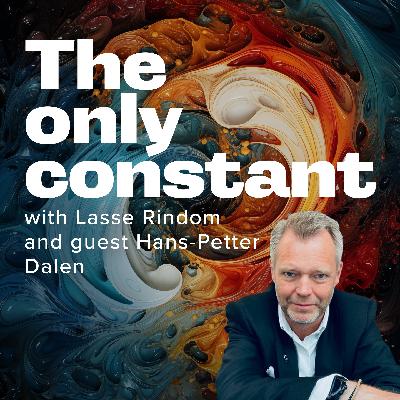
In this episode, Lasse Rindom is joined by Hans Petter Dalen - “HP” to most - who heads up AI Governance for IBM across Europe, the Middle East, and Africa. With more than two decades inside IBM and a rare mix of realism, wit, and deep enterprise insight, HP brings clarity to a conversation often lost in hype words and messages.
Together, they unpack:
How IBM actually saved $3.5 billion with AI - and why it's more than just a nice number or marketing message
Why AI governance isn’t bureaucracy, but the key to doing real things at scale
The hidden cost of shadow AI, and why your apps may already be leaking value and risk
And why relevance, not general capability, is the true frontier for enterprise AI
HP doesn’t sugarcoat it: most companies are still in the sandbox. But the tools are here, the use cases are maturing, and the mandate is clear- get serious, or get left behind.
Do you want to know more about Hans Petter Dalen?
Hans-Petter (”HP”) Dalen, is IBM’s Business Executive for AI in EMEA. He has 25 years of experience in IBM, and has for the past many years discussed AI Use Cases and how to operationalize them across many industries.
HP is Norwegian, and has lived in Denmark for the last 20 years with his family. He is an engaging speaker, panelist and podcaster. He has addressed the OECD, parliament committees, standardization bodies and ministries.
LinkedIn profile: www.linkedin.com/in/hans-petter-dalen-691b345
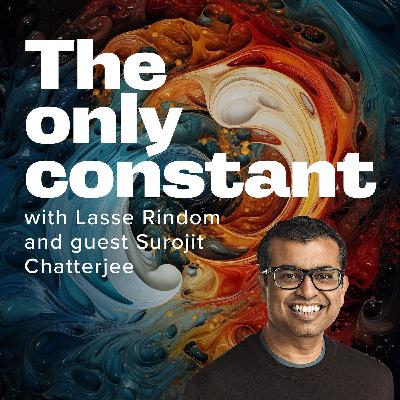
In this episode, Lasse Rindom speaks with Surojit Chatterjee, CEO of Ema AI - a platform for building agentic AI employees that automate complex enterprise workflows across systems and departments. The conversation cuts through the hype and dives into real operational challenges of scaling generative AI in the enterprise:
Why “agent-washing” is the new “AI-washing” - and what truly separates intelligent agents from chatbots and RPA
The balance between letting agents act autonomously and keeping them purposefully inhibited to ensure trust and control
How cross-silo AI deployment and change management are becoming more critical than model accuracy
A must-listen if you think your enterprise is AI agent–ready. Are you sure it is?
Do you want to know more about Surojit Chatterjee?
Surojit is the founder and CEO of Ema, the company pioneering agentic AI to transform enterprise work. Previously, he guided Coinbase through a successful 2021 IPO as its Chief Product Officer and scaled Google Mobile Ads and Google Shopping into multi-billion dollar businesses as the VP and Head of Product. Surojit holds 40 US patents and has an MBA from MIT, MS in Computer Science from SUNY at Buffalo, and B. Tech from IIT Kharagpur.
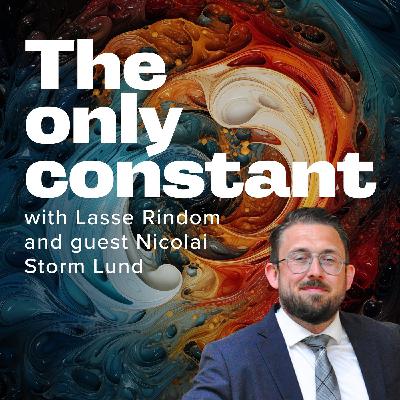
In this episode of The Only Constant, Lasse Rindom sits down with Nicolai Storm Lund, Vice President of Digital Technology & Information Security at Velux, to talk about what it really means to lead digital change in the machine room - beyond buzzwords and boardroom slides.
They discuss:
Why AI is just another tool - until it’s paired with real problems and real accountability
How IT needs to be both flexible and firm: agile enough to build fast, structured enough to scale responsibly
The discipline of saying no - and why it’s often the most important part of driving change
What it takes to move from proof-of-concept to production - when business expectations are moving faster than systems can keep up
It’s a conversation about staying clear-headed when things speed up - and keeping purpose at the center when everyone else is chasing trends.
Do you want to know more about Nicolai Storm Lund?
Nicolai Storm Lund is Vice President of Digital Technology & Information Security at VELUX, where he leads global IT infrastructure, cloud operations, digital workplace, and information security initiatives. Based in Denmark, he oversees datacenter operations, network management, cloud adoption, identity and authentication, as well as global IT support for over 12,000 users across the company’s worldwide locations.
Throughout the past 25 years, Nicolai have held international management roles in the space of Information Technology, with the international facility services giant ISS A/S, as well as GN Store Nord known for Jabra and GN ReSound.
With a career spanning leadership role at major international companies, Nicolai brings deep expertise in IT operations, security architecture, and digital transformation. Nicolai is recognized for his strategic vision, technical acumen, and commitment to fostering high-performing teams that drive innovation and operational excellence in complex, global environments. He puts an honor in representing what he calls “Mid-Wife leadership”.
He is a father of three, hobby farmer, passionate strength sports fan, and a fan of pretty much everything with a motor.
In this episode, Lasse Rindom is joined by one of his favourite analysts - Tom Reuner. Principal Analyst at PAC, Tom is known for calling out hype, challenging lazy narratives, and bringing a historian’s lens to enterprise tech. They discuss:
Why orchestration beats buzzwords in the race to value
How agentic AI won’t fix anything if your architecture’s still a mess
The repeated failure to turn tech promise into operational change
Why ambiguity is the true enemy of enterprise AI
And what providers conveniently leave out when talking transformation
Tom combines deep market insight with just the right amount of cynicism - plus decades of experience working with automation, cloud, AI, and enterprise service delivery.If you’re tired of decks with no outcomes and pilots with no path to production, this one’s worth your time.
Do you want to know more about Tom Reuner
Tom Reuner is a Principal Analyst at PAC based in London, UK.Tom is passionate about helping clients solve business problems and understand technology adoption. He has gained a strong reputation for blending developing innovation frameworks with pragmatic advice while connecting communities. Leveraging his long entrenchment in the automation community and having worked with some of the brightest minds in AI for a startup, Tom guides PAC’s thought leadership on automation and AI.
Tom’s extensive knowledge of the market will allow him to contribute to PAC’s research in Europe and in the US on a broad range of hot topics including cloud transformation, Artificial Intelligence (AI) and automation, and software platforms (like ServiceNow and Salesforce).His deep understanding of market dynamics comes from having held senior high-profile positions at multiple analyst firms, where his responsibilities included research, consulting, and business development. Tom is based in London and will be directly involved in PAC’s UK coverage as well as our Software and IT Services (SITSI®) Research Program and international consulting projects.
Tom has a Ph.D. in history from the University of Göttingen in Germany.
In this episode of The Only Constant, Lasse Rindom sits down with Katrin Gülden Le Maire, senior advisor, philosopher, and business thinker, for a sharp, deep dive into ethics, AI, and the limits of truth. Together they untangle the buzzwords, the confusion, and the hidden tensions shaping today’s corporate decisions:Why “ethics” in business isn’t what most people think
How philosophical reflection, not just compliance, shapes real strategy
Why leadership often rushes into AI adoption without asking the right foundational questions
How governance becomes culture, and why ethical direction must come top-down
Why ethics isn’t just about what you do - but also about what you refuse to do
At its heart, this conversation explores the hard questions: Is it real? Is it true? Is it right? Katrin’s perspective reminds us that rushing into technological change without pausing for deep, structured reflection is a failure not just of ethics but of leadership itself.
Do you want to know more about Katrin Gülden Le Maire?
Dr. Katrin Gülden Le Maire is a seasoned strategic advisor and independent researcher with over 25 years of experience across the finance, real estate and technology sector. Her work is characterized by a strong emphasis on governance, ethical leadership, and the integration of philosophical insights into business practices.
Based in Paris, Katrin has an extensive international background, having lived and worked in Germany, the UK, and France. She provides guidance to leaders and Boards on strategic development, positioning and governance – working with a value-add approach.
She earned a Doctorate in Philosophy from Middlesex University, where her interdisciplinary research delved into the educational and science-political developments on the scientific credibility of theology as a university discipline in Germany. She holds a Master of Science in Corporate Communications from Rotterdam Business School and has completed further studies in Financial Management and Theology at British universities. Moreover, Katrin is a Chartered Financial Analyst ESG.
Katrin research interests are interdisciplinary, encompassing cyber ethics, democracy development, social cohesion, and epistemology. She selectively teaches and participates in scientific research at the the intersection of philosophy, the political and cognitive sciences.
In addition to her advisory and research roles, she is actively involved in promoting female leadership. She serves as an advisor to ACTIVES, a French coalition, which aims to promote female senior talent to lead CAC40 companies. Katrin is a former advisor to the Policy Liaison Group ESG in Westminster/UK with focus on the development of a British taxonomy.
Katrin is a recognized contributor to international forums such as the Women's Forum Global Meeting or Women in Tech, where she discusses topics related to cyber ethics, AI and tech diplomacy.
For more information about her work and publications, you can visit her official website at kglemaire.com or follow her on LinkedIn.

In this episode of The Only Constant, host Lasse Rindom speaks with Peter Vester, Lead Data Scientist at Novo Nordisk and winner of the 2024 DAIR Award for Data Science Professional of the Year. Peter’s approach cuts through the usual GenAI hype.
Together they explore:
Why the right question is never “can we do a GenAI solution?” but “what real problem are we solving?”
How Novo rolled out an internal AI marketplace and chatbot to 30,000 employees without losing control or trust
Why the better the model, the more dangerous human laziness becomes
How to balance creativity and accuracy when deploying GenAI in a highly regulated pharma environment
The long-term risk: replacing engineers with AI and eroding critical system understanding
For anyone interested in making AI work in the enterprise (not just in demos), this episode will spark plenty of reflection.
Do you want to know more about Peter Vester?
Peter Vester is Lead Data Scientist at Novo Nordisk with a PhD, several scientific publications and front-cover articles, and multiple international awards, including the DAIR Awards "AI / Data Science Professional of the Year 2023 / 2024" for the Nordic countries. He has also been recognized as a Top-100 talent in Danish Business by Berlingske. As a specialist in Generative AI, he leads a team developing high-quality business solutions with large language models and agents.
Peter works on initiating and leading data science projects across a wide range of domains, including research, clinical trials, marketing, finance, and the supply chain. His passion lies in creating real business value from data by putting machine learning into production and going beyond the proof-of-concept stage. He is also an official subject matter expert in Machine Learning for AWS.
To Peter, data science goes beyond just numbers - it’s about uncovering the stories they tell and the valuable lessons they offer. He compares it to scaling a mountain: full of difficulties, obstacles, and challenges, but with a view at the top that makes the journey worthwhile. Like any adventurer, he enjoys sharing the path he took, the hurdles he overcame, and the awe of standing at the peak of the data mountain.
In this episode of The Only Constant, Lasse Rindom speaks with Anna Tebelius Bodin - a Harvard-educated educator and brain science communicator - about the essential role of effort in cultivating meaning and fulfillment in a world increasingly defined by convenience.Together, they explore:
Why friction and striving are central to personal growth - and how AI’s instant gratification risks leaving us empty
The cost of outsourcing thought: what we gain in speed, we risk losing in identity, learning, and satisfaction
The paradox of progress: when we get what we want too easily, we lose the very desire that drove us
The responsibility of leaders and educators to protect focus, mental engagement, and human connection
As Anna warns, “A brain that isn’t used won’t be needed.”
This episode is a timely reflection on what makes life meaningful - and what we should be careful not to automate away ...
Do you want to know more about Anna Tebelius Bodin?
Anna Tebelius Bodin is a speaker, author, and educator, with a master’s degree from Harvard University, where she also assisted research.
She has given more than 1700 lectures on the psychology behind leadership, personal development and learning. Her books have been appreciated for making complex theory simple enough to provide profound insights to everyday life. As recognition of her work, she received the 2020 Swedish Mensa Award.

Comments

Download from Google Play

Download from App Store
 United States