


 Claim Ownership
The PJ Pod
Subscribed: 49Played: 1,119
Subscribe

© All rights reserved
Description
Keeping you one step ahead of developments in pharmacy, medicines and the pharmaceutical sciences. Brought to you by the team behind The Pharmaceutical Journal.
68 Episodes
Reverse
This episode of The PJ Pod looks at the importance of speaking up whenever you have a safety or wellbeing concern, and how exactly to go about that. We speak to Beth Carter, interim director of operations and strategy at the National Guardians Office; and Mark Pitt, pharmacist and director of defence services at the Pharmacists’ Defence Association, who set out what anyone working in pharmacy should know if they are thinking about raising concerns.
For links to further resources and sources of support when getting started in research visit The Pharmaceutical Journal website.
This episode is presented by Katherine Sole, editor of research and learning at The Pharmaceutical Journal, and produced by Geoff Marsh.
The PJ Pod’s final episode of the year looks ahead to our editorial team’s predictions for pharmacy in 2026. What big changes are coming for the world of pharmacy — and what impact will this have on pharmacists’ day-to-day work?
We also look at the biggest stories of 2025, including a new contract that was deemed the best deal in the past decade, the ten-year health plan and the greater role that pharmacists will play in preventing ill-health within the community, as well as a government consultation on pharmacists combatting medicines shortages by being able to amend prescriptions in limited ways.
Tell us about your own predictions and join our conversation on social media using the hashtag #PJPod, or email us at: editor@pharmaceutical-journal.com.
This episode is presented by Siobhan Chan, senior features editor, and produced by Geoff Marsh.
Thank you to Corrinne Burns, Royal Pharmaceutical Society correspondent; Graham Clews, news editor; Caitlin Killen, clinical editor; Joanna Robertson, senior clinical reporter; and Sophie Willis, investigations editor, for their contributions.
Article Supported By
Pfizer
Financial support was provided from Pfizer Ltd. Pfizer have provided only financial support and have had no input into the development or content of the project and associated materials.
In this episode of The PJ Pod, senior editor Alex Clabburn shares insights from a recent expert round table meeting hosted and organised by The Pharmaceutical Journal exploring how pharmacists can contribute to improved migraine care for patients.
For links to further resources and sources of support when getting started in research visit the PJ website.
Many thanks to Callum Duncan, Sandip Patel, Bethany Hill, Katy Munro, Rob Music and The Migraine Trust for their contributions and support in the production of this episode.
This programme is presented by Alex Clabburn, senior editor, research and learning and was produced by Geoff Marsh.
In this episode of The PJ Pod, senior editor Alex Clabburn shares insights from a recent expert roundtable meeting hosted and organised by The Pharmaceutical Journal, which explored how pharmacists can contribute to improved migraine care for patients.
By the end of the episode, you should be able to:
Understand how to recognise symptoms and identify patients with undiagnosed migraine;
Know which treatments are recommended for acute migraine and when preventative medications are indicated;
Understand the long-term nature of migraine and need for ongoing patient support and optimised treatments,
Know the importance of lifestyle adjustments and headache diaries to help patients reduce their exposure to migraine triggers and frequency of attacks.
Many thanks to Callum Duncan, consultant neurologist at Aberdeen Royal Infirmary, Sandip Patel, Bethany Hill, a headache and facial pain clinical nurse specialist at Guy’s and St Thomas’ NHS Foundation Trust, Katy Munro, a senior GP headache specialist at the National Migraine Centre, Rob Music, chief executive of the Migraine Trust, and the Migraine Trust for their contributions and support in the production of this episode.
This programme is presented by Alex Clabburn, senior editor, research and learning and was produced by Geoff Marsh.

In this episode of The PJ Pod, we explore the main changes and implications for practice of the National Institute for Health and Care Excellence (NICE)’s chronic heart failure guidance update.
On 3 September 2025, NICE released its updated guidance on ‘Chronic heart failure in adults: diagnosis and management’.
The guidance mentions the role of pharmacy for the first time and has implications for an expanded role for primary care in managing heart failure.
The guidance makes several recommendations, including on the use of combination treatment of the four main types of treatment: angiotensin-converting enzyme inhibitors (ACEIs), beta-blockers (BBs), mineralocorticoid receptor antagonists (MRAs) and sodium-glucose co-transporter-2s (SGLT2s) inhibitors — also known as the four pillars — in the early treatment of heart failure.
In this episode of The PJ Pod, clinical editor Caitlin Killen talks to Paul Wright, consultant cardiovascular pharmacist at Barts Health NHS Trust, to learn more about the guidance and its implications for practice.
This episode was produced by Geoff Marsh.

In this episode of Pharmacy Inside Jobs, senior features editor Dawn Connelly talks to Sanjay Gudimetla.
Gudimetla has worked within the pharmaceutical industry for around nine years and is currently senior medical affairs manager at Jazz Pharmaceuticals. He is also a qualified final medical signatory.
Before moving to his role within the pharmaceutical industry, Gudimetla gained his independent prescriber qualification and worked within clinical practice, including roles in community pharmacy, primary and secondary care.
Listen to this episode if you want to find out how to secure a role in the pharmaceutical industry, the diverse opportunities available and whether it is possible to achieve a work–life balance.
This episode was produced by Geoff Marsh, with editorial support from Alex Clabburn, senior editor, research and learning.
--
Our new PJ Pod series — Pharmacy Inside Jobs — has been developed to inspire you to take the next step in your career. Whether you are a pharmacy student or a seasoned pharmacy professional, our goal is to provide insights into the increasingly diverse roles that exist within the profession.
In each episode, we will be joined by a guest to explore their career journey so far, with a focus on their current role and the opportunities, challenges and rewards that it brings. We will also find out which skills are needed to succeed in their role and how you could follow in their footsteps.
From rising stress to expanding clinical roles, pharmacists are facing mounting pressures.
Chronic understaffing combined with increased demand and limited resources are
compromising patient safety and leaving many pharmacists working alone or rushed.
Emotional strain is also growing, with reports of increased abuse and burnout.
Despite these challenges, pharmacists remain deeply committed to patient care — but
without meaningful support, the cracks in the system are becoming harder to ignore.
In this PJ Pod 'Spotlight' episode, interim executive editor Carlotta Eden and senior features editor Siobhan Chan unpack the results of The Pharmaceutical Journal’s latest salary and job satisfaction survey.
This episode was recorded in July 2025.
If you'd like to hear us cover any specific topics in our podcasts or have any suggestions, please contact us at editor@pharmaceutical-journal.com
In this episode of The PJ Pod, we look at the benefits of effective patient engagement and speak to the OPERA 2025 shortlist and joint winners, to explore some of the ways that they are working patients and the public to improve the relevance, accessibility and quality of their work.
For links to further resources and sources of support when getting started in research visit the PJ website.
Many thanks to the OPERA 2025 shortlist Qonita Anjani, Ryan Hamilton, Wallis Lau, Smita Salunke and Jennifer Stevenson the for their contributions.
This programme is presented by Alex Clabburn, senior editor, research and learning and was produced by Geoff Marsh.
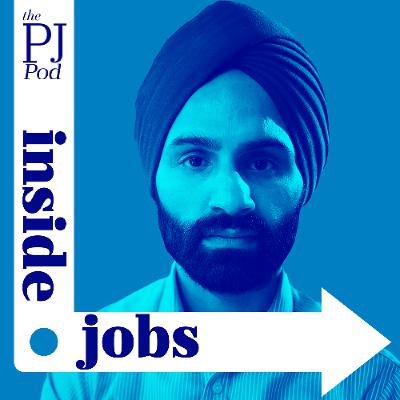
Our new PJ Pod series — Pharmacy Inside Jobs — has been developed to inspire you to take the next step in your career. Whether you are a pharmacy student or a seasoned pharmacy professional, our goal is to provide insights into the increasingly diverse roles that exist within the profession.
In each episode, we will be joined by a guest to explore their career journey so far, with a focus on their current role and the opportunities, challenges and rewards that it brings. We will also find out which skills are needed to succeed in their role and how you could follow in their footsteps.
In this episode of Pharmacy Inside Jobs, senior features editor Dawn Connelly talks Gurmat Khangura, a specialist in neurodevelopmental conditions.
Khangura has more than 15 years of experience as a mental health pharmacist and is currently working within the neurodevelopmental pathway of a Child and Adolescent Mental Health Service covering Shropshire, Telford and Wrekin.
He is an independent prescriber and is responsible for conducting ADHD assessments for young people and providing evidence-based interventions to support them and their families following a diagnosis. Khangura has also founded his own private practice, where he provides ADHD and autism assessments for children and adults.
This episode was produced by Geoff Marsh, with editorial support from executive editor Carolyn Wickware.

Our new PJ Pod series — Pharmacy Inside Jobs — is aimed to inspire you to take the next step in your career. Whether you are a pharmacy student or a seasoned pharmacy professional, our goal is to provide insights into the increasingly diverse roles that exist within the profession.
In each episode, we will be joined by a guest to explore their career journey so far, with a focus on their current role, and the opportunities, challenges and rewards that it brings. We will also find out what skills are needed to succeed in their role and how you could follow in their footsteps.
In this episode of Pharmacy Inside Jobs, senior features editor Dawn Connelly talks to prison pharmacist Kaniksha Aggarwal.
Aggarwal has recently founded Prison Pharmacy Connect, a platform dedicated to raising awareness of prison pharmacy professionals and sharing the lived experiences of people who have been on the receiving end of pharmacy services while in prison. She completed the Chief Pharmaceutical Officer’s Clinical Fellowship scheme in 2024 and is currently employed by Central and North West London NHS Foundation Trust as an advanced pharmacist specialist working in a men’s prison.
This episode was produced by Geoff Marsh, with editorial support from executive editor Carolyn Wickware.
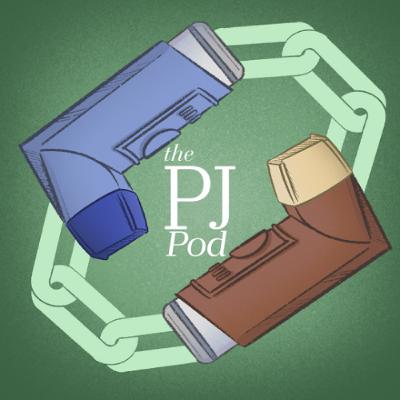
On the 27th of November 2024, the British Thoracic Society (BTS), National Institute for Health and Care Excellence (NICE) and Scottish Intercollegiate Guidelines Network (SIGN) released joint guidance on ‘Asthma: diagnosis, monitoring and chronic asthma management’. The guidance is the first collaboration of its kind between the organisations.
The guideline makes a number of recommendations, including a strong recommendation to stop prescribing Short-acting beta-2 agonist (SABA) inhalers without inhaled corticosteroids. While there has been a move towards this treatment regimen in recent years, this is the first recommendation of its kind in national guidance.
In this episode of The PJ Pod, Caitlin Killen, clinical editor, talks to Toby Capstick, Consultant pharmacist in respiratory medicine at Leeds Teaching Hospitals NHS Trust, to learn more about the guidance and its implications for practice.
Many thanks to Toby for his expertise.
This episode was produced by Geoff Marsh.
The Pharmaceutical Journal’s third analysis of MPharm awarding gap data has revealed that the percentage point difference between the proportion of white students and minority ethnic students awarded a first or 2:1 degree increased to 11 percentage points in 2021/2022 and 2022/2023.
This comes after previous analyses of the data from before and during the pandemic indicated a narrowing of the gap from 12 percentage points in 2017/2018 and 2018/2019 to 8 percentage points in 2019/2020 and 2020/2021.
In this Spotlight episode of The PJ Pod, senior features editor Dawn Connelly shares what she learned from experts about why the gap has rewidened and what pharmacy schools and other pharmacy bodies, including the Royal Pharmaceutical Society, are doing to help produce more equitable MPharm outcomes.
Disagreement and conflict are unavoidable realities common to all working environments, but for pharmacists and pharmacy teams faced with potentially long hours, stretched resources, increasing complexity and high expectations, it does not take much for problems to escalate. This can put patient safety at risk and contributes to stress and burnout.
In this learning episode of The PJ Pod, we explore some of the common underlying causes of conflict in the pharmacy workplace and consider how individuals, whether managers or not, can take practical steps to avoid or resolve conflict situations.
By the end of the episode, you will be able to:
- Understand how pharmacy working conditions and external factors can make conflict within teams more likely;
- Spot early warning signs of conflict in the workplace;
- Use simple strategies to address conflict early and avoid problems growing;
- Understand the importance of a safe, welcoming work environment and what you can do to promote one.
Many thanks to Harpreet Chana, pharmacist and founder of the Mental Wealth Academy, and Melissa Cochrane, well-being director at Pharmacist Support, for their expert contributions.
This programme is presented by Katherine Sole, editor, research and learning, and was produced by Geoff Marsh.
Despite national incentives and locally commissioned services designed to improve availability of palliative care medicines from community pharmacies, access is not evenly distributed across the country.
This problem is only set to get worse with demand for these services expected to increase in the coming decades. Marie Curie has estimated that, if the proportion of people requiring palliative care remains the same, the number of people with palliative care needs in the UK would increase by more than 147,000 between 2023 and 2048 — a rise of 25%.
In this episode of The PJ Pod, executive editor Carolyn Wickware and senior features editor Dawn Connelly discuss what the NHS is doing at local and national levels to ensure patients can maintain their quality of life for as long as possible.
As has become tradition, The PJ Pod’s final episode of the year looks back over some of the most significant stories in pharmacy in the past 12 months, before members of The PJ editorial team make their predictions for 2025.
Big stories of 2024 have included the launch of Pharmacy First in England, a persistent ethnicity pay gap in the profession, the emerging threat of nitazines, slumping vaccination rates and new legislation allow pharmacy technicians to take on a wider role.
Please do let us know what you think we have missed in this episode on social media, using the hashtag #PJPod or email us at: editor@pharmaceutical-journal.com.
This episode is presented by Carolyn Wickware, executive editor, and produced by Geoff Marsh.
Thank you to Dawn Connelly, senior features editor; David Lipanovic, senior clinical reporter; Sophie Willis, investigations editor; Corrinne Burns, RPS correspondent; and Caitlin Killen, clinical editor, for their contributions.
In September 2024, the Royal Pharmaceutical Society (RPS) put forward proposals to take on royal college status, pending a vote of the membership in early 2025.
The RPS said the proposals were in response to strategic ambitions amid rapid changes in the pharmacy profession, and followed an independent, 18-month-long review of its constitution and governance, led by consultancy firm Firetail.
To share more information with members about why the changes are being proposed and how a Royal College of Pharmacy might operate, the Society's executive team — comprising president Claire Anderson, chief executive Paul Bennett, deputy chief executive Karen Baxter and head of strategic communications Liz North — toured Great Britain to speak with members directly.
The Pharmaceutical Journal attended two of these ‘roadshow’ events to hear from pharmacists and pharmacy students about their opinions on the proposals and to find out what questions they were asking RPS leaders.
More information about the proposals can be found on the RPS website or in The Pharmaceutical Journal’s interview with Bennett, published in September 2024.
If you have any questions that have not yet been answered, you can email them to feedback@rpharms.com.
This episode was produced by Geoff Marsh and presented by RPS correspondent Corrinne Burns with support from executive editor Carolyn Wickware.
High levels of patient safety incidents related to time-critical medicines (TCMs) — medicines that need to be given or taken at a specific time — have persisted for decades. In 2022/2023 alone, there were 17 deaths recorded as a result of medicine dose delivery being delayed or omitted entirely.
Solutions, such as using e-prescribing systems, has been successful on a local level but scaling them up nationally to accommodate a variety of platforms is a challenging task.
However, a new national focus from NHS England on reducing the number of these events, may finally deliver a solution.
In this episode of The PJ Pod, executive editor Carolyn Wickware and senior clinical reporter David Lipanovic take a closer look at how TCMs can be administered more safely.
Lipanovic’s full feature on this topic can be found here: https://pharmaceutical-journal.com/article/feature/every-minute-counts-taking-a-national-approach-to-time-critical-medicines
Green social prescribing, which can include activities such as community gardening, mindful walks and conservation volunteering — as well as 'blue' activities like kayaking and wild swimming — is gaining traction.
Results from a government-backed green social prescribing programme were published in September 2024, showing that it had a positive impact on measures of wellbeing and was able to reach a broader range of people than many other social prescribing initiatives.
However, there are challenges to implementing green social prescribing, including commissioning arrangements, funding, and data collection and sharing.
In this episode of The PJ Pod, Dawn Connelly, senior features editor, visits a charity that helps people to connect with nature in order to improve their mental wellbeing, hears about the latest evidence from researchers evaluating these nature-based interventions and talks to a mental health pharmacist who is working with social prescribing link workers to connect patients with nature.
With thanks to Georgina Gould, clinical lead at Dose of Nature; Ruth Garside, professor of evidence synthesis at the University of Exeter; Julze Alejandre, a health promotion and policy specialist at the University of Edinburgh; and Dimple Khatiri, a mental health pharmacist and personalised care lead at a primary care network in Hertfordshire.
A special thank you to Dose of Nature service-user Steve for sharing his story with us.
This episode was produced by Geoff Marsh, with editorial support from executive editor Carolyn Wickware.
Over the last decade, the development of targeted therapies has significantly changed the way that chronic lymphocytic leukaemia (CLL) is treated. Survival and life expectancy has improved, and this patient cohort is living and receiving treatment for longer than ever before. These changes have meant that the involvement of pharmacists across all sectors in the treatment of CLL patients has also evolved significantly.
In this episode of The PJ Pod, Caitlin Killen, assistant clinical editor, speaks to a patient who has been living with CLL for 17 years, as well as with two pharmacists involved in the care of CLL patients, to understand how pharmacists can best support patients with CLL.
Many thanks to expert patient Anthea Holland; Catherine Parbutt, consultant pharmacist for cancer services, The Leeds Teaching Hospitals NHS Trust; and Tejal Gorasia, principal cancer pharmacist, Milton Keynes University Hospital NHS Foundation Trust, for their expertise.
This episode was produced by Geoff Marsh.
In this learning episode, we look at the latest developments in migraine treatment where new classes of drugs are starting to provide additional options for patients and prescribers.
For links to relevant articles and further resources on migraine treatment visit the PJ website.
Many thanks to Kerri Spalding, a migraine patient, advocate and fundraiser, and Mathew Garrod, lead pharmacist for neurosciences and specialist pharmacist at University Hospital Southampton NHS Foundation Trust, for their expertise and insights.
This programme is presented by Alex Clabburn, senior editor — research and learning and was produced by Geoff Marsh.
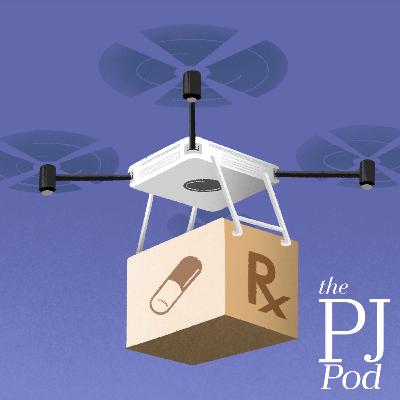
Drones are already being used to transport medicines in several countries around the world, including the United States, Australia, Switzerland and Rwanda, but what’s the story in the UK, where the road infrastructure is good and the airspace is small and busy? Is there a need for medical drone deliveries? Are they safe and would they be a viable option for the NHS?
These are questions that senior features editor Dawn Connelly investigates in this episode of The PJ Pod. We hear from the experts behind several projects across the UK as they test the feasibility of using drones to deliver NHS medicines.
Thank you to Paul Royall, senior lecturer in pharmaceutics at King’s College London; Arthur Mendez, a research and development engineer with drone development company HeroTech8; Mark Knowles, head of production at Northumbria Healthcare NHS Foundation Trust; Christopher Law, co-founder of healthcare drone logistics start-up Apian; Jamie Hogg, clinical lead for the CAELUS project for the north of Scotland; and Anthony McDavitt, director of pharmacy for NHS Shetland.
This episode was produced by Geoff Marsh, with editorial support from executive editor Carolyn Wickware.

Comments

Download from Google Play

Download from App Store
 United States