


 Claim Ownership
The Podcaster's Guide to a Visible Voice
Subscribed: 12Played: 208
Subscribe

© 2020-2025 Mary Chan
Description
How do you, as a podcaster, make an emotional connection with your listeners to create a place where they feel like they belong?
This podcast about podcasting for underrepresented podcasters doing good in the world, who want to build a community of belonging. You'll discover what it takes to be a powerful podcaster and support your listeners to feel like they belong. Go on your podcasting journey to reclaim and redefine what a successful podcast means to you, by thriving on your own terms, with Mary Chan as your host.
As a Voice-Over Artist and former radio producer for almost 20 years, she'll share with you what she's learned from creating, recording, and editing, hundreds of thousands of voices; from newbie clients who had to read their very first script to seasoned professionals voicing the very same commercials you hear on the radio and TV. They all have one thing in common with you – they made an emotional connection to a listener, not by the words they use, but by how they use their voice.
Now as a Podcast Strategist and founder of Organized Sound Productions, you'll gain the insights to keep you podcasting and have fun while you're at it! How do you want your listener to feel?
Learn all the secrets at http://www.visiblevoicepodcast.com and to work with Mary, check out https://www.organizedsound.ca.
This podcast about podcasting for underrepresented podcasters doing good in the world, who want to build a community of belonging. You'll discover what it takes to be a powerful podcaster and support your listeners to feel like they belong. Go on your podcasting journey to reclaim and redefine what a successful podcast means to you, by thriving on your own terms, with Mary Chan as your host.
As a Voice-Over Artist and former radio producer for almost 20 years, she'll share with you what she's learned from creating, recording, and editing, hundreds of thousands of voices; from newbie clients who had to read their very first script to seasoned professionals voicing the very same commercials you hear on the radio and TV. They all have one thing in common with you – they made an emotional connection to a listener, not by the words they use, but by how they use their voice.
Now as a Podcast Strategist and founder of Organized Sound Productions, you'll gain the insights to keep you podcasting and have fun while you're at it! How do you want your listener to feel?
Learn all the secrets at http://www.visiblevoicepodcast.com and to work with Mary, check out https://www.organizedsound.ca.
109 Episodes
Reverse
When's the last time you replayed your old episodes and really listened? It's the end of another year of podcasting, and that means looking back on how far you've come and planning the next steps. Whether you're taking some time off for the holiday or plugging away between the eggnog and the family time, Mary has one non-negotiable for you: you need to start listening back to your old episodes—and not just at 2X speed. For a medium that celebrates the voice, podcasters are way too lax about auditing their primary instrument. Yes, it's awkward, and chances are you'll sound weird to yourself. You might even get a hint of that imposter syndrome you thought you quashed. But trust Mary: give yourself the gift of perspective and growth this year by running some personal airchecks. It really does get easier the more you do it, and you'll unlock so much potential for your show in 2026 and beyond. Put aside the mic and queue up some past episodes. Discover: How focusing on feelings helps you develop a discerning ear; Efficiency hacks for reducing the cringe factor of listening to your own voice; Reflection questions to consider as you review old episodes. Links worth mentioning from the episode: Try Smitten Kitchen's Brownie Roll-Out Cookies: https://smittenkitchen.com/2008/04/brownie-roll-out-cookies/ Listen to Episode 15, Identifying Your Audience for Podcast Growth: https://www.organizedsound.ca/identifying-your-audience-for-podcast-growth-episode-15/ Listen to Episode 50, Stop Thinking About Yourself: https://www.organizedsound.ca/stop-thinking-about-yourself-episode-50/ Listen to Episode 105, How to Keep Fear From Overpowering Your Voice with Kat Stewart and Kevin Ribble: https://www.organizedsound.ca/how-to-keep-fear-from-overpowering-your-voice-with-kat-stewart-and-kevin-ribble-episode-102/ Connect with Mary! Leave a voice note with your feedback at https://www.speakpipe.com/VisibleVoice or email visiblevoicepodcast@gmail.com Get the full transcript of the episode at http://www.visiblevoicepodcast.com Read up on more secrets with the Visible Voice Insights Newsletter https://www.organizedsound.ca/newsletter To learn more or work with Mary, check out https://www.organizedsound.ca Link up on LinkedIn https://www.linkedin.com/in/marychan-organizedsound/ Engage on Instagram @OrganizedSoundProductions https://www.instagram.com/organizedsoundproductions Show Credits: Podcast audio design, engineering, and editing by Mary Chan of Organized Sound Productions Show notes written by Shannon Kirk of Right Words Studio Post-production support by Kristalee Forre of Forre You VA Podcast cover art by Emily Johnston of Artio Design Co.
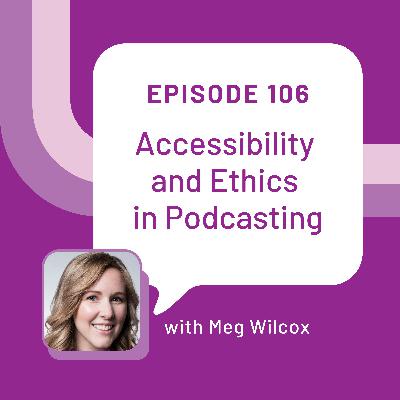
What assumptions are holding you back from creating a more accessible show? If you knew more about your listener's accessibility needs, how would that change your show? Podcasting borrows so much of its policy and practice from more traditional forms of media, and while that's given us a great place to start, it's also slowed down innovation in this unique medium. Meg Wilcox is a journalist and professor at Mount Royal University. Her research focuses on where podcasting could improve in terms of accessibility and ethics. In this episode, she shares how her experience producing an audio memoir for a woman with vision impairment prompted her to reconsider how we approach everything from recording and publishing to promoting our shows. You'll learn about the ethics of copyright ownership, the slow adoption of accessibility tools, and the ongoing barriers that, if dismantled, would give anyone with a podcasting dream the tools to make it come true. Reframe how you think about your show's accessibility and availability: The power of accessibility upgrades to make podcasting better for everyone; The importance of understanding your audience and what they need; What's still missing in the wider world of media accessibility; Our flawed expectations around what's "professional" in audio. Links worth mentioning from the episode: USC Annenberg, "Inequality in Popular Podcasts? An Examination of Gender & Race/Ethnicity": https://assets.uscannenberg.org/docs/aii-inequality-Podcasts-2025-11-06.pdf PodNews, "25 Podcasts Announced as Eligible for Golden Globes": https://podnews.net/press-release/golden-globes-eligible-podcasts-26 Episode 99, "Canadian Identity in the Indie Podcasting Ecosystem with Kattie Laur": https://www.organizedsound.ca/canadian-identity-in-the-indie-podcasting-ecosystem-with-kattie-laur-episode-99/ Engage with Meg Wilcox: Listen to Static: A Party Girl's Memoir: https://www.megwilcox.com/2024/11/08/static-a-party-girls-memoir/ Connect with Meg on LinkedIn: https://www.linkedin.com/in/megwilcox/ Learn more about Meg's work: https://www.megwilcox.com/ Connect with Mary! Leave a voice note with your feedback at https://www.speakpipe.com/VisibleVoice or email visiblevoicepodcast@gmail.com Get the full transcript of the episode at http://www.visiblevoicepodcast.com Read up on more secrets with the Visible Voice Insights Newsletter https://www.organizedsound.ca/newsletter To learn more or work with Mary, check out https://www.organizedsound.ca Link up on LinkedIn https://www.linkedin.com/in/marychan-organizedsound/ Engage on Instagram @OrganizedSoundProductions https://www.instagram.com/organizedsoundproductions Show Credits: Podcast audio design, engineering, and editing by Mary Chan of Organized Sound Productions Show notes written by Shannon Kirk of Right Words Studio Post-production support by Kristalee Forre of Forre You VA Podcast cover art by Emily Johnston of Artio Design Co.
How can a solid structure make your podcast process easier? Your podcast starts with a great idea—a topic that fires you up, that you can passionately go on about at length. That's a great place to begin a show, but without some structure, producing episode after episode can become tedious and stressful. That's why Mary advocates for building a show map. Think of it as Google Maps directions that help guide both you and your listener on a journey that's just predictable enough to make it feel comfortable and familiar. If the thought of "structure" makes you think of strict rules for every episode, think again! Mary explains how to create a show map that guides you from intro to outro with lots of wiggle room and just enough direction to prevent decision fatigue. You'll keep your options open and speak with confidence because you know just where you need to go. With tips for identifying your existing structure and drawing on the expertise (or mistakes) of other shows, this episode is a must-listen for new and established podcast hosts alike. Map out your show to simplify your process: Find your flow by setting some gentle boundaries for your podcast; Use the structure you already have to fine-tune your show map; Experiment to discover new components that keep it entertaining, for you and your listener. Links worth mentioning from the episode: Episode 104, "The Perks of Being (or Having) a Co-Host with Darren Dukes and Jamie Weiss" - https://www.organizedsound.ca/the-perks-of-being-or-having-a-co-host-with-darren-dukes-and-jamie-weiss-episode-104/ Episode 60, "Planning, Structure, and Mindset Before You Hit Record: a Sample Workflow for Recording Your Episodes" - https://www.organizedsound.ca/planning-structure-and-mindset-before-you-hit-record-a-sample-workflow-for-recording-your-episodes-episode-60/ Connect with Mary! Leave a voice note with your feedback at https://www.speakpipe.com/VisibleVoice or email visiblevoicepodcast@gmail.com Get the full transcript of the episode at http://www.visiblevoicepodcast.com Read up on more secrets with the Visible Voice Insights Newsletter https://www.organizedsound.ca/newsletter To learn more or work with Mary, check out https://www.organizedsound.ca Link up on LinkedIn https://www.linkedin.com/in/marychan-organizedsound/ Engage on Instagram @OrganizedSoundProductions https://www.instagram.com/organizedsoundproductions Show Credits: Podcast audio design, engineering, and editing by Mary Chan of Organized Sound Productions Show notes written by Shannon Kirk of Right Words Studio Post-production support by Kristalee Forre of Forre You VA Podcast cover art by Emily Johnston of Artio Design Co.
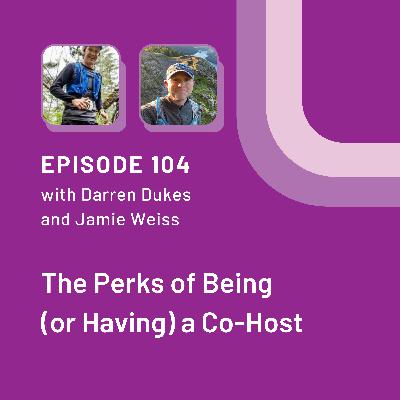
How do you find the perfect podcast host to share airtime with? If a podcast is your passion project but you don't have a technical background, an audio-savvy partner could help make your dream a reality. That's what Darren Dukes, a Vancouver Island physiotherapist and running enthusiast, discovered when he convinced fellow runner and former radio broadcaster Jamie Weiss to be his co-host. Darren's vision and Jamie's recording prowess have resulted in a podcast that's drawing in avid runners and jogging-curious listeners alike. Darren and Jamie chat with Mary about podcast partnerships, the importance of strong show structure, and the challenges and skill-building opportunities they've already encountered as they forge a new touchpoint for the vibrant West Coast running community. Keep your show—and your motivation—running smoothly: The benefits of a local focus: a strong start without limiting your potential for growth; Maintaining positive momentum through feedback; The unexpected wins of shared airtime; How strong audio cues and a consistent structure help your audience keep up. Links worth mentioning from the episode: Listen to Island Miles Episode 1: https://open.spotify.com/episode/4jFuseQLPK5ia5KM9jhg4t Engage with Jamie and Darren: Follow Island Miles on Instagram: https://www.instagram.com/islandmilespodcast/ Connect with Mary! Leave a voice note with your feedback at https://www.speakpipe.com/VisibleVoice or email visiblevoicepodcast@gmail.com Get the full transcript of the episode at http://www.visiblevoicepodcast.com Read up on more secrets with the Visible Voice Insights Newsletter https://www.organizedsound.ca/newsletter To learn more or work with Mary, check out https://www.organizedsound.ca Link up on LinkedIn https://www.linkedin.com/in/marychan-organizedsound/ Engage on Instagram @OrganizedSoundProductions https://www.instagram.com/organizedsoundproductions Show Credits: Podcast audio design, engineering, and editing by Mary Chan of Organized Sound Productions Show notes written by Shannon Kirk of Right Words Studio Post-production support by Kristalee Forre of Forre You VA Podcast cover art by Emily Johnston of Artio Design Co.
What's the worst piece of feedback you've received about your podcast? We all have one—that cringe-inducing review or comment that fires up our impostor syndrome. The one that makes us question our hosting skills, our topic selection, and our whole show. And yet, feedback, even the negative kind, doesn't have to get you down. In this episode, Mary takes on trolls and seasoned listeners alike to suggest a very different relationship between host and reviewer: one of thoughtful collaboration. Find out how to filter and process your feedback in a way that improves its production value and boosts your confidence—in your show and your unique voice. Convert your podcast comments into actionable intel: The track-and-tag system that helps you make the most of your feedback; Why email feedback is the cream of the crop; The real impact of platform reviews and ratings; Why new shows shouldn't ask for reviews. Links worth mentioning from the episode: Episode 102, How to Keep Fear From Overpowering Your Voice with Kat Stewart and Kevin Ribble: https://www.organizedsound.ca/how-to-keep-fear-from-overpowering-your-voice-with-kat-stewart-and-kevin-ribble-episode-102/ Connect with Mary! Leave a voice note with your feedback at https://www.speakpipe.com/VisibleVoice or email visiblevoicepodcast@gmail.com Get the full transcript of the episode at http://www.visiblevoicepodcast.com Read up on more secrets with the Visible Voice Insights Newsletter https://www.organizedsound.ca/newsletter To learn more or work with Mary, check out https://www.organizedsound.ca Link up on LinkedIn https://www.linkedin.com/in/marychan-organizedsound/ Engage on Instagram @OrganizedSoundProductions https://www.instagram.com/organizedsoundproductions Show Credits: Podcast audio design, engineering, and editing by Mary Chan of Organized Sound Productions Show notes written by Shannon Kirk of Right Words Studio Post-production support by Kristalee Forre of Forre You VA Podcast cover art by Emily Johnston of Artio Design Co.
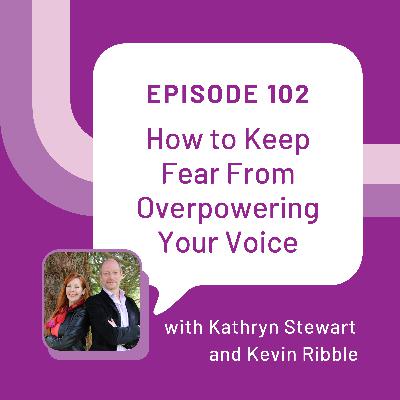
What are you afraid of when you're recording your podcast? Training your voice doesn't start with what comes out of your mouth—it starts with what's going on in your head. Mary learned this 25 years ago from her radio school instructors, Kat Stewart and Kevin Ribble. In this episode, her former teachers take the mic to talk about finding your charisma and confidence as a podcaster and the vocal impact of fear and judgment. Kat and Kevin want to make the world a better place, one confident, impactful podcast host at a time. Their insights stem from decades of experience and will have you reflecting on your podcast's ability to inspire change. It's time to go back to school and learn: Why dealing with your fear of death is an essential foundation of voice work; The impact of tension and the nervous system on how you sound; Why you should channel your bestie when you're recording; The power of podcasting to make a difference in the world. Links worth mentioning from the episode: Episode 50, Stop Thinking About Yourself: https://www.organizedsound.ca/stop-thinking-about-yourself-episode-50/ Engage with Kat and Kevin: Listen to Ignite My Voice; Becoming Unstoppable at https://podcasts.apple.com/ca/podcast/ignite-my-voice-becoming-unstoppable/id1827041495 Connect with Kat: https://www.linkedin.com/in/kathryn-stewart-77155316/ Connect with Kevin: https://www.linkedin.com/in/kevin-ribble/ Connect with Mary! Leave a voice note with your feedback at https://www.speakpipe.com/VisibleVoice or email visiblevoicepodcast@gmail.com Get the full transcript of the episode at http://www.visiblevoicepodcast.com Read up on more secrets with the Visible Voice Insights Newsletter https://www.organizedsound.ca/newsletter To learn more or work with Mary, check out https://www.organizedsound.ca Link up on LinkedIn https://www.linkedin.com/in/marychan-organizedsound/ Engage on Instagram @OrganizedSoundProductions https://www.instagram.com/organizedsoundproductions Show Credits: Podcast audio design, engineering, and editing by Mary Chan of Organized Sound Productions Show notes written by Shannon Kirk of Right Words Studio Post-production support by Kristalee Forre of Forre You VA Podcast cover art by Emily Johnston of Artio Design Co.
How do you make your personality shine through as soon as you hit record? The podcast world is always evolving—that's what happens when a baby industry grows up! For better or worse, audio-first media is changing constantly, and the latest shift involves Amazon's decision to shut down the Wondery podcast studio. This kicks off a move away from those shows heavy on the music, sound effects, and research, toward more personality-driven podcasts. Like yours! This is great news, because that special kind of pod that people tune in to for the host (which recent research shows is the listener's favourite part) will get more space on their app. It also means you'll have to work even harder to make sure your on-air personality is unique and your show stands out from the crowd. With that in mind, Mary shares three tips for getting your voice ready to resonate. Get your #1 instrument prepped to steal the show: Why you need to settle into your current state of mind before you start; What your warmup should include, beyond lip trills and humming. The memory trick that'll let you hit record with confidence. Links worth mentioning from the episode: Read Sounds Profitable's The Podcast Landscape 2025 report: https://soundsprofitable.com/article/maturity-growth-next/ Learn more about PodSummit 2025 YYC: https://www.podsummit.com/ Listen to Episode 100, Finding Joy in the Serious Work of Podcasting: https://www.organizedsound.ca/finding-joy-in-the-serious-work-of-podcasting-episode-100/ Connect with Mary! Leave a voice note with your feedback at https://www.speakpipe.com/VisibleVoice or email visiblevoicepodcast@gmail.com Get the full transcript of the episode at http://www.visiblevoicepodcast.com Read up on more secrets with the Visible Voice Insights Newsletter https://www.organizedsound.ca/newsletter To learn more or work with Mary, check out https://www.organizedsound.ca Link up on LinkedIn https://www.linkedin.com/in/marychan-organizedsound/ Engage on Instagram @OrganizedSoundProductions https://www.instagram.com/organizedsoundproductions Show Credits: Podcast audio design, engineering, and editing by Mary Chan of Organized Sound Productions Show notes written by Shannon Kirk of Right Words Studio Post-production support by Kristalee Forre of Forre You VA Podcast cover art by Emily Johnston of Artio Design Co.
How can reflecting on your podcast journey spark delight in your success? The process of podcasting is serious business. You have to be laser-focused on all the pieces of the spiral—from brainstorming topics to marketing the published episode to starting the next one—and sometimes the subject matter gets dark, especially in the daunting uncertainty of our modern world. But at the end of the day, if you don't enjoy what you're creating, the overwhelm that will come up eventually is going to keep you from coming back. That's why Mary is dedicating her 100th episode (woo-hoo!) to reflecting on the genuine joy of podcasting and inspiring you to do the same. It's time, once again, to check in with that big, overarching Why. Turn up the gratitude for all the opportunities your show has afforded you, the connections you've cultivated, and the support of the people who listen in. Let this episode be your reminder to take the time—look back, laugh out loud, and bask a bit in the joy of your creation. Consider the journey so far with storytelling and reflection prompts: Where to look for joy when you're tempted to back-burner your show The benefits and unexpected bonus points of having a podcast A guided walk down memory lane to see how far you've come Links worth mentioning from the episode: Episode 69, Intangible Values of a Podcast: What It Means For Stats, Metrics, and Monetization: https://www.organizedsound.ca/intangible-values-of-a-podcast-what-it-means-for-stats-metrics-and-monetization-episode-69 Episode 95, Generative AI: Understanding the Future of Podcasting with Amanda Cupido: https://www.organizedsound.ca/generative-ai-understanding-the-future-of-podcasting-with-amanda-cupido-episode-95/ Connect with Mary! Leave a voice note with your feedback at https://www.speakpipe.com/VisibleVoice or email visiblevoicepodcast@gmail.com Get the full transcript of the episode at http://www.visiblevoicepodcast.com Read up on more secrets with the Visible Voice Insights Newsletter https://www.organizedsound.ca/newsletter To learn more or work with Mary, check out https://www.organizedsound.ca Link up on LinkedIn https://www.linkedin.com/in/marychan-organizedsound/ Engage on Instagram @OrganizedSoundProductions https://www.instagram.com/organizedsoundproductions Show Credits: Podcast audio design, engineering, and editing by Mary Chan of Organized Sound Productions Show notes written by Shannon Kirk of Right Words Studio Post-production support by Kristalee Forre of Forre You VA Podcast cover art by Emily Johnston of Artio Design Co. Transcript with Audio Description: [MUSIC IN - GHOSTHOOD FEATURING SARA AZRIEL "LET'S GO" BEGINS] MARY: Podcasting is serious work. Sure, most of the time we're just having a conversation with someone or hearing stories, and yet when it comes to the making of podcasts, you know, the tasks that take you from an idea to actually publishing the episode, right, the recording, the editing, and then the promoting when it's all done, it's not always rainbows and unicorns. And even in some cases where podcasts are talking about very serious topics, I've worked on episodes that talk about food insecurity, war torn countries, child abuse, trauma, relationship issues, there still can be joy, when you're talking about serious issues and creating your show. The light and the joy that actually comes from sometimes being in these really dark spaces can brighten even more. I mean, to the lack of a whole cliche thing, you really need to be in the dark and to be in that seriousness, to really enjoy and know what it means to be appreciative of being in that light. So, podcasting is serious work. But like I always say, podcasting is meant to be fun. So as we celebrate 100 episodes of this very show, I want us both to reflect on how much work podcasting really is. Through the struggle to complete and publish episodes. That struggle is real, and yet how there's actually so much joy that it can bring. Podcasting is serious work, yes, but it's also fun. So, this is episode number 100, oh yeah! On the Podcaster's Guide to a Visible Voice. << WOMAN SINGS: So so so so let's go >> Here we are, episode number 100. This is where you throw that, bah bah bah bah [HORN NOISE MADE WITH VOICE], celebrating horns confetti, right? [MUSIC ENDS] I don't know. I'm not usually that type of a person. And numbers are just numbers. I mean, yes, 100 is a milestone, but I decided for this episode that I just want to be very grateful. Grateful that I've created this many episodes for this particular show, but that you are here with me today and finding a bit of joy in whatever you've been up to so far and also by choosing to listen to this episode. So, first of all, thank you. Thank you for being here. [MUSIC IN] As I said on the top of the show, creating a podcast is not easy. And if you have a detailed checklist like I do, you can also see how much work it actually takes to get from idea to publish and even more work after that with the premiering and then planning for the next episode. It's a never ending spiral of stuff to do. One of the things I wanted to focus on for this episode was actually reflecting back on our whys. Why? Why are we doing this? So if you're not familiar. You'll always hear me talk about your why. That's the point of your podcast. Why do you want to create one? Because, like I said, it's a lot of work, so you have to know why it should exist in your world. It's not a matter of if, but when you'll be overwhelmed or when you'll be burnt out. So knowing your why will bring you back to your joy and the joy of creating a podcast. [MUSIC ENDS] I actually had this very conversation with a potential podcaster the other day. I was asking them about their goals for the podcast, and usually this is where I figure out if we're in alignment in how they think, what they want their podcast to do, and if I'm a good partner for that. And they talked about how they wanted to build a community, and I'm like, yep, bang on. Okay, this is it. It's not going to be about the numbers, right? It's not going to be about growing your listenership, which comes with it anyway, but, she wanted to build a community. But the thing was, she works in the beauty industry, and usually all the beauty stuff, it's your typical physical side of things, right? Looking perfect. So all those stereotypes of the beauty industry, she wanted to showcase how the work she does is actually outside of all these stereotypes. What she does is really transformational and also restorative because it's about the confidence, the confidence within. I know, it's such a cliche, right? And in this case, it does kind of work, because her work can also deal with cancer patients losing their hair and the struggle of not only dealing with the cancer diagnosis, but then also the journey of going through all the therapies and all of that. But in amongst that, all beauty comes into play, right? What happens when you no longer have hair and you lose that part of you? So, long story short, it's not about the beauty. So her podcast isn't really about that either. She has another why for her podcast and the work she does. [MUSIC IN] As for myself, I've had these moments of overwhelm, too. You know, we're celebrating episode 100, so I'm walking down that memory lane, and I'm always glad that I have my breaks to set up what I do for this podcast and the joy it brings. So I know this is my last episode before my summer break. That was the plan. And actually it just lucked out that it was episode 100. That was all serendipity right there. I can't wait to do all the summer adventures that we have lined up as a family. But to reflect on the past 100 episodes, I've had a very busy first part of the year this year with work, new clients, lots of podcasts to listen to. There was voice coaching clients as well. And then also now setting up for the remainder of my year having some speaking gigs. And there's lots of personal things too, right? Like, work and personal stuff intertwines. You can't really separate the two. So I was caring for my mom. I was away from home and my family for a bit, but then also coming back and being with my kiddo with her very first events, like her first track meet, and for me to volunteer with her. I was so grateful to be able to do that. So with all of these responsibilities, there was always time to put the podcast on the back burner, right? You don't have to create the podcast in all the things that you have to do, podcasting isn't high on that priority list that I was just talking about. But I want to keep it going because in knowing my joy and my why, it's because A, I know it's going to grow my business, right? It's a long term marketing plan. And B, it's just really fun to do. And again, I only do things if it's fun, right? So if it stops being fun, I'm going to stop doing it. So we need to take a look at this reflection and to find our joy in podcasting. [MUSIC ENDS] In creating a podcast, not just for me, but I see this in the clients that I work with too. We get to use our podcast platform to also work things out that I've been chatting with, you know, the people in my lives, whether that is my clients, or maybe it's my clients chatting with their clients. So it really is, we are chatting with our listeners, right? We're trying to figure out what their challenges are so that on the podcast we can actually work out some of these strategies and tips or even playing through the ideas I have for an upcoming talk or workshop that I'll be facilitating. This can all be done through episodes of your podcast. And then there's also, if you have interviews, connecting with a larger community in podcasting and hearing from others, right? I interview other podcasters, so I'm creating that network and really getting a new perspective from other people. And then another reason that my podcast exists is that I get to share very specific episodes wit
What differentiates Canadian podcasters from their American counterparts, eh? If you think about the first podcast that comes to mind, there's a pretty good chance it's American. That's because podcasting tends to feel—and in many ways actually is—pretty U.S.-centric. But that certainly doesn't mean there aren't a ton of fantastic, groundbreaking Canadian podcasters in the industry. From the struggle to identify Canada-specific resources to the future of marketing metrics, join Mary for a must-listen episode for every podcaster seeking to set their show apart. Listen to fellow Canuck Kattie Laur as they dig into all things Canadiana and pods. Kattie is an award-winning podcast producer and the editor of Pod the North, a popular newsletter that keeps subscribers in the know about everything happening in our country's podcast ecosystem. Kattie takes a refreshingly optimistic perspective on creating and marketing shows in Canada. She and Mary explore the unique Canadian culture built around celebrating difference and how traits like this truly set them apart from American showmakers. Make your podcast stand out, in Canada and beyond. Find out: What makes Canadian podcasters unique Why it's so hard to make a living as a podcast creator in this country How to share the Canadian perspective in our podcasts without overdoing it How to facilitate community interaction as an indie podcaster Links worth mentioning from the episode: Bumper: "Spotify Plays are One More Nail in the Download's Coffin" - https://wearebumper.com/blog/spotify-plays-are-one-more-nail-in-the-downloads-coffin Hear more about the podcast monetizing landscape in Episode 97, Embrace Curiosity to Grow a Vibrant Podcast Community with Chidinma Azubuike - https://www.organizedsound.ca/embrace-curiosity-to-grow-a-vibrant-podcast-community-with-chidinma-azubuike-episode-97/ Meet Mary at PodSummit YYC 2025 - https://www.podsummit.com/speakers25 Engage with Kattie: Learn more about her projects and services - https://www.kattielaur.com/ Listen to the Canardian podcast - https://www.kattielaur.com/canardian Subscribe to the Pod the North newsletter - https://podthenorth.substack.com/ Connect with Mary! Leave a voice note with your feedback at https://www.speakpipe.com/VisibleVoice or email visiblevoicepodcast@gmail.com Get the full transcript of the episode at http://www.visiblevoicepodcast.com Read up on more secrets with the Visible Voice Insights Newsletter https://www.organizedsound.ca/newsletter To learn more or work with Mary, check out https://www.organizedsound.ca Link up on LinkedIn https://www.linkedin.com/in/marychan-organizedsound/ Engage on Instagram @OrganizedSoundProductions https://www.instagram.com/organizedsoundproductions Show Credits: Podcast audio design, engineering, and editing by Mary Chan of Organized Sound Productions Show notes written by Shannon Kirk of Right Words Studio Post-production support by Kristalee Forre of Forre You VA Podcast cover art by Emily Johnston of Artio Design Co. Transcript with Audio Description:
What kinds of questions do you ask your podcast guests? The most engaging podcast episodes—the ones that make for the best conversations and the best listening—are the ones that contain great stories. As the host, you're always aiming to draw all those details and deep disclosures from your guest. So why does getting the full picture sometimes feel like pulling teeth? Mary recently taught her nine-year-old daughter how asking more specific questions will get her the answers she wants, and that conversation prompted this episode's exploration. An open-ended question—the kind that requires a more thorough answer than "yes," "no," or some other short word or phrase—is always going to elicit a stronger response. In return, you as the host don't have to work as hard; your guest's fascinating story, the whole reason they're chatting with you, stands a much better chance of tumbling out of them with the passion every podcaster (and podcast listener) is looking for. Ask yourself these impactful interview-question questions: What are the best W5 question prompts to ask in your interview? How can you utilize storytelling statements to deliver more engaging episodes? What should you look for in past episodes to start asking better questions in the future? Links worth mentioning from the episode: Episode 32, "Bad Interviewing Habits" - https://www.organizedsound.ca/bad-interviewing-habits-episode-32/ Connect with Mary! Leave a voice note with your feedback at https://www.speakpipe.com/VisibleVoice or email visiblevoicepodcast@gmail.com Get the full transcript of the episode at http://www.visiblevoicepodcast.com Read up on more secrets with the Visible Voice Insights Newsletter https://www.organizedsound.ca/newsletter To learn more or work with Mary, check out https://www.organizedsound.ca Link up on LinkedIn https://www.linkedin.com/in/marychan-organizedsound/ Engage on Instagram @OrganizedSoundProductions https://www.instagram.com/organizedsoundproductions Show Credits: Podcast audio design, engineering, and editing by Mary Chan of Organized Sound Productions Show notes written by Shannon Kirk of Right Words Studio Post-production support by Kristalee Forre of Forre You VA Podcast cover art by Emily Johnston of Artio Design Co. Transcript with Audio Description: [MUSIC IN - GHOSTHOOD FEATURING SARA AZRIEL "LET'S GO" BEGINS] MARY: How do you ask questions? I guess specifically on your podcast, maybe when you do interviews, how are those questions being asked? I know it's still quite a broad question, but have you ever gone back to your episodes, listen to them again to review how you have been asking questions? And if you want to get even more specific, I'm actually talking about open ended questions versus close ended questions. So today I'm going to explore those types of questions with you and show you how open ended questions can make your interviews and your podcast more enjoyable. Not just for you as a host, but maybe as a guest as well if you're on someone else's show, but more importantly for your listener. This episode actually stemmed from my conversation with my daughter. So, you know, lots of real life experience can come onto the podcast as well. And this idea of what it's like to pull stories from someone by asking them the different types of questions. So, how does your curiosity with these open ended questions play a significant role in your interviews? So there you go. The next generation of podcasters, through my daughter, is already teaching me about something that I can share with you on this very podcast. This is episode number 98 on the Podcaster's Guide to a Visible Voice. << WOMAN SINGS: So so so so let's go >> MARY: Hey, welcome to the show. And yeah, things in real life this happens in radio all the time. It's just called show prep. [MUSIC ENDS] What's happening in your life as you go about your day that can help impact what you do on air. So in this case behind the mic on your podcast. And there are some real life situations that go on in my life that go behind the scenes on this podcast which you might not always know about, but this one I'm gonna share very much all the details of how I realized that this conversation that I had with my daughter is, I'm going to translate here on this episode today about open ended questions for you to ask during an interview with your guest. And in fact I talked a lot about bad interviewing habits actually, that was episode 32 if you have not listened to that one. So definitely go back to that episode. It is a great companion to this one. Lots of details there on episode 32, bad interviewing habits. But briefly for this episode, a close ended question essentially closes the conversation very quickly. This type of question will either get a yes or no type of answer and if you don't want to elaborate more, you don't have to. It's really quite the conversation killer. But I know, when people come on a podcast, they're actually here to share stories. So even if you do ask those close ended questions, they will elaborate a bit more. However, it will be more enjoyable if you have open ended questions. But back to the close ended questions. As an example, do you like chocolate? It's going to be a yes or no answer. Yep, chocolate's good. Or maybe a little bit more expanded, right? You don't have to go into details but you're like, maybe, it depends, I don't like milk chocolate, I like a dark chocolate. But then that's, that's really it until you come up with a follow up question. And there's a lot more interview techniques to go into this. However, if you start with an open ended question, you don't have to do as much of the hard work, you're already asking for more, all in that one question. So the guests can't just say yes or no. What kind of chocolate do you like? What are your favorite chocolate bars? Why is that your favorite chocolate bar, right? These type of questions are very specific and they can help the listener jog in their mind a story they want to share. And it makes your job just that much easier. [MUSIC IN] So as I alluded at the start of the show, my nine year old daughter sparked this idea for the episode. And if you've got some young ones in your life, like most kids, you might know that they do ask a lot of questions. And most of these questions are close ended aside from the ones that always ask, but why, but why, but why? Those kids already are on the uh, open ended question train. However, my daughter does ask a lot of questions and not always the and why. Sometimes they are just emulating the adults in their lives, right? So for example, sometimes I'll say to her, did you have fun at school today? Or she doesn't always eat her lunch. So I'm like, did you finish eating your lunch today? Did you play with so and so, or who did you play with? And they'll just list off a bunch of names, right? So these are very much close ended questions and it gives a very short answer or one word answer. So what parents or you as a podcaster, you know, what you want are actually stories, not short answers. In this audio format, you need the stories to shine. So for them to share in conversation, whether that is your guest, or your child, or a young one in your life. For them to share, and also so that it's not so hard getting those kids to talk to you, right? So like I said, this whole thing started when my daughter asked me actually about specifically working at a petting farm in my teens. Now think of my daughter in this story, in this scenario I'm going to share with you as the podcast host and me as the guest to help you relate. Okay? So I'm going to share this little conversation that from my memory, what I remember she said, it kind of goes something like this. My daughter says to me, do you have any stories from when you worked at the petting farm? Yes, yes, I have lots. And then she'll say, okay, tell me. I'm like, oh, which one? As I guest I'm like, wow, I got so many. Which one do I pull from? I can't just think of a story off the top of my head. So I ask her, what are you actually curious about? What do you want to know? And she's like, did you do anything gross or did the animals do anything gross? I'm like, well, yeah, I scooped poop for a living when I worked at the petting farm. And I kind of just ended it at that. I'm like, yeah, of course, of course there was lots of gross stuff. And I didn't really elaborate on that more either. So, she got a little frustrated with me. But do you see what's going on here? She wasn't getting any stories. She was wondering why she had to keep asking questions. She just wanted me to tell a story. But I was just answering her questions and her questions were close ended. I mean, I could have easily picked a story, right? I'm a storyteller. That's not hard for me to do. But I'm always of the mind about what does my listener actually want to hear or, or learn? How do they want to feel with the story that I share? And I kind of go through that with my daughter to show her, hey, if you ask those questions in a different way, you'll actually get the response that you want. So I taught her about being curious, being very specific, and the art of open ended questions. [MUSIC ENDS] So if you actually listen back to that little story that I just shared, they were all close ended questions. They always started with did, did you this or did you that? Another version could be like do, do you this, do you that, right? They would be yes or no or very, very short answers. So I asked my daughter what type of stories was she actually hoping to hear and if she could re-ask the question starting with either a what, when, or why, or sometimes even how. This comes from my radio days where I learned about W5. Maybe this was even like English class days in high schools, probably, but it really was like a journalism thing. In radio, W5 stands for who, what, when, where and why, and I say and sometimes how. Because in
How can curiosity and commitment to your listener drive your show's growth? From guest selection to generating advertising revenue, the process of running your own podcast is always challenging and fascinating, and it often calls on you to take big chances. That's exactly what Chidinma Azubuike discovered when she started "But What Do I Know?" back in 2020. Her willingness to keep trying new tactics has paid off—all while working toward her primary goal of fostering a vibrant and thriving listener community. In this episode, Mary sits down with Chidinma to talk show prep, rebrands, and the difference between American and Canadian ad partners. Discover some fresh ideas for building listener engagement on this passive medium and how to deliver an authentic community resource while also making money. Whether you're just starting your podcast or have been working away for years, Chidinma's perspective is sure to have you taking notes and making plans to take your show to the next level. Learn an exploratory approach to creating an award-winning podcast: How Chidinma turned to life experience to inspire her show When and how to tackle a rebrand Transforming listeners into a real community Making moves to monetize your podcast Links worth mentioning from the episode: Register for BWDIK's virtual movie screening of "Village Keeper" - https://docs.google.com/forms/d/e/1FAIpQLSdJ3oHnRoTAruUHjbsvMTncTv8UMuBPD1IdOJeEG28jhXjTzQ/viewform CBC, "The Golden Globes want to honour podcasting": https://www.cbc.ca/arts/commotion/the-golden-globes-want-to-honour-podcasting-1.7532676 Engage with Chidinma Azubuike: Listen to the But What Do I Know podcast - https://www.bwdikpodcast.com/podcast Follow But What Do I Know on Instagram - https://www.instagram.com/bwdikpodcast/ Connect with Mary! Leave a voice note with your feedback at https://www.speakpipe.com/VisibleVoice or email visiblevoicepodcast@gmail.com Get the full transcript of the episode at http://www.visiblevoicepodcast.com Read up on more secrets with the Visible Voice Insights Newsletter https://www.organizedsound.ca/newsletter To learn more or work with Mary, check out https://www.organizedsound.ca Link up on LinkedIn https://www.linkedin.com/in/marychan-organizedsound/ Engage on Instagram @OrganizedSoundProductions https://www.instagram.com/organizedsoundproductions Show Credits: Podcast audio design, engineering, and editing by Mary Chan of Organized Sound Productions Show notes written by Shannon Kirk of Right Words Studio Post-production support by Kristalee Forre of Forre You VA Podcast cover art by Emily Johnston of Artio Design Co. Transcript with Audio Description: [MUSIC IN - GHOSTHOOD FEATURING SARA AZRIEL "LET'S GO" BEGINS] MARY: When looking at new podcasts for something to listen to on your podcast player, sometimes one just stands out. For me, it was quite a few years ago when the title But What Do I Know grabbed my attention. It was nominated for a podcast award and it really resonated with me because, the imposter syndrome behind that question, my need for continual learning, and also learning from a fellow Canadian, which was rare at that time. When I saw the show, Canadian podcasts weren't really highlighted as Canadian, but really it was all about that imposter syndrome part. That little girl's uncertainty that I have that still lingers inside of me even as I am a 45 year old woman today. Right. Like all of this stuff comes up, and it came up through that one question, the title of her podcast. So I added But What Do I Know? to my list, even though I didn't listen to it, not in the beginning at least, because I wasn't ready to face my inner struggles with that little girl that I was talking about, right? That struggle of, ooh, I actually have to look at this now. Nah. But I'll still save it on my podcast player because you just never know, right? And then I fast forward to last year, 2024, and the podcast was rebranded and it spoke to me even more. I was like, wait a minute, why did this rebrand happen? What's different? What's going on? And it piqued my curiosity. So I was like, okay, leaning towards the curiosity versus, ooh, do I have to face my inner demons? And that was the change for me. And I decided to hit play because I realized, yeah, what do I know? Because I could learn from Chidinma Azubuike. Chidinma and I chat about her podcasting journey and what success looks like for her now. Because as we know, podcasting is a lot of work. So how does her curiosity and drive to build community work for her podcast today? This is episode number 97 on the Podcaster's Guide to a Visible Voice. << WOMAN SINGS: So so so so let's go >> MARY: Chidinma, thank you so much for joining me on the show, because when I saw the title of your show, But What Do I Know? I say that to myself all the time. It's like, but what do I know? What do I know? And I just really connected with you on that. And then the fact that we're both Canadian, like you, a lot of Canadian shows don't get highlighted as Canadian. So I'm really, really glad that you agreed to come on and chat with me today. CHIDINMA: Yes, no, thank you so much for having me, Mary. I really do appreciate it. And yes, But What Do I Know?, is the story of my life and the story of the phase of life that I'm currently in. And when I landed on that name for the podcast, I was like, this is so good. MARY: Yeah. Cause I mean, when I started my podcast production and consulting company, I had almost 20 years of radio background, but still I was doing the whole. But what do I know? It's podcasting, it's different, it's not radio. What can I do? What can I share? I don't know, I don't know. It's just, I kept saying that, so. Oh, uh, so connected with you over this. CHIDINMA: Yeah, like it just so represents just all the questioning. I think it's been a really good place for me to like all the questions about any aspect of life. Like my main pillars for the podcast are, you know, like finances, wellness, and relationships of all different types. So whenever, you know, whatever, I'm sort of thinking, I honestly think of my episodes based on that. Like, you know, I'm going through a period of like, questioning my finances. Then I'm like, oh, let's have a conversation about that. But what do I know about how to build up my savings, but what do I know about how to invest more and stuff like that? So, yeah. MARY: Oh yeah. So walk me through that process. You're like, okay, I'm having this trouble or challenge in my life. CHIDINMA: Yeah. MARY: What does that look like in terms of then building out a podcast episode and like figuring out who a guest to bring on and all of that? Walk me through the whole process. CHIDINMA: So it's really like curiosity driven, I guess, and what I usually do and now it's become, I guess a well oiled machine, if I do say so myself. And so what I'll do is at the beginning of every season, so in January. My seasons typically run from March to December. Now I have an editor on the team, so thankfully I won't have to take that two month break. We can cut it down to one month. But what I do is in January I will, you know, just sit, kind of reflect, journal a bit and think of the different topics that I want to cover for that season. So, you know, and again, it's related to whatever I'm going through. It's related to life. It's related to something maybe my girlfriends are asking me about. Like right now, I had a little bit of like a pre-launch event with a couple of women and the common themes were hair. Especially for black women, it's hair and hair extensions, braid in hair. Can you get someone to talk about that? And I was like, okay, cool. Questions have been like hair care or balancing or how to build a sustainable creative business. Like, stuff like that are comments that I get. And of course people love conversations around relationships. Whether it's relationships, your family or, you know, dating is always going to pull people's attention. So when I kind of brainstorm them, I also have sort of like, an admin coordinator slash social media coordinator as well. She helped me sort of brainstorm some ideas and helps me manage socials right now as well. So the team is growing, but yeah, so we'll make a list of topics and then we'll start searching up guests through either Google or socials are really good, especially TikTok and IG because they help me to get a gauge of the person's personality and character and if they'll be a good fit for the podcast. And so, you know, we'll search, we'll kind of do some tags. We'll search by like, if we're looking for, let's say like a business coach, we'll type in like, business coach. And my podcast is for women of colour primarily, so I'll type in, you know, business coach WOC, and IG is pretty great with all the tags and filters. I'll end up finding somebody that fits the profile. And then once we find someone, it's now a matter of reaching out, pitching someone, sending that email that includes, you know, the stats for the podcast and generally what we're about. And then it's a couple of back and forths with the gap with the potential guest before we then lock in a date. And then closer to our recording day, I'll send instructions, important instructions, like, you need a wired headset, I'm not doing the Bluetooth… MARY: Oh, gosh no. CHIDINMA: …anymore. Please don't show up, like, no, no, no, that's not acceptable. You know, like conversations, topics, things like that I used to do and I still do sometimes, like a pretty call before we record just to get to meet the guest and warm up a little bit. But sometimes if you're a repeat guest or if I kind of have a sense of who you are or you have a podcast yourself, we can kind of skip that phase. And then, yeah, and then we get to the time we record and then once we record, it's now on that post production end and market end. But yeah, that's, that's the process. MARY: You were saying that,

What does coming back strong from a podcast hiatus look like? In the day-to-day chaos of our lives—balancing work, family, personal time, household upkeep, etc, etc—it's perfectly understandable if it feels like a bit much to plan, record, publish, and market a podcast on top of that. If you're thinking about pressing pause on your show, or you already have, rest assured, you can take that step without derailing your past progress. In this episode, Mary talks you through how to put your show on hiatus and set yourself up to return strong. Whether you plan to reimagine the whole thing or just take a break before diving back into business as usual, you'll want to ponder the goals of your podcast, your ideal workflow, and—maybe most importantly—the fact that taking breaks is a natural and healthy part of continuing to enjoy your podcasting journey! Start preparing for your pause and your return right now: Why it's important to keep your listeners in the loop How to incorporate the role you want your podcast to play What to include in an updated feature episode once you're back Why it's a great idea to build in breaks ahead of time Links worth mentioning from the episode: Episode 87, "Find Podcast Success While Doing Less": https://www.organizedsound.ca/find-podcast-success-while-doing-less-episode-87/ Episode 84, "Simplify Your Workflow to Keep Your Podcasting Passion Alive": https://www.organizedsound.ca/simplify-your-workflow-to-keep-your-podcasting-passion-alive-with-craig-constantine-episode-84/ Podtalk, "Presence with Mary Chan": https://podtalk.show/presence-with-mary-chan/ Connect with Mary! Leave a voice note with your feedback at https://www.speakpipe.com/VisibleVoice or email visiblevoicepodcast@gmail.com Get the full transcript of the episode at http://www.visiblevoicepodcast.com Read up on more secrets with the Visible Voice Insights Newsletter https://www.organizedsound.ca/newsletter To learn more or work with Mary, check out https://www.organizedsound.ca Link up on LinkedIn https://www.linkedin.com/in/marychan-organizedsound/ Engage on Instagram @OrganizedSoundProductions https://www.instagram.com/organizedsoundproductions Show Credits: Podcast audio design, engineering, and edited by Mary Chan of Organized Sound Productions Show notes written by Shannon Kirk of Right Words Studio Post-production support by Kristalee Forre of Forre You VA Podcast cover art by Emily Johnston of Artio Design Co. Transcript with Audio Description: [MUSIC IN - GHOSTHOOD FEATURING SARA AZRIEL "LET'S GO" BEGINS] MARY: With all this uncertainty in the world, podcasting is, spoiler alert, not going to be your number one priority in your life. Okay, I know. Maybe it's already on the back burner for you, actually, and you feel this nagging feeling to do something. It's like, oh, I have my podcast. I should put out an episode, or, oh, I want to talk about these things, but, oh, I don't know, how do I have time? It's kind of nagging you. But the overwhelm of everything else in your life either A, doesn't give you the time to record, or B, the mental capacity to say a coherent sentence at this time is truly, truly lacking. So what is it like to take a pause from your podcast and also then come back too, with that intention? How do you restart or maybe reimagine your podcast if you're in a season of overwhelm or busyness? Or you know what, it's been on the back burner for a while and you're like, I want to come back now. So what can you do either to prep for this pause or figuring out what it can look like when you want to come back? This is episode number 96 on the Podcaster's Guide to a Visible Voice. << WOMAN SINGS: So so so so let's go >> Hey there, welcome to the show. This is episode number 96, as I said. [MUSIC ENDS] But you know what? If you go back to episode 87, about doing less for your podcast, if you haven't listened to that one yet, do go and listen to that one, because it'll be a great companion episode for this one. It'll give you some ideas on shifting your podcast workflow and just giving you a few more details and expansion on what I'm going to talk about today. So, yeah, bookmark that. If you haven't listened to episode 87 yet, that is the one to get to after this one. All right. [MUSIC IN] So today we're going to talk about, hey, maybe somewhere along the way of your podcasting journey, you paused the show, or you, uh, plan to pause it now, or maybe you want to come back from your show. What does this all look like? Will you be getting back to the old workflow that you used to do? What worked for you then, and what would you change now? Another question could be, what did you never liked about that podcast workflow? So you would like to get rid of it or approve upon it altogether, right? Getting rid of it could just mean, like, skipping that step or passing it off to somebody else. So we're going to deep dive into some of these things today. To maybe even reimagine what it could look like to restart that podcasting journey of yours. So, the foundational question, really, I'm going to ask you is, is this the same podcast that you want to create, or is there a new iteration for you right now in your podcasting journey? So if you're in that season of overwhelm right now and you want to reimagine what your podcast can look like in the future, we're definitely going to take a look at that in this episode. So what does restarting a podcast look like? But before we even get to that, let's take a look first at the pause. [MUSIC ENDS] So maybe you're in that overwhelm season right now, and you're like, I just have to stop cold turkey. I don't have time for this. But if you do have the bandwidth, if you do have that mental energy to create one more episode, it's best not to ghost your listeners. You know, as a listener myself, I always wonder, oh, is this person coming back? Or maybe I've noticed, you know, they used to have a weekly show, but they haven't published this week. Oh, sometimes I might not notice the first week, but then the second week, third week, fourth week a month, two months go by, and I was like, oh, yeah, I used to like listening to this show. What happened to it? It's not coming up on my feed anymore. So if you have the bandwidth, create a final episode and provide them with what your plan is so that, you know, a few months down the road, they can still think, oh, yeah, what happened to that show? I wonder if they're back yet. Or, you know what? Even if you don't have a plan, let them know that you don't have a plan, [LAUGHTER] that you'd like to come back. Just depends on what the situation is, right? So it just depends on your transparency and what you want to share. Some of the things that you can share are your hopes for the podcast. What do you love best about creating the show for your ideal listener? Share that as well, because they want to know what's going on in your head. So could be a short solo episode that you share this, or you can create one of your regular episodes. Especially if you do interview episodes, you can tag it onto your intro and outro for the next episode that you create. The point of all of this is the intention and making sure that your listener is on that plan as well. You don't want to just leave them in a lurch, right? Especially if you've been creating a show for quite some time. They want to know where you are on that journey and go alongside with you. So, you might not have all your plans ironed out right now, but maybe this is also a good way to verbalize those ideas. I've had people do a solo episode and just start with a few bullet points and then just riff on that and figure out, okay, is this what I want to do? If I say it out loud, it might create a different meaning for you. So your episode doesn't have to be pre-planned and scripted, freestyling it as a brainstorming session out loud can really be beneficial as well. However, if you do have a plan, great. Let your listener know. I know for me, I've always scheduled in breaks, so I talk about those pauses in my last episode before I do the break. And I'll also let my listener know when I'm back. Like, I could have an exact date or I could just say like, mid-September or something like that, right? But right now, let's take a step back, back. So we're taking a step back even further and think about some options that you have when you come back from your break. Whether it's a couple of months or it's been a whole year or more since your last episode. What's the plan? [MUSIC IN] So even before you hit that record button, let's revisit our foundations. Here are some prompts for you to start thinking about what you want out of your podcast. Has your ideal listener changed? If so, how? Who is this person now? What are you passionate about currently? What new directions related to your business, or work, or organization that could drive new goals for your podcast? And finally, what role does your podcast play in those new goals? Does your podcast role need to shift? Earlier this year, mid-April, I was actually speaking at NTEN's Nonprofit Technology Conference about just that. Your podcast role. That, in order to figure out the direction of your podcast, or in this case, maybe a new direction when you're coming back, we need to know what role your podcast will play for your goals. You know, things like your frequency, your length, how long your episodes are the types of resources that go into a podcast, like show notes, that will all change based on what the role of your podcast is. For example, if you're looking just to create a lot more episodes, you're like, I want to come back and I want to come back strong. With weekly shows, a content role could be what you're after, but in this case, after a pause, really, do you have the bandwidth to continually create a weekly show and then repurpose that episode into other forms of content? You really gotta think about your capacity as well. A
How are you using or avoiding artificial intelligence in your podcast? AI is a shiny new offering with loads of possibilities, but a lot of people are also understandably threatened by its wide-reaching and ever-growing abilities. On today's episode, Mary connects with Amanda Cupido, an adjunct professor, TEDx speaker, podcast producer, and author of the book "Let's Talk Podcasting." Amanda has her finger firmly on the pulse of all things new in the world of podcasts, and she shares her deeply researched insights on the pros and cons of welcoming generative AI into our shows—just how wide should we be opening that door? From concern around the inherent biases of AI outputs to the tool's potential to build the confidence of new voices in audio, Amanda's hot takes might just change the way you incorporate artificial intelligence into your podcast. Learn to navigate generative AI from a 100% human expert: How we can maintain the human touch in AI-assisted creations, The struggle to stay transparent about our use of AI, What to take away and leave behind from popular celebrity podcasts, What other big changes are making waves in the podcasting world today. Links worth mentioning from the episode: Suno AI music-making tool - https://www.suno.com Boardy AI networking tool - https://www.boardy.ai/ ChatGPT - https://chatgpt.com/ DeepSeek AI - https://deepseek.ai/ Start With Why by Simon Sinek - https://www.youtube.com/watch?v=u4ZoJKF_VuA Episode 79, Making Accessibility Possible in Podcasting with Joel McKinnon - https://www.organizedsound.ca/making-accessibility-possible-in-podcasting-with-joel-mckinnon-episode-79/ Engage with Amanda Cupido: Find out more about Amanda's work - https://www.amandacupido.com/ Connect with Amanda on LinkedIn - https://www.linkedin.com/in/amandacupido/ Order a copy of "Let's Talk Podcasting" - https://www.letstalkpodcasting.com/ Get the kid's version - "Let's Talk Podcasting for Kids" - https://www.letstalkpodcastingforkids.com/ Work with Lead Podcasting - https://www.leadpodcasting.com/ Listen to Amanda's TEDx talk, "Why Audio Storytelling is the backbone of humanity" - https://youtu.be/srh0mdmmQoo Connect with Mary! Leave a voice note with your feedback at https://www.speakpipe.com/VisibleVoice or email visiblevoicepodcast@gmail.com Get the full transcript of the episode at http://www.visiblevoicepodcast.com Read up on more secrets with the Visible Voice Insights Newsletter https://www.organizedsound.ca/newsletter To learn more or work with Mary, check out https://www.organizedsound.ca Link up on LinkedIn https://www.linkedin.com/in/marychan-organizedsound/ Engage on Instagram @OrganizedSoundProductions https://www.instagram.com/organizedsoundproductions Show Credits: Podcast audio design, engineering, and edited by Mary Chan of Organized Sound Productions Show notes written by Shannon Kirk of Right Words Studio Post-production support by Kristalee Forre of Forre You VA Podcast cover art by Emily Johnston of Artio Design Co. Transcript with Audio Description: [MUSIC IN - GHOSTHOOD FEATURING SARA AZRIEL "LET'S GO" BEGINS] MARY: AI, artificial intelligence. People love it or they're afraid of it. On one hand it's this shiny new object, people flock to it. It's been helping us write better, maybe give us ideas and do that basic level of tasks that sometimes we don't want to do. But then on the other hand, it's the thought of robots taking over the world, making decisions that might be wrong, or even, gasp, replacing actual humans. So yes, I too all those fears and the shiny new object syndrome more so the fears though. So I haven't really been jumping on the AI bandwagon. And yet when I look at the nitty gritty side of things that I do, a lot of it is AI involved. You know, there's a lot of automations and workflows that are just always happening in the background for me. So why are we so scared? Amanda Cupdio tells us that it's the generative AI that has us all fearful. The generative part, that's the AI that's gotten very, very good lately. So I wanted to know more about it to A, calm my fears, but also my curiosity to it for the whole side of podcasting. Amanda came into my world through a mutual podcasting friend shout out to Aaron Johnson. Not only is Amanda an award winning podcast producer, TEDx speaker, and an entrepreneur, founder and CEO of Lead Podcasting, Amanda is also the author of the Amazon number one bestseller Let's Talk Podcasting: The Essential Guide To Doing It Right and now a kids' version of that book too. And if all of that wasn't enough to keep her busy, to top it all off, she's helping the next generation of podcasters as an adjunct professor to redefine the radio courses at both Seneca Polytechnic and Toronto Metropolitan University. To top it all off yet again is also teaching a new generative AI course at Seneca, which is the thing that piqued my interest and why I really wanted to get her thoughts on how AI can be good for podcasting, so that we're not so afraid of what's to come. I also have such a love for her because we both are former radio people and she was the first woman to be a program director at a talk radio station in Toronto. Which really blows my mind because Toronto is the biggest market in Canada and this milestone is actually relatively new in our recent history, so how is that still possible? But kudos to her. Congrats on that one. Okay, back to the topic at hand. Whether you are using AI or not in your podcast, in your podcast workflow, in the creation of your show, you are really going to enjoy this chat because, like I said, AI is a part of our podcasting world. So we need to be aware of how it's impacting our space and what unfolds for the industry itself and for the next generation of podcasters. This is episode number 95 with Amanda Cupido on The Podcaster's Guide to a Visible Voice. << WOMAN SINGS: So so so so let's go >> Amanda, thank you so much for taking time out of your, [MUSIC ENDS] You're so busy, you've got so much going on to talk with little ol' me here. AMANDA: Thank you. It's a true pleasure. Happy to be here. MARY: One of the things that you're so busy with is this new class at Seneca Polytechnic… AMANDA: Yep. MARY: …out in your east coast, Ontario, from me, West Coast, BC. AMANDA: Yes. MARY: Brand new class, Generative AI for Communicators. AMANDA: That's it, Yes. MARY: I was like, whoa, what is this? AMANDA: Yeah. MARY: So, you know, I'm, I'm not a big AI fan. I'm still a little afraid of it. But when you think more about it, it's like, you know, back in the day when I remember when I was in high school, teachers were like, don't use your calculator. No calculators in math class. AMANDA: [LAUGHTER] Yep. MARY: And now look at us, right? So I feel like AI is similar to that so broadly. Tell us, especially for us who are fearing that AI, what is this class all about and why is it so important right now? AMANDA: Well, the class is brand new and it's part of also a brand new program. So it's, it's all just spanking new. [LAUGHTER] It's a bachelor's program from Seneca for Communications Management. And they're teaching the students in general in this program about storytelling, content creation, communication strategies for corporate communication, strategies for individuals, brand building, personal thought, leadership development, right? So it's trying to paint this picture of like, what that, that whole, where this fits into the bigger picture of the, of the actual degree they're earning. And this course comes now in, and this is the first cohort of students coming through this new program. So this is why it's all. I love this stuff. This excites me. I like, you know, building and testing and just experimenting. And so I am using AI in my podcast production company, Lead Podcasting, and I also have a certificate from the University of Oxford. And so they reached out to me with the opportunity to bring this class to life, which was great. And so I'm also just responding to where the students are at. And so from a high level, the class is teaching really practical use cases, as the name says, to use AI for communications and that can be with more formal comms plans for corporate, but also as a freelancer who's maybe trying to get a gig as a copywriter. And so it really ranges and we'll do different case studies. I brought in guest speakers. We've also been just following the news in general and talking about that. So one interesting thing that I was surprised by, I was getting ready, these are, you know, early 20s, the students in the class are in their early 20s and, I was ready for them to teach me too. I was ready. No, but they were really open to learning. They, a lot of them had not experimented with AI at all. Some of them just truly had not even touched ChatGPT. Some had said, oh, they've used ChatGPT and that's it. Have not experimented with a single other thing. And I was shocked by that. I was expecting the younger generation to be all over this and, uh, telling me what apps they were using, but which I think, you know, for no matter what your age, just goes to show we're all in this together. I'm trying to figure this out. There's no advantage for anybody. We could all just dive in, even just me. I personally experiment with things and then I bring it into the classroom. So it is really evolving. But some of the programs we're using, if you're curious and you want to do some experimenting, we've used Suno to create songs and in that use case for, in a comms plan, you know, a custom song for a presentation or an anthem for a campaign. And Suno, you could like put in your own lyrics or have it generate lyrics for you. You pick the genre, the voice and then it like creates a song for you. So that's one app and one in class activity that we just did and shared our songs. And then we're also doing. We used Boardy AI. I don't know if you've heard of this, but this is, uh, an app that is an AI
How can you take your guest episodes beyond a basic Q&A? When you think of a podcast, what comes to mind? If "a mic and two people talking" is your first thought, you're in good company, but in this episode, Mary encourages you to expand that definition. Your show is about so much more than the interview. That one-time guest isn't the person who keeps listeners coming back week after week—that's you! So, how can you use strategic guest selection to leverage the values, interests, and timing of both the host and the listener? When you bring on not just the most popular guest but the one who is truly the best fit, you gain a stronger episode, a more dedicated listener base, and a more cohesive show. Get picky about your guest picks with these helpful tips: Why this month's most sought-after podcast guest might not be the right choice for you Why platforms that match guests to podcasts aren't ideal How your podcast values play into your guest selection every time How to tweak your publishing schedule to get the most out of every episode. Links worth mentioning from the episode: Episode 62, How to Land Someone From Your Dream Guest List: https://www.organizedsound.ca/how-to-land-someone-from-your-dream-guest-list-episode-62/ Episode 71, Celebrating with Values to Nourish Your Podcast: https://www.organizedsound.ca/celebrating-with-values-to-nourish-your-podcast-year-end-break-episode-71 Connect with Mary! Leave a voice note with your feedback at https://www.speakpipe.com/VisibleVoice or email visiblevoicepodcast@gmail.com Get the full transcript of the episode at http://www.visiblevoicepodcast.com Read up on more secrets with the Visible Voice Insights Newsletter https://www.organizedsound.ca/newsletter To learn more or work with Mary, check out https://www.organizedsound.ca Link up on LinkedIn https://www.linkedin.com/in/marychan-organizedsound/ Engage on Instagram @OrganizedSoundProductions https://www.instagram.com/organizedsoundproductions Show Credits: Podcast audio design, engineering, and edited by Mary Chan of Organized Sound Productions Show notes written by Shannon Kirk of Right Words Studio Post-production support by Kristalee Forre of Forre You VA Podcast cover art by Emily Johnston of Artio Design Co. Transcript with Audio Description: [MUSIC IN - GHOSTHOOD FEATURING SARA AZRIEL "LET'S GO" BEGINS] MARY: When you think of a podcast these days, what do you envision? Like, what is a podcast? Most people I talk to tend to say that if there's a microphone and there's two people talking, you've got a podcast. So, yes, that could be a good barometer. Like, a lot of the celebrity type podcasts are going that route. But podcasting is more than just interviews. I mean, this episode alone is a solo episode where there is no guest, but it still is a podcast. With the exceptional growth in podcasting since the pandemic, when we were all at home listening away, connecting to other humans through our earbuds and headphones, we've seen this interview style show get replicated over and over and over again. And I see the allure you want to emulate your favourite thought leaders. It's an easy route to get started, and we want to have a connection with someone. So an interview style show is definitely the way to go. However, what if we can make interview style shows better? What if it's more than just two people talking? On this episode, we're going to take a look at what we can be doing differently for our podcast and how being choosy about your guests will actually make a better show for you as the creator and for your listeners. This is episode number 94 on the Podcaster's Guide to a Visible Voice. << WOMAN SINGS: So so so so let's go >> Over the years, as I created my show, this very podcast, almost at 100 episodes, yay, I'm gonna get there. [MUSIC ENDS] I've evolved based on my interests, capacity, and curiosity too, like wanting to experiment for myself and for my clients, using this podcast as a testing ground. Some of the things I did was change up my branding, my frequency, and even my format. So if you actually look back on the history of this very podcast, you'll see in my first year, I did only solo episodes every single week. And that was tough. It was a slog to get through, but it was my goal because I wanted to see what that felt like, to do an episode every single week, because that's what everybody was saying. You had to produce content every single week. And I'm glad I met that goal. But I totally knew that path was not for me. I am not a weekly content creator in that sense. Proud to have done it, but glad it didn't stick. And then when you look back, my second year, I went to rotating guest and solo episodes. That publishing every two weeks format, which I still have today. And it's a pace that really challenges me, yet gives me the pauses I need during the summer and winter and so, this every two weeks with the little mini breaks in between. I really fell into this and really loved this frequency and really loved what this gave me in terms of joy of creating the podcast, yet still something that I could do in my capacity with running my business. And still actually at that time when I was starting recovering a lot from my traumatic brain injury from my accident that I had and you know, having a family and life and all that stuff too. So that was great to figure out in my second year. My third year, I refreshed my branding to see what that impact was like, because like with all things, you know, things evolve and you want to change how things look a bit. So why not? Tried that out in my third year, which is still the branding that you see today. Year four, I was more particular about my guest choices. This is where I was experimenting more about this theme for this episode, about strategic interviews and how do I choose my guests and what does that really entail in the whole grand scheme of things and the value of my podcast and in the industry too. I started seeing trends towards guesting companies popping up like those matchmaker type things, and I wanted to see how those worked and why some guests were always not such a great match for your show. I really wanted to experience what that was like. And then that takes us to last year and now this year. Years five and six, I've gotten into a really good rhythm, at least from this recording, right? Like, I feel very in line with what I'm doing with my guests and making sure that the ones that I choose to come on the show are aligned with certain themes or my curiosities. And you know, your curiosities too, because you asked me questions about podcasting and sometimes those themes are very timely or sometimes they're just have been simmering in the background for a while and I've just been waiting for the right person to show up. My point is everyone grows and learns and so does your podcast. So looking at how you choose your guests can also change. And that is okay. [MUSIC IN] As I said earlier, many of the big name shows we want to emulate because we look up to them. They look like they're doing something right. Right? So if they're doing X, why can't we, they have success with guests on their show, so why can't we have guests as well? Many of the big name talk shows are big names because of the very fact that they have a talk show. An interview style podcast, of course, is very similar and in line with that same structure. You pretty much have your own talk show. But what many people don't realize is that those huge big name shows also have a huge team behind them, whether that's for the actual production and editing of the show or for things like guest coordination. And this is where my episode here is really landing. I'm getting tired of that guest coordination side of things on podcast episodes. On one hand, I get it, you are the star of your show. You don't have time to schedule guests for those big name talk shows. That makes sense. But on the other hand, it smells like they're only focused on the publicity cycle. You know, like A, these guests are an easy land as long as you talk about what they want to promote, that's the whole promotional publicity cycle. B, makes it easy for you to fill a spot on your publishing schedule. Nothing like some easy guests to have, right? And C, they are on all the other big name shows already, so they're doing a publicity circuit, the cycle or in the podcast world, usually it's a podcast book tour, instead of in person book tours. Podcast book tours are now a thing. This is the same when you think about actors who are promoting a new movie. All you see are the same actors, actors going on a different "Jimmy like" talk show, right? You get the same guests and sometimes the same stories. Now I know what you're thinking. I'm not a big time show. Yes, I might want to try and emulate some things, but I'm still an independent podcaster, so I don't have this problem. You know, we're not going to get a listers on our show, right? In an ideal world, I'd love to have them, but they're probably not going to come on my show. I can still dream, but in reality, let's bring it back down to reality. This can still relate. Think about this from a listener standpoint. If you are taking people who are releasing a book, are they doing their own podcast book tour that you might not know about? So, from a listener standpoint, if you are hearing and seeing the same guests on all your favourite shows, yes, sure, they might tell different stories, but mostly they are all doing the same tour cycle. That means the same messaging. They're going to talk about their book. So why should I, as a listener, tune into your show instead of my favourite show that already has that guest on? I may not necessarily actually want to listen to a new show when this guest has already been on my most favourite show. Will having this bigger name guest do more for you than just say, like a download spike the day or week that that episo
What's the right way to go about being a guest on other podcasts? When's the last time you went on another show as a guest? As a podcast host, it's easy to get bogged down in the day-to-day requirements of running a podcast. After all, you're expected to find guests, record episodes, edit episodes, post everything online, and find fresh ways to get the word out. Here's the good news: being a guest on other podcasts is an excellent way to market your own show. Need more convincing? In this episode, we spell out the benefits with Julie Fry, the CEO of Your Expert Guest. Julie and her team are dedicated to finding their clients opportunities to be podcast guests. Turns out, there are plenty of reasons for podcast hosts to moonlight as guests, from positive impacts on your mission and messaging to growing your mailing list. Julie is brimming with tips for streamlining your pitch and plan, highlighting your call to action, and building lasting relationships with hosts and audiences alike. Guest better (or better yet, start guesting) with Julie's practical, insightful suggestions: Why you need to nail down your guest goals before you dive in What really works to get your target host's attention Why you need to purge your pitch of "I" statements Key steps for the post-interview follow-up. Links worth mentioning from the episode: The Podcast Host, "Podcast Guests are Secretly Paying $50,000 to Go on Shows": https://www.thepodcasthost.com/business-of-podcasting/podcast-advertorial-secrets/ The Canadian Code of Advertising Standards, "Influencer Marketing": https://adstandards.ca/resources/influencer-marketing/ Competition Bureau of Canada, "Deceptive Marketing Practices": https://competition-bureau.canada.ca/en/deceptive-marketing-practices Rephonic - https://rephonic.com/ Listen Notes - https://www.listennotes.com Episode 69, Intangible Values of a Podcast, "What It Means For Stats, Metrics, and Monetization": https://www.organizedsound.ca/intangible-values-of-a-podcast-what-it-means-for-stats-metrics-and-monetization-episode-69/ Connect with Mary! Leave a voice note with your feedback at https://www.speakpipe.com/VisibleVoice or email visiblevoicepodcast@gmail.com Get the full transcript of the episode at http://www.visiblevoicepodcast.com Read up on more secrets with the Visible Voice Insights Newsletter https://www.organizedsound.ca/newsletter To learn more or work with Mary, check out https://www.organizedsound.ca Link up on LinkedIn https://www.linkedin.com/in/marychan-organizedsound/ Engage on Instagram @OrganizedSoundProductions https://www.instagram.com/organizedsoundproductions Show Credits: Podcast audio design, engineering, and edited by Mary Chan of Organized Sound Productions Show notes written by Shannon Kirk of Right Words Studio Post-production support by Kristalee Forre of Forre You VA Podcast cover art by Emily Johnston of Artio Design Co. Transcript with Audio Description: [MUSIC IN - GHOSTHOOD FEATURING SARA AZRIEL "LET'S GO" BEGINS] MARY: How do you figure out what success looks like when you're a guest on another podcast? What is that return on investment of your time? You know, a lot of people might think, is it really worth it, or is it something I can really do? Is that possible? Spoiler alert. Yes. In this episode, we're going to talk all about that, but we're also going to focus on what's changing today in the podcast guesting landscape that can really affect you and your podcast. So in this episode, you're going to hear from Julie Frey, the Founder of Your Expert Guest, a podcast visibility agency for women making an impact who want to be heard by their ideal client without spending hours on social media. We're talking effortless visibility by using strategic podcast guesting to grow your own podcast. This is episode number 93 with Julie Fry on the Podcaster's Guide to a Visible Voice. << WOMAN SINGS: So so so so let's go >> MARY: Julie, thank you so much for coming on the show. I'm so glad we get to reconnect and have this time together. [MUSIC ENDS] JULIE: Me too. Thank you so much, Mary. I'm really excited for this conversation. MARY: Yes. Because I think there's a lot of, like, myths and things that people have just been doing because it's stuff that is kind of, like, secondhand now. They're like, oh, yeah, I'm a guest, or, oh, if I want to be a guest, I just do XYZ and ta da done. [LAUGHTER] But I feel like it's more than just that. There's strategy involved. And so I was like, ooh, you're the person that needs to come on to talk about podcast guesting. JULIE: I love that. Yes. There is a lot more to just saying, okay, I'm in a guest on podcasts. MARY: Yeah. I'm just gonna ask and everything will be okay, but okay. In the work that I do, there's two sides of being a guest. That's just being a guest and not having your own show. And so you're just going on different shows and talking about your message and promoting your work and stuff like that. But there's also the other side of it when you are a host and you have guests. So there's like, the hosting side of it, but in your line of work, you kind of have to deal with both. You know, you're working with people who want to be guests and those that also have their own shows to host them. So I want to first dip into why it's really important for hosts who have their own shows to also be a guest, because sometimes I feel like hosts are doing all this work, and then they're like, well, I don't have time to be a guest. So lay that out a little bit about that importance of why it is important to also be a guest when you have your own show. JULIE: I am often surprised at how frequently I talk to podcasters who tell me that, one, it never occurred to me to guest on other podcasts to grow my own audience, or two, that they have a lot of imposter syndrome around reaching out to other podcasters to be a guest on their show. I'd be curious to see what you find in talking to other podcasters, but those are two of the main things that I hear podcasters saying. So I can definitely speak to both of those. We work with clients that have their own podcast and guests on other shows, and then we also have clients that do not have their own show. For the folks that have their own podcast, usually they come to work with us. And because they either don't have the time nor do they have the desire or the they feel like they're just not well equipped… MARY: Yeah. JULIE: …to pitch themselves to be a guest. It is fascinating, this peek behind the curtain into human psychology, [LAUGHTER] but in terms of why a host would want to guest on other podcasts, and I'm sure you talk to a lot of your clients about this, is it is a tremendous way to reach new audiences for your own podcast, which, again, if you're guesting, if you have a podcast because you have a business, can ultimately end up driving more referrals or relationships or revenue into your business. If you have a passion project, and that's your podcast, it still helps you connect with new listeners, new potential listeners, potential guests for your show. There's just a multitude of reasons of why you would want to do it if you have a show. But those are really kind of the driving factors. MARY: I totally agree with that. Especially when you were saying how people have, like, maybe that imposter syndrome where they're like, I didn't know I could be a guest. I'm like, yes, you already have all your equipment. I mean, you might as well go and be a guest as well. And to showcase your own show, you can talk about your own podcast on other people's podcasts. And I feel like there's, yeah, that piece that's missing from host's mind, where they're like, oh, that is a way of promotion. And I never, ever thought about that. JULIE: Yeah, I mean, it's really because you're already doing your own podcast, which is an investment of time and or money to keep it going. So if you are committing to that marketing strategy, then this is a really great way to run alongside of it and really maximize what you're doing in the podcasting space. MARY: Okay, so let's say someone's decided, alright, I'm going to be a guest. But you know, it's nice to go out and have a conversation with someone like we're doing right now online. That's great. But also we're busy people. A lot of the people that you work with, and I work with too, they're impact driven leaders. You know, they're busy, they have their business, they have their messages to send out and all this stuff. So, what does success actually look like for them when they are guesting? What is that goal that they have in mind? JULIE: Yeah, I think it's very specific to each individual. That's how we always start a new relationship. Or even a discovery call with a client is what are you hoping to accomplish by guesting on podcasts? And so we have a client right now where she has a book coming out in May. She has her own podcast, but what she is trying to do is grow the awareness of her book. And so we've talked about what sort of metrics that looks like at the end of a certain period of time. And that would be her definition of success with podcast guesting. We have another client who's had a show since 2019 and it's very, very niche. But what her success metrics are is the number of discovery calls that she is generating… MARY: Mhmm. JULIE: …as a result of being a guest on podcasts. So it really varies. It is personal. Some people, I mean, we once had a podcaster who worked with us to get on other shows and it was truly a personal development exercise for him. Like he had no goals other than he just wanted to go meet people, talk on other people's shows. Granted, he was a very wealthy individual and not many of us have those resources to just do a personal development exercises. But it truly kind of comes down to you asking yourself, what does success look like at the end of a certain time period? Is it a certain number of shows? Is it a certain number of incre
Video has taken podcasting by storm, but how do you know if it's right for your show? As a podcaster, how are you interacting with and utilizing video? More and more, we're hearing about creators tacking on this visual element, and platforms like YouTube and Spotify are eagerly showcasing all the success stories of podcasters giving their audience a fresh way to consume content. Sure, it's relatively easy and inexpensive to get your hands on video recording equipment these days, and it's straightforward to drop the final video into platforms like YouTube. But what about editing, and lighting, and additional preparations like your hair, outfit, and background? Video requires a lot of moving parts, and you still have to generate high-quality audio on top of all that. In this episode, Mary breaks down the meteoric rise of video podcasts and encourages you to really ponder how adding video would affect your workflow and your budget. How will video get you closer to your podcasting goals, or is it a timesuck you just don't need? Dig into the pros and cons of tackling this extra format: How easy is it really to "just" add a video component? How do you figure out if your audience even wants to watch your podcast? Just how helpful will AI be for editing and marketing? Links worth mentioning from the episode: Episode 89, "Your Podcasting Questions Answered" - https://www.organizedsound.ca/your-podcasting-questions-answered-and-a-year-end-break-episode-89/ Spotify research, "Spotify Unveils Uninterrupted Video Podcasts, Audience-Driven Payments, and the New Spotify for Creators Platform" - https://newsroom.spotify.com/2024-11-13/spotify-unveils-uninterrupted-video-podcasts-audience-driven-payments-and-the-new-spotify-for-creators-platform Sounds Profitable, "Audio and Video Podcast Consumers in 2024, Part One" - https://soundsprofitable.com/article/audio-and-video-podcast/ Connect with Mary! Leave a voice note with your feedback at https://www.speakpipe.com/VisibleVoice or email visiblevoicepodcast@gmail.com Get the full transcript of the episode at http://www.visiblevoicepodcast.com Read up on more secrets with the Visible Voice Insights Newsletter https://www.organizedsound.ca/newsletter To learn more or work with Mary, check out https://www.organizedsound.ca Link up on LinkedIn https://www.linkedin.com/in/marychan-organizedsound/ Engage on Instagram @OrganizedSoundProductions https://www.instagram.com/organizedsoundproductions Show Credits: Podcast audio design, engineering, and edited by Mary Chan of Organized Sound Productions Show notes written by Shannon Kirk of Right Words Studio Post-production support by Kristalee Forre of Forre You VA Podcast cover art by Emily Johnston of Artio Design Co. Transcript with Audio Description: [MUSIC IN - GHOSTHOOD FEATURING SARA AZRIEL "LET'S GO" BEGINS] MARY: Video. It's one of the biggest things that people talk about these days for podcasting, because it feels like video is all the rage in the digital world. For podcasting you see clips of those interviews on social media. You hear of big names creating a studio and filming their podcast. You also see people talking with microphones. Like that visual aspect of a podcast is people with microphones. So the lines of audio first podcasting versus video podcasts are kind of blurring. But are they really? What's driving this need for video? And is it worth it for you as a podcaster to create a video for your podcast? I touched on this a little bit in episode 89, that's the episode on Your Podcasting Questions Answered as my last episode of 2024. But I wanted to bring this topic back up for an entire episode of its own because, like I said, there's so much talk about video these days that I wanted to address it. But like anything in tech, things change quickly. So know that this is recorded in March of 2025, and I may have a new episode in the future for more video talk, because I'm sure this isn't the end of it, and I'm sure that there's a lot more things I want to add, but there's only so much that can go into this short little solo episode. So as of today, I figure, let's talk video podcasts as of right now, and are they right for you and how you can potentially integrate video into your podcasting workflow if you choose to record visuals as well. This is episode number 92 of the Podcaster's Guide to a Visible Voice. << WOMAN SINGS: So so so so let's go >> Hey, welcome to the show. Thanks for listening. Yeah, we're going to talk about video. [INTRO MUSIC ENDS] The appeal of video for podcasting is growing. It's making a huge shift. And you know what? It actually started a while ago, too. Spotify started to offer video podcasts in 2020. So that's five years ago now. Toward the end of last year, Spotify reported that more than 50% of their creators are actively publishing videos monthly on Spotify. But video for podcasting isn't new. There's been a version of that called vidcasts, or videocasts that have been around since the early 2000's. So why the push now? Why video podcasts today? And it all has to do with tech, right? With the rise of TikTok, YouTube focusing on podcasting, which they started in about 2023, so two years ago now. And of course, the integration of easily recording video, it's so accessible for everyone now. Cameras on laptops, your devices, your phones, right? Easily bought camera gear that is, you know, accessible. You can go to a store and just pick up some stuff and it's a pretty good price point for the pretty good quality. Video's point of entry has gotten easier and easier over the years. So that brings us to today. It is easy to record your podcast online with platforms like Riverside, Squadcast, Zencastr, you know, even straight into your phone, and then easily take that video and drop it into YouTube, video podcast done, right? Check. But in fact, many of those platforms come with AI as well, so they can cut your interviews into bite sized little clips. And some of my clients seeing all this on those video platforms like Riverside, Squadcast, Zencastr, et cetera, they're asking me about video for their podcasts. Should I be recording video too? They used it mainly just to facilitate the conversation with that video portion, but they never published the video, but now they're asking about doing that. So with all these new tools, it sounds like a no brainer. I mean it's already there. You can easily just record it with a hit another button, right? But is it really that easy? Or maybe the question is, is video really that effective for your podcast? [MUSIC IN] So I want to make my first argument here that making a video podcast is not as easy as it sounds. It's not like, okay, we're hitting record anyway, might as well just record video for it. Bang, you're done. Video podcast isn't easy, especially in terms of creating one that is engaging. Because today in our world of video zoom conferences, all that stuff, are we really excited to see talking heads talk back and forth, does that make for a good video? So sure, anyone can record video, but to have video of a certain quality that also has good audio, because if video doesn't have good audio, people are going to turn that off. So a good video with good audio doesn't come easily. There's a lot of setup and different workflow flows to make sure that not only are you recording your audio, but you are also going to be recording your video now, it's an additional step or multiple steps as, uh, you'll hear. You have to think about camera. Are you going to use more than what that camera is already on your laptop? Do you have to get a separate webcam? The quality of that webcam, the tech aspects of it all. Better lighting, especially when we're getting into daylight savings and it's darker later in the day and you might be recording episodes later in the day as well. Lighting is great. You need that. What's your background gonna look like? Some people are still recording their podcasts in their closet. Do they want to have their closet in the background? And then talking about closets, what are you gonna wear? You gotta wear something from like, waist up at least, right in your video. So you gotta put on some decent clothes and if you're inclined to also put on some makeup and even wash your hair, make sure it's a hair washing night the day before you do your podcast, right? That's a lot of extra effort. You might not have thought about all that, but the little details and nuances that it takes, not just your time, but that mental capacity to get ready for a video. I mean, you don't have to wash your hair, but I bet most of you will think twice about how you look. If you know there's going to be a video portion to any recording, right? We're gonna put in that extra effort to look a certain way because it's just human nature in us to want to look presentable on a stage that is going to be recorded. So although there are many tools to facilitate the video recording process, it makes things easier these days. You still have to think about what's going to happen after you record that video. What happens next? So we're talking about how you're going to edit it. Will you be creating a thumbnail? YouTube likes to see thumbnails. Do you have to go the YouTube route? What are their rules? Back to the editing. What sort of edits will you make? Will it just be the two heads side by side, or will you have multiple camera angles that you can make those smooth edits and jump from one person to the next? There's also the publishing side, after the edits. Many podcast hosting companies don't host the video. So you'll have to take an additional step or two to upload that video to YouTube or Spotify or wherever you want to host your video podcast versions. And then we get to those video clips too, because video clips are part of that promotion, that marketing of your episode. Are you using those types of video for your podcast? Since you recorded the
How do you know if social media is really worth it? Social media inundates almost every aspect of our lives these days, from communicating with friends to deciding what to listen to, watch, or buy—all the way down the line to actually listening to, watching, and buying it. So, of course, many podcast creators worry that leaving social media behind is an enormous marketing faux pas. But what if it isn't? Amanda Laird is the marketing pro behind Slow and Steady Studio. She wields more than two decades of PR and management experience to help small businesses and non-profits do just enough marketing to reach their goals in ways that make sense for them. In this episode, Amanda shares plenty of tips for figuring out whether that social media slog is paying off. You'll discover the link between podcasting and social media, as well as the first steps to determining exactly how social media marketing serves your podcast—and how your podcast serves you—so you can make strategic decisions that drive success rather than drive you crazy. Hear Amanda's insights on how essential social media really is to podcast marketing: What benefits are social media providing for your show? Where does podcasting fit in your marketing sandwich? What is your podcast's consistent call to action? Should you consider moving your podcast to Substack? Links worth mentioning from the episode: Amelia Hruby's podcast episode, "Should I host my podcast on Substack?": https://www.softersounds.studio/softercast/should-i-host-my-podcast-on-substack Episode 87, "Find Podcast Success While Doing Less": https://www.organizedsound.ca/find-podcast-success-while-doing-less-episode-87/ The Anxious Generation: How the Great Rewiring of Childhood Is Causing an Epidemic of Mental Illnesss by Johnathan Haidt - https://bookshop.org/p/books/the-anxious-generation-how-the-great-rewiring-of-childhood-is-causing-an-epidemic-of-mental-illness-jonathan-haidt/20144236?ean=9780593655030&next=t&next=t Engage with Amanda: Get some podcast clarity for your marketing with Amanda: https://www.slowandsteady.studio/ Connect with Mary! Leave a voice note with your feedback at https://www.speakpipe.com/VisibleVoice or email visiblevoicepodcast@gmail.com Get the full transcript of the episode at http://www.visiblevoicepodcast.com Read up on more secrets with the Visible Voice Insights Newsletter https://www.organizedsound.ca/newsletter To learn more or work with Mary, check out https://www.organizedsound.ca Link up on LinkedIn https://www.linkedin.com/in/marychan-organizedsound/ Engage on Instagram @OrganizedSoundProductions https://www.instagram.com/organizedsoundproductions Show Credits: Podcast audio design, engineering, and edited by Mary Chan of Organized Sound Productions Show notes written by Shannon Kirk of Right Words Studio Post-production support by Kristalee Forre of Forre You VA Podcast cover art by Emily Johnston of Artio Design Co. Transcript with Audio Description: [MUSIC IN - GHOSTHOOD FEATURING SARA AZRIEL "LET'S GO" BEGINS] MARY: There's no shortage of distraction these days. We are digitally connected, and there's so much we can learn or be entertained by, especially from the world of social media. And today it's even more heightened because of all the research into how social media is playing a negative role in our mental health, and especially with kids growing up in this digital, like, hyper digital age. You know, recently, last year, there was Jonathan Haidt's wildly popular book called The Anxious Generation, how it connects social media to the epidemic of teen mental illness. Yet, as podcasters, we use social media without thinking much about it sometimes. We use it to promote our show. And if you have a business or organization that's tied to the podcast, that you need to talk about your message too, and it's all done on our screens, and it feels as if social media is the number one way to market the show, or sometimes even, like, the only way to market your show. So as a podcaster, we might think without social media, your message might sink without it. However, there really are alternatives. We marketed way before social media even existed. And so I've always thought, why can't we still market today like we did back in the day before social media existed? So on today's episode, we're talking about marketing without social media with Amanda Laird. Amanda is the Founder of Slow and Steady Studio and a marketing communications strategist. She has more than 20 years of experience in communications and PR and management, and now helps solopreneurs, small businesses, and nonprofit organizations do what she calls "just enough marketing to reach their goals their way". And I love the idea of just enough marketing because I worked with her on one of her Clarity Sessions about two years ago. You know, my side of the story, which I tell briefly on the episode, is basically realizing how social media actually plays a role in my business and podcast, or actually the lack of a role social media actually plays and what I can be doing instead of social media. But also knowing it might play a little part in what I do. So I am still on it. So it's about talking about how to best use my time and stop that doom scrolling. Amanda and I also get into Substack. I really wanted to highlight this with her because it's the new shiny object for podcasters and the Internet. So Substack is heavily using podcasting and video on their platform. So if you're wondering about Substack, listen through to the whole episode and how that can or cannot integrate with your podcast. So, yeah, if you're curious or just wondering if you should be giving up on social media or even figuring out if you want to do less on these social platforms. Today's episode is for you. This is episode number 91 with Amanda Laird on the Podcaster's Guide to a Visible Voice. << WOMAN SINGS: So so so so let's go >> MARY: Amanda thank you so much for coming on the show and rescheduling with me due to my sick brain fog. You know how it is. [INTRO MUSIC ENDS] AMANDA: Thank you for having me, Mary. I will always find the time to chat with you. MARY: Oh, thank you. I know, like, we were, I was thinking back before this, I was like, oh, when did we first, like, meet online? And it was like, when I first started my podcast production business, was it freelance? I was like, I don't know what I'm doing. And I don't remember how we were connected, but we were connected. And I was like, oh, sparks are flying. AMANDA: That was many, many years ago, too. MARY: Yeah, that was like, 2018, I believe. AMANDA: I think it was. MARY: Anyway, things have shifted in more ways than one between, like, what we do and social media these days. And that's what we're going to talk about. So I always say podcasting is not social media because sometimes people are like, well, isn't it social media? So I just want you to give the lay of the land, first of all, and help us define, what is social media? AMANDA: Oh, is this not the question of our times Mary? Okay, so I went to Wikipedia. Wikipedia defines social media as, interactive technologies that facilitate the creation, sharing, and aggregation of content among virtual communities and networks. So in simple terms, that's your Facebook, your Twitter, your X, your Blue Sky threads, Instagram. These platforms that have become, like, the backbone of our communications personally and professionally. Where we are logging on and posting, there's text, videos. Oh, I can't believe I forgot TikTok on that list. MARY: Oh, yeah. AMANDA: Videos, images, whatever content we're posting on these platforms that's then distributed to our friends, followers, whatever the platform calls it. MARY: So then would podcasting be under that category? AMANDA: I don't think so. Okay. I'm taking a pause. MARY: Yeah. [LAUGHTER] AMANDA: I mean, okay, in some ways, I guess you could argue that perhaps it's social media, but at the same time, I don't think it is. Because podcasting is distributed to a lot of different channels, right?Like, when I upload my podcast to my podcast host, then it's going out to Apple podcasts. It's going to, you know, all the places where people listen to podcasts. And I think one of the defining differences, too, with social media, and I'm putting, like, my Old PR school hat on when I say this like also with social media or what the promise of social media was way back at the turn of the century was a two way conversation. MARY: Yeah, I think that too… AMANDA: Right? MARY: ...That's what I was thinking. AMANDA: Yeah. And so yes, I do think that podcasts do facilitate a two way conversation, but that conversation isn't happening on the podcast, right? Like we put the podcast out into the ether and then that two way conversation might actually happen on social media that the podcast instigates, but it's not happening like on the podcast… MARY: Yeah. AMANDA: …if that makes sense. MARY: Yeah, yeah, yeah. Okay, so then, now that we can sort of have like, a good foundation of what that is. Like marketing existed before social media. You know, we were marketing snake oil back in the day, right? So like, how can we market today without social media? What foundations should we be looking at first? What should we be considering? AMANDA: These are great questions and definitely some of the most topical questions with my clients and in communities that I'm a part of, running a mostly online business. First, before I dive into some of the practical things, I just really cannot say enough that if you want to market your business without social media, or put it another way, if you don't want to use social media to market your business, then that is 100% possible. I really think, and I'm thinking about what I just said a couple minutes ago about how social media has become such a critical part of our professional and personal communications, but as social media has risen in popularity, we
What shifts in podcasting have you noticed in the last few months? In the first episode of 2025, Mary dives right into the changes we've seen in podcasting just since last fall. More and more hosts are leaning into partisan politics and using their shows to share their thoughts and concerns with a huge audience. This has further legitimized the industry, similar to when celebrities started to don the mantle of podcast host several years back. This mainstream growth has a real impact on your show, even if you aren't interviewing Canada's Prime Minister or the Democratic presidential candidate. Mary explores how you, as a podcast creator, can seize this opportunity to transform or elevate your show—ultimately your own media platform—to refresh stagnant formulas and revisit the most essential question: how does your podcast align with your values? Whether you're brand new or years into podcasting, let's think about: How podcasting becoming more mainstream affects you and your show How you can lean into the shifts to bring a fresh perspective Why you should use your podcast to control the message you want to spread Links worth mentioning from the episode: Find Podcast Success While Doing Less, Episode 87: https://www.organizedsound.ca/find-podcast-success-while-doing-less-episode-87/ Canadian Prime Minister Justin Trudeau on facing impostor syndrome and taking criticism, Rethinking with Adam Grant: https://podcasts.apple.com/ca/podcast/canadian-prime-minister-justin-trudeau-on-facing-impostor/id1554567118?i=1000658497013 Gratitude enhances health, brings happiness — and may even lengthen lives, Harvard Health: https://www.health.harvard.edu/blog/gratitude-enhances-health-brings-happiness-and-may-even-lengthen-lives-202409113071 Connect with Mary! Leave a voice note with your feedback at https://www.speakpipe.com/VisibleVoice or email visiblevoicepodcast@gmail.com Get the full transcript of the episode at http://www.visiblevoicepodcast.com Read up on more secrets with the Visible Voice Insights Newsletter https://www.organizedsound.ca/newsletter To learn more or work with Mary, check out https://www.organizedsound.ca Link up on LinkedIn https://www.linkedin.com/in/marychan-organizedsound/ Engage on Instagram @OrganizedSoundProductions https://www.instagram.com/organizedsoundproductions Show Credits: Podcast audio design, engineering, and edited by Mary Chan of Organized Sound Productions Show notes written by Shannon Kirk of Right Words Studio Post-production support by Kristalee Forre of Forre You VA Podcast cover art by Emily Johnston of Artio Design Co. Transcript with Audio Description: [MUSIC IN - GHOSTHOOD FEATURING SARA AZRIEL "LET'S GO" BEGINS] MARY: Although it's February, and this is my first episode back from my year end break. Welcome back. It feels like a lifetime ago because so much has changed in this short little bit of time from my last episode that I published in early December. It's amazing what a few months can do for you. And toward the end of last year, too, in episode 87, called Find Podcast Success While Doing Less, that episode is a good one to listen to before this one, because it's kind of a continuation or maybe like a little addendum to that episode. Where are you on your podcasting journey to make your podcast more integrated with what you do and your values, especially in today's world when, yeah, we're still trying to figure out what to do with less time, less money, less capacity, all of that sort of stuff. So if you haven't listened to episode 87 yet, make sure you go find that one and then continue on to this one. Because, yeah, the world has changed. It doesn't matter which part of the world you live in. And I usually don't get very political. This podcast isn't political at all. And I don't slide into that realm. But I feel like with everything that I do, whether that is my personal life, my podcasting life, my business life, everything is all intertwined. So what does that political landscape actually mean for podcasting as a whole? And then more specifically, what does it mean for your show? A few things, actually. So listen in. This is episode number 90 of the Podcaster's Guide to a Visible Voice. << WOMAN SINGS: So so so so let's go >> Hey, welcome back to the show. Oh, my gosh. This is episode 90. [INTRO MUSIC ENDS] And as I usually start my year, I like to go back on, okay, what did I do on my podcast? What do I want to talk about this year? And things like that? And I realized I'm going into my sixth year of this particular podcast. I've done podcasting before with a different show, but this one, this is my sixth year for this. And that also means I'm going into my eighth year in my podcast production company. Who would have thought when I started this adventure? So thank you so much. Whether you are a longtime listener, whether you've known me from the beginning of my podcast production company or even before then, if I'm lucky enough to have a few listeners that are from before that time, or if you're relatively new here, or this is your first episode, you know, it also still feels, very much new to me, because every time I produce an episode, every time I come up with an idea, I take it from that curiosity and learning angle, what can I learn in this moment and how can I share that learning piece with you? So thank you so much for coming on this ride, listening to this specific episode, and we're going to talk a lot about what's shifted in the past few months since I last recorded an episode from December and what is going on right now in February and into the future of podcasting, of course, for your show. [MUSIC IN] So what is shifting in podcasting? Like I said at the top of the show, I don't usually go political, but podcasts as an industry have gone political. It really has taken that mainstream effect because of the U.S. election back in November and we're starting to see like how that all played out with the podcasting space. So the way I see things is in some ways this is all a good sign for the podcasting industry as a whole. Just like when celebrity podcasts were starting to be a big thing, that started to drive the industry even more. I'm thinking maybe like Dax Shepard has this podcast, Armchair Experts, that started in 2018 and then a few years after that you're starting to see like, podcasting mention in TV shows. And in fact there are shows that are based on this idea of podcasting, like Only Murders in the Building, which I love, love, love. And what are they just finished their fourth season or they're going into their fourth season. Either way it's a hilarious show and there's all these goofs on like how the podcast is actually made and as an audio person I'm like, oh, you can't do that. But whatever, it's a TV show, it doesn't matter, right? And it's fun, but it's good to see it in mainstream. There's also Based On A True Story, which is about podcasting as well, and how do you make money and that celebrity status of a podcast and stuff like that. So it's really good to see that the podcasting industry as a whole, because of these celebrity type podcasts, has made it more accessible for you, an independent podcaster. Like, why do you care that there are celebrity podcasts? Why do you care that there are politics in podcasting now? As an independent and someone who is not on a network show, how does this really impact you? And the whole bottom line is that it legitimizes the platform, meaning if your show is produced well and it stands out in your industry, you become the leader. I mean even before the U.S. election, being Canadian, myself, Justin Trudeau, our Prime Minister in June of 2024, he was on Adam Grant's podcast ReThinking. Love Adam Grant. And I'm not saying to, like, listen to this episode because, oh, my gosh, Justin Trudeau was on and politics and this stuff, but it was just that Adam is also using this podcast as a little bit of behind the scenes of how he even got the Prime Minister onto his show. Like, he's an American going to Ottawa to meet Justin Trudeau. Like, I don't think that would have normally happened in an everyday scenario. But now, 2024, 2025, into the future, podcasting is a legitimate media platform. So taking this into consideration for your podcast, how are you using your podcast as a media platform? Meaning, what is it doing for you? Whether that is having a business behind it or you're marketing your personal brand, or maybe you're just getting awareness for an organization, or a brand, or something that you work with or work for. What is that point of that podcast? Because now you're creating your own media assets. That's what your podcast is. So in order to do that, we need to start thinking about what you want that podcast to do and to make your listeners feel, because that feeling then translates into action. So let's dig into that feelings bit first. [MUSIC ENDS] When you're creating your podcast, what's feeling new? So if you're trying to figure out, okay, do I still want to do interviews, do I want to add solo episodes? What does the format of my show look like and feel like right now, and do I want to change anything? What's feeling stagnant, either for you or maybe for your listeners? And how do you want that refresh to happen? Because, again, you're going to look at this from a media platform lens. How does your podcast play into your overall work? If it's a passion project or, like I said before, part of a business or organization, what are these goals and how does your podcast align with that for this specific year? Because, like I said, everything's changing, everything's new. It's a great time to have that fresh eyes on something. And it's never too late. If you're listening to this episode and it's way past February and not the week that it is published, then that's totally fine. It's never too late to think about your podcasting journey that you've been on so far, even if you
How are your values guiding your voice, schedule, and future plans for your show? The holiday season is upon us, and that makes this the final 2024 episode of The Podcaster's Guide to the Visible Voice! Throughout the year, Mary fields tons of questions about all things recording, speaking, and producing. So, here's a round-up of some of the impossible-to-Google questions most podcast creators ask at some point. From embracing the volume of your voice to easy-to-implement recording hacks for guest episodes, wrap up your year and feel empowered to launch or continue your show in 2025 with these practical tips from a seasoned podcast strategist and voice coach. Get inspired for your upcoming podcast season: How to reframe the "professional" voice in podcasting Consider capacity: taking breaks as a solo creator The future expectations of adding video Easy tips to take your recording process to the next level Listen to this year's guest episodes: Accessibility in Podcasting for Hard-of-Hearing Listeners with Kellina Powell, Episode 88: https://www.organizedsound.ca/accessibility-in-podcasting-for-hard-of-hearing-listeners-with-kellina-powell-episode-88/ Warm Up to a Healthier, More Confident Voice with Nic Redman, Episode 86: https://www.organizedsound.ca/warm-up-to-a-healthier-more-confident-voice-with-nic-redman-episode-86/ Simplify Your Workflow to Keep Your Podcasting Passion Alive with Craig Constantine, Episode 84: https://www.organizedsound.ca/simplify-your-workflow-to-keep-your-podcasting-passion-alive-with-craig-constantine-episode-84/ Start a Ripple Effect of Continuous Learning with Beth Cougler Blom, Episode 81: https://www.organizedsound.ca/start-a-ripple-effect-of-continuous-learning-with-beth-cougler-blom-episode-81/ Making Accessibility Possible in Podcasting with Joel McKinnon, Episode 79: https://www.organizedsound.ca/making-accessibility-possible-in-podcasting-with-joel-mckinnon-episode-79/ Why We Need To Highlight Our Humanity In Podcasting with Erin Moon, Episode 77: https://www.organizedsound.ca/why-we-need-to-highlight-our-humanity-in-podcasting-with-erin-moon-episode-77/ Writing For Your Podcast with Shannon Kirk, Episode 75: https://www.organizedsound.ca/writing-for-your-podcast-with-shannon-kirk-episode-75/ Crafting a Consistent Brand Story with Brigitte Bojkowszky, Episode 73: https://www.organizedsound.ca/crafting-a-consistent-brand-story-with-brigitte-bojkowszky-episode-73/ Voice Health: Treat Your Podcasting Instrument With Care, Episode 85: https://www.organizedsound.ca/voice-health-treat-your-podcasting-instrument-with-care-episode-85/ Organic Discovery for Podcasts, Episode 67: https://www.organizedsound.ca/organic-discovery-for-podcasts-episode-67/ Learn more about Spotify for Creators: https://creators.spotify.com/ Connect with Mary! Leave a voice note with your feedback at https://www.speakpipe.com/VisibleVoice or email visiblevoicepodcast@gmail.com Get the full transcript of the episode at http://www.visiblevoicepodcast.com Read up on more secrets with the Visible Voice Insights Newsletter https://www.organizedsound.ca/newsletter To learn more or work with Mary, check out https://www.organizedsound.ca Link up on LinkedIn https://www.linkedin.com/in/marychan-organizedsound/ Engage on Instagram @OrganizedSoundProductions https://www.instagram.com/organizedsoundproductions Show Credits: Podcast audio design, engineering, and edited by Mary Chan of Organized Sound Productions Show notes written by Shannon Kirk of Right Words Studio Post-production support by Kristalee Forre of Forre You VA Podcast cover art by Emily Johnston of Artio Design Co. Transcript with Audio Description: [MUSIC IN - GHOSTHOOD FEATURING SARA AZRIEL "LET'S GO" BEGINS] MARY: Over the course of the year, I get plenty of podcasting and audio or voice related questions, as you could guess from the work that I do. And like we've talked about on the podcast before, no question is a dumb question. Podcasting questions come up all the time. Whether they might be a bit more foundational, like, what mic do you buy? How do you record online, how do you get the best sound? Those are more technical questions, but for this episode I wanted to go beyond that, because if you can google it, does it really make for an interesting or exciting podcast episode? Probably not. So I wanted to get under those almost superficial layers. So as we wrap up the year, I'm going to answer three very common questions that I get a lot. And as always, touch upon your podcasting values as we close out this year. This is episode number 89, the last episode for 2024, on the Podcaster's Guide to a Visible Voice. << WOMAN SINGS: So so so so let's go >> Hey, thanks for listening to the show, but before we get to the questions, a little Q&A. I wanted to share a voice note with you first, from someone's voice story. [INTRO MUSIC ENDS] This is back in episode 85 about your voice health and treating your podcasting instrument with care. I asked you to say and complete the following sentence stems. The first time someone said something about my voice, it made me feel, dot, dot, dot, fill in the blanks, and then end with the second sentence stem, today, what I love about my voice is, dot, dot, dot, so this is one of the voice notes I got. [VOICE NOTE AUDIO]: I'm calling from New York City, New York. The first time someone said something about my voice, it made me feel very self conscious. Today, what I love about my voice is that I've learned to speak slower. My ideal voice is that of many hosts on NPR public radio, which I listen to all day. And I've often been reprimanded by friends and family for having a very loud voice when I become excitable. And I don't notice that I have such a loud voice. So I'm always really thrilled to listen to voice coaches and experts when it comes to voice. Thank you so much. [VOICE NOTE AUDIO ENDS] MARY: Thank you so much for sending the voice note. I love it. I wish more people would send voice notes. Honestly, I talk about them all the time and a lot of people don't have that bravery. And so the voice notes that do come into my inbox, I love them. So thank you so much for sharing. Now, when I heard that voice note, I do have to say I heard the words loud voice, and I too was reminded about how when I was a kid or, you know, even when I was working in radio, when other people use their voices for a living, I was told I was too loud. My coworkers would do that, if you kind of squish your fingers trying to pinch together with your thumb that pinching together to tell me to be quiet, softer, I'm like, no. Because that's when, you know, I am passionate about something. [LAUGHTER] But what I have to say is that it's okay to be loud because it is that passion coming through. It can be. When I get loud that way, I am passionate about something. But that doesn't mean you have to speak that way all the time, right? It's when we can play with our voice to be loud and passionate, but also soft and vulnerable when we need it. So thanks again for your note. Thank you so much for recording it and sending it. I'm glad you have a loud voice when you need it, as I do as well, because loud doesn't always equal bad. [MUSIC IN] So this leads to my first question for this little Q and A episode. How do I sound more professional? I get this one all the time because, yes, I worked in radio, as you know, and so when people hear my voice, they're like, oh, you've got a great radio voice. And I'm like, yeah, well, been in the business for like 20 years. Like, this isn't the way I started out. This is not how I sounded when I started. So, how do I sound more professional? My short answer is, you don't. Not exactly at least, for podcasting. Like, even in that voice note earlier, she mentioned NPR. For me, it's CBC in Canada or in Europe, it might be the BBC voice. Those are broadcast voices. And even those are slowly changing. But when we podcast, listeners are looking for someone to connect with. So that means also sounding like them, not someone sitting behind a big desk with a microphone. I think the deeper question that someone is actually wanting to ask, when they ask about that professional sounding question, it's that confidence piece with their voice. Like, how do I know when to bring the emotion? Or when should I sound like that journalistic voice? But I think that's the key, though, in podcasting you're not reporting a story or being a journalist. That's a totally different kind of podcast. So unless you are creating a true crime podcast, we really need to reframe this. The professional, quote unquote sound in podcasting is essentially that confidence in your voice. Because in the podcasting industry, most of the popular podcasters don't have a broadcast background. The podcasters, they sound like you, or your friends, or your family. It's when you have confidence to play with your voice, to bring out the anger when you need it, or that sadness when it comes to share your happiness, your excitement, and joy. We're along for that ride with you. So as I said earlier, it's not a one note show. As humans we have many emotions and expressions to play with, and that can also be expressed through your voice. Your listeners are going to get it when you're loud and excited, like I said before, because they'll be there with you. How do you want them to feel? How do you want your listener to feel? Feel that way too. Because we're sharing the feelings. We're not just talking heads. [MUSIC ENDS] The next question is a big question I get all the time. It's usually around taking breaks. Do I take a break from my podcast? Can I take a break on my podcast? The productivity aspect in us, in our society, that accountability part where we hear everyone saying, you need to create content, you need to have a weekly show, podcast once a week, post something once a week, or twice a week at this specific time, et cetera, et cetera. Yo

How can you make your podcast more accessible to people who are deaf and hard of hearing? It goes without saying that we don't know what we don't know. When it comes to how people with auditory differences—such as those who are deaf and hard of hearing—interact with our podcasts, the only way to learn how to do better and make those episodes more accessible is to ask. And that's exactly what this episode does. Kellina Powell is an author and speaker who helps deaf and hard-of-hearing women express themselves with confidence in a hearing world. Tuck in your earbuds and get ready to listen and learn as Mary and Kellina discuss the nuances of engaging with podcasts as a hard-of-hearing listener. How big a role does video play? Is all the effort we put into creating transcripts paying off? Kellina weighs in with helpful transparency from first-hand experience about the accessibility questions you've always wanted to ask. Learn from Kellina's unique perspective of the audible world: How your microphone affects sounds picked up during recording The difference in how hearing and hard-of-hearing people filter ambient noise How we can make our transcripts more accessible to those who need them How to respectfully ask questions about accessibility Links worth mentioning from the episode: Episode 84 "Simplify Your Workflow to Keep Your Podcasting Passion Alive with Craig Constantine" - https://www.organizedsound.ca/simplify-your-workflow-to-keep-your-podcasting-passion-alive-with-craig-constantine-episode-84/ Engage with Kellina: Buy Kellina's book, "Everyday I Am Just Deaf" - https://bookshop.org/p/books/everyday-i-am-just-deaf-life-in-a-hearing-world-with-deaf-queen-boss-kellina-powell/18522433?ean=9781778112102 Connect with Kellina - https://www.kellinaempowerment.com/ Connect with Mary! Leave a voice note with your feedback at https://www.speakpipe.com/VisibleVoice or email visiblevoicepodcast@gmail.com Get the full transcript of the episode at http://www.visiblevoicepodcast.com Read up on more secrets with the Visible Voice Insights Newsletter https://www.organizedsound.ca/newsletter To learn more or work with Mary, check out https://www.organizedsound.ca Link up on LinkedIn https://www.linkedin.com/in/marychan-organizedsound/ Engage on Instagram @OrganizedSoundProductions https://www.instagram.com/organizedsoundproductions Show Credits: Podcast audio design, engineering, and edited by Mary Chan of Organized Sound Productions Show notes written by Shannon Kirk of Right Words Studio Post-production support by Kristalee Forre of Forre You VA Podcast cover art by Emily Johnston of Artio Design Co. Transcript with Audio Description: << MUSIC IN - GHOSTHOOD FEATURING SARA AZRIEL "LET'S GO" BEGINS >> MARY: You don't know what you don't know. And that goes for all sorts of things, not just any podcasting. But in the world of accessibility that is especially true. We can't create an environment to support accessibility features until we understand how someone actually interacts with it. Not what all the gurus and experts are telling us, but actual people. All the good and the bad things, what works, what doesn't. This usability aspect is really important to know. But in podcasting, an audio medium, how accessible are they to people who are hard of hearing? How do you create podcasts that can be more accessible in an audio-focused world? For some insight, I reached out to Kellina Powell, the Deaf Queen Boss. Kellina empowers deaf and hard of hearing women to express themselves fully and be heard in the hearing world with confidence. We recorded this conversation at the height of 2024, in the summer heat. So it was really hot out where she lives in the Toronto area. And I took this opportunity to let her A, feel at ease with the tech that she wanted to use for our recording. So in this case an iPad, so she could have captions automatically since we were not using video for the recording. And then B, I also realized for you as the listener, since she's outside, you can actually hear how things are recorded and heard from her point of view. So you'll hear it all and I want you to hear all of it. Not all podcasts are recorded in quiet rooms. So I wanted to use this episode as a great example of what it can be like when audio is used in a natural outdoors environment versus a closed environment. You'll hear the difference, because she'll be outside and I'll be in my quiet space. So what I've done differently with this episode is the editing. I slowly faded out her side of the recording when I'm speaking, so you can hear the difference. But there were also some spots that I left in while I was speaking. So you can hear her background too, because different mics record differently and the environment you're in plays a significant role in the outcome of your audio. So there were spots where I was talking and her background was full of great noise. As in you could hear the wind, birds chirping, traffic in the background, and there was even a siren happening at one point. It all gets amplified when a microphone comes into play. A lot of people, for those who do have full hearing capabilities, they block out all of that stuff. Your brain knows that's background, and in that natural environment, your brain just filters it out. But with the microphone, it's recording all of that and playing it back into your headphones or your speakers. And I feel like that's how someone who is hearing impaired and uses a hearing device might actually hear the world. So keep that in mind when you record your podcast or have a guest on, because even someone like Craig Constantine, who was my guest from episode 84, he talked about being hard of hearing, an invisible disability that I didn't even know about, until he mentioned it on the show. So you never know who is hearing or wants to hear your show, but has a really challenging time. So I want you to listen in not only for what Kellina is saying in this episode, which is so really important to elevate accessibility in podcasts, but also for the sound itself of the episode and what role sound plays into your own podcast recordings. This is episode 88 with Kellina Powell on the Podcaster's Guide to a Visible Voice. << WOMAN SINGS: So so so so let's go >> MARY: Kellina, thank you so much for joining me on the show. [INTRO MUSIC ENDS] I'm really excited to talk to you about your experience as a listener, as a guest, all the stuff for podcasting. KELLINA : Woohoo! I'm excited to be here. Thank you so much for having me. MARY: Okay, let's talk first about your listening experience. As a listener of podcasts, Take me through some of your struggles that happens when you're listening to podcasts. KELLINA: So I guess I would start with is when, during COVID So during COVID it was not acceptable for people who had deaf or hard of hearing. And I think it was just because technology was very new to everybody. Not everybody knew how to be accessible at the time. And for me, when I started listening to a podcast through my cell phone, even though I had a hearing aid Bluetooth in my ears, it was really great and everything. But until I realized that it's very hard to find, like, a subtitle that can go along with or even just a description of the podcast alone and what's happening. It was very hard in the beginning because I couldn't follow through until I actually started listening to podcasts on YouTube. So that actually helped me to listen to podcasts. MARY: I didn't even think about that aspect of it because YouTube does have that captioning. KELLINA: Yes. MARY: Do you ever use Apple podcasts? KELLINA: I did a couple of times, but not often. MARY: Okay. Because since March of this year, in 2024, they've included transcripts that you can follow along with. So I was just also wondering, from a listener perspective, do transcripts actually help at all? KELLINA: Sometimes it does. And sometimes it doesn't, unfortunately. Sometimes it cuts off. So know when you're speaking or even when someone's speaking fast, sometimes it doesn't pick up everything that someone's talking, unfortunately. Or sometimes it's not active all the time, like consistent, right? Sometimes your iPhone may act up or, you know, maybe you need to upgrade a new software, because I know a lot of people have been complaining about they always have to be consistent with new iPhone software, which is annoying for some people, right? Like for me, I didn't know that there was a closed caption that was coming up in March until I tried in April and I couldn't find it on my phone. And it was so hard because I had to upgrade my phone. I'm like, are you kidding? So sometimes it gets annoying. MARY: Yeah, it's like the tech is helpful, but not always. KELLINA: Exactly. MARY: Yeah, and then there's also, I think as an industry as a whole, when we talk about transcripts, there is that difference between like a caption or subtitles, which is normally like a YouTube visual aspect, and then transcript, where it can be a separate document. And sometimes for myself, if I'm looking for a transcript just to like, figure out like the exact words somebody said or to do some research, or something like that. Transcripts are hard to find in terms of, is it on the website? Do I have to go into an app to find it? So that type of a transcript, when you're actually getting a document to read through, is something like that helpful at all? KELLINA: It gets annoying, right? There's some people that don't even bother looking. For me personally, I don't have the energy to do that. People always ask me like, do you ever look for them? And I said no, if I can't find where it's coming from and I have to do the extra work, unfortunately they're going to lose me as a listener, because you didn't have an easy way of getting access to subtitle or description. MARY: Yeah, it's that layer of friction, right? KELLINA: Mhm. MARY: So you gravitate towards YouTube because that

Comments

Download from Google Play

Download from App Store
 United States