


 Claim Ownership
The Pondcast
Subscribed: 2Played: 281
Subscribe

© Copyright 2021 All rights reserved.
Description
In this series, we take a look at what a Catchment Management Authority does, a few of the projects the organisation is delivering on the ground, meet some of the passionate people working to deliver those projects and hopefully along the way, give you an insight to how we are protecting and enhancing the land, waterways and biodiversity of the Glenelg Hopkins Region of South West Victoria.
20 Episodes
Reverse
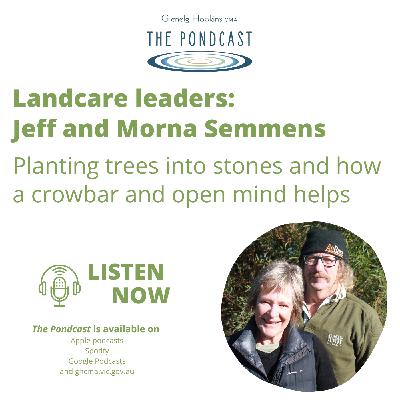
Glenelg Hopkins CMA Landcare Leaders series
Jeff and Morna Semmons
Planting trees in stones and how a crowbar and open mind helps.
Morna and Jeff are first generation farmers, who bought a stony block of land covered bracken that had winds that blew from one end to other with the aim of giving their children a grounded upbringing. 30 years later, they have become local leaders in Landcare who drove the need for a local facilitator of works, experts in all sorts of techniques to get trees to grow in a challenging landscape – including using a crowbar – have a crop-producing of Wattles plantation, and created a productive farm landscape which leaves a sustainably legacy for the future.
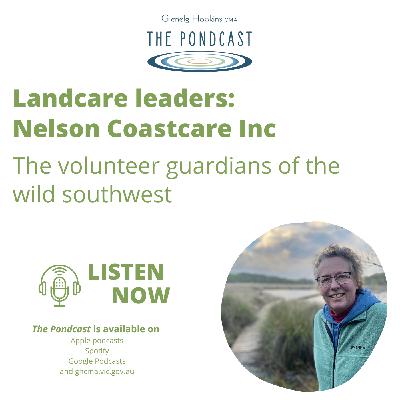
Glenelg Hopkins CMA Landcare Leaders Series
Nelson Coastcare Inc - Mary Styles
In this episode, we meet Mary Styles from the Nelson Coastcare Inc group from the far south-west corner of Victoria west of Portland.
Mary and her merry band of over 40 volunteers are the guardians of the Ramsar-listed wetland area of Long Swamp and the Glenelg Estuary. She declares it the last wilderness frontier in Victoria and the crew from Nelson Coastcare take their responsibility for caring for, understanding, monitoring and mapping of the area in a variety of ways but with the common goal of protecting it for future generations and for the benefit of the environment and tourism in the local area.
For those wanting to download the Nelson Coastcare audio information, its available at nelsoncoastcare.org
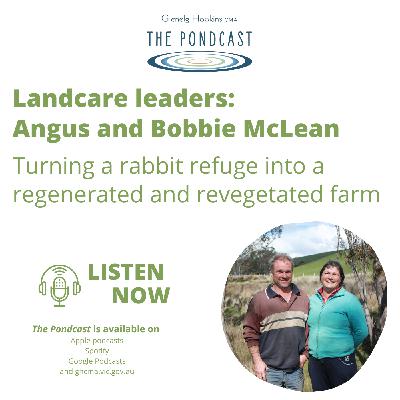
Glenelg Hopkins CMA Landcare Leaders series
Angus and Bobbie McLean, Pigeon Ponds
How a rabbit refuge became revegetated and regenerated
When Angus McLean and his wife, Bobbie, moved back to the Pigeon Ponds district in 2014 and purchased a farm hosting almost the entire population of the region’s rabbits, they could not have realized how much change they could influence on a property in just 12 years through fencing, revegetation and regeneration. With a new bridge, watering system that lifts water almost 80 metres up hillsides, and a creek area that is now an abundance of regeneration, the McLeans are now farming in an environment that is safer, healthier and more productive than ever.
Glenelg Hopkins CMA Landcare Leaders series
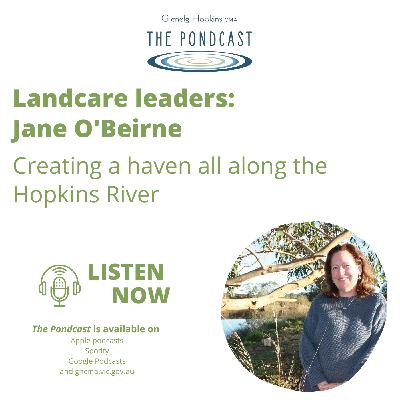
Jane O'Beirne, Hopkins River, Warrnambool
Creating a Hopkins River haven for all
For the last 25 years, planting sections of the banks of the Hopkins River has been Jane’s goal – bit by bit joining the sections together form the Hopkins Falls all along the length of her farm to replace what was once removed. To get the 2000-odd trees a year into the ground, Jane has called on the community, utilizing family, neighours, and school groups to ensure the plants get into the ground so they can begin looking after themselves. It’s paying off in more than just improved production on-farm, the waterway is healthier too, as evidenced the platypus who appear at the end of this interview!
Glenelg Hopkins CMA Landcare Leaders series
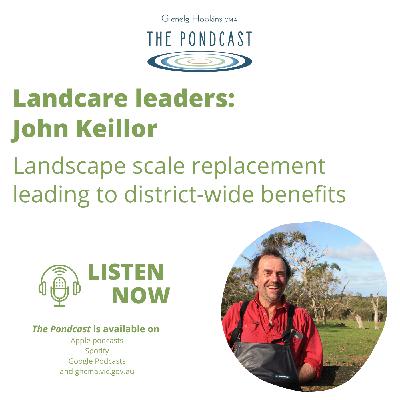
John Keillor, Cashmore Park, Portland
Putting back what was once there across the landscape
In John’s family, the connection to environmental support through field naturalism goes back to the 1900s, and grazing on some of his property has the longest in the history of Victoria, going back the very first settler farmers in 1834. And about 30 years ago, John started his own impact on the local landscape when he headed up the Tarragal Landcare group which took a landscape-scale approach to reversing the clearing of vegetation in the local area. From planting north-south corridors of vegetation, to espousing the benefits of local landcare facilitators, John’s history with landcare is strongly rooted in the theory of living on and with the land.

Comments

Download from Google Play

Download from App Store
 United States