


 Claim Ownership
The Portraitists
Subscribed: 3Played: 47
Subscribe

© Nick Guacheta'
Description
Casual conversations with portrait & figurative artists. Hosted by Nick Guacheta'.
48 Episodes
Reverse
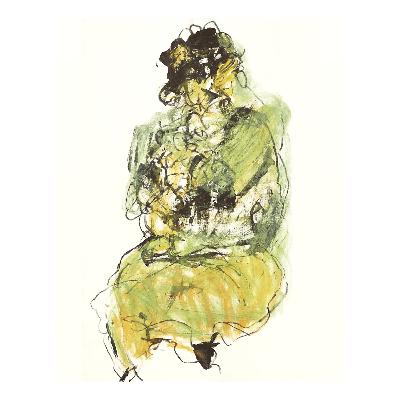
A conversation with Carolina Tangassi, a Mexican figurative artist currently practicing in Mexico City. Tangassi comes from a long line of artists and creatives, a lineage that shaped her sensibilities from an early age. As a girl, her primary pursuit was kinetic expression in the form of ballet and figure skating—but an unexpected exhibition of her paintings at the age of 17 quietly redirected the course of her life.Tangassi’s signature work explores the motion of the human figure, both in action and at rest. As she explains, “everything is moving—even your molecules are vibrating.”@carolinatangassi
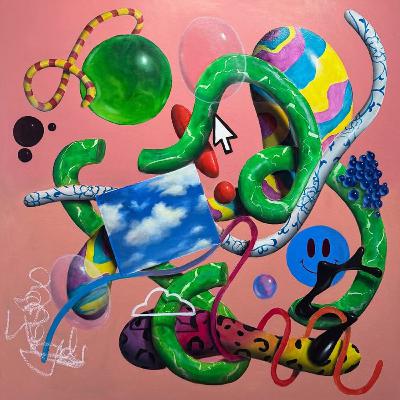
A conversation with Beau Carnes, an American figurative artist currently practicing in Denver, Colorado. Carnes grew up as an enthusiast of painters and paintings, however, dedicated himself to the pursuit of music, and later creative marketing. In both of these disciples, Carnes developed an appreciation for the execution of the intent via a process of technical know-how. Carnes was able to prove to himself that a craft could be learned and mastered if fundamentals were tediously studied and applied. At the age of 25, Carnes became refanaticized by paintings via frequent visits to the Minneapolis Institute of Art - and with spurring from his wife - Carnes decided to enter the practice himself. Carnes’ body of work depicts high octane fantasy - fun, surreal, and novel images that exist nowhere else besides Carnes’ imagination and canvas. Approaching painting, as his other outlets, Carnes utilizes the diligent and technical process of glazing - emulating the Old Masters he idolizes, and colliding centuries-old techniques with a modern visual subjective language. @beaucarnes
A conversation withJohanna Bath, a German figurative artist currently practicing in Hamm, Germany. After stumbling into visual art as a young adult, Bath’s life took a turn that suspended her from accessing both her true emotions and the potential of her full efforts. Bath would eventually liberate herself from these circumstances - dedicated to her practice, and dedicated to her authenticity. Bath’s work focuses on sensation, recollection, and the capture of ‘je ne sais quoi’. @fraeulein_bath
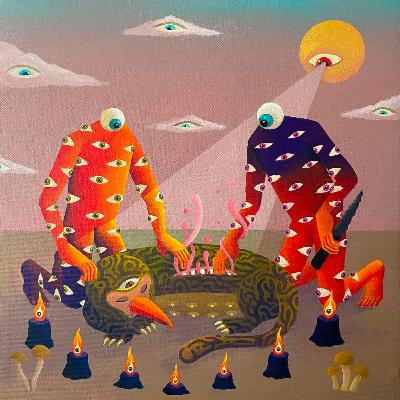
A conversation with Raul Sisniega, a Mexican figurative artist currently in residency in Roswell, New Mexico. Sisniega was raised in Mexico City - his parents spurred him to follow a straight and narrow path to white-collardom. Sisneiga’s relationship with his parent’s expectation and his artistic practice faced its reckoning in his mid-twenties, when he decided to drop out of law school and pursue an education in graphic design. This decision was still a concession, and finally, Sisniega’s impulse to create visual art in its purest form percolated forth in the form of wall painting that graffitied his apartment. Sisneiga was able to transition this private practice to a public practice by collecting these images with papers hung on his walls and plastering them to exteriors. This led to a decade spanning career in muralism, or as Sisneiga prefers: large scale illustration. Sisniega eventually cooled his muralism and pivoted to a more traditional practice, in which he’s able to connect directly to his globe-spanning collectors. Sisneiga’s work evokes the fundamental visual languages that threads prehistoric cultures, intersected by the aesthetic of a boy growing up in the 80’s with a Nintendo remote in hand, and exploring the internal angst that has teased him and us all.
@biosisniega
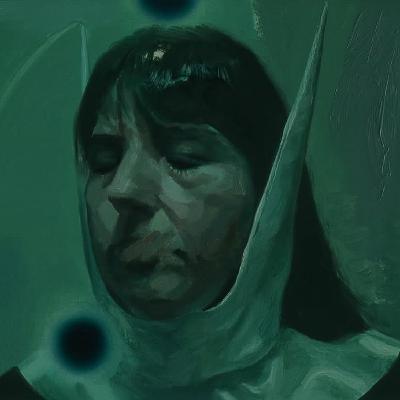
A conversation with Diego Zelaya, a Mexican figurative artist currently practicing in Mexico City. Zelaya had a unique upbringing - the 3rd and youngest son of revolutionaries-turned-scholars. Zelaya’s family highly prioritized education, and at the age of 16, Zelaya transplanted to a niche institution in the UK. While there, Zelaya’s interest in visual arts flourished amongst the collections of Britain. Zelaya was able to influence his academy to develop a more robust arts curriculum - including studio practice and tours to France. After 7 years abroad, Zelaya returned to Mexico City to start a new chapter of his artistic practice - muralism. These large-scale projects were as lucrative as they were dangerous - and that realization became bitterly clear after a tragic accident. Zelaya was inspired to shun his previous work, and retreat into the contemplative practice of studio art. Zelaya, steeped in a household of political consciousness, doesn’t describe his work as overtly political, but fundamentally political - as he strives to illustrate the internal of the human condition.
@diegozly

Comments

Download from Google Play

Download from App Store
 United States