


 Claim Ownership
The Present Age
Subscribed: 15Played: 127
Subscribe

© Parker Molloy
Description
A weekly discussion about communication, media, pop culture, and politics hosted by Parker Molloy
www.readtpa.com
www.readtpa.com
22 Episodes
Reverse

The Present Age is reader-supported. Please consider subscribing to the free or paid versions. Thanks!Today, for another edition of You Know, where I introduce you to someone who is starting a newsletter who you should know, I am joined by the insightful Maris Kreizman. Maris is the former host of the beloved podcast The Maris Review, the new head of the recently relaunched newsletter of the same name, and a celebrated cultural critic who bridges the worlds of literature and pop culture. With her extensive experience in book publishing and her sharp commentary on contemporary media, Maris brings a unique perspective to the world.Can you share a bit about your journey from working in the book publishing industry to cultural criticism, podcasting, and now newslettering? What are some of the pivotal moments that sort of shaped your career?Yeah, in my About Me section on my Substack, it starts, takes a long drag on a cigarette because I feel like I've really seen it all. I started out wanting to be a book editor and I did that through most of my twenties. And then I was laid off and had to find work that was more in and around books. So, I worked at barnesandnoble.com and Kickstarter and Book of the Month.And while I was doing all of that stuff, I sort of realized, as we all did back then, that it's nice to have a personal brand. It really is. And it's nice to have one that is not attached to your profession or the way you earn money. And I began to realize that I loved writing as much as editing. So I do some book criticism and some TV criticism and I started freelancing. And I started my podcast for Lit Hub because I was getting frustrated that I couldn't pitch conversations or profiles with authors anymore at most publications now that aren't paying that much attention to books.I figured that was a way to talk to the people I wanted to talk to on my own terms. And this will be kind of a continuation of that. It won't be audio to start, but I get to talk about what I want and when I want to, and that's so freeing.You've been really vocal about the intersection of literature and the broader pop culture. How do you think that relationship has evolved with the advent of digital media and social platforms? You know, “BookTok” and such.Yeah, I have to admit that I am a lurker on BookTok, [but] have not participated. I started out on Tumblr, and that was really my main platform. And since I started out on Tumblr, I think social media in general has gotten more toxic and digital media has gone from an industry that was booming to one that I hope is still around tomorrow. So it becomes really important to have a way to talk about books that doesn't rely all the time on those platforms. … There are so few platforms now to talk about books other than BookTok. BookTok has become so big that you might start thinking those kinds of books are the only books out there. And there is a vast world and it would be so wonderful if there were a platform for all of the kinds of books that I enjoy.Yes. Which brings me to my next question. With so many new books being published every year, how do you decide which titles and authors you'll engage with? Are there any particular trends that excite you?Parker, this one keeps me up at night and makes my apartment a wreck. It's really hard. There are some books that I know are coming and they're written by someone I already admire and that's really exciting. But getting a first novel from someone I haven't heard of is so exciting and I don't have time to read them all. And sometimes it's really just luck of the draw. I pick one and then I'm in it. And that's why book criticism is so important that we need as many people as we can to be picking out those debut novels and small press books and telling people about them. Because I'm not looking at trends.I'm just looking at whatever looks interesting to me, which is specific.Finally, tell me about the Maris Review, the newsletter and how does it differ from your podcast (RIP) of the same name and what can readers expect format wise, frequency, et cetera.I think my main challenge with my Substack is going to be that I have become so disillusioned with the publishing industry and the digital media industry. And I just have to always try to keep my love of books and the excitement around books away from that.And so the Maris Review will be a place where you can see what I'm reading, see what I'm going to read next, hear my thoughts on the latest scandal — scandal's a big word for the book world, but kerfuffle, perhaps. I hope to talk about adaptations because that's such a big way that people find their way into books. I hope to do author interviews and perhaps audio once again.I'm so excited to figure out what my own constraints are going to be. I have so much freedom now and I'm getting ready to kind of wheedle it down.That’s it for me today. Thanks again for reading! Get full access to The Present Age at www.readtpa.com/subscribe
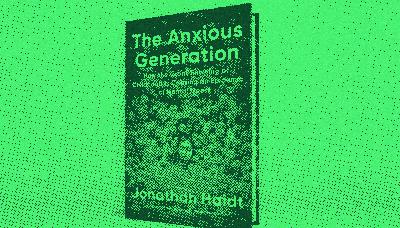
A few weeks ago, I had the chance to read a book called The Anxious Generation: How the Great Rewiring of Childhood is Causing an Epidemic of Mental Illness, by Jonathan Haidt. The argument made in the book went like this: with the rise of smartphones and other internet-connected devices, there’s been a massive uptick in mental illness among Gen Z youth and adolescents. Haidt connects these two, arguing that these don’t merely correlate, but share a causal link. I saw a lot of really positive coverage of his book, a lot of really fawning praise for his work, but something about it didn’t sit quite right with me. It all fit too neatly.There was a review of the book published in Nature that tore into his findings, which I recommend people check out. I’ll link that in the notes here. But for today’s newsletter, I’m sharing an audio interview I conducted a couple weeks ago with Siva Vaidhyanathan, the Robertson Professor of Media Studies and director of the Center for Media and Citizenship at the University of Virginia, and one of Haidt’s more vocal critics.In the interest of fairness, I’ll also be linking to the original book, some of the more positive praise it received, and some coverage of the controversy it’s caused. I hope you enjoy this special audio edition of the newsletter. Full transcript included, obviously.Parker Molloy: All right, so it's so great to talk to you. And so I spent the past week reading Jonathan Haidt's book, The Anxious Generation. And I really wanted to chat with you about it because I know this is a topic on which you've done a lot of study on, and I've seen your social media posts about it. And yeah, so the basic argument that he makes throughout the bookThe book is very repetitive. He repeats his thesis over and over. He makes the argument essentially that the rise of what he calls phone-based childhood, which he refers to as all internet-connected devices, has replaced play-based childhood. And that is primarily to blame for the Gen Z mental health crisis. So I wanted to know what he got wrong here.Siva Vaidhyanathan: Sure, sure, sure. Well, let me start with what he got right. Right. First of all, it's indisputable that young Americans, especially girls and young women, are experiencing higher level of expressed mental distress and emotional distress than we have seen in some time. Right. So that that pretty much tells us that something is happening in this country and probably a few other countries that is creating some combination of suffering we have not seen before and an ability to express and a willingness to express that misery. Right. So, you know, it's a weird thing to look at historically and height doesn't tend to look at things historically, but, you know, life for most people in most of the planet is better than it has been ever in human history.So in the long curve, you know, misery is down, but that shouldn't be a reason to not take seriously the stress, distress and suffering of so many millions of young people. Now, the other thing he gets right is at least in the American context, a steady change in tactics of parenting and the experience of childhood. That's well documented. You don't just need anecdotes to show you this. And it comes in many forms, of course, and it's largely class -informed. So we do see, and we've seen for decades, a sense of parents being both more protective of their children's loose time, right? And this can come from various sources. It can be influenced by the moral panic about drugs or the moral panic about kidnapping or exploitation or any of those things that has been circulating in our media for so many decades, convincing parents that they have to manage children's time precisely.You know, along with the hyper competitive culture that we're seeing among the more privileged classes in the United States where everybody's struggling to get into the same 20 colleges and everybody is trying to sign up for the travel soccer team. You know, all of these things have definitely shifted the practice of parenthood and the experience of childhood. Now, for people who are not privileged,Of course, we've seen the proliferation of demands on parents that take them out of their children's lives, right? So it's not like the free -range latchkey child phenomenon is gone. It's just alive among lower -income families and lower -wealth families, because of course, no one can afford childcare.No one can afford a nanny. No one can afford for one parent to stay home and not work. All of those things that allowed, especially the one parent staying home and not working, which was a luxury long gone in this country, allowed for children to have that space and that security. And so all of these things are long-term changes over four or five decades we've seen. So what happens in the 2000s and what happens to crater mental health among young people? Well, I think it's important to remember that when you're talking about, first of all, as diverse a population as the United States and as complex a question as mental health is thatYou should resist looking for one factor or even trying to isolate variables to find the main factor, the universal factor, the contributing factor. That is what leads us astray. Right. So this is what I think he does wrong. What I think he does wrong is he starts out with a very poor archaic theory of technology. And he starts out with an ahistorical approach to what has changed in American life in recent decades. But he still has this phenomenon that does speak to his thesis, which is that there is a demonstrable drop -off in well -being starting around 2010 or 2011, which is four years after the iPhone is introduced. And just as we start to see younger and younger people get smartphones or get mobile phones at all. And look, every child who has a mobile phone, everybody under 18 who has a mobile phone or has a smartphone has so for a particular reason. There was a conversation, they're expensive, there was a commitment, there were rules set down, there are reasons for it and there are often very good reasons for it. But collectively you do have this change.So he sees a correlation here and it's irresistible to him because of course if he can spark panic about this, then he can create a tremendous amount of attention and then he can be the one stepping forward to try to, you know, prescribe a problem. But this isn't going to help, right? This isn't going to help because the problem is complex.Let's concede that moving one's eyes from the park to the phone is not healthy. I think it would be hard to argue otherwise, right? We experience in our daily lives, it's just so obviously not as healthy as running and playing and playing kickball and softball and street hockey and all of those things, right? So at the same time, let's concede that people do engage with these screens and the apps on them for reasons that are important to them. It's not a default. People have particular uses and needs that they're satisfying by moving to these phones. So again, let's concede it's not great. But that leaves us a huge gap between not great or even bad on balance, and being the chief cause of this high level of distress. When a much more reasonable explanation, and I think a richer explanation, is that a number of factors work synergistically to affect not only an individual's mental health state, but collectively a population's mental health state. It's safe to say that there are people in our country in our communities who are better off because their screens, their phones, the apps on their phones allow them to build community, allow them to find people who have gone through similar experiences to whatever stress or distress they're experiencing, right? People who find mentors, people who find guides. This has been well documented among queer youth for many, many decades, right? Thatthat the ability to reach out beyond your immediate surroundings and find stories and role models and guides and peers could be crucial to surviving some of the most and thriving through some of the most stressful developmental moments that a person can go through. And so for someone in a hostile family or an uncaring or an unreasonable family, or an unreasonable community or church or whatever, these sorts of tools can be crucial. Now, who knows how many young Americans use these tools for that purpose, but we know it's not zero. We know it's significant and we know it's important to them. We also know that children whose families are dissolving or children whose families have lost wealth, houses, jobs, over the cascading economic crises, first the 2008 crisis and its long legacy wiping out American wealth, and then the COVID crisis, right? The sort of two convulsions happening in their lifetimes. How many found solace, community distraction, fun, joy through their screens when nothing else was available?So going back to this question, remember, Haidt has a two-part diagnosis, but he and everyone reading him seems to be only focusing on the second part of the diagnosis. The first part of the diagnosis is that childhood has changed. We've gone from having a sense of free-range immersion in our immediate surroundings, our physical landscape, our communities, other people face to face, and shifted our behavior toward these screens and it has not been healthy, right? So you don't even have to go as far as height to say the problem is the phones. Maybe the problem is everything else in society, right? Maybe the problem is that everything else in society seems scary, unfriendly, unwelcoming, not permitted by certain parents, right? And the only reasonable escape is to go to one screen. Now Dana Boyd did tremendous qualitative research on these very questions about a decade ago before smartphones themselves were the screen of question and when there were plenty of other platforms accessible largely through computers that young people were starting to use.And it was really cl
![The Daily Show's Matt Negrin may or may not be Chuck Todd's nemesis. [podcast + transcript]](https://substackcdn.com/feed/podcast/2282/post/47325343/114a79c2d052d3c3adae86cc1329505e.jpg "The Daily Show's Matt Negrin may or may not be Chuck Todd's nemesis. [podcast + transcript]")
Parker Molloy: My guest today is Matt Negrin, a senior producer for the Daily Show with Trevor Noah. And just about the only person on the planet, I know who gets more irritated about the way politics gets covered in the media than I do. Matt, thank you so much for joining me.Matt Negrin: No, I'm obviously happy to have a contest with you about who is more angry at the media on a daily basis. It's a contest in which we both lose so full in on it.Well, I was thinking about this. So this is going to be the first episode of my podcast for the new year, because I had to take a month off because I was just like, “Why am I doing this?”I take a month off because I celebrate January 6th privately. And so I really just a full-on month of just remembrance.Yeah. Well, I mean, if Christmas starts in November, January 6th starts in December.January 6th creep is a real issue that we need to address, people are putting up their January 6th gallows way too early.So I feel like the two of us started the Trump years as relatively sane individuals who just happened to consume a lot of news media. What happened to us?The question is how did we become totally crazy while also feeling that we're the only sane people in a world in which everyone else is crazy, right?Yeah. Pretty much.To me, it feels like the beginning of the Trump years, or the beginning of the Trump term was like, okay, obviously this is a catastrophe, but maybe, just maybe our trusted news media will do the right thing and we'll hold this guy accountable. We'll check him, we'll provide a level of accountability that you and I haven't seen in our lifetimes really. And obviously, that didn't happen. So I think the ongoing frustration with that is what has, at least for me just made me question what is going on with this industry that I was a part of? That I spent almost a decade in, how did I not see that this was kind of inevitable? And then when I left the industry, I was like, all right, now I feel like I can talk about this stuff freely, which is kind of a bad sign that people in journalism can't talk about what's really happening.And that's been kind of the undertone I think of journalists will tell you privately in the DMs that they agree with what you're saying, but will never say it publicly. And that's bad.The Present Age is a reader-supported publication. To receive new posts and support my work, consider becoming a subscriber.Yeah, well, on that sort of the same kind of thought, I get a lot of people who will text me or DM me to say they liked something I wrote and I'm like, "Cool. I would appreciate a retweet." And they're like, "Sorry, I can't."It's just, "I'll get in trouble if I do that." I've heard from so many people at newspapers and TV networks who say the same thing. And they're like, "God, you're so right. Thank you for doing this. This really needed to be called out." And my response is always, "You are totally in a position to call this out yourself." And they all say, "Ah, you know I can't do that." And it's like, “ha ha.” Yeah. Well, that's fun. Thanks for your help. But I'm just going to sit back and let this profile of Greg Gutfeld just kind of go out and get tweeted about, and I won't do anything about it.Yeah. “I won't criticize it because I don't want to get in trouble with the bosses.”Exactly. I don't want to mention how we gave a platform to Josh Hawley. I don't want to be the person who does that. It's not my role. Yeah.So speaking of giving a platform to Josh Hawley and giving a platform to Ron Johnson and giving a platform to Roger Marshall and Rick Scott and Mike Ron, and all of those. So is Chuck Todd your nemesis? And does he know that he's your nemesis?Okay. The word “nemesis” requires the person to acknowledge your existence. So I think the answer is no, I don't think he has ever once acknowledged at least explicitly, any of the good faith. I would say criticisms about Meet the Press, but I've heard from enough people to know that like yeah, he's aware of it. They're aware of it. They're all aware of it. And one of the NBCPR guys, Richard Hudock has engaged with me on Twitter. So has another producer for Meet the Press. So yeah, they're aware, but they do not respond anymore and I think part of it is because they probably know it's not a good look to be fighting on Twitter. But also I think they know that some of these things are indefensible.So you can't defend Chuck Todd for putting Roger Marshall, who is a Senator who voted to overturn the election on Meet the Press. You can't defend that. It's an obvious message that Chuck Todd thinks it's okay to give a platform to people who tried to overturn the election. And that's simply something that if you're a good faith journalist, you probably don't agree with. So I don't relish the idea that there's a guy on TV who is my nemesis, but at the same time, why aren't more people talking about this? It seems very dystopian. I don't know. What was your feeling after January 6th? I feel like there were a bunch of us on the left who were saying we have to hold these people accountable by not giving them platforms or at least by branding them explicitly every time they're mentioned or on the air with a reminder that they did this thing. Right. Do you remember that feeling?Oh yeah. I mean, I wrote an article for Media Matters in December 2020. So it was before January 6th where I was just like, “What they have done is an unacceptable attack on democracy, et cetera, et cetera.” And yeah, so then of course, then January 6th happens and the-You brought up Mike Braun, that's a triggering person for me because I remember in December, I think it was December 6th, I hope I'm right about that. I'm going to Google it real quick because I'm pretty sure I'm right. I've just ingrained all this stuff into my f*****g head. Yeah. December 6th, 2020, Mike Braun was on ABC's This Week and he floated this conspiracy theory that boxes of ballots were being hidden under a desk in some state and that there was a video showing how the Democrats were trying to steal the election. So this is a month after the election. It's, I guess three weeks after Biden was declared the winner. And you have a sitting senator on ABC talking about this conspiracy theory. That is at the time, the media was feeling out this world, right?“How many senators are going to help Trump try to overturn the election? What is the line?” And Mike Braun was seen as a non-crazy Republican by a lot in the media. And then he goes on This Week and pushes this thing out. To me as a producer or as a host or as a person at ABC that should have been the cutoff line, like okay, we're ending this interview. And it just went on for six minutes. They didn't even talk about the thing they were going to talk about, they just talked about voter fraud and that's millions of people who are seeing that and thinking what is this video? What is he talking about? Maybe there is something to this. That to me was like, Mike Braun is not Josh Hawley, he is not Ted Cruz and that's kind of the point.They can all be pushing this conspiracy theory or different versions of the conspiracy theory. And the media is going to accept them because they don't have this outwardly crazy Marjorie Taylor Greene-ish stain on them. Mike Braun looks like an honorable person, but if you look at what he really does, he goes on Newsmax and talks about the same thing. So that's why that guy is very triggering for me. Months later you have Donie O'Sullivan, who I think is a really sharp reporter at CNN going to these QAnon rallies, interviewing people who are saying the election was stolen. And they specifically cite the thing Mike Braun talked about. So, this is how misinformation spreads. It spreads on mainstream media. And the fact that these networks keep putting these people on, to me, indicates they either don't know their role in it, or they're just totally fine with it. I don't know what another option would be.Yeah. I mean, that's... God, I remember when I first got hired at Media Matters, one of the first things I did was I flew out to DC because we decided to do a thing where I would work in the office one week and then spend a few months working from home and then kind of repeat that. And I flew into DC and I saw a guy wearing a shirt that just had a big letter Q on it, standing on the steps of the Supreme court with a selfie stick, taking a picture where he is making a real tough guy face. And it was just him by himself. And it was the first time I had ever seen anyone in person wearing a QAnon kind of thing. And I thought, “Ha ha, that's so funny.” It's not so funny anymore. Part of the issue is that these views aren't debunked on TV instead what you get is you get, "Hey, do you think Joe Biden won the election?" That's not good. Presenting it as a question is part of the problem.Right. And there are multiple journalists who have done this in GOP primary debates over the past year, there was one in, I think it was Hugh Hewitt who did it in the, oh, what race was it? I can't remember, but he was moderating a debate. And he said, do you believe Joe Biden won the election? Okay. You're a journalist on MSNBC, you should not be allowed to do that. There was another local news reporter in New Mexico who was moderating a special house race primary and, or I think it was actually the general election, and she said, "Who do you think won the 2020 election? And how do you plan to work on work with others who disagree with you?" Don't frame this as an issue, it is not an issue.Part of the problem with the Q stuff that, what you just said made me think of is, when QAnon first started becoming a topic that the mainstream media had to talk about. They did it really poorly. And I remember the Q baby at the Trump rally, someone held up a baby with a Q on the shirt and it was like Q baby. And then QAnon went nuts. And then someone was wearing a Q dress and the letter Q. And so then the media
![Matthew Sheffield talks media's blind spot for religious fundamentalism [podcast + transcript]](https://substackcdn.com/feed/podcast/2282/post/44478795/f3ac6530894ea41c4a3f2a8a00e0576a.jpg "Matthew Sheffield talks media's blind spot for religious fundamentalism [podcast + transcript]")
This is part 2 of 2 of my conversation with Matthew Sheffield. If you haven’t checked out last week’s episode, you may want to do that here:Parker Molloy: A lot of criticism of Democrats seems to ignore the asymmetric nature of partisan media. There's a massive right-wing infrastructure in place that can keep the same topic and headlines for an indefinite amount of time. This makes it easy to pick a topic re-alert invented to hammer away at for their own political goals, and I think we saw that recently in Virginia about critical race theory and all of that. And you have people like James Carville offering advice like stop the wokeness, but what he seems to miss is it's not Democrats who are pushing these narratives. If Fox News wants to spend every night between now and the next election claiming that Biden quadrupled everyone's taxes or made it illegal to breathe oxygen, they can, and some people will believe it and they'll repeat it.The Democrats who lost these recent elections, they didn't run on critical race theory or defund the police or anything like that, or LGBTQ issues, which, trust me, I wish the Democrats were as pro-LGBTQ as right-wing media make them out to be. But I don't know what they're supposed to do, or even more importantly, what legitimate news outlets are supposed to do to counter this. If Democrats weigh in on every nonsense issue that comes up... As we're recording this, we're in day two or three of them freaking out about Big Bird. There's a new target every day that gets thrown out there. If they weigh-in, they lose because they're weighing in on something as trivial as Big Bird. If they ignore it, it just builds up and so all of it's a long way to ask you what... How do you fight back against that when the infrastructure is so... It's a very strong infrastructure that right-wing media has built. You have Fox and Gateway Pundit and Daily Caller and Daily Wire and all of that; they keep bouncing the same ideas back and forth. Oh, commentary from a Daily Wire contributor turns into a Fox and Friends segment with that person, which then gets put on Daily Caller. It's this very incestuous, basically. It's an echo chamber. And people often talk about there being, "Oh, the liberal bubble, get out of your liberal bubble." That was something we heard over and over and over after 2016, and then after 2020 there was a big push to, "People have to get out of their liberal bubble," again. The answer is always people on the left need to do this. It's never people on the right need to get with reality. That's never something that gets brought into it, and that's one way I feel like mainstream outlets are failing us is that they don't realize, or they refuse to urge people on the right to maybe be less extreme. You hear after the recent elections, there's been this push, hey, oh, does Joe Biden need to move to the right? Has he been too extreme? He hasn't really done anything extreme. The policies he's proposed have generally been pretty well supported. There's nothing crazy in there, especially when you consider that when Republicans passed the tax bill in 2017, it had something like a 30% approval rating. It was super low and they passed it anyway. And it remained unpopular, but they didn't care.Matthew Sheffield: Well, there's a lot to unpack there.Oh yeah, I'm sorry. That went on forever on my end. The first thing I would say is that after Republicans lose elections, they don't think, well how can we move to the center? What is the message that we can say that will make people like us? They don't do that. They never do that. In fact, what they do is to say, "How can we change the environment so that our ideas can propagate better?" And nobody on the left does that. And part of that is why I started my website, Flux, to try to focus on some of these larger issues and larger trends. In terms of Christian nationalism and the Republican mind, I just did a long interview and discussion about how this works. The Left Behind novels. People have heard of them but did you know that they were written by the... from one of the co-founders of the Council for National Policy? No, I didn't.Which is a right-wing networking organization. The Left Behind novels are designed as political propaganda. That's what they're for; that's the point of them. But people just think, well look at this stupid moron Kirk Cameron movies and whatnot. Of course it's done. Whatever. Understand-Yeah, that God's Not Dead; that whole series of movies, too. It's all the same.Yeah, yeah, exactly. Yeah, of course it's dumb, but you have to go to the next step which is what is the point of these things? Why do they exist? How many people are reading them? And in the case of the Left Behind, those things have sold over 100 million copies.Yeah. Which, in fairness, it's a cool premise for a book, but it's definitely... I feel like it's a cool premise that could've been done in a less super propaganda type way, which I guess that just becomes the Leftovers.Yeah, the end of the world, Satan trying to kill everyone or the demons or whatever. Hell, that's every f*****g superhero.Yeah, it's true.Marvel literally has a god character, Thor, in its pantheon of superheroes. Yeah, it is a cool premise, for sure, but people have to understand what does it... The way that it's executed is designed to tell the audience who reads the books or watches the films or whatever that Democrats are the literal, not metaphorical, literal servants of Satan. Yep, that's... Yeah.And that reality that there are 10s of millions of people who think this. Have you ever seen that discussed on cable news? No.I don't think ever.No. And if it was brought up, people would get slammed for, "Oh, your generalizing," which, okay, but if one Democrat somewhere saying, "We should defund the police," gets turned into, "This is what Democrats believe," there's no... No one goes, "All Republicans believe that forest fires are started with a Jewish space laser," like Marjorie Taylor Greene said, but that's kind of how things are when it comes to you find one fringe-type character on the left and that becomes this is what Democrats believe, this is what the left believes.Yeah, or even in the case of Black Lives Matter, there were some acts of arson or criminality that were conducted, but if you act... I actually was watching the... I live in Long Beach, California; I was watching some webcam footage that people had, the public webcams, and I saw the protests. They were in an area and then they left, the protesters left. And then some people drove in from who knows where and then broke into a store. They had nothing to do with these protests, they were just looters and were not affiliated with the groups. But nobody reported that.Yeah. Well, and also with that, there was this narrative last year as that was happening, "Oh, Democrats support riots and mobs and violence and looting and burning," but I don't know, there might have been a couple who were outspoken on the more extreme ends of whatever was happening, but for the most part, Democrats were like, "Violence is bad, violence is wrong. No violence. Stop it." That sort of thing. But it's-Well, and then, yeah... Oh, sorry.There was this idea that Joe Biden was... these were Joe Biden fans. No. No one who goes and calls themselves an anti-fascist is a Joe Biden fan.They hate Joe Biden.Yeah. Joe Biden, he's the middle of the road. I don't know. He's, "Is Pepsi okay?" as a person, you know?Mm-hmm (affirmative). Yeah.That sort of thing. He's no one's first choice. Yeah. But I would say, though, that, yeah, I don't think, though, that the mainstream media is adequately positioned to cover this. And Democrats and democratic leaders and funders and activists need to understand that the mainstream media will never be up to this task. There is nothing that you can say to them because most of them operate... Their training is basically show up in a building and try to find people and ask them about legislation. That's the only thing they know how to do. They don't know-Repeat whatever gets told to them, which that's one of those things that, especially during the Trump era, was pretty obnoxious because you'd have respectable mainstream reporters tweeting out whatever nonsense Trump said that day or whatever-Yeah, "I had the biggest inauguration attendance ever."Yeah. One guy who used to do that a lot was this CBS reporter, Mark Knoller, where he would just say nonsense. Trump would say nonsense and he would just type it up and send it out and everyone would be like, "Why are you doing this? You understand that this is straight-up untrue. You don't need to share it word-for-word without saying-“Are you a stenographer?”Yeah, well exactly. And then he... I forgot, there was-He retired, actually.Yeah, he retired and then immediately started popping up in the replies of some... I forgot who it was but some democratic lawmaker said something that was a slight exaggeration and he popped in to go, "Actually..." And it's like, where was this guy? Where was this guy the past four years? But-Yeah. Well yeah, so basically what has to be done is that there has to be multiple organizations started who will not only document the lies but also actively push back against them and then also try to stay in touch with the democratic base and get them to be engaged and continue to be engaged, then also to... And then there also need to be groups that are out there telling people who vote Republican, "This is who you actually are supporting when you support these people," because I can tell you so many people who I know, they have no idea. I personally didn't know about this stuff and I worked in media commentary and analysis and I didn't know how crazy these people were. And so the mainstream media isn't going to report it because they are so upset. The only thing that they can understand is an elected politician said this. And sometimes they will debunk it, ma
![Matthew Sheffield helped build the right-wing media apparatus. Now he's fighting it. [podcast + transcript]](https://substackcdn.com/feed/podcast/2282/post/44129717/0ac552e6b2a368587ccab4922fb9b0ba.jpg "Matthew Sheffield helped build the right-wing media apparatus. Now he's fighting it. [podcast + transcript]")
This week’s podcast guest is Matthew Sheffield, the founder and editor of Flux, a new online community for progressive writers and podcasters. I was interested in talking to Matthew about his earlier life experience as someone who was present when right-wing media really started building the echo chamber. The interview went pretty long, so this is part one of two. The second portion will be posted next week.The Present Age is a reader-supported newsletter. Please subscribe. Thank you!Parker Molloy: Joining me today is Matthew Sheffield. One of the first things I wanted to ask you is can you tell me a little bit about your connection to right-wing media? How it started, what you did, how your views changed over time, how your involvement changed over time. You offered to share the tale of your exit from the world of right-wing media and I would absolutely love to hear it.Matthew Sheffield: Okay, all right. Well, my background is I was raised as a Fundamentalist Mormon, and Mormons basically, a lot of people don't know, but Mormons actually are the original Christian Nationalists. Mormonism was founded on the idea that America was the choice land above all other lands. That's literally in the Book of Mormon. And that Christopher Columbus was moved upon by the holy spirit to discover America even though he never came here, but... And so Mormons, to some degree, kind of created the environment then rubbed off on a lot of people. I was brought up in that environment very much to a large degree. I have seven siblings, and my family and I, we traveled all over America doing an informal ministry because Mormons don't actually have ministries; they're not allowed to have them by their church. It's a very centralized bureaucratic church, and so I was in that. Part of it was that we were so disenchanted with the regular Mormon church. It wasn't fundamentalist enough for us. But luckily, we were not into polygamy, so that was at least good for us in that regard.But I didn't want to go on a regular Mormon mission because when you turn 19, that's what young men are expected to do. But I was so disenchanted, I was like, "No, I want to do something else." And it was, unfortunately, a really bad idea in retrospect, but in any case, we started traveling around America playing classical music on the street, literally. That was my misspent youth. We did that, and in the course of doing that, for whatever reason... This was the pre-internet days. We actually watched the evening news on TV, and our family watched the CBS Evening News. During the imbroglio over Bill Clinton's impeachment, we decided that we thought Dan Rather... One of my brothers and I decided we thought Dan Rather was unfair. In retrospect, he's obviously shown he's a fairly progressive guy. But anyway, we decided we were going to start a website called ratherbiased.com, and it basically was blogging before there was even a word for it. We got picked up all over the place. I guess people liked it, or some people liked it. We did that for a few years until we got thoroughly and utterly sick of talking about Dan Rather, and so we quit the site in 2002 and we got so many requests to bring it back for 2004 from our... Because we left the site up but we didn't want to do it. But so many people were like, "Please, please bring this site back." And so we said, "Fine, we will." But we had decided at that point we're definitely going to stop no matter what after the election's over. Well, after the election was over, we actually kept going because Dan Rather had gotten involved with that document scandal where he used fake documents to say that George W. Bush had avoided the draft in the Vietnam War. I think that's probably true that Bush did that, but when you're using documents that were typed up in Microsoft Word and you're presenting them as if they were made on a typewriter, that's pretty embarrassing. Anyway, that just exploded in popularity. We thought, my brother and I, we were tired of our family ministry by that point but we had no way out to go and do something on our own. None of us had ever had an internship, none of us had any friends because we lived basically a nomadic lifestyle. We grew up in trailer parks and tents, so yeah, we had no network. I went to I think eight different colleges, and I have two other ones from my high school years, so I've got 10 universities on my transcript. Originally, we thought, well what if we had a website that brought together left and right-wing media criticism? We actually started recruiting a bunch of people for it, and there was a ton of interest for it and people liked this idea. We actually found... before they had signed on with anyone, we found Matt Yglesias. We also found Ezra Klein while they were in college and a bunch of other right-of-center people, and so a lot of people wanted to do this but then we got to the point where we realized, oh, we don't have any money. We can't pay anybody to do this stuff and we have no way of raising money. We're like, f**k, I guess we'll have to just go into right-wing media because we have no other options. It was a weird moment because I remember I applied... I had never even applied for a job before, and so I went up and applied for, I think it was Nordstrom Rack or something like that and they never got back to me, and I was like, man, I don't know. I have no idea what to do. My university people had no interest in helping me, and so we're like, all right, well I guess we'll team up with a media research center and start News Busters. News Busters was basically like a large format version of what we had been doing at ratherbiased.com, and they had apparently seen what we were doing. Actually, we ended up getting more publicity for our stuff than they did, and so we started News Busters. After that, it was basically the first-ever think tank blog publication out there as far as I know. And then a bunch of people started trying to get into that business as well and Heritage Foundations did it, and actually, Media Matters, as I understand, was inspired by what we were doing to some degree. And then I started a business basically sort of duplicating that idea. Had only Nordstrom Rack gotten back to you, this could've all been avoided. Apparently yeah, yep. We did that for a while and then I actually tried to do that... After we started working with them, the first day after we moved out... My brother and I actually had money, we could move out so we did as soon as possible. And I was 27 at the time, and we both... The first Sunday after we left, moved out, my mom had put up a paper on our kitchen because we were living together, actually. She put a paper on it for the address of the local Mormon church, and my brother and I, we got up on Sunday morning with enough time to go to it, but then I looked over and him and I said, "I don't want to go. Do you want to go?" "No," so we didn't and we never did. We never went again after that. Anyway, long story short, our faith in Mormonism and religion generally collapsed after that, but not our interest in right-wing activism. I, for a number of years, tried to make space for non-Christians in the Republican party. And, well, ultimately that was a fool's errand as I soon discovered. Well, not soon, I eventually discovered. I guess the big catalyst for that discovery... Well, there was a couple of things. One was that I kept noticing how people were stealing my ideas on the right. I would go to an organization and say, "Hey, I've built these things here that have millions of readers that are nationally known. I could do that for you." And then they would say, "Well, I don't know, I don't know," and then a few months later big fundraising campaign: We're doing this large website and we need your money. Of course.Yeah, and so that kept happening to me. At first, I thought, well maybe it's just because I'm not... I don't know. Because I grew up in a trailer park and I don't know anybody. I'm not an elite Republican consultant or whatever. And that's what I thought for a while. But then eventually I decided to start writing a book to try to improve conservative politics. And by improve, I also meant to help them become more responsive to public sentiment, so public opinion. And in the course of doing that I began researching why do they pursue these ideas that people don't want? Where does that come from? I had always stayed away from the religious right just by being not religious, but I actually started reading their stuff and I was horrified at what I was seeing. I remember reading a story of this man who was, he's a Hindu priest and he was invited to give the... The US Capitol has a daily prayer session at the beginning of all their... when they're in session, and they invite different people do to it. And this guy, who was a Hindu priest, was invited to do it. And so he got up to do it and people started... They invaded the Capitol, actually. This was a predecessor of January 6th, and no one has ever heard of it. But this happened, and they invited the rotunda and started screaming about Satan and, "We have to stop this." They were demanding that he be arrested. It was awful. I was like, is this what I am helping here? And so I started trying to rewrite to, I don't know, oppose that Christian nationalist extremism, but eventually, I got to the point where I realized, you know what? The reason that they do these things is because they think they're God's servants. I could write all the best words, to use Trump's phrase. I could have all the best words, the best-written book in human history and it wouldn't matter because they're doing these things because they think God wants them to do it. And their ability to distinguish between their own ideas and the will of God is none; it's nonexistent. And it was a profoundly depressing realization because I had thought that there were sincere motives about policy and America and the public servic

Comments

Download from Google Play

Download from App Store
 United States