


The Redemption Project
Subscribed: 0Played: 0
Subscribe

© Brandon Burley
Description
The Redemption Project tells real stories of change, accountability, and second chances.
Hosted by Brandon Burley—a retired law enforcement detective, criminal justice educator, and journalist—this podcast features conversations with men and women who have lived on both sides of the justice system, along with the ministries, programs, and people helping them rebuild their lives.
Each episode explores what redemption actually looks like after prison: recovery, faith, responsibility, failure, growth, and the long road back to trust and purpose. Some stories are quiet. Some are uncomfortable.
Hosted by Brandon Burley—a retired law enforcement detective, criminal justice educator, and journalist—this podcast features conversations with men and women who have lived on both sides of the justice system, along with the ministries, programs, and people helping them rebuild their lives.
Each episode explores what redemption actually looks like after prison: recovery, faith, responsibility, failure, growth, and the long road back to trust and purpose. Some stories are quiet. Some are uncomfortable.
32 Episodes
Reverse
Human trafficking often hides in plain sight.In this narrated journalism episode of The Redemption Project, Brandon Burley examines a new Tennessee law that requires licensed tattoo artists to complete human trafficking awareness training—and why that policy matters.Drawing from reporting, survivor advocacy, and law enforcement experience, this episode explores how traffickers have historically used tattoos as tools of control, why tattoo professionals are uniquely positioned to notice warning signs, and how community-based awareness can become a bridge between vulnerable individuals and help.This is not an argument that tattoos equal trafficking. It’s a discussion about training, pattern recognition, and the quiet role everyday professionals can play in disrupting exploitation.This episode is based on Brandon Burley’s recent opinion column published in The Knoxville News Sentinel and is part of Season 4: Narrated Journalism, where reporting, policy, and practice intersect.
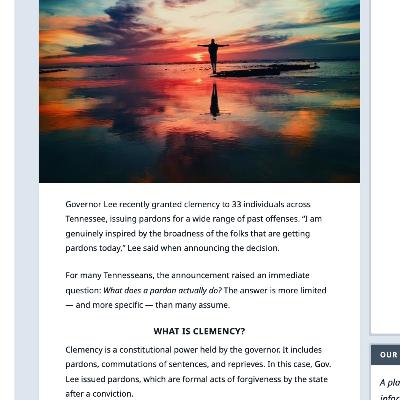
In this episode, Brandon Burley breaks down one of the most misunderstood parts of criminal justice: pardons.Following Tennessee Governor Bill Lee’s recent decision to grant clemency to 33 individuals—including a high-profile recipient—public conversation quickly blurred the line between forgiveness, expungement, and erasure of a criminal record. This episode explains, in plain terms, what a pardon actually does under Tennessee law—and just as importantly, what it does not do.Brandon walks through how pardons affect employment, housing, professional licensing, travel, and public records, why pardons are not shortcuts through the legal system, and how they fit into the much longer and often misunderstood process of expungement. He also explains why pardons remain rare, discretionary, and the result of extensive review—not public pressure or celebrity status.To ground the discussion, Brandon references a firsthand interview with Clark Shepherd, one of the individuals granted clemency, and outlines the years-long process behind that decision.This episode is part of The Redemption Project’s narrated journalism series—focused on clarity, context, and facts beyond headlines
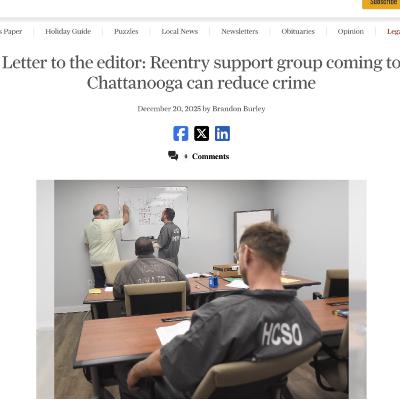
n this Season 4 episode of The Redemption Project, Brandon Burley narrates and comments on a letter to the editor he wrote for the Chattanooga Times Free Press about a reentry support program coming to the city—one with a documented record of reducing recidivism.Drawing from firsthand experience in law enforcement and direct visits to Men of Valor campuses in Tennessee, Brandon explains why structured reentry matters for public safety. He breaks down how housing, employment, accountability, and decompression after incarceration intersect—and why the absence of those supports often sends people right back into the system.While this episode focuses on Chattanooga, the broader issue applies nationwide: when people leave jail or prison without stability, the conditions for reoffending quietly rebuild themselves.Season 4 of The Redemption Project features narrated journalism, letters, and reported commentary examining criminal justice, reentry, and public safety beyond headlines.
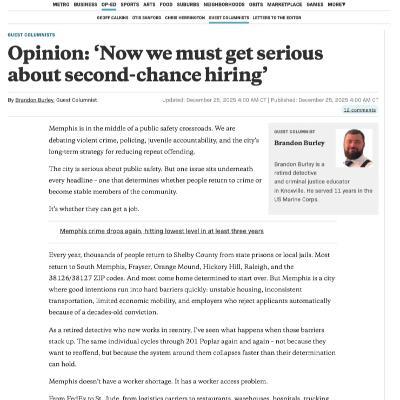
In this narrated episode, Brandon Burley reads and reflects on an opinion piece originally published in The Daily Memphian examining why second chance hiring is a public safety issue—not just an employment one.While the article focuses on Memphis, the argument applies far beyond one city. When people return from prison or jail without access to work, housing, transportation, or licensing pathways, the conditions for reoffending are quietly rebuilt. Public safety doesn’t improve by closing more doors. It improves by opening the right ones back.This episode explores how background checks, licensing barriers, housing scarcity, and transportation gaps intersect—and why responsibility for change doesn’t rest solely with government, but with employers, communities, and citizens willing to step in.Season 4 of The Redemption Project features narrated journalism and reported essays on criminal justice, reentry, and public safety.
In this episode of The Redemption Project podcast (Season 4, Episode 3), I read and comment on my article originally published in Knox TN Today: “What People Don’t See About Life After Jail in Knoxville.”This piece sheds light on the hidden challenges people face after leaving jail—beyond what most of the public sees or understands. From housing and employment barriers to healthcare gaps and societal stigma, the realities of reentry demand deeper attention and practical support.In this read-aloud and commentary, we explore:• The unseen obstacles of life after jail in Knoxville • Why traditional measures of “success” miss the real stories • The importance of community, structure, and accountability • How programs and ministries are filling the gapsFor the original written article, visit:https://www.knoxtntoday.com/what-people-dont-see-about-life-after-jail-in-knoxville/The Redemption Project tells real stories of change, accountability, and second chances, hosted by Brandon Burley.
In this episode of The Redemption Project podcast (Season 4, Episode 2), I read and comment on my article originally published in Knox TN Today: “Mission of Hope, at Christmas and Every Other Day of the Year.”This piece reflects on how ministries and community partners work year-round—not just during the holidays—to care for people in need, extend compassion, and provide meaningful help that leads to stability and purpose.In this read-aloud and commentary, we explore:• What hope looks like in action, not just in intention • How community ministries sustain support beyond seasonal generosity • Why long-term relationships matter in recovery and reentry • The broader impact of consistent care in building resilient livesFor the original written article, visit:https://www.knoxtntoday.com/mission-of-hope-at-christmas-and-every-other-day-of-the-year/The Redemption Project tells real stories of change, accountability, and second chances, hosted by Brandon Burley.
In this episode of The Redemption Project, I read and comment on my article “What Redemption Looks Like in Knoxville: A Day Inside Men of Valor,” originally published in Knox TN Today.The piece offers a firsthand look inside Men of Valor Knoxville—a long-term reentry program built on accountability, structure, and community. It explores what life actually looks like for men transitioning out of incarceration, beyond slogans and statistics.This episode reflects on what redemption requires in practice: time, responsibility, mentorship, and systems willing to invest in people after prison. Redemption doesn’t erase the past—it shapes what comes next.Read the original article here:https://www.knoxtntoday.com/what-redemption-looks-like-in-knoxville-a-day-inside-men-of-valor/
Hey! Welcome to season 4. Season 4 is all about narrated journalism. These short form episodes should all be around the 2 minute mark. I would love to hear your thought on each one!
In this episode of The Redemption Project, Brandon Burley sits down with TK, a licensed therapist and recovery professional whose life was nearly ended by addiction before it was rebuilt through faith, accountability, and community.TK’s story challenges stereotypes. He didn’t grow up in poverty or chaos—he grew up privileged. And yet addiction still took hold, escalating from early alcohol use to prescription opioids, pain clinics, dealing, methamphetamine, and ultimately a near-fatal overdose that left him on life support.After being revived with Narcan nine times, TK faced prison, the loss of his career, and the collapse of his family. What followed wasn’t a shortcut to redemption—it was treatment, humility, consequences, and years of rebuilding from the ground up.Today, TK is a licensed Marriage and Family Therapist and Licensed Alcohol & Drug Abuse Counselor (LADAC II) in Tennessee—despite felony convictions that nearly disqualified him from licensure. His journey offers rare insight into addiction, recovery, criminal justice, and what actually sustains long-term change.This conversation explores:• Why addiction doesn’t discriminate by class or background• The moment TK realized he couldn’t save himself• Near-death, faith, and the cost of recovery• Employment barriers for people with felony records• Why community—not independence—keeps people aliveThis is not a slogan-driven recovery story. It’s a real one.
What actually changes lives inside prison—and what only sounds good on paper?In this extended conversation, Brandon Burley sits down with Dr. Robin LaBarbera, a leading researcher on prison-based theological education, reentry, and well-being inside correctional systems.Drawing from years of firsthand research inside prisons and jails, Dr. LaBarbera explains why transformation cannot be measured by recidivism alone, how faith-based education reshapes prison culture, and why community, accountability, and purpose matter more than policy slogans.This episode explores:Why well-being is a stronger indicator of successful reentry than raw recidivism ratesWhat prison-based theological education gets right—and why it changes entire housing unitsThe gap between academic research and real-world practiceHow redemption stories inside prison challenge public assumptions about crime and punishmentWhy human dignity must come before policy outcomesThis is not a debate episode. It’s a working conversation between research and lived reality—grounded in evidence, humility, and firsthand experience.Whether you’re a practitioner, educator, policymaker, or simply someone asking how people truly change, this conversation offers clarity few discussions ever reach.
In this narrated commentary, Brandon Burley reflects on his recent opinion piece examining why addiction impacts every community—but recovery resources often do not.Drawing from reporting in East Tennessee, the episode explores how smaller cities like Oak Ridge experience the same pressures as larger urban centers—substance misuse, fractured families, and relapse—without the same concentration of treatment, visibility, or long-term recovery infrastructure.The discussion highlights First Recovery in Oak Ridge as an example of sustained, community-based support that goes beyond short-term intervention, connecting people and families to accountability, structure, and practical help. The episode also addresses broader regional data on addiction, homelessness, and overdose deaths, and why recovery efforts cannot remain centralized if communities want meaningful public safety outcomes.This episode is part of Season 4: Narrated Journalism, where published reporting is paired with context, reflection, and practitioner insight for educators, justice professionals, and community members.
Matt Holder’s story isn’t about a single bad decision — it’s about how addiction slowly dismantles a life, one rationalization at a time.Growing up in East Tennessee, Matt came from a stable family, earned a degree in criminal justice, and built a career. But prescription opioids changed everything. What started as pain management turned into years of addiction, felony charges, repeated incarceration, probation violations, and the constant weight of consequences he couldn’t outrun.At his lowest point, Matt was facing a potential 28-year sentence and believed there was no way out. What followed was not a miracle moment — it was structure, accountability, brutal honesty, and people willing to walk with him without excusing his behavior.In this conversation, Matt walks through:How addiction escalates quietly and relentlesslyWhy “white-knuckling” recovery failsThe role jail, probation, and treatment really played in his transformationWhat accountability looks like when grace doesn’t erase consequencesHow redemption is built over years, not momentsToday, Matt works in recovery and ministry, advocates for people reentering society, and lives a life that looks nothing like the one that nearly ended him.This is a long-form conversation for anyone who wants to understand what real change actually takes, both inside the justice system and beyond it.
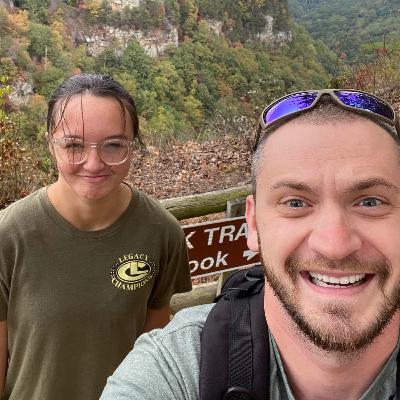
Clark doesn’t begin his story with a testimony. He starts with the record.Manufacturing methamphetamine. Identity theft. Criminal simulation. Unauthorized use. A list of charges that once defined his life. Addiction drove the collapse—relationships failed, trust disappeared, and prison became the inevitable outcome.In this long-form conversation, Clark talks about what actually changed him while incarcerated: structure, accountability, faith lived out daily, and people who refused to let him drift. Redemption didn’t arrive as relief. It arrived as responsibility.Years later, Clark was granted a pardon by Governor Bill Lee. The paperwork made headlines—but it didn’t create the change. It recognized it.This episode of The Redemption Project is about confronting the past honestly, rebuilding consistently, and the people who walk with you long before the world notices.🎧 New episodes release weekly.
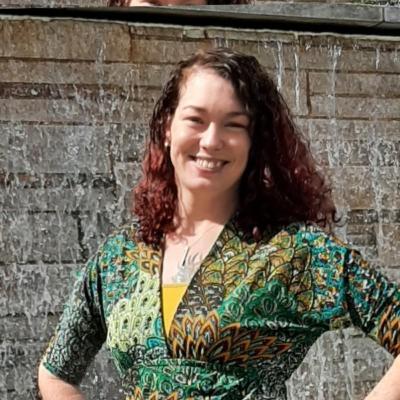
A long-form conversation with Savannah Ford, whose life once revolved around addiction, incarceration, and the belief that she didn’t really matter.Savannah talks about growing up in Sevier County, years of IV drug use and repeated overdoses, serving time in jail, and what it was like to walk out with no structure—and fall right back into the cycle. She reflects on the moment a court decision diverted her into treatment, the slow work of accountability and faith, and why staying—long after the program ended—changed everything.Today, Savannah works on staff at FOCUS Ministries, helping other women navigate the same road she once walked.This conversation is part of The Redemption Project—a podcast about real people, real consequences, and the long, imperfect work of change.🎧 New episodes release weekly on Spotify and major podcast platforms.
Hey! Welcome to season 2. In season 2, I will be focused on more long form storytelling from individuals who have overcome their demons. Season 1 was more short from storytelling (less than 10 minutes), and we will have that again in season 3 if thats what you like!Season 4 is narrated Journalism. That is where I will be reading, and/or commenting on my own journalism and those podcasts I am trying to keep around the 2 minute mark.Season 5 is episodes of me teaching. I will be uploading videos of me teaching criminal justice to middle school and high school students. This may include videos with guest speakers, or field trips- but it is everything that is part of teaching criminal justice.Season 6 is all about ministries. Ministries throughout the United States that are doing great things in the redemption world.
Sean Luttrell’s first arrest came in 2023.By his own words, he wasn’t confused about how he got there. He was living an evil life — one bad decision stacked on top of another until the weight finally caught up with him. The arrest didn’t surprise him. In a way, it confirmed what he already knew: the path he was on only led one direction.While incarcerated for aggravated assault, something shifted.Sean didn’t start with grand promises or dramatic declarations. He hit his knees. He opened his Bible. And he began reading it every day — not for comfort, not to pass time, but because he knew he needed real change. Slowly, he says, he could feel something happening inside him. Not all at once. Not overnight. But enough to know this wasn’t just another jailhouse phase.After serving one year, Sean expected to be released.Instead, he stayed another year.At the time, it felt like a setback. Looking back, Sean believes it wasn’t punishment — it was preparation. “God had other plans,” he says. Plans that required more time, more discipline, and fewer distractions.During that additional year, Sean completed the Men of Valor program while still inside the jail. He chose growth over bitterness. Structure over excuses. Accountability over shortcuts. It wasn’t easy — but it was necessary.Redemption, Sean learned, doesn’t always mean getting out sooner.Sometimes it means staying longer… so you don’t come out the same.Today, Sean carries that lesson with him. He doesn’t deny his past or minimize his mistakes. He understands the harm his choices caused. But he also understands that change is possible — when someone finally stops running and starts surrendering.Sean’s story isn’t loud. It isn’t flashy. It’s quiet, deliberate, and honest.And sometimes, those are the ones that last.
From Maximum Security to Redemption. Michael Charles King was convicted of murder in 1992 and sentenced to life with the possibility of parole. He spent years in maximum security, planned an escape for over a year—and was caught the same day.But that’s not where his story ends.In this full conversation, Michael talks honestly about what prison couldn’t fix, what finally changed him, and how love, accountability, and structure reshaped his life after release.Paroled in 2023. Nearly lost everything again. Didn’t quit.Today, he works with Men of Valor Knoxville and mentors other men rebuilding their lives from the inside out.This isn’t a story about excusing the past.It’s about what real redemption looks like when it’s lived daily.
Kevin’s story isn’t built on a single dramatic turning point. It’s built on decisions.In this short-form episode, Kevin talks about how small choices stacked up over time and eventually led him to prison. Inside, the noise faded—and what remained was the truth he couldn’t avoid anymore: the life he had been living wasn’t working, and no one was coming to rescue him from it.Kevin shares what it was like to encounter Men of Valor, a program that demanded accountability, discipline, and humility. There were no shortcuts—only the daily choice to take responsibility and keep going.This episode of The Redemption Project is about quiet change, honest work, and rebuilding life one decision at a time.
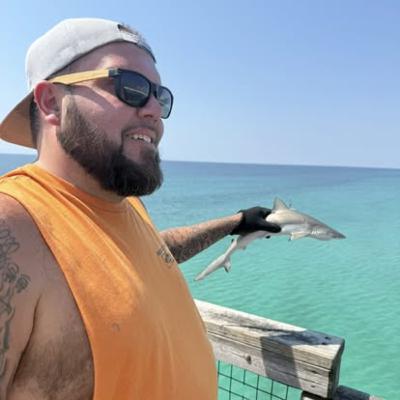
Kris shares his story of coming to Men of Valor Knoxville after being released from Bledsoe Prison and choosing to stay—not because he had to, but because he knew he needed structure, accountability, and community.In this short-form conversation, Kris talks about navigating self-doubt, facing unexpected responsibilities like child support, and how relationships—not just sobriety—became the foundation for lasting change. Today, he serves as the ReEntry Minister and Family Coordinator at Men of Valor Knoxville, helping others walk the same path he once did.This episode is part of The Redemption Project—real stories about responsibility, faith, and rebuilding life after incarceration.
A short conversation with Duan, who chose to continue his journey with Men of Valor Knoxville after his release from the Knox County Jail.After completing the Men of Valor program while incarcerated, Duan could have walked away. Instead, even while on enhanced probation, he chose to stay focused on the work in front of him.For Duan, this season isn’t about fear — it’s about focus. He talks about getting clean and sober, learning new ways to cope, and why turning to God changed how he handles life’s problems.This conversation is part of The Redemption Project, a podcast about real people, real consequences, and the ongoing work of change.🎧 Full conversations available weekly on Spotify and major podcast platforms.

Comments

Download from Google Play

Download from App Store
 United States