


 Claim Ownership
The Revolutionary Star Podcast
Subscribed: 0Played: 19
Subscribe

© The Revolutionary Star
Description
The Revolutionary Star is a Zimbabwean Social and Political Commentary Podcast that covers issues that affect Zimbabwe and other Southern African countries. Our views are based on a Southern African Nationalistic ideology that is known to have birthed the independence of most African Countries from colonialism.
Our goal is to search for the truth in-between the headlines that bombard you a daily basis. We delve into the substance of the issues and follow wherever that discourse leads us. Be warned that at times you may not agree with the analysis or commentary however we encourage debate
Our goal is to search for the truth in-between the headlines that bombard you a daily basis. We delve into the substance of the issues and follow wherever that discourse leads us. Be warned that at times you may not agree with the analysis or commentary however we encourage debate
52 Episodes
Reverse

The Land Reform Agenda that has greatly empowered the people of Zimbabwe through Zanu PF with MDC now supporting it with their SMART Pledge.
The focus on productive use of land and issuance of security of tenure documents to beneficiaries of land in order to allow for long term security of tenure; reflects both MDC and Zanu PF.
Wider access to land being achieved through rightsizing of farms and elimination of multiple farm ownership; yet another tenet that MDC and Zanu PF agree on.
Therefore what is actually the MDC; PLEDGE of a Sustainable and Modernisation Agenda for Real Transformation (Smart pledge)?
SMART Governance, Nation Building and the Consensus State
SMART Sustainable, Shared and Inclusive Economy
SMART Citizen Rights, Interests and Protection
SMART Social Justice and Delivery
Did Zanu PF copy and paste this to Vision2030?
Join Us as we discuss and deliberate
follow us on twitter at @RevoltStarZim
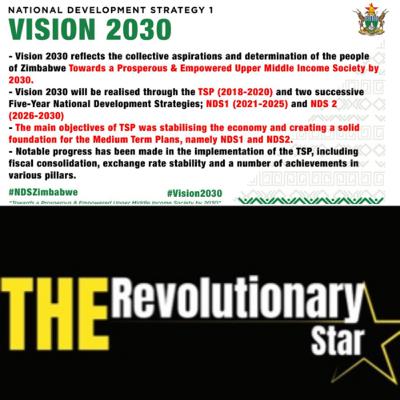
According Cde ED Mnangagwa.......... Government will leave no stone unturned in transforming Zimbabwe into a knowledge driven and industrialised Upper Middle Income Economy by 2030.
Vision 2030 supposedly reflects the collective aspirations and determination of the people of Zimbabwe towards a Prosperous Upper Middle Income Nation by 2030.
Vision 2030 paints a vision of guiding the Transitional Stabilisation Programme (2018-2020), and successive Five-Year Medium-Term Development Strategies (2021-2025) and (2026- 2030) to success.
Vision 2030 seeks to fundamentally transform Zimbabwe to an upper middle income economy,with a per capita Gross National Income of over US$5000 in real terms by 2030, from the current US$1 440.
The key aspirations of Zimbabwe Vision 2030 will be realised through five strategic Pillars, namely:
Governance;
Macro-economic Stability and Financial Re-engagement;
Inclusive Growth;
Infrastructure and Utilities; and
Social Development.
Today we delve into this policy document and direct it to see if it holds water.
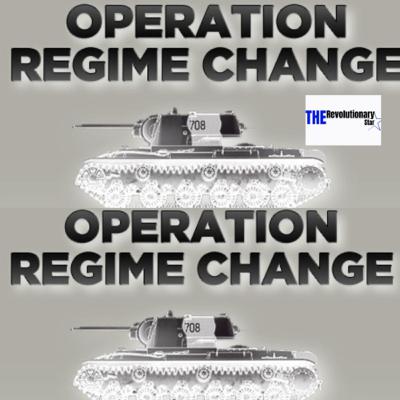
Taliban is gaining ground in Afghanistan as the United States Retreats. What lessons can a small nation in Africa learn when a Superpower makes a mistake
How to avoid being sacrificed as a pawn in this global Geo-political world......
Today is Sunday the 15th of August 2021 today we talk on Regime Change: Lessons Zimbabwe can learn from Afghanistan! When the United States breaks something and cant fix it
On Thursday the 12th of August, Herat, Afghanistan’s third-largest city, fell to the Taliban, becoming the eleventh provincial capital to be captured by the Taliban since the U.S decided to withdraw from Afghanistan
Earlier on Thursday, the armed group took control of Ghazni, the capital of Ghazni province, about 130km (80 miles) southwest of the national capital, Kabul.
The Taliban now controls an 65% of the country’s territory, as the US-led foreign forces are about to complete the pullout from the country after 20 years of war.
Comrades we live in a Predatory environment and need to be vigilant
when a great power fails..... we stop and analyze not to critique but to learn
The Revolutionary Star 15th Episode: 15th
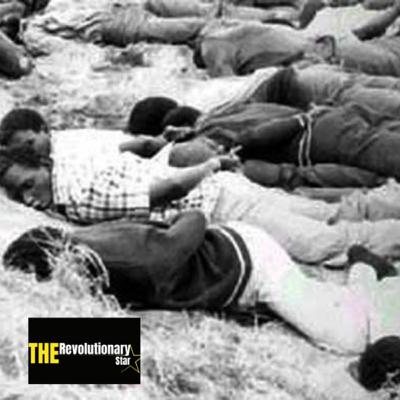
Episode 15: Gukurahundi Foreign Backdrop
Today is Sunday the 8th of August 2021 today we talk on Gukurahundi: How; Who; What and Where!
Gukurahundi is a term used to refer to disturbances in Matabeleland and Midlands in the 1980s which resulted in the death of an estimated 20,000 Ndebele people. It was carried out by the North Korean trained 5th Brigade which was an elite regiment of the Zimbabwe Defence Forces. Gukurahundi is derived from a Shona language term which loosely translates to "the early rain which washes away the chaff before the spring rains". For Gukurahundi timeline click here.
Today we discuss on the foreign aspect of Gukurahundi; what were the dynamics happening in the Geopolitical environment at the time?
Join us today for Part 1 of Gukurahundi and comment on all our platforms
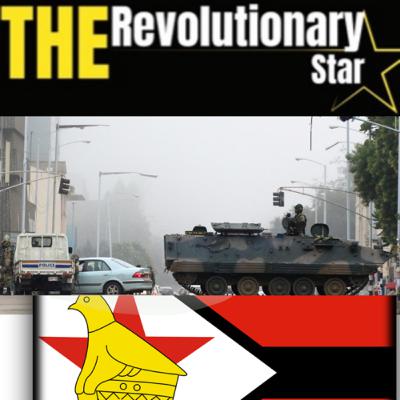
The fourteenth episode of The Revolutionary Star Season 2
Today is Sunday the 1st of August 2021 today we talk on Coup Not Coup" Was Comrade Mugabe Caught Slipping?..........2017 Broken Down
President Robert Mugabe was removed as president and party leader of ZANU-PF, and replaced by Comrade Emmerson Mnangagwa
On the 19th of November 2017, ZANU-PF removed Mugabe as its party leader, replacing him with Comrade Mnangagwa.
We break down the Interview that Proffessor Jonathon Moyo had with Techmag on the 24th of July 2021. Please listen to the full interview at https://www.youtube.com/watch?v=bN4CNnsN9CA&t=66s
We go deeper into this period of time and touch on the manner in which revisionist history is permeating across social media platforms
Join us now on youtube @https://www.youtube.com/channel/UCqkhDsLEs53kB3X1M2LXWjw
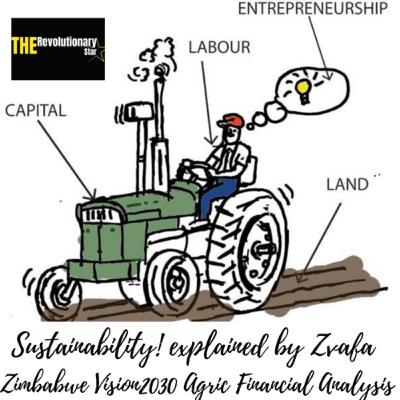
Comrades we cannot keep talking about Natonal politics unless we as Cadres intrinsically understand it ourselves on a financial personal basis. We need to strive for Economic Independence from the forces against us.
As Comrade Uncle Sekuru has been stressing throughout our current marathon on Financial Independence;........... we need to strive for actionable goals based on a sound financial plan! MaComrade.......Please disregard the high sounding words and concentrate on the knowledge in-between spoken in these audio podcasts. As we continuously stress; "The True Revolution will never be Televised".
Welcome to Zvafa (Zimbabwe Vision2030 Agricultural Financial Analysis Thinktank); in today's podcast we have been invited behind the scenes to a farm within Zimbabwe invested in meshing Zimbabwean African Traditional Values with our current Global Corporatism Culture.
We discuss sustainability in a Business and endeavour to understand the difference between Financial Knowledge and Financial Literacy.....
Zvafa is a think-tank affiliated with all Southern African Pan Africanist movements involved in the mental nurturing of future leaders to establish wealth before entering positions of power within our Revolutionary Struggle.
Lets go beyond the rhetoric and nice sounding words maComrade; let us unerstand ourselves as comrades and as a nation. Please listen to this podcast and subscribe to our Youtube page to see additional videos tiri paGround
Makorokoza & Cartels Part 2 Gold Syndicate: How; Who; What and Where!
Artisanal and small-scale mining (ASM) of gold in Zimbabwe is undertaken either through the exploitation of reefs or alluvial placer deposits.
There are over 4,000 recorded gold deposits, almost all of which are on ancient workings
While the coming of the colonialists in 1890 did not significantly change the mining methods for the first ten years, it did shift ownership structures
Let us discuss this area and delve into who what or where our Revolutionary Antenna needs to pay attention to.
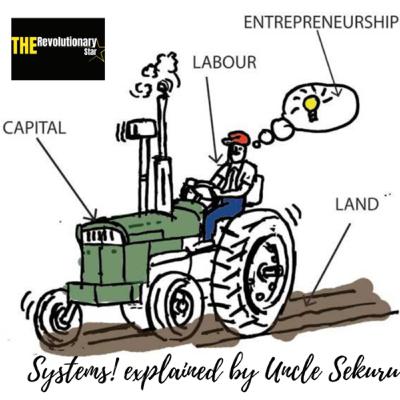
How does a Revolutionary Cadre create a self-sustaining financially independent system?
When we got to Uncle Sekuru's farm the first thing that caught me by surprise was the absence of any foul smell at the farm. Comrade Sekuru rears pigs and i am accustomed to stench being associated with anything to do with piggery.
That being said my surprise only grew as i was given a tour of Uncle Sekuru's Research and Development area, taking up less than half a hectare of his farm. MaComrade the new frontier for Zimbabwe's emancipation involves financial independence and i was in one of the boiler rooms where this idea is being hammered into practical use by everyday Zimbabweans.
Our podcast today wont dwell on the various environment-friendly projects we at the Revolutionary Star saw at the farm. We wont even go into the scalability of the homegrown capital-margin growing initiatives we discussed.
Today we talk about us,......isusu as Revolutionary Cadres "nemafungiro edu"are we Short-termists? Do we understand how to turn ideas into practical systems?
Do we need to change how we think? What needs to be altered in order to create self-sustaining systems that will provide financial Independence?
Comrades........Poverty is a form of slavery and as Revolutionaries economic emancipation is the next battlefront were wars will be waged.
Join us today as we discuss with Uncle Sekuru on what a system is,........ as well as how to create a system and what fundamentals YOU need in order to be goal oriented.

Zanu PF 2030 and beyond
A glimpse into the possible future of Zimbabwe Politics Post 2030; what does that mean?
In life we as Cadres should have goals; principles and defined systems in order to comprehend any policy ideas that may come across our desks as a family members or comrades at arms let alone business owners.
Today on the Podcast we have an agrarian economist; a true son of the soil with revolutionary blood coursing through his veins trying to navigate the liberation templates our forefathers left us…..just like us…
As Cadres we live in a corporate world yet we are African revolutionaries birthed from actual emancipators from colonialism.
How do we reconcile the two, how do we mesh a corporatist society with those ethos our elders fought for?
Do we truly understand what it means to be Revolutionaries or Pan Africanists in a modern Corporate world?
We are honoured to have as our first guest a practical philosophical Zimbabwean farmer who has made meshing corporate business norms with african tradition as a lifestyle.
We delve into how our political landscape will look as;….in 2030; and ask you the succinct question of wether or not it is relevant to Zimbabwe’s development.
Join us today on youtube The Revolutionary Star or subscribe to Twitter @ward9H to continue this conversation on our maturation as a Africans
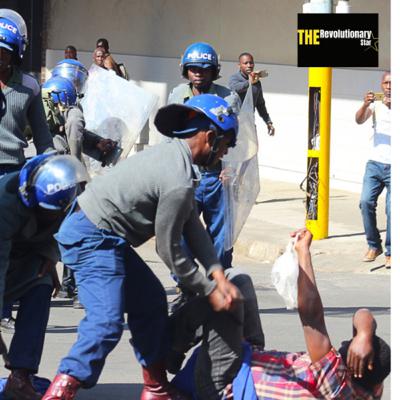
Does Zimbabwe Have a Human Rights Problem
Today we talk on whether or not Zimbabwe has a Human Rights Problem
The military is responsible for external security but also has some domestic security responsibilities.
Reported torture methods is this true? Sexual assault; beating victims with sticks, clubs, cables, gun butts are our leaders and fellow comrades truly doing this?
We delve into this topic as an introductory prelude

Zimbabwe's Cartels and Syndicates and our Organized Crime problem :
Today we talk Zimbabwe's Cartels and Syndicates and how this delves into our Organized Crime problem as a nation
These systems having existed prior to our independence at 1980 and inherited by the political class that ushered in Zimbabwe as we know today
Why do Zimbabweans not trust many of the key institutions in our country. They do not trust in the money issued by their Central Bank, or the electoral process that bestows power on their leaders neither do they trust the opposition completely.
They also do not trust their leaders to serve the interests of citizens, and there is no trust in the courts, the military or the police to serve them well.
Cartels are formed to transfer wealth from consumers and public funds to participants in the cartels (i.e., rent-seeking).The undeserved or unearned profit that rent-seekers gain is defined by economists as an “economic rent”.
sanctions are clearly not entirely responsible for the state capture and economic malfeasance described throughout this report. However, the sanctions regime and U.S. sanctions in particular have had some negative externalities, for example, Zimbabwe lost over 50 relationships with correspondent banks between 2008 and 2017 as they engaged in derisking as a result of the sanctions and global non- compliance with anti-money laundering legislation.
Join Us as we start delving into this subject!
The Revolutionary Star 8th Episode: 8th
The Birth of MDC Explained: Episode 8 Yes We Can Change We Can Believe In Chinja Maitiro
Today is Sunday the 14th of March 2021 today we talk on How MDC was Born
The MDC began after the People's Working Convention in February 1999. In February 2000
As a political party, the MDC was created by a coalition of civic groups that were united more by distaste for Mugabe and ZANU-PF than by any unity of political programmes.
Its origins may be located primarily in ZANU-PF’s adoption of the Economic Structural Adjustment Programme (ESAP) in 1991.
What there is MDC and who is a Chinja Cadre?

The Revolutionary Star 7th Episode: 7th
The Birth of ZANU Explained: Episode 7 Omertà this thing of ours chinhu chedu
Today is Sunday the 7th of March 2021 today we talk on How ZANU was Born: How did this Revolutionary Party become what it is today? The Politics of the Gun and the Bullet meets the Ballot.
ZANU was formed at Cde Enos Nkala's house in Highfield on 8 August 1963 just a few days before a ZAPU Congress was supposed to take place.
ZANU was formed as a breakaway Party from the main Nationalist Party then ZAPU.
What therefore is ZANU the general version?
Zimbabwe's Housing Issues Explained: Episode 6
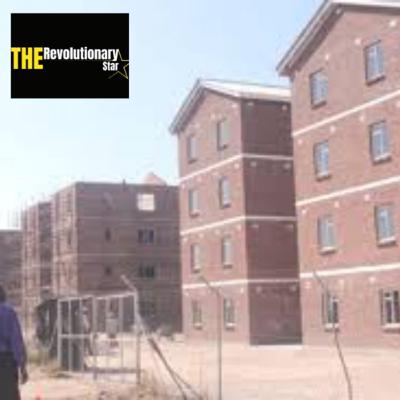
Today is Sunday the 28th of February 2021 today we talk on National Housing in Zimbabwe
Is housing for all considered realistic in Zimbabwe?
"The transition to majority rule in 1980 saw the lifting of decades of racial restrictions to the “Right to the City”. The urban population of Zimbabwe rose rapidly from 23% in 1982 to 30% by the early 1990s. This trend, typical of many developing countries, can be described as the “challenge of rapid urbanization” whereby people migrating to urban areas improve their livelihoods in terms of income opportunities and access to social services, while cities, as economic units, witness impoverishment."
Where are we now?
The Revolutionary Star 5th Episode: 5th
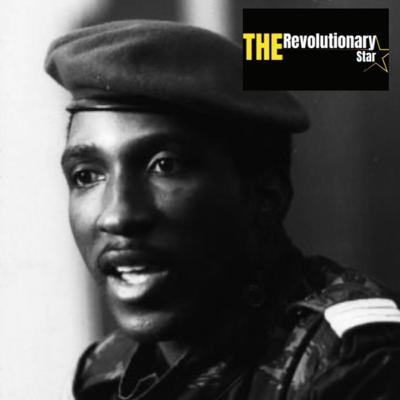
Today is Sunday the 21st of February 2021 Happy Happy Mugabe Day......... today we talk on Thomas Sankara and his Social Political thought in relation to Zimbabwe
Is Sankarism alive in Zimbabwe politics?
Thomas Isidore Noel Sankara (1949–1987) was one of the world’s most prominent pan-African socialist revolutionaries.
He was a military captain and a president, an unapologetic anti-imperialist, a critic of patriarchy and a partner in the “total emancipation” of women, a formidable and often amusing orator, and a humble but resolved human committed to the co-creation of a more just world.
In the early 1980s, he undertook a grounded, applied, and radical approach for the total transformation of the State for the well-being of the people of Burkina Faso.1 Sankara was also distinctive for his revolution’s—the August Revolution—successes, including achievements in food self-reliance, the importance given to ecological balance and reforestation, rapid infrastruc- tural achievements, and advances in healthcare. ***Audio states 2020 this is an error production done 2021
The Revolutionary Star 4th Episode: 4th
Women in Zimbabwean Politics: Episode 4
Happy Valentines as we discuss: Women in Zimbabwean Politics
“Women have traditionally occupied subservient positions in relation to men in the social, economic and political spheres of life.
In Zimbabwe, women constitute 52% of the population. This, according to the Research and Advocacy Unit (2012), means that there are about a quarter of a million more women voters than men, given the estimated 12.6 million total of the population, and assuming that half of the population is under the age of eighteen and thus cannot vote
The few women that have made it to political office have had limited influence as compared to their male counterparts”..........Why is that? We delve into this. **Audio states 2020 this is an error production done 2021
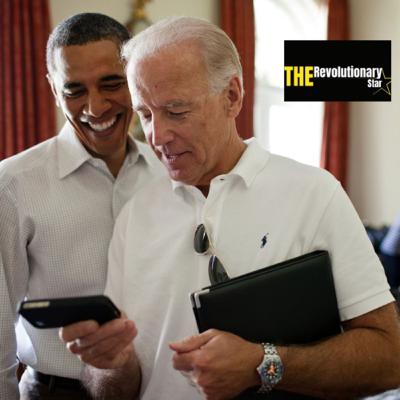
Today is Sunday the 7th of February 2021 today we talk on What exactly is Joe Biden's Foreign Policy Agenda?
When it comes to Zimbabwe, is America open for Business?
Biden Administration is expected to depart from some of the key tenets of President Trump's 'America First' foreign policy, experts also point to a high possibility of continuity in areas such as trade and relations with China. However, on climate change, multilateral cooperation and support for NATO, expectations are high regarding a potential return to deep levels of transatlantic consensus and cooperation.
So what does a Biden Administration mean for Zimbabwe?
Linjani Linjani Makadii Makadii Hello Hello
Welcome to the Watchlist a weekly commentary that tracks upcoming power brokers within Zimbabwe and SADC every Thursday
In an effort to provide more layer and substance to our weekly Sunday podcasts we at the Revolutionary Star have decided to provide a feeder audio that gives more context and background information to the individuals that we cover in our weekly analysis
Expect this podcast to be a informational and biographical commentary that tries to give you an inside understanding to Zimbabweans that we consider should be watched and tracked when it comes to the future of Zimbabwe and Southern Africa at large.
Join us in our journey and get to know the real power brokers in this game that we call Life in Zimbabwe
See you next week.
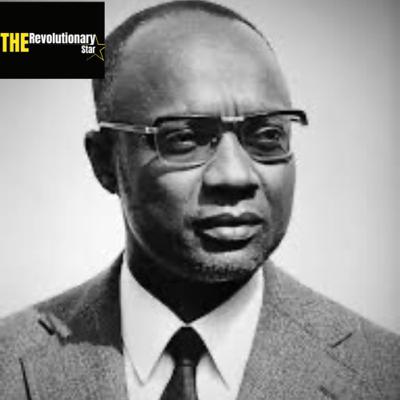
Today is Sunday the 31st of January 2021 today we talk on Amilcar Cabral and how his Social Political thought in relation to Zimbabwe permeates or lack thereof.
Born in 1924 in the territory of what is now Guinea-Bissau, Comrade Cabral
engaged in opposition movements that sought to bring down the Salazar dictatorship and kept up with the events that heralded the arrival of a postcolonial world, including the independence of India in 1947 and the Chinese Revolution in 1949. It was only in the 1950s that African political activities began playing a greater role in his life.
Cabral was assassinated in January 1973 under circumstances that have never been fully clarified, and he witnessed neither Guinea-Bissau’s declaration of independence nor the fall of the longest-standing European colonial empire, marked by the Portuguese Revolution on April 25, 1974.
A revolutionary to the bone; we at the Revolutionary Star today pay homage to him as we reflect on ourselves as Zimbabweans. **Audio states 2020 as produced however this is an error its 2021

Today is Sunday the 24th of January 2021 today we talk on Freedom of Speech and how it affects us as a citizenry ***Audio states 2020 however its an error production was 2021
Is it a Crime to Publish False Statement Undermining Public Confidence in a State Agency?
Earlier this year as well as throughout 2020 reports circulated on social media in regards to several false reports and fake news, many have been arrested for publishing or communicating false information
Is section 31(a)(iii) of the Criminal Law Code valid?
This law reads as follows:
“Any person who, whether inside or outside Zimbabwe publishes or communicates to any other person a statement which is wholly or materially false with the intention or realising that there is a real risk or possibility of
undermining public confidence in a law enforcement agency, the Prisons and Correctional Service or the Defence Forces of Zimbabwe; shall, whether or not the publication or communication results in a consequence............
be guilty of publishing or communicating a false statement prejudicial to the State and liable to a fine up to or exceeding level fourteen [currently Z$120 000] or imprisonment for a period not exceeding twenty years or both.”
In October 2013, after the present Constitution came into force, the Supreme Court declared that section 31(a)(iii) did indeed contravene the former Constitution. Under section 24 of the former Constitution the Supreme Court was obliged to call on the Minister of Justice to show cause why it should not issue a final order declaring section 31(a)(iii) to be unconstitutional.
Therefore so whats the fuss about? Whats the real story?

Comments

Download from Google Play

Download from App Store
 United States