DiscoverThe RosterPilot Show
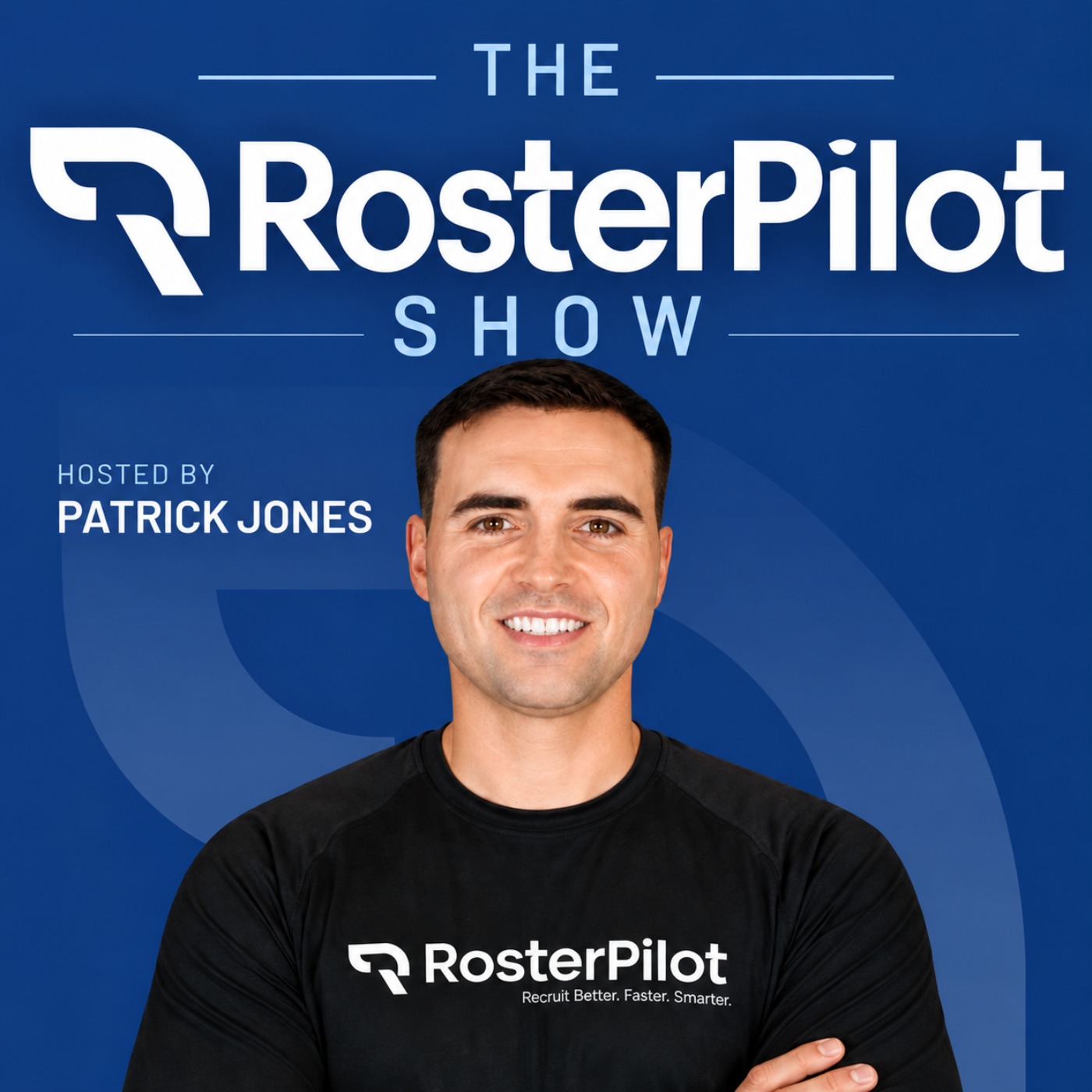
The RosterPilot Show
Claim Ownership

The RosterPilot Show

Author: Patrick Jones

Subscribed: 99Played: 4,584
Share

Description

The RosterPilot Show is built for baseball and softball coaches who want to get better at evaluating, recruiting, developing, and managing their programs.


Hosted by Patrick Jones, former professional hitting coach and founder of RosterPilot, the show features conversations with college coaches, professional coaches, scouts, and other people shaping the game.


We go inside how coaches actually operate — from evaluating and recruiting players to player development, roster construction, managing a staff, and building a successful program.

You’ll hear real conversations about what’s working, what’s changing, and how coaches are adapting across every level of the game.


Evaluate. Recruit. Manage.

Learn more about RosterPilot at rosterpilot.com.


Hosted on Acast. See acast.com/privacy for more information.
415 Episodes
Reverse
Colton Hahn is the hitting coach at Transylvania University and brings experience coaching at both the Division I and Division III levels.In this episode, Colton shares his perspective on coaching and recruiting across different levels of college baseball, stories from his time in the game, and what makes Transylvania University and Lexington, Kentucky, a unique place for student-athletes.We discuss:The differences between coaching at the Division I and Division III levelsColton’s approach to hitting and player developmentRecruiting at the Division III levelLessons and stories from his coaching careerWhat Transylvania University offers student-athletesBuilding a career in college baseballFollow Colton on Twitter Hosted on Acast. See acast.com/privacy for more information.
In this episode, Phil Shallenberger shares insights on building a values-driven baseball program at Messiah, emphasizing character, culture, and strategic recruiting. He discusses how focusing on individual growth and team culture creates sustainable success and how parents and coaches can support young athletes.Chapters00:00 The Savannah Bananas Experience03:00 Building a Culture at Messiah College06:03 Recruitment Philosophy and Team Dynamics09:10 The Importance of Character in Recruitment11:57 Creating a Supportive Environment for Players14:48 Niche and Identity of Messiah College Baseball17:59 Facility Upgrades and Future Aspirations22:18 Recruiting Strategies and Geographic Reach26:04 Balancing Family and Coaching Life30:07 Navigating Parental Involvement in Recruitment37:17 Encouraging Youth Sports Participation and IdentityResourcesMessiah College Baseball - https://www.messiah.eduPhil Shallenberger on Twitter - https://twitter.com/philshallenberger Hosted on Acast. See acast.com/privacy for more information.
In this episode, I sit down with Cam Lanzilli, college pitching coach and former professional pitching development specialist with the Baltimore Orioles, to talk about what elite pitching development actually looks like behind the scenes and what most coaches and families are getting completely wrong.Cam breaks down why recruiting pitchers who "throw strikes" is the wrong way to think about command, what focal point training is and why it changes everything, and how he uses data and movement profiles to develop pitchers individually rather than forcing them into a one size fits all system.We also get into the Tommy John epidemic, why low volume training in the fall is actually the smartest thing a pitcher can do. He also mentions what he saw in a preferred walk-on that nobody else wanted that turned him into a scout magnet by the end of the season.This conversation is a must listen for pitchers, parents, and coaches who want to understand what modern elite pitching development actually looks like and why uniqueness beats everything else in recruiting.Topics Covered:0:00 Intro0:08 Is "recruit guys who throw strikes" actually true or just a social media trend3:55 What acquiring strikes actually means and why zone rate alone is misleading4:45 How focal point training works and why pitchers should stop throwing to their target7:35 What the average pitch miss differential is in the MLB and what it means for development8:39 What Cam would teach hitters knowing everything he knows as a pitching coach10:35 A simple breakdown of focal point vs target and how pitchers can use it today13:45 What Cam learned about patience from his mom being an English teacher15:58 The biggest differences between developing college pitchers and professional pitchers19:00 Why Cam keeps fall workloads intentionally low and what he is actually building toward21:39 The real reason Tommy John injuries spike at the start of every season25:03 How Cam gets pitchers to buy in when they are resistant or listening to someone else25:36 Why Cam always has a reason before asking a pitcher to make a change27:43 When is the right time for a pitcher to get a biomechanics assessment and 3D motion capture29:42 The preferred walk-on nobody wanted who became a scout magnet by the end of the season32:34 What Cam looks for first when he watches a pitcher and why uniqueness beats everything36:53 The advice Cam would give every player and family navigating the recruiting process todayFollow Cam Lanzilli:Twitter/X: https://x.com/LanzilliCam https://x.com/eckerdbaseball Hosted on Acast. See acast.com/privacy for more information.
In this episode, I sit down with Clay Martin, pitching coach at the University of Pittsburgh, to talk about what it really takes to compete on the mound at the highest level of college baseball and what separates pitchers who get there from those who don't.Clay breaks down his journey from Division III to the ACC, what he learned building one of the best pitching staffs in Division II at Seton Hill, and what the biggest adjustments have been in his first year coaching in the ACC at Pitt.We also get into the development side, why Clay believes failure is the most underrated tool in a pitcher's growth, what he would do completely differently if he could coach young pitchers over again, and what he saw in national Pitcher of the Year Ian Korn before anyone else did.This conversation is especially valuable for pitchers and families trying to understand what the jump to elite college baseball really looks like and what coaches are actually evaluating when they recruit at the highest level.Topics Covered: 0:00 Intro 0:05 What it was like competing at the ACC Tournament for the first time 2:00 The biggest adjustments Clay has made coaching in the ACC at Pitt 3:47 How TrackMan is changing the strike zone in college baseball and what it means for pitchers 5:45 What made Seton Hill one of the best Division II programs in the country 7:37 The biggest lesson Clay took from his time at Seton Hill 8:57 What is Seton Hill's secret sauce for recruiting good players year after year 10:51 The real talent difference between Division II and ACC baseball 13:00 How Clay recruits pitchers to fit the park and the program at Pitt 14:37 Is struggling to put hitters away a mental problem or a mechanical one 16:09 Command first or velocity first and which pitcher Clay would rather recruit 18:00 The resources at Pitt that give pitchers a real developmental edge 19:46 The one thing Clay wants to do better as a pitching coach next season 22:02 The biggest coaching lesson Clay learned working with 14U travel ball players 24:37 Why keeping it simple is the most underused tool in player development 25:51 When Clay realized Ian Korn had what it took to become national Pitcher of the Year 28:22 Was there ever a hidden gem Clay found that other schools overlooked 31:00 Why Clay calls Pittsburgh a dream job and what makes Pitt a special place to playFollow Clay Martin and Pitt Baseball: Twitter/X: @ClayMart_ Instagram: @therealclaymartin Twitter/X (Pitt Baseball): @Pitt_BASE Hosted on Acast. See acast.com/privacy for more information.

In this episode, I sit down with Nick Flesher, recruiting coordinator and pitching coach at Milligan University, to talk about what it really takes to get recruited as a pitcher and what college coaches are actually evaluating when they get you on the phone.Nick breaks down how Milligan builds their recruiting classes, why transparency with recruits matters more than selling a dream, and how their unique stackable aid system makes a high-academic school more affordable than most families expect.We also get deep into the development side, why Nick doesn't call pitches during games, how he builds relationships with pitchers before he builds their mechanics, and what he's learned from being wrong in front of his players.This conversation is especially valuable for pitchers, parents, and families trying to understand what coaches are really listening for during that first phone call and what separates the guys who get offers from the ones who don't.Topics Covered: 0:00 Intro 0:04 What late May looks like for a coaching staff after the season ends 1:02 Why JUCO guys wait longer to commit and how Milligan operates around that 2:09 How Milligan's recruiting process works across all three coaches 3:35 The stackable aid system and how Milligan makes tuition more affordable 4:41 How late Milligan will go on a recruiting class and why 6:00 FaceTime campus tours and how Nick started using them for out of state recruits 7:22 Nick's personal portal journey from JUCO to Southeastern Louisiana to Tuskegee 8:26 Why Milligan is fully transparent with recruits about roster spots and roles 9:33 What Nick listens for the moment a pitcher picks up the phone 11:00 Why Milligan doesn't call pitches and the thumbs in vs index out philosophy 14:00 How Milligan's catchers are trained to become an extension of the pitching coach 14:57 The pitcher who went from struggling starter to a key contributor and what changed 18:20 What it looks like when Nick admits he was wrong to a pitcher mid-season 19:46 The hardest conversation Nick has had with a player and what he learned from it 22:39 Why getting to know a pitcher as a person comes before developing him as a player 23:10 What Nick attributes Milligan's 40-plus win seasons to over the last several years 24:32 Nick's favorite pitch to teach and why the knuckle ball is his secret dream 26:01 How Nick teaches a seam-shifted changeup to supinator pitchers 27:00 The hardest pitch to improve and what Nick does to fix a dead-zone fastball 28:00 Velocity or command first in recruiting and the minimum velo Nick will consider 29:15 The most underrated trait in a pitcher 29:52 The biggest recruiting red flag Nick sees 31:23 The most unexpected thing Nick has witnessed at a showcase or recruiting tripFollow Milligan Baseball: Twitter/X: @BuffBallMBB Twitter/X (Nick): @CoachFlesh Hosted on Acast. See acast.com/privacy for more information.
loading
Comments 
loading