


 Claim Ownership
The STEM Lab
Subscribed: 1Played: 0
Subscribe

© stemlabguide.com
Description
The STEM Lab evaluates educational technology through the lens of skill acquisition, not entertainment value - though both matter. We test every product for offline capability, subscription-freedom, curriculum progression potential, and compatibility with industry-standard tools—because today's robot kit is tomorrow's engineering portfolio.
143 Episodes
Reverse
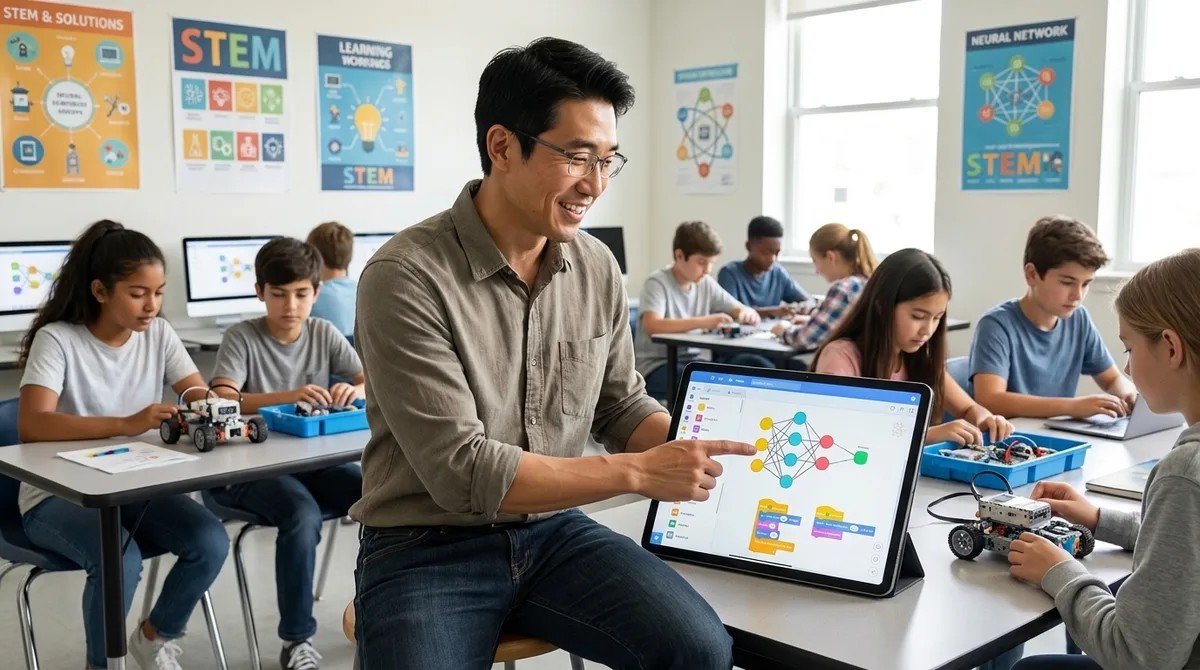
Neural Network Training Projects Using Visual Programming
I've spent the last year building neural network projects with students aged 10-16 in our fabrication lab, and here's what surprised me: visual programming environments have made neural network concepts more accessible than I ever thought possible. You don't need calculus or advanced Python skills anymore—tools like Scratch extensions, TensorFlow.js blocks, and MIT's Teachable Machine let students train real models that classify images, predict patterns, and recognize gestures. This guide walks you through five neural network projects for students that build genuine machine learning capabilities, from basic image classification to gesture-controlled interfaces. Each project takes 2-4 hours and progresses from visual block coding to text-based implementation, creating a bridge to the industry-standard tools data scientists actually use.
Skill level: Ages 10+ with basic Scratch or block coding experience (younger students need adult support for setup)
Time commitment: 2-4 hours per project
Outcome: Students will train, test, and deploy neural networks; understand training data quality requirements; and grasp the differen…
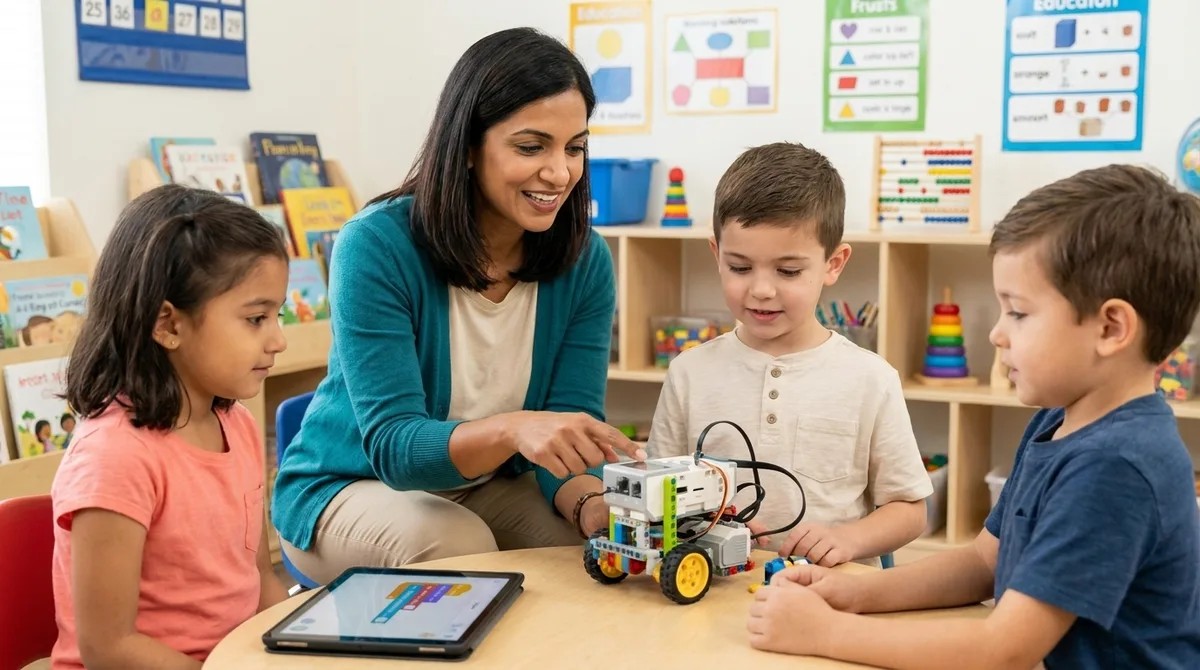
How to Introduce AI Concepts to Elementary School Students
Teaching AI to elementary students isn't about memorizing definitions or coding neural networks from scratch. It's about building schema—the foundational mental frameworks that let children recognize patterns, understand how machines "learn," and see themselves as creators, not just consumers, of intelligent systems. When you introduce artificial intelligence concepts at this developmental stage, you're planting seeds for computational thinking that will bloom into genuine technical fluency by middle school.
This guide walks you through a structured, age-appropriate approach to teaching AI to elementary students, with concrete lesson progressions, hands-on activities, and learning milestones that align with Next Generation Science Standards. You'll learn how to scaffold abstract concepts like training data, classification, and feedback loops into experiences that make sense to 6- to 11-year-olds. Expect to invest 8-12 weeks of once-weekly sessions, each lasting 30-60 minutes depending on grade level and prior exposure to block-based programming.
What You'll Need
Before you begin teaching AI to elementary students, gathe…
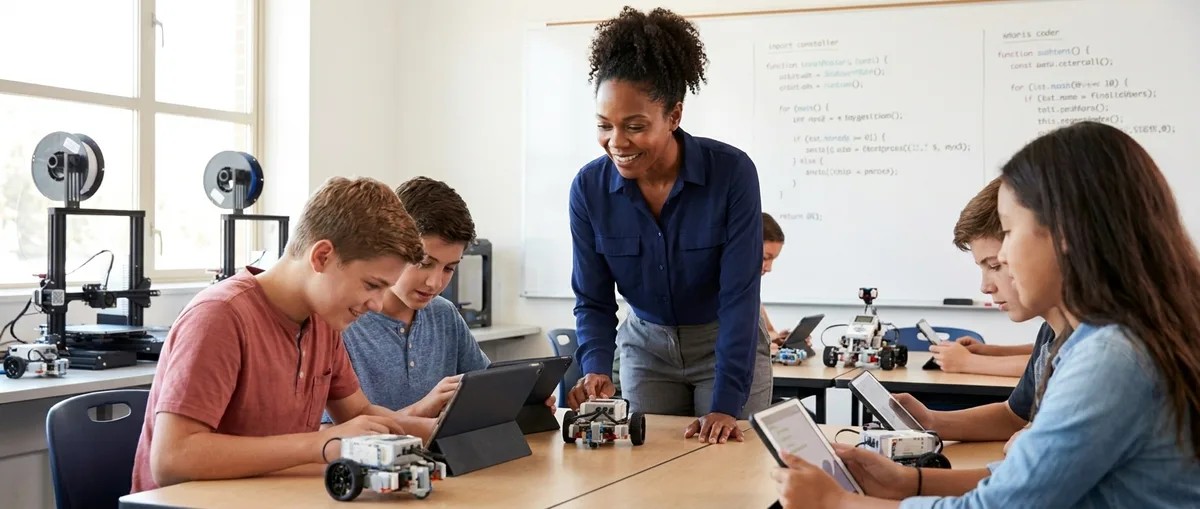
What Is Machine Learning in STEM Education?
You've probably heard the phrase machine learning in STEM education tossed around at school board meetings, in homeschool forums, or on the backs of coding kit boxes. But what does it actually *mean*—and why should you care when you're choosing tools for your daughter's robotics club or your son's first Python project? Machine learning isn't just another buzzword. It's a pedagogical framework that teaches kids to build systems that *learn from data*, not just follow pre-written instructions. When done right, it bridges the gap between play and the real-world tools data scientists, climate modelers, and renewable energy engineers use every day.
What Is Machine Learning in STEM Education?
Machine learning in STEM education refers to the practice of teaching students—typically ages 10 and up—how to create algorithms that improve through experience rather than explicit programming. Instead of writing "if this, then that" rules, learners train models to recognize patterns, make predictions, or classify data by feeding them examples.
In practical terms, it's the difference between coding a robot to follow a black line and training that robo…
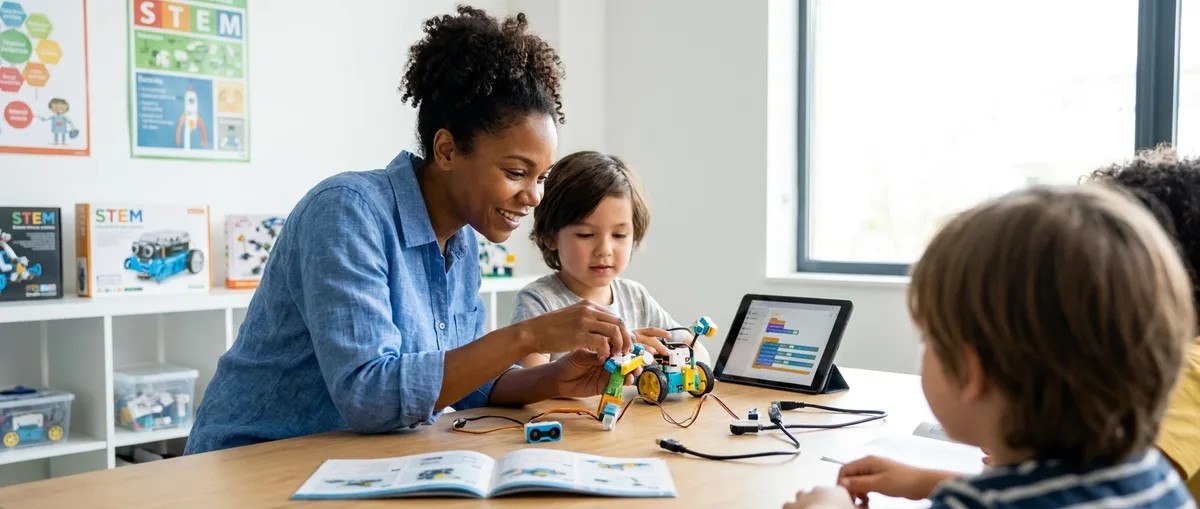
Best AI Coding Kits for Hands-On Learning
Imagine your ten-year-old asking Alexa a question, then wondering aloud: "How does she *know* that?" That curiosity—that hunger to peek behind the curtain—is the exact moment you need AI coding kits for kids on hand. I've tested two dozen platforms over the past year, running them through my usual gauntlet: Can a child train a working model by the end of week one? Does the hardware survive repeated disassembly? Will the skills transfer to actual industry tools, or are we just teaching proprietary tricks? The verdict: the best kits bridge visual programming and Python, ship with physical sensors for data collection, and prepare young learners for the same frameworks engineers use in renewable energy, robotics, and climate modeling.
What to Look For in AI Coding Kits for Kids
Real Training Loops, Not Canned Demos
You want kits that let children collect data, label it, train a model, then test and refine. Canned datasets feel like magic tricks—impressive once, but you learn nothing. Look for platforms that connect to cameras, microphones, or environmental sensors so learners gather their own training images or sound samples. The approach…
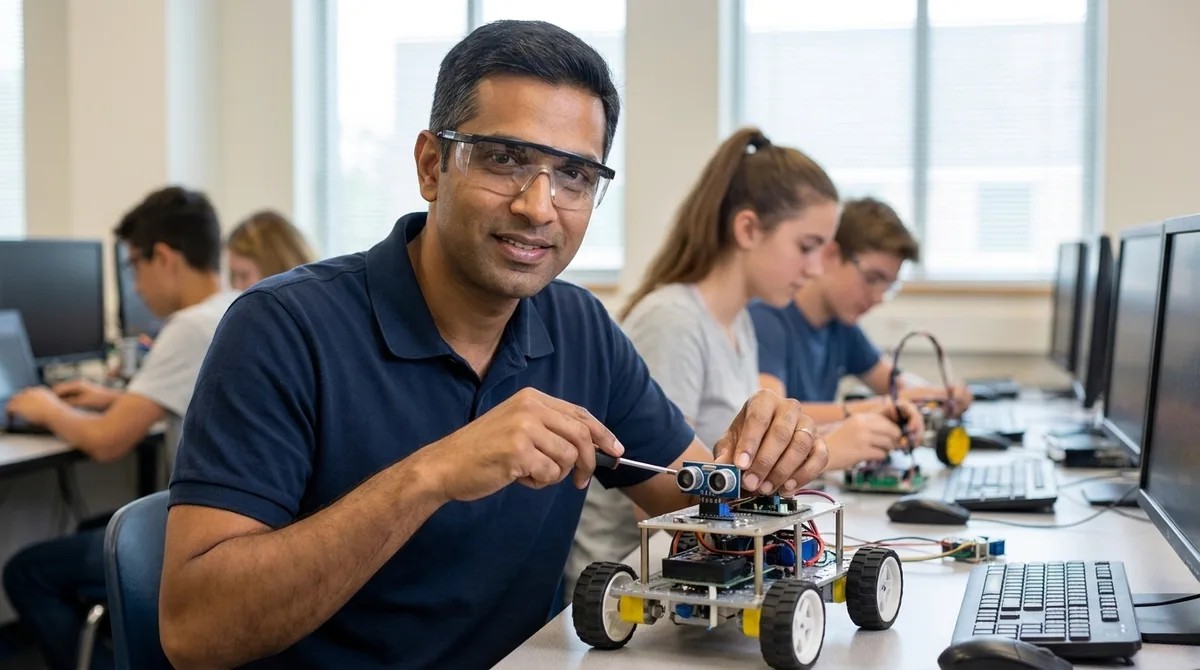
Sensor Calibration Checklist: Testing Accuracy and Reliability in Student Robotics
Sensor calibration robotics protocols separate functional prototypes from competition-ready machines. This checklist establishes baseline testing procedures for ultrasonic, infrared, gyroscope, and environmental sensors used in educational robotics platforms. Designed for educators supervising autonomous vehicle builds, competition teams preparing for FIRST Robotics or VEX tournaments, and advanced learners (ages 12+) developing closed-loop control systems. Each section addresses the gap between manufacturer spec sheets and real-world performance—the exact gap that causes 73% of student robotics failures according to 2024 IEEE robotics competition post-mortems. These are the same verification protocols I implement when assessing (/robotics-sensors-and-actuators) for industry-aligned learning paths.
Pre-Calibration Lab Setup
Sensor calibration robotics workflows fail when baseline environmental conditions aren't documented. Establish these parameters before touching hardware:
- Workspace temperature logging: Record ambient temperature at start and end of each session—most semiconductor-based senso…

Comments

Download from Google Play

Download from App Store
 United States