


 Claim Ownership
The Signal
Subscribed: 24Played: 96
Subscribe

© EdTech Connect Inc 2024 - 2026
Description
With more than 600,000 downloads, The Signal is the podcast for higher education’s innovative leaders.
Hosted by Jeff Dillon, The Signal cuts through the noise to bring you the strategic insights needed to reshape how institutions recruit, support, and retain students. Every Friday, I talk to the practitioners and technology builders who are actively defining the next decade of campus life.
Why Higher Ed Leaders Listen:
In one of the most consequential periods for academia, we move past the hype to focus on Human-Centered Innovation. Our episodes feature deep-dive interviews with guest experts focusing on the "real work" of institutional evolution.
Core Topics & AI Strategy:
* Artificial Intelligence: Practical AI adoption, governance, and the "Human in the Loop" mindset.
* Enrollment Marketing: Modern recruitment strategies and GEO (Generative Engine Optimization).
* Student Success: Data-driven retention, mental health, and digital engagement.
* Institutional Transformation: Navigating digital transformation with a focus on workforce readiness and AVPs reimagining student care.
Whether you are a C-suite leader, IT Director, or Faculty member, join our community of 110,000+ professionals and subscribe to The Signal Newsletter at EdTechConnect.com to stay ahead of the curve.
113 Episodes
Reverse

In this week’s episode, Jeff Dillon sits down with Chris Meador, an AI coach and founder of Yes & Thinking, whose approach to AI adoption starts with people, not prompts. Chris brings a rare background: he trained as an actor at, spent nearly two decades helping organizations adopt what's new—leading brand and video solutions globally at Facebook during its shift to mobile and video, directing global product marketing for Xbox at Microsoft, and serving as VP of marketing at Wistia.
Chris argues that AI is the fifth big technology shift he's lived through, but it's fundamentally different because it's coming for everyone—not just the tech team. Every role, every person, will be impacted. He calls this the tension between "big AI" (frontier models, media hype, forces we can't influence) and "little AI" (the embedded tools we use every day that we can influence). The conversation we're having in the media is not the conversation we need to have on campus.
He offers a practical framework—Direct, Control, Own—for moving from abstract anxiety to concrete action. And he proposes a simple but radical idea: what if every faculty and staff member got two hours of guided play with AI? Not a training, not a policy, not another tool. Just time and space to explore, with someone there to help. That, he argues, is what actually unlocks adoption.
For any higher ed leader, manager, or faculty member wondering where to start with AI, this episode offers a grounded, human, and surprisingly fun approach.
Key Takeaways
AI Is the Fifth Big Shift—But This One Comes for Everyone: Mobile, video, social, and cloud all required adaptation, but AI is the first technology that will change every person's behavior in every role. It's not just for the tech team.
Big AI vs. Little AI: "Big AI" is the frontier models, the headlines, the world ending scenarios—forces we can't influence. "Little AI" is the embedded tools we use every day (Spotify playlists, Gmail completions, AI features in our workflow). Focus on what you can influence.
The Blame Game Ends with the Person Who Pressed Send: One bad AI written message can land in 30,000 inboxes. There is no line between individual accountability and institutional responsibility—the individual is the voice of the university, and the university is responsible for making sure they are the right voice. Both have to work together.
AI Slop Is Just Bad Work: There's no such thing as AI slop—only slop created by people using AI. It's lazy work. It doesn't answer the question, it's not easy to read, it doesn't give you the information you need. If you use AI for a first draft, you better be putting in a lot of edits.
The Two Camps: Google Ecosystem vs. Own Your Data: Some will say, "All my data lives in Google already—let's just use what's there." Others will say, "Let's build our own ecosystem." That's the decision we'll all have to make, individually and institutionally. Chris is building Dotty, a personal AI context layer, to help people own their own data.
The Theater Training Still Shows Up: Chris's acting background taught him empathy—the ability to think through what the other person is going through, where the gap is between what you see and what they see. It also taught him "Yes, and"—the improvisational skill of accepting what's in front of you and building on it. That's exactly what AI adoption requires.
The Signal Newsletter: https://edtechconnect.com/newsletter
Seminar - What Does a University Website Look Like in 2030?
Chapters
(00:00:00) - Intro: AI Slop and Laziness(00:00:34) - Guest Introduction: Chris Metter(00:01:50) - Theater Roots and Empathy in AI Adoption(00:04:35) - AI as the Fifth Big Shift(00:05:25) - Big AI vs Little AI, Embedded Tools(00:08:44) - Why AI Tools for Educators Lag Behind(00:09:53) - Creatives Thriving in the AI Era(00:11:47) - Lack of AI Training in Higher Ed(00:13:23) - The AI Driver's License Concept(00:14:49) - Direct, Feed, Control, Own Framework(00:17:01) - Building Your Own AI Ecosystem(00:18:55) - Using AI for Real Campus Tasks(00:21:52) - Accountability for AI-Generated Messages(00:24:41) - Defining Real AI Slop(00:26:51) - Learning AI by Building: Dottie(00:28:05) - Closing: Two Hours of Guided Play(00:30:04) - Outro and Where to Find Chris
What happens when your website's most important visitor isn't a person—but an AI agent?
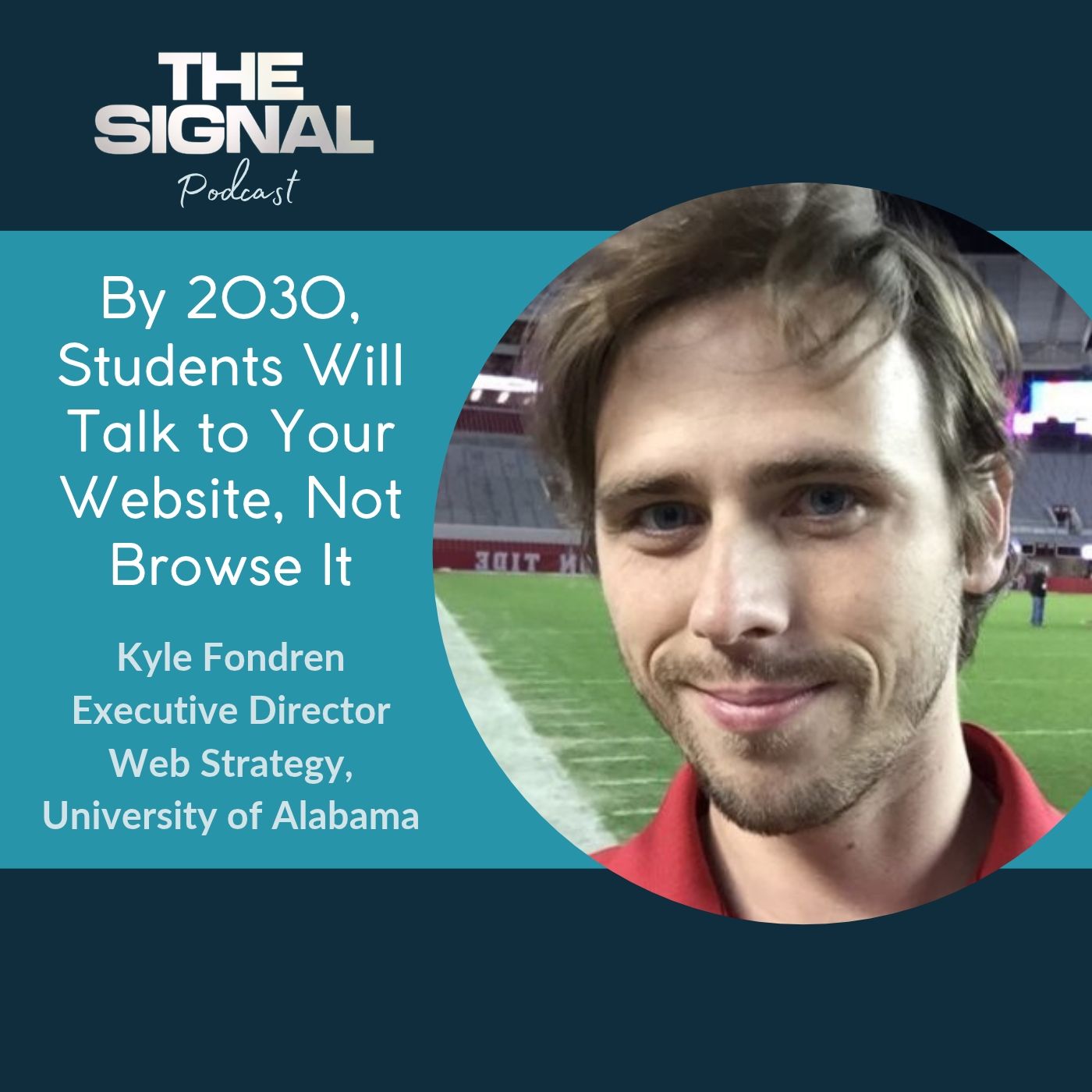
In this episode, host Jeff Dillon sits down with Kyle Fondren, Executive Director of University Web Strategy at the University of Alabama, where he leads UA's global web presence, its institutional design system, and AI enablement across the Division of Strategic Communications. Kyle built UA's web strategy function from the ground up, manages more than 20 mission‑critical institutional websites serving over 15 million visits a year, and brings a unique perspective from his time working with Alabama football—a place where the pace is relentless and the margin for error is thin.
Kyle shares the most "Kitchen Nightmares" moment of his career—a college web presence running on Adobe Contribute with 350 pages, countless sub‑subdomains, and no rhyme or reason to any of it. He and his team cut it down to 33 pages. The whiplash was real.
He also tackles the big question: with human traffic down 15–20% and bot traffic surging, how do you design for two audiences at once? Kyle's answer is duality. The deep, well‑structured content that AI agents crave doesn't need to be beautiful—it needs to be accurate and structured. The homepage, admissions page, and brand campaigns are where you reserve your visual firepower. The human experience and the machine experience are diverging—and great web teams will learn to serve both.
For any web leader, marketing strategist, or institutional leader trying to future‑proof their digital presence, this episode offers a clear, practical framework for what comes next.
Key Takeaways
Process Wins Championships: Working for Nick Saban taught Kyle that big results come from a bunch of small things done right. You can't hit a big redesign or tech moonshot if the atomic level of your design system is in disagreement. Set the standard, focus on the little things, and the big mountain builds itself.
Human Traffic Is Down, Bot Traffic Is Up—And That's Okay: UA is seeing human traffic down 15–20%, but the traffic that remains is more engaged. Bot traffic is shaving off low‑intent bounces. The people who come now are curious, interested, and ready to explore.
Design for Two Audiences: Duality Is the Theme: AI agents don't care about your beautiful homepage—they want well‑structured, deep content. You can reserve your visual firepower for the pages that need to create an experience: the homepage, admissions, brand campaigns. The machine experience and the human experience are diverging.
Design Systems Are the Most Valuable Infrastructure You Have: A good design system speeds up development, serves as the source of truth for AI agents, and syndicates good decisions downstream across your web presence. You can have your cake and eat it too—structure for the machine, experience for the human.
Good AEO Has Been Good SEO All Along: For the most part, the fundamentals haven't changed. Well‑structured, authoritative, consistent content is what AI is looking for. If your domain disagrees with itself, you lose authority and you're less likely to be cited.
Student Outcome Stories Penetrate AI Answers: AI agents love stories that are corroborated by third parties—student outcome stories, cited in institutional data, backed by external validation. That's one way to get your brand storytelling into the AI answer, even when the machine is mostly looking for structured, factual content.
Your Web Presence Is Only Getting More Important: Even...
Chapters
(00:00:00) - Intro: Bot traffic and human engagement trends(00:01:07) - Guest introduction: Kyle Fondren(00:02:19) - Kitchen Nightmares of university websites(00:04:32) - Lessons from Alabama football and Nick Saban(00:07:18) - Measuring success amid bot and AI traffic(00:09:33) - Designing for human vs AI audiences(00:12:41) - Design systems as critical infrastructure(00:15:10) - Building governance and buy-in across campus(00:17:35) - Managing outdated content and AI citations(00:20:59) - Choosing and procuring AI tools(00:22:30) - Closing the AI adoption gap across teams(00:23:39) - Brand storytelling in an AI-mediated world(00:25:54) - Separating hype from real tech value(00:27:21) - Vision for university websites in 2030(00:30:19) - Closing remarks and sign-off

What does a historian trained in medieval manuscripts know about SEO and generative engine optimization? More than you might think.
In this episode, host Jeff Dillon sits down with Matt Russell, Director of SEO and Content at Inspira Education Group, an edtech company helping students navigate the road to medical school and college. Matt took a less traditional route into search—he earned a BA in history at Queen Mary University of London, where he also worked as a student admissions ambassador, and a master's in modern British history at Cambridge. That researcher's discipline—evaluating sources, interrogating context, understanding what information matters—turned out to be exactly what SEO demands.
Matt shares how he scaled Inspira's organic reach from 20,000 to over 400,000 monthly active users and grew their email community from 1,000 to over 120,000 subscribers. He explains the concept of "sign-up intent" keywords—queries where users want something so badly they'll trade their email for it—and how building genuine, expert-crafted resources (like a full-length MCAT practice test) fed a virtuous cycle of rankings, recommendations, and brand trust.
He also offers a grounded take on GEO (generative engine optimization) and AI visibility. The clicks may be declining, but the traffic that remains is more qualified. The question for universities isn't just "how do we rank?"—it's "how do we become the source behind the answer?"
For any enrollment marketer, SEO professional, or content strategist trying to make sense of a post‑AI search landscape, this episode offers a practical, evidence‑based playbook.
Key Takeaways
The Historian's Edge in SEO: Historical research trains you to interrogate sources—to ask why they were created, what they're saying, and what their intended purpose is. The same skill applies to reading Google's documentation, understanding algorithm updates, and identifying what AI search engines are actually looking for.
"Sign‑Up Intent" Keywords Are the Key to Email Growth: There are queries where users want something so badly they'll give you their email to get it. For Inspira, that's MCAT practice tests, med school calculators, and "which med school is best for you" quizzes. Build those resources, rank well, and the conversions follow.
Build Resources That Are Genuinely Excellent: The MCAT practice test is a few hundred pages with answer explanations, handmade with the help of expert consultants. When users find something that helpful, they recommend it on Reddit, which drives branded search, which drives rankings, which drives more email sign‑ups—a virtuous cycle.
AI Search Is Giving Answers Without Clicks—But the Clicks Are More Qualified: Universities may see traffic going down, but the traffic that remains is more qualified because those students already have more information and are coming to the site to confirm and act. Make sure the highway on your site is clear and the conversion path is easy.
Know Your Bot Traffic: A significant portion of website traffic is now bot traffic. Institutions need to understand how much of their traffic is human versus bot and adjust their metrics accordingly—focusing on qualified engagement, downstream inquiries, and application behaviors rather than raw pageviews.
Generative Engine Optimization (GEO) Is SEO with Extra Steps: Make content scannable with short, topically themed chunks. Ensure schema markup is consistent. Being recommended by an AI is a different game than ranking—it's about off‑page signals and brand trust as much as on‑page o...
Chapters
(00:00:00) - Introduction and Guest Background(00:01:58) - From History Degree to SEO Career(00:05:56) - Lessons from Admissions Counseling(00:08:12) - Challenges Facing Medical and Law Applicants Today(00:12:47) - Scaling Organic Traffic at Inspira(00:15:25) - Growing Email Subscribers via Sign-Up Intent Keywords(00:18:06) - Generative Engine Optimization and AI Visibility(00:19:57) - Declining Traffic and Conversion Strategy in the AI Era(00:23:02) - How AI Shapes Student Decision-Making(00:25:45) - Where AI Belongs (and Doesn't) in Applications(00:28:12) - Future of Student Search and Closing Advice(00:29:27) - Outro and Show Credits

Jeff Dillon welcomes back Eytan Wurman, founder and CEO of CommonTime Pathways—the recruiting platform built on a simple, disruptive idea: creatives deserve the same recruiting pipelines athletes get. When Eytan and Jeff first talked about a year ago, CommonTime was just getting off the ground. Since then, the company raised $1 million from Yamaha and Reach Capital, expanded beyond music into theater and dance, and took the platform to the international stage at the ISME World Conference.
Eytan shares the big realization that reshaped CommonTime's mission: they weren't just helping music kids connect with scholarships—they were repositioning the artist as the center of an AI‑enabled future. He explains why music faculty are the most underutilized recruiters on campus, why they're already visiting high schools and adjudicating festivals, and why Common Time simply makes them 20 times more effective.
He also offers a brilliant analogy for two‑sided marketplaces: they're like middle school dances. Everyone's on the wall, no one wants to touch each other. CommonTime created the dance floor, set up the DJ booth, and then had to figure out how to get people to dance. The answer? The snowball dance. Get one college and one kid to talk, then another, then another—until everyone sees it's safe to join in.
For anyone thinking about enrollment innovation, creative talent, or what higher ed looks like in 2050, this episode is a must‑listen.
Key Takeaways
Artists Deserve the Same Recruiting Infrastructure as Athletes: Common Time is an athletics‑style recruiting platform for creative humans—musicians, and now theater and dance students. Colleges can find 13‑year‑old violists, oboists, and tenors the same way they find soccer players.
Music Faculty Are the Most Underutilized Recruiters on Campus: Music professors already visit high schools, adjudicate festivals, give lessons at summer camps, and build pipelines. Common Time makes them 20 times more effective by connecting them with non‑majors who want to keep playing in college.
Creative Students Are the Center of the AI‑Enabled Economy: The Forbes/LinkedIn versatility data shows that English and performing arts majors are among the most versatile degrees. As AI handles more technical production work, the ability to perform, present, communicate, and curate experiences becomes more valuable, not less.
The Unintended Consequence: Parents Are Talking About Music Like Sports: Students are telling their parents they want to study music earlier—and they're using Common Time to convince them it's viable. Parents are starting to see music as something that might pay for college, not just something that's good for you.
Application Pledges Change the Conversation: Colleges can now offer application fee waivers, audition waivers, and pre‑assigned scholarships tied to a student's profile—sometimes two years before they apply. It's the same model as athletics recruiting, and it signals early interest that changes how families see a school.
The Enrollment Cliff Is Creating Urgency—and Opportunity: With three million fewer college kids expected over the next five years and $75 billion in lost tuition revenue at stake, colleges are grasping for new ways to enroll students. Common Time opens the door to 10 million creative kids in the US alone.
Two‑Sided Marketplaces Are Like Middle School Dances: Everyone's on the wall, no one wants to touch each other. The hardest part is getting people in the door. Common Time created the dance floor, put up the DJ booth, and then ran the snowball dance—one college and one kid at a time until everyone joins in.
Common Time's Vision for 2050: To b...
Chapters
(00:00:00) - Introduction and Guest Background(00:01:54) - Catching Up: What's Changed at Common Time(00:03:06) - Expanding Beyond Music to All Creative Fields(00:04:40) - The Versatility of Creative Degrees(00:07:41) - How Common Time Pathways Works(00:09:25) - Building Scouting Infrastructure for Artists(00:11:20) - Art, AI, and Human Potential(00:12:42) - Fundraising and Investor Perspectives(00:15:50) - Taking the Idea to the ISME World Conference(00:19:37) - Redefining Success and Family Buy-In(00:21:42) - Application Pledges and Scholarship Mechanics(00:24:51) - The Enrollment Cliff and Pressure on Colleges(00:27:53) - Scaling a Two-Sided Marketplace(00:31:43) - Vision for the Future and Closing Thoughts
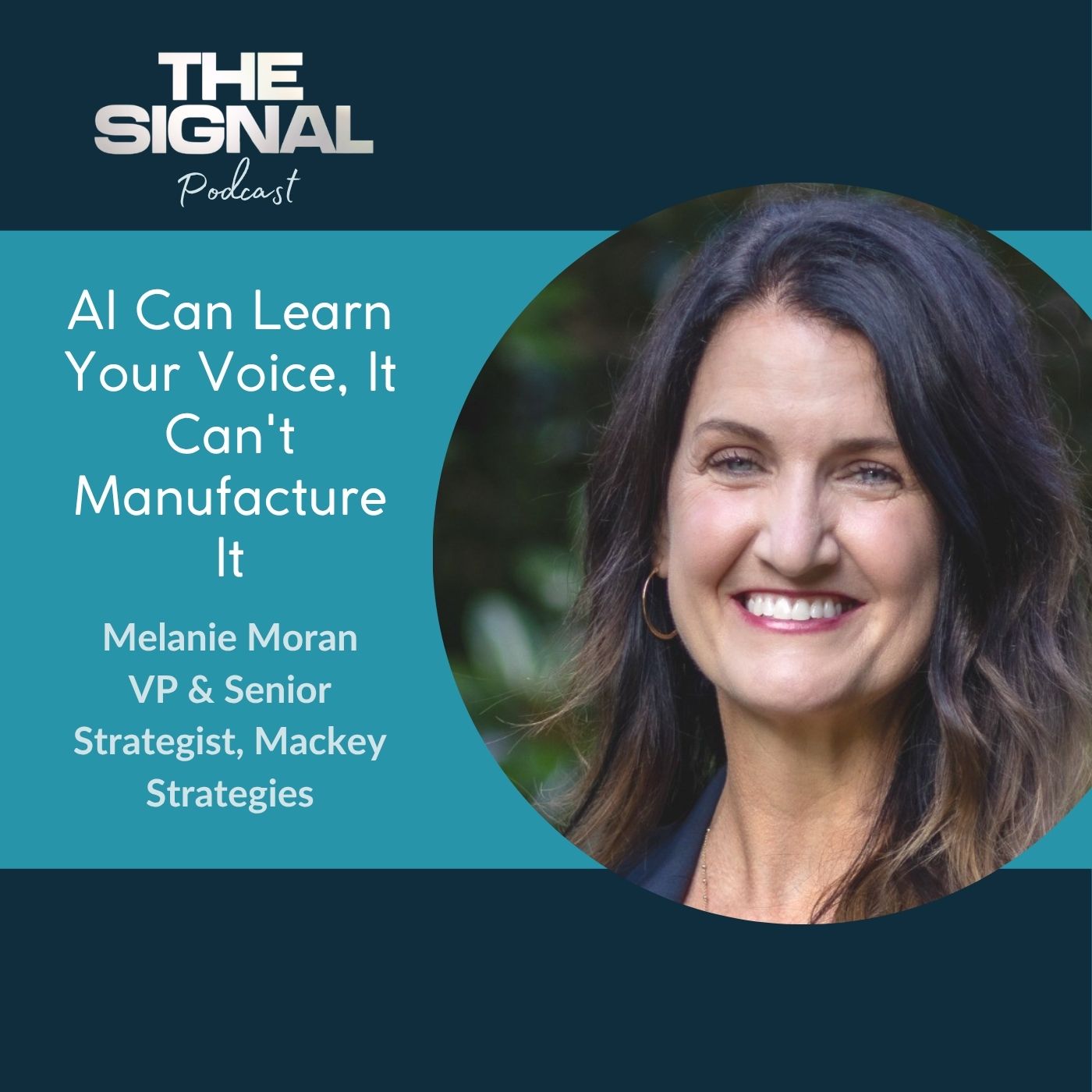
In this episode, host Jeff Dillon welcomes Melanie Moran, Vice President and Senior Strategist at Mackey Strategies, who spent nearly two decades at Vanderbilt University—rising to Associate Vice Chancellor for University Relations—and recently completed an 18‑month stint as interim head of athletic communications. She's seen campus and athletics communications from every angle: as a writer, a strategist, a leader, and an outsider brought in to bridge two worlds.
Melanie shares what surprised her most about athletics communications: the sheer volume, the round‑the‑clock pace, the 17 sports, the live broadcasts, and the massive, always‑on audience. She explains why operational separation makes sense—athletics needs to move fast—but why brand and strategy can never be siloed. The university's name is on the jerseys, and the best operations work hand in glove.
She also offers advice for crisis leadership. The best leaders don't panic. They create space to understand what really happened. They're willing to hear information they don't like. And they understand that trust is the currency of a crisis—the goal isn't to survive tomorrow's news cycle, it's to protect the institution's reputation for the next decade.
For anyone in communications, athletics, or institutional leadership trying to navigate an increasingly complex media landscape, this episode is essential listening.
Key Takeaways
Relationships Must Be Built Before the Crisis Hits: You don't want to be meeting your campus communications colleagues for the first time in the middle of a reputational fire. Establish regular check‑ins, track issues together, and know in advance who handles what.
The Crisis Playbook: What Happened, What Will We Do, What Will We Say: In that order. Don't skip ahead to messaging before you understand the facts and have decided on a course of action grounded in your values.
The Best Leaders Don't Panic: The leader's behavior sets the tone for the entire team. Calm creates space to understand what really happened and gives staff confidence that they'll be supported.
The Best Leaders Ask "What Do I Need to Know?" Not "How Do I Make This Go Away?" They're willing to hear tough news, even if it reveals a staff failure or a mistake that could have been avoided. You can't make good decisions without complete information.
Trust Is the Currency of a Crisis: Getting through tomorrow's news cycle is not the goal. Protecting the institution's reputation for the next five to ten years is. Trust and values are foundational—and they can be lost in the midst of a crisis if you're not careful.
AI Is Great for Getting Past the Blank Page—Not for Judgment: AI can synthesize information, test ideas, and handle repetitive work. But outsourcing judgment, leadership voice, or relationships to AI is risky. The question isn't "Is AI replacing communicators?" It's "How can AI free up communicators to think more strategically?"
The Transition from Individual Contributor to Leader Requires a Mindset Shift: Being the best writer or social media person won't prepare you to lead. You need to shift from "What can I produce?" to "What is the strategy behind it?" Learn the business of the institution. Understand what the president, provost, and athletic director are trying to accomplish. Invest in relationships before you need them.
The Signal Newsletter: https://edtechconnect.com/newsletter
...
Chapters
(00:00:00) - Intro and guest background(00:01:51) - A career story: chasing down a school bus(00:03:20) - How communications leadership evolved at Vanderbilt(00:04:47) - Athletics vs. university communications: scale and pace(00:07:16) - Where separation between athletics and university works or fails(00:08:43) - Crisis speed, authority, and shared language(00:10:32) - NIL, revenue sharing, and deeper integration needs(00:12:45) - Value of outside strategic counsel and interim leadership(00:15:10) - Common traits of leaders handling crisis well(00:16:30) - AI's role in communications work(00:18:09) - Mentoring communicators into leadership roles(00:20:37) - Optimism, burnout, and the future of athletics-campus branding(00:22:50) - Closing and sign-off

Comments

Download from Google Play

Download from App Store
 United States