


The Snooze Button
Subscribed: 18Played: 314
Subscribe


© All rights reserved.
Description
In North America alone, there are about 100 million people with sleep issues. Maybe you’re one of them. Every week, veteran broadcaster Neil Hedley sits down with celebrities, high achievers and the world’s top neuroscientists to try and find answers to his own 50-year battle with sleep issues in the hope that he might find an answer that works for you, too.
70 Episodes
Reverse
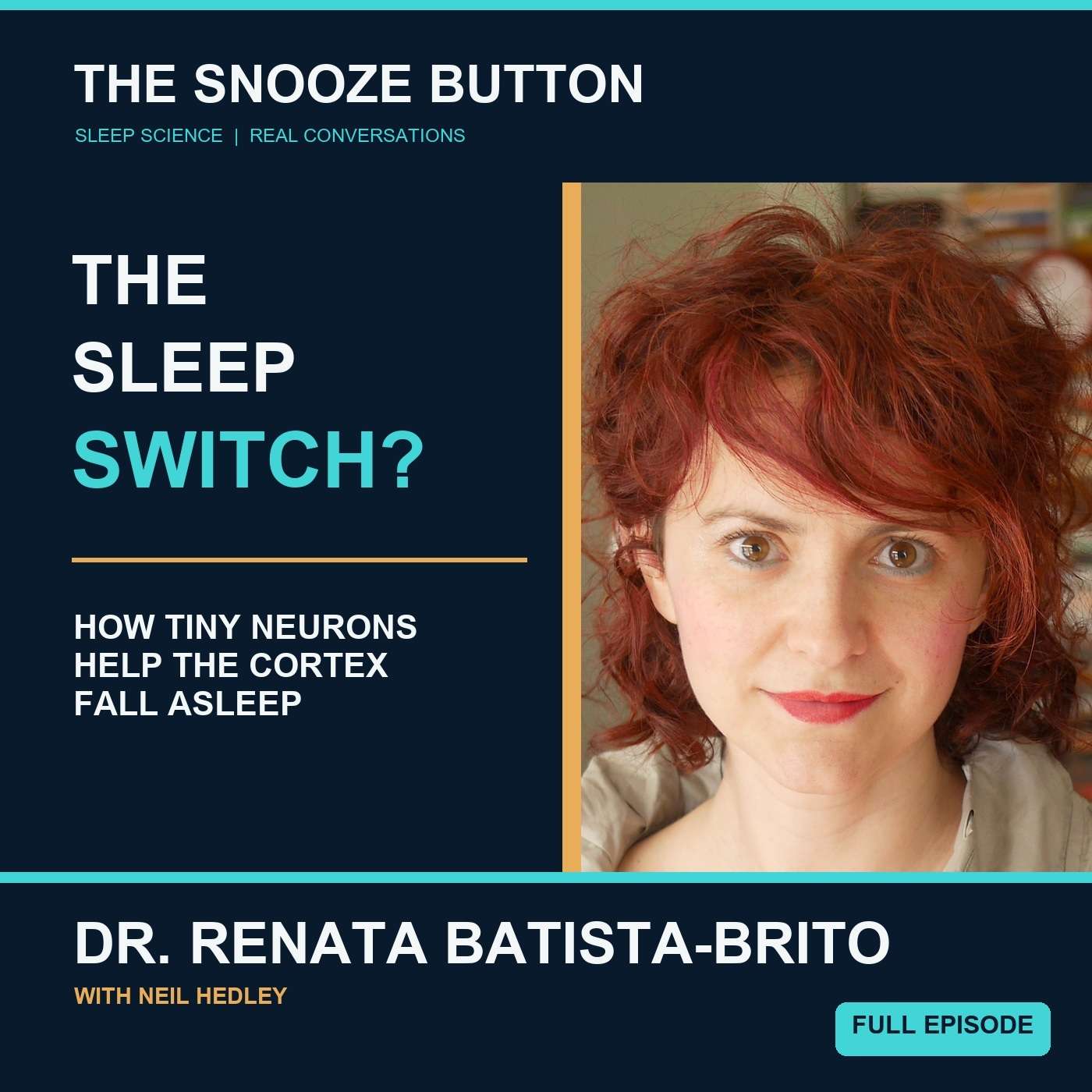
A tiny group of neurons in the cerebral cortex may play a much bigger role in sleep than scientists previously appreciated.
Dr. Renata Batista-Brito, Associate Professor of Neuroscience at the Icahn School of Medicine at Mount Sinai, joins Neil Hedley for a conversation about research into the brain circuitry behind falling asleep. Her team studied an exceptionally sparse population of long-range inhibitory neurons, known as Sst-Chodl cells, whose activation can coordinate activity across the cortex and promote sleep in mice.
Renata explains how these widely connected cells can influence distant brain regions despite their small numbers; the difference between circadian timing and homeostatic sleep pressure; and the unanswered questions about natural sleep regulation, aging, and neurological or neurodevelopmental conditions.
This is basic neuroscience, not an insomnia treatment. The research does not establish a universal brain off switch or show that every sleep disorder can be traced to these cells.
Research: Ratliff and colleagues, Neocortical long-range inhibition promotes cortical synchrony and sleep, Nature (2026), published September 9, 2026.
Find the companion EXPRESS edition and accompanying article on The Snooze Button website after release.
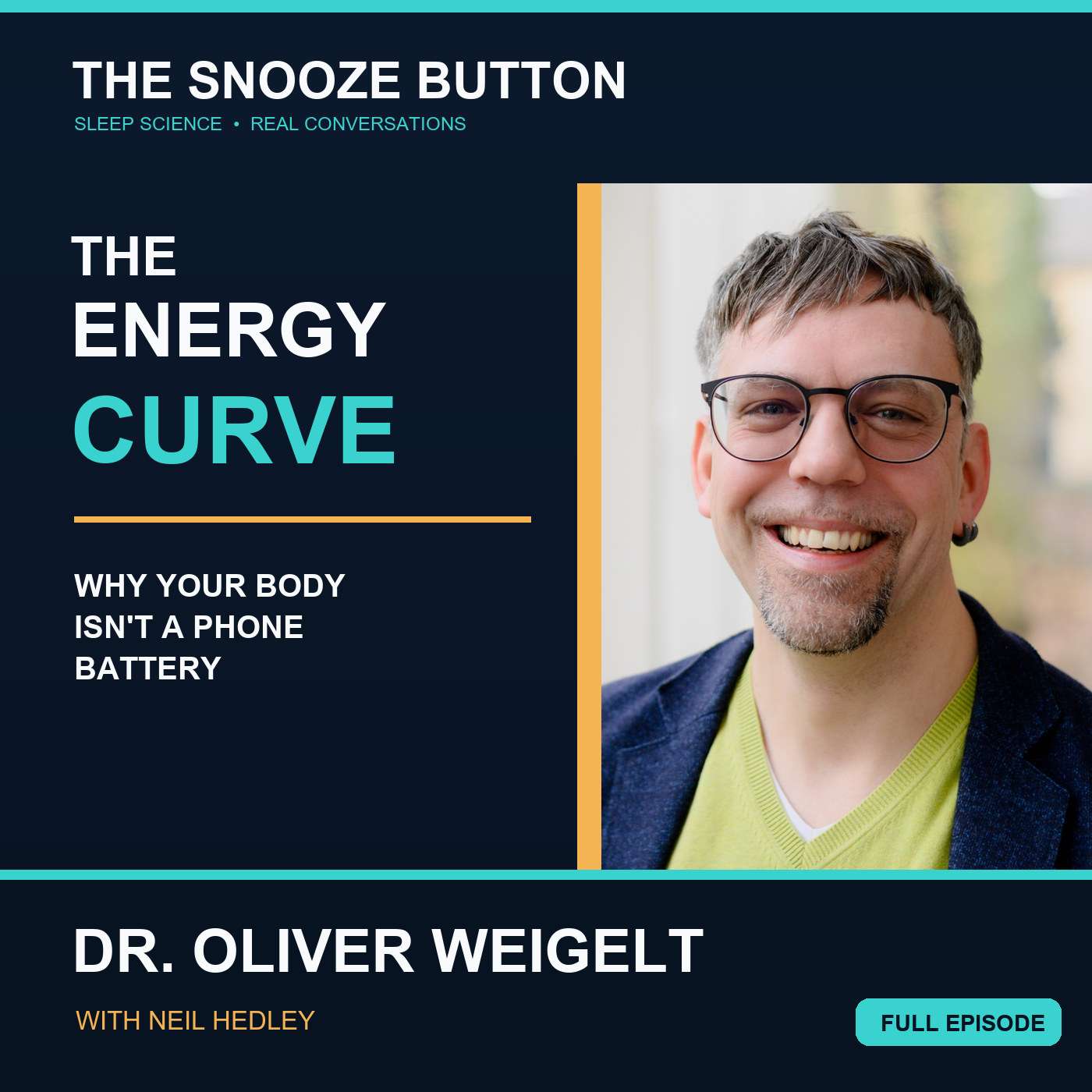
A bad night's sleep can leave you waking up drained. But unlike a phone, your energy doesn't necessarily keep falling throughout the day. In workplace research, people often report a rise in energy during the morning, a peak around midday, and a decline later.Dr. Oliver Weigelt, assistant professor of organizational psychology at the University of Groningen, joins Neil Hedley to discuss what sleep quality changes about our starting point, the effort paradox, why afternoon fatigue is more complicated than it seems, and where shift work fits—or doesn't fit—into the evidence.This observational study followed 106 employees across up to 10 workdays; its group-level patterns are not universal recommendations or sleep treatments.Research: Handschuch, Weigelt and colleagues, Journal of Business and Psychology (2026). Guest: Dr. Oliver Weigelt, University of Groningen.Prefer the nine-minute version? Listen to Oliver Weigelt on The Snooze Button EXPRESS.
British Columbia stopped changing its clocks on November 1, 2026. But there's a catch: ending the twice-yearly switch and choosing which time to keep are two different questions.
In this episode, Neil Hedley talks with Dr. Ralph Mistlberger, a professor of psychology and circadian-rhythm researcher at Simon Fraser University, about why he believes permanent standard time is better aligned with our biology than permanent daylight time. Mistlberger is a co-author of a new Canadian Medical Association Journal analysis examining the potential health, education and economic trade-offs of these policies.
They explore how morning light resets the human body clock, why darker winter mornings may worsen the mismatch between biological time and school or work schedules, and what researchers mean by social jet lag. Their discussion also considers the political appeal of brighter evenings—and why popularity doesn't necessarily answer the biological question.
Most importantly, the conversation distinguishes between the disruption of changing clocks twice a year and the consequences of living on a particular time year-round. The CMAJ paper reviews evidence and identifies risks; it does not establish that every person will experience the same effects.
Further reading: Lam RW, Mistlberger R, Baylis P, Choi A. Analysis of health impacts associated with adopting permanent standard time or permanent daylight saving time to inform policy in Canada, CMAJ (October 2026). B.C. government's announcement of permanent Pacific Time (UTC−7). Dr. Mistlberger's SFU profile.
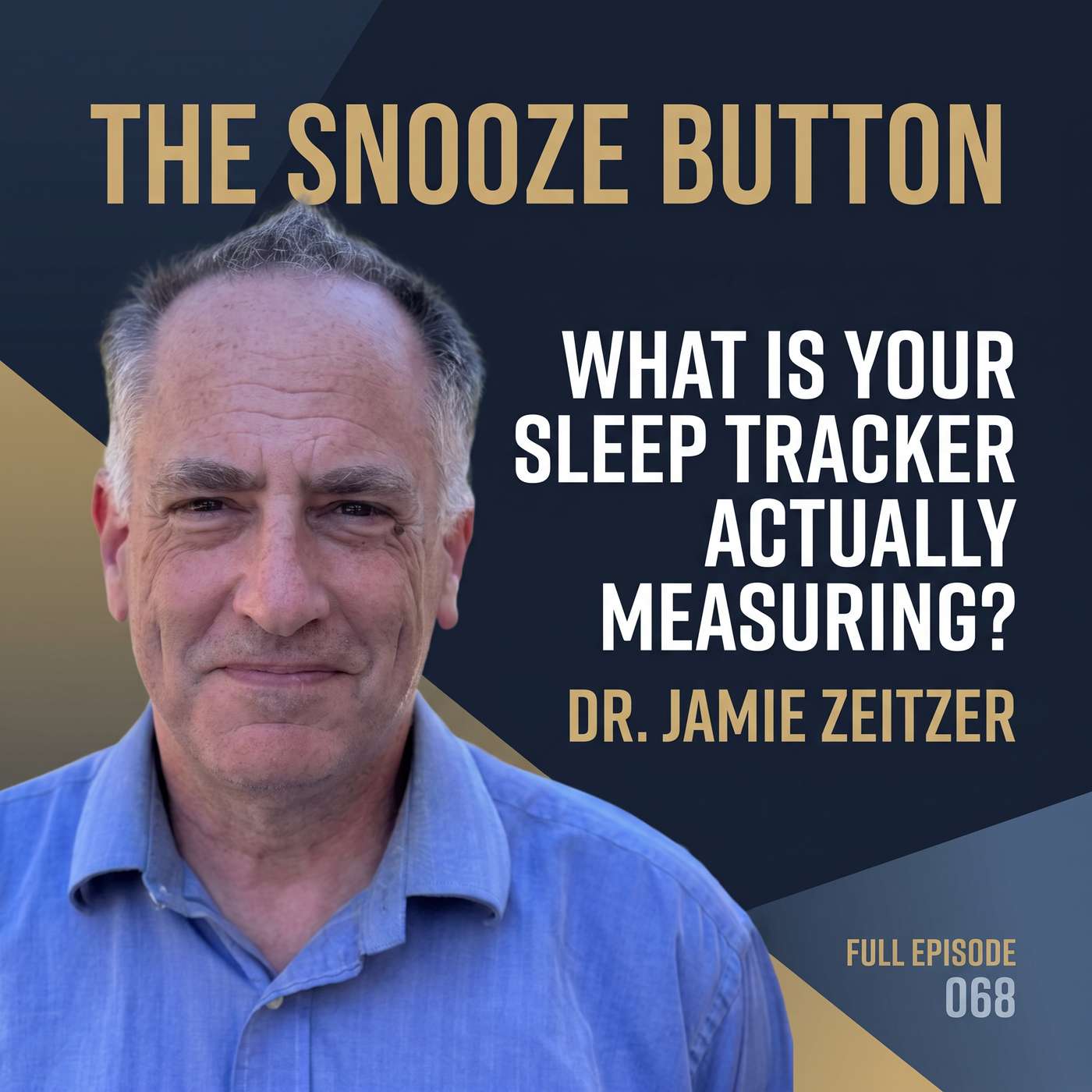
What does a sleep tracker actually measure when it tells you that you slept badly—and how much should you trust the score?
Stanford sleep and circadian researcher Dr. Jamie Zeitzer joins Neil Hedley to unpack the gap between a precise-looking number and the evidence behind it. They discuss why wrist-based devices can estimate sleep duration reasonably well for some people yet struggle when sleep is fragmented, what proprietary sleep scores leave unexplained, and why a single night's rating may be less useful than patterns over time.
Neil shares how wearable data prompted him to seek a formal sleep assessment. They also explore what a more useful future could look like: changes that prompt better questions for a clinician, links between daytime behavior and nighttime sleep, and feedback about a bedroom environment that could be adjusted.
Important distinction: Consumer sleep trackers estimate aspects of sleep; a sleep score is not a medical diagnosis. The future applications discussed are possibilities, not established benefits of every device.
Further reading: Jamie M. Zeitzer, The utility of sleep wearables—well, that depends, SLEEP (2024), read the editorial. Zeitzer, A time for change: actigraphy in the age of consumer wearables, SLEEP (2026), read the editorial. Dr. Zeitzer's Stanford profile.

Could the same brain structure be associated with better sleep in some young people and worse sleep in others?
Dr. Aaron Mattfeld of Florida International University joins Neil Hedley to discuss research on the pineal gland, anxiety, and objectively measured sleep in early adolescence. The gland is involved in melatonin production, but the study found that the relationship between pineal-gland tissue volume and sleep varied with anxiety severity.
They explore why the result was surprising, what researchers can and cannot conclude from it, and how adolescent biology and everyday choices affect sleep.
About the evidence: This is an observational association, not proof that pineal gland size causes sleep problems. Melatonin production was not directly measured.
Research: Fuertes F., Lalama M., Dick A. S. et al., Anxiety severity moderates the relation between pineal parenchymal volume and objective sleep problems in peri-adolescent youth, Scientific Reports (2026). Read the study.
Florida International University's research overview · Dr. Mattfeld's faculty profile · The Snooze Button.
Next week: Dr. Jamie Zeitzer on what your sleep tracker can—and cannot—tell you.

Comments

Download from Google Play

Download from App Store
 United States