


 Claim Ownership
The Speed Lab Podcast
Subscribed: 6Played: 218
Subscribe

© Universal Speed Rating LLC
Description
Introducing The Speed Lab Podcast by Universal Speed Rating. Hosted by Les Spellman, Danny Foley, and Cici Murray, The Speed Lab Podcast dives into all things performance to help you train smarter and play faster.
21 Episodes
Reverse
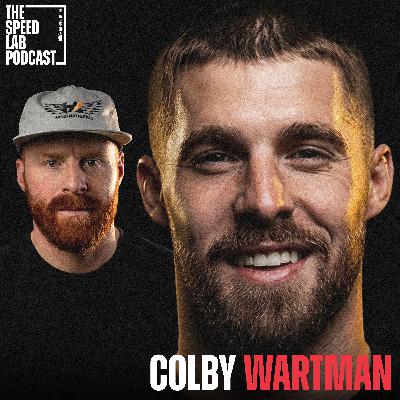
Episode 21 – Eccentric Loading, Sprint Mechanics & Building Athletes That Last | ft. Colby Wortman
Guest host Darren Hansen sits down with Colby Wartman, Speed Lab Director and owner of Origin Performance in Dickinson, ND. Colby shares his personal journey through addiction and sobriety, the mentorship that shaped his coaching philosophy, and how eccentric loading has become the foundation of his athlete development system. From the TreadMetrics leg press to resisted runs and depth jumps, Colby breaks down the tools and methods behind his results — plus a candid conversation on youth athlete burnout and what college coaches are really looking for today.
Timestamps
* 0:00 – Intro & Hero/Hardship/Highlight
* 3:07 – Colby's background & new facility build
* 5:40 – Eccentric loading philosophy & Coach Pete Leno
* 11:55 – TreadMetrics eccentric leg press deep dive
* 19:47 – Recovery, programming frequency & in-season management
* 22:05 – Youth athlete overload & burnout
* 29:23 – Sprint mechanics: negative foot speed & ground attack cues
* 36:35 – Colby's core training toolkit
* 38:27 – Simplifying speed development for coaches
* 41:13 – Shifting to a speed-first program
* 43:40 – What college coaches actually want from athletes
* 44:53 – Where to find Colby & wrap up
If you are interested in getting connected with Colby, Darren, and 200+ private facilities in the country - see if your facility is a fit for the Speed Lab Partnership: https://universalspeedrating.com/learn-more-partner-with-universal-speed-rating-speed-lab-podcast

Guest host Darren Hansen sits down with Erica Mulholland to talk about coaching young female soccer players the right way: balancing skill work with strength, reducing overuse injuries, and why load management + recovery matter way more than most athletes realize. Erica shares how a meniscus tear changed her approach, what she's seeing with ACL injuries in young girls, and the big rocks coaches should focus on if they want athletes to stay healthy and keep improving long-term.
Timestamps (Key Moments)
* 0:29 – Erica's early inspiration: discipline, hard work, and chasing big goals
* 1:11 – Meniscus tear → wake-up call on load management + recovery
* 4:09 – Why "skills-only" training fails young girls (and drives overuse injuries)
* 4:29 – ACL injuries becoming more common in young girls (and what pushed Erica deeper into S&C)
* 15:59 – Calling out bad coaching trends you see on Instagram (and why it matters)
* 48:33 – Where to find Erica / socials
Get Connected:Learn more about how becoming a Speed Lab helps you build faster athletes and a more sustainable sports performance business: https://universalspeedrating.com/learn-more-partner-with-universal-speed-rating-speed-lab-podcast
 1
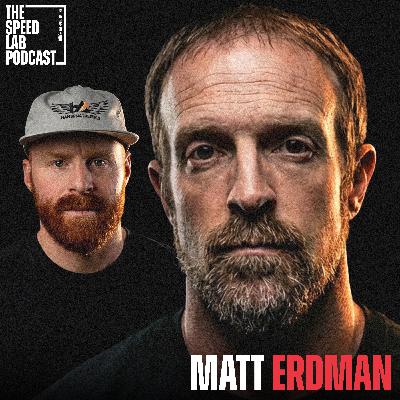
In this episode of The Speed Lab Podcast, guest host Darren Hansen sits down with coach and mentor Matt Erdman for a powerful conversation on the art of coaching. Matt Erdman Owns Veritas Athletic Performance and is a Universal Speed Rating Speed Lab Director.
They dive deep into building trust with athletes, the power of positive communication, adapting coaching style to the individual, and why relationships—not just programming—drive long-term results. This episode is packed with practical insights for coaches, gym owners, and anyone looking to create a stronger training culture that actually lasts.
Timestamps
00:00 – Intro & why Matt Erdman stands out as a coach
03:30 – Opening a facility: lessons learned & early mistakes
06:20 – Systems, organization, and why clarity matters
07:20 – Transition into The Power of Positive Selection
11:10 – Coaching delivery, trust, and athlete relationships
14:15 – Universal Speed Rating milestone & impact
15:25 – Individualizing coaching styles (men vs women, personalities)
18:05 – Building culture & uniting rival athletes
21:10 – Being approachable without lowering standards
24:10 – Consistency, clarity, and losing athlete trust
27:20 – Coaching less, saying more with fewer words
29:15 – Meeting athletes where they are mentally & physically
33:10 – Creating "wins" even on bad training days
35:05 – Communicating progress to parents
37:20 – Building resilient athletes beyond speed & strength
39:15 – Final thoughts & closing remarks
If you'd like to learn more about how to working with Universal Speed Rating in your facility, schedule a call: https://universalspeedrating.com/learn-more-partner-with-universal-speed-rating-speed-lab-podcast

Darren Hansen sits down with Joe Pedulla to discuss rethinking acceleration training, working with youth athletes, and practical coaching strategies for time-constrained programs. They explore how to identify athlete types, balance strengths vs. weaknesses in training, and prepare for their upcoming webinar.
Timestamps
00:00 - Introduction & Triple H (Hardship, Highlight, Hero)
05:09 - Rethinking Acceleration: Joe's general philosophy
07:50 - Teaching young athletes: Gorillas vs. Cheetahs framework (force production vs. speed)
10:16 - Visual cues for coaches to identify athlete movement types
16:02 - Training strengths vs. weaknesses: when to focus on each
17:20 - In-season training: keeping athletes engaged and stimulated
19:21 - Working with limited time (2-3 hours/week with athletes)
23:40 - Sled training loads and programming discussion
32:58 - Why sleds rarely make athletes slower + recovery considerations
34:56 - Lateral movement patterns and "squat accelerators" in sport
39:18 - Program design: subtle changes for different athlete profiles
44:56 - Acceleration vs. deceleration: what separates athletes at game speed
47:27 - Where to follow Joe + closing thoughts

The Speed Lab Podcast - Episode 17
Substitute host Darren Hansen of HansenAthletics sits down with Ryan Paul, owner of New Athlete and veteran performance coach with over two decades of experience training athletes. With more than 12,000 athletes trained since 2001, Ryan shares his evolution from conjugate periodization to an eccentric-focused training philosophy centered on force reduction and deceleration. The conversation dives deep into why athletes often return from college slower despite being stronger, the critical importance of teaching athletes to absorb force before producing it, and how long-duration isometrics (up to 300 seconds) are transforming athlete durability and performance. Ryan also breaks down his unique assessment methods using lunge positions to identify sprinting tendencies and explains why training volume in the weight room should better reflect the demands athletes face on the field.
Timestamps
* 0:00 - Introduction with Darren Hansen
* 0:44 - Ryan Paul's background and 23+ years of athlete development
* 2:41 - Evolution from conjugate training and its limitations
* 3:54 - Why athletes get hurt decelerating, not accelerating
* 5:08 - Common deficiencies: athletes can produce force but can't absorb it
* 7:29 - Why college athletes return slower but stronger
* 9:39 - Programming ratios: ~80% eccentric/deceleration work
* 11:08 - Long-duration isometrics explained (5–300 seconds)
* 16:01 - Cueing isometric lunges and assessing sprint type
* 20:49 - Using USR technology to validate training observations
* 22:29 - Redefining "recovery" and reducing systemic inflammation
* 26:21 - Personal results from eccentric training
* 27:01 - Favorite movements: Bulgarian split squats and toddler patterns
* 29:34 - Crawling, coordination, and cortex development
* 31:00 - Daily integration of eccentric training
* 31:45 - Results: healthier athletes, better repeatability, reduced injury severity
* 33:26 - Advice for coaches: match training volume to game demands
* 36:21 - Closing remarks

Comments

Download from Google Play

Download from App Store
 United States