


 Claim Ownership
The TechWolf Podcast
Subscribed: 4Played: 40
Subscribe

© TechWolf
Description
Technology in HR is booming, yet confusing.
Many vendors claim to include AI (agents), skills, seamless integrations, and other technologies in their product offerings.
In practice, product promises often differ from reality.
In this podcast, our host, Julius Schelstraete, holds no-nonsense conversations with business practitioners and thought leaders on everything related to "the skills-based organization": what it is, whether it's realistic, typical roadblocks, real-life use cases, and more.
Join us as we move beyond the hype and examine skills-based HR from a critical, realistic lens!
Many vendors claim to include AI (agents), skills, seamless integrations, and other technologies in their product offerings.
In practice, product promises often differ from reality.
In this podcast, our host, Julius Schelstraete, holds no-nonsense conversations with business practitioners and thought leaders on everything related to "the skills-based organization": what it is, whether it's realistic, typical roadblocks, real-life use cases, and more.
Join us as we move beyond the hype and examine skills-based HR from a critical, realistic lens!
27 Episodes
Reverse
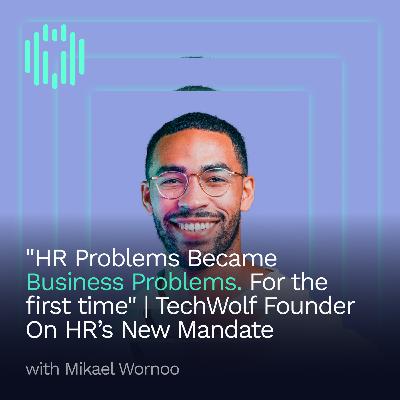
In this episode of The TechWolf Podcast, host Julius Schelstraete speaks with Mikael Wornoo, co-founder of TechWolf and the leader of its US expansion. Calling in from New York, Mikael lays out why skills data alone is no longer enough—and how task-level intelligence is the key to making workforce AI transformation actionable.From task automation to strategic workforce planning, this episode unpacks the urgent market shift that's uniting HR and business leaders: understanding how AI is disrupting work—and what to do about it. You’ll also get a sneak peek into TechWolf’s newest launch: the Workforce Intelligence Index, a public data tool built on 2 billion job postings and 10 years of labor market data.If you’re in HR, talent, transformation, or workforce planning, this episode is your cheat sheet for how to lead—not follow—during AI disruption.🔑 Key Topics & TakeawaysWhy workforce planning has changed foreverFrom forecasting to modeling AI adoption: With AI affecting every sector, workforce planning isn’t about “what if” anymore—it’s about how fast.The new job of HR is understanding task-level change: what humans do today, what AI might do tomorrow, and what that means for reskilling and redeployment.What skills data can’t do—without tasksTasks bring precision to workforce intelligence: they make AI use cases like augmentation, automation, and role redesign measurable and actionable.With tasks, you can finally answer: What’s the impact of AI on our workforce—and how do we respond?The rise of the CHRO–CEO allianceFor the first time, business and HR leaders share the same problem: how to future-proof the workforce in the face of AI.That’s creating momentum for a new kind of HR leader—one who tells compelling stories backed by data and builds coalitions across the enterprise.Introducing: The Workforce Intelligence IndexA first-of-its-kind tool, analyzing how AI is already transforming jobs, tasks, and skills across 1,500 companies.Built to help HR and business leaders stop guessing—and start planning with confidence.
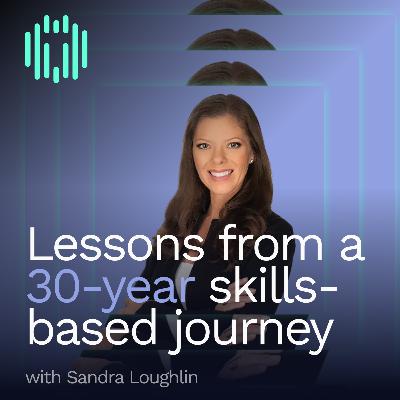
Sandra is the chief learning scientist at Epam Systems, a global provider of software engineering, digital platform engineering, and product development services.
Interestingly, EPAM has been on a skills-based journey for over 30 years and is as close an example as you’ll find of a skills-based organization.
Sandra has been a proud advocate of Epam’s journey and helped build the critical foundations with ups and downs!
Key topics in this episode:
Should every organization become skills-based?
Matching skills supply & demand data
The EPAM way and how they stand out in the market
The importance of skills data for the business
Skepticism about skills-based initiatives
Explore how Sandra’s expertise can inspire your journey toward a skills-based organization.
My key takeaway quotes:
“Skills are owned by the business (...). It’s impossible for a people organization to know what skills are trending, what skills are critical, and start predicting skills needed."
"Have someone come in and look at your ecosystem - chances are you have redundancies & gaps."
“How long will it take to be a skills-based organization? It is a long-term play because it’s a data play.”
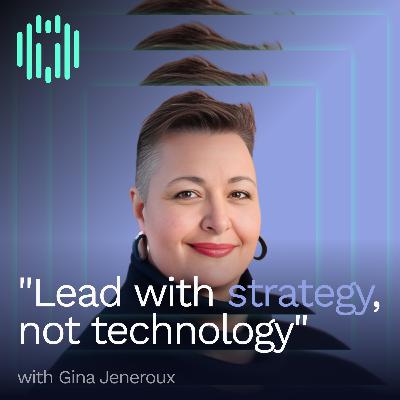
Gina Jeneroux is the former Chief Learning Officer at BMO Financial Group, where she gained years of experience in enterprise learning and skills strategies, design, operations, and governance.
She now sits at the intersection of AI, skills, and industry as the Chief Skills & Innovation Officer at Executive Networks, Professor of Practice in Future Work & Skills, and Director of the Future Talent Research Institute at International Business University (IBU).
We cover many topics, including:
The skills agenda moving beyond learning
How to create business buy-in for skills-based journeys
How to select HRtech vendors
Leading with strategy & following with technology
Managing learning as a business
My key takeaway quotes:
“Look for the 'wind in the sails' moments .(...) you need to be opportunistic"
"You need to build a Coalition of Belief"
"The best choice around vendors is to find a match on vision & values"
See here for additional reads to this conversation:
Online Guide to get started with skills
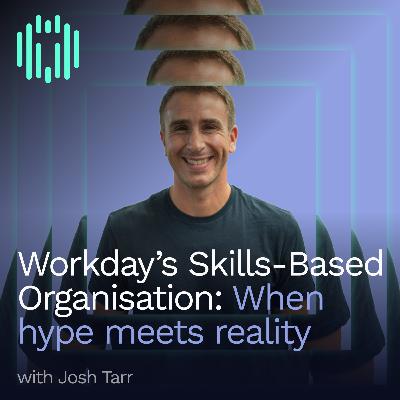
Josh Tarr is the Director of Skills-Based Organizations (SBOs) at Workday. He and his team are fully committed to the concept of skills-driven organizations for Workday's internal workforce. In this interview, we explore Josh's vision for SBOs and the steps he has taken to achieve it.
We cover many topics, from the hype cycle around SBOs to Workday’s skills transformation journey, practical milestones the team has already achieved, and the importance of skills use cases.
My key takeaway quotes:
“We view this work as entrepreneurial work. (...) It’s like starting up a new business.”
“We got started with data.”
“Together (with TechWolf), we did in 3 months what other companies do in 18”
“The value chain of skills is easy, the work is definitely not easy.”
See here for additional reads to this conversation:
My reflection blog after the interview
HR Brew's article on Workday's Skills Use Case
It is rare to hear two leaders from the same organization move past the corporate script and into a "healthy debate" about the very foundation of their work. In this episode, Mike Manning (VP, HR Data & Innovation) and Preethi Gowda (Global People Insights Lead) from FM do exactly that. While Preethi advocates for the proactive power of layering skills with knowledge and ability , Mike challenges the "skills revolution" as a lazy proxy for understanding the actual tasks that drive revenue. They don't always agree on the terminology, but they are perfectly aligned on the outcome: if HR doesn't speak the language of the P&L, it isn't doing its job.01:31 – The positive start: Mike and Preethi’s differing takes on a world without skills data.08:22 – Sparring over "The Skill-Based Organization" vs. the reality of the job.13:01 – Mike’s wake-up call: "You lost me when you called me an HR professional".18:10 – The SIPOC Framework: A Six Sigma approach to talent.28:15 – Case Study: How Preethi and Mike’s joint investigation saved $3M by slowing down hiring.43:04 – The collaborative "Hard Question" for our next guest.
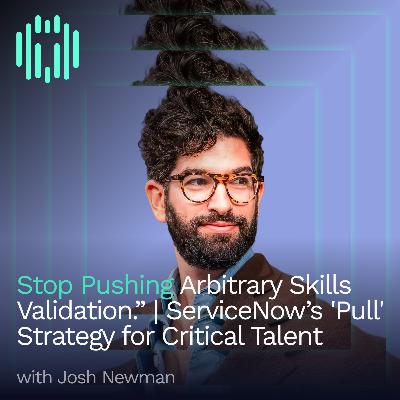
Most HR leaders are obsessed with "skilling" their workforce, but they’re ignoring the tasks that actually make up the work. Josh Newman, VP of Workforce Skills at ServiceNow, argues that skills data is essentially dead weight unless it’s tied to specific business processes and AI impacts. In this episode, Josh breaks down how ServiceNow is moving beyond simple taxonomies to create a "Talent Signature", a dynamic data layer that predicts who is ready for a promotion before they even raise their hand.01:05 – Why AI makes HR more human, not less.02:30 – Why redesigning HR won't be automatic and will take a "shitload of work."04:00 – Defining the "AI-Native" organization and operationalizing intelligence.05:25 – The "Talent Signature": Building the data layer for individual understanding.06:30 – How ServiceNow uses intelligence to close the "Readiness Gap."07:45 – Identifying "Forward Deployed Engineers" through capability adjacencies.10:15 – The "Pull vs. Push" strategy: Why arbitrary skills validation fails.12:20 – The 6-Layer Workforce Intelligence Stack (Strategy to Skills).14:35 – Why ServiceNow chose TechWolf: The API and dynamic data layer.16:25 – Measuring success: Infrastructure health vs. business-specific metrics.18:50 – The next horizon: Integrating LLMs and organizational redesign.20:15 – Josh’s question for the next guest (The Skills Skeptic).
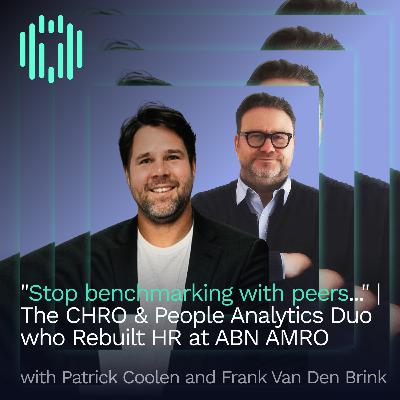
Most organizations are pouring millions into AI tools while their actual workforce strategy remains stuck in 2010. We talk about "efficiency," but we’re failing to measure the return on investment or the impact on the people actually doing the work. In this episode, Frank and Patrick from KennedyFitch break down why the "efficiency trap" is a race to the bottom and how HR leaders must shift from managing headcounts to architecting organizational capabilities.Timestamped Topics01:06 – The AI Metrics Gap: Addressing whether board-level AI objectives are enterprise-wide or just "siloed in HR and IT." 03:51 – "Not yet": Frank’s direct take on why companies haven't actually updated their scorecards for the GenAI era. 06:33 – The Human Quotient: Why the return on investment (ROI) for technology is lagging behind the speed of adoption. 08:26 – The Next-Gen CHRO Search: How the leadership profile is shifting toward "digital dexterity" and strategy execution. 11:39 – Evidence-Based HR: Why the new breed of CHRO must move past being a "jack of all trades" to become a data-driven architect. 15:45 – The Skepticism Trap: Why HR leaders often reject skills data because it isn't properly contextualized with business growth. 17:54 – Cracking the SWM Nut: A systematic breakdown of Strategic Workforce Management—from demand mapping to supply analysis. 20:15 – The Demand Struggle: Why identifying "workforce demand" is the hardest part of the strategy (and why tools can't do it for you). 24:59 – Beyond Headcount: Moving the conversation from "size and FTEs" to organizational capabilities and leadership types. 29:04 – Stop Copying Benchmarks: Patrick’s warning against "social influence" and why you should build your own practice instead of testing what others do. 32:20 – "The Heat of the Moment": Why the value of an HR roadmap is only proven during a crisis or major shift, not two years later. 34:59 – Task Intelligence vs. Hype: Moving from high-level "AI will automate 20% of work" to granular, actionable employee-level data. 38:45 – The "Co-Pilot" Philosophy: Positioning AI as a partner to navigate complexity rather than a tool for simple replacement. 41:15 – The Three-Signal Filter: Balancing the Voice of the Business, the Voice of the Market, and the Voice of the Employee. 44:10 – Deducting Complexity: The final mandate for CHROs to provide vision and direction in an "intense world of complexity."
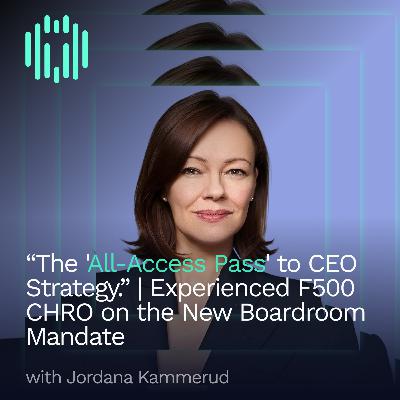
Most organizations are "dabbling" with AI while the technology's capability doubles every four months. Jordana Kammerud (Experienced F500 CHRO) and Mik Wornoo (Co-founder, TechWolf) argue that we’ve reached a turning point: the "Oppenheimer moment" of workforce transformation, where HR must either step up as a business strategist or watch the organization succumb to the weight of outdated role-based systems. This episode breaks down the three horizons of work intelligence and how to build a trust-based "all-access pass" to the CEO's agenda.In this episode, we discuss:00:00 – The Fortune 500 Perspective: Introducing Jordana Kammerud.01:04 – Why Skills Strategies Failed (Until Now): Moving past legacy systems that "died under their own weight."03:43 – The End of Role-Based Talent Management: Why traditional job architectures are no longer viable in 2026.04:14 – The "Go Deep" Mandate for CHROs: Why leaders must personally master AI tools to shepherd transformation.05:42 – Exponential Acceleration: Understanding the shift from AI doubling every 7 months to every 4 months.07:04 – The Early Adopter Program: Co-creating the future of workforce intelligence with TechWolf.08:23 – The "Secret Sauce" of CEO Trust: How data-driven insights solidify the CHRO-CEO bond.12:14 – The "All-Access Pass": Defining the CHRO as a business leader first, functional expert second.14:52 – HR’s Oppenheimer Moment: Facing the reality of 50% displacement in early careers.18:03 – Maintaining Humanity at Scale: Balancing "synthetic empathy" with real-world human judgment.22:09 – From Black Coffee to Million Permutations: Reimagining career pathing through a "rich tapestry" of skills.26:15 – The Three Horizons of Work Intelligence: A tactical framework for present and future AI ROI.30:19 – Squelching vs. Cultivating Curiosity: How to protect innovation in an automated workforce.33:54 – The Boardroom Question: "Is the caliber of our workforce better or worse than last quarter?"36:49 – The Closing Question: Jordana’s query for the next global HR leader.
Lisa Brockman, Talent Director at Genesys, returns to prove that skills-based transformation isn't a multi-year "maybe"—it’s a 60-day "must". After launching an AI-driven pilot to 2,000 employees in November, Genesys saw 75% of users validate their skills almost immediately.But they aren't stopping at data collection. In this episode, Lisa reveals why Genesys is making AI-specific goals mandatory for every single employee starting this February. She breaks down the shift from manual, static spreadsheets to a dynamic "Data Presence" where opportunities now find the employees. This is the blueprint for moving past the "manual trap" and building a workforce that is actually ready for the AI era.
Most organizations spend 18 months building manual skill taxonomies only to realize the data was stale before it was even finished. Lisa Brockman (Talent Management Director at Genesys) realized that if employees don’t trust the data, they won’t use the marketplace, leaving leadership to hire externally for skills they likely already own. In this PART 1 episode with Lisa, we break down how to move from "manual and messy" to a scalable, AI-driven skills strategy that actually fuels internal mobility.The Breakdown01:51 – The 18-month mistake: Why manual skill mapping isn't scalable.03:04 – AI Mindset: Shifting from "nice-to-have" to "must-have" for AI readiness.05:22 – The "So What?" Factor: Connecting skills to gigs, roles, and learning.07:44 – Why Workday Skills Cloud needs a "clean fuel" source to drive Career Hub adoption.09:30 – Change Management: Why HR can’t push this alone.
Most companies are using AI to do the same boring work faster. They’re chasing "efficiency" while completely ignoring the fact that the work itself needs to be redesigned. Jan Duthoo (CRO, SAP SuccessFactors) joins us to explain why your business case for skills is likely too small, why L’Oreal and Safran used the exact same technology for opposite reasons, and how to stop "boiling the ocean" with HR tech.Timestamps:04:12 – Why SAP’s own revenue grew when they stopped "selling and forgetting."08:45 – The L’Oreal Paradox: Using skills to decrease internal mobility.12:30 – The Business Case: Moving from "efficiency" to "work redesign."18:15 – Why your HR project needs to fail faster (and smaller).22:40 – The "Car on Steroids": How SAP and TechWolf actually fit together.28:05 – The COVID Moment: Can CHROs reclaim their seat at the executive table?
Most organizations buy the software and hope the culture follows. Advent Health did the exact opposite. Marquita and Mary Beth spent two years building a "culture of curiosity" before flipping the switch on their technology. In this live episode from Workday Rising, they break down why skills have a five-year shelf life and how to move your workforce from "episodic learning" to a dynamic, self-driven engine.Episode Highlights02:15 – The 9 critical skills for the 2030 workforce.06:40 – Why the "shelf life" of a skill is shorter than you think.11:20 – "Pull" vs. "Push": Moving away from mandatory training.18:45 – The Psychological Safety gap: Why employees hide their weaknesses.24:10 – The ROI of curiosity in a healthcare talent shortage.
Is your workforce plan looking in the rear-view mirror, or is it predicting your next market win? Rob Etheridge, Group Head of Workforce Strategy at HSBC, argues that most organizations are drowning in "use cases" while missing the bigger picture: future competitive advantage. In this episode, Rob reveals why he rejected the "4,000 skills" taxonomy, why buying more HR tech won't solve your talent gap, and how HSBC is building a "Blueprint" to secure its future.⏱️ Timestamps00:00 – 01:22 | Setting the stage01:22 – 03:33 | Why skills-based workforce planning actually matters03:33 – 06:29 | Business triggers for HSBC’s skills-led transformation06:29 – 11:40 | From abstract concept to actionable blueprint11:40 – 16:59 | Why HSBC partnered with TechWolf16:59 – 23:53 | Early wins: taxonomy, pilots & proof points23:53 – 27:32 | Choosing the right pilot area27:32 – 30:11 | Storytelling and stakeholder buy-in30:11 – 32:19 | Looking one year ahead32:19 – 33:27 | Rob’s question for the next guest
In this episode of the TechWolf Podcast, Julius Schelstraete sits down with Diane Gherson, former CHRO of IBM and current independent director at TechWolf. From her vantage point as one of the most influential HR leaders of the past decade, Diane shares a candid, strategic, and urgent message for HR executives navigating AI, workforce intelligence, and the shift to skills-based organizations.Diane recounts IBM’s pioneering journey toward AI-inferred skills and internal mobility, explains why today’s moment mirrors the historic shift triggered by Frederick Winslow Taylor, and warns that without intentional leadership, AI could push organizations toward a dehumanized, assembly-line model of white-collar work. This episode offers clarity, challenge, and concrete direction for any leader shaping the future of talent.00:08 — Welcome + introducing Diane Gherson02:00 — Uniquely human skills vs. durable skills: what truly matters05:20 — IBM’s journey to AI-inferred skills and internal mobility09:45 — Why Diane joined the TechWolf board12:10 — The “Frederick Winslow Taylor moment”: history repeats with AI17:00 — The rise of AI-serving jobs (annotators, auditors, trainers)20:30 — HR’s urgent role: redesigning work before AI redesigns it23:45 — Reality check: entry-level roles down 50% since 201926:00 — How HR can zoom out and align with business value creation29:20 — Skills as a board-level metric: assessing workforce caliber33:00 — How Diane keeps up with AI and HR trends (and who she follows)35:10 — Diane’s question for the next guest, Lisa BrockmanKey TakeawaysSkills ≠ the whole story — durable human capabilities like context-setting, situational awareness, and organizational intuition remain irreplaceable.IBM’s early skill-based model proved the value: AI-inferred skills fueled mobility, training, and strategic workforce planning long before the market caught up.We’re entering a “Frederick Winslow Taylor moment” — AI could standardize white-collar work the way scientific management standardized the assembly line.HR must lead system-level redesign — not just productivity gains, but sustainable talent ecosystems, career pathways, and future leadership pipelines.Entry-level talent is already under pressure — openings are at 50% of 2019 levels; HR must address this before long-term capability erodes.Boards now expect clarity on “caliber of workforce” — skills data is becoming a board-level strategic metric.
In this episode of the TechWolf Podcast, recorded live at Workday Rising in San Francisco, Marianne Herrmann (Principal, Skills-Based Hiring Strategy & Enablement at Workday) reveals the real numbers behind a hiring revolution.Workday didn’t “experiment” with skills-based hiring; they rebuilt hiring around it.By combining AI-driven insights from TechWolf with behavioral science and relentless business alignment, they cut underperformance by 39% and accelerated ramp-up speed by 14% across key roles.This conversation goes far beyond HR strategy; it’s about how precision in skills can transform hiring outcomes, productivity, and even patient care.
This special edition of the TechWolf Podcast puts the spotlight on a topic that’s often misunderstood, frequently overlooked, but absolutely foundational: Job Architecture.Julius sits down with Richard Hanson - former founder of Jobbable and now leading Digital Strategy & Innovation at WTW - for a deep, candid exploration of the frameworks behind workforce transformation.Whether you’re mapping skills, building a talent marketplace, or launching GenAI pilots, you’ll need a job architecture that doesn’t collapse under the pressure of change.What you'll learn:What job architecture really is and why most people still get it wrongHow to balance compensation governance with skills strategyWhy the job architecture is “the body of the car” and skills are the fuelThe real reason so many organizations get stuck at the starting lineHow to sell the case for architecture investment to your CFOWhy GenAI job families didn’t exist 18 months ago, and what to do about itThe role of AI-powered vendors (like TechWolf) in keeping architectures aliveWhat a great architecture looks like from scratch - tech, teams & steps
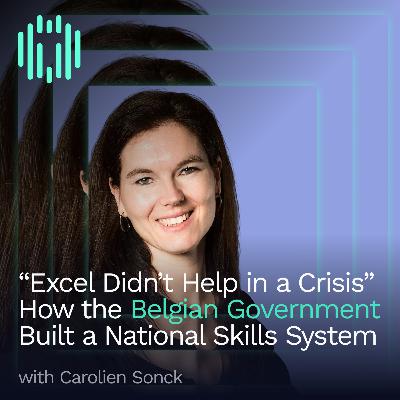
In this episode of The TechWolf Podcast, Carolien Sonck, Director of Support Services at the Belgian Government, joins Julius Schelstraete in Ghent to share a remarkable transformation story. When the COVID-19 crisis exposed a fundamental blind spot in their workforce data, Carolien and her team set out to build something entirely new: a skills-based workforce intelligence system that could support crisis response, mobility, internal consultancy, and national talent planning.Carolien shares how the journey began with phone calls and spreadsheets and evolved into a real-time skills system now used across multiple departments. She explains how the government is reshaping internal mobility, mapping AI-disrupted roles, and bringing employees and worker councils on board—all with privacy and trust at the center.This episode is a must-listen for public sector leaders, HR teams, and change-makers looking to build a data-driven workforce strategy—without relying on guesswork.
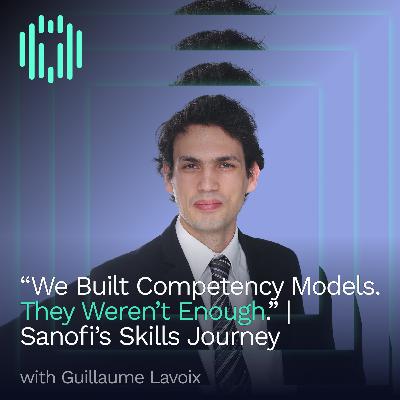
In this episode, Guillaume Lavoix, Global Skills Intelligence Lead at Sanofi, shares how one of the world’s largest pharma companies is embedding skills at the heart of its transformation. Guillaume explains how Sanofi’s “Skills Power” program emerged from a shifting business strategy: moving toward R&D-driven innovation and AI-enabled drug development.He details the early steps — from building a global skills taxonomy with over 500 SMEs to piloting employee-driven experiences in career development and learning — and how these moves are preparing Sanofi for workforce automation and new ways of working.This conversation is essential for HR and business leaders navigating complex transformations while ensuring workforce readiness for the future.
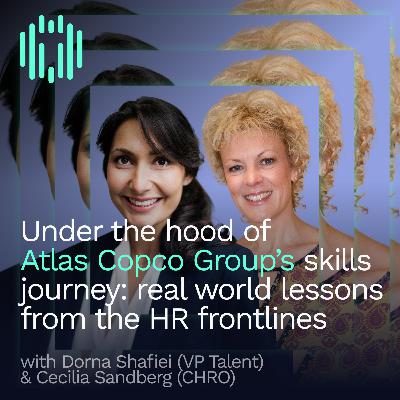
In this episode of the TechWolf Podcast, we travel to Stockholm to meet Cecilia Sandberg, Chief HR Officer, and Dorna Shafiei, VP Talent Management at Atlas Copco Group. Together, they break down the practical journey of making a 55,000-person industrial tech company skills-enabled, without introducing a new platform or compromising on cultural values. The conversation covers internal mobility, skills-based hiring, and job architecture transformation. Packed with learnings from the field, this episode offers a blueprint for embedding skills across a decentralized global enterprise.Cecilia Sandberg is CHRO of Atlas Copco Group, leading strategic people transformation across a decentralized, 70-country industrial organization. Dorna Shafiei is VP Talent Management and a driving force behind the Group’s skills-based talent acquisition and development strategy.
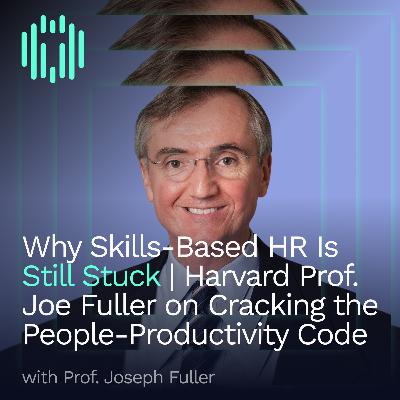
Why do so many companies say they’re going skills-based, but still hire like it’s 2005? In this episode of The TechWolf Podcast, Julius sits down with Harvard Business School Professor Joe Fuller to uncover the disconnect. From the real business case for skills to the hidden role of AI, Joe makes one thing clear: skills are more than an HR experiment—they’re your edge in a high-stakes transformation race.🎙️ This episode is a wake-up call for:CHROs navigating AI disruptionStrategy leaders stuck in job-first thinkingAnyone tired of skills theater and ready for results👀 Filmed live in Ghent, this episode blends global insight with raw honesty—and might just rewire how you think about your HR function.

Comments

Download from Google Play

Download from App Store
 United States