


 Claim Ownership
The Vault: The Epstein Files
Subscribed: 154Played: 16,474
Subscribe

© bobby capucci
Description
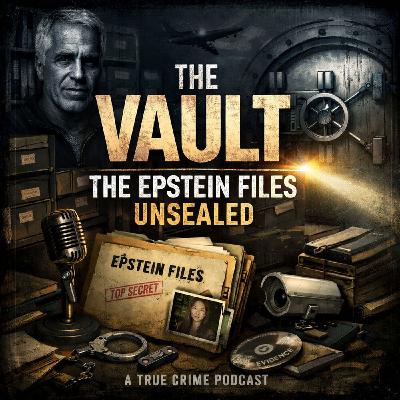
The Vault: The Epstein Files Unsealed is a deep-dive investigative podcast that pulls back the curtain on one of the most protected criminal networks in modern history. This series is built from the ground up on the actual paper trail—unsealed court records, depositions, exhibits, emails, and filings that were never meant to be read by the public. No pundit panels. No spin. Just the documents themselves, examined line by line, name by name, connection by connection—paired with precise, document-driven analysis that explains what the record truly shows.
Each episode opens the vault on newly unsealed or long-buried Epstein files and walks listeners through what they actually reveal about power, money, influence, and the systems that failed survivors at every turn. Alongside the filings themselves, informed commentary breaks down the legal strategy, the institutional behavior, the contradictions, and the implications hiding between the lines. From judges’ orders and sealed exhibits to sworn testimony and back-channel communications, the show connects the dots the media often won’t—or can’t. Patterns emerge. Timelines collapse. Excuses fall apart.
The Vault is a working archive in audio form, a living record of the Epstein case as told by the courts themselves—supplemented by rigorous analysis that provides context, challenges official narratives, and exposes where the record has been distorted, sanitized, or deliberately ignored. Every claim is grounded in filings. Every episode is anchored to the record. Listeners aren’t told what to think—they are shown what exists, what was said under oath, and what the commentary reveals about how those facts were buried, softened, or misrepresented.
If you want to understand how Jeffrey Epstein was protected, who circled him, how institutions closed ranks, and why accountability keeps slipping through the cracks, The Vault: The Epstein Files Unsealed is where the record finally speaks for itself—and where the commentary ensures the documents do what no press release ever will.
Each episode opens the vault on newly unsealed or long-buried Epstein files and walks listeners through what they actually reveal about power, money, influence, and the systems that failed survivors at every turn. Alongside the filings themselves, informed commentary breaks down the legal strategy, the institutional behavior, the contradictions, and the implications hiding between the lines. From judges’ orders and sealed exhibits to sworn testimony and back-channel communications, the show connects the dots the media often won’t—or can’t. Patterns emerge. Timelines collapse. Excuses fall apart.
The Vault is a working archive in audio form, a living record of the Epstein case as told by the courts themselves—supplemented by rigorous analysis that provides context, challenges official narratives, and exposes where the record has been distorted, sanitized, or deliberately ignored. Every claim is grounded in filings. Every episode is anchored to the record. Listeners aren’t told what to think—they are shown what exists, what was said under oath, and what the commentary reveals about how those facts were buried, softened, or misrepresented.
If you want to understand how Jeffrey Epstein was protected, who circled him, how institutions closed ranks, and why accountability keeps slipping through the cracks, The Vault: The Epstein Files Unsealed is where the record finally speaks for itself—and where the commentary ensures the documents do what no press release ever will.
2996 Episodes
Reverse
Ghislaine Maxwell bought the secluded 156-acre New Hampshire estate known as “Tucked Away” for about $1.1 million in December 2019, roughly seven months before the FBI arrested her there. Newly released Justice Department records showed that Swiss banking giant UBS transferred nearly $8 million from an account tied to a trust associated with Maxwell shortly before the purchase, with the money then moving through a series of trusts and financial institutions before reaching the entity that bought the property. Maxwell used the alias “Janet Marshall” during the transaction and surrounded herself with private security at the estate as federal investigators closed in.The timing of UBS’s involvement drew particular scrutiny because the bank processed the transfer after federal investigators had already issued it a grand jury subpoena seeking information about Maxwell’s finances as part of a child sex-trafficking investigation. UBS had also told Maxwell in August 2019 that it intended to end its relationship with her, yet records indicated the bank continued handling substantial assets connected to her as money was moved out. The documents showed UBS had managed as much as roughly $19 million for Maxwell, raising broader questions about how major financial institutions continued servicing figures tied to Epstein even as criminal scrutiny intensified.to contact me:[email protected]:How a Swiss bank helped Epstein accomplice Maxwell buy her hideout, 'Tucked Away,' in NH | Crime | unionleader.com
Highbridge Capital Management was a major New York hedge fund founded by Glenn Dubin and Henry Swieca that had grown into one of the most successful alternative-asset managers on Wall Street by the early 2000s. In 2004, JPMorgan Chase acquired a majority stake in Highbridge, which was managing roughly $7 billion at the time, giving the bank a much larger foothold in the rapidly expanding hedge-fund business. The deal became important to the Epstein story because Jeffrey Epstein was not simply an outside observer. Records from later litigation showed that he helped connect JPMorgan executive Jes Staley with Dubin and played a central role in bringing the two sides together. Staley himself later described the Highbridge acquisition as one of the most important transactions of his career.The financial records made Epstein’s role even harder to dismiss. JPMorgan admitted in litigation that Dubin and Swieca’s holding company paid Epstein’s Financial Trust Company a fee connected to the acquisition, and records showed Highbridge paid Epstein’s company $15 million in December 2004 for “merger and acquisition advice.” That payment placed Epstein directly inside a transaction that materially benefited JPMorgan’s asset-management business and strengthened Staley’s standing at the bank. The Highbridge deal therefore became one of the clearest examples of Epstein delivering real financial value to JPMorgan and the executives who dealt with him, helping explain why his relationship with the bank went far beyond that of an ordinary wealthy client.to contact me:[email protected]
Highbridge Capital Management was a major New York hedge fund founded by Glenn Dubin and Henry Swieca that had grown into one of the most successful alternative-asset managers on Wall Street by the early 2000s. In 2004, JPMorgan Chase acquired a majority stake in Highbridge, which was managing roughly $7 billion at the time, giving the bank a much larger foothold in the rapidly expanding hedge-fund business. The deal became important to the Epstein story because Jeffrey Epstein was not simply an outside observer. Records from later litigation showed that he helped connect JPMorgan executive Jes Staley with Dubin and played a central role in bringing the two sides together. Staley himself later described the Highbridge acquisition as one of the most important transactions of his career.The financial records made Epstein’s role even harder to dismiss. JPMorgan admitted in litigation that Dubin and Swieca’s holding company paid Epstein’s Financial Trust Company a fee connected to the acquisition, and records showed Highbridge paid Epstein’s company $15 million in December 2004 for “merger and acquisition advice.” That payment placed Epstein directly inside a transaction that materially benefited JPMorgan’s asset-management business and strengthened Staley’s standing at the bank. The Highbridge deal therefore became one of the clearest examples of Epstein delivering real financial value to JPMorgan and the executives who dealt with him, helping explain why his relationship with the bank went far beyond that of an ordinary wealthy client.to contact me:[email protected]
Julie K. Brown, the investigative reporter for the Miami Herald, not only reignited the Jeffrey Epstein case by exposing the sweetheart non-prosecution agreement in Florida but also turned her spotlight to Epstein’s Caribbean operations. In a 2023 Miami Herald piece titled “U.S. Virgin Islands cozied up to Jeffrey Epstein. Now they’re profiting from his sex crimes,” Brown detailed how Epstein benefited from deep ties to the territory’s institutions—securing lavish tax breaks and beneficial financial dealings through shell companies like Southern Trust. Her reporting underscored how USVI authorities, including those in positions of power, either overlooked or enabled Epstein’s operations, which later came under legal scrutiny through lawsuits and settlements.In the piece, Brown argued that the USVI not only allowed Epstein to operate with little interference but later positioned itself to collect financial benefits through penalties and settlements after his death. This framing suggested that the government was both complicit in allowing the criminal enterprise to flourish and opportunistic in profiting from its collapse. The article sparked strong pushback, including from the University of the Virgin Islands, which issued a public response disputing some of the claims. The controversy reflected the tension between investigative reporting that sought to highlight systemic failures and local institutions that rejected the characterization of their role.to contact me:[email protected]:U.S. Virgin Islands profiting from Jeffrey Epstein’s crimes | Miami Herald
Julie K. Brown, the investigative reporter for the Miami Herald, not only reignited the Jeffrey Epstein case by exposing the sweetheart non-prosecution agreement in Florida but also turned her spotlight to Epstein’s Caribbean operations. In a 2023 Miami Herald piece titled “U.S. Virgin Islands cozied up to Jeffrey Epstein. Now they’re profiting from his sex crimes,” Brown detailed how Epstein benefited from deep ties to the territory’s institutions—securing lavish tax breaks and beneficial financial dealings through shell companies like Southern Trust. Her reporting underscored how USVI authorities, including those in positions of power, either overlooked or enabled Epstein’s operations, which later came under legal scrutiny through lawsuits and settlements.In the piece, Brown argued that the USVI not only allowed Epstein to operate with little interference but later positioned itself to collect financial benefits through penalties and settlements after his death. This framing suggested that the government was both complicit in allowing the criminal enterprise to flourish and opportunistic in profiting from its collapse. The article sparked strong pushback, including from the University of the Virgin Islands, which issued a public response disputing some of the claims. The controversy reflected the tension between investigative reporting that sought to highlight systemic failures and local institutions that rejected the characterization of their role.to contact me:[email protected]:U.S. Virgin Islands profiting from Jeffrey Epstein’s crimes | Miami Herald

Comments

Download from Google Play

Download from App Store
 United States