


 Claim Ownership
The Witch's Way
Subscribed: 20Played: 24
Subscribe

Description
Modern witchcraft, shadow work, and practical spells for women healing trauma and reclaiming their power.
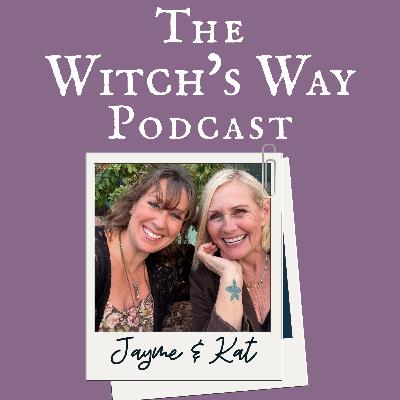
Welcome to The Witch’s Way — the podcast where we blend magic, mischief, and modern psychology to help women move from overwhelmed to empowered. Hosted by a mother-daughter duo, this show explores shadow work, everyday spellwork, nervous system regulation, intuition development, and seasonal witchcraft practices that create real-life transformation.
We talk trauma healing, toxic relationship recovery, boundaries, confidence building, moon magic, Wheel of the Year rituals, and how to build a spiritual practice that actually works in modern life.
Each episode weaves together:
• Beginner-friendly witchcraft and practical spells
• Shadow work for healing generational patterns
• Psychology-backed tools for nervous system regulation
• Seasonal magic, moon cycles, and intuitive development
• Empowerment practices rooted in the Divine Feminine
Bring your candles and your chaos — your truth and your trauma — and together we’ll walk the Witch’s Way.
86 Episodes
Reverse
What happens after awareness and acceptance? You begin living according to what you now know. In this episode of The Witch’s Way, we explore embodiment—the point where your spiritual growth moves beyond ideas, labels, and aesthetics and begins changing how you show up in everyday life. Embodiment is built through small practices that align with the woman and witch you are becoming. Sometimes that means saying no, setting a boundary, or walking away. Other times it means saying yes to something unfamiliar that could help you grow. We talk about recognizing the moment an old trigger sends you into panic, freezing, people-pleasing, or another familiar response—and learning to say, “Shit, I’ve been here before.” We also discuss how preparing your words ahead of time can help you respond differently when you’re caught off guard. By deciding what you will say, what you will allow, and where you will draw the line, you give yourself another choice when the old pattern returns. Because being a witch isn’t only about what sits on your altar or how witchy your life looks. It’s knowing who you are, recognizing what aligns with you, and repeatedly choosing what supports the person you are becoming. Awareness reveals the pattern. Acceptance acknowledges the truth. Preparation creates another choice. Practice turns that choice into embodiment.
Awareness may be the first step toward transformation, but seeing the truth and accepting it are two very different things.
We can recognize that a relationship is hurting us, a religion no longer fulfills us, a job is draining us, or an old version of ourselves no longer fits—and still spend years explaining away what we already know.
In this episode of The Witch’s Way, Kat and Jayme continue their conversation about becoming a witch by exploring the second stage of the journey: acceptance.
Through personal stories about relationships, family, identity, clothing, moving across the country, and rebuilding a life from almost nothing, they unpack why acceptance can feel so frightening. Sometimes the truth asks us to grieve the future we imagined. Sometimes it forces us to confront the time, love, money, and energy we’ve already invested. And sometimes it leaves us facing one enormous question: Who am I without the life I thought I was supposed to live?
They also explore the sunk-cost trap, the comfort of a “fine” life, the fear of disappointing others, and the invisible rules that keep women loyal to situations they have already outgrown.
Acceptance doesn’t mean approving of what happened. It doesn’t mean pretending the loss doesn’t hurt. It means acknowledging what is true so we can stop surrendering our power to denial, obligation, and fear.
We cannot always change what is true—but we can change what we do with the truth. Acceptance creates the space to let go, choose differently, and begin creating whatever comes next.
What is the very first step to becoming a witch? Most people think it's buying crystals, learning tarot, casting spells, or creating an altar. We disagree. In this episode of The Witches Way Podcast, we explore why the true beginning of a witch's path has nothing to do with toolsand everything to do with awareness. Through personal stories, honest conversations, and a few laughs, we share how developing self-awareness transformed our lives far more than any ritual ever could. From recognizing unhealthy relationship patterns and people-pleasing habits to paying attention to the changing seasons, rescuing tiny creatures, setting healthier boundaries, and questioning beliefs we inherited from others, this conversation is about what it really means to awaken. We discuss: Why being a witch is a mindset, while witchcraft is a practice The difference between collecting magical knowledge and actually transforming your life How awareness helps you recognize unhealthy patterns, limiting beliefs, and emotional triggers Why growth is never a straight line (and why that's completely normal) Learning to observe nature and the world around you with new eyes How awareness creates choiceand choice creates change Why boundaries are an essential part of the witch's path The surprising ways everyday moments become magical when you're fully present Whether you're a complete beginner or have been practicing for years, this episode is an invitation to slow down, pay attention, and discover that the most powerful magic begins long before the first spell. ✨ Because before you practice witchcraft... you become aware.
What started as frustration with a demanding coworker became an unexpected lesson in self-awareness, boundaries, and personal responsibility. In this episode, Kat shares a recent workplace conflict that left her so angry she shut down her computer and walked away. But after taking time to cool off, reflect, and communicate her needs clearly, she discovered something surprising: the problem wasn't really her coworker. Together, Kat and Jayme explore how many of us—especially women—spend our lives being the helper, the fixer, and the person who always says yes. We learn to anticipate everyone else's needs while ignoring our own, only to become resentful when people continue expecting what we've taught them to expect. This honest conversation dives into people-pleasing, childhood conditioning, boundaries, shadow work, and the lifelong process of learning how to ask for what we need. Because sometimes the most profound healing comes not from changing other people, but from recognizing the patterns we've been carrying for decades. If you've ever felt taken for granted, overwhelmed by other people's expectations, or frustrated by relationships that seem stuck in unhealthy patterns, this episode offers a compassionate reminder that it's never too late to learn a different way.
For centuries, women have been taught to fear aging. We spend our lives chasing youth, hiding wrinkles, and worrying about becoming invisible. But what if that fear isn't accidental? What if society has spent generations teaching women to distrust older women—and ultimately, to fear becoming one themselves? In this episode, Kat and Jayme explore the Crone archetype, the stereotypes that surround older women, and the stories we've inherited through fairytales, folklore, and popular culture. From the "wicked witch" and the "bitter old hag" to the "crazy cat lady" and the "lonely spinster," why are older women so often portrayed as jealous, dangerous, or irrelevant? Together, we examine how these narratives may have shaped the way women view aging, wisdom, independence, and their own self-worth. We discuss the historical role of wise women, healers, midwives, and witches, and ask an uncomfortable question: Who benefits when women are taught to fear the very stage of life that holds the greatest wisdom and freedom? Join us for a thought-provoking conversation about reclaiming the Crone, honoring the wisdom that comes with age, and discovering the power that emerges when women stop seeking approval and start trusting themselves. Because perhaps the most radical thing an older woman can be is visible, unapologetic, and fully herself.

Comments

Download from Google Play

Download from App Store
 United States