


 Claim Ownership
The WorkOps Podcast
Subscribed: 0Played: 0
Subscribe
© 2026 by Kinfolk
Description
The WorkOps Podcast is your weekly conversation with HR leaders and People Ops practitioners doing the real work.
In every episode we dig into one story. A process that went sideways, a system that just didn't work, and what someone actually did about it. Packed with practical lessons you'll want to bring back to your team. Whether you're supporting 500 employees or 5,000, this is how the best People leaders are building for what comes next.
In every episode we dig into one story. A process that went sideways, a system that just didn't work, and what someone actually did about it. Packed with practical lessons you'll want to bring back to your team. Whether you're supporting 500 employees or 5,000, this is how the best People leaders are building for what comes next.
28 Episodes
Reverse
SummaryWhat happens when AI changes not just the tools HR uses, but the way People teams operate? Trace Durning, Chief People & Culture Officer at Idox, joins Jeet Mukerji on The WorkOps Podcast to explain why successful transformation starts with people, process design, and shared ownership of change - not simply introducing a new technology.Trace shares her path from change management into HR and describes how Idox is expanding employee self-service, building HR technology expertise directly into the People team, and partnering with the CTO and technology leaders on AI adoption. She explains the rapid improvement events her team uses to map processes before selecting AI use cases, and how colleague surveys, support enquiries, and feedback help identify where better tools could create real value.The conversation also explores giving People partners more time for strategic work, preserving the fundamentals of early-career HR development, and making AI fluency accessible through pilots, drop-in sessions, and safe opportunities to practice. Trace makes an important distinction between putting agents on a human org chart and incorporating AI-agent handoffs into the operating model with risk management built in. Her message: unlike a traditional transformation, AI may never have a fixed finish line, so curiosity and continued learning matter.Chapters00:00 Trace Durning’s route from change management into HR 02:02 Why People teams and change leaders must partner 05:21 Employee self-service and the HR technology leadership role 08:19 Making AI adoption a shared responsibility 10:48 Transparency, pilots, and involving colleagues 12:47 Rapid improvement events and process-first AI 14:19 Mapping the internal customer value stream 15:57 Using data and feedback to prioritize AI use cases 17:09 Faster answers and more employee autonomy 19:46 Freeing HR partners for more strategic work 21:31 Preparing early-career HR talent for AI 23:11 Where AI agents belong in operating models 26:21 AI fluency, training, and safe environments to learn 30:10 Why AI transformation has no fixed endpoint 34:26 Build versus buy and in-house HR expertise 35:44 What comes next for Idox’s People team 37:36 Trace’s advice for embracing changeTakeaways-Change is everyone’s responsibility. HR can enable transformation, but leaders and individual colleagues must participate in making it stick.-Build the right HR technology capabilities. Idox introduced an HR technology leadership role combining HR experience and technical expertise, alongside employee self-service.-Map the process before adding AI. Rapid improvement workshops look at the internal customer value stream, avoid unnecessary steps, and identify where technology can genuinely help.-Bring employees along. Transparency, pilots, shared feedback, learning sessions, and supportive leaders help colleagues develop confidence in AI.-Use evidence to prioritize. Colleague surveys, support enquiries, and process reviews help the team identify useful AI applications.-Make room for strategic HR. Reducing administrative demands may allow People partners to focus on more valuable work, although Trace says the team is still early in measuring results.-Put agents into workflows thoughtfully. Trace sees AI agents playing a role in operating-model handoffs, with explicit attention to human oversight and risk, rather than automatically adding them to human org charts.-Expect continuous transformation. AI has no clear final implementation date; curiosity and the ability to keep learning are essential.Connect with the GuestLinkedIn: linkedin.com/in/tracedurning Idox: idoxgroup.comSponsorThis episode is brought to you by Kinfolk, the AI service desk built for HR.Learn more at kinfolkhq.com.
SummaryAnuradha Mayer, EVP & Chief People Officer at Infoblox, joins Jeet Mukerji on The WorkOps Podcast to explain why People teams need to stop thinking only in HR programs and start operating like product teams. For Anuradha, the shift means treating business leaders and employees as customers, building practical solutions to their problems, and getting feedback before anything feels finished.She takes Jeet Mukerji inside Infoblox's AI transformation: a leadership exercise where HR teams built AI prototypes for internal customers and pitched them for a buy-or-pass decision; an AI Trailblazer Award that rewards scaled impact and sharing unfinished work; and routine HR letters automated to save 87% of the time previously spent. The conversation follows the company's staged rollout of Bloxmate, its internal employee-support assistant, the capabilities-and-speed tradeoff behind build-versus-buy decisions, and a joint HR–IT roadmap that spans both workforce transformation and the hire-to-retire lifecycle.Anuradha also discusses why teams will increasingly manage AI agents, why employees have AI performance and development goals, why leaders must combine AI fluency with human connection, and why AI output without original thought becomes more work for everyone. For CHROs, People Ops executives, HR technology leaders, and anyone deciding how to turn AI usage into measurable business impact.Chapters00:00 AI Fluency and Human Connection01:15 Meet Anuradha Mayer03:55 Moving from HR Programs to Products06:07 Rewarding AI Experimentation and Sharing09:09 Automating HR Tasks and Saving 87% of the Time10:04 Introducing Bloxmate: AI-Powered Employee Support11:28 Build vs. Buy: Capabilities and Speed13:41 HR Transformation Roadmaps and Managing AI Agents18:31 AI Engineers and the Future of HR Teams22:49 AI Performance Goals and Employee Adoption25:54 Balancing AI Fluency with Human Connection27:41 Avoiding AI Slop and Preserving Critical Thinking29:57 Why AI Is the Biggest Technology Wave Yet31:54 Advice for HR Professionals and LeadersTakeaways- Move from programs to products: start with a real business problem, test the solution with internal customers, and measure whether it helps.- Make unfinished work visible. Anuradha encourages her team to share work even when it is only 50% complete, because early feedback accelerates learning.- Automate the routine to create space for meaningful work. At Infoblox, automating employee letters saved approximately 87% of the time spent on that workflow.- Decide whether to build or buy based on the capabilities you need, how fast you can deliver them, and whether your content and processes are ready to support trustworthy AI answers.- AI transformation is also a leadership responsibility. Employees need accessible learning, clear goals, human connection, and guidance on where AI can have an impact.- Keep original thinking in the driver's seat: use LLMs as critical thought partners instead of shipping unexamined AI-generated material.Connect with the GuestAnuradha Mayer: EVP & Chief People Officer, InfobloxLinkedIn: https://www.linkedin.com/in/anuradhamayer/Company Website: https://www.infoblox.com/SponsorThis episode is brought to you by Kinfolk, the AI service desk built for HR.Learn more at kinfolkhq.com.
SummaryClaude Silver, Chief Heart Officer at VaynerX, joins Jeet Mukerji on The WorkOps Podcast to explain how a role with no job description became the only Chief Heart Officer title in the business. Twelve years ago Gary Vaynerchuk gave her one remit, touch every single human being and deploy empathy, and she has scaled it from about 400 people to 2,200 by renaming HR "People and Experience," dropping the college degree requirement, swapping culture fit for culture addition, and building a network of culture champions who scale the heart.The conversation covers where AI belongs in the People function (answering the benefits, holidays and onboarding questions that once took a full-time person, but not the human moments), why AI adoption should sit with IT, how VaynerX helps people through the fear of AI, and why she expects People teams to keep growing as coaches rather than shrink to a flat G&A line. She closes on kind candor, balancing empathy and accountability without creating entitlement, and why every AI rollout should start by talking to people. For CHROs, People Ops leaders and anyone deciding where AI should and should not sit in their organization.Chapters00:00 Welcome Claude Silver, Chief Heart Officer at VaynerX00:20 Never wanting to do HR and becoming Chief Heart Officer03:35 People and Experience, not HR05:45 Dropping the degree requirement and culture fit07:06 Culture champions who scale the heart09:26 Choosing an HRIS that feels human10:22 Why the heart is not automated yet11:38 How the People and Experience team uses AI today13:20 Why IT should own AI adoption14:22 Helping people through the fear of AI16:54 Efficiency still needs critical thinking19:06 The next 18 months: coaches, not paper pushers21:40 What AI means for entry-level HR talent23:13 Advice for starting a career in HR24:08 Testing for AI skills when hiring26:29 Will People teams scale with the company?28:49 Belonging without entitlement31:55 Kind candor in practice34:24 Bespoke training for managers35:37 Final advice: talk to people firstTakeaways- Claude renamed HR "People and Experience" because the job is to take care of people from the moment they send a CV to their last day, and beyond through an alumni network.- VaynerX dropped the college degree requirement and replaced culture fit with skill set fit and culture addition, because culture fit often just means exclusivity.- AI now answers the benefits, holidays and onboarding questions that used to take a full-time person, which frees the team for the human work; AI adoption itself is owned by IT, not HR.- Claude expects People teams to keep scaling with headcount, because the future of HR is coaching, not paper pushing or policing, and well-being is not a product off the shelf.- Retention comes from safety, belonging and recognition delivered with kind candor, balancing empathy and accountability without coddling or creating entitlement.Connect with the GuestClaude Silver LinkedIn: https://www.linkedin.com/in/casilver/Company Website: https://vaynerx.comSponsorThis episode is brought to you by Kinfolk, the AI service desk built for HR.See more at kinfolkhq.com
SummaryKatarina Berg, CHRO at On, joins Jeet Mukerji on The WorkOps Podcast to explain what an HR leader carries from company to company after 30 years in the function, and what she leaves behind. She has run People at Spotify and now at On, the Swiss running brand that benchmarks itself against tech companies, and she has deliberately changed industry every time so she never does a "blue copy" of the last playbook.The conversation covers the 5 Cs she hires for now that leadership is both and rather than either or, why she still backs experience over tech-native hires (intuition, she argues, is just experience), and why AI in the People function is a mindset shift, not a tech shift. She describes the one-day agentathon where her HR team built plug-and-play agents in Claude and Lovable, how On buys and tweaks platforms like Sana rather than building from scratch, and the question she thinks nobody in HR is asking: when AI removes repetitive work, what replaces the recovery it used to give people? For CHROs, People Ops leaders and anyone deciding where AI sits in their organization.Chapters00:00 Cold open00:51 Welcome Katarina Berg, CHRO at On01:08 30 years in HR and never a blue copy06:21 The 5 Cs to hire for when everything is both and11:14 Does experience still matter in the AI era?17:01 From Spotify to On: listen before you change anything21:46 A mindset shift, not a tech shift28:16 AI first does not mean people lost: HR, IT and the agent hackathon34:50 The micro pauses AI takes away36:31 Build, buy or tweakTakeaways- Katarina hires for 5 Cs, communicative, consistent, compelling, able to conceptualize and able to put it in context, because leadership today is both and, not either or.- She still backs experience over tech-native hires: intuition is compressed experience, and it is what lets a team judge AI output and dare a contrarian bet.- AI in the People function is a mindset shift, not a tech shift, so HR has to be the change agent and cannot be tech averse or scared.- On's HR team built plug-and-play agents in Claude and Lovable during a one-day agentathon, aimed at repetitive work, and talent acquisition already answers every applicant instead of leaving them in a black hole.- Nobody's unique: On buys and tweaks platforms like Sana rather than building from scratch, and Katarina's open question is what replaces the recovery that repetitive work used to give people.Connect with the GuestKatarina Berg LinkedIn: https://www.linkedin.com/in/katarina-berg-5375074/Company Website: https://www.on.comKatarina's book, BOLD: A new era of strategic HR: https://www.amazon.se/-/en/BOLD-new-era-strategic-HR/dp/8327289802SponsorThis episode is brought to you by Kinfolk, the AI service desk built for HR.See more at kinfolkhq.com
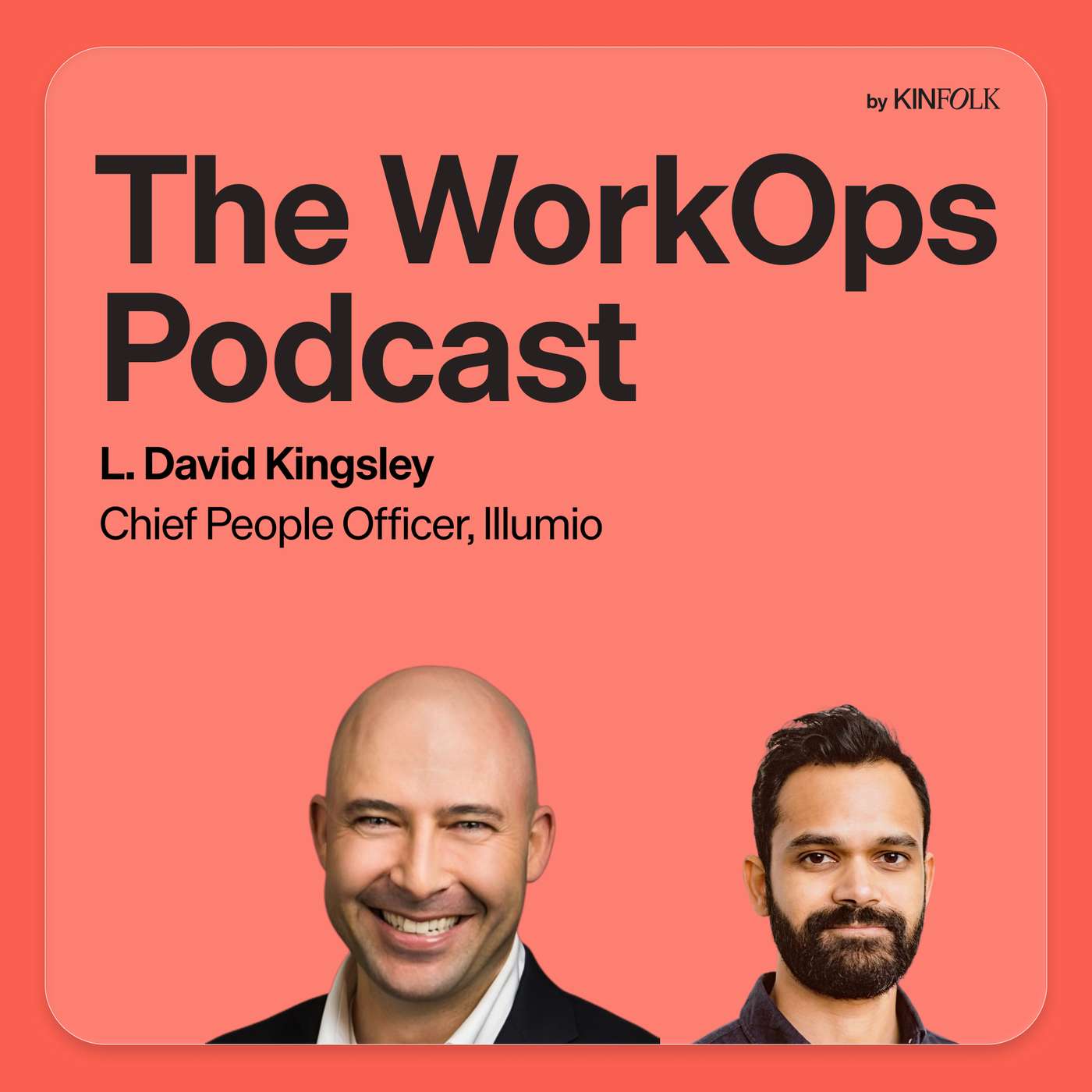
SummaryL. David Kingsley, Chief People Officer at Illumio, joins Jeet Mukerji on The WorkOps Podcast to talk about what AI is doing to the People function from inside a zero trust cybersecurity company. David spent 13 years in management consulting at Accenture and Booz Allen before a single moment changed his path: he asked a disruptive HR business partner to leave his account planning meeting, then started wondering what HR would look like if it showed up differently. Salesforce called soon after, and he has led People teams ever since.The conversation covers the anti pattern he sees in early career teams, a 14 slide deck produced in 17 minutes that skips the learning that comes from building it yourself, and his rule that AI work should never take longer to read than it took to make. David explains how Illumio governs AI inside its own Copilot instance, why HR has to move from necessary evil to trusted advisor to earn a voice on the future of work, and how recruiting coordination has changed almost overnight. He also describes the month every member of his people team built and named an AI agent, from LL Coolpay in compensation to Ingrid in people operations, and his plan to put those agents on the org chart. For CHROs, People Ops leaders and anyone deciding where agents belong in the HR operating model.Chapters00:00 Cold open00:54 Welcome L. David Kingsley, Chief People Officer at Illumio02:53 The day he asked HR to leave the meeting07:57 AI slop and the learning early career people skip15:52 Process maps in minutes, not weeks18:50 AI governance inside a walled garden23:20 From necessary evil to trusted advisor31:16 The chief workforce officer and the new shape of HR36:51 AI agents with cheeky names on the org chart42:38 One front door for every employeeTakeaways- AI can produce a polished 14 slide deck in 17 minutes, but early career people who skip the whiteboard to final draft process also skip the pattern matching that makes them credible in front of a board.- David's rule for AI work product is simple: it should never take longer for someone to consume it than it took you to create it.- Illumio keeps AI inside its own Copilot instance, steered by an executive AI committee and a working group, and would rather leave some value on the table than let company data into personal accounts.- HR only gets a say in how AI changes the nature of work once it has moved from necessary evil to critical enabler to trusted advisor, by showing up as a business person first.- Every member of Illumio's people team built and named an AI agent, and by the end of Q1 next year those agents will sit on the org chart reporting to each of David's direct reports.Connect with the GuestL. David Kingsley LinkedIn: https://www.linkedin.com/in/ldavidkingsley/Company Website: https://www.illumio.comSponsorThis episode is brought to you by Kinfolk, the AI service desk built for HR.See more at kinfolkhq.com

Comments

Download from Google Play

Download from App Store
 United States