


 Claim Ownership
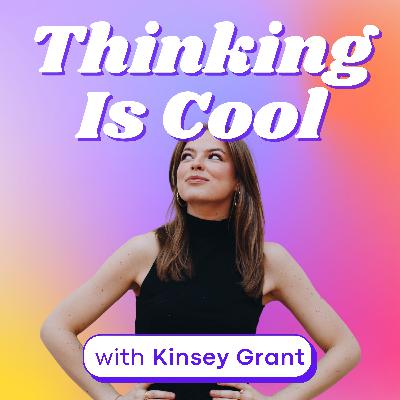
Thinking Is Cool
Subscribed: 25Played: 1,210
Subscribe

© All rights reserved.
Description
What if we all stopped to think a little harder? To have conversations with each other? What might the world look like? I’m Kinsey Grant and together, we’re gonna find out.
55 Episodes
Reverse
Like my jewelry in this video? It's sweat-proof, which is exactly what I need now that my career is pretty much just dunking on the rich and powerful. It's from OXB—feast your eyes on their incredible, show stopping, never been done before selection here: https://bit.ly/3PkZIkd----Meet Steph Mui, the founder and CEO of PIN, a startup innovating the venture capital model through community funds. Where Andreessen Horowitz zigs, Steph and PIN zag. Because the incentive model for venture is clearly not working (looking at you, Adam Neumann). So how do we rewire the money? Steph Mui has an idea or two.1:20 meet Steph and PIN3:53 how has VC traditionally worked?6:33 venture's competitive landscape8:11 the c word (community)13:47 community investing has risks17:13 rage against the money machine21:55 the future of VCSUBSCRIBE TO MY NEWSLETTER: https://kinsey.beehiiv.com/subscribeFOLLOW ME ON TIKTOK: https://www.tiktok.com/@kinsey_grantFOLLOW ME ON INSTAGRAM: https://www.instagram.com/kinseyrgrant/
Like my jewelry? It's sweat-proof, which is exactly what I need as a profoundly sweaty betch. It's from OXB—feast your eyes on their gorge selection here: https://bit.ly/3PkZIkdToday, you'll hear from Sami Sage, cofounder and chief creative officer of Betches, the digital media brand behind some of your favorite podcasts (like U Up? and The Betchelor and many many more), newsletters, meme pages, and now canned cocktails.We talk about weathering the many storms of digital media this last decade, from the first pivot to video to the second pivot to video. Also TikTok, Instagram sucking, etc. Also? Creativity, the fallacy of determination, and more.Listen! Learn! Live! Laugh! Love!1:36 meet Sami and Betches5:37 the world is changing...does that mean you should too?9:50 pop culture & current events (Elon Musk x Ramona Singer)15:21 the evolution of Betches contentCheck out Sami's Morning Announcements here: https://betches.com/podcast-channel/m...SUBSCRIBE TO MY NEWSLETTER: https://kinsey.beehiiv.com/subscribeFOLLOW ME ON TIKTOK: https://www.tiktok.com/@kinsey_grantFOLLOW ME ON INSTAGRAM: https://www.instagram.com/kinseyrgrant/
Presenting: Naomi Shah. Naomi is the CEO and founder of Meet Cute, the storytelling incubator breathing new life into rom-coms. We talk about her founder journey, her ambition to out-Disney Disney, and the challenges and advantages of operating in "modern" media.HEY: Like my jewelry? It's sweat-proof, which is exactly what I need to watch that bathroom scene in How to Lose a Guy in 10 Days. It's from OXB—feast your eyes on their spectacular selection here: https://bit.ly/3PkZIkd1:01 meet (cute) Naomi4:10 in defense of rom-coms6:30 on disruption7:19 audio, video, and both11:41 modern storytelling, decoded16:17 defying expectations (self-set and otherwise)21:08 Naomi's biggest founder lessons28:57 watch out DisneyLearn more about Meet Cute: https://www.meetcute.com/Follow Naomi: https://twitter.com/naomicshahSUBSCRIBE TO MY NEWSLETTER: https://kinsey.beehiiv.com/subscribeFOLLOW ME ON TIKTOK: https://www.tiktok.com/@kinsey_grantFOLLOW ME ON INSTAGRAM: https://www.instagram.com/kinseyrgrant/See you soon!
BUT FIRST: Like my jewelry? It's sweat-proof, which is exactly what I need given the feathers this might ruffle in my hometown. It's from OXB—feast your eyes on their spectacular selection here: https://bit.ly/3PkZIkdYou posted the infographic. You made the donation. But now what? What are we to do to fight for a better future in a dystopian present after the overturn of Roe vs. Wade?Rachel Cantor and Ben Allan-Rahill have an idea or two. Welcome to postroe.00:56 meet the guests03:11 what is postroe?05:31 the business angle08:26 should companies have morals?17:04 small is better than nothing20:04 where to find postroeCheck out postroe.co at...uh, postroe.co.SUBSCRIBE TO MY NEWSLETTER: https://kinsey.beehiiv.com/subscribeFOLLOW ME ON TIKTOK: https://www.tiktok.com/@kinsey_grantFOLLOW ME ON INSTAGRAM: https://www.instagram.com/kinseyrgrant/See you soon!

Last week, I outed myself as a web3 doubter. This week, I'm pushing myself to consider whether I might be...wrong.But first: If you check this video on YouTube you'll see that I'm wearing some very gorgeous dainty gold jewelry. It's sweat-proof, which is exactly what I need when I'm talking about cr*pto. It's from OXB—feast your eyes on their beautiful selection here: https://bit.ly/3PkZIkdNow to the episode: I'm hanging out with Kirby Porter, the founder of New Game Labs and W3 Sports and a former Harvard basketball player. She explains her thesis on the nexus of web3 and sports, namely how athletes navigating new rules around monetizing their careers can leverage web3 tech. The best part of this interview, though, is that it's about more than just people who play sports. It's about all of us.Listen, learn, think about how you squandered your hoop dreams. Lots to be absorbed with this one!! Also Kirby is genuinely one of the coolest, smartest people I know. Enjoy!!!00:32 meet Kirby3:20 NIL changes & impacts05:28 the athlete as a brand08:18 why web3 for athletes?15:31 fine let's talk about NFTs18:32 the risks of web323:06 the future of web3LINK TIIIIIMMMMEEEEFollow Kirby: https://twitter.com/KirbyPorter_Kirby mentioned Li Jin, whom you can follow here: https://twitter.com/ljin18SUBSCRIBE TO MY NEWSLETTER: https://kinsey.beehiiv.com/subscribeFOLLOW ME ON TIKTOK: https://www.tiktok.com/@kinsey_grantFOLLOW ME ON INSTAGRAM: https://www.instagram.com/kinseyrgrant/

Comments

Download from Google Play

Download from App Store
 United States