


 Claim Ownership
This Week In College Viability (TWICV)
Subscribed: 2Played: 121
Subscribe

© 2024 College Viability, LLC
Description
Welcome to the podcast. We call it TWICV. It is our effort to provide a fast-paced, entertaining, and alternative voice to the propaganda and hype flowing out of colleges in America today. I focus on news stories and commentary on college financial health and much more.
This week in College Viability is a proud affilate of The EdUP Experience podcast network.
229 Episodes
Reverse
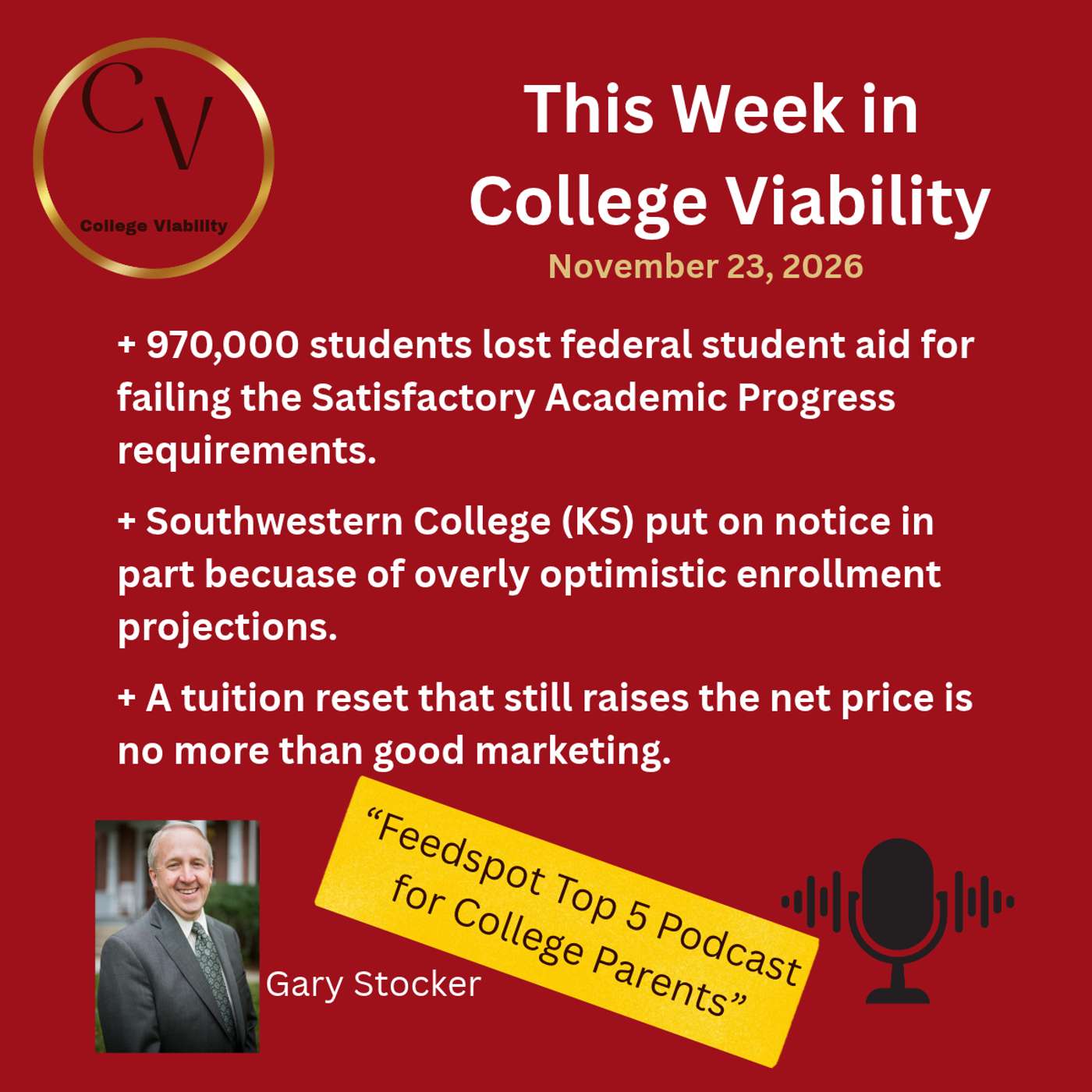
In this week's This Week in College Viability, I examine how college policies, financial pressures, and outdated reporting practices continue to put students and families at risk. I begin with a troubling finding: approximately 1.8 million undergraduate students failed federal Satisfactory Academic Progress (SAP) requirements in a single evaluation cycle, and nearly 970,000 lost their federal financial aid. Even more concerning, relatively few students appealed those decisions, despite approximately three-quarters of appeals being approved. I argue that colleges already have the flexibility to make these policies more student-friendly but frequently fail to use it. I also examine Southwestern College's accreditation warning and financial deficits, proposed federal Pell Grant funding, campus closures, and the nearly 38 million Americans who have attended college without earning a credential. These stories reinforce my continuing criticism of higher education's reliance on financial and enrollment data that are often nearly two years old. Students, families, faculty, and communities deserve more timely information about the institutions they depend on.I also explore the growing movement toward tuition resets, including substantial published tuition reductions at Ripon, Tulsa, and Coe College, and challenge colleges to disclose whether these changes actually reduce what students pay or simply replace inflated sticker prices with more realistic numbers. Additional topics include athletic scholarship reductions at Indian River State College, concerns about accreditation oversight of short-term credentials, and my continued advocacy for Massachusetts-style financial disclosure requirements that give families advance warning about financially distressed colleges. I close with an important announcement: My College Decision Team is officially live, one week ahead of schedule. This new College Viability service brings together 13 AI agents available 24/7 to help students and families evaluate college affordability, academic majors, career outcomes, travel costs, financial stability, and the strengths and weaknesses of their final college choices. My central message remains consistent: families should not have to make one of life's most expensive decisions using outdated information, incomplete financial disclosures, or emotion alone.
We are just 2 weeks away from the release of ‘My College Decision Team’. Colleges have admissions teams. Students and their family deserve a decision team. So, we created one for them. 13 AI agents and guides have been developed to provide 24 x 7 x 365 guidance and support at a price well below that of private consultants. For example: Viability Val will serve as your overall college decision guide. She can help you manage the AI guides and answer questions you may have about the college decision process.Penny will serve as your ‘college budgeting resource.Sage will provide support and guidance on majorsClara will be there at the end to challenge your decision so there can be no doubt that you are making the most informed college decision possible. Plus 9 more at MyCollegeDecisionTeam.com. Test it out today. It is free until December 1st.
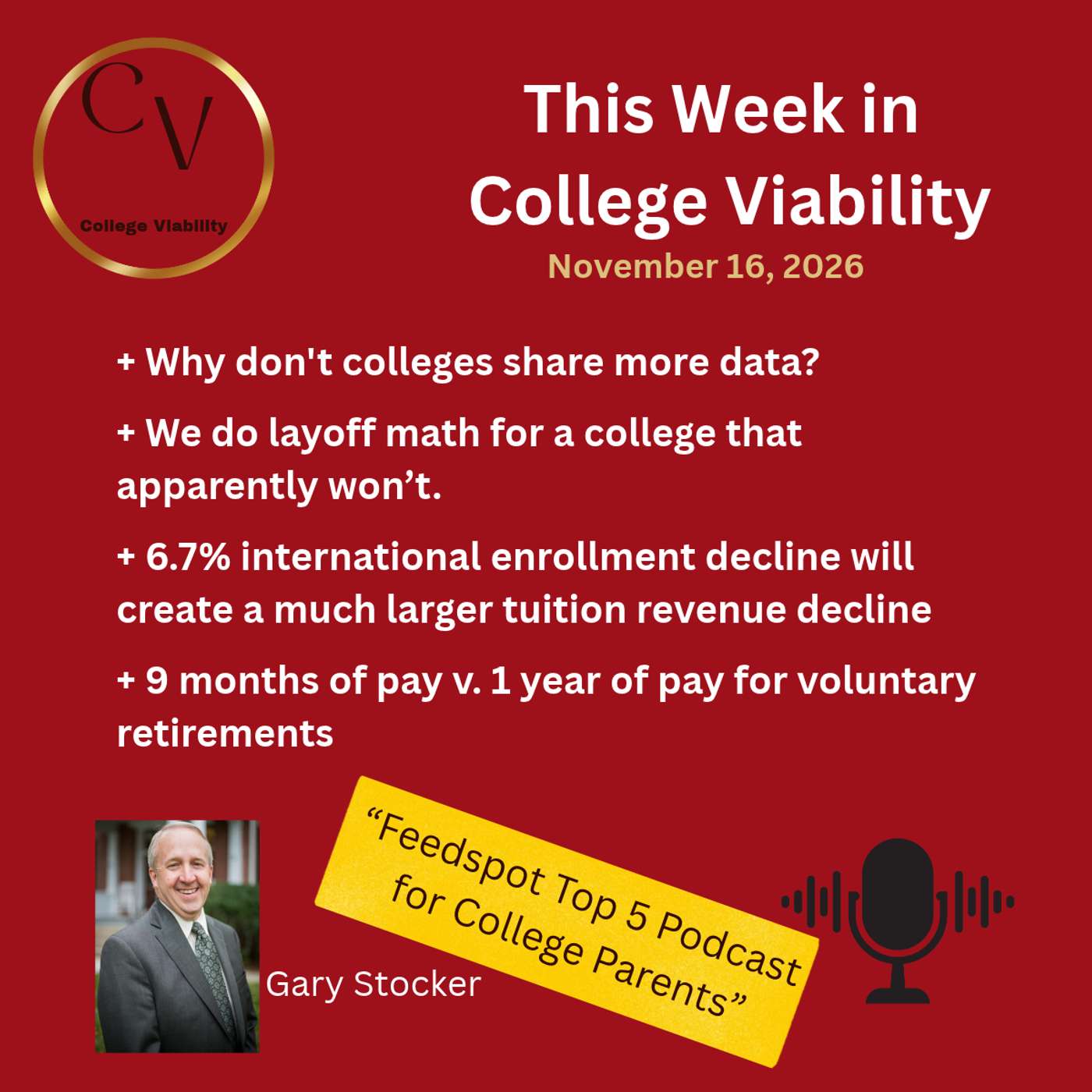
In this week's This Week in College Viability, I examine the growing financial pressures facing American colleges and universities, with a particular focus on declining enrollment, tuition revenue, academic program cuts, and the lack of financial transparency. The University of Arizona lost more than 5,200 students this fall, a 10% enrollment decline that university leaders describe as part of a strategy to attract fewer but better-prepared students. I challenge that explanation and argue that without disclosing net tuition revenue per student, colleges cannot demonstrate whether their enrollment strategies are financially successful. Meanwhile, Gannon University has experienced a 20% enrollment decline over two years and is cutting faculty and academic programs, while North Dakota State University faces a projected $6.1 million revenue loss and possible faculty reductions. I also examine how new federal graduate borrowing limits are pushing students toward private lenders with fewer consumer protections, reinforcing my argument that students and families should negotiate college costs rather than automatically accept additional debt.Beyond enrollment and borrowing, I discuss major changes in accreditation, growing community resistance to college decisions, and the long-term financial consequences of institutional closures. Drexel University's decision to close its Academy of Natural Sciences has prompted a city council subpoena, while Albright College students are protesting the elimination of academic programs. I also examine how closed college campuses are selling for substantially less than their previous investments and outstanding debts, demonstrating that the financial consequences of closure extend well beyond the final graduating class. My central message is that American higher education is undergoing a fundamental transformation, and students, families, taxpayers, and communities deserve timely, independently verifiable financial information. I conclude by advocating stronger state disclosure requirements, encouraging families to inspect a college's financial health before enrolling, and introducing the upcoming December 1 launch of College Viability's My College Decision Team, featuring 13 AI agents and guides designed to make college decisions more organized, objective, and data-informed.
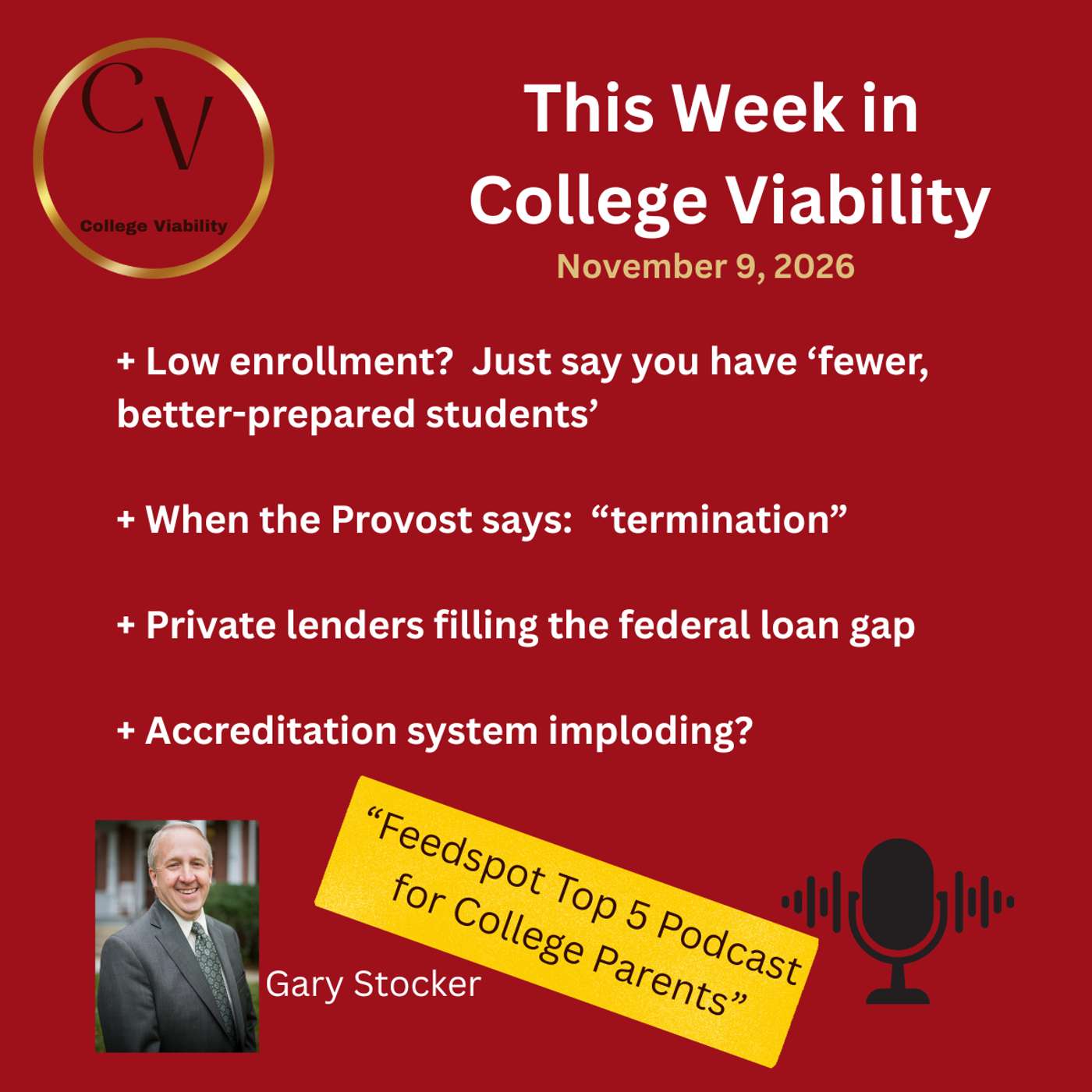
In this week's This Week in College Viability News and Commentary, I examine the announced closure of the University of Providence in Montana, where years of financial dependence on an outside health system ultimately proved unsustainable. I also look at growing faculty unrest, layoffs, and budget cuts at Commonwealth University, Temple, Oregon, Kent State, and across the California State University system. We should start to watch for more widespread faculty labor threats and actions. It is possible that the past year's layoff and cutbacks have reached a point where faculty feel a need to push back stronger than ever.I discuss new enrollment data showing virtually flat national enrollment growth alongside a troubling decline in master's enrollment, as well as changes in accreditation and Illinois Tech's plans to borrow nearly $200 million from its own endowment.I conclude that the University of Providence closure is much more than another small college failure. It illustrates a widespread consumer protection problem in higher education: students and families are often unaware of serious financial risks until colleges announce layoffs, eliminate programs, or close. These warning signs exist at institutions of all sizes, and neither accreditation nor a college's reputation guarantees financial stability. My message remains consistent: families deserve greater financial transparency, stronger consumer protections, and independent information before making one of life's largest investments. Inspect before you invest.
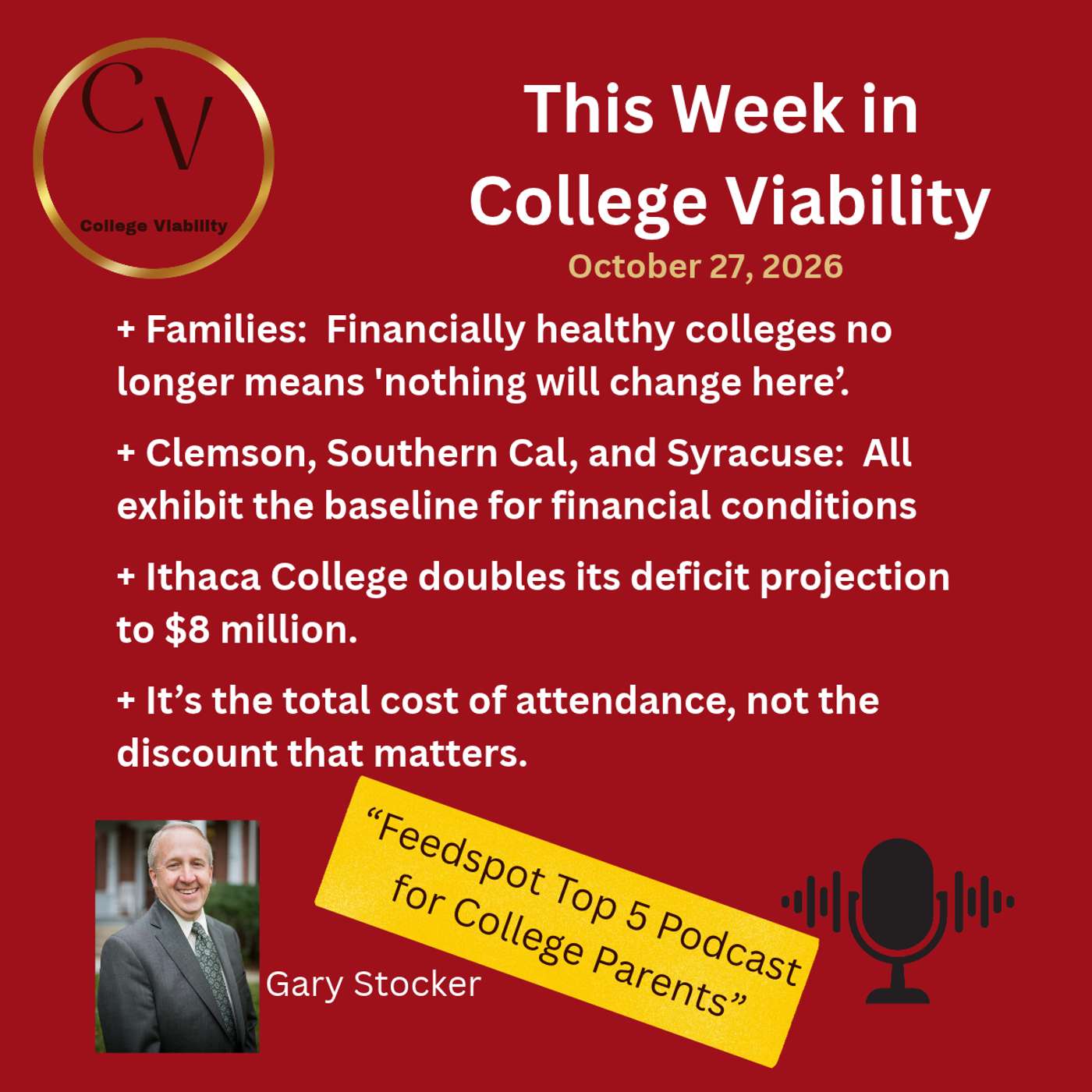
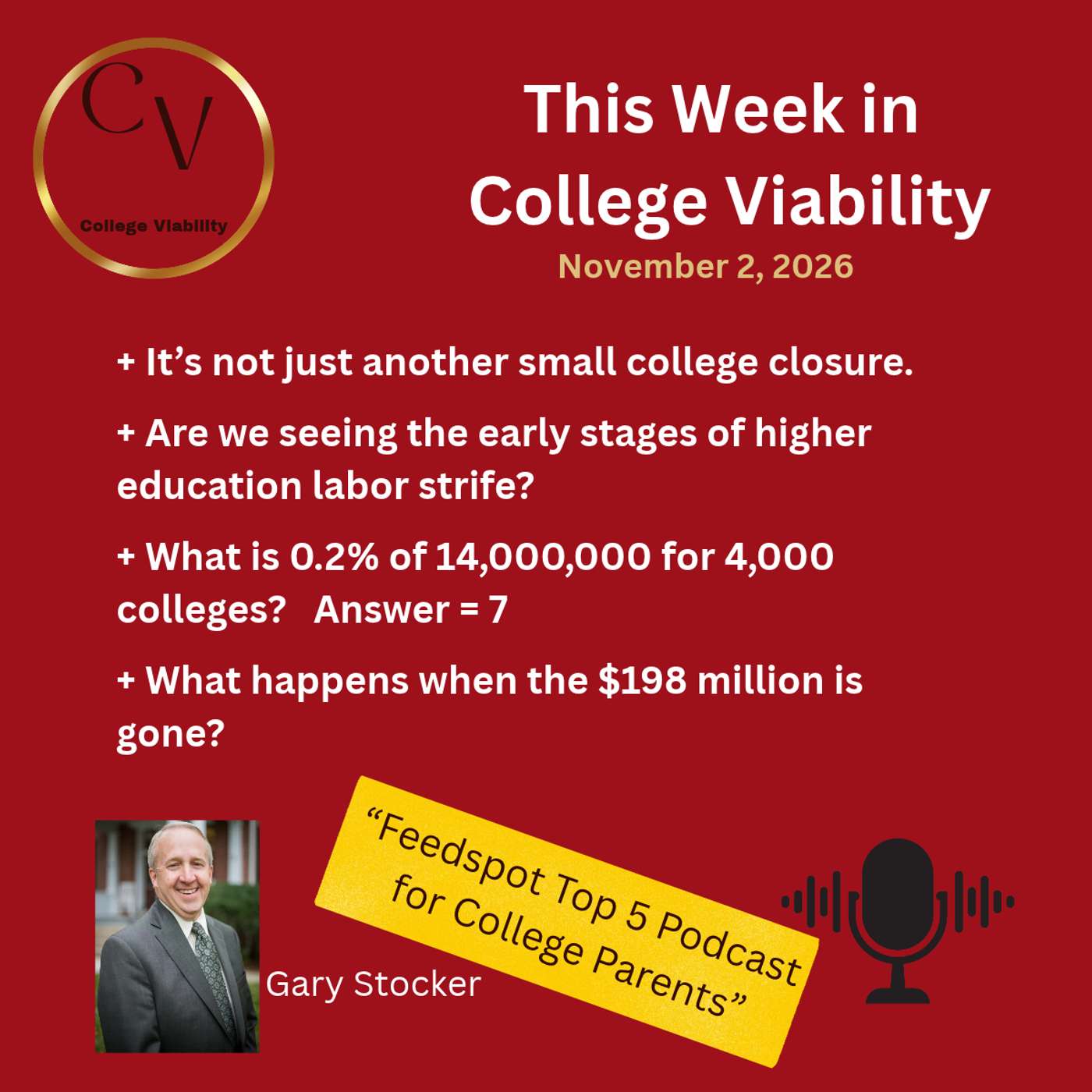
In this week's This Week in College Viability, I examine a troubling trend across American higher education: financial pressures are forcing colleges and universities of all sizes and financial conditions to reduce staffing, eliminate academic programs, and reconsider their operating models. Even financially strong institutions are making significant cuts. Clemson University is offering voluntary separation packages to 452 employees, while Commonwealth University in Pennsylvania faces up to 175 layoffs as it addresses a $17 million deficit. Syracuse University is reviewing its administrative staffing, the University of Maine is working to reduce its projected deficit, Ithaca College has doubled its projected budget shortfall to $8 million, and Keene State College has placed 14 academic programs on hold. These developments raise important questions about institutional priorities, financial transparency, and the consequences for students, faculty, and staff.I also challenge the lack of meaningful financial disclosure accompanying many of these decisions. When colleges announce employee buyouts, budget reductions, or academic restructuring, they frequently fail to explain the actual costs, anticipated savings, or long-term implications. I examine emerging concerns about accreditation accountability and question Illinois Wesleyan University's promotion of a $40,000 scholarship guarantee through its expanded direct admissions program. Despite the impressive headline, students and families could still face approximately $38,000 in annual attendance costs. The central message of this episode is that college financial health cannot be measured by reputation, enrollment, or promotional announcements alone. Students, families, employees, and policymakers deserve independent financial evidence, transparent institutional decisions, and a clearer understanding of the risks facing higher education.

Comments

Download from Google Play

Download from App Store
 United States