


 Claim Ownership
Three Castles Burning
Subscribed: 2,188Played: 111,211
Subscribe

© Donal Fallon
Description
Three Castles Burning is a social history podcast, dedicated to the story of the Irish capital. Dublin is a city of many stories, Three Castles Burning tells some of the more forgotten ones.
230 Episodes
Reverse
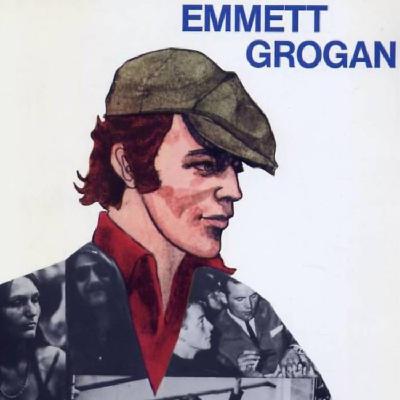
SERIES 4, EPISODE 1. Welcome back to a new series. Emmett Grogan was one of the defining figures of American counterculture in the 1960s. Though his name is almost completely unknown in Ireland, the author of Ringolevio: A Life Played for Keeps is a man for whom Bob Dylan dedicated an album, and who was described by Abbie Hoffman (who he distrusted greatly) as "the hippie warrior par excellence." Yet before the Summer of Love took San Francisco, Grogan was in Dublin in the early 1960s. His accounts of the city are fascinating, from Neary's to Guinness, but how much of it is true? You can read his account here: https://stealthiswiki.com/library/emmett-grogan-ringolevio

A nice mention for the podcast recently on Crime World inspired me to go back to the subject of the Animal Gang. Seperating fact from folklore, just who made up the so-called Animal Gang of 1930s and 1940s Dublin. Was there one gang, or does the term mean something much broader? What was the relationship between the Animal Gang and the turbulent politics of the time. For more on the Animal Gang, see John Gibney's Doc On One at https://www.rte.ie/radio/doconone/647163-documentary-podcast-animal-gangs-inner-city-dublin-folklore
Historian Pádraig Óg Ó Ruairc has just produced Burn Them Out, a history of the Irish far-right. One of its most intriguing chapters studies the Blueshirt movement, tracing its development from an association of veterans into something much broader. Studying intelligence files and reports, Ó Ruairc demonstrates the surprising level of violence associated with this movement around the country. So, was Eoin O'Duffy's so-called 'March on Dublin' ever a serious proposal, and what could have happened on the streets of Dublin in August 1933? Buy the book: https://chaptersbookstore.com/products/burn-them-out?srsltid=AfmBOop0N2oZXPbSABE-zU5TPnUeajS5-fJ2bJ8TJrNdsMUQYynSN-tM Support TCB: www.patreon.com/threecastlesburning

 1
1 Both Patrick Leo Burdock and Ivan Beshoff were revolutionaries, though in very different circumstances. These two names remain stalwarts of the Dublin chipper landscape, but did you know a branch of Leo Burdock's was raided in 1941, or that Ivan Beshoff lived to be over 100? From the Battleship Potemkin to a tramway strike in Dublin, this is the story of two remarkable men.
In Dublin, just a handful of public houses now open at seven o'clock in the morning. Where did these early houses come from, and what has influenced their decline? On this journey across the city, we visit a pub financed by the Beamish & Crawford Brewery, as well as the historic fruit and vegetable market. Thanks to Brand New Retro for scanning SLATE Magazine!

Bob Dylan's 1966 visit to the Adelphi Cinema is a concert on which there is very little agreement. Torn apart by one Dublin reviewer, many who were there describe the gig in different terms entirely. For many in attendance, it was an extraordinary experience. Visiting Dublin in a year when The Clancy Brothers were putting Dublin's story on the international map, the Dylan concert survives. Support TCB: www.patreon.com/threecastlesburning
Described by The Irish Times as 'raucous, bawdy, reflective and wistful in turn', Traditional Singing from Dublin is more than just an album of songs. Inspired by figures as diverse as Liam Weldon and Seosamh Ó hÉanaí, this work has a strong sense of history throughout. Macdara Yeates joins me. You can stream Traditional Singing from Dublin now. Tickets for TradFest are available at www.tradfest.com
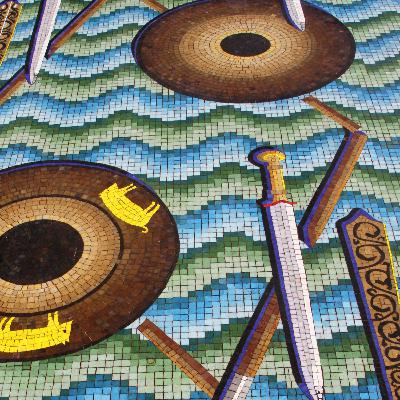
One of Dublin's Historians in Residence, Elizabeth Kehoe has developed a walking tour of Parnell Square which shines a lot on many aspects of its history. Walking around it, we encounter things as diverse as symbolic weapons in the mosaic tiles of the Garden of Remembrance and the coat of arms of the Duke of Rutland. In recognition of the involvement of the Hugh Lane Gallery in Dublin City Council Dublin Winter Lights, Elizabeth took me on a walk around one of Dublin's most important squares. With thanks to Dublin City Council for supporting this edition of the podcast.

James Earley comes from a family rooted in the story of Irish stained glass. As an artist, his work often pays homage to Earley Studios and those who came before him. As part of Dublin City Council Dublin Winter Lights, he has brought an extraordinary show to James Gandon's Custom House. This offered an opportunity to talk about his career to date, stained glass broadly, and art in the public sphere. With thanks to Dublin City Council for supporting this edition of the podcast. For more information.

More than just a resident of Oliver Bond House, Gayle Cullen Doyle is a vital voice within her community, advocating for and representing her neighbours. Eoin Ó Broin is the new author (with photographer Mal McCann) of a study on Herbert Simms, which places schemes like Oliver Bond House in context. Recorded in Oliver Bond House, this discussion is one that emphasises the importance of good quality public housing in any urban environment. Flats and Cottages: Hebert Simms and the Housing of Dublin's Working Class 1932-48 is available now. You can support Three Castles Burning at www.patreon.com/threecastlesburning
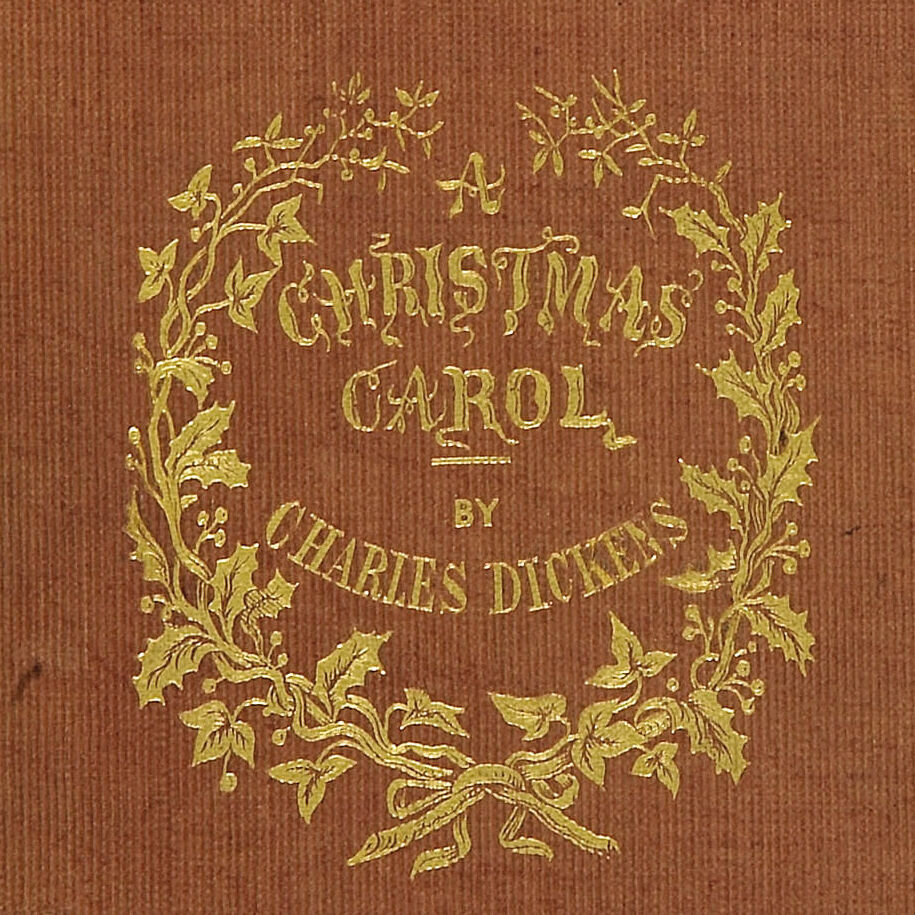
On three occasions, Charles Dickens would speak in Dublin. Each time huge crowds came to hear him speak in the Rotunda, with the crowds spilling out into Sackville Street and well beyond. A Christmas Carol was the highlight of all three tours. Beyond his readings, Dickens also wrote interesting letters from the city, comparing it favourably to London and Edinburgh. There was once a time when Dublin even had street names taken from the world of Dickens.
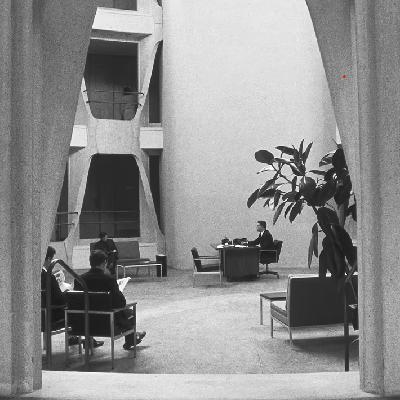
Cormac Murray is the author of a new study of the US Embassy in Ballsbridge. A visual feast, it explores one of Dublin's most unusual buildings in its architectural, social, cultural and political contexts. The work of John M. Johansen,described as "a Neoclassical Modernist", the building was something of a never-ending saga. In an edition of just 400, the study is available from Phibsboro Press You can support Three Castles Burning at Patreon.
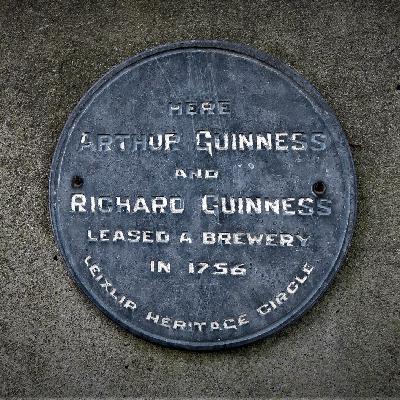
The story of Guinness is one of great success, yes, but also turbulence. Together with historian Antonia Hart, Ned Guinness has produced a family history that doesn't shy away from the challenges faced, while shining a spotlight on some of the key figures in the ultimate success of the brand. Our story passes through events like 1798 and 1916, but there is also talk of the future. Please vote for The Dublin Pub: https://www.irishbookawards.ie/
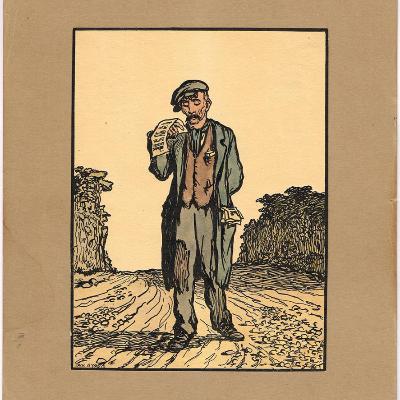
Lord Leitrim, John Twiss and the songs of our year (with Michael Steen) This edition of the podcast is dedicated to the memory of Manchán Magan. Singer Michael Steen (a member of the An Góilín Traditional Singers Club) has developed an intriguing calendar of the year, which creates a journey of song through the seasons. Some of these songs are tied to folklore traditions, others mark key anniversaries. In this discussion, we touch on all from the story of a detested landlord buried in St Michan's Church to the recently pardoned John Twiss. The calendar is available to view at www.songcalendar.ie. Please vote For The Dublin Pub at https://www.irishbookawards.ie/vote/ Follow the Irish Traditional Song Calendar on Instagram at: https://www.instagram.com/irishsongcalendar/
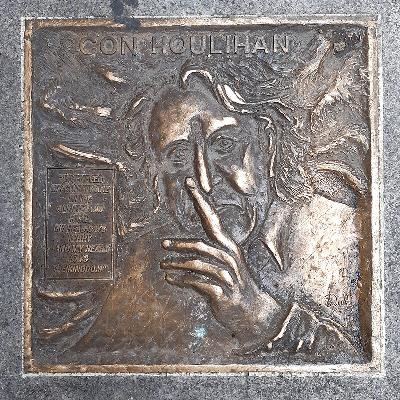
At a packed Oak Room in the Mansion House, a celebration of the life of the journalist Con Houlihan last Saturday brought the audience on a journey into the work and passions of one of Ireland's most beloved scribes. Born in Castle Island (two words, he insisted) in 1925, Con became the heart of the Evening Press newspaper on Dublin's Burgh Quay. His love for his native Kerry, sport, literature, the theatre, St Patrick's Athletic, the public houses of Dublin and more besides are all explored here. One of Ireland's great actors of the stage, Brendan Conroy reads march reports and other pieces from Con, while the journalist, writer and friend of Con, Roy Curtis, held the attention of the room throughout with his beautiful memories of a man who influenced him greatly. Recorded at the Dublin Festival of History. Thanks to all Patreons of the podcast (www.patreon.com/threecastlesburning) The Dublin Pub is available (with free post and packaging) from independent bookshop TheBookshop.ie.
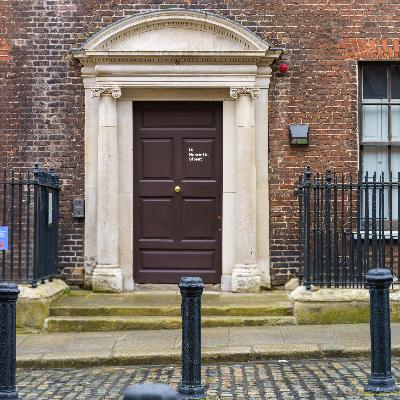
Shaffrey Architects was established in 1967 by Patrick and Maura Shaffrey. Based on Ormond Quay,the practice has made a real and meaningful contribution to Dublin and beyond, with projects including 14 Henrietta Street and Wicklow Head Lighthouse. Fifty years on from Patrick Shaffrey producing The Irish Town: An Approach to Survival, Grainne Shaffrey joins me to talk about the journey since. This event was part of the brilliant Seán Corcoran Series in Drogheda's Highlanes Gallery, an annual event dedicated to the life, work and memory of one of Ireland's great collectors and local champions: www.seancorcoranseries.com/ (Image: William Murphy shot of 14 Henrietta Street. Creative Commons. With thanks to William for his on-going photography capturing Dublin.)
Brian Kerr's voice is instantly familiar as a broadcaster, and his contribution to Irish football is extraordinary. Born in 1953, his first coaching role came while barely a teenager. In the 1980s he would come to manage the team he had supported since his childhood, St Patrick's Athletic, before going on to historic victories with Ireland's youth teams in the 1990s. In this discussion, we touch on everything from the 1966 World Cup Final to the visit of the Al-Helal Football Academy in Gaza to Dublin. A little language in this one. With thanks to Naoise Nunn and all at Mindfield/Electric Picnic. For more on Kerr's story, see Joe O'Rourke's 'The People's Champions' exploring his 1989/1990 league winning side. Support Three Castles Burning, an independent ad-free podcast, at www.patreon.com/threecastlesburning Or at www.ko-fi.com/threecastlesburning
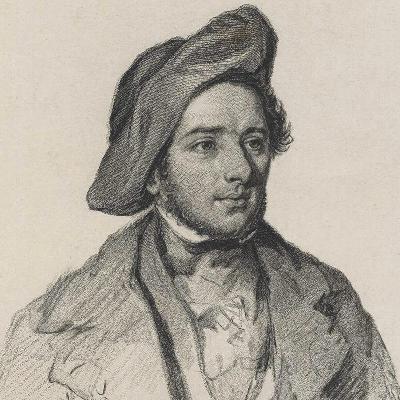
Padraic X. Scanlan is the author of Rot: A History of the Irish Famine. Framing the crisis in Ireland within the broader picture of Empire, this book brings much to how we understood the events that reshaped Ireland. While the crisis recalls rural Ireland, Dublin was central to the story, as the location of the Castle Administration and a bustling port. In this episode we touch on the peculiar story of Alexis Soyer, chef to London's Reform Club, who would arrive in the city in 1847. Establishing a soup kitchen in front of the Royal Barracks, Soyer's intervention was widely condemned in the contemporary press. Rot is available now in all good bookshops.
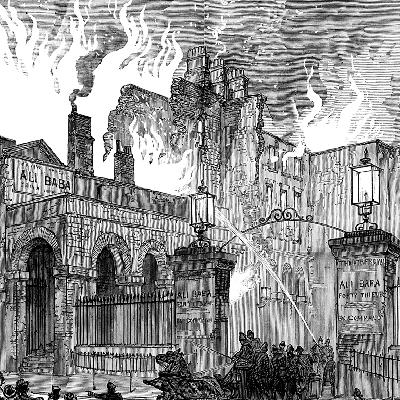
In 1860, a blaze in the Kildare Street Club led to the death of three workers and the destruction of an institution. Together with other fires of the era, this provided the imperative for a municipal fire service. While Captain James Robert Ingram's name is associated with the 'Whiskey Fire' of 1875, there were many other significant fires, including the destruction of Dublin's Theatre Royal. This all occurred in a time when a new scientific approach to firefighting was taking shape, thanks to the pioneering writing of James Braidwood, influenced by the Great Fire of Edinburgh. This episode explores the emergence of modern firefighting, and how Edinburgh and London paved the way for what followed in Dublin. Las Fallon is the author of The Great Liberties Whiskey Fire (2025) available from Chapters Bookshop and online from Kenny's at: https://www.kennys.ie/shop/the-great-liberties-whiskey-fire-fallon-las-9781916742673-1
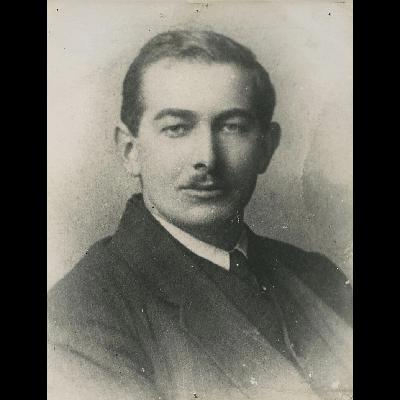
Niamh Hassett and Sean Nugent join me in this special edition of the podcast, exploring a wonderful Tipperary tradition on Dublin's Talbot Street. When the Premier County reach an All Ireland Final, hundreds gather to remember Seán Treacy on the morning of the game. What began this tradition, and why is it growing in popularity?


Download from Google Play

Download from App Store
 United States
Just happened on Walking the Winter Lights - great idea for a podcast, loved it and learned so much. Will have to listen again. Fergus Whelan is a mine of information.
great podcast, unusual topics delivered in a very engaging way! a must for anyone from/in/going to Dublin or interested in history.
so impressed by this, really informative and brilliantly delivered
Three Castles Burning , one of the best Podcast. Congratulations . ☘️
Probably the best history podcast I've come across
Very interesting podcast. Very well researched and delivered.
Fantastic podcast overall. Thank you. ☘️
Excellent podcast on the history of Dublin from Dónal Fallon covering a wide range of issues big and small.