


Transit Lounge
Subscribed: 1Played: 35
Subscribe


© Creative Commons Attribution-NonCommercial-NoDerivatives 4.0 International Public License 2018
Description
Cultural Producer Jodi Rose invites creative people into the Transit Lounge to talk about life in perpetual motion and visions of the future. A series of internationally nomadic conversations about society, creativity & technology with makers, thinkers and doers. You never know who you'll meet in the Transit Lounge!
27 Episodes
Reverse

Kudzai M Mubaiwa talks about why there is a clear need for women to have resources for them to attain real freedom, with a leaning towards strong networks they can activate for tangible forms of wealth. The conversation emphasizes how economic empowerment brings options.
Investor Saint + Future + Female + Zimbabwe + iZone Hub + open:fora
----more----
iZone Hub is a Zimbabwean Entrepreneurship, Innovation & Community Development Hub that serves women and youth makers, innovators, creatives, small business owners. We help them develop their enterprises in the digital age and promote creation over consumption.
Financial & Digital Literacy Trainer | Personal Finance & Small Business Columnist
Kudzai M Mubaiwa is an economic development professional and financial educator who is the founder of Investor Saint (Private) Limited. She is a cofounder of iZone Hub that serves youth and women entrepreneurs and innovators. Her passion is to increase the financial and digital literacy of individuals and small business owners – enabling them to create wealth and ultimately escape poverty – whilst leveraging the opportunity of the internet. Kudzai anchors a personal finance radio program and writes for a weekly business newspaper on small business.
Investor Saint
iZone Hub
Twitter: @kedukudzi
@iZoneHub
Open:fora Feminist Cafè (OFFC)
AfricaOSH (Africa Open Science & Hardware) & AfricArXiv
Art as Protest
open:fora weeklong neighbourhood open culture event in Berlin's deep West. In times of increasing illiberal democracy (Orbàn), upload filters and Exiteering the pressures on our freedoms to act, share culture and make voices heard, reinforces the urgency to act on how we as global citizens can reclaim our collective res publica. Joining our team members from South Sudan and GIG (Global Innovation Gathering) network guests working for open cultures across five continents, open:fora invites all our neighbours, friends, students, activists and all those interested in creating resonant open cultures, technologies and ecologies in celebrating with us!
Hosted by r0g_agency for open culture and critical transformation gGmbH and Open Source Ecology Germany e.V., open:fora offers an opportunity to engage with, build and discuss that which drives critical positions on open technologies, media literacy and capacity building not only at home, but in the challenging post-conflict environments our organisations often work in. STEAM (Science Tech Engineering Art Math), #ASKotec (Access to Skills and Knowledge – open tech emergency case), PAPERPCB (symbiotic synthesizers), Open:fora Feminist Cafè (OFFC), MMN - Migrant Media Networks, AfricaOSH (Africa Open Science & Hardware), #defyhatenow, AfricArXiv, Heteropia, and Art as Protest are some of codeplay key words marking a range of activities that ALL are invited to join.
twitter: @intertwilight
facebook: opencultureagency
programm: https://www.open-fora.org/
open:fora supported by #GuerrillaFoundation
Thank you for tuning in, we hope you enjoyed listening as much as we did talking! Transit Lounge Radio is 100% independently produced, and ad-free. Your generous support, event invitations and sharing to community networks will help to keep the conversation free-flowing!
Support independent radio!
Donate & keep the conversation flowing
Hang out in the Transit Lounge on facebook
Reviews and stars on iTunes make us happy
Listen on the TLR YouTube Channel
Subscribe to TLR RSS Feed
Invite Transit Lounge Radio to your event!
signal at transitloungeradio dot net
tags: r0g_agency, open-fora, guerrilla foundation, open culture, Berlin, transit lounge, radio, podcast, conversation, Kudzai Mubaiwa, izonehub, investorsaint, Zimbabwe, women, economy, finance, empowerment, business, incubator, start-up

Friedrich Lindenberg talks me through the investigative journalism data tools developed by the Organized Crime and Corruption Reporting Project (OCCRP) and details of the Azerbaijani Laundromat. He is optimistic about the potential for lasting and significant structural change to dismantle the complex financial industries that support organised crime & money laundering worldwide. We agree on the importance of pirate radio!
Organised Crime + Money Laundering + Data Journalism + OCCRP + #DNL15
----more----
Data Team Lead, OCCRP, Organised Crime and Corruption Reporting Project, DE
Friedrich Lindenberg leads the data team at OCCRP. He is responsible for the development of OCCRP Data and supports ongoing investigations where data analysis is needed. In 2014/2015, Friedrich was a Knight International journalism fellow with the International Center for Journalists, working with the African Network of Centers for Investigative Reporting (ANCIR), and in 2013 he was a Knight-Mozilla Open News fellow at Spiegel Online in Hamburg. Prior to that, Friedrich was an open data activist, and worked to promote the release of government information about public finance, lobbying, procurement and law-making across the world.
Twitter: @pudo
OCCRP: Azerbaijani Landromat
OCCRP: The Russian Laundromat Exposed
OCCRP: Investigative Tools (Find online sources / Search for leads / Map your investigation)
OCCRP: Database for Researchers (145 Million entries)
OCCRP: Data Visualisation Tools (for investigators)
Guardian: Everything about the Azerbaijani Laundromat
Reuters: National Crime Agency Account Freezing Order
The Organized Crime and Corruption Reporting Project (OCCRP) is an investigative reporting platform formed by 40 non-profit investigative centers, scores of journalists and several major regional news organizations around the globe. Our network is spread across Europe, Africa, Asia and Latin America. We teamed up in 2006 to do transnational investigative reporting and promote technology-based approaches to exposing organized crime and corruption worldwide.
We help journalists anywhere to trace people, companies and assets across the globe. Our team has worked on dozens of award-winning investigations in different regions. Their support is free for reporters from anywhere in the world.
DARK HAVENS PANEL
LEAKING MASSIVE DATASETS:
Security, Openness, and Collective Mobilisation
Ryan Gallagher (Investigative Reporter & Editor, The Intercept, UK)
Friedrich Lindenberg (Data Team Lead, OCCRP, Organized Crime and Corruption Reporting Project, DE)
Moderated by Tatiana Bazzichelli (Director, Disruption Network Lab, IT/DE)
This panel poses issues of security and openness related to the analysis of data leaks and strategies of indexing data, to journalists, technical experts, researchers, and the larger civic society. In the case of the Panama Papers (April 2016) 11.5 million financial and legal records were leaked in 2015 from the Panama-based law firm Mossack Fonseca; those were followed by the Bahamas Leaks (September 2016), where 1.3 million internal company register files were leaked; later, the Paradise Papers (November 2017) were a set of 13.4 million leaked confidential electronic documents about offshore investments. This huge amount of information was all leaked to the Süddeutsche Zeitung reporters Frederik Obermaier and Bastian Obermayer, who shared it with the Washington-based International Consortium of Investigative Journalists (ICIJ) who coordinated a worldwide investigation.
Ryan Gallagher (The Intercept) and Friedrich Lindenberg (Organized Crime and Corruption Reporting Project, OCCRP) discuss the ethics of massive data leaks, security and secrecy vs. openness and transparency, as well as source protection and collective mobilisation in the analysis of the material.
DARK HAVENS
Confronting Hidden Money & Power
#DNL15 DARK HAVENS brings together people from around the world who have been part of global investigations and leaks, have blown the whistle on corporations, been put on trial, and who have taken severe personal risks to confront hidden money and power.
15th conference of the Disruption Network Lab. Curated by Tatiana Bazzichelli. In cooperation with Transparency International.
Disruption Network Lab: Dark Havens
Twitter: @disruptberlin
Thank you for tuning in, we hope you enjoyed listening as much as we did talking! Transit Lounge Radio is 100% independently produced, and ad-free. Your generous support, event invitations and sharing to community networks will help to keep the conversation free-flowing!
Support independent radio!
Donate & keep the conversation flowing
Hang out in the Transit Lounge on facebook
Reviews and stars on iTunes make us happy
Listen on the TLR YouTube Channel
Subscribe to TLR RSS Feed
Invite Transit Lounge Radio to record conversations at your event:
signal at transitloungeradio dot net
#DNL15, Transparency, Panama Papers, investigative journalism, tax justice, offshore tax havens, disruption, network, Dark Havens, Disruption Network Lab, journalism, treasure islands, finance curse, offshore tour operator, Paradise Papers, Lux Leaks, whistleblower, UBS, ICIJ, OCCRP, Berlin, transit lounge, radio, podcast, conversation

Simon Shuster talks in the Transit Lounge at Dark Havens about the importance of the work journalists do as the immune system of a society.
"Investigative journalists expose things most people would agree we do not want – organised crime, corruption, illicit wealth and inequalities."
As journalists bring these secrets to light, it's important for people to understand and hear what we do, to have the media literacy to understand the kinds of conversations and complexity that goes into dealing with a story, and the synergy between journalists and activists in civil society to push for change.
Tax Havens + Investigative Journalism + Time Magazine + Berlin + #DNL15
----more----
Simon Shuster (Berlin Reporter for TIME, RU/DE)
Simon Shuster has been the Berlin bureau chief of Time Magazines since 2013, responsible for coverage of Central and Eastern Europe. Born in Moscow and raised in San Francisco, his work in the last few years has focused on the European refugee crisis, the rise of right-wing populism and Russian hybrid warfare from Ukraine to the US. @shustry
Articles by Simon Shuster
It's Business as Usual for Russians in Sudan, Despite Bashir's Fall
How Putin Built a Ragtag Empire of Tyrants and Failing States
She Was Next in Line to Be the President. He Plays One on TV. Who Will Win Ukraine's Election? (spoiler alert: the comedian)
DARK HAVENS
Confronting Hidden Money & Power
#DNL15 DARK HAVENS brings together people from around the world who have been part of global investigations and leaks, have blown the whistle on corporations, been put on trial, and who have taken severe personal risks to confront hidden money and power.
15th conference of the Disruption Network Lab. Curated by Tatiana Bazzichelli. In cooperation with Transparency International.
Disruption Network Lab: Dark Havens
Twitter: @disruptberlin
Artistic Director and Curator: Tatiana Bazzichelli
Community Director: Lieke Ploeger
Programme Managers: Daniela Silvestrin, Nada Bakr, Monti Harmony
Thank you for tuning in, we hope you enjoyed listening as much as we did talking! Transit Lounge Radio is 100% independently produced, and ad-free. Your generous support, event invitations and sharing to community networks will help to keep the conversation free-flowing!
Support independent radio!
Donate & keep the conversation flowing
Hang out in the Transit Lounge on facebook
Reviews and stars on iTunes make us happy
Listen on the TLR YouTube Channel
Subscribe to TLR RSS Feed
Invite Transit Lounge Radio to record conversations at your event:
signal at transitloungeradio dot net
#DNL15, Transparency, Panama Papers, investigative journalism, tax justice, offshore tax havens, disruption, network, Dark Havens, Disruption Network Lab, journalism, treasure islands, finance curse, offshore tour operator, Paradise Papers, Lux Leaks, whistleblower, UBS, ICIJ, OCCRP, Berlin, transit lounge, radio, podcast, conversation, Simon Shuster, Time Magazine

HOW TO SHORT CAPITALISM:
THE CRYPTO-POLITICAL ECONOMY OF ECSA
Economic Space Agency (ECSA) is building the next generation network infrastructure for programmable economies. Most blockchain and distributed ledger technologies applications are oriented toward the creation of distributed markets, reinforcing rather than disrupting oligarchic concentration of wealth over time and questioning what “value” is actually traded. ECSA offers something different: a fully integrated, commons-oriented approach to cryptoeconomy.
Economic Space + Cryptophilosophy + Post-Capitalism + Speculative Economy + Fabulation
I met with Erik Bordeleau at the ECSA 'Economic Space Design Program' in the Haus der Statistik Werkstatt in Berlin to find out exactly what is 'Economic Space' and how we can claim agency. The readings and notes come from the subsequent 'Token Logic Design' seminar series with Erik at the School of Disobedience, Art and the Blockchain.
----more----
Edited transcript:
JR: Can you tell me what exactly the Economic Space Agency is? I imagine intergalatic cryptocurrencies…
EB: As it exists now comes from an initiative called ‘Robin Hood Hedge Fund Coop’ making captures on the actual financial markets. We were able to gather some money and redistribute it to projects that we found interesting. Commons-oriented projects essentially. And then blockchain and distributed ledger technologies came in. We were being Robin Hoods of the traditional markets, which can only go up to a certain point.
Then with distributed ledger technologies, you can start to imagine creating new markets or new financial stratas that you can start operating with. The way I understand it is the opportunity to create a thousand financial plateaus, from which you can start deterritorializing finance as it exists, and start making value a little bit more multi-dimensional. One of the things we used to say at ECSA is that we are stuck in a mono economy, where everything gets valued within a very narrow set of coordinates, which we call capitalism. Which generates as all we know tremendous externalities. The way forward towards a post-capitalist economy needs to be towards recognising all these values that are considered external to our economic system.
JR: What is fabulation?
EB: Fabulation is a way of saying that you can't think of the 'real' economy, as opposed to the speculative economy. The economy is always speculative, all the way down. That's not something to judge, or it's not something to deplore. It's something to accept, to deal with, so we need to accept that we are also part of self-fulfilling prophecies or processes. We are part of that.
We're a little bit lunatic at times, we are entertaining ideas that seem completely incredible. But it's part of the game. The economic game is fuelled with dreams, and fabulation is a term to name the passage from the virtual to the actual.
As one philosopher I really like says 'Only people who are dreaming can modify someone else's dream'. You can't just go up to someone and make them change their minds. You have to be meeting people in the space where they dream, they're also dreaming of something... So, the open office was organised here at Haus der Statistik which is a dream itself. But a dream with a fantastic reality..
I would like to have this collective adventure keep on going, and grow organically. So there's a mix of fantasy, craziness, crazy ambition that we express collectively, but I also want other types of intelligences that are more grounded, closer to the granular aspects of all the relationality of our lives. I want that to be more and more part of our process. Because that's how something sustainable, organic will sustain in the future. That's really important.
We're coming in with quite radical ideas but they need to be translated, converted into practices of different kinds, and that's what I envision for the future. A very multi-dimensional proliferating set of practices that share some sort of common financial or alter-financial understanding, so that we can federate when necessary for a common agenda, but otherwise most of the time developing these practices for their own sake.
Economic Space Agency is a group of radical economists, software architects, finance theorists, game designers, critical thinkers and artists, coming together to reimagine the future of the economy.
Our crew in Berlin includes, among others: Akseli Virtanen, Pekko Koskinen, Jackie Vu, James Foley, Jon Beller, Joel E. Mason, Erik Bordeleau, Fabian Bruder, Emma Stenström, Emanuele Braga, Tirdad Zolghadr, Matthias Einhoff and more.
***
Erik Bordeleau
Erik Bordeleau is researcher at the SenseLab (Concordia University, Montreal), fugitive finance planner at the Economic Space Agency (ECSA) and affiliated researcher at the Center for Arts, Business & Culture of the Stockholm School of Economics. His work articulates at the intersection of political philosophy, media and financial theory, contemporary art and cinema studies, with a marked interest for the speculative turn and the renewal of the question of the possible in contemporary thinking.
He recently taught a seminar series in critical cryptoeconomics at the School of Disobedience at Volksbühne (Berlin) and is currently working on the creation of an MA program in Cryptoeconomics at the Global Center for Advanced Studies (GCAS). With Saloranta & De Vylder, he is developing The Sphere, a p2p community platform for self-organization in the performing arts, which is also part of ABC’s research projects. He is based in Berlin.
Erik Bordeleau PhD ECSA on Medium
Economic Space Agency (ECSA)
ECSA STACK
Gravity:: Distributed Runtime
Gravity provides secure computational containment, serialization, persistence, networking, and hardware interfaces to be utilized upwards throughout the ECSA stack.
Gravity Protocol
The Gravity protocol provides event ordering, scaling, strong security, fail recovery and high availability. It ensures network wide consistency, and enables distributed atomic transactions.
Space:: Organizational Expression
Space is a grammar for the creation of programmable organizations which can seamlessly combine models of governance and economy. It provides Gravity with an organizational programming environment, utilizing Gravity's implementation of object capabilities.
Space Protocol:: Organizational Interoperability
The Space Protocol allows the organizational forms of Space to interoperate, regardless of their implementation substrate, establishing fully organizable economic networks.
Economic Space:: Value Expression
ECSA's offer:: networked value production, distribution and measurement through a new economic abstraction:: The Economic Space.
Economic Space Protocols:: Economic Interoperability
Protocols and models such as distributed exchange, trading units, synthetic indexing and network derivatives enable the creation of organizational forms with a shared economic grammar.
Economic Space Agency (Medium.com)
A global collective working to remake the DNA of the economy.
Programmed decentralised commons production, April 2017
Video: After Scarcity
"A compelling economic sci-fi is mathematic disguised in a well-crafted storyline."
SCREENING + DISCUSSION around "After Scarcity"
(Bahar Noorizadeh, 2019) with Stefan Heidenreich and Economic Space Agency.
Haus der Statistik, Monday 6th May, 19:30 to 22:00 pm
For many of us, computer technology seems almost inseparable from the corporate hypercapitalism of Silicon Valley. In "After Scarcity", Bahar Noorizadeh explores the soviet cybernetic past in search of our possible post-neoliberal future. "How might we use computation to get us out of our current state of digital feudalism and towards new possible utopias? After all, what would Vladimir "socialism is electricity plus statistic" Lenin have to say about blockchain?"
This fascinating 30 min. sci-fi essay film will act as a free indirect entry point for a wider discussion around the disruptive potential of crypto- and cyber-economies. Including: Stefan Heidenreich's recent work around a non-money economy partly based on algorithmic matching formulas, and ECSA's general proposal to build a financial and computational infrastructure for post-hayekian economy.
“Flying through swarms of floating dots outlining monasteries and city streets, After Scarcity flashes through decades of history to propose the ways contingent pasts can make fictive futures realer, showing us that digital socialism was inbred into the communist revolution and that computation doesn’t mean we’re condemned to today’s tyranny of total financialization.”
Complementary readings
Imagine there's no money: dialogue between Stefan Heidenreich & Geert Lovink
Geert Lovink: German media theorist Stefan Heidenreich has produced a concise proposal for a ‘non-monetary economy’. The book is entitled */Money/* and came out late 2017 with Merve Verlag in Berlin. Excerpts in English can be found at the Transmediale website. There we find the following description of Heidenreich’s project: ‘Given complex information infrastructures that have already been developed for documenting transactions, tying consumer habits to identities, and accurately predicting future exchanges, the substructure of a new kind of economy is now in place.’ March 2018
How Not to Network a Nation: The Uneasy History of the Soviet Internet. Peters, B. (2016) Cambridge: MIT Press.
Red Plenty: Inside the Fifties’ Soviet Dream. Spufford, F. (2010). London: Faber & Faber.
Review by Philip Cunliffe
In the fifties, Soviet economic growth made it seem that the USSR might still win on the front of delivering material abundance to the masses: ‘Moscow would out-glitter Manhattan, and every Lada would be better engineered than a Porsche’... The heroes of Spufford’s Soviet dream are an entire generation of peasants brutally torn off the land and propelled on an astonishing ascent in the breakneck process of Soviet indus
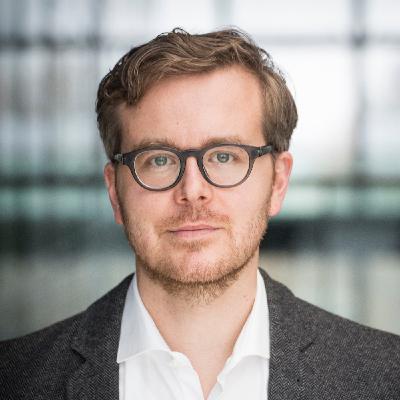
Frederik Obermaier on global crime & collaborative reporting, the demise of the 'lone wolf' investigative journalist, Panama Papers cocktails, writing that email to Vladimir Putin, and a thank you message to John/Jane Doe for the 11.5 million files contained in the Panama Papers.
The stories are global, crimes are global and journalism needs to be global: Frederik dishes on the complexities of working collaboratively with 400 journalists from 80 countries over a year to publish the Panama Papers.
Tax Havens + Investigative Journalism + Collaboration + Panama Papers + #DNL15
----more----
Frederik Obermaier
Investigative journalist, Süddeutsche Zeitung, DE
"It was a difficult process, to be honest. Our editor-in-chief (Wolfgang Krach) was a big fan of collaborations, so he encouraged us to share the data. It think he's a visionary in this aspect.
We also had colleagues who asked us:
'Frederik, Bastian are you stupid?
You're sharing a scoop!
Why should you?'
Sometimes they're in this old lonely wolf mindset, journalists, especially investigative journalists being the lonely wolf not sharing anything even with his outlet... always secretive, always hunting for the scoop.
These times are over in journalism. I think in investigative journalism, it's now the pack, the power of the pack. And it's only logical because crime is not limited to one country anymore.
We're speaking about transnational organised crime groups. So it's only logical to team up as journalists to tackle this problem, to uncover it. And I think we need more. We do see a lot of collaborations currently in journalism, and I think that's good. The more, the merrier!"
Frederik Obermaier is a Pulitzer-Prize winning investigative reporter for the Munich-based Süddeutsche Zeitung, Germany’s leading broadsheet. He is one of the two reporters first contacted by the anonymous source of the Panama Papers, the leaked documents that prompted a global investigation involving hundreds of journalists. He also initiated the Paradise Papers-revelations. Obermaier is a member of the International Consortium of Investigative Journalists, ICIJ.org.
Photo by Stefanie Preuin/SZ
If you have data, contact Frederik Obermaier using a secure channel & encrypted communication. Please note that unencrypted email, skype and phone calls are highly susceptible to being monitored or accessed.
Contact details on his website
Email encryption via PGP
Threema: FPN4FKZE
Documentary: The Panama Papers (2018), directed by Alex Winter (TRAILER)
“We’ve said it again and again: some stories are too big, too complex and too global for lone-wolf muckrakers or even individual news organisations to tackle. We believe collaboration is the wave of the future in global journalism. Pooling resources and sharing information is a powerful way to investigate and expose stories that politicians, corporations and organized criminals are determined to keep in the shadows.”
Gerard Ryle, Director ICIJ
Panama Papers wins Pulitzer Prize
How the Panama Papers were unwrapped
Reporting on The Panama Papers
Reporting on The Paradise Papers
The Panama Papers: Breaking the Story of How the Rich and Powerful Hide Their Money, by Bastian Obermayer & Frederik Obermaier. The inside story from the journalists who set the investigation in motion.
ICIJ Investigations: Panama Papers / Paradise Papers
ICIJ Offshore Leaks Database
OCCRP: Organized Crime & Corruption Reporting Project
Forbidden Stories: Network of Journalists
Twitter: @f_obermaier
PANAMA PAPERS:
How the Rich and Powerful Hide Their Money
WATCH VIDEO: DARK HAVENS KEYNOTE
Frederik Obermaier (Investigative Journalist, Süddeutsche Zeitung, DE). Moderated by Max Heywood (Transparency International Global Outreach and Advocacy Coordinator, UK/DE).
The Panama Papers began with a cryptic message from an anonymous whistleblower. “Hello, this is John Doe,” the source wrote. “Interested in data?” In the months that followed, the confidential source transferred emails, client data and scanned letters, from Mossack Fonseca, a notorious Panamanian law firm that has not only helped prime ministers, kings and presidents hide their money, but has also provided services to dictators, drug cartels, Mafia clans, fraudsters, weapons dealers, and regimes like North Korea or Iran.
After the revelation several heads of governments had to step down, thousands of investigations were launched, approximately one billion $ recouped. The Panama Papers proved that there is a whole parallel world offshore in which the rich and powerful enjoy the freedom to avoid not just taxes but all kinds of laws they find inconvenient.
In this Keynote, Süddeutsche Zeitung investigative journalist Frederik Obermaier reflects on the Panama Papers and their impact (arrests, changes in legislation etc.), as well as the crucial roles of whistleblowers and the need to protect them. In conversation with Max Heywood, the dialogue addresses what we learnt from The Panama Papers about political and economic power, what progress has been made against tax and dark havens, and how the Panama Papers have changed the way journalists think about and analyse tax havens.
DARK HAVENS
Confronting Hidden Money & Power
#DNL15 DARK HAVENS brings together people from around the world who have been part of global investigations and leaks, have blown the whistle on corporations, been put on trial, and who have taken severe personal risks to confront hidden money and power.
15th conference of the Disruption Network Lab. Curated by Tatiana Bazzichelli. In cooperation with Transparency International.
Disruption Network Lab: Dark Havens
Twitter: @disruptberlin
Thank you for tuning in, we hope you enjoyed listening as much as we did talking! Transit Lounge Radio is 100% independently produced, and ad-free. Your generous support, event invitations and sharing to community networks will help keep the conversation free-flowing!
Relax in the VIP Lounge
Hang out in the Transit Lounge on facebook
Reviews and stars on iTunes make us happy
Listen on the TLR YouTube Channel
Subscribe to TLR RSS Feed
Invite Transit Lounge Radio to record a series of conversations at your world changing event: signal at transitloungeradio dot net
#DNL15, Transparency, Panama Papers, investigative journalism, tax justice, offshore tax havens, disruption, network, Dark Havens, Disruption Network Lab, journalism, treasure islands, finance curse, offshore tour operator, Paradise Papers, Lux Leaks, whistleblower, UBS, ICIJ, OCCRP, Berlin, transit lounge, radio, podcast, conversation, Frederik Obermaier, Süddeutsche Zeitung

Comments

Download from Google Play

Download from App Store
 United States