


 Claim Ownership
Trinity Forum Conversations
Subscribed: 225Played: 8,809
Subscribe

© 2026 The Trinity Forum
Description
Trinity Forum Conversations is a podcast exploring the big questions in life by looking to the best of the Christian intellectual tradition and elevating the voices, both ancient and modern, who grapple with these questions and direct our hearts to the Author of the answers. We invite you to join us in one of the great joys of life: a conversation among friends on the things that matter most.
155 Episodes
Reverse
These days, the questions are coming at us fast. What distinctly human capacities deserve to be cultivated rather than outsourced to AI? How do our tools shape our habits, imagination, relationships, and finally our understanding of what it means to be human? Can a Christian idea of what it means to be human help us avoid either a Luddite aversion or dangerous techno-optimism?Michael Sacasas is the author of The Convivial Society, a popular Substack newsletter on the tech/human interface. In this episode he asks not only what new technologies can do for us, but what they are doing to us. This episode was recorded live in Nashville, at a Trinity Forum Evening Conversation in November 2026. Please subscribe, and learn more about the Trinity Forum, and how you can be part of its work as a member here!
From the nation’s founding to today, Americans have wrestled with the question: What role should faith play in a democratic society? Many have argued that we should keep faith and politics separate–that less religion in public life would lead to a more peaceful and unified democratic nation. Yet in reality, as religious practice has declined, our nation has grown increasingly polarized, anxious, and unstable. Can faith help us recover the trust and shared purpose that holds our diverse society together?Our guests in this episode, Matthew Kaemingk and Shadi Hamid, argue that it can. Across their differences in faith, they agree that secularism has deepened our divides. They make the case that there is a hopeful common ground to be found, and that the resources of faith can help us rebuild our commitment to democracy.This episode is drawn from an Online Conversation in 2026. You can view the video and other resources here!Go deeper into the issues discussed in this podcast with these Trinity Forum Readings:Sphere Sovereignty Abraham KuyperCity of God St Augustine of HippoLetter from Birmingham Jail Martin Luther King, Jr.Children of Light & the Children of Darkness Reinhold Niebuhr
What happens when the things we thought we knew no longer seem to hold? When the maps we’ve relied upon fail us, and even our best efforts to understand the world leave us feeling disoriented?For philosopher, author, and Trinity Forum friend James K. A. Smith, these questions became deeply personal during a season of suffering that challenged his confidence in the power of reason. In his recent book, Make Your Home in This Luminous Dark, Smith draws on the wisdom of Christian mystics. He explores how uncertainty, suffering, and even darkness might become unexpected pathways to wonder, wisdom, and a deeper awareness of God's love.In this conversation, Smith reflects on the limits of knowledge, the spiritual gifts of contemplation and modern art, and what ancient wisdom might teach us about navigating an anxious and divided age. You can find the video & other resources here.Go deeper into the issues discussed in this podcast with these Trinity Forum Readings:The Confessions of Saint Augustine (introduced by Smith)Revelations of Divine Love Julian of NorwichWrestling with God Simone WeilOn Happiness Thomas AquinasThe City of God Saint Augustine
The American Revolution took place against a backdrop of long religious conflict in both Europe and the colonies. Yet despite their personal flaws and their varied faith views, the Founders embraced the radical principle of freedom of conscience and religious expression, instilling it not only in our Constitution, but in the fabric of our society. What is the story behind this extraordinary development? And what does this legacy of religious pluralism mean for Christians in the much more complex America of 2026?As we celebrate America’s founding in this 250th anniversary year, we’ll discuss this story and what it means for us today with Trinity Forum Senior Fellow David French. As a longtime religious freedom litigator before becoming a New York Times columnist, he’ll guide us in considering the discussions during the founding, and their implications for today.As background for the conversation, check out our recent Trinity Forum Reading: George Washington and the First Freedom, featuring the first President’s powerful statements on freedom of conscience. This episode was recorded as a Trinity Forum Online Conversation in 2026. You can view the transcript and other resources here.Special thanks to Interfaith America for supporting this episode.
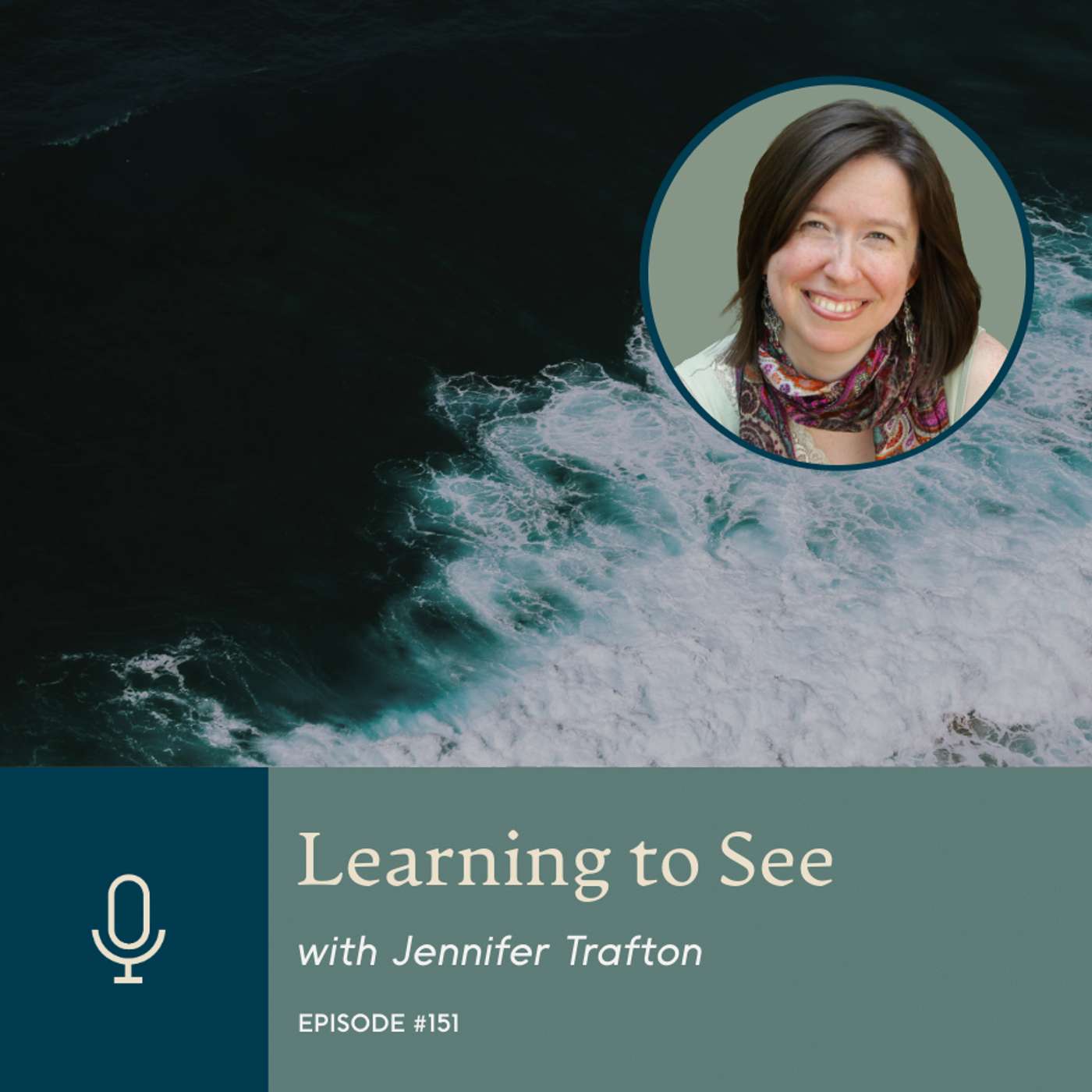
What does it mean to truly see? In a world that rewards speed, certainty, and quick judgment, the patient work of attention can feel almost countercultural. Yet learning to see clearly—to notice beauty, to attend to the people before us, and to look beyond our assumptions—may be essential to learning how to love well.The Victorian artist and missionary Lilias Trotter devoted her life to just this kind of attention. Though a gifted painter said she could become one of the greatest artists of her generation, Trotter instead chose a quieter and more hidden path. Author and artist Jennifer Trafton’s latest book, “If We Could Only See,” traces the remarkable life and legacy of Lillias Trotter. She joined Cherie for a conversation about what Lillias can teach us about seeing the world—and one another—with greater patience, humility, imagination, and love.This episode was also recorded in-person and the video will be available on our Youtube here!

Comments

Download from Google Play

Download from App Store
 United States