


 Claim Ownership
Type.Tune.Tint.
Subscribed: 5Played: 70
Subscribe

© 2026. Tom Kranz
Description
What is your hidden talent? Tom Kranz explores how everyday people discover art, writing, music, or other creative pursuits. Maybe your work life, personal obstacles, or sheer denial have gotten in the way. It's never too late to give yourself permission to be creative. Listen to these stories of discovery by all kinds of people.
118 Episodes
Reverse

A prison sentence didn’t end Josh Chaffin’s creative life—it became the setting for a years-long commitment to learning, writing, and building a body of work as a prison author. Under the pen name JL Chaffin, he joins this conversation through emailed responses, with his wife and creative partner, Vicki Lincoln, interviewed from Kansas City. Because prison rules prevented a recorded phone interview with Josh, his answers appear as on-screen text and an AI-synthesized voice. Vicki shares how she helps turn his handwritten scripts into finished digital work, and how Josh taught himself the craft while incarcerated.The conversation also explores The Andrew Jackson Defense, a screenplay that blends Josh’s personal story with the history of the seventh U.S. president—and earned third place in a screenwriting contest. The episode discusses accountability, education, creative partnership, and Josh and Vicki’s efforts to seek clemency.Watch the videoKey Topics[00:00:08] - Meet JL Chaffin and the unusual format of this interview[00:04:14] - Vicky Lincoln’s story and reconnecting with Josh[00:08:25] - The crime, its consequences, and Josh’s reflections on his victim[00:11:45] - How Josh began studying writing in prison[00:13:44] - Screenwriting, The Andrew Jackson Defense, and learning the craft[00:21:14] - Vicky’s role adapting handwritten scripts for publication[00:25:48] - Josh’s current goals, including learning Spanish[00:27:01] - Contest recognition and life inside prison[00:29:34] - Josh’s books, website, and the clemency processRelevant LinksJL Chaffin’s websiteFind JL Chaffin on AmazonWriteAPrisonerFinal Draft screenwriting softwareTakeawaysJosh’s story is one of sustained effort: he pursued education, studied writing, and continued developing his craft while serving a lengthy sentence. Vicky’s support has helped bring that work to readers, including The Andrew Jackson Defense and Would Jesus Do Time?The episode also holds space for the lasting impact of serious harm and for the work of taking responsibility. Josh and Vicky’s clemency application is still in progress, with the outcome—and the future—uncertain.
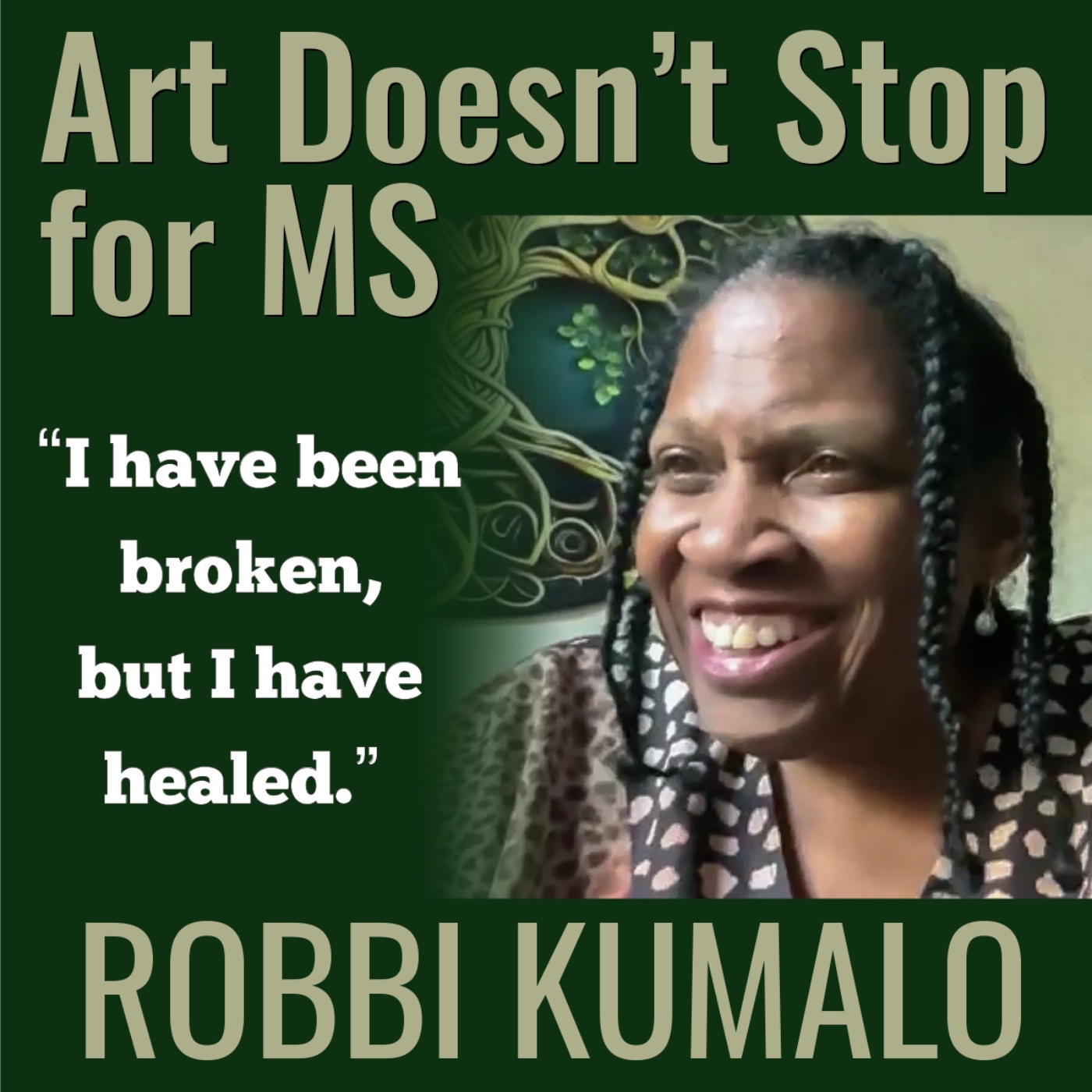
Robbi Kumalo’s life in music took her from school assemblies and New York recording studios to performing alongside legendary artists—and through a life-changing multiple sclerosis diagnosis. In conversation with host Tom Kranz, she reflects on adapting to illness, rebuilding after homelessness, and finding new ways to create and connect.Kumalo shares stories from her career as a singer, storyteller, voice artist, and children’s performer, including how she came to work with Paul Simon’s production company and meet her husband, bassist Bakhiti Kumalo. She also talks about singing with artists such as Aretha Franklin, Diana Ross, and Chaka Khan, and contributing a song to the Grammy-nominated children’s album All One Tribe.The conversation turns to her 2014 MS diagnosis and the months she spent in a Bronx homeless shelter. Kumalo describes the creative work she’s pursuing now—including her podcast, a children’s book about chronic illness, and a film—and offers a hopeful perspective on reinvention without sugarcoating the challenges.WATCH THE VIDEOKey Topics[00:00:09] - Robbi Kumalo’s music career and life after an MS diagnosis[00:03:58] - Multiple Superbness, creativity, and adapting to new technology[00:07:23] - Growing up on Long Island and finding her way into performing[00:09:19] - Touring school assemblies and developing as a children’s artist[00:13:24] - Working with Spike Lee and Paul Simon’s production company[00:17:30] - Marriage to bassist Baghiti Kumalo and life around touring[00:20:01] - Singing with major artists and building a music career[00:24:19] - “Set It Free” and the All One Tribe children’s album[00:27:04] - MS, homelessness, and finding support[00:32:33] - Current creative projects and a message of resilienceRelevant LinksRobbi Kumalo’s website: https://robbikumalo.com/Married to a Rockstar — Amazon search: https://www.amazon.com/s?k=Married+to+a+Rockstar+Robbi+KumaloAPAP (Association of Performing Arts Professionals): https://apapnyc.org/National Multiple Sclerosis Society: https://www.nationalmssociety.org/Kumalo’s story is a reminder that a changed life can still hold new work, new community, and new purpose. Her path through MS is deeply personal; for medical information and support, consult qualified healthcare professionals and trusted MS organizations.

Teresa Magistro shares the remarkable immigrant story of her mother, Antonetta Vincatorio Lombardi—a woman who crossed from poverty in Italy to build a life and raise a family in America. Their conversation explores Italian American history, family traditions, and the stories that can disappear if no one writes them down.At 81, Teresa published her first book, Antonetta: An Immigrant's Story, after years of telling her mother’s stories to her grandchildren. She reflects on the experiences that shaped Antonetta’s values: arriving in the United States without knowing English, discovering everyday comforts like running water, and insisting that her children value education, hard work, and independence.The episode also reveals Antonetta’s unexpected six-second moment of fame in a 1964 Rheingold beer commercial, her evolving views on women’s roles, and her open, faith-centered approach to death and remembrance.Watch the videoKey Topics[00:01:17] - Teresa’s path from teaching to writing her first book[00:09:11] - Why family stories need to be written down[00:15:16] - Antonetta’s childhood in Italy and journey to America[00:18:03] - Starting over without English—and appreciating life’s everyday comforts[00:23:40] - Immigration, education, hard work, and family values[00:27:00] - Antonetta’s changing views on women’s independence[00:29:21] - The story behind Antonetta’s Rheingold beer commercial appearance[00:37:04] - Family, faith, and Antonetta’s perspective on death[00:44:00] - Where to find Teresa’s book and what she may write nextRelevant LinksFind Antoinette: An Immigrant Story on AmazonCasa Belvedere, the Italian Cultural FoundationThe City College of New YorkTeresa’s conversation is a warm reminder that immigrant stories are also family histories—and that preserving them can help future generations understand the sacrifices, hopes, and values that shaped their lives. Antonetta’s story offers a personal glimpse into the contributions of Italian immigrants and the many ways a family’s legacy lives on.

The idea of cloning humans, still a scientific fantasy, makes for intriguing stories that lead us to examine ourselves. How would you feel if you woke up one day as a clone, then discovered your real self was a bad person? Or, you discover your real self is dead, and you’ve been cloned, but at a massive cost that you will never be able to repay?Author Jeffrey Ashkin’s adventures in cloning take a darker turn in his new novel, The Second World of Sendel, a follow-up to his first novel, The Second Life of Jonathan Sendel. In each story, the protagonist is a clone of a man who died. The clone discovers his creation comes with major strings attached. In the new book, Steven Sendel learns that becoming a clone cost a fortune he must now repay by being conscripted to a lunar mining colony.“He’s in debt, so he’s alive. But in debt,” says Jeff. “So, because of that, he wants to figure out who put him in the situation and also how to get out of it and reunite with his loved ones.”To repay the debt, Sendel must work on the Moon mining Helium-3. More and more debt piles up, into millions of dollars, a burden shared by fellow miners. He decides to try to return to Earth to discover who signed him up for this arrangement, and the adventure ensues.The author’s fascination with cloning grabs you from the start and propels you through the story. Here’s our conversation.WATCH THE VIDEO

It's possible, even probable, that no one has the depth of knowledge about rock 'n' roll history that Richie Unterberger has. His 40+ year career, starting as a DJ in college to writing 15 books, countless reviews and articles, has focused on the music of the 60s and 70s. This episode focuses on his new books about the Velvet Underground and The Who and looks back at how rock music has changed over the decades.As a DJ at the University of Pennsylvania’s FM station, WXPN, Richie Unterberger delved into the roots of rock and folk music. It became his passion.“I can play guitar and piano, but not very well,” he admits. “I realized pretty early on my main strength was going to be as a writer.”That’s an understatement, looking at his body of work–fifteen books, countless magazine articles, reviews, commentaries and lectures over a career spanning more than 40 years. Throw out the name of a musician or band from the 60s, 70s and beyond, and Richie’s encyclopedic mind will recall chapter and verse–The Beatles, The Rolling Stones, The Who, Janis Joplin, Elvis Presley, Jimi Hendrix, The Byrds–are just some of the artists he’s written and lectured about. You can find it all at richieunterberger.com.His latest book, Do What You Fear Most: The History of the Velvet Underground, is an 800-page epic that covers every detail of the group’s members, including leader Lou Reed, the origins of their songs, the labels, the sound engineers, their association with Andy Warhol, and more. Even if you were never a fan, you might become one by immersing yourself in Richie’s book.“Because I’ve been a fan [of the Velvet Underground] since 1979, I already accumulated a lot of the basic research. I wasn’t starting from scratch. I was reading as much as I could about them. So, I dug through microfilm and collections of vintage magazines. I did a lot of things simultaneously. It’s not hard to find the four principal studio albums and the two live albums that came out, but there’s a lot of unreleased material that really illuminates the group.”Also released this spring is an e-book version of Won’t Get Fooled Again: The Who from Lifehouse to Quadrophenia. Picking up after the success of the rock opera “Tommy”, this is the story of band leader Pete Townshend’s quest to create another rock opera, “Lifehouse”, and the complications that prevented it from ever being created, and then the success of “Quadrophenia,” which benefited from a much simpler concept.I was absolutely privileged to speak with Richie, who I consider one of the greatest rock historians of our time, in this edition of Type. Tune. Tint. Watch or listen now!WATCH THE VIDEO VERSION

Comments

Download from Google Play

Download from App Store
 United States