


 Claim Ownership
UNICEF
Subscribed: 9Played: 40
Subscribe

Description
UNICEF engages in thought-provoking deep dialogue on the changing face of childhood.
32 Episodes
Reverse

Join Kristy Crabtree (International Rescue Committee) and Virginia Zuco (UNICEF) as they discuss the newly available resource, the GBVIMS+ Case Management Companion Guide. This new, holistic guidance complements the GBVIMS+ and explicitly links GBV case management and information management as it builds upon the Interagency GBV Case Management Guidelines. Designed to accompany the GBVIMS+ User Guide, this resource highlights the functionalities in GBVIMS+ that facilitate GBV case management service provision, supervision, and monitoring the quality of GBV case management services. This episode is cross-posted on the IRC’s Women's Protection and Empowerment Podcast and the GBVIMS Podcast. Related resources: GBVIMS+ GBV Case Management Companion Guide: https://www.gbvims.com/primero/the-primero-gbvims-case-management-companion-guide/ For more information on Primero/GBVIMS+: https://www.gbvims.com/primero/ For more podcasts on GBVIMS and GBVIMS+ visit https://www.gbvims.com/learn-more/podcast/

Despite widespread violence along the migration routes to Europe, migrant and refugee survivors of violence still face significant obstacles in accessing support services once in Europe. This is due to poor referral networks, lack of information, and complicated systems of care. The limited number of linguistic and cultural mediators (LCM) and interpreters trained in how to support survivors is also a key barrier. LCMs provide interpretation but also share information, offer support, and help refugees and migrants connect to services. That is why the Women’s Refugee Commission (WRC) and UNICEF developed this training curriculum, which aims to equip LCMs with the foundational knowledge they need to support survivors according to their role. In this episode, mediators and experts explain more about the role of LCMs and how the curriculum has helped to provide better support to survivors. Related resources: Training Curriculum Supporting survivors of violence: Helping cultural mediators to respond to refugees and migrants who have experienced violence Overview of the sub-regional program in Europe ‘Action Against Gender-Based Violence (GBV) Affecting Refugee and Migrant Women and Children in Greece, Italy, Serbia and Bulgaria’ implemented with the generous contribution from the Government of the United States

In the last 20 years, successive SEA scandals have made media headlines: revelations that peacekeepers in Bosnia were involved in sex trafficking were followed by reports of aid workers raping or engaging in transactional sex in refugee camps in West Africa, which were in turn followed by scandals in Haiti, Liberia, and most recently, the Central African Republic. SEA is a form of GBV experienced by survivors. We need to ensure that reporting SEA accounts for the survivor-centered approach that governs GBV response services and that the burden of proof is not unreasonably placed on survivors. In this episode, two of UNICEF’s experts on SEA and GBV, Lorenza Trulli and Sunita Palekar Joergensen tell us more about how SEA and GBV service provision are integral parts of the same puzzle, how to place survivors are the center of the protection against SEA. Related resources: IASC Six Core principles UN Secretary General Bulletin on Special measures for protection from sexual exploitation and sexual abuse GBV Guidelines, PSEA and GBV: Key Messages UNICEF PSEA Assessment and PSEA Toolkit on PSEA for CSO partners

As part of the 16 days of activism against GBV, in this episode we chose to showcase what UNICEF country offices have been doing in responding to the surge in GBV risks during the COVID-19 pandemic. In this episode, we hear from Jolanda Van Westering from Zimbabwe office, Antigoni Angelaki and Galit Wolfensohn from Greece office, Sheeraz Almukhaimer from Jordan office, Faye Alma Balanon from the Philippines office and Estelle-Emile Dade from Yemen office. Related resources: 'The World Anew’, e-book on generate awareness and dialogue among young people about how to prevent and combat gender-based violence in Greece UNICEF Philippines Country office account with #talaarawan (diary) where kids uploaded how they are doing during lockdown SafeKidsPH is a consortium led by UNICEF addressing Online sexual abuse and exploitation in the Philippines Article on the Philippine Red Cross-UNICEF partnership

This episode features VOICE’s founder, Mendy Marsh and her team, Kelly Joseph and Chiderah Monde who will discuss alongside Christine Heckman from the partnership between UNICEF and VOICE. VOICE is a global organization with plans to unapologetically create a world where women and girls no longer face discrimination and violence. Where they are respected leaders of humanitarian responses. Related resources: VOICE website VOICE's COVID-19 Response Strategy VOICE's statement on the COVID-19 Response

In this episode, Caroline Masboungi interviews Merheen Jaswal from IRC and Dorcas Erskine from UNICEF. They talk about the impact of COVID-19 pandemic on adolescent girls and how their safety towards GBV has been affected. Early evidence indicates that COVID-19 pandemic has increased risks of adolescent girls towards GBV. Studies of past disease outbreaks and other humanitarian crisis have shown that without targeted intervention, COVID-19 will heighten pre-existing risks of GBV against girls, hinder their social, economic and educational development and threaten their sexual reproductive health. Related resources: Briefing note on COVID-19 – GBV risks to adolescent girls and interventions to protect and empower them Technical Guidance Note on Women and girls safe spaces for COVID-19 UNICEF (2020) Practical tips on engaging Adolescents and Youth in the COVID-19 response [Online] [Accessed July 2020] Girl Shine Safeguarding considerations for keeping in contact with girls during Covid WPE Podcast on responding to women and girls during COVID-19

In this 5th episode of the UNICEF GBViE podcast, Sunita Palekar Joergensen and Zaman Ali Hassan from UNICEF MENA and UNICEF Lebanon are presenting the Virtual Safe Spaces project that UNICEF has been leading on since couple of years. In GBV programming, safe spaces for women and girls have been established as a key approach of reaching adolescent girls and providing them with access to Sexual and Reproductive Health (SHR) information, links to services, skill-building, peer connection, and support. Yet, access to physical safe spaces is often limited for adolescent girls because of security concerns, gender norms, and domestic responsibilities. UNICEF has been developing a platform to act as a virtual safe space for adolescent girls to access gender-based violence information. The virtual safe space model is designed to facilitate access to information and services in a way that is safe, culturally appropriate and accessible to adolescent girls, particularly those who face higher levels of marginalization, such as girls with disabilities and married girls. This episode is part of the Innovation series of the podcast.

In this 4th episode of the UNICEF GBViE podcast, Caroline Masboungi and Elfriede Kormawa from UNICEF discuss with Ayesha Siddiqa Ireen from Relief International in Bangladesh about the use of Primero/GBVIMS+ in the context of the response to COVID-19 pandemic. Primero/GBVIMS+ enables services providers responding to GBV to safely and ethically document information from their service provision. This allows them to stay on track with where they are at in terms of the service provision as well as ensuring accountability towards GBV survivors to remember to follow up on referrals made and action plans developed with the survivor. Related resources: GBVIMS Remote Case management series for COVID-19 Guidance note on GBVIMS, GBVIMS+ in the context of COVID-19 pandemic Primero/GBVIMS+ introduction video

In this 3rd episode of our UNICEF GBViE podcast, Catherine Poulton from UNICEF and Joy Anderson from Criterion Institute talk about how financial systems can help addressing GBV, looking more specifically at mitigating the impact of COVID-19 pandemic. Finance is one of the most powerful systems on earth, and investment decisions about private and public funds are based on an analysis of risk and return over time. UNICEF and Criterion Institute have been exploring pathways to engage systems of finance in addressing GBV in crises, on how GBV can be understood as material to investment decision-making, including several actions investors can implement now. Criterion Institute and UNICEF have partnered and recently creates a due diligence tool for investors to identify and mitigate the investment risks gender-based violence poses. This was done in response to addressing adverse impacts of the COVID-19 pandemic on women and girls. Resources linked to the podcast: Article: Recovery investing to reimagine the GBV pandemic UNICEF Blog: Flattening the curve: Finance and the pandemic of GBV Report: The material risks of gender-based violence in emergency settings

In this episode of the UNICEF GBViE podcast, Caroline Masboungi is discussing with Masumi Yamashina who works as a CP specialist with UNICEF and has been leading GBV risk mitigation across UNICEF-led clusters including Global WASH cluster since 2017. They are talking about how to mitigate risk of GBV and address needs of women and girls in WASH programming in the context of the COVID-19 pandemic. Armed conflict, natural disasters and other humanitarian emergencies can significantly alter a community’s traditional water, sanitation and hygiene (WASH) practices. During an emergency, well-designed WASH programmes and facilities can help to keep affected populations safe from violence. Conversely, WASH programming that is poorly planned and insensitive to gender dynamics in a given social and cultural context can exacerbate risk of exposure to sexual and other forms of gender-based violence (GBV). This is particularly true for women, girls and other at-risk groups,1 who may be disproportionately affected by WASH issues. In the context of the COVID-19 pandemic, these needs and risks are exacerbated. This episode looks further into how the pandemic affects the needs of women and girls linked to WASH programming and what can be done to mitigate these risks. Available resources mentioned on the podcast: Video on GBV risk mitigation in WASH for COVID-19 pandemic UNICEF, Managing the impact of COVID-19 on menstrual health and hygiene Period don’t stop for pandemics – What COVID-19 means for MHH Integrating Menstrual Hygiene Management into Humanitarian Response toolkit UNICEF, Guide on Menstrual Health and Hygiene GWC resource center – Gender or Vulnerable population GBV Guidelines COVID-19 resource page UNICEF EAPRO Guidance for Gender Integration in the COVID-19 WASH Response MHM day website Period tracker app COVID-19 Course on Integrating Gender Based Violence Risk Mitigation

In this 1st episode of the UNICEF GBViE podcast series, Caroline Masboungi interviews Dorcas Erskine, Senior consultant with UNICEF GBViE team. They talk about how the COVID-19 pandemic affects GBV response services and the capacity of women and girls to reach out for help. As countries across the globe struggle to manage the COVID-19 pandemic, concerns are being raised about the effect of the pandemic on Gender Based Violence (GBV) in all countries affected by the COVID-19 pandemic. Dorcas has also drafted a guidance note on GBV service provision during COVID-19 beyond hotlines and mobile phones. Paper on GBV service provision for COVID-19 beyond hotlines and mobile phones GBV Case Management and COVID-19 GBVIMS series on remote case management for COVID-19 COVID-19: GBV risks to adolescent girls and interventions to protect and empower them
UNICEF's 10-part special podcast series on "The Future of Childhood" - to mark the 30th anniversary of the Convention on the Rights of the Child. In this episode, Sarah Crowe, speaks to Lawrence Aber on child development Professor Aber, an internationally recognized scholar for his research on children and poverty, joined the Steinhardt faculty as Professor of Applied Psychology and Public Policy in 2004. His work, which centers on social, emotional, motivational, and behavioral development of high-risk children and youth, integrates basic and applied research with public policy. Aber has examined the effects of family and neighborhood poverty, exposure to violence, abuse and neglect, and parental psychopathology on child and youth development.
UNICEF's 10-part special podcast series on "The Future of Childhood" - to mark the 30th anniversary of the Convention on the Rights of the Child. In this episode, Sarah Crowe, speaks to Amanda Third talks on indigenous communities online. Associate Professor Amanda Third is Principal Research Fellow in Digital Social and Cultural Research in the Institute for Culture and Society. Her research focuses on the socio-cultural dimensions of young people's technology use, with particular emphases on children's rights in the digital age, the intergenerational dynamics shaping technology practice, and vulnerable young people's technological engagements.
UNICEF's 10-part special podcast series on "The Future of Childhood" - to mark the 30th anniversary of the Convention on the Rights of the Child. In this episode, Sarah Crowe, speaks to Dr. Perri Klass on pediatrics. Perri Klass, MD has been writing as a medical journalist dating back to her years as a student at Harvard Medical School in the 1980s, when she published a series of essays, reflections on medical training, in the Hers column of The New York Times. Since that time she has published her medical journalism in many newspapers and magazines, including The New York Times Science Section, The New York Times Magazine, Washington Post, Boston Globe, The New England Journal of Medicine, Esquire, Parenting, and Vogue.
UNICEF's 10-part special podcast series on "The Future of Childhood" - to mark the 30th anniversary of the Convention on the Rights of the Child. In this episode, Sarah Crowe, speaks to Gerd Leonhard on children’s neuroscience. Listed as one of the top 100 most influential people in Europe Gerd's Leonhard work focusses on the future of humanity and technology, digital ethics, artificial intelligence, future-leadership and communications. In his keynotes, presentations, workshops and advisory sessions Gerd addresses topics such as the what it means to be human in a world of machines and algorithms, the coming redefinition of human-machine relationships, the future of work and jobs and many more.
UNICEF's 10-part special podcast series on "The Future of Childhood" - to mark the 30th anniversary of the Convention on the Rights of the Child. In this episode, Sarah Crowe, speaks to Larry Wolff on the history of childhood. Professor Wolff works on the history of Eastern Europe, the Habsburg Monarchy, the Enlightenment, and on the history of childhood. He tends to work as an intellectual and cultural historian. He has been most interested in problems concerning East and West within Europe: whether concerning the Vatican and Poland, Venice and the Slavs, or Vienna and Galicia.
UNICEF's 10-part special podcast series on "The Future of Childhood" - to mark the 30th anniversary of the Convention on the Rights of the Child. In this episode, Sarah Crowe, speaks to Kumi Naidoo on the environment and human rights. Kumi Naidoo is a life-long social justice and environmental campaigner hailing from South Africa. Born in Durban in 1965, Kumi’s first taste of activism came at age 15 when he organised and took part in an anti-apartheid protest that saw him expelled from his school.
UNICEF's 10-part special podcast series on "The Future of Childhood" - to mark the 30th anniversary of the Convention on the Rights of the Child. In this episode, Sarah Crowe, speaks to Gerison Lansdown on the Convention on the Rights of the Child. Gerison Lansdown is the founder director, 1992-2000, of the Children's RightsAlliance for England, and, over the past 16 years, has worked as an international children's rights consultant and advocate publishing and lecturing widely on the subject of children's rights.
UNICEF's 10-part special podcast series on "The Future of Childhood" - to mark the 30th anniversary of the Convention on the Rights of the Child. In this episode, Sarah Crowe, speaks to Oxford University Professor of Globalisation and Development Ian Goldin on a new children’s renaissance. Professor Ian Goldin was the founding Director of the Oxford Martin School from September 2006 to September 2016. He is currently Oxford University Professor of Globalisation and Development, Senior Fellow at the Oxford Martin School, Director of the Oxford Martin Programme on Technological and Economic Change and a Professorial Fellow at the University’s Balliol College.
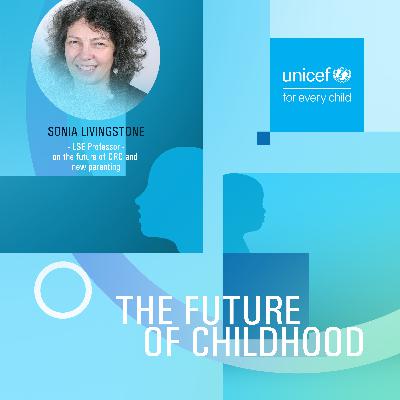
UNICEF's 10-part special podcast series on "The Future of Childhood" - to mark the 30th anniversary of the Convention on the Rights of the Child. In this episode, Sarah Crowe, speaks to Sonia Livingston, Professor of Social Psychology in the Department of Media and Communications at LSE, on the future of CRC and new parenting.

Comments

Download from Google Play

Download from App Store
 United States