


 Claim Ownership
UNICEF
Subscribed: 26Played: 135
Subscribe

© All rights reserved
Description
UNICEF saves children’s lives, defends their rights, and helps them fulfill their potential. We never give up. #ForEveryChild
523 Episodes
Reverse
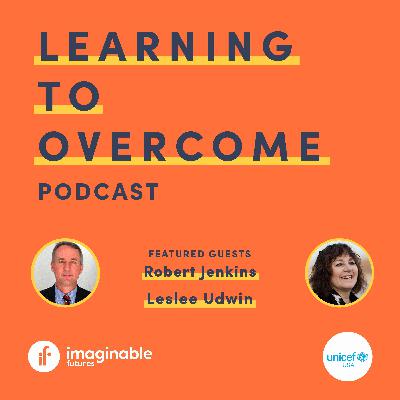
We’re joined by Robert Jenkins, Chief of Education at the United Nations Children’s Fund (UNICEF), and Leslee Udwin, Founder and CEO of Think Equal, to discuss how we can support students’ mental well-being and nurture social emotional development during this global pandemic.
Students around the world are facing increased mental health challenges as they continue to deal with isolation related to the lack of structure, routine and connection to community, as well as the stress of the economic fallout of COVID-19 felt by households everywhere. While many educators are focusing on getting the academics right with online learning, equally important is social-emotional learning across all age groups.
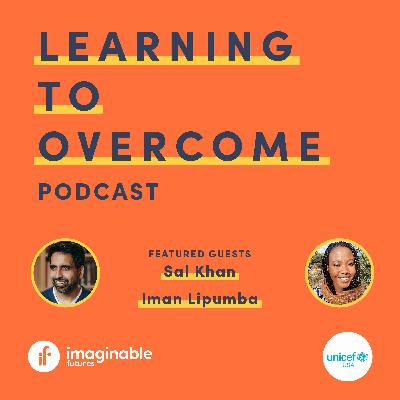
We speak with Sal Khan, Founder and CEO of Khan Academy, and Iman Lipumba, Head of Marketing and Communications at Ubongo, who share their thoughts on how to facilitate learning opportunities across borders, and what anytime and anyplace learning looks like.
As learning across the world relies more and more on access to expensive devices and internet connectivity, the education divide deepens. Global, large-scale efforts to use technology in support of remote learning and distance education are emerging and evolving quickly. During COVID-19 and beyond, it is essential to leverage technology that will enable high quality, flexible learning pathways that place equity at its core.
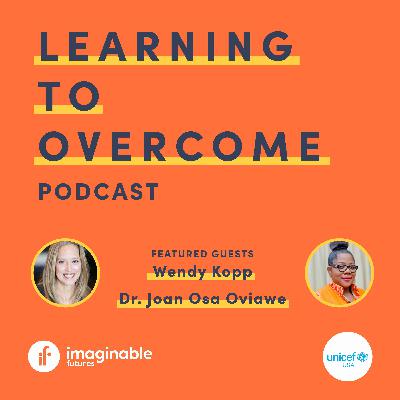
We share a conversation with Wendy Kopp, CEO and Co-founder of Teach For All, and Dr. Joan Osa Oviawe, from EdoBEST in Nigeria, about their experiences and ideas on how best to manage and ensure at-scale education response and recovery interventions. Educators, leaders, and parents globally have the responsibility of what seems like an impossible task: To replicate the functions of school for months without a physical classroom or playground. The importance of local leadership from educators as well as innovation around learning with a focus on equity is paramount. In this episode, we talk to two education leaders who about their experience and ideas on how best to manage and ensure at-scale education response and recovery interventions.
Amanda Third- Western Sydney University- On Indigenous communities online by UNICEF
Dr. Perri Klass- NYU Professor- On pediatrics by UNICEF
Gerd Leonhard- Futurist humanist- On children's neuroscience by UNICEF
Larry Wolff- NYU Professor- History of childhood by UNICEF
Kumi Naidoo- SG Amnesty International- On environment and human rights by UNICEF
Kumi Naidoo- SG Amnesty International- On environment and human rights by UNICEF
Gerison Lansdown- Rights Expert- On politics and the CRC by UNICEF
Ian Goldin- Oxford Professor- On a new children's renaissance by UNICEF
Dr. Vikram Patel- Harvard University- On children's mental health by UNICEF
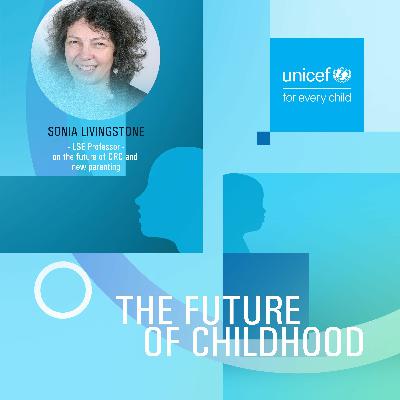
Sonia Livingstone- LSE Professor- On digital parenting by UNICEF
Indonesia Communications Specialist Lely Djuhari discusses the earthquake in West Sumatra.
Youth delegates from the Children's Climate Forum outline the many issues their countries are facing in relation to climate change.
A youth from Monrovia, Liberia, wants to be an engineer but can’t afford the university fees.
UNICEF podcast moderator Kathryn Herzog speaks with UNICEF Ambassador and NBA player Pau Gasol about the importance of early education.
Podcast moderator Femi Oke speaks with child development specialist Cassie Landers and Evelyn Margron, of Haitian Foundation Tipa Tipa, about integrating innovative playgrounds into Haitian schools.
UNICEF podcast moderator Femi Oke speaks with UNICEF’s Principal Adviser, Gender Rights and Civic Engagement, Dr. Anju Malhotra, on the role of education in ending child marriage and enabling girls to reach their full potential.
Podcast moderator Rachel Bonham Carter talks to Grand Chief Edward John, Gabriele Papa and Krysta Williams about the right of indigenous peoples to education that is appropriate to their cultural methods of teaching and learning.

Comments

Download from Google Play

Download from App Store
 United States