Discover
UX Banter
UX Banter
Author: Galaxy UX Studio
Subscribed: 10Played: 11Subscribe
Share
© 2026 Galaxy UX Studio
Description
UX Banter is a candid, conversational podcast where UX leader and author Dushyant Kanungo explores the real stories behind design, product thinking, and digital innovation. Each episode features unfiltered banter with designers, product leaders, and technologists from around the world, unpacking how they navigate careers, ship complex products, and build ethical, evidence-based experiences for real users.
68 Episodes
Reverse
In this special crossover episode, we’re joined by AJ Bubb, host of the podcast Facing Disruptions, for an unscripted, high-energy conversation that flips the format. Instead of a traditional interview, this episode brings two hosts together for an authentic exchange on UX, product thinking, and the evolving role of designers. From hybrid roles and AI disruption to building high-performing teams and breaking silos, this episode dives into what it really takes to stay relevant in today’s fast-changing landscape. Discussion Points Tell us about your Journey. (AJ to Dushyant) 2:24 How do you design with empathy when you’re not at the edge, close to the user? (AJ to Dushyant) 6:42 How do you build teams that handle pressure and solve the right problems, not just deliver solutions? (Dushyant to AJ) 20:08 What does the future of high-performing teams look like? (Dushyant to AJ) 26:35 As new tech reshapes the rules, has it actually made your work better, especially on products like your podcast app? (Dushyant to AJ) 40:11 AI went from doing the work to supporting thinking. What changed, and what does that mean for the future? (Dushyant to AJ) 44:30 With AI speeding up product builds, are clients now expecting working products instead of just wireframes? (AJ to Dushyant) 59:50 Show Notes ~ You can't just give one screen and say, can you please beautify it? You are not going to get the output. - Dushyant Kanungo ~ You're hiring to solve the problem, not for the solution. You need people who can think about the problem. - AJ Bubb ~ You need to give them that levy, the time to breathe, think, and do their best. — Dushyant Kanungo ~ We now get more time to think about the strategy part of UX than we ever had before. - Dushyant Kanungo ~ If you're an engineer and you think you're being paid to code — you don't know what your job is. - AJ Bubb ~ A dream without a plan is just wishful thinking. You are not going to win the lottery without buying the ticket. - Dushyant Kanungo AJ’s LinkedIn: https://www.linkedin.com/in/ajbubb/ His Podcast: https://www.youtube.com/@FacingDisruption #DesignLeadership #UXDesign #AIandUX #ProductThinking #Podcast
In this episode we are joined by Luis Berumen, Executive Director of Calgary UX. He brings deep experience working across enterprise platforms, government initiatives, and grassroots communities. He is passionate about shaping meaningful product direction, championing inclusive and accessible design, and mentoring the next generation of designers while actively contributing to the global design community. Discussion Points - Share your story, what experiences shaped you into who you are today? 2:00 How did your professional journey evolve from your early roles to where you are today? 6:26 How has growing up across different cultures and languages shaped the way you approach design? 15:02 You’ve built a strong UX community in Calgary through meetups, conferences, and mentorship. What drives you to invest in this, and what does mentorship mean to you when it comes to giving back? 25:13 What advice would you give to someone from a country under construction who wants to build an international design career? 35:51 Show notes - If you always feel like you're fighting your environment, the means of the environment is wrong, not you. If what you love dies with you, then you never really loved it enough. You have to share it. You need to know that you can do it. As soon as you are in the room with creative people and you participate, you will be at the level. It doesn't matter where you're coming from. If you're going to migrate, you're going to experience rejection and loneliness. But that shouldn't define you. It's just one way to build resilience and keep going. Humour in UX is not just about being funny. If it's functional for the goal, like recovering from an error, then it's welcome. Otherwise it just humiliates the user when they're already down. People have three different feelings at the same time, influenced by so many things that are not just your application. You need to dig deeper into how people feel and keep understanding the human heart. Luis’s LinkedIn - https://www.linkedin.com/in/luisberumen/
In this episode, we’re joined by Bryan Dávila, Design Director at Hook Studios and a creative leader known for shaping award-winning digital experiences for global brands. With experience spanning top agencies and iconic organizations, including being one of the key designers at Apple, he brings a thoughtful perspective on design direction, branding, and creative leadership. He’s also deeply involved in industry juries and creative forums, where he continues to influence and mentor the design community. Discussion Point - Take us through your journey from Ecuador to Silicon Valley and how you got to where you are today. 3:16 You started in print and physical design before moving to digital. How has that shaped the way you approach design compared to those who started natively in digital? 10:46 As a design leader, how do you guide your team through the constantly shifting landscape of AI and new tools? 14:15 Rapid fire round 16:14 Tell us about the Google Language Inclusion and Language Explorer projects and what drove you to work on them. 34:32 You have worked both in-house at Apple and at an agency working with Google. What is the key difference between those two worlds? 42:09 What advice would you give to someone who wants to get a job at a company like Apple? 49:23 Show notes - Discipline counts double than talent. Talent might get you noticed early, but discipline is what compounds over time. Good design doesn't happen solo. Leading a design team is mostly about creating the right environment for smart and thoughtful work to come to life and thrive. The work I'm most proud of isn't just the work that wins awards. It's the work that actually helps someone understand, feel and act with less friction. Design used to be seen as decoration. Now it's infrastructure. It shapes how people learn, communicate and make decisions and that's a huge shift in responsibility. The medium has changed but the perception hasn't. Good design still starts with people, not platforms. It's not necessarily something that looks good, but something that truly impacts the world. That is what makes the work meaningful. Bryan’s LinkedIn: https://www.linkedin.com/in/davilabryan/ Explore the Google Language Inclusion initiative: https://sites.research.google/languages/
In this episode, we are joined by Kevin Forister, Creative Director at Flywheel and a seasoned creative leader with deep experience across ideation, concept development, and team leadership. His work has earned multiple national awards and global recognition. Beyond client work, Kevin is passionate about mentoring creatives and shares practical insights through his book Breaking Into Art Direction and his YouTube channel, Open Door Creative. Discussion Points ~ How did your journey start, and what led you to become a Creative Director? 1:35 ~ What does the role of a Creative Director actually entail, and how do you manage a team of creatives? 5:16 ~ How do you balance working within brand guidelines while still pushing creative boundaries? 9:03 ~ How is AI changing the creative industry, and what is your take on the fear and imposter syndrome around it? 22:51 ~ Tell us about your YouTube channel, Open Door Creative, and what drove you to create it? 34:44 ~ Tell us about your book, Breaking Into Art Direction, and what can readers expect from it? 37:16 Show notes ~ Design doesn’t exist only on screens or inside tools. It’s shaped by how much you pay attention to the world, the conversations you listen to, and the ideas you allow yourself to explore outside of your immediate work. ~ A lot of what I know didn’t come from formal training. It came from listening, observing, and staying curious about things that didn’t seem directly related to design at the time. ~ Leadership isn’t about having all the answers. It’s about creating space for better questions, better conversations, and letting people grow into their own strengths. ~ You never really stop learning in this field. We’re all still figuring things out, making assumptions, testing ideas, and adjusting as the world keeps changing. ~ Curiosity is one of the most underrated skills in design. The more curious you stay, the more perspectives you collect — and that always shows up in your work. ~ What excites me most is seeing people take what they’ve heard, make their own assumptions, and form their own point of view. That’s where real creative confidence begins. Kevin’s LinkedIn: https://www.linkedin.com/in/kevinforister/ His YouTube Channel: https://www.youtube.com/@OpenDoorCreative
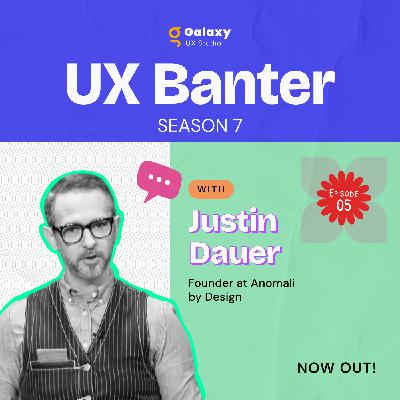
In this episode, we are joined by Justin, a designer, author, and speaker who focuses deeply on the human side of design. Justin has spent years exploring how culture, values, and craft shape the way designers build products and teams, helping creatives think beyond tools and trends to create more meaningful work. He’s also the author of Creative Culture and In Fulfillment: The Designer’s Journey, where he shares reflections on growth, humility, and lifelong learning in design. Discussion Points - What was your journey from deciding to become a designer to building your own studio? 2:11 Has your perspective on agency work evolved over time, or is it what you originally envisioned? 5:28 How do you balance your day job with personal creative pursuits without feeling like you’re missing out on other opportunities? 14:53 How has your workflow evolved from traditional tools to today’s AI-driven design processes? 24:18 When choosing new projects, do you prefer working with specific types of clients or project sizes? 27:53 What advice would you give your younger self, and do you think it still holds true today? 30:06 Show notes - Designers need to think beyond tools and trends if they want to create work that truly matters. People are engaging with our experiences in real, imperfect environments, and that responsibility should guide how we design. Design is a profession, but for many of us, it’s also a passion and a calling. Early success can be dangerous if you’re not prepared for it. Ego can quietly hurt the work. Leveraging humility while still respecting your expertise is one of the most important lessons in a design career. Never stop learning. Never stop being a student of your craft—this advice will always be relevant. Justin’s LinkedIn: https://www.linkedin.com/in/pseudoroom/ Company’s Website: https://anomalibydesign.com His books, In Fulfillment: The Designer's Journey (https://in-fulfillment.com) and Creative Culture (https://the-culturebook.com)
In this episode, we’re joined by Feras Abdul Khayum, UX & Product Design Lead at Data D Solutions, who shares his journey from early startup work to leading UX in mission-critical U.S. healthcare insurance systems. The conversation dives deep into designing for trust, responsibility, and speed, especially when decisions can directly impact human lives. Discussion Points: What’s your origin story—from your early life and education to becoming a design leader today? 2:09 You’re currently working in the insurance sector. Do you think this niche is receiving the attention and recognition it truly deserves? 7:22 Is this a double-edged challenge, serving end users while also enabling enterprise users to confidently make data-driven decisions? 10:43 Rapid fire round 13:00 What does it take to design AI solutions for healthcare in emergency situations, and what is your approach to it? 17:03 What advice would you give to your younger self or to the youth who want to follow in your footsteps? Anything they should watch out for? 29:01 Show notes: In healthcare UX, you’re not designing for delight or engagement metrics — you’re designing for responsibility. Every decision has a real human impact, and that changes how seriously you approach the work. When systems influence life-critical decisions, trust isn’t built through visuals alone. It comes from clarity, transparency, and helping users understand why a decision was made. AI should never replace human accountability in healthcare. Its real value is in supporting faster, more informed decisions while keeping humans firmly in control. Speed in healthcare UX isn’t about moving fast for efficiency’s sake. It’s about reducing friction at moments where delays can affect outcomes and, sometimes, lives. Deep domain understanding is non-negotiable in complex systems. Without it, even the most beautiful interface can fail the people who depend on it. Ethical design becomes unavoidable when your work impacts real people. In healthcare, you don’t get the luxury of treating ethics as a secondary consideration. Feras’s LinkedIn: https://www.linkedin.com/in/feras-ak-dezine-theuxguy/
In this episode, we’re joined by Michael Miller, Associate Creative Director at Level Studios, who brings over a decade of experience designing and scaling digital products across enterprise platforms. Michael leads multidisciplinary teams focused on UI strategy, design systems, and cross-functional collaboration. With a background spanning experiential design, marketing, and product design, he shares a grounded perspective on building systems that balance structure, creativity, and real business impact. Discussion Points ~How did your journey into creative leadership begin? (1:39) ~Do your past experiences in marketing and creative projects influence the work you do today? (4:28) ~Why is understanding the business and domain critical for enterprise-level UX and product design? (6:26) ~Rapid fire round (9:35) ~Do UX designers often take on business analyst responsibilities, from understanding requirements to envisioning how solutions will be executed? (20:14) ~How is AI changing your role today, and where do you see it taking the future of design? (27:42) ~What advice would you give your younger self 10–15 years ago? (34:13) Show Notes ~Design isn’t just about visuals—it’s about understanding people and what makes them engage. ~The real through line in my work has always been human connection, whether it’s the user or the client. ~Strong systems thinking and organization naturally translate into great product design. ~You don’t need to be the subject matter expert, but you need to understand how the business works. ~Good design comes from working closely with experts and understanding what actually works in the real world. ~Design systems aren’t about control; they’re about creating structures that allow things to grow. ~UX isn’t just about solving the problem given; it’s about understanding what the real problem is. Michael’s LinkedIn: https://www.linkedin.com/in/creationmod/
In this episode, we are joined by Kevin Watkins, Founder and Creative Director at Farewell. With over 250 websites launched, Kevin brings deep expertise in building fast, accessible, and future-ready digital experiences. We dive into his journey from WordPress to Webflow, embracing chaos in the creator world, and what it takes to design scalable, inclusive websites today. Discussion Points - What led you to start Farewell and your journey into web design? 2:23 What kind of clients or brands do you typically work with, and what excites you most about these projects? 5:05 What challenges did you face while building and scaling your studio? 6:09 Do designers naturally become good managers as teams grow? 8:21 Rapid fire round 9:41 How do you see AI influencing design and creativity? 16:25 What advice would you give to aspiring creative founders? 24:38 Show notes - Embrace the chaos instead of running away from it. That has been our motto, and it reflects in everything we do. Original ideas will always win. AI is just reusing what's out there, pulling from a database of original ideas, so keep creating. Don't put all your eggs in one basket. Be flexible with the things you're doing and be ready to change direction. Fail forward is one of our core values here at the agency. Don't be afraid to make mistakes; they are part of the journey. If you're jumping into the creative space right now, buckle up because it's fun, it's chaotic, it's rewarding, you'll laugh, and you'll cry. But there's no better field to be a part of. Being a tool agnostic is key right now. If another tool comes around that serves our clients better, we will switch to that without hesitation. Kevin’s LinkedIn: https://www.linkedin.com/in/kevinstanleywatkins/ Company’s Website: https://www.heyfarewell.com/
In this episode, we sit down with Taylor Gurian, Director of User Experience at Nebo, to explore her journey across marketing, customer insights, and UX leadership. Taylor shares practical guidance on building a career in UX, why non-traditional backgrounds are an advantage, and how real-world experience shapes strong designers. Discussion points - Walk us through your journey from architecture to marketing to UX and how each chapter shaped where you are today. 1:56 How do you use your marketing background in your day-to-day UX work? 10:19 Rapid fire round 13:43 Do you think defining product requirements should be part of a UX designer’s role, or should a business analyst handle that before the design process begins? 17:57 How is AI changing the way UX designers work, and what is your approach to using it responsibly? 21:16 How is your team at Nebo currently adopting AI tools, and what has the experience been like so far? 23:23 What advice would you give to someone trying to break into UX today when entry level jobs are harder to find than ever? 32:33 Show notes - Use your past experience as a superpower. Whether you were a nurse, a marketer or anything else, you can always find your differentiator in what you did before. AI should do boring work for creative people, not creative things for boring people. Let it handle the grunt work, so you have more time and space for the creative stuff. Think of AI as your eager intern. It wants to move fast, it has a few ideas for you, but you always need to adjust and modify its work because you are the expert, not it. If you're trying to respond to human problems, try to stay away from AI. We, as humans helping other humans, must stay human no matter where efficiency takes us. The traditional UX path doesn't really exist, and it doesn't need to. What makes you unique is your differentiator, and that is what stands out when everything else looks the same. Get experience doing work with real people. Even if it never goes live, the interaction with a real human is what builds your portfolio and your instincts at the same time. Taylor’s LinkedIn: https://www.linkedin.com/in/taylorgurian/ Company’s website: https://www.neboagency.com/
S2 Episode. 6 - Designing Solutions That Make a Difference - Steve Cleff
Introduction
Steve Cleff is a gifted artist eager to develop innovative solutions for end users. From financial futures and workplace connections to breast cancer, he manages cross-functional teams to create elegant and innovative digital solutions that raise the bar. The Senior Director of UX at Comfy, Steve is an accomplished designer and artist whose works have appeared as the posters for several films including Neil Gaiman's Dream Dangerously.
Discussion Points
How was your journey? What led you to this moment when you become the Senior Director of Design? 01:49
I was intrigued to learn that you have a condition called Synesthesia, how does it impact your life as a designer? 07:57
So talking about colleagues, the communication between colleagues, I think this is one of the core topics that you are quite interested in, you spoke at the conferences about it. So would you like to elaborate on that topic? 14:46
Rapid Fire 23:34
Communication overload is becoming a critical challenge for office productivity. How do you think your new app, Workplace Connect, resolves this issue and improves on the existing technology? 27:44
You have worked with Breastcancer.org and have received acclaim for the experience that was designed. What should a designer keep in mind while designing such purposeful solutions? 31:42
Being a designer, what is the advice that you would want to give to someone who’s just starting out in the field of UX & UI design? 37:32
Show Notes
User experience is something I can do forever, people will always need to interact with software. 05:21
I just hired the best in the world, so that I can apprentice with them. 06:18
I'll tell people when I'm training them when they're new to the industry, that you'll spend five minutes figuring out the answer to 55 and convincing everybody that you're right. 18:56
If you're thinking about the goals from a production perspective or a development perspective, you're thinking about the goals from the product’s KPI perspective, it will make the process go faster. 21:14
They said, if I'd had this site, I think I would have gotten different treatment than I got. And that's, in many ways, what it's all about just trying to improve someone's life. And, you know, the people who did have that website, after that, hopefully, had a higher level of comfort and confidence of what they needed to do. 34:33
If you organize some things, it doesn't need to be complex or expensive. To try and help people, you just need to guide them a little bit. And it will make a huge impact. 35:53
There's nothing more humbling than the first time you put something that you've designed. Especially even if you're completely well-versed in user experience heuristics, you put that design in front of someone. Within a couple of minutes, you are humbled and you are enlightened, and you are improved as a designer. 44:13
It's sometimes hard for people to win when they go to a company that's not regularly doing usability testing, it's hard for them to get buy-in until you get that first test. Once you do, you can demonstrate this is actually a faster process. 45:58
Contact
LinkedIn: https://www.linkedin.com/in/stevecleff/
Twitter: https://twitter.com/cleff
Instagram: https://www.instagram.com/fluidbeauty/
Company: https://comfyapp.com/
Email: artByCleff@gmail.com
Portfolio: https://stevecleff.com/
Facebook: https://www.facebook.com/fluidbeauty
YouTube: https://www.youtube.com/user/fluidbeauty
#design #experience #productdesign #collaboration #workplace #humancentereddesign #uxpodcast
S2 Episode 5 - Shannon Kelly - Embracing the Unicorn Style for Better Product Designs
Introduction
Shannon Kelly is a famous UX Designer known to marry business needs, marketing targets, and user-focused goals together. Drawing inspiration from a number of data-driven approaches like analytics and conversion rate optimization, she has helped brands like Fathom, New way and UMC see new horizons of success. A committed volunteer for UXPA Cleveland Board and a consultant for Usborne Books and More, Shannon Kelly is the UX Digital Strategist at Overdrive.
Discussion Points
How is the journey that you've been on as a professional web designer to being a digital strategist? 01:07
What is your experience like engaging with the conference from the inside? 03:48
How has that inspired your work? Or change your career as a UX professional, while knowing that there is a lot of suffering in the world? 08:38
Rapid Fire. 13:04
You have won quite a few awards in your lifetime, how much inspiration that you get out of these recognitions? 32:02
What advice would you give to somebody just starting out in the journey of UX, and what should they do to stand out from the crowd and be hired? 34:43
Show Notes
Hey, do you want to learn about conversion rate optimization? And I was like, sure, like, what's this? And they're like, oh, yeah, you can use data to justify your design decisions, and also, how you learn to make recommendations and stuff like that. 02:18
The one thing that kind of helped me as a catalyst, from a designer to a UX professional is that gap where I learn how to use this data to not only help my clients but also make better recommendations for their users. 03:15
People say you shouldn't be a unicorn, but I'm a fan of being a unicorn because you get to know how things work throughout the whole process. 21:38
If we're at the table in the forefront, if we're planning, strategizing, and organizing things, we can make the process easier for everybody in the company. 24:07
It could be a really great thing if more companies had better, more mature UX practices in their companies. 23:47
The most important skill that you can have, as a UX person, in this industry is critical thinking. Don't take anything at face value, really think things through and be methodical, and always ask why why why why, whether it's why is this project coming to us? 35:23
Being a great team player on a good UX team, means you recognize how other people work and their styles and how they take feedback and how they receive feedback, and how they're giving it to you. 38:02
You just need to have patience and resilience. I think that's the hardest thing. I think a lot of people quit because they just can't handle the fact that people still don't get what UX is. 38:51
Contact
LinkedIn: https://www.linkedin.com/in/shannonmkelly
Company website: https://shannonkellyux.com/
Portfolio/ website: https://shannonkellyux.com/about/
Email: me@shannonkellyux.com
#designjob #datadrivendesign #designmentor #uxworkflow #userexperience #uxdesign #uxresearch #webdesignonline #userexperiencejourney
In this episode, we are joined by Ranjithkumar Rajarethinam, Director of Design & Strategy at Esperia Studio. With over 20 years of experience, Ranjit has worked across industries from banking to manufacturing, blending empathy, process, and AI-driven tools to shape user experiences. He is also the founder of Learner at Large, a platform that mentors UX designers at every stage of their careers.
Discussion Points
~ How did your design journey begin, and what were the turning points that shaped your career?
~ How do you see AI impacting design careers today, especially for junior designers entering the field?
~ Rapid fire round
~ Can you walk us through your stakeholder management framework and why stakeholder buy-in is critical in enterprise UX?
~ How do you adapt your design approach across diverse industries like banking, manufacturing, and energy?
~ What’s one key piece of advice you’d give to someone just starting out?
Show Notes
~ Everything I learned so far has come full circle with AI—today I can scale my skills in ways I couldn’t before.
~ When you build a portfolio, make sure it carries your stamp—don’t try to be another designer in the market.
~ Resources are the same for juniors and seniors now; the difference lies in vision and the willingness to iterate.
~ In enterprise UX, you’re not just designing screens—you’re designing alliances.
~Time is money. To succeed, you must understand the customer’s business context, not just their users.
~ The three skills that will define careers in the next decade are creative problem-solving, analytical thinking, and lifelong learning.
Ranjith’s LinkedIn: https://www.linkedin.com/in/learneratlarge/
In this episode, we are joined by Aysha Samrin, UX Design Architect at McAfee.
Aysha’s journey is a testament to the power of creativity and resilience. From illustrating children’s books and building brands to leading UX strategy in global tech, her path has been shaped by cultural influences spanning India, Abu Dhabi, the UK, and Canada. Alongside her industry roles, she also mentors the next generation of designers as a Senior UX Instructor at the Vancouver Institute of Media Arts.
Discussion Points -
~ What was your journey like from illustration and branding to becoming a UX leader? 1:47
~ What is PropTech? 12:58
~ How have cultural influences from India, Abu Dhabi, the UK, and Canada shaped your design approach? 13:45
~ Rapid Fire Round 20:48
~ How are you experimenting with AI tools, and what opportunities or challenges do you see for designers? 26:54
~ What has your experience been like teaching UX at VanArts and mentoring the next generation of designers? 29:57
~ What advice do you have for young designers who are just beginning their careers in this field? 35:34
Show notes -
~ A lot of cultural influences show up in my design without me consciously putting them in—it’s what I’ve grown up with and observed.
~ Illustration taught me storytelling, and that skill has been invaluable in UX.
~ Understanding cultural context, like payment methods, colors, or patterns, can make or break a user experience.
~ Exploring AI tools has been eye-opening, not to replace designers, but to see how they can support creativity.
~ Teaching reminds me that design fundamentals never go out of style.
~ Formal design education matters; it gives you a foundation to build a long-term career instead of realizing too late that you’re in the wrong field.
~ Living and working across different countries taught me that even simple design choices, like colors or payment methods, carry deep cultural meaning.
Aysha’s LinkedIn: https://www.linkedin.com/in/aysha-samrin/
In this episode, we are joined by Ryan Brink, Senior Product Designer at Michigan Software Labs. With a background that spans business, sports, and marketing, Ryan’s journey into UX is anything but traditional. His experience coaching soccer shaped his collaborative, people-first design mindset, while his early work in marketing and analytics honed his ability to combine creativity with data. Today, Ryan designs enterprise platforms, compliance tools, and AI-powered workflows—all with a focus on clarity, collaboration, and user-centered thinking.
Discussion Points
~ How did your journey into UX design begin? 2:15
~Since sports are data-heavy, do you see a connection between that and digital design dashboards? 6:36
~ Do you think people from non-design backgrounds challenge or enrich your perspective in UX? 8:40
~ Rapid Fire Round 10:16
~ What unique challenges do you face when designing for enterprise software and compliance-heavy products? 15:25
~ How are you leveraging AI in your design process, and what opportunities or risks does it bring? 20:31
~ What inspired your book, Phony Confessions of a Designer, and how does humor play a role in your approach to design? 24:54
~ What advice do you have for young designers starting their careers today? 26:57
Show notes
~ UX is all about creating alignment; it’s not about who has the best idea, but about what’s best for the end user.
~ Coaching soccer taught me leadership and teamwork—skills I bring into every design project.
~ Metrics bridge the gap between creativity and strategy; they tell us what’s working and where we need to improve.
~ AI can’t replace the UX process. If you put in garbage, garbage will come out.
~ Creativity was the missing piece in my career. Once I found design, tinkering with problems stopped feeling like work.
~ Enterprise UX isn’t just about usability; it’s about navigating red tape, earning stakeholder buy-in, and still keeping the user at the center.
~ Humor helps us stay honest about our flaws as designers; sometimes laughing at our “confessions” makes us better at what we do.
Ryan’s LinkedIn: https://www.linkedin.com/in/ryan-brink/
Ryan’s Website: https://brinkryan.com/
In this episode, we are joined by Paige Maguire, Director of UX & Research at Fueled.
With a background in philosophy and law, Paige’s journey into UX has been shaped by her deep curiosity about human behavior and communication. Over the years, she has blended strategic thinking with user empathy to design digital products that are both intuitive and impactful. Her leadership brings clarity to complexity, helping teams create smarter, human-centered solutions.
Discussion Points
~ How did your journey evolve from studying philosophy and law to becoming a UX leader? 1:34
~ How do you apply advocacy and negotiation skills from your legal background to UX practice? 3:19
~ Rapid fire round 8:35
~ How is your team navigating the rise of AI in tools and user experience design? 12:10
~ How do you keep your team creatively inspired while experimenting with new tools and technologies? 19:50
~ What advice do you have for young designers who are just beginning their careers in this field? 21:24
Show Notes
~ We do a little bit of advocacy every day, balancing technical feasibility, stakeholder needs, and usability while fighting for our users.
~ Data can tell us what happened in the past, but we must always leave space for the irrationality of human behavior.
~ Start slow, but start now. That’s our mantra at Fueled when integrating AI into design processes.
~ We put our foot down - at Fueled, we do not use synthetic users for research. Nothing replaces talking to real people.
~ Design is more than putting pixels together; it's about leaving space for the creative act, the magic that brings ideas to life.
~ Don’t be afraid of AI replacing you. Let it assist your creative act, not inhibit it.
Paige’s LinkedIn:
https://www.linkedin.com/in/paigemaguire/
In this episode, we are joined by Cathy Davenport Lee, Principal Creative Director of Product Design & Marketing at Eluvio. With over 15 years of experience blending product design, brand storytelling, and emerging tech, Cathy has led award-winning projects across industries. Formerly VP of Interaction Design at HBO, she has shaped iconic campaigns for series such as Game of Thrones and Westworld, while continually pushing the boundaries of digital experiences.
Discussion Points
~ Can you take us through your journey from studying digital design to leading creative roles at HBO and Eluvio, and what it was like working on household names like Game of Thrones and Westworld? 1:33
~ Can you tell us about your current role at Eluvio and the direction you’re headed in your career? 12:00
~ Rapid fire round 13:00
~ How do you feel about the creative industry's emphasis on awards and recognition? 16:23
~ How are you using AI in your day-to-day work right now? 35:09
~ Can you tell us about your podcast? 35:44
~ What advice would you give to aspiring designers who want to follow in your footsteps? 37:10
Show notes
~ Back then, nobody knew what a digital designer was. We were inventing the role while still trying to explain what the internet could even do.
~ I spent years dreaming of working at HBO. When the call finally came, it felt surreal, like a moment I had manifested years before.
~ Awards are great, but they depend a lot on access. If your company can't afford to submit, your work might never get seen.
~ AI isn’t just something happening to creatives. If we want to influence where it's going, we have to engage with it now, not later.
~ Tools and technologies are shifting so fast that by the time you plan a project, the platform you started with may already be outdated.
~ Sometimes the most powerful thing a creative can do is pause, to protect their imagination, recharge, and create from a place of clarity.
Links:
Cathy’s LinkedIn: https://www.linkedin.com/in/cathydavenportlee/
Cathy’s Podcast: https://podcast.thecreativeleadworkshop.com/
In this episode, we are joined by Hernan Ibanez, Head of Art at Ogilvy New York. With over two decades of experience in advertising and design, Hernan has led creative work for prominent brands such as PlayStation, Oreo, and Toyota. His global journey and passion for storytelling continue to shape impactful campaigns and inspire creative teams worldwide.
Discussion Points -
~ Tell us about your journey — how did you go from Rosario, Argentina, to leading creative work in New York? 1:32
~ How did moving across cultures and cities from Argentina to LA, Miami, and then New York shape you professionally? 3:24
~ Rapid fire round 12:45
~ With AI-generated artwork becoming part of creative workflows, how do you see it reshaping the design process? 14:55
~ In the age of AI and evolving creative workflows, how do you see the role of design leadership adapting? 20:34
~ At Ogilvy, what key qualities are prioritized when bringing new talent on board? 23:27
Show notes -
~ You’re the only person that needs to coexist with yourself for your entire life, so don’t try to become someone else.
~ I can help people grow, but I can’t teach them passion. That has to come from within.
~ New York allows you to be part of different cultures while still being yourself—that’s what I love about it.
~ We’re still trying to insert AI into our old workflow, but the real shift will come when AI helps shape the workflow itself.
~ The most important part of creative leadership is making sure everyone feels like they own the work—it’s everybody’s puppy.
~ Some of the most rewarding moments aren’t about awards, they’re about seeing your work in the places that once inspired you.
Hernan’s LinkedIn: https://www.linkedin.com/in/hernanibanez/
In this episode, we are joined by Larry Marine, a pioneer in UX research with over three decades of experience and more than 250 successful projects. He's elevated product leadership for companies like ProFlowers and FedEx Print Services and is the author of Disruptive Research. He currently serves as the Director of Research and Design at LSA Digital.
Discussion Points:
~ How was the journey for you, starting back in the 90s—how do you see the changes in UX from then to now? 1:57
~ How different is the workload you're managing now, and what are the key differences compared to the early years of UX? 4:44
~ Does your life experience—military discipline, moving across the country—reflect in the way you approach design? 8:00
~ How can applying AI to large-scale research repositories help identify and bridge user knowledge gaps more effectively than traditional personas? 13:57
~ What is advanced UX, and how does it differ from traditional UX methods? 16:39
~ What advice do you have for senior UX professionals who are at a crossroads—either learning AI or moving into management? 26:38
Show notes:
~ Excellent design tries to address that knowledge gap by embedding what you know about the product into the design.
~ Personas are far too vague. They don't describe anything that will affect your design.
~ I didn’t like the whole management track. I’m an individual contributor, and I do hands-on work because that’s where I add the most value.
~ Observations are far better than interviews. People often say one thing and do another.
~ If 100 people are doing the same thing 100 different ways, it means nobody knows how to do it right. Let’s design to guide them to the best practice.
Links:
https://www.linkedin.com/in/larrymarine/
https://lsadigital.com
In this episode, we are joined by Derek Boman, Director of Product Design, Liminal. With a strong background in brand design, digital experiences, and UX leadership, Derek is building transformative tools at the intersection of AI, design, and finance. He’s passionate about mentoring future designers and solving complex problems through creativity and empathy.
Discussion Points
~ Can you tell us about your career journey—from growing up in a tech-savvy environment to leading at Socrates AI? 1:28
~ What is your leadership style and how do you empower your teams in today’s fast-evolving tech space? 3:50
~ Are you navigating the rapid changes in AI technology, and how often do you need to adapt your tools? 7:30
~ What inspired the creation of Socrates AI, especially coming from a UX background into FinTech? 9:25
~ Rapid Fire 15:02
~ How do you ensure the use of AI in your product is meaningful and not just trendy? 17:52
~ As a mentor and educator, what advice do you give to young designers and job seekers in tech? 24:24
Show notes
~ Good leadership means removing roadblocks, not controlling outcomes. Give your team space, context, and trust—then get out of their way.
~ AI should solve real user pain, not just be sprinkled in for novelty. Ask: What becomes possible now that wasn’t before?
~ Design can drive adoption and understanding in even the driest industries—finance included. That’s where real impact lives.
~ If you're a junior designer, this is your moment. Learn AI now—because everyone is learning it together, and you can lead the charge.
~ Don’t aim to replace humans with AI. Use it to free them from the grind so they can focus on strategic, high-value work.
~ Hiring isn’t about who’s perfect today—it’s about who’s growing fastest. Coachability and curiosity beat static skills every time.
Derek's LinkedIn: https://www.linkedin.com/in/bomanderek/
In this episode, we are joined by Ruwan Fernando, a seasoned UX leader with expertise in AAA games, SaaS, and gamification. With experience across five countries, he brings a unique perspective on design, storytelling, and user engagement. Tune in as we explore his journey, industry insights, and the evolving role of UX in gaming.
Discussion points:
~ How did your journey into UX and game design begin? 1:45
~ How did your expectations of the gaming industry change over time? 7:20
~ Do you need to be a gamer to succeed in the industry? 12:50
~ Rapid fire round 17:55
~ What are you looking forward to at GDC, and how can people connect with you? 22:59
~ Which of your work/accomplishments are you most proud of? 23:23
~ What’s your top advice for aspiring game designers and UX professionals? 29:33
Show notes:
~ UX is a job of communication. Design just happens along the way. UX is all about communicating your vision as someone making a product to the expectations of a user who's expecting to use it. It's shortening the distance between the two.
~ Technology is experienced through the interface. If you don't build the interface, then you've built a technology that will never be experienced.
~ The longer we leave people out of the discussion, the more the product itself fails to connect with its audience.
~ We use things like pressure, time, scarcity, and tension to ramp up or down the emotional connection to a story. If a game isn’t emotionally engaging, it’s not an engaging story.
~ If you only ever observe other people's solutions, what you're observing is a list of compromises that you have never seen. So you take that solution and all the compromises with it without understanding what they were. Then you build something based on compromises on which you further compromise.
~ The minute you say ‘I prefer it this way,’ you take what is a wide-angle perspective and narrow it to one. But we need to appeal to millions of people, not just ourselves.
~ Instead of going wide, I recommend you narrow focus, become incredible at it, and then graduate to the next.
Link:
https://www.linkedin.com/in/ruwan-f/
https://adplist.org/mentors/ruwan-fernando


