


 Claim Ownership
Under the Tree: A Seminar on Freedom with Bill Ayers
Subscribed: 26Played: 584
Subscribe

© All rights reserved
Description
“Under the Tree” is a new podcast that focuses on freedom—a complex, layered, dynamic, and often contradictory idea—and takes you on a journey each week to fundamentally reimagine how we can bring freedom and liberation to life in relation to schools and schooling, equality and justice, and learning to live together in peace.
Our podcast opens a crawl-space, a fugitive field and firmament where we can both explore our wildest freedom dreams, and organize for a liberating insurgency. "Under the Tree" is a seminar, and it runs the gamut from current events to the arts, from history lessons to scientific inquiries, and from essential readings to frequent guest speakers.
We’re in the midst of the largest social uprising in US history—and what better time to dive headfirst into the wreckage, figuring out as we go how to support the rebellion, name it, and work together to realize its most radical possibilities—and to reach its farthest horizons?
Our podcast opens a crawl-space, a fugitive field and firmament where we can both explore our wildest freedom dreams, and organize for a liberating insurgency. "Under the Tree" is a seminar, and it runs the gamut from current events to the arts, from history lessons to scientific inquiries, and from essential readings to frequent guest speakers.
We’re in the midst of the largest social uprising in US history—and what better time to dive headfirst into the wreckage, figuring out as we go how to support the rebellion, name it, and work together to realize its most radical possibilities—and to reach its farthest horizons?
146 Episodes
Reverse
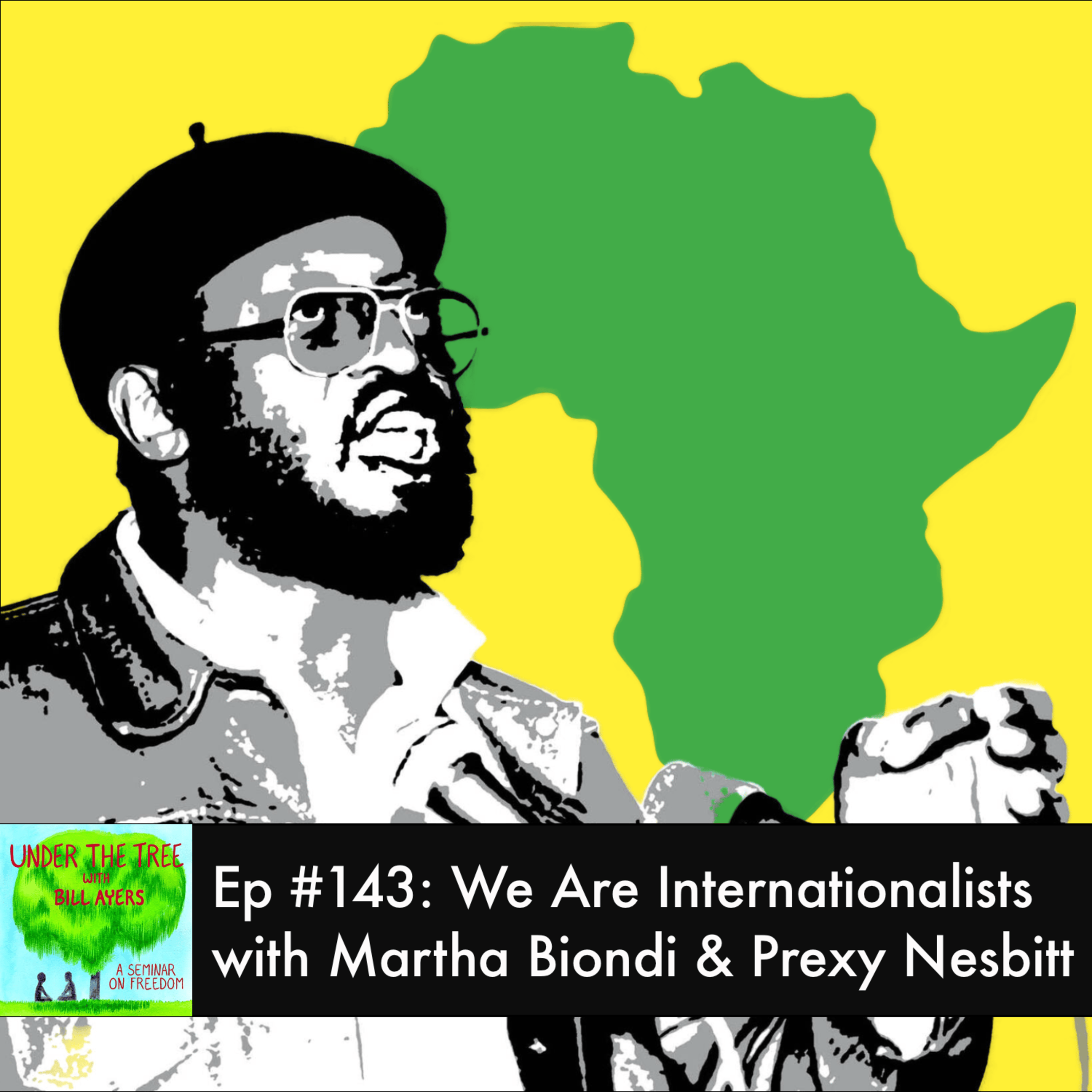
International solidarity is at the heart of our hopes for fundamental, humane change in the US. There can be no revolution in values or in fact if progressive Americans wrap themselves in the myth of “exceptionalism” and stand aside from the global struggles leading the fight against imperialism and for peace and justice. We need to become comrades, standing together—shoulder-to-shoulder against a common enemy and toward a common goal. We join, then, a voluntary association characterized by enthusiasm and joy at being part of something larger than ourselves. We’re not allies, functioning in service to, but rather comrades, acting in solidarity with. The biggest obstacle to authentic comradeship in US history—the third rail of American radical politics—is and always has been white supremacy, and tepid work toward International Solidarity and Black freedom. Comradeship in America emerges only from an unconditional embrace of Internationalism and Black Liberation. We are joined in conversation with Martha Biondi, the Lorraine H. Morton Professor of African American Studies and Professor of History at Northwestern University, author of The Black Revolution on Campus; To Stand and Fight: the Struggle for Civil Rights in Postwar New York City, and most recently, We Are Internationalists: Prexy Nesbitt and the Fight for African Liberationand Prexy Nesbitt, a Chicago organizer, engaged scholar, and activist who built (over several decades) international solidarity with African liberation movements fighting against colonialism and apartheid in Mozambique, Angola, and South Africa.
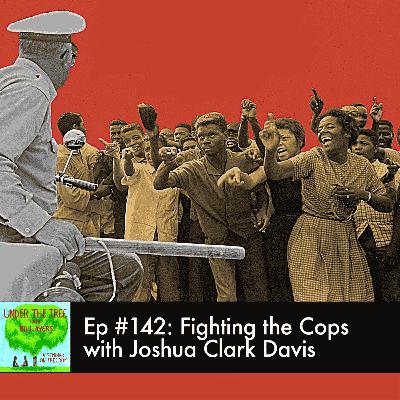
Police agencies across the country have functioned from the start as a violent arm of the elite and a cat’s paw in resisting racial justice and economic fairness. Today’s ICE agents are in the long tradition of slave patrols, SWAT teams and Red Squads. During the high tide of the Civil Rights Movement the brutality of Southern sheriffs was on full display, but two critical phenomena are missed when the dominant narrative focuses exclusively on iconic photos from a few dramatic moments: first, state repression—brutality, physical violence, infiltration and spying, reputational attacks, bogus prosecutions—against the Movement was not confined to a few redneck sheriffs, but was common practice in police departments at every level everywhere; and, second, Movement activists did not passively accept the abuse, but rather, fought back actively. In Police Against the Movement: The Sabotage of the Civil Rights Struggle and the Activist Who Fought Back Joshua Clark Davis documents a monstrous pattern of police activity to crush the Movement, and also the brilliance of Movement folks who confronted police power openly, consistently, and courageously.
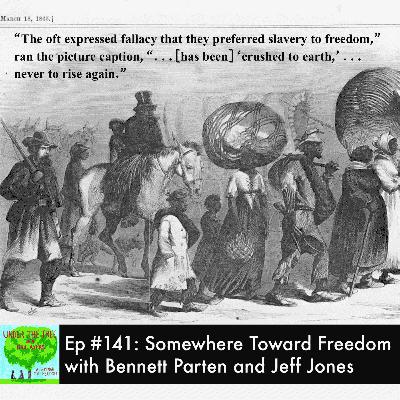
We surely know by now that freedom is more journey than destination, more a summons to struggle than a port-of-call in which to lie down and take s rest. We understand freedom most acutely, paradoxically, when we name the obstacles to our full humanity as unacceptable, and link arms to storm the barricades in the name of liberation. There are moments in history when an apparition of freedom appears clearly, and its meaning is transformed and enlarged—General Sherman’s “March to the Sea” was just such a moment. Twenty thousand enslaved people liberated themselves, taking freedom into their own hands in the wake of the march—they sought freedom in movement, and created a keen, detailed reimagining of freedom, reframing the meaning of the Civil War ever after. We’re joined in conversation by my dear friend and co-host for this episode, Jeff Jones, and Bennett Parten, the author of the remarkable new history, Somewhere Toward Freedom: Sherman’s March and the Story of America’s Largest Emancipation.
These are tough times for teachers and students, for young people and their families, for immigrant communities, for people of color, for all of us. All times are tough, of course, but the consolidation of white supremacist power, the organized acts of everyday cruelty, the disdain for humanity, the consolidation of autocracy, the performance of savagery, the unchecked embrace of selfishness, selective humanization and the rendering of large sections of human beings as disposable—the vilest human qualities and the beating heart of capitalism—make our lives all the more precarious, and precious. We’re joined by Kathryn (Kat) Zamarron, a Chicago Public School teacher, in a wide-ranging conversation focussed on the complex reality of supporting children and youth and their families in dark times.
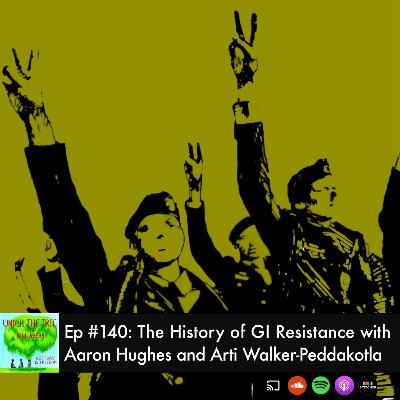
On September 27, 2025 we met up at Pilsen Community Books with Aaron Hughes and Arti Walker-Peddakotla of About Face: Veterans Against the War, a dynamic and powerful group involved in building an irresistible movement for peace and against war and fascism. About Face builds on and highlights the legacy and revolutionary power of GI resistance against the backdrop of military mobilizations to violently suppress people’s movements. They walk a difficult and necessary path, organizing inside the military as they support GI resistance and the right to refuse, and outside as they create structures of care and support that prevent enlistment in the imperial death machine in the first place. Their work dances a difficult dialectic as it embraces a fundamental contradiction: confronting and resisting the real harm erupting from the war-makers, and providing paths for radical reorientation for people who (like all of us) can be both perpetrators of harm and victims of a racial capitalist system. They are the authors of a new zine, State Violence, Abolition, and GI Resistance.
On Monday, September 29th the National Public Housing Museum in collaboration with the Goodman Theatre hosted a conversation between Lisa Lee, the founding director of the Museum, and the playwright Zayd Dohrn whose hip hop rock musical Revolution(s) opens the Goodman Theatre's centennial season in October. The gathering was part of an epic citywide and year-long event—100 Free Acts of Theater—which will activate all 50 wards in the city to celebrate the artistic fabric of Chicago, amplify existing arts programming, and collaborate on new efforts. (Learn more at GoodmanTheatre.org/100FreeActs). The conversation roamed widely and revolved around questions like: What does revolution mean? What is the future we deserve? What role do love and joy play in our visions of a better world? What is the role of the many arts at this moment on the clock of the universe? Examining how art, activism, and imagination shape movements for change, Lisa and Zayd are joined by guest activists throughout the night.
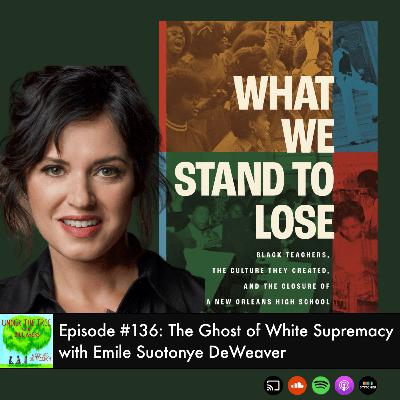
When Hurricane Katrina roared up the Gulf of Mexico and slammed into the Coast in August, 2005, the devastation was just beginning. The government was murderously unprepared—when the levees failed, 80% of New Orleans was underwater, 1500 people lost their lives, thousand more were injured, and property losses were estimated at $125 billion. The capitalist media consistently smacked its lips over suffering and offered an upside down world where victims became criminals, and mutual aid was portrayed as theft. The afterlife—the trauma, waste. and wreckage—of the catastrophe is ongoing and includes displacement, corporate theft, privatization of public goods, educide, and cultural sacking. We’re joined on the 20th anniversary of Hurricane Katrina by Kristin Buras, an anti-racist activist, teacher, and researcher who is the director of the New Orleans–based Urban South Grass-roots Research Collective, a coalition with African American community groups that combines research and grass-roots organizing for racial equity. She is the author, most recently, of What We Stand to Lose: Black Teachers, the Culture They Created, and the Closure of a New Orleans High School.
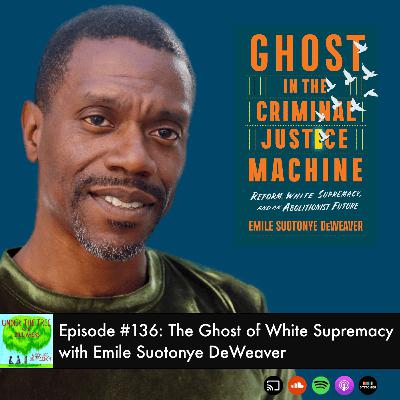
The speed at which a fascist government can disrupt, dismantle, and destroy on its way to building a full-blown fascist society is breathtaking. Resistance is scattered, and anyone looking to the Democratic Party to offer guidance or leadership should remember that we came to this point on bipartisan rails, that is, the ruling class and the political establishment has agreed for decades on every major issue: unqualified support for Israel’s murderous and illegal actions; the militarization of domestic police forces and policing as the ready-answer to every social problems; mass incarceration as a defining feature of society; the frantic privatization of public goods and services. And underlying it all, the tenacious and deadly legacy of the culture and structures of white supremacy. We’re joined in conversation with the activist, organizer, and writer Emile Suotonye DeWeaver, author most recently of Ghost in the Criminal Justice Machine: Reform, White Supremacy, and an Abolitionist Future.
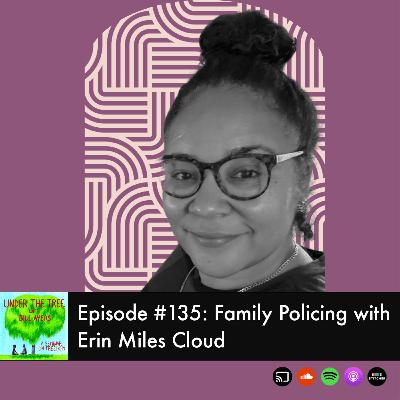
Just as the US Department of Defense should change its name back to the more accurate and honest War Department—its true function and its title from 1789 until 1947 when it morphed into the National Military Establishment (NME), and then, with mad-help from a PR offensive in 1949, the DoD—state and city organizations with names such as “child welfare” and “family services” should stop air-brushing their true functions—the Departments of Family Policing. We’re joined in conversation today with Erin Miles Cloud, the mother of two dazzling kids, a civil rights attorney, and co-editor of a new book from Haymarket called How to End Family Policing: From outrage to action.
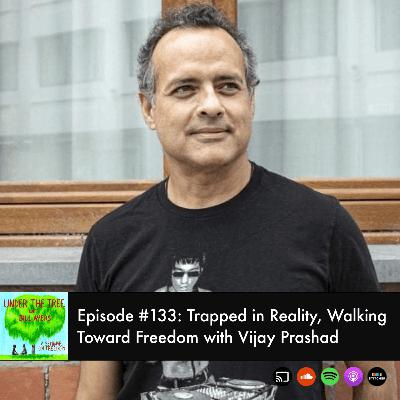
The severe challenges and unforeseen possibilities facing humanity today cry out for clarity. We need it all: poetry and politics, art and the people’s army, agitation and organization, theory and practice, deep study and sustained action, joy and justice, both the moments of quiet contemplation and the times of swift, sharp thrusts, dreams as well as deeds. We’re delighted to be joined from Santiago, Chile by Vijay Prashad, a preeminent Marxist theorist and activist intellectual. His work continues the initiative of the Tricontinental Conference in Cuba which brought together revolutionary movements from Africa, Asia and Latin America. Today Vijay is the executive director of Tricontinental: Institute for Social Research, and an advisory board member of the US Campaign for the Academic and Cultural Boycott of Israel. Vijay is refreshingly dialectical in his thinking and writing—witness a dangerous mind in ongoing argument with itself.
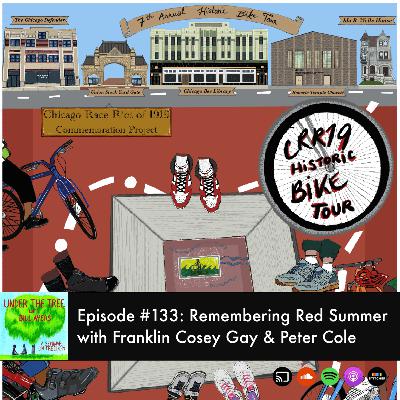
In 1922 a commission made up of prominent citizens—six Black men and six white men appointed by the governor of Illinois—issued a report about the 1919 Race Riot entitled The Negro in Chicago: A Study on Race Relations and a Race Riot. Eve Ewing’s dazzling poetry collection, 1919, excerpts small bits from the report as epigraphs for each poem, comments like “…the presence of Negroes in large numbers in our great cities is not a menace in itself,” and “the sentiment was expressed that Negro invasion of the district was the worst calamity that had struck the city since the Great Fire.” Today the Chicago Race Riot of 1919 Commemoration Project (CRR19) aims to ignite conversations about white supremacy in Chicago and around the country and the world. Formally launched on the 100th anniversary of the riot, CRR19 remembers the worst incident of racial violence in the city’s history, and the events that swept the city and set the framework for racial segregation to this very day. We’re joined by Franklin Cosey Gay and Peter Cole, co-directors of CRR19 on the eve of their annual commemoration and slow-rolling south-side bike tour.
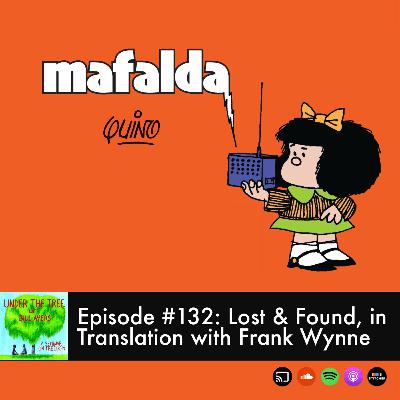
If you were ever an enthusiastic reader of “Calvin and Hobbes,” “Peanuts,” “Blondie,” “Doonesbury,” or the “Boondocks,” you have a treat coming your way: “Mafalda,” a six-year-old comic book character created by the artist Quino in Argentina, is now available in English in a dazzling translation by Frank Wynne. Mafalda is a precocious kid—Frank describes her as “six going on sixty”—who observes the world around her with fresh eyes, and then asks the kind of queer questions that the grown-ups in her life can’t or won’t answer. Mafalda’s concerns focus on humanity and world peace, and her innocence shines a bright light on the conflict between what adults claim to value, and how they actually live. Think of her as a socialist “Nancy.” We’re joined from London by Frank Wynne, a former Chair of the Judging Panel of the International Booker Prize and the award-winning author, translator, and editor of two major anthologies, Found in Translation: 100 of the finest stories every translated, and QUEER: LGBTQ Writing from Ancient Times to Yesterday.
Big time college sports have distorted the intellectual mission of colleges and universities for decades—and we’re in a particularly volatile period as athletes organize themselves into unions and demand a share of the riches that they’ve created with their labor, as well as the fashioning of a system that makes intercollegiate athletics increasingly indistinguishable from professional sports. The “Transfer Portal,” the “Name/Image/Likeness” deals that athletes sign with third parties, and now direct payments to athletes on top of their scholarships (which typically cover tuition, housing, and health care) create a Brave New World for universities, perhaps a kind of crossing-the-Rubicon moment. We’re joined by Rus Bradburd, a writer who spent 14 seasons coaching college basketball, followed by16 years as a university professor, in conversation about his subversive and hilarious novel, Big Time, as well as the state of the field.
The mass incarceration system has been dubbed “the new Jim Crow”—there are now more Black men in prison or on probation or parole than there were living in bondage as chattel slaves in 1850. There are significantly more people caught up in the system of incarceration and supervision in America today—over six million—than inhabited Stalin’s gulag at its height. And while the United States constitutes less than 5 percent of the world’s people, it holds over 25 percent of the world’s combined prison population. There’s more, of course, but you get the idea—the tentacles of the criminal legal system touch us all, coming down with especially lethal force against poor and marginalized people who are increasingly deemed disposable in the eyes of the powerful. We’re joined in conversation with Patrick Hoffman, a writer and private investigator based in Brooklyn whose latest novel, Friends Helping Friends, is a dazzling triller and a portrait of two young men living on the borderland of society. Their unwanted contact with a corrupt legal system drags them into a frightening brush with a white nationalist group that tests the redemptive power of friendship.
Thomas Jefferson was the masterly author of the ringing and rousing Declaration of Independence as well as a human trafficker and serial rapist. The second president embodies James Baldwin’s observation that “American history is longer, larger, more various, more beautiful, and more terrible than anything anyone has ever said about it.” The US is a settler-colonial colossus whose founders committed one of the most massive genocides in the history of the world—violence in the service of wealth accumulation has been a national calling card from the start. It’s also the birthplace of Harriett Tubman, John Brown, Geronimo, Malcolm X, Grace Lee Boggs, and generations of freedom-fighters. The wealth and the power of the US derives from armed robbery, serial murder, stolen land, and forced labor—that’s legacy. And we cannot be free without facing the complexity and the hard truth. We’re joined in conversation with Jesse Hagopian, one of the most brilliant contemporary voices in education, and author, most recently, of Teach Truth : The Struggle for Antiracist Education, an essential text for these troubled times.
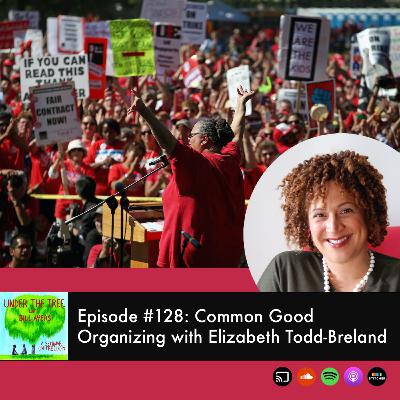
The Caucus of Rank and File Educators (CORE) led by Karen Lewis, a charismatic high school chemistry teacher, was elected to lead the Chicago Teachers Union in 2010. Lewis was a brilliant, transformational labor leader, and CORE developed a forceful form of social justice union organizing they called “organizing for the common good.” They foregrounded the best interests of the child, and they insisted on raising issues beyond wages and benefits, standing up for the arts, libraries, and nurses in every school as well as for the rights of families and the broader community. Among CORE’s early initiatives were starting a research department, and moving staff away from exclusively servicing the contract toward ongoing organizing of parents, community members, and teachers together. We’re joined by Elizabeth Todd-Breland, an Associate Professor at the University of Illinois at Chicago and author of both the award winning A Political Education: Black Politics and EducationReform in Chicago Since the 1960s and the recently released memoir, I Didn’t Come Here to Lie, written with the late Karen Lewis and published by Haymarket Press.
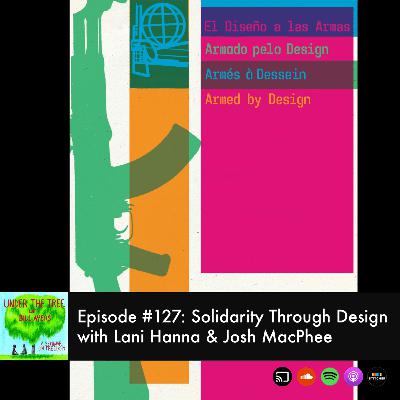
Solidarity takes on many forms but for over four decades one vivid example rose out of a design and print studio in Havana, Cuba. Born in 1966 out of the Tricontinental Conference the Organization of Solidarity of the People of Asia, Africa, and Latin America (Organización de Solidaridad de los Pueblos de Asia, África y América Latina — OSPAAAL) strove to unite liberation movements across the three continents. The Tricontinental magazine and the colorful, multi-lingual posters inserted within became legendary and covered the walls of activists and revolutionaries around the world. Inspired by the intersection of graphic design and political solidarity, the Brooklyn-based Interference Archive hosted an retrospective exhibit of the work of OSPAAAL. Now, publishers Common Notions have released an astonishing and beautiful new book not only celebrating the legacy but inviting us all to explore how we can contribute to this vital work of moving towards social transformation. We’re joined in conversation by two of the editors of the book Armed by Design: Posters and Publications of Cuba’s OSPAAAL, Lani Hanna and Josh MacPhee.
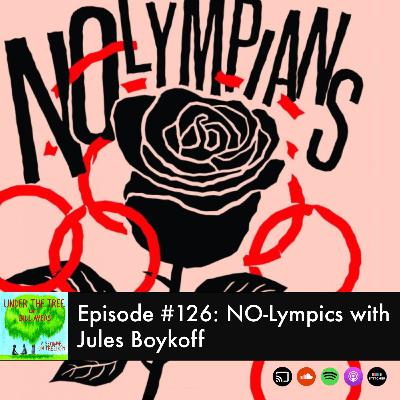
Dave Zirin (“Edge of Sports;” and Under the Tree, Episode #58 ) gave a delightful and provocative talk at a conference a few years ago called “Will There Be Sports Under Socialism?” The short answer—of course!—human beings have played games and sports from the beginning, and there’s no stopping us. But capitalism has distorted and mangled our natural desire and capacity to play in its relentless drive for profit. An ongoing case-in-point is the Olympic Games, flying under the noble banner of internationalism while on the ground exploiting athletes and workers, destroying host communities, increasing militarism, and more. Dave introduced us to Jules Boykoff and the movement to defend local communities against the steam-roller that is the 2028 Los Angeles games. Jules is an academic, author, activist and former professional soccer player whose writing focuses on the politics of the Olympics, social movements, the suppression of dissent, and the role of the mass media in US politics, especially regarding coverage of climate change. He is part of the coalition of community organizations (LA Tenants Union, Black Lives Matter, Sunrise Movement, DSA) founded in 2017 to oppose staging the 2028 Summer Olympics, and the author of NOlympians: Inside the Fight Against Capitalist Mega-Sports in Los Angeles, Tokyo and Beyond..
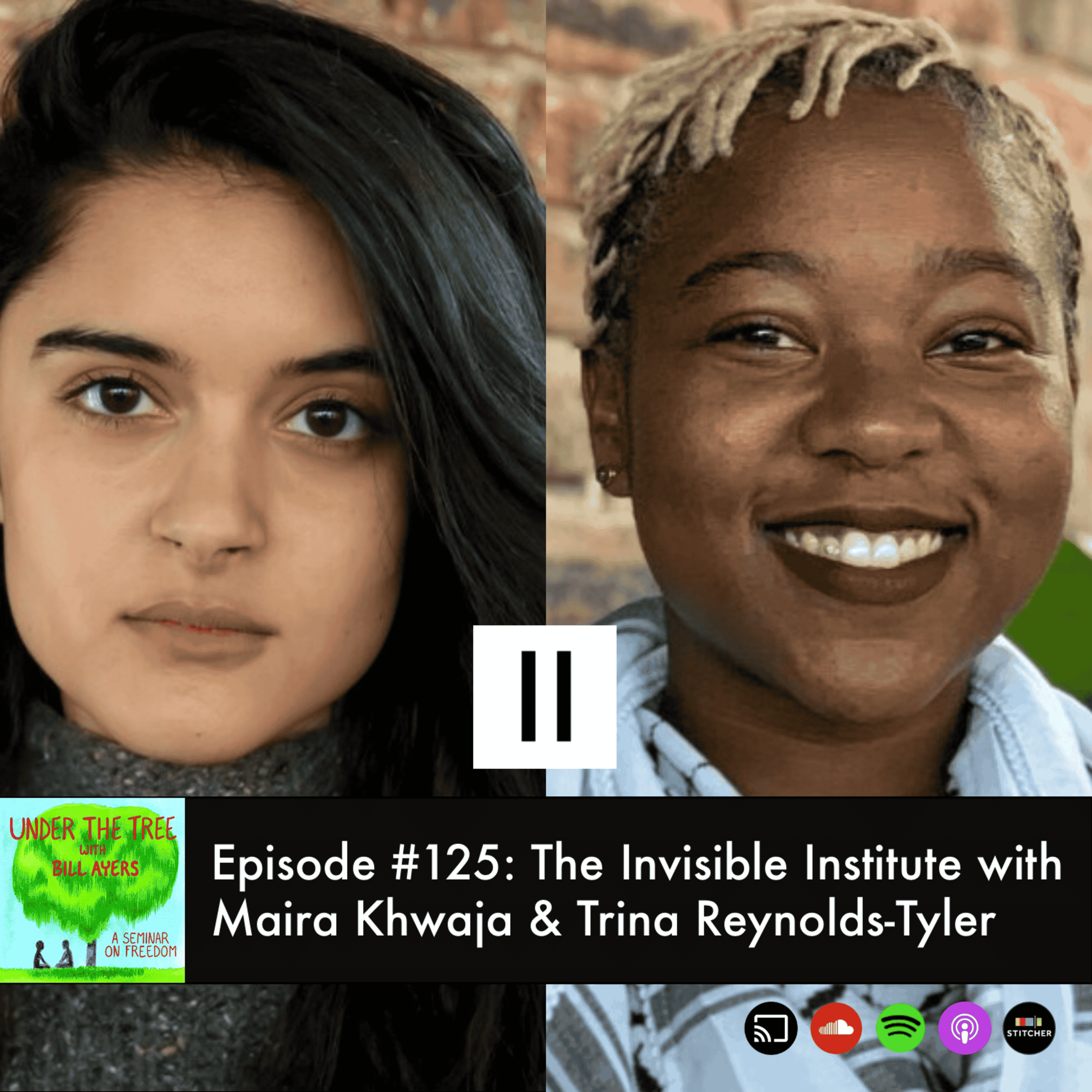
The Invisible Institute—with its evocative and mysterious name—exists in the proud tradition of “guerrilla journalism,” a difficult to define or pigeon-hole practice of human rights inquiry and documentation. This dazzling collection of journalists, archivists, writers, thinkers, organic intellectuals-without-portfolio, organizers, activists, data analysts and other collaborators pioneer a form of journalism based on long-term relationship-building, deep inquiry, and on-going interrogation of our shared social/political world. They are investigative reporters, multimedia storytellers, human rights champions, and facilitators of difficult public conversations. The Invisible Institute has won two Pulitzer Prizes, and produced a film that was a finalist for a short documentary Academy Award. They also won a landmark court decision, Kalven v. Chicago, in 2014 establishing that in Illinois police misconduct files are public information. We’re joined by two brilliant members of the Invisible Institute team, Maira Khwaja, Director of Public Strategy, and Trina Reynolds-Tyler, Director of Data.
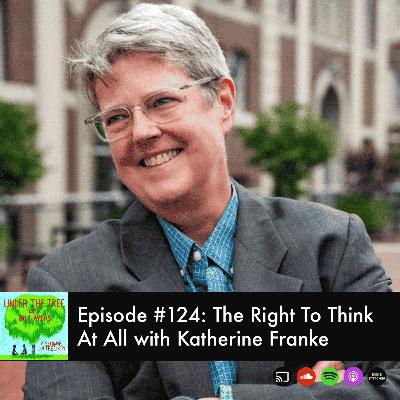
Thousands of student visas cancelled by the government! Legal residents snatched off the streets by masked agents, detained and deported! Federal research grants to universities scrapped! The government asserting a special right to oversee academic departments and curriculum decisions!The frequency of events like these across the country are dizzying, and the pace is accelerating. Academic freedom is in the cross-hairs. The First Amendment says “Congress shall make no law respecting an establishment of religion, or prohibiting the free exercise thereof; or abridging the freedom of speech, or of the press; or the right of the people peaceably to assemble, and to petition the Government for a redress of grievances.”Academic freedom falls within that scope, but goes far beyond: academic freedom is the right to interrogate the world, the right to teach, and the right to learn. Academic freedom is the right to think at all. We’re joined by Katherine Franke, renowned law professor, courageous scholar, and human rights champion who has endured a relentless campaign of threat and harassment because of her intrepid support of Palestinian rights.

Comments

Download from Google Play

Download from App Store
 United States