


 Claim Ownership
Untangling Web3
Subscribed: 5Played: 104
Subscribe

© Untangling Web3 2023
Description
The podcast that simplifies tomorrow's tech, today.
Untangling Web3 dives deep into the world of the next-generation Internet, exploring the groundbreaking technologies, projects, and ideas shaping the future of the Web. Join us as we demystify the concepts behind Web3 and learn how you can be relevant in this radical digital and societal transformation.
This series is hosted and produced by Jack Davies and Alec Burns.
125 Episodes
Reverse
In this week’s episode, we're zooming out - literally - to explore the new space race unfolding before our eyes. With companies like SpaceX leading the charge, and global powers like China and Russia ramping up ambitions, the conversation dives into how space technology, orbital infrastructure, and interplanetary flight are moving from sci-fi fantasy to strategic reality. From Moon bases to Mars colonies and even AI data centers in orbit, this episode asks whether we are entering a new era of competition for dominance beyond Earth.Key Points Discussed:Moon vs Mars: The Strategic Pivot in the Space Race: Elon Musk’s long-term vision of colonizing Mars has recently shifted toward a more immediate and achievable target: the Moon. Alec explains how lower gravity, accessible water ice for rocket fuel, and reduced escape velocity make the Moon an ideal staging ground for deeper space flight into the universe. Rather than launching massive payloads directly from Earth, building infrastructure on the Moon could dramatically lower costs and enable larger-scale exploration missions.AI, Data Centers, and Orbital Infrastructure: One of the most futuristic ideas discussed is the concept of orbital data centers powered by solar energy. With AI driving massive demand for compute and cooling, placing data centers in space could offer abundant energy, passive cooling, and fewer regulatory hurdles. The episode explores how AI, satellites, and space technology could converge—blurring the lines between aerospace engineering and digital infrastructure, and turning orbit into the next frontier for critical tech systems.Global Competition and the Return of Geopolitics in Space: This isn’t just about innovation—it’s about power. The hosts unpack how China, Russia, and the U.S. are all accelerating lunar and orbital ambitions, reigniting a geopolitical race reminiscent of the Cold War. With NASA’s Artemis program, SpaceX’s government contracts, and China’s plans for a lunar research station in the 2030s, space is once again becoming a symbol of dominance. As the world shifts toward a multipolar order, the competition for strategic position beyond Earth may define the next decades of global influence.The new space race isn’t just about planting flags. It’s about infrastructure, sovereignty, AI, and the future of human civilization. As private companies and governments invest billions into lunar bases, orbital data centers, and deep-space missions, the boundary between science fiction and reality is shrinking fast. Whether driven by survival, competition, or pure ambition, humanity’s push into the universe is accelerating, and the next 10 to 20 years could reshape not just space technology, but life on Earth itself. Watch this space.--Learn more about Web3 at:https://untanglingweb3.com/--Untangling Web3 is brought to you by hosts Jack Davies and Alec Burns, with music by Daniel Paigge. Got a question or topic suggestion? Send us an email at theuntanglingweb3podcast@gmail.com.Love what you're hearing? Show your support by becoming a subscriber and don't forget to leave us a stellar review.The views we express here are our own, and do not represent the views of our employers. Nothing discussed or stated in the show should be considered advice.
In this week’s episode of the Untangling Web3 podcast, we tackle one of the biggest narratives dominating tech and global markets right now: the so-called AI bubble. With headlines predicting an imminent crash in artificial intelligence stocks and skepticism mounting around LLMs, the hosts unpack whether we’re witnessing genuine over-exuberance, or simply the growing pains of a transformative technology. Drawing on real market signals, user adoption, and infrastructure realities, this episode cuts through the hype to examine what’s really going on beneath the surfaceKey Points Discussed:Why People Are Calling It an AI Bubble: The episode explores the core arguments behind the bubble narrative, including sky-high valuations, heavy reliance on a handful of AI-driven tech stocks, and the dominance of companies like Nvidia in propping up broader markets. Alec and Jack discuss concerns around circular investment models, where capital flows between AI companies and hardware providers, raising questions about whether real value is being created or simply recycled on balance sheets.The Reality of AI Adoption and LLM Progress: Despite investor anxiety, the hosts highlight a stark contrast at the product level: LLMs are improving rapidly and becoming deeply embedded in everyday workflows. From replacing search to enhancing productivity, AI tools are delivering tangible value to consumers and businesses alike. The conversation emphasizes that while enterprise-level ROI may take longer to materialize, dependence on AI systems is already a reality—and unlikely to reverse.Hidden Risks: Chips, Energy, and Global Dependencies: Beyond market sentiment, the episode dives into structural risks that could act as real pressure points for the AI boom. These include reliance on a single chip manufacturer (TSMC), rising energy and water demands from data centers, and geopolitical tensions between the U.S. and China. Unlike valuation debates, these are physical constraints that could trigger disruption regardless of how strong AI demand remains.Is there an AI bubble? Possibly—but not in the simplistic way the headlines suggest. While a short-term correction in tech markets may be inevitable, Alec and Jack argue that artificial intelligence itself is here to stay. The real story is one of scale, infrastructure, and timing: massive long-term bets paired with very real near-term constraints. Whether markets cool or surge next, AI and LLMs are already too deeply woven into the digital economy to disappear.--Learn more about Web3 at:https://untanglingweb3.com/--Untangling Web3 is brought to you by hosts Jack Davies and Alec Burns, with music by Daniel Paigge. Got a question or topic suggestion? Send us an email at theuntanglingweb3podcast@gmail.com.Love what you're hearing? Show your support by becoming a subscriber and don't forget to leave us a stellar review.The views we express here are our own, and do not represent the views of our employers. Nothing discussed or stated in the show should be considered advice.

In this annual 2025 review special, Alec and Jack take a step back to reflect on one of the most transformative years yet for crypto, AI, LLMs, and digital assets. From Bitcoin’s institutional turning point to AI becoming a daily tool for millions, this episode captures how Web3 and emerging technologies moved from niche experimentation into the mainstream. It’s a wide-ranging conversation about what actually mattered in 2025, and what it tells us about the road ahead.Key Points Discussed:Crypto and Digital Assets Go Mainstream (But Not Without Volatility): The hosts unpack why 2025 marked a legitimacy breakthrough for Bitcoin and crypto, driven by ETF approvals, institutional adoption, and a more crypto-friendly U.S. political environment. At the same time, Bitcoin behaved more like a risk asset than a safe haven, reacting strongly to macro events like tariffs and global market uncertainty. A major standout was the explosive growth of stablecoins, which quietly found real product–market fit by enabling faster, always-on financial settlement infrastructure .AI and LLMs Become Ubiquitous: If crypto found legitimacy, AI found ubiquity. 2025 was the year AI tools—powered by increasingly capable LLMs—became everyday utilities for individuals and enterprises alike. From workplace copilots to creative tools, AI shifted from novelty to necessity. The episode explores how rapid competition between OpenAI, Google, and others drove massive improvements in reasoning, context length, and cost efficiency, while also flooding the internet with AI-generated content and reshaping how people trust information online .Wearables, Robotics, and the Next Computing Shift: Beyond software, 2025 hinted at what comes next in hardware. Meta’s smart glasses helped prove the viability of AI-powered wearables, while humanoid robots moved from labs into early industrial testing. From BMW factory trials to Tesla’s Optimus ambitions, the conversation highlights how automation and AI-native machines are beginning to integrate into real-world workflows—setting the stage for much bigger changes in the years ahead .Looking back, 2025 wasn’t about a single breakthrough, it was about consolidation, legitimacy, and scale. Crypto became harder to ignore, AI and LLMs became unavoidable, and digital assets quietly embedded themselves into global financial plumbing. As Alec and Jack reflect, the pace of change is accelerating, making predictions harder, but also making the future more fascinating than ever. This episode captures a pivotal moment before the next wave hits, setting the tone for what could be an even more disruptive year ahead.--Learn more about Web3 at:https://untanglingweb3.com/--Untangling Web3 is brought to you by hosts Jack Davies and Alec Burns, with music by Daniel Paigge. Got a question or topic suggestion? Send us an email at theuntanglingweb3podcast@gmail.com.Love what you're hearing? Show your support by becoming a subscriber and don't forget to leave us a stellar review.The views we express here are our own, and do not represent the views of our employers. Nothing discussed or stated in the show should be considered advice.
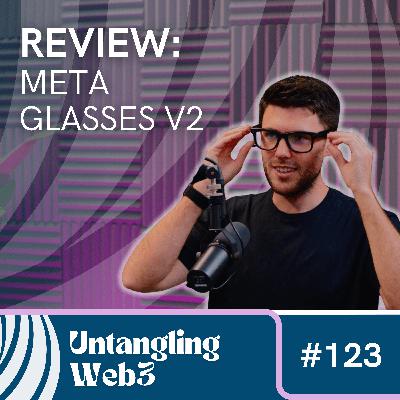
In this week’s episode of the Untangling Web3 podcast, we dive into Alec’s hands-on review of the new Meta AI Glasses v2 — Meta’s latest step toward merging AI and AR into everyday tech.Fresh from attending Meta’s launch event in California, Alec shares his firsthand impressions of how these next-generation smart glasses blend voice-controlled AI, contextual awareness, and seamless design to create what Mark Zuckerberg calls “the next mobile interface.” From hands-free recording to real-time translation, this episode explores where these glasses succeed — and where they still fall short.Key Points Discussed:First Impressions and Use Cases: Alec shares his early experiences using the Meta AI Glasses, highlighting their intuitive voice commands, sleek design, and surprisingly good photo and video quality. While the AI assistant can perform simple contextual tasks — like identifying objects or fetching quick answers — it still falls short of full autonomy. The glasses excel in recording and hands-free content creation, making them ideal for creators, travelers, and anyone wanting to stay present without constantly using their phone.AR, Audio, and Intelligent Context: The hosts explore how Meta’s AI and AR features bring subtle layers of digital intelligence into the real world. Built-in microphones and bone-conduction speakers allow for private listening, live translation, and contextual responses from Meta’s LLaMA AI model. Alec demonstrates how the glasses can “see” and describe surroundings, respond to voice commands, and even play music — though full contextual awareness and live streaming of visual data are still in development.Meta’s Vision and the Future of Wearable Tech: Beyond the gadget itself, Alec and Jack unpack Zuckerberg’s long-term vision for a post-smartphone future powered by wearable AI. They discuss how Meta’s hardware strategy — combining smart glasses, neural input devices, and the company’s AI ecosystem — could one day replace traditional screens. With an upcoming SDK for third-party developers, the potential for apps like note-taking, live translation, and real-time guidance could transform how we interact with both technology and the world around us.The Meta AI Glasses v2 are a bold step toward the fusion of AI, AR, and everyday life — a glimpse into the future of personal computing. While the current generation remains limited in scope, its design, integration, and potential applications make it one of the most exciting tech innovations of the year. --This episode is sponsored by the VeChain foundation. Learn more about VeBetterDAO here:https://vebetterdao.org/--Learn more about Web3 at:https://untanglingweb3.com/--Untangling Web3 is brought to you by hosts Jack Davies and Alec Burns, with music by Daniel Paigge. Got a question or topic suggestion? Send us an email at theuntanglingweb3podcast@gmail.com.Love what you're hearing? Show your support by becoming a subscriber and don't forget to leave us a stellar review.The views we express here are our own, and do not represent the views of our employers. Nothing discussed or stated in the show should be considered advice.
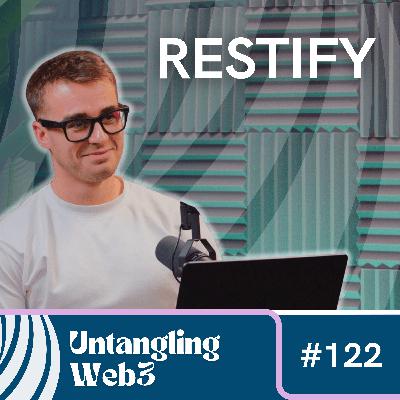
In this week’s episode of the Untangling Web3 podcast, the spotlight is on Alec’s latest venture Restify, a Web3 dApp designed to help users reduce their screen time and improve mental health through microincentives and rewards.Built on blockchain, Restify transforms digital wellness into a game of positive reinforcement, paying users small amounts of crypto for simply staying off their phones. We dive deep into the story behind the app, how it works, and why it could represent a new era of purpose-driven dApps.Key Points Discussed:The Problem: Screen Time and Mental Health in the Digital Age Alec explains how screen addiction and overuse of social media have become major contributors to the global mental health crisis, costing over a trillion dollars annually in lost productivity. Restify’s mission is to flip the script—using blockchain incentives to encourage healthier habits. Instead of punishing overuse, the app rewards users for time spent offline, proving that positive reinforcement can drive long-term behavioral change.How Restify Works and What Makes It Unique: The dApp integrates with a user’s phone to track downtime sessions—periods when the phone isn’t used—and automatically issues microrewards in the VeBetter token. Users can earn small payouts for every minute they stay off-screen, with verified data stored transparently on-chain. Unlike other apps or “digital detox” gadgets, Restify doesn’t block access—it builds self-control through motivation, gamification, and the psychology of reward.Building a Decentralized Wellness Ecosystem: Restify has grown to over 15,000 users and saved more than 160 years of verified screen time. The app’s success comes from Web3’s ability to coordinate global communities quickly, without traditional startup bureaucracy. Beyond screen time, the long-term goal is to evolve into a full mental health dApp—tracking mood logs, integrating an AI wellness assistant, and even partnering with insurers or wellness providers to incentivize healthy behavior at scale.Restify showcases the potential of Web3 beyond speculation—using decentralized apps to create measurable social impact. By aligning financial incentives with wellness goals, it demonstrates how crypto can be used for good, not just profit.tThe future of mental health technology may depend less on new gadgets and more on how we use incentives to encourage balance in a hyperconnected world.--This episode is sponsored by the VeChain foundation. Learn more about VeBetterDAO here:https://vebetterdao.org/--Learn more about Web3 at:https://untanglingweb3.com/--Untangling Web3 is brought to you by hosts Jack Davies and Alec Burns, with music by Daniel Paigge. Got a question or topic suggestion? Send us an email at theuntanglingweb3podcast@gmail.com.Love what you're hearing? Show your support by becoming a subscriber and don't forget to leave us a stellar review.The views we express here are our own, and do not represent the views of our employers. Nothing discussed or stated in the show should be considered advice.

In this episode of Untangling Web3, blockchain researcher and educator Keir Finlow-Bates returns to unpack one of the most critical debates in modern finance—the rise of stablecoins and central bank digital currencies (CBDCs). As digital assets evolve from niche tools for traders into core infrastructure for global payments, this conversation explores how blockchain-based money systems are reshaping the way value moves, who controls it, and what the next era of programmable finance might look like.Key highlights:Why Stablecoins Have Become the Bridge Between Finance and Blockchain: Stablecoins solve two critical problems—volatility and interoperability. They provide a stable medium of exchange that allows individuals and institutions to engage with blockchain networks without the price risk of native tokens like Bitcoin or Ether. At the same time, they act as a universal liquidity layer connecting decentralized finance (DeFi) protocols, exchanges, and traditional financial systems.Comparing Stablecoins and CBDCs: Architecture and Control: While both stablecoins and CBDCs represent fiat on the blockchain, their architectures differ fundamentally. Stablecoins like USDC or USDT are issued by private entities that hold reserves—often in treasury bonds or cash equivalents—and provide blockchain tokens on a 1:1 basis. They rely on smart contracts with mint, burn, and freeze functions that grant issuers limited control. CBDCs, in contrast, would be issued directly by central banks.Monetary Philosophy - What Money Really Represents: Fiat currencies are no longer backed by commodities or assets but by government decree and collective belief. Representing fiat digitally on blockchain networks forces society to confront this abstraction. Stablecoins expose the philosophical foundations of money—its value is not intrinsic but agreed upon. By contrast, Bitcoin introduces verifiable scarcity as a digital property, creating a new category of value rooted in cryptographic and computational certainty rather than institutional trust.Stablecoins represent the convergence of traditional finance and blockchain technology, providing the infrastructure for global, programmable money. CBDCs, meanwhile, embody a competing vision—state-issued digital assets designed for control and policy enforcement rather than decentralization. Between these two poles lies the defining question for the next decade of monetary innovation: will the future of money be open, programmable, and user-controlled—or centralized, monitored, and conditional? --This episode is sponsored by the VeChain foundation. Learn more about VeBetterDAO here:https://vebetterdao.org/--Learn more about Web3 at:https://untanglingweb3.com/--Untangling Web3 is brought to you by hosts Jack Davies and Alec Burns, with music by Daniel Paigge. Got a question or topic suggestion? Send us an email at theuntanglingweb3podcast@gmail.com.Love what you're hearing? Show your support by becoming a subscriber and don't forget to leave us a stellar review.The views we express here are our own, and do not represent the views of our employers. Nothing discussed or stated in the show should be considered advice.

In this episode of Untangling Web3, futurist and returning guest Aragorn Meulendijks explores how artificial intelligence and robotics are redefining science, labor, and the future of human society. With developments like humanoid robots entering mass production, the reversal of aging in primates, and AI-driven scientific discovery accelerating, this conversation focuses on the transformative—and potentially disruptive—technological shifts underway. Aragorn unpacks the exponential acceleration of innovation and its potential to trigger post-scarcity economics, reshaping the social contract as we know it.Key highlights:Robotics and Post-Scarcity Economics: Humanoid robots are advancing rapidly from prototype to consumer product, with companies like Figure and Tesla aiming for mass production within the next two years. Robots are already deployed in factories and are now entering homes to accelerate learning through real-world complexity. Aragorn projects a scenario where 1.5 billion humanoid robots could exist by 2035, disrupting manual labor across the economy. This raises fundamental questions about capitalism, productivity, and whether society must begin preparing for a post-scarcity world.Scientific Discovery in a Post-AI World: AI is revolutionizing the scientific method by reducing years-long research timelines into days through simulation and modeling. Projects like AlphaFold have predicted over 200 million protein structures, effectively accelerating biochemical understanding by centuries. In fields such as drug development and fusion energy, AI is proving to be not just a research assistant but a generative force for discovery. However, Aragorn raises concerns about verifying AI-generated insights and the increasing noise in scientific literature from low-quality, AI-generated papers.A Philosophical and Emotional Reset: As AI and automation disrupt productivity and labor, humanity may undergo a broader philosophical shift. Aragorn speculates about a post-work society, where meaning and purpose are decoupled from employment. Referencing Asimov’s Foundation series, he suggests that humanity may need to evolve emotionally and cognitively in parallel with technological progress to avoid dystopian outcomes and fully embrace a new model of civilization.The future that Aragorn sketches is both exhilarating and daunting. Mass robot deployment, scientific automation, and redefined human purpose all lie within reach, but navigating the transition will require a collective reimagining of economics, ethics, and governance. Whether society evolves toward utopia or faces instability will depend not just on technology, but on humanity’s ability to adapt, redistribute value, and embrace new social contracts.--This episode is sponsored by the VeChain foundation. Learn more about VeBetterDAO here:https://vebetterdao.org/--Learn more about Web3 at:https://untanglingweb3.com/--Untangling Web3 is brought to you by hosts Jack Davies and Alec Burns, with music by Daniel Paigge. Got a question or topic suggestion? Send us an email at theuntanglingweb3podcast@gmail.com.Love what you're hearing? Show your support by becoming a subscriber and don't forget to leave us a stellar review.The views we express here are our own, and do not represent the views of our employers. Nothing discussed or stated in the show should be considered advice.

In this episode, we break down the highlights from Meta Connect, where Mark Zuckerberg unveiled the company’s latest innovations in AR glasses, AI, and wearable tech. Once dismissed as a fading metaverse experiment, Meta is now doubling down on hardware and contextual AI, aiming to reshape how people interact with the digital and physical worlds. Alec attended the event in person and brings firsthand insights into what’s real, what’s hype, and what it means for the future of Meta’s vision.Key highlights:Smart Glasses and Everyday AR Integration: Meta’s partnership with Ray-Ban continues to expand, with updated smart glasses boasting improved battery life, better cameras, and built-in AI assistants. While not revolutionary, these AR-enabled glasses are steadily growing in adoption, offering hands-free digital interaction and promising a future where voice-first, context-aware computing becomes the norm.Next-Gen AR Glasses and Neural Wristbands: The real showstopper was Meta’s new AR glasses featuring subtle heads-up displays and a neural wristband for intuitive gesture control. From writing in the air to navigating apps, these innovations bring a sci-fi-style interface into reality. Though still early and pricey, the progress shows Meta closing the gap between futuristic concepts and consumer-ready products.Contextual AI, Horizon Worlds, and Breaking Smartphone Addiction: Beyond hardware, Meta’s pitch centers on contextual AI—AI that integrates seamlessly with your environment and daily life. Combined with VR and Horizon’s generative world-building tools, Meta is laying the groundwork for immersive, builder-friendly ecosystems. While marketed as a way to reduce smartphone addiction, the hosts question whether AR overlays could become an even more persistent form of distraction.Meta’s latest AR glasses and AI-driven ecosystem signal a bold shift in wearable tech, blending hardware, software, and contextual AI into a unified vision. While challenges remain—ranging from adoption to privacy—Meta is clearly betting on glasses as the next frontier of personal computing. Whether this future feels liberating or intrusive will depend on how the technology evolves, but one thing is certain: Meta is determined to define the next era of digital interaction.--This episode is sponsored by the VeChain foundation. Learn more about VeBetterDAO here:https://vebetterdao.org/--Learn more about Web3 at:https://untanglingweb3.com/--Untangling Web3 is brought to you by hosts Jack Davies and Alec Burns, with music by Daniel Paigge. Got a question or topic suggestion? Send us an email at theuntanglingweb3podcast@gmail.com.Love what you're hearing? Show your support by becoming a subscriber and don't forget to leave us a stellar review.The views we express here are our own, and do not represent the views of our employers. Nothing discussed or stated in the show should be considered advice.
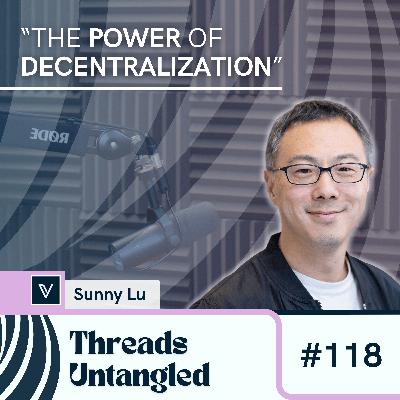
Threads Untangled is our series bringing you the best of Untangling Web3, featuring our favourite highlights and segments from past episodes. This week, we're revisiting our conversation with Sunny Lu and his unique take on the "power of decentralizaton" for sustainability.VeChain, under Sunny's leadership, is redefining global supply chains and leveraging blockchain for sustainability initiatives like VeBetterDAO, which rewards sustainable actions.__This episode is sponsored by the VeChain foundation. Learn more about VeBetterDAO here:https://vebetterdao.org/--Learn more about Web3 at:https://untanglingweb3.com/--Untangling Web3 is brought to you by hosts Jack Davies and Alec Burns, with music by Daniel Paigge. Got a question or topic suggestion? Send us an email at theuntanglingweb3podcast@gmail.com.Love what you're hearing? Show your support by becoming a subscriber and don't forget to leave us a stellar review.The views we express here are our own, and do not represent the views of our employers. Nothing discussed or stated in the show should be considered advice.

Gaming is evolving beyond entertainment into a dynamic, player-driven economy—and Web3 is at the heart of that transformation. In this episode of Untangling Web3, Luke Barwikowski, founder and CEO of Pixels, joins to explore how blockchain is reshaping the gaming industry. Pixels is a social Web3 game that fuses casual farming gameplay with real-world economic mechanics. With over 10 million registered users, the game is setting new standards for interoperability, player ownership, and scalable token-driven economies in the Web3 space.Key highlights:Web3 gaming demands new economic models: Traditional gaming revenue models are struggling. Studios spend magnitudes more on user acquisition than on game development, often with razor-thin margins. Pixels flips this model by directly rewarding users for valuable behavior. Instead of spending $1 on ads, that dollar is given to users through the game itself—an approach made scalable through tokens. This “reward-to-play” model uses data-driven segmentation to tailor incentives to user profiles, ensuring economic sustainability while strengthening community participation.Precision reward systems drive user growth and retention: Rather than blanket airdrops or undifferentiated incentives, Pixels uses predictive analytics and behavioral segmentation to issue rewards based on user potential and engagement patterns. Whether encouraging gameplay, referrals, or in-game spending, each incentive is optimized for long-term growth. These mechanics mirror Web2 adtech systems but replace ad spend with value distribution to players, forming a player-centric economic loop.Bridging crypto-native and mainstream audiences Pixels initially focused on crypto-native users, but reaching the next wave of players means eliminating crypto onboarding barriers. Future iterations will remove mandatory wallet sign-ups and minimize crypto UX friction. While blockchain infrastructure powers the backend, the frontend will prioritize smooth, intuitive gameplay. New users can access Web3-native benefits—like real ownership and tokenized economies—without having to confront the technical complexities.Pixels illustrates how Web3 gaming can move beyond hype into scalable, user-owned ecosystems. By aligning player incentives with network growth, eliminating friction for mainstream adoption, and reimagining game economies through blockchain, projects like these signal a future where fun, fairness, and functionality co-exist. Web3 isn’t just enhancing games—it’s reinventing how they're built, played, and sustained.__Learn more about Pixels here:https://www.pixels.xyz/--This episode is sponsored by the VeChain foundation. Learn more about VeBetterDAO here:https://vebetterdao.org/--Learn more about Web3 at:https://untanglingweb3.com/--Untangling Web3 is brought to you by hosts Jack Davies and Alec Burns, with music by Daniel Paigge. Got a question or topic suggestion? Send us an email at theuntanglingweb3podcast@gmail.com.Love what you're hearing? Show your support by becoming a subscriber and don't forget to leave us a stellar review.The views we express here are our own, and do not represent the views of our employers. Nothing discussed or stated in the show should be considered advice.

Bitcoin mining is often portrayed as environmentally harmful, but this episode of Untangling Web3 with guest Dr. Owen Vaughan, founder and CEO of Bitroots, redefines that perception.With a background in blockchain fundamentals, Owen explains how Bitcoin mining can drive renewable energy adoption, stabilize power grids, and economically benefit local communities. This conversation reveals how proof-of-work, when understood properly, is not only compatible with green energy but can be a force for accelerating the energy transition.Key highlights:Bitcoin Mining is a Clean Technology with No Emissions at Source: A mining machine only consumes electricity and produces heat, making Bitcoin mining itself emissions-free at the point of operation. The environmental footprint comes solely from the electricity source. Hydropower is currently the most common renewable input, and overall, 41% of Bitcoin mining is powered by renewables, a figure expected to rise to 70% by 2030. This trend is driven by the declining cost of renewable energy and favorable co-location opportunities near dams and wind farms.Mining Incentivizes Renewable Energy Expansion in Underserved Regions: In countries like Ethiopia and Uruguay, overproduction from hydropower dams has led to underutilized energy. Bitcoin miners are filling this demand gap by purchasing excess electricity that would otherwise be wasted. In Ethiopia, $200 million in revenue was generated in just six months from selling clean power to Bitcoin miners. This income helps fund grid expansion and provides economic stimulus to the local economy—demonstrating that mining can directly contribute to national infrastructure development.Sustainable Bitcoin Mining Extends to Recycling and Future Demand: With 95% of Bitcoin already mined, future mining revenue will increasingly rely on transaction fees. These, too, can be certified based on the energy source used to validate the blocks. Even post-halving and long after new coins stop being issued, the infrastructure and economic mechanisms for clean mining will remain critical. Certified mining also opens up potential for jurisdictional and ethical tracking of coin origins—much like ethically sourced diamonds or gold.Bitcoin mining offers a pathway to a more sustainable energy future. Certified clean coins, traceable to renewable sources, also provide a means for individuals and institutions to align their investments with ESG values. Rather than being an environmental threat, Bitcoin may be one of the most powerful green technologies in the Web3 toolkit.--This episode is sponsored by the VeChain foundation. Learn more about VeBetterDAO here:https://vebetterdao.org/--Learn more about Web3 at:https://untanglingweb3.com/--Untangling Web3 is brought to you by hosts Jack Davies and Alec Burns, with music by Daniel Paigge. Got a question or topic suggestion? Send us an email at theuntanglingweb3podcast@gmail.com.Love what you're hearing? Show your support by becoming a subscriber and don't forget to leave us a stellar review.The views we express here are our own, and do not represent the views of our employers. Nothing discussed or stated in the show should be considered advice.

In this episode, Alec shares a harrowing story of Bitcoin loss, digital vulnerability, and eventual recovery. After his phone was stolen during a night out, Alec discovered that his Coinbase account had been compromised—resulting in the theft of his entire Bitcoin holdings. This candid conversation explores what went wrong, how crypto thefts are becoming more sophisticated, and what lessons can be drawn to protect yourself in the age of digital finance.Key highlights:How the Theft Happened and the Shocking Aftermath: Alec recounts the moment his phone was snatched in London and how, within minutes, the thieves accessed his Coinbase app and drained his Bitcoin. Despite biometric protections and multi-factor authentication, the attackers managed to bypass security and execute transactions. Alec describes the emotional toll, the helplessness of watching the funds move in real time, and the feeling of transparency without control as he tracked the Bitcoin theft on-chain.The Role of Custodians and Coinbase’s Response: The episode highlights a surprising silver lining: Coinbase investigated the incident thoroughly and refunded the stolen funds after six weeks. Alec praises the company’s approach, transparency, and user support—contrasting it with other platforms where victims often receive no compensation. This part of the conversation reignites the debate between self-custody and trusted custodians, underscoring the importance of platforms that provide recourse in the event of security failures.Crypto Security, Recovery Challenges, and Broader Implications: Jack and Alec delve into how the immaturity of police investigations, social engineering, and growing AI-enabled attacks complicate crypto security. They explore how blockchain’s immutability—one of its greatest strengths—can also work against victims. They also reflect on the limitations of traditional law enforcement when it comes to investigating digital theft, and how Alec's experience may push more crypto holders toward regulated platforms, especially those that can offer a chance at recovery.This episode is a powerful reminder that Bitcoin and blockchain may be secure technologies, but the people using them remain vulnerable. Alec's experience offers a cautionary tale and a call for better security practices, awareness, and institutional protections. Whether you store your tokens on-chain or with a custodian, being proactive about your security is non-negotiable. And sometimes, as Alec learned, choosing the right platform—like Coinbase—can make all the difference between loss and recovery.--This episode is sponsored by the VeChain foundation. Learn more about VeBetterDAO here:https://vebetterdao.org/--Learn more about Web3 at:https://untanglingweb3.com/--Untangling Web3 is brought to you by hosts Jack Davies and Alec Burns, with music by Daniel Paigge. Got a question or topic suggestion? Send us an email at theuntanglingweb3podcast@gmail.com.Love what you're hearing? Show your support by becoming a subscriber and don't forget to leave us a stellar review.The views we express here are our own, and do not represent the views of our employers. Nothing discussed or stated in the show should be considered advice.

In this episode, we dive deep into the evolving relationship between Bitcoin, blockchain, and financial institutions. Once a symbol of rebellion against the banking system, Bitcoin is now embraced by institutions and governments alike—raising big questions.Are they legitimizing crypto or diluting its original purpose? As BlackRock, PayPal, and governments tokenize assets, we explore whether this new wave of adoption is saving Web3 or reshaping it altogether.Key highlights:The Institutional Era of Bitcoin and Crypto Finance: there has been a massive influx of institutions into the Bitcoin space. With over 10% of Bitcoin’s total supply now held by institutions, ETFs, and governments, and public companies like MicroStrategy owning over half a million BTC, the duo reflects on how this shift has transformed Bitcoin from a peer-to-peer payment network into a mainstream financial asset. The approval of ETFs, growing regulatory clarity, and widespread adoption by traditional financial firms all underscore this new financial paradigm.Benefits and Trade-Offs of Institutional Involvement: Institutional adoption brings with it pros like regulatory clarity, increased financial stability, and global legitimacy. It’s driving up prices, enabling better user protections, and opening new enterprise use cases beyond just finance—like digital identity and supply chain management. However, it also raises concerns about centralization, custodial dominance, and potential protocol-level influence. Cultural Shifts and the Future of Innovation: Many innovators have either exited the space or moved on to more flexible ecosystems like Ethereum. While Bitcoin thrives as “digital gold,” innovation now happens largely outside the BTC base layer. So does Web3's real future lies in alternative chains and what does rise of custodians like Coinbase and PayPal means for user control and digital self-sovereignty?The institutionalization of Bitcoin is undeniably reshaping the crypto landscape. What began as a decentralized experiment is now a critical part of the financial system. While some of the original dreams of Web3 may be fading, this mainstream adoption could be the key to realizing its broader potential—from stable payment rails to real-world blockchain use cases. Whether you're a purist or pragmatist, one thing is clear: the future of Bitcoin and blockchain will be built by institutions, innovators, and communities—together. --This episode is sponsored by the VeChain foundation. Learn more about VeBetterDAO here:https://vebetterdao.org/--Learn more about Web3 at:https://untanglingweb3.com/--Untangling Web3 is brought to you by hosts Jack Davies and Alec Burns, with music by Daniel Paigge. Got a question or topic suggestion? Send us an email at theuntanglingweb3podcast@gmail.com.Love what you're hearing? Show your support by becoming a subscriber and don't forget to leave us a stellar review.The views we express here are our own, and do not represent the views of our employers. Nothing discussed or stated in the show should be considered advice.

In this episode, we explore the rise of stablecoins—the digital dollar alternatives that are reshaping how money moves in the age of crypto and Web3. Once a niche financial tool, stablecoins are now processing trillions annually, attracting institutional players like PayPal and Stripe, and even overtaking Visa in transaction volume.With new legislation like the U.S. GENIUS Act and regulatory clarity on the horizon, we unpack how these stable tokens are becoming foundational to the future of digital assets.Key highlights:What Are Stablecoins and Why Are They Taking Off? Stablecoins—tokens pegged to fiat currencies like the U.S. dollar—and explain their appeal to both crypto traders and institutions. They discuss how these assets offer the technological benefits of blockchain (borderless, 24/7, transparent) without the volatility of traditional crypto. From powering over 70% of crypto trading volume to acting as a hedge in inflation-ridden economies, stablecoins are proving invaluable across multiple use cases.The Types of Stablecoins and How They Work: The episode dives into the different categories: fiat-backed (like USDC and USDT), crypto-collateralized (like DAI), and algorithmic (like the defunct Terra/LUNA). Alec and Jack explain how each type maintains its peg, the risks involved, and how new legislation is prioritizing transparency, 1:1 fiat reserves, and regulatory accountability—especially for the fiat-backed models favored by institutions. Circle's USDC, for example, is praised for regulatory compliance, while Tether faces continued scrutiny.The Regulation Revolution and Institutional Adoption: With the U.S. GENIUS Act now law and the CLARITY Act progressing through Congress, the regulatory landscape for stablecoins is rapidly maturing. The hosts highlight how these laws define rules for issuance, reserves, and oversight—giving stablecoins a green light to scale. Meanwhile, companies like PayPal, Revolut, and even JPMorgan are entering the stablecoin race, and firms are starting to pay salaries in digital dollars. This signals a huge shift in the way digital assets are used globally.Stablecoins are no longer just a stepping stone into crypto—they are becoming a core layer of the Web3 financial stack. With stronger regulation, massive adoption by tech-forward companies, and a user experience that rivals traditional finance, stablecoins could redefine how the world transacts. As countries choose between stablecoins, CBDCs, and crypto-native currencies, one thing is clear: stable, programmable money is here to stay. --This episode is sponsored by the VeChain foundation. Learn more about VeBetterDAO here:https://vebetterdao.org/--Learn more about Web3 at:https://untanglingweb3.com/--Untangling Web3 is brought to you by hosts Jack Davies and Alec Burns, with music by Daniel Paigge. Got a question or topic suggestion? Send us an email at theuntanglingweb3podcast@gmail.com.Love what you're hearing? Show your support by becoming a subscriber and don't forget to leave us a stellar review.The views we express here are our own, and do not represent the views of our employers. Nothing discussed or stated in the show should be considered advice.

In this episode of Untangling Web3, we’re joined by Marc Boiron, CEO of Polygon Labs, and Simran Singh, Head of DeFi Trading at GSR, to explore how the Katana blockchain is reshaping the future of Web3 by tackling one of the ecosystem’s most critical challenges: liquidity fragmentation. Built by Polygon Labs and incubated in collaboration with GSR, Katana is a bold experiment in consolidating value, optimizing capital flow, and unifying a splintered blockchain ecosystem.Key highlights:The Problem with Fragmented Liquidity and DeFi Silos: Marc and Simran explain how today’s DeFi landscape is plagued by silos—with dozens of decentralized exchanges, lending protocols, and wrapped assets across multiple chains. This leads to inefficient markets and shallow liquidity pools that fail to meet the needs of both institutions and retail users.Katana’s Bold, Opinionated Design Philosophy: At the heart of Katana is an “opinionated” model—a deliberate departure from neutral, general-purpose chains. Katana selects a single best-in-class protocol for each DeFi function (like Sushi for swaps or Morpho for lending), limiting duplication and boosting efficiency. The ecosystem also curates preferred versions of assets (e.g. one wrapped BTC standard), reducing redundancy and maximizing network utility.Yield Generation and Sustainable Incentives: Katana’s yield model goes beyond emissions by integrating real economic value. The chain also incentivizes long-term liquidity provisioning rather than short-term mercenary farming. This creates a flywheel of productivity and makes Katana not just another DeFi chain—but a viable candidate for becoming the most efficient Web3 liquidity layer.Katana represents a powerful reimagining of how blockchain ecosystems can operate—one that challenges fragmentation with focus, and replaces redundancy with purpose. With support from industry giants like Polygon and GSR, it aims to become the go-to destination for deep, usable DeFi. Whether you're a builder, investor, or user, Katana's emergence signals a shift in how Web3 businesses and companies can collaborate to create unified, user-friendly infrastructure. __Learn more about Katana & Polygon here:https://polygon.technology/blog/katana-foundation-announces-katana-network-incubated-by-polygon-labs-and-gsrhttps://katana.network/blog/wake-up-samurai-katana-is-here--This episode is sponsored by the VeChain foundation. Learn more about VeBetterDAO here:https://vebetterdao.org/--Learn more about Web3 at:https://untanglingweb3.com/--Untangling Web3 is brought to you by hosts Jack Davies and Alec Burns, with music by Daniel Paigge. Got a question or topic suggestion? Send us an email at theuntanglingweb3podcast@gmail.com.Love what you're hearing? Show your support by becoming a subscriber and don't forget to leave us a stellar review.The views we express here are our own, and do not represent the views of our employers. Nothing discussed or stated in the show should be considered advice.
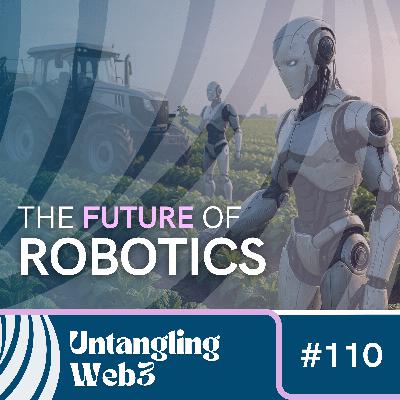
Welcome to the final installment of our three-part robotics series on the Untangling Web3 podcast. In this episode, we explore how robots and automation are transforming real-world industries—from agriculture and manufacturing to healthcare, humanoid design, and beyond. As the lines blur between robotics, artificial intelligence (AI), and human labor, we examine how this revolution is already unfolding and what the future might hold.Key highlights:Sector-by-Sector Applications of Robotics: we consider how robots are being used today across key sectors. In manufacturing, robots dominate production lines with precision and 24/7 uptime. In logistics, massive fleets of warehouse bots (like those used by Amazon) are reshaping how goods move from factory to front door. In agriculture, autonomous tractors, drones, and AI-powered sensors are helping boost crop yields while solving labor shortages. And in healthcare, surgical robots, exoskeletons, and even companion bots are supplementing human doctors and care providers.The Rise of Humanoids and AI-Native Robots: One of the most forward-looking discussions explores the shift toward humanoid robots—bipedal machines designed to fit seamlessly into human-built environments. These machines offer a general-purpose solution for industries facing labor shortages, especially in aging societies. The hosts also explore the integration of AI and large language models (LLMs), allowing robots to understand natural language, learn from users, and personalize their tasks. This shift marks a move from rule-based behavior to AI-native agency.Soft Robotics, Swarms, and Ethical Futures: Emerging trends like soft robotics, which mimic human tissue and enable safer interactions, and swarm robotics, where many small bots collaborate to complete complex tasks like environmental clean-up. But with this explosion of capability comes enormous ethical questions. From job displacement to regulation, digital rights for robots, and geopolitical control over robotic infrastructure, the discussion highlights how society must prepare for a radically automated future.The future of robotics is here—and it’s far more nuanced, powerful, and intertwined with AI than most people realize. Whether it’s building homes, harvesting food, or assisting in surgery, robots are moving from the lab to the real world at scale. As we navigate this new age of automation, the way we design, regulate, and relate to these machines will define our shared future.--This episode is sponsored by the VeChain foundation. Learn more about VeBetterDAO here:https://vebetterdao.org/--Learn more about Web3 at:https://untanglingweb3.com/--Untangling Web3 is brought to you by hosts Jack Davies and Alec Burns, with music by Daniel Paigge. Got a question or topic suggestion? Send us an email at theuntanglingweb3podcast@gmail.com.Love what you're hearing? Show your support by becoming a subscriber and don't forget to leave us a stellar review.The views we express here are our own, and do not represent the views of our employers. Nothing discussed or stated in the show should be considered advice.

In this second installment of our three-part robotics series, we dissect the inner workings of robots and explore the components that bring them to life. While science fiction often romanticizes humanoid machines, this episode is firmly grounded in the real-world anatomy of robotics—how artificial intelligence (AI), mechanical parts, and software work together to build functional and increasingly autonomous machines. From sensors to actuators, we break down the building blocks of modern automation.Key highlights:Brains, Controllers, and AI Integration: At the core of every robot is its “brain”—the controller that processes inputs from sensors and determines actions. We examine how hardware limitations have historically held robots back and how recent advances in miniaturized processors and edge computing are changing that. The team also compares the computational capacity of robots versus humans, highlighting how AI enables faster reaction times and specialized performance in specific, task-oriented domains.Sensory Systems and Real-World Awareness: A robot’s ability to navigate its environment hinges on a blend of advanced sensors, including cameras, LiDAR, infrared, ultrasonic, gyroscopes, and more. These devices serve as robotic "eyes," "ears," and "skin," enabling high-precision perception. The episode dives into how robots not only perceive physical reality but also extend beyond human capability through internet-based data input—offering a new kind of digital "sense."Muscles, Actuators, and Energy Constraints: The “muscles” of a robot—its actuators—convert processed commands into movement. While humans outperform robots in versatility, adaptability, and energy efficiency, machines shine in strength, speed, and precision. However, major challenges remain, particularly in energy usage and power systems, with robots still heavily reliant on limited battery life. The discussion compares robotic movement and endurance with biological efficiency, revealing both strengths and limits in today’s designs.Robots may seem like futuristic sci-fi marvels, but understanding their anatomy—from AI-driven minds to real-world sensors and actuators—makes them less mysterious and more tangible. While still far from matching the adaptability of humans, robots are becoming increasingly powerful thanks to rapid progress in robotics, AI, and mechanical engineering. As we build toward a more automated future, knowing how these systems work is key. Join us next time as we explore how these technologies are being used in the real world—and where they might take us in the decades ahead.--This episode is sponsored by the VeChain foundation. Learn more about VeBetterDAO here:https://vebetterdao.org/--Learn more about Web3 at:https://untanglingweb3.com/--Untangling Web3 is brought to you by hosts Jack Davies and Alec Burns, with music by Daniel Paigge. Got a question or topic suggestion? Send us an email at theuntanglingweb3podcast@gmail.com.Love what you're hearing? Show your support by becoming a subscriber and don't forget to leave us a stellar review.The views we express here are our own, and do not represent the views of our employers. Nothing discussed or stated in the show should be considered advice.

In this episode of the Untangling Web3 podcast, we dive into the fascinating and ever-evolving world of robots, robotics, and their intersection with artificial intelligence (AI). From ancient mythology to cutting-edge tech, this episode explores how our visions of mechanical beings have transformed from mythical automatons to industrial arms, humanoid assistants, and autonomous drones. We trace this journey from Asimov’s science fiction to real-world innovation and ask: what happens when automation meets ambition?Key highlights:The Origins of Robotics and Sci-Fi Inspirations: The episode kicks off by going way back—literally—to ancient Greek myths like Talos, imagined metal giants powered by magic, and traces that lineage through history to literary visions like Karel Čapek’s play “R.U.R.” (which coined the term “robot”) and the iconic writings of Isaac Asimov. Asimov’s Three Laws of Robotics are highlighted as early governance frameworks that still influence today’s discussions about robotic ethics, AI control, and coexistence with machines.Industrial Automation and the Rise of Robotic Arms: From Henry Ford’s assembly lines to the first robotic arm patents in the 1950s, the episode chronicles the practical evolution of robotics in manufacturing. We cover the leap from basic machine tools to robotic arms capable of precision and autonomy, used in everything from automotive assembly to pharmaceutical packing. Japan’s early dominance in this field, driven by labor shortages and technological innovation, illustrates how robots revolutionized modern production.Modern Robotics, Humanoids, and the Role of AI: Fast-forward to today’s AI-enhanced robotics—this includes everything from Boston Dynamics’ quadrupeds to Tesla’s Optimus and autonomous drones. The conversation highlights how perception, feedback loops, and decision-making make modern robots fundamentally different from their predecessors. We also touch on real-world applications like healthcare robotics, military drones, and the promise (and risks) of placing humanoid robots into homes and public environments.The world of robotics is no longer confined to sci-fi or factory floors. As AI supercharges automation, robots are becoming more intelligent, mobile, and integrated into daily life—from hospitals and homes to warehouses and war zones. But as machines become more autonomous, questions of control, ethics, and purpose become increasingly urgent. Whether you dream of robotic butlers or fear the rise of machine overlords, this episode offers a comprehensive look at how far we’ve come—and where we might be headed next.--This episode is sponsored by the VeChain foundation. Learn more about VeBetterDAO here:https://vebetterdao.org/--Learn more about Web3 at:https://untanglingweb3.com/--Untangling Web3 is brought to you by hosts Jack Davies and Alec Burns, with music by Daniel Paigge. Got a question or topic suggestion? Send us an email at theuntanglingweb3podcast@gmail.com.Love what you're hearing? Show your support by becoming a subscriber and don't forget to leave us a stellar review.The views we express here are our own, and do not represent the views of our employers. Nothing discussed or stated in the show should be considered advice.

The global sports industry is worth over $500 billion, but cracks are beginning to show beneath the surface. Today’s sports ecosystem is dominated by aging fanbases, legacy monetization models, and an increasingly distracted younger generation. In this episode of Untangling Web3, Tom Fleetham joins to break down the real opportunities for Web3 in sports—beyond hype and speculation. With years of experience at the intersection of sports, technology, and blockchain, Tom examines how loyalty, digital ownership, and new models of engagement could reshape the fan experience.Key highlights:The disconnect between global reach and monetization: Major sports clubs often boast global fanbases in the hundreds of millions, yet the vast majority of those fans generate little to no revenue for the clubs. Ticketing and merchandise are limited in geographic scope, leaving international fans with few meaningful ways to engage or contribute financially. Web3 offers a solution: blockchain-based digital assets and memberships that allow fans worldwide to participate, own, and benefit from their loyalty in tangible ways.The long-term potential of tokenized ownership and governance: Tokenization can radically transform fan engagement by offering shared ownership models and governance rights. Tokenized assets, such as shares in a club or NFT-based voting rights, could unlock new revenue streams, deeper fan loyalty, and entirely new community-driven club models.Opportunities for decentralized prediction markets and fan-led ecosystems Blockchain-powered prediction markets present a viable entry point for Web3 sports applications. These systems could allow fans to create their own betting pools or fantasy systems, fostering a sense of ownership and skill-based engagement. More radically, a non-league team could go fully on-chain, leveraging Web3 tools for everything from tokenized ticketing to DAO-based decision-making.Web3 offers a once-in-a-generation opportunity to rewire the sports industry from transactional relationships to participatory ecosystems. By enabling real fan ownership, decentralized decision-making, and global monetization through digital assets, blockchain can deliver more than hype—it can bring long-term value to clubs and communities alike. To realize this future, both sports organizations and builders must think beyond short-term gains and commit to creating products and experiences that resonate with fans for the long haul.__Learn more about Tom Fleetham and his podcast here:https://www.linkedin.com/in/tommyfleets/https://linktr.ee/fanzon3--This episode is sponsored by the VeChain foundation. Learn more about VeBetterDAO here:https://vebetterdao.org/--Learn more about Web3 at:https://untanglingweb3.com/--Untangling Web3 is brought to you by hosts Jack Davies and Alec Burns, with music by Daniel Paigge. Got a question or topic suggestion? Send us an email at theuntanglingweb3podcast@gmail.com.Love what you're hearing? Show your support by becoming a subscriber and don't forget to leave us a stellar review.The views we express here are our own, and do not represent the views of our employers. Nothing discussed or stated in the show should be considered advice.

In this episode of Untangling Web3, we're joined by Anthony Day, Marketing Director at VeChain and creator of the Blockchain Won’t Save the World podcast. With a background in enterprise transformation and years of experience building real-world blockchain applications, Anthony brings deep insights into what’s blocking—and enabling—mainstream Web3 adoption. This conversation moves beyond hype to focus on value delivery, practical implementation, and what real users and businesses actually need from blockchain.Key highlights:Community incentives are underutilized by enterprises: Many traditional companies lack the mental model or experience to effectively use open token-based systems. Web3-native mechanisms like shared economics and community-driven reward structures remain foreign. Success stories like VeBetterDAO demonstrate that onboarding large user bases to sustainable, real-world actions is not only possible—it’s replicable. But it requires a shift from centralized control to collaborative growth.Enterprise integration requires meeting companies where they are: Web3 projects often frame their technology in ideological or overly technical terms. To resonate with business leaders, blockchain must be positioned as an enabler of clear business outcomes—cost savings, user engagement, compliance, loyalty, or sustainability. Decentralization is not a selling point by itself; it must be tied to tangible value.Narratives need translation, not evangelism: Terminology like “decentralized”, “non-fungible”, or “programmable privacy” often alienates outsiders. Mass adoption depends on framing products in accessible terms. Instead of leading with protocol jargon, builders should explain what the tool does in real-world language. This isn’t dumbing things down—it’s communicating value.Onboarding isn’t just technical—it’s cultural: Web3 isn’t failing because the tech doesn’t work. Failures are mostly due to poor planning, unclear value propositions, or incompatible mindsets. Success requires adapting growth strategies, messaging, and support systems to people who’ve never operated in open ecosystems before.Web3 adoption will not come from viral enlightenment or speculative hype. It will come from delivering measurable value to real users—through applications that are usable, rewards that matter, and infrastructure that scales. Clear regulation, practical incentives, and business-ready narratives are now within reach. For those building the next wave of Web3, the priority isn’t to convert the world to crypto—it’s to help the world do what it already does, better.--This episode is sponsored by the VeChain foundation. Learn more about VeBetterDAO here:https://vebetterdao.org/--Learn more about Web3 at:https://untanglingweb3.com/--Untangling Web3 is brought to you by hosts Jack Davies and Alec Burns, with music by Daniel Paigge. Got a question or topic suggestion? Send us an email at theuntanglingweb3podcast@gmail.com.Love what you're hearing? Show your support by becoming a subscriber and don't forget to leave us a stellar review.The views we express here are our own, and do not represent the views of our employers. Nothing discussed or stated in the show should be considered advice.


Download from Google Play

Download from App Store
 United States
nice show!