


 Claim Ownership
Untapped Azania
Subscribed: 0Played: 1
Subscribe

© Onyx Africa
Description
A space to explore ideas - fostering a positive and engaging dialogue that contributes to a broader African Renaissance.
40 Episodes
Reverse

In this episode, Untapped welcomes Gin and Sharon, affectionately known as "The Dailys." The conversation kicks off with a playful nod to the Diddy documentary before diving into Gin's love for anime, specifically One Piece, and how it mirrors real-world dynamics. Every villain has a story. Somebody's got to be the villain. Sharon pushes back, saying she doesn't like villain origin stories. Maureen ties it back to the "moral luck" conversation from the previous episode.Gin shares what has unfolded since his last appearance on the pod, including the liminal space of having paid lobola but not being formally married yet, and the confusion that comes with moving beyond boyfriend and girlfriend. Sharon and Gin speak about building life and work together, from their journey of meeting in 2017 to founding Taste and Places and creating SLOW as a reminder to pause, connect, and step out of the rat race. They reflect on word of mouth as their biggest blessing, working with grace rather than chasing clients, and what it means to build something grounded in faith and alignment.The conversation widens into relationships in this generation, why healthy love stories are rarely spoken about, and how adult friendships often become transactional. Sharon touches on the gap between online energy and real life connection, leading into a discussion on curated personas, not meeting your heroes, and the importance of spaces like SLOW that reconnect people beyond screens.They close with a deep dive into Acoustics and Poetry (A&P) and the upcoming Re-Union. Gin talks about looking for young people to carry the vision, opening vacancies for the younger generation. He feels older, perhaps not as tapped in anymore. Letting go of control. Creating space. The younger generation needs to come up with the vision and share the pulse of the culture, while the older generation assists by implementing the systems they've set in place. The older generation realising they were stewards. Trying to bring back the nostalgia. That's what the Re-Union is about. They also spoke about classism in art as well as clean audience culture...It’s a rich, layered, and warmly candid episode about partnership in life and work, the courage to build slow and real, and the complex, beautiful work of stewarding culture for the next generation.
In this episode, Maureen and Mashudu start with the idea of moral luck. They explore how circumstance shapes behaviour, from people praised for discipline they were never tested on, to children pushed into violence or ideology because of the world they were born into. It is a conversation about advantage, disadvantage, and the paths they quietly create. Mashudu links this to his long standing concern about charity that looks like help but centres the giver. They speak about support that disrupts more than it uplifts, the danger of bringing people into worlds far removed from their own, and the ego that often hides behind “doing good.”The mood lifts as they look at their Spotify Wrapped and Apple Music data for the year. They reflect on the top episodes of Untapped Azania and the gentle reminder from the numbers that listeners enjoy the lighter moments too. They also share their own favourite artists and albums of the year.From there, the duo look back at 2025 through the lens of “No Glitter.” Growing older means realising that the shine wears off and life asks for a different kind of honesty. Maureen captures the year as surgery without anaesthesia. Necessary, painful, and impossible to ignore. They talk about chasing thirty, taking life too seriously, and the need to recover a childlike sense of courage. They reflect on the truth that changing the world sometimes begins with changing your own small circle, and knowing when to act and when to let go.They close with a conversation about intuition. How human communication has shifted over time, and how that shift has affected our ability to trust our inner voice. The episode ends on a light note, with a question about the unusual things they each do to steady themselves in moments of discomfort.It is a reflective and honest episode that sits at the crossroads of clarity, growth, and reality.
In this episode, Maureen and Mashudu dive headfirst into the turbulent waters of our political and economic moment. The conversation begins with a 2020 leaked email from billionaire Peter Thiel, sounding the alarm on a generation turning towards socialism. But is it a rejection of capitalism itself, or a revolt against a system corrupted by policy-driven scarcity and cancerous success? Mashudu frames this modern turmoil through the legacy of Adam Smith and Kenneth Lux's critique, How a Moral Philosopher Invented Economics and Ended Morality, setting the stage for a deep dive into the ideologies shaping our world.Two responses emerge: one blames policy failures, not capitalism. The rebuttal? Capitalism enabled the aggregation of power that led to monopolies and "too big to fail." Thiel's fears materialized in 2025 when Zohran Mamdani became New York's newly elected mayor. A candidate with no elite backing, dismissed as a communist despite identifying as a social democrat, running on policies aimed squarely at the working majority. His opponent, Andrew Cuomo, enjoyed support from billionaires like Michael Bloomberg and Bill Ackman, as well as a nod from Elon Musk. And yet, the race became a reminder that political legitimacy doesn’t always flow from capital — sometimes it flows from the people.The duo also unpack how the right packages left-wing policies as progress while the left often struggles with messaging. Maureen's analogy cuts through: capitalists want bailouts when things fail (centre right), socialists want business-friendly environments that provide them with a fulfilling experience (centre left). The centre is where ideology collides with reality...The conversation shifts to South Africa's Police Service. Maureen shares her experience being scammed (not on her 2025 bingo card) and the nightmare of opening a case. If this is what reporting a scam looks like, what must GBV victims endure? The ineffectiveness of public services is why private companies now run critical industries.And because no episode would be complete without levity: does pineapple belong on pizza?This one's heavy, layered, and full of contradictions that don't resolve neatly, but maybe that's where the most honest conversations happen.
In this episode, Maureen and Mashudu delve into the real-world meaning of "Purchasing Power." They open with a striking revelation from Reserve Bank governor Lesetja Kganyago: the rand should be trading at R7 to the dollar, not R18. They unpack what this means, not just in economic terms, but in everyday life. How much cheaper would a bottle of Hennessy be? An iPhone? And more importantly, how has this currency manipulation locked out content creators from better tools, academics from longer research trips, and dreamers from exploring the world? Time lost is money that can't be reclaimed.From there, the conversation shifts to coming of age. Realising you're no longer little bro or little sis, but stepping into spaces of influence with the responsibility to guide and inspire the next generation. They reject the notion that "rock bottom means you can only go up," reminding us that without intentionality, you can fall deeper into the abyss. But the opposite is also true: there's always another level to reach. You're living in answered prayers, and there's still more ahead.Mashudu reflects on mentorship without a traditional mentor, finding wisdom in books like Ray Dalio's Principles and the words of those who've passed on. Maureen brings in the story of Esau, who sold his birthright for bread and lentil soup. A reminder of how easily we undervalue ourselves when we fail to recognise our power.They close with a reflection on desires versus values: understanding what we like, but also having the moral clarity to know what we'll never pursue, and the big lessons that come from navigating spaces with that kind of integrity.It’s a grounded yet expansive chat about value—monetary, moral, and personal. It taps into what it really means to recognise your own worth in a world that constantly misprices it. It's layered, honest, and full of the kind of clarity we all need right now…

In this episode, Maureen and Mashudu dive into the complex layers of Ageism. They open with a provocative question: why is a woman's value so often tied to her youth? The conversation explores stark cultural double standards, from labels like "leftover women" for unmarried women over 30, to celebrated terms like "diamond bachelor" for men. They examine the dangerous consumerism this fuels and the parallel toxic pressure on men to "lock in" and achieve wealth, often with devastating consequences.Shifting the energy, they celebrate Bafana Bafana's qualification for the 2026 World Cup and discuss the implications of their new partnership with Adidas, reflecting on the end of an era with Le Coq Sportif.The episode ends on a visionary note with a lighthearted round of "If I Ruled the World," where the duo shares their one big idea for change.This is a provocative and insightful conversation that moves from critical cultural analysis to hopeful vision.

In the second part of this episode, Maureen and Mashudu explore the sting of disappointment; how it cuts deepest when it comes from someone you’ve placed on a pedestal. They dive into the current Cardi B vs. Nicki Minaj saga, unpacking how admiration can turn into disillusionment, and how controversial behavior can redefine a legacy almost overnight. It’s a conversation about the fragility of trust, fame, and the cost of being let down by those we look up to.From there, they shift focus to Tyla’s recent controversy in the U.S., discussing the tension between cultural context and global perception. With Tiwa Savage defending her stance on Breakfast Club, Maureen and Mashudu explore how terms like “coloured” carry different weight in different societies, highlighting one of America’s biggest blind spots: assuming a single rule applies universally.Sports fans get a moment too, as the duo reflect on Bafana Bafana losing crucial World Cup qualifier points over an administrative error. They trace the implications of relying on last-minute miracles and the pattern of hoping for favorable outcomes rather than building systems that consistently deliver.The conversation closes on a reflective note: what do we place our faith in, and what does it take to be the best version of oneself? From habits to mindset, achievements to spiritual alignment, Maureen and Mashudu dissect the lifestyle choices that propel people to peak performance, and how we can tap into that version of ourselves again.This episode is a layered journey through disappointment, cultural missteps, sports heartbreak, and personal growth. A reminder that learning from the unexpected is often where the richest lessons lie...

In this episode, Maureen and Mashudu dive into the idea of value and how it often hides in plain sight within the noise of the niches. They explore the unique advantage of being a first mover—like the gamer who invested in NVIDIA early, recognizing its potential not from mainstream hype, but from the loud, passionate signals of a growing gaming community. It’s a conversation about how a focused few can often see the future more clearly than the distracted masses.From there, they apply this lens to the explosive growth of podcasting in South Africa. How COVID turned locked-in audiences into binge listeners; creators like MacG and Mpoomy Ledwaba rode that wave, and how the space is still in its infancy. They note the wild reality: MacG's network does numbers comparable to Joe Budden in the US, yet we still don't have a Joe Rogan. The conversation touches on timing, too—the delicate balance between moving early and moving right, with platforms like The Dojo Podcast launching before MacG but not catching the same momentum. Luck, it turns out, plays a bigger role than we'd like to admit.The conversation then takes a fascinating turn to the power of personal brand as the ultimate asset. The duo unpacks Elon Musk’s trajectory toward becoming the world's first trillionaire, arguing that his success is as much about his masterful narrative control and media influence as it is about his companies' technologies. They contrast this with the failed promise of platforms like BitClout and pose a provocative question: what if we could invest in people the way we invest in stocks?Things then take a turn into politics with a grounded discussion on the Madlanga Commission. Reflecting on a state compromised by mafias and cartels, and a crime intelligence apparatus that appears deeply fractured. It’s a heavy but necessary discussion that doesn’t just spotlight the corruption, but also plays devil’s advocate, considers the path to a credible defense for the implicated, and underscores the vital importance of due process to ensure the NPA can ultimately act without being compromised.This is a layered, insightful, and forward-thinking episode that connects the dots between spotting value in unexpected places, the mechanics of building influence, and the foundational integrity required for a functioning society. It’s all about learning to hear the signal in the static. Hope you’re ready to dive in.

In this episode, Maureen and Mashudu kick things off with a vibe, diving straight into the DSTV Delicious Festival and the long-awaited performance from the one and only Ms. Lauryn Hill. They relive the magic of seeing a legend share the stage with her sons Zion and YG Marley and longtime Fugees partner Wyclef Jean, who brought pure Jimi Hendrix energy. The duo unpacks the chatter about family on stage, the powerfully African and familial feel of the set, and how the crowd’s fashion paid perfect homage to Lauryn’s iconic looks across the years.A standout moment was the deep-dive comparison to Kendrick Lamar's "Hey Neighbour" set from 2023. The analysis wasn't about who was better, but about the different artistic intentions: Hill's performance was a vibrant, engaging exchange, while Kendrick's was a meticulously curated experience—a testament to being at different points in a legendary career arc.From the stage, they pivot to the global stage, unpacking the new H-1B visa fee signed by Donald Trump. The duo frames the $100 000 charge as a potential “Cobra Effect,” arguing you can’t fix an economy by pulling down the very talent that drives innovation. They draw a direct line to South Africa’s own systemic challenges, from the oligopolistic banking sector to the deeper issue of job creation. Their takeaway is clear: solve the grassroots. Energy sits at the core of any future-ready economy, and fixing the electricity crisis is non-negotiable if South Africa wants a real place in an AI-driven, data-centered world.They close with a lighter but pointed conversation on etiquette, first for festivals with a simple plea for consideration when moving through a crowd, and then for the ongoing online discourse about wedding guest fits. Their verdict? Guests should absolutely go all out. The onus is on the bride and groom to stand out regardless; you can't expect people not to dress super well for a celebration.It’s an episode that moves from music to macroeconomics to manners, full of the sharp observations and easy banter that make Untapped Azania what it is.
In this episode, Maureen and Mashudu extend the conversation across themes that are both global and personal. They kick things off by unpacking the military-industrial complex, exploring how much nations spend to protect themselves, and what that reveals about our deep-rooted mistrust of one another. From nuclear deterrence to referees in sport, it’s a reflection on rules, power, and the fragile frameworks that hold society together.From there, the lens shifts inward. What does it mean to approach life through the perspective of the opposite gender? The duo wrestle with the subtle and not-so-subtle ways expectations differ. Men often build identity around provision and power, while women navigate a world where appearance and being pursued carry weight. They dig into the social scripts that shape how confidence is built, who “shoots their shot,” and how privilege quietly defines our roles in relationships.Finally, with spring in the air, they close on a meditation drawn from nature itself. Seasons teach us that letting go isn’t optional—it is built into the rhythm of renewal. As dry leaves make way for new blooms, Maureen and Mashudu ask what it means to release what no longer serves us, in a culture that clings and hoards far too much.It’s a layered conversation, part geopolitical, part deeply human, and all tied together with the reminder that change, whether global or personal, is inevitable.
In this episode, Maureen and Mashudu unpack what it means to live in a world that seems obsessed with positivity, even when it comes at the expense of depth. They question why negative results, failure, and struggle have become so undervalued, reflecting on a generation addicted to instant gratification, quick wins, and the constant chase for the next thing.The conversation flows into the overstimulating nature of social media, exploring how even a single post can invite overwhelming engagement and how being “always on” creates a dopamine rush we were never built to handle. They discuss the importance of stepping back from the noise and the triggering content that saturates our feeds.They also explore deeply personal topics. Would you tell a child they were adopted? At what point does truth serve love, and at what point does it harm? The dialogue shifts to the complexity of forgiveness, questioning whether betrayal stings more from a partner or a friend, and why our culture struggles to embrace nuance. They reflect on a society that often defaults to rigidity and judgment rather than grace.Finally, they turn to the invisible pressures that come with public roles. From police officers to celebrities, they ask why society strips humanity from those we expect to perform for us, holding them to impossible standards while denying them the simple right to just be.This episode is raw, layered, and unafraid to ask hard questions about the way we think, live, and treat one another.

In this episode, titled Resources ≠ POV, Maureen and Mashudu unpack what it really means to have access, and how access alone isn’t always enough.They kick things off with Nardwuar’s “Do It Yourself!” TED Talk, reflecting on the audacity of asking, the power of persistence, and why comfort can be a cue that it’s time to level up. From there, they move into Tyler, The Creator’s recent Hot97 interview, where he credits Pharrell for not just inspiring him, but putting him on. It’s a conversation about doors being opened, yes, but also about the people who open them, and how that shapes the journey.The heart of the episode centres around the mismatch that can exist between resources and readiness. How do you even begin to leverage support: be it financial, relational, or creative - when you’ve spent most of your life building from scarcity? What does it take to rewire your point of view when abundance finally enters the room?They dive into reflections inspired by Phases and Cycles (by King Lutendo ft. H&Them), drawing links between life’s inevitable peaks and troughs, and how grief, in all its complexity, often teaches us to let go — not just of people, but of the idea that we must place them on a pedestal to honour them.There’s also a thoughtful detour into the worlds of individual vs. team sports, and how solo disciplines often allow room for pause, restoration, and return in a way collective ones don’t. It sparks questions about self-preservation, timing, and the courage it takes to step back before stepping forward.And somewhere in between it all, there’s a nod to Clubhouse, and how its brief moment in the spotlight quietly laid the groundwork for what we now know as Twitter Spaces (now known as X Spaces).This one’s layered, honest, and quietly confronting. A deep dive into the subtle ways we grow, stall, and relearn; especially when the thing holding us back might not be a lack of resources, but a perspective that hasn’t quite caught up...
In this episode, Maureen and Mashudu take you on a journey across borders—both real and imagined. The conversation kicks off with a sharp take on the existence of passports; they unpack how access often morphs into hierarchy. When formerly excluded people gain mobility, why does it sometimes come with a sense of superiority over those still locked out? And deeper still—do passports, borders, and visas serve progress, or quietly work against our collective future?From there, they revisit Onyx Africa’s recent Web3 Founder Series, spotlighting Glen Jordan’s work with Empowa. The conversation expands into the hidden mechanics of poverty—how people aren’t necessarily poor, but punished for earning irregularly, and in turn locked out of things like home loans and financial dignity.Things heat up when the two lock horns on payday access apps: are they empowering tools or dressed-up loan sharks? Is it reckless spending or underpayment that’s failing the average worker? It’s a spirited debate that doesn’t land neatly—just how we like it...From there, the discussion zooms out to a continental scale: the Grand Ethiopian Renaissance Dam (GERD), Egypt’s opposition, and the power dynamics that dams (literal and political) always reveal. The episode closes with a hard look at historical amnesia—how those who once upheld and benefited from apartheid now conveniently act like they never supported the system.It’s one of the most debated, dynamic, and boundary-pushing episodes yet. It’s fiery. Uneasy. But important. A cozy conversation… with sharp edges. 🥶
In this episode, Maureen and Mashudu kick things off with Nasty C’s unexpected “Soft” campaign. No flashy club launch or lifeless PR rollout—just a rapper changing tyres at a workshop, manning the till at Spar, and cutting hair at Legends Barber. It’s a refreshing shift. In a streaming era where songs alone don’t stick, Nasty’s banking on narrative—and it’s working.From there, the conversation widens. Gen Alpha thinks texting is cringe. Gen Z is drinking less. And across the board, younger generations are leaning into voice notes, cleaner diets, and a slower kind of intimacy. Less performance, more presence.Things take a thoughtful turn as the duo revisit Maslow’s Hierarchy—not the Westernized version we all know, but the original fieldwork, which pointed to self-actualization as a collective pursuit. What happens when fulfillment isn’t a solo climb, but a communal circle?They close with a look at capitalism’s dependence on insecurity—how the machine keeps spinning by selling us solutions to problems it helped create. And finally, a bit of nostalgia: when pop culture was a shared experience. When we’d rush home to catch the latest hot and happening music videos on Trace. When SoundCloud felt like a secret portal to the next big thing.This one’s textured. Honest. And full of those quiet truths we often overlook. Hope it lingers long after the episode ends.
In this episode, Maureen and Mashudu return to the mic with both gratitude and fire. One year in, Untapped Azania has become more than just a podcast—it’s grown into a space for nuanced, necessary conversations, shaped by a community that continues to show up and stretch us.To mark the milestone, the duo reflects on what it means to keep showing up: consistency, collaboration, and the unexpected ease of finding rhythm with each other and the people listening in. They also revisit the episode that resonated the most—and unpack what made it land so deeply.From there, the conversation moves into complex terrain. Maureen and Mashudu explore the flattening of Black identity in South Africa—especially how phrases like “splitting the Black vote” reveal a deeper discomfort with our political and social plurality. What does it say about our sense of self, if diverging thought is framed as betrayal?They also dig into class dynamics, and the myth of a one-size-fits-all Black experience. What are the distinct needs of the middle class, the affluent, and those facing economic precarity—and how do we hold those truths in the same room without erasing each other?It’s a reflective, layered episode. One that sits at the intersection of growth and self-interrogation. Because maybe that’s where the real work—and the real joy—is.
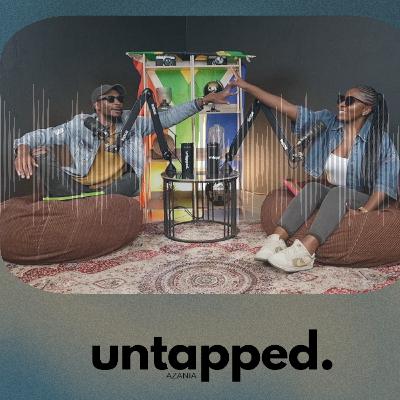
In this episode, Maureen and Mashudu reflect on the journey of learning—whether you’re hitting the books young or circling back to study later in life. It’s a candid exploration of timing, choice, and the frameworks we use to make life-altering decisions about education and direction.They then dive into what it means to chart new paths in unfamiliar terrain—building legacies from scratch, in spaces where no footsteps have gone before. It’s a conversation about courage, vision, and the quiet power of doing things your way, not just for yourself, but for generations to come.The conversation deepens with reflections on therapy: what brings us there, what we hope to extract, and how it connects to the broader, often uncomfortable, process of returning to self. In a world driven by power and performance, the duo ask what happens when we choose not to conform—when we question the structures we’re told to respect.This one’s layered. Introspective. And full of questions that don’t have easy answers—but maybe that’s the point.
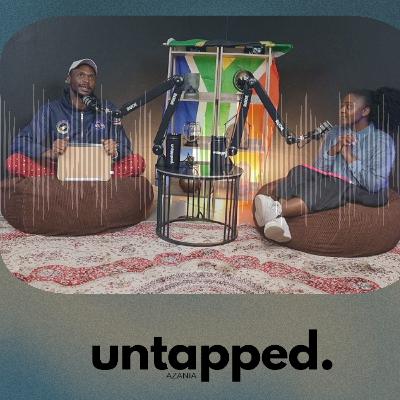
In this episode, Maureen and Mashudu kick things off with a celebratory nod to grad season. Mash highlights the brilliance of “Phindulo The Answer!”, whose Master’s thesis in Space Law stands out for its bold, unconventional thinking—a reminder that the future is being shaped in unexpected ways.From there, the conversation takes a more serious turn. The duo unpacks Dan Corder’s sharp exchange with Ernst Roets on Piers Morgan Uncensored, reflecting on how that moment captured the tensions in South Africa’s ongoing cultural discourse. They also discuss President Cyril Ramaphosa’s meeting with Donald Trump at the White House—an event clouded by controversy, particularly around Starlink and its broader geopolitical implications.The episode closes with a difficult but necessary conversation about the recent GBV case involving Olerato. Maureen and Mashudu share their thoughts on the systemic failures that persist and offer reflections on what a real path forward might look like.It’s not the lightest episode, but it’s an honest, insightful one—filled with the kind of dialogue we need more of. Hope it gives you something to think about…

In this episode, Maureen and Mashudu start off on a very light note by reminiscing on Hip Hop’s ‘Blog Era’, going off the back of the recent Red Bull Spiral Freestyle that featured Big Sean, Ab Soul, and Joey Bada$$. They followed this through by going into how young talents are often overlooked in the corporate space, but are appreciated and recognised in alternative spaces like entertainment and the sporting fraternity. With grad season underway, they touched a bit on how great it is, especially the communal spirit that the season is characterised by. The chats become a bit heavy when they go into masculinity and femininity, as well as therapy, among many other things. This episode is like “The Edge Of The Overton Window 2.0”... Hope you enjoy! 😊

In this episode, Maureen and Mashudu spoke on grief and the different contexts through which humans experience grief. They followed this through with an in-depth discussion on Ryan Coogler’s critically acclaimed movie “Sinners”. They also had a conversation on the difficulty surrounding finding a running club where you can just show up as yourself; running clubs that aren’t “close knit” or have a group of people that fit a specific aesthatic. They end of their chats with an engaging back-and-forth on exposure therapy and why pursuing rejection can actually be a wholesome act. This episode took a lot of interesting turns... Hope you enjoy! 😊
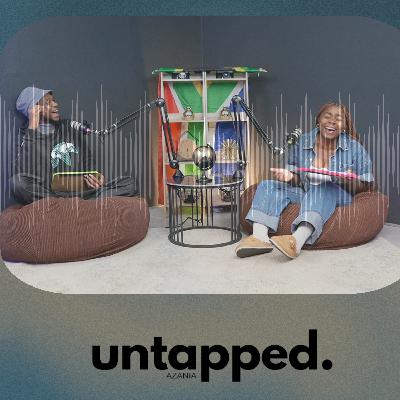
In this episode, Maureen and Mashudu start off by tapping into April being “Autism Awareness Month” and the progress that’s been made societally in shining the light on individuals with varying neurological conditions. They follow that through with an in-depth conversation on “the boy child” and the whole discourse that’s been going on, on X (formerly Twitter) about what’s led to boys as well as men falling behind their female counterparts in various facets of life. They spoke about Jordan Peterson's sit-down with AfriForum's Dr. Ernst Roets and broke down what they thought about the underlying intentions behind the conversation. They also went into the idea/ concept of “people pleasing” and their unconventional takes on what that entailed. This episode was not only reflective and conversational, it was actually quite fun... Hope you enjoy! 😊
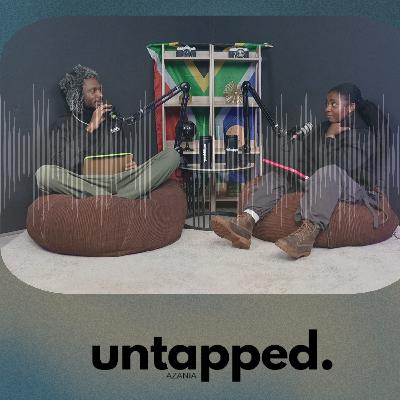
In this episode, Maureen and Mashudu kick off the conversation with the “Liberation Day” tariffs and discuss whether they will yield unintended consequences. They follow this up with an extensive conversation on “Tokenization,” sparked by Robinhood founder Vlad Tenev’s recent op-ed in The Washington Post. The discussion seems to lighten when they begin talking about traveling and road trips, but the purpose is actually to explore the challenges and costs associated with celebrating culture in the city, as well as South Africa’s Apartheid spatial planning legacy and how it continues to affect modern-day society—keeping many segregated with little hope of improving their lived reality... Hope you enjoy! 🌚

Comments

Download from Google Play

Download from App Store
 United States