


 Claim Ownership
UpFront
Subscribed: 1,358Played: 16,720
Subscribe

© 2026 Al Jazeera Media Network. All rights reserved.
Description
With the thrust and parry of rigorous debate, Mehdi Hasan cuts through the headlines to challenge conventional wisdom, highlight contradictions and uncover double standards.
176 Episodes
Reverse
As the United States continues its war on Iran, pressure is mounting on Britain to decide how far it will go in supporting Washington. Prime Minister Keir Starmer has signalled that United Kingdom military bases could be used by US forces, raising concerns that Britain may be drawn deeper into the conflict. This week on UpFront, Redi Tlhabi speaks with UK Member of Parliament and former opposition leader, Jeremy Corbyn. Subscribe to our channel: http://bit.ly/AJSubscribe Follow us on X : https://twitter.com/AJEnglish Find us on Facebook: https://www.facebook.com/aljazeera Check our website: http://www.aljazeera.com/ Check out our Instagram page: https://www.instagram.com/aljazeeraenglish/ Download AJE Mobile App: https://aje.news/AJEMobile
The war on Iran enters another week, with Israel, the US, and Iran striking key energy infrastructure, raising questions about global supply. Meanwhile, President Donald Trump says the US had no prior knowledge of Israel’s attack on the South Pars gasfield, though that claim is being questioned. So what comes next? And how far could this conflict escalate? This week on UpFront, Redi Tlhabi speaks with former US Special Envoy for Iran, and one of the lead negotiators of the 2015 Iran nuclear deal, Robert Malley. Subscribe to our channel: http://bit.ly/AJSubscribe Follow us on X : https://twitter.com/AJEnglish Find us on Facebook: https://www.facebook.com/aljazeera Check our website: http://www.aljazeera.com/ Check out our Instagram page: https://www.instagram.com/aljazeeraenglish/ Download AJE Mobile App: https://aje.news/AJEMobile
The United States and Israel have often portrayed themselves as secular democracies fighting against a theocratic Islamic regime in Iran. But as the war against Iran continues to escalate, US leaders have spoken of a biblical duty to defend Israel, military commanders have referenced divine destiny, and Israeli leaders continue to cite biblical claims to territory. So why is this religious rhetoric resurfacing now? This week on UpFront, Redi Tlhabi speaks with author and Professor of American Studies and International Affairs at George Washington University Melani McAlister, and rabbi and Professor of Modern Jewish Studies at Harvard Divinity School Shaul Magid on what happens when faith, nationalism and politics collide on the global stage.
The United States has once again found itself drawn into a major conflict in the Middle East, this time with Iran. But a key question is now being debated: who pushed Washington into this conflict? Israel has played a central role in encouraging a confrontation with Tehran, warning that Iran poses an existential threat, and has urged Washington to take stronger action to stop its nuclear ambitions. But how much influence does Israel really have over US foreign policy, and did it help shape the decision to confront Iran militarily? This week on UpFront, Redi Tlhabi speaks with political scientist John Mearsheimer.
This past week, the United States and Israel launched a war on Iran under the banner of regime change. But as the war escalates and with Iran firing missiles at US bases across the region and at Israel - questions are mounting over how far this conflict could spiral. This week on UpFront Redi Tlhabi challenges former National Security Adviser and former US Ambassador to the United Nations John Bolton on why he believes that a diplomatic end to the war would be a mistake, and we speak to Joe Cirincione, author of, Nuclear Nightmares: Securing the World Before it is Too Late, about the risk of nuclear proliferation.
 1
1More than a hundred days into Gaza’s ceasefire, Israeli strikes continue, killing hundreds of Palestinians. At the same time, United States President Donald Trump’s "Board of Peace" is pushing ahead with Gaza reconstruction plans - without any Palestinians in its top leadership - raising questions about whether meaningful change is possible without the voices of those most affected. So what comes next? Will Gaza Palestinians have any real say in shaping their own future? This week on UpFront, Marc Lamont Hill speaks with Jehad Abusalim, policy analyst and author of Light in Gaza: Writings Born of Fire, on the ceasefire, the ongoing Israeli strikes, Trump’s plans for Gaza, and what lies ahead for the territory.
One year into Donald Trump’s return to office, a wave of hardline actions - from volatile ICE raids to growing concern over political pressure on the media - has raised alarm about the expansion of the president’s power. Then with US midterms approaching, attention is turning to whether there is any meaningful challenge to Republican grip on Congress. So what happens next? This week on UpFront, Marc Lamont Hill speaks with journalist and author Chris Hedges about Trump’s second presidency and whether US democracy is on the decline.
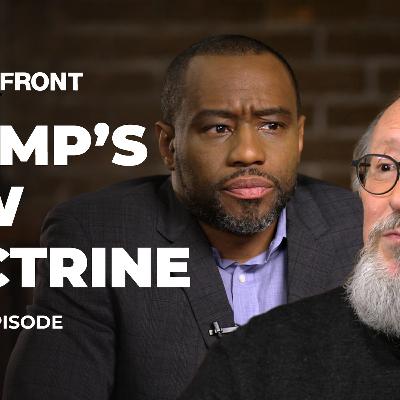
Following United States forces’ abduction of Venezuelan President Nicolas Maduro, a new set of questions is emerging as to how far Donald Trump is prepared to go in pushing US power abroad through direct intervention. But is this a real break with past policy - or the latest iteration of the US's longstanding interventionist power play in Latin America? And with Cuba back in the administration’s sights, will Trump push for further action in the region? This week on UpFront, Marc Lamont Hill speaks with Senior Analyst at the National Security Archive, Peter Kornbluh.
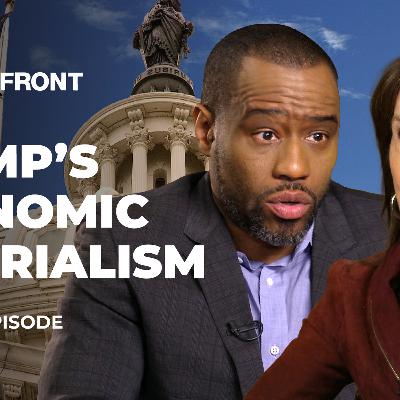
One year into his second term, United States President Donald Trump is testing the outer limits of executive power. From the abduction of Venezuelan President Nicolas Maduro to threats towards Iran and efforts to secure control of Greenland, the administration has plunged the US into turbulent territory. Domestically, the Trump administration is enforcing hardline immigration policies. Documented reports of expanded anti-immigration operations - along with allegations of racial profiling and detentions affecting even US citizens and legal residents - have many communities on edge. Adding to this, a shaky economy has many in the US questioning Trump’s policies as his approval ratings plummet before November's midterm elections. This week on UpFront, Marc Lamont Hill speaks with Katrina vanden Heuvel, editor and publisher of The Nation magazine, about Trump testing the limits of his executive power and what this could mean for the rest of his presidency.
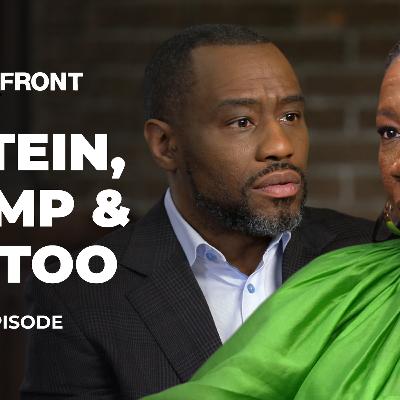
In 2017, a reckoning over sexual violence called “#MeToo” swept the globe. Eight years later, has the movement done enough for survivors? And what will it take for some of the world’s most powerful men accused of sexual misconduct to face consequences? This week on UpFront Marc Lamont Hill speaks to founder of the Me Too movement, Tarana Burke. The Department of Justice has released files related to the late convicted sex offender and financier Jeffrey Epstein after mounting pressure led President Donald Trump to sign the Epstein Files Transparency Act last month. Trump, who himself has been accused dozens of times of sexual assault and misconduct, has already appeared in photos, emails and other documents in connection with Epstein, causing a rift in his base. Other business elites, academics, politicians and world leaders have also been named in connection to Epstein. While some have faced minor consequences, only Ghislaine Maxwell has been criminally convicted as part of Epstein’s sex trafficking of minors. Will newly released documents lead to new convictions and genuine accountability for survivors?
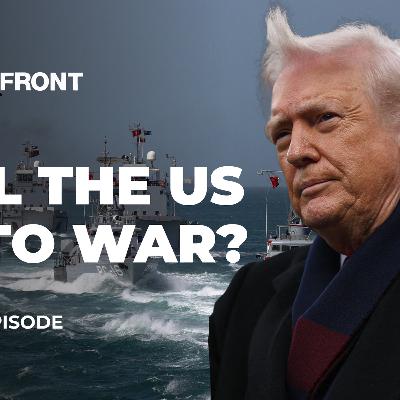
Is the United States orchestrating regime change in Venezuela? Could this spark an all-out war? This week on UpFront, Marc Lamont Hill speaks to Alan McPherson, an author and history professor at Temple University who specialises in US-Latin American relations. The US is continuing the largest military build-up in Latin America in decades and has seized an oil tanker off the coast of Venezuela. US President Donald Trump has also threatened to attack Venezuela by land “very soon”, while the Pentagon continues to strike alleged drug boats in the Caribbean and Pacific. At least 87 people have been killed in what human rights groups have called extrajudicial killings and murder. The Trump administration has made clear that it wants Venezuelan President Nicolas Maduro out of power, and has thrown its support behind opposition figure and Nobel Peace Prize laureate Maria Corina Machado. She supports foreign intervention and wants to privatise Venezuelan oil, leaving many to question how much the ideologies of US politicians and the interests of oil companies are driving the push for regime change inside Venezuela. Subscribe to our channel: http://bit.ly/AJSubscribe Follow us on X : https://twitter.com/AJEnglish Find us on Facebook: https://www.facebook.com/aljazeera Check our website: http://www.aljazeera.com/ Check out our Instagram page: https://www.instagram.com/aljazeeraenglish/ Download AJE Mobile App: https://aje.io/AJEMobile #aljazeera #aljazeeraenglish #aljazeeranewslive
How do the legacies of empire continue to shape politics today? In his new book, Slow Poison: Idi Amin, Yoweri Museveni, and the Making of the Ugandan State, Mahmood Mamdani examines how colonial rule shaped Uganda’s political institutions and the leaders who emerged from them. Mamdani also reflects on political change closer to home: His son, Zohran Mamdani, is poised to become the first Muslim mayor of New York City - a victory he says reveals deep generational shifts in US politics. This week on UpFront, Marc Lamont Hill speaks with renowned scholar Mahmood Mamdani about colonial legacies, multipolarity, and what these shifts mean for global politics today.
Did the Biden administration help cover up the killing of Al Jazeera journalist Shireen Abu Akleh by Israeli forces? This week on UpFront, Marc Lamont Hill speaks to Steve Gabavics, a colonel-turned-whistleblower who was sent by the United States Department of State to investigate Abu Akleh's killing in 2022. Gabavics found that Israel intentionally killed Abu Akleh, who was fired at 16 times while wearing a blue vest marked “press”, but the State Department labelled her killing "accidental" to avoid angering the Israeli government. Gabavics claimed that Abu Akleh is among several American citizens killed by the Israeli military for whom the US has taken no action to hold Israel accountable.
As inequality deepens and dissent is punished, many are looking to new voices like Zohran Mamdani, the democratic socialist running for New York City mayor on a platform of rent freezes, free public transit, and taxing the rich. Can candidates like him revive the Democratic Party in the United States, or is real reform from within impossible? This week on UpFront, Marc Lamont Hill speaks with journalist and former Bernie Sanders Press Secretary Briahna Joy Gray.
As foreign troops, private contractors and international powers tighten their grip on Haiti, the country is facing one of the worst crises in its modern history. But who is really to blame? This week on UpFront, Marc Lamont Hill speaks with scholar and activist Jemima Pierre, who argues that the crisis is not home-grown but the result of two decades of United States, United Nations and Western intervention that dismantled Haitian democracy and sovereignty.
Does grassroots organising have the power to hold governments and corporations accountable for genocide? And where does the US labour movement stand today? This week on Upfront Marc Lamont Hill speaks to labour organiser and activist Chris Smalls, who cofounded Amazon’s first US labour union. Smalls has also been a vocal critic of the United States’s complicity in the genocide in Gaza and argues that labour unions in the country have a role to play to stop Israel: “If our dock workers did the same as our brothers and sisters overseas, we wouldn't see a genocide,” he says.
The Hague Group is a new alliance of nations, primarily from the Global South, taking coordinated legal action to uphold international law and hold Israel accountable for its actions in Palestine. But will this effort bring real accountability? And as the US faces growing criticism for its role in Gaza and its dominance over global institutions, many countries, especially in Latin America, are calling for a fairer, multipolar world order. Could this mark a turning point, a moment when the Global South begins to reshape the balance of power? This week on an UpFront special, Marc Lamont Hill speaks with Guillaume Long, senior diplomatic adviser to the Hague Group and former Ecuadorian foreign minister.
President Trump has released a Gaza “peace” plan that would put Gaza under a Trump-chaired “Board of Peace”. While some in the international community have welcomed the move, some question the fact that it bypasses Palestinians and offers no path to statehood. So, with Netanyahu pledging not to fully withdraw from Gaza, will this deal bring genuine peace or cement the status quo? This week on an UpFront special, Marc Lamont Hill speaks with one of the world’s foremost experts on the Israel-Palestine conflict, Norman Finkelstein.
The United Nations Independent International Commission of Inquiry recently declared that Israel is committing genocide in Gaza in a new report. With more than 60,000 Palestinians killed, calls for accountability and an end to the assault are mounting. But how is the determination of genocide made? And within Israel itself, how is Netanyahu’s assault on Gaza seen? This week on an Upfront special Marc Lamont Hill speaks with genocide scholar and professor at Brown University, Omer Bartov. Subscribe to our channel: http://bit.ly/AJSubscribe Follow us on X : https://twitter.com/AJEnglish Find us on Facebook: https://www.facebook.com/aljazeera Check our website: http://www.aljazeera.com/ Check out our Instagram page: https://www.instagram.com/aljazeeraenglish/ Download AJE Mobile App: https://aje.io/AJEMobile #aljazeera #aljazeeraenglish #aljazeeranewslive
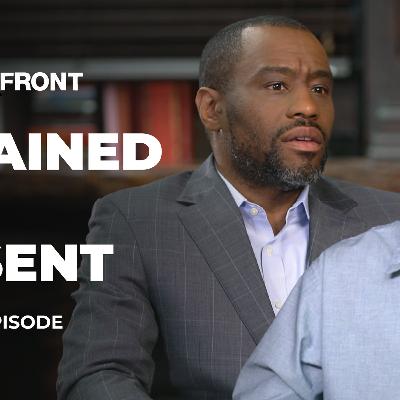
After fleeing Syria’s civil war, Palestinian Columbia University graduate Mahmoud Khalil was detained in the United States for more than 100 days after protesting against Israel’s genocide in Gaza. He says his arrest was meant to silence dissent and intimidate others from speaking out. So what does Khalil’s story reveal about the suppression of dissent in the US and the risks faced by those who speak out for Palestinian rights? This week on UpFront, Marc Lamont Hill speaks to Mahmoud Khalil. *Editor’s Note: This interview was recorded before an immigration judge issued an order for Mahmoud Khalil’s deportation. Khalil's immigration lawyers say they intend to appeal the immigration court's deportation order.


Download from Google Play

Download from App Store
 United States
So glad to have dound this show.. and coverage from BOTH sides.. thank you, and all success!
So glad to have dound this show.. and coverage from BOTH sides.. thank you, and all success!