


 Claim Ownership
VRMA Arrival
Subscribed: 7Played: 368
Subscribe

© VRMA
Description
The official podcast of the Vacation Rental Management Association (VRMA). As the only organization representing the entire spectrum of the vacation rental industry, VRMA has an audience of both vacation rental managers and suppliers, large and small. Join us as we discuss vacation rental management trends, hot topics and association initiatives with the industry’s leading minds.
72 Episodes
Reverse
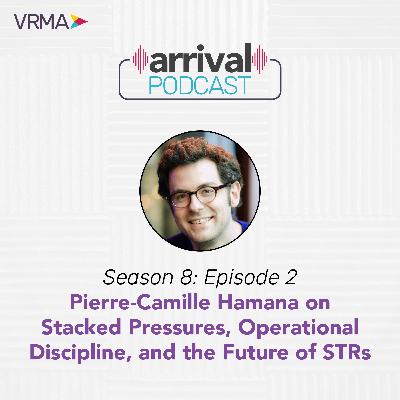
In this episode of the VRMA Arrival Podcast, Pierre Camille Hamana, CEO and founder of Hospitable, joins us to unpack key findings from Hospitable’s newly released 2026 STR Industry Report and what they signal for hosts and professional property managers.Hamana explains why 2025 was a revealing year for the industry, marked by “stacked pressures” that included rising operating costs, softening demand, staffing challenges, and economic uncertainty. Rather than facing isolated problems, many operators experienced multiple constraints at once, forcing a renewed focus on discipline, efficiency, and day-to-day execution.Despite those headwinds, confidence remains intact. Nearly 60% of surveyed hosts and property managers plan to expand their portfolios in 2026, reflecting long-term belief in short-term rentals as a durable asset class. The challenge, Hamana says, isn’t demand for the product itself, but whether operators have the systems in place to deliver consistent performance and reliable financial returns.A major theme of the conversation is the evolving role of technology. Property management software is no longer just about channel distribution; it’s becoming an operating system for housing—centralizing pricing, guest communication, team coordination, device control, and owner reporting. Automation, AI, dynamic pricing, and smart devices are now core infrastructure, not optional add-ons.Hamana also shares practical advice for mid-size property managers planning for the year ahead, emphasizing operational efficiency over growth at all costs. Without strong systems, he warns, expansion only amplifies existing weaknesses. The operators best positioned for 2026 will be those who reduce variable costs, automate aggressively, maintain service quality at scale, and make their value to owners visible through clear reporting and performance metrics.

In this episode of the VRMA Arrival podcast, Lance and Elaine Stitcher of Seaside Vacation & Sales share the story behind their 2025 VRMA Excellence Awards win for Best Marketing Campaign, and why the campaign was never really about Seaside at all.Celebrating both their company’s 10th anniversary and the 100th annual Chincoteague Pony Swim, the Seaside team challenged themselves to do something bold: create an original, feature-length documentary that honored the island’s history, culture, and people. Led by a small but highly creative in-house marketing team, the project became the centerpiece of a year-long storytelling campaign that extended far beyond the film itself, generating millions of social impressions, significant follower growth, and hundreds of thousands of dollars in directly attributable bookings.Lance and Elaine unpack how the campaign came together, how they measured success, and why community-first storytelling consistently outperforms traditional “listing-first” marketing. They also share practical takeaways for property managers of any size—whether or not they have a milestone event or a big budget—including how to repurpose content, spotlight local characters, and let destination storytelling do the heavy lifting.
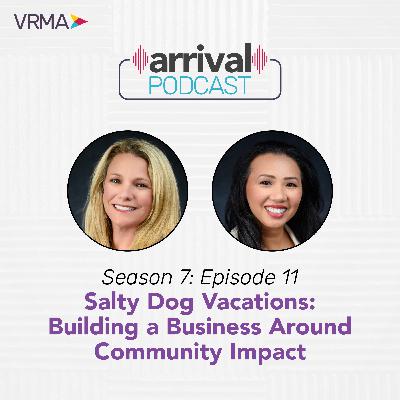
In this episode of the VRMA Arrival podcast, we sit down with Salty Dog Vacations co-owners Kymberlee Nguyen and Krista Goodrich, recent recipients of VRMA’s Community Impact Award. Based in the Daytona Beach area, Krista and Kym share how they’ve woven service into every part of their business model—from mentoring at-risk students and serving on the local school board to supporting Daytona Dog Beach, organizing book and clothing drives, and directing guest spending toward locally owned businesses and tours. Throughout the conversation, they highlight how leading by example inspires both their team and homeowners to get involved. Listeners will walk away with practical ideas for starting or deepening their own community impact efforts, along with a reminder that “wealth” comes in many forms—and that businesses can shape their communities for the better.
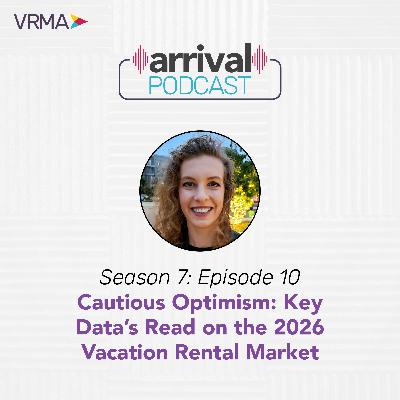
Melanie Brown, vice president of data insights at Key Data, joins the podcast to unpack Key Data’s Vacation Rental Industry Outlook 2026—a survey of nearly 250 US property managers that reveals what operators expect in the year ahead. According to Brown, sentiment has finally shifted toward “cautious optimism,” with most managers anticipating flat to modest gains in ADR, demand, and revenue per unit. But optimism isn’t replacing realism: staffing shortages, revenue pressures, and tightening regulations remain top concerns heading into 2026.

Jessica Gillingham—CEO of Abode Worldwide and author of “Tech-Enabled Hospitality”—joins us to map the real state of hospitality tech across short-term rentals, hotels, and multifamily. Drawing on interviews with 38 global leaders, she argues that technology’s job is simple: enable better hospitality. We dig into the mindset shift from “tech as cost” to “tech as a strategic investment,” why many operators now prize stability and long-term vendor partnerships over constant churn, and how AI is moving personalization from buzzword to practice—provided operators unify data across the guest and staff journeys. Jessica explores the rise (and operational complexity) of hybrid hospitality models, the cooling of sustainability talk versus the steady, cost-driven adoption of IoT, and her big prediction: search and discovery will change fast as LLMs start answering instead of listing, reshaping OTA dynamics and operator marketing. She closes with pragmatic advice for managers: start with strategy, move deliberately, and use tech to get more human, not less.
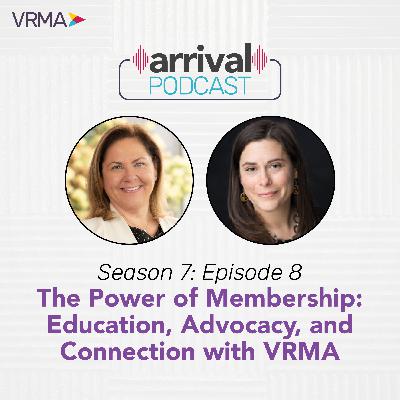
In this episode, VRMA Board Chair Jodi Refosco and Executive Director Anne Gardner explore how VRMA supports its members every day—not just during conferences. They share exciting updates about modular training programs, safety certifications, and upcoming webinars, including one on ADA compliance. Plus, they discuss VRMA’s reinvigorated advocacy efforts, growing supplier community, and a special gift for listeners: recordings of the top 10 sessions from the 2024 International Conference. Whether you’re a longtime member or considering joining, this conversation offers valuable insight into how VRMA is your year-round professional home.

In this episode, VRMA Arrival podcast host Alexa Schlosser sits down with Molly Reardon, head of short-term rental growth at PointCentral and a short-term rental owner herself. Reardon offers a unique dual perspective on how technology can enhance—not replace—the human side of hospitality. She shares firsthand experiences installing smart home hardware, discusses how the pandemic accelerated tech adoption in the industry, and explains where AI is delivering real value for property managers—from saving time to enabling personalization. The conversation also explores quick-win automations, eco-conscious smart tools, and the next big trends shaping vacation rentals in 2025, including consolidation and smarter tech integration.
In this episode of the VRMA Arrival podcast, David Stephens, lead data scientist at TravelNet Solutions, cuts through the AI hype to share what short-term rental operators really need to know. From guest messaging and marketing to revenue management and sentiment analysis, Stephens explains where AI adds true value and where it still needs a human touch. He also offers key questions to ask before adopting any AI tool and compares cutting-edge “thinking” models to today’s more common AI applications.
In this episode of the VRMA Arrival podcast, VRMA Board Chair Jodi Refosco sits down with Tiffany Edwards of Weatherby Consulting to discuss the formation of VRMA’s new Government Affairs Council and what it means for the vacation rental industry. They explore why the council was created, how it consolidates previous advocacy committees, and what major regulatory challenges it aims to address, including housing affordability, tourism taxes, and commercial classification. Edwards also offers a behind-the-scenes look at the council’s structure, funding strategy, and how VRMA members can get involved, donate, and shape the industry’s future.
In this episode of the VRMA Arrival podcast, Onita Mihaly, senior director of brand marketing at Ooma, discusses the company's role in improving short-term rental (STR) safety with its VoIP-based landline service.
In this episode of the VRMA Arrival podcast, host Jodi Refosco, VRMA Board chair, is joined by Tim Cafferty (Sandbridge Blue & Outer Banks Blue) and Tyann Marcink Hammond (Branson Family Retreats) to preview VRMA Foundations, taking place April 14-15 in Savannah, Georgia.Unlike traditional conferences, Foundations is a brand-new event built from the ground up to deliver hands-on, targeted training for frontline staff, operations teams, and emerging leaders in the vacation rental industry. With longer, in-depth sessions and three focused tracks—Office, Field, and Team—attendees will walk away with practical skills and immediate takeaways.Tune in to hear what makes this event unique, who should attend, can’t-miss sessions (yes, there’s one on pools and hot tubs!), and why Savannah is the perfect backdrop.
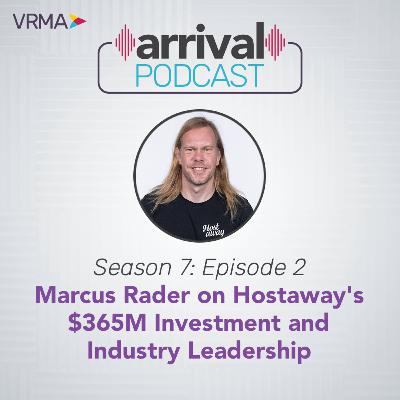
In this VRMA Arrival podcast episode, Marcus Rader, CEO of Hostaway, shared the company’s impressive growth since 2022, which is the last time we had Rader on the podcast, including securing a $365 million investment and expanding its product offerings. Hostaway has evolved into a multiproduct, all-in-one solution for short-term rental property managers, driven by customer feedback and innovation.Rader highlighted the role of AI in optimizing guest communication, enhancing property listings, and improving operations. He also discussed the company’s international expansion into France, Spain, and Italy, leveraging its European roots to localize offerings and strengthen its market presence.Amid industry consolidation, Rader emphasized Hostaway’s competitive edge, citing customer satisfaction and glowing reviews. Looking ahead, he envisions further growth through innovation and a focus on delivering exceptional value to property managers.

On the latest episode of the VRMA Arrival podcast, Bart-Jan Leyts, the 25-year-old founder of Otamiser, shared his insights into optimizing OTA rankings for short-term rentals (STRs) and hotels. Based in Ghent, Belgium, Otamiser has grown rapidly since its launch three years ago, recently introducing a cutting-edge tool called Autorank. Designed specifically for STRs, Autorank automates listing updates to align with ever-changing algorithms on platforms like Airbnb, helping property managers increase visibility, bookings, and guest satisfaction.
Leyts explained that many property managers neglect their listings after the initial setup, leading to poor rankings over time. Tools like Autorank address this by automating adjustments, such as selecting impactful photos or refining descriptions, all based on data rather than guesswork. He emphasized that regional nuances also play a role; for instance, in Aruba, where pools are common, simply showcasing a pool is no longer a competitive advantage.
With $3 million in recent funding, Otamiser is set to expand Autorank’s reach and enhance its hotel-focused products. Leyts also reflected on industry trends, predicting that dynamic pricing tools will become more strategically vital and sharing his belief that OTAs will continue to dominate over direct bookings due to their scalability and efficiency.

In this episode of the VRMA Arrival podcast, Matthew Gurley, director of sales and partner integrations at Lynnbrook, discusses the growing issue of credit card fraud in the vacation rental industry and the strategies property managers can implement to protect themselves. Gurley explains how fraudsters target vacation rental companies, especially smaller or independent operators with less robust security measures. He shares examples of fraud schemes, including bot attacks that test stolen credit cards and instances where fraudsters book luxury rentals to commit theft or illegal activities.
Gurley emphasizes the importance of two-factor authentication (2FA) as a simple yet effective tool to prevent fraud. He explains Lynnbrook’s post-booking 2FA system, which verifies the identity of guests by matching reservation data with public phone records. This system has significantly reduced fraud without disrupting the guest experience.
He also highlights other protective measures, such as background checks, ID verification, and using automated tools to reduce the risk of fraud. Gurley acknowledges that while AI and other technologies are advancing to catch fraudsters, the criminals themselves are also evolving, using techniques like Photoshop and voice modulators.
The episode provides practical advice for vacation rental managers, stressing the importance of staying vigilant and leveraging available technology to mitigate the risk of fraud.
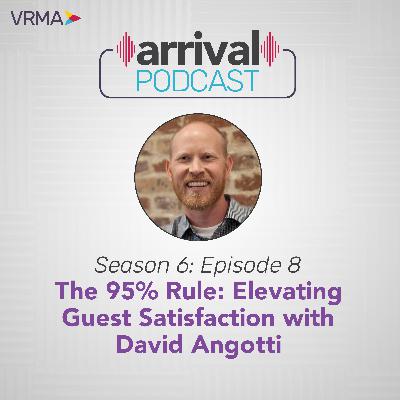
In this episode, David Angotti, chief evangelist at Guesty, discusses the evolving landscape of the vacation rental industry. He explores the rise of unique, high-end rental properties popularized by Airbnb and how property managers can differentiate themselves by delivering personalized guest experiences. Angotti highlights the importance of leveraging technology, empowering staff, and maintaining a human connection in an industry driven by customer satisfaction. He also emphasizes the need for scalable training processes and strategic use of social media to build lasting relationships with guests. With a focus on blending technology and the human touch, Angotti outlines the future of the vacation rental space.
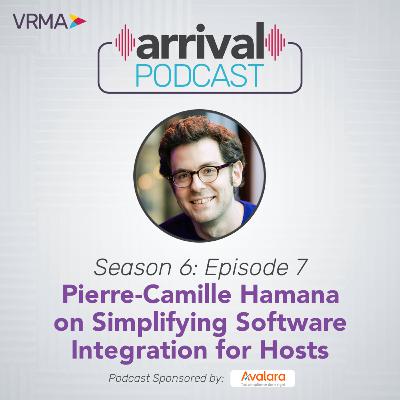
In this episode of the VRMA Arrival podcast, we delve into the journey and insights of Pierre-Camille Hamana, the founder and CEO of Hospitable. Hospitable is a company dedicated to providing software solutions for property managers and hosts in the short-term rental industry.
In the episode, Hamana shares his background and journey to founding Hospitable. Originally trained as a lawyer, his entry into the property management software space was driven by personal necessity when he started renting out his apartment on Airbnb.
Hospitable began as a solution to automate guest communication and has evolved over eight years to support 15,000 customers, mainly hosts with fewer than seven properties. The company’s core mission is to save time for property managers and hosts, allowing them to focus on enhancing guest experiences and spending time with loved ones.
Hospitable has always prioritized AI, aiming to simplify and automate the complexities of property management. This approach has seen significant advancements over the past two years, enabling more efficient operations for users.
Hospitable Connect is a new feature designed to reduce the perceived risks and complexities of connecting with software for property owners and self-managers. It allows hosts to integrate with OTAs (online travel agencies) like Airbnb and Vrbo without altering their existing experiences. This solution lowers the barrier for hosts to adopt software and enhances their operational efficiency.
The goal of Hospitable Connect is to professionalize the short-term rental industry by making advanced software solutions accessible to all, not just large property management companies. Hamana emphasizes the importance of integration and connectivity, advocating for a more inclusive approach that benefits both small hosts and large operators.
Listeners are invited to try Hospitable’s products for free for two weeks via a special offer at hospitable.com/vrma2024, with a 25% discount for the first three months on any chosen plan.
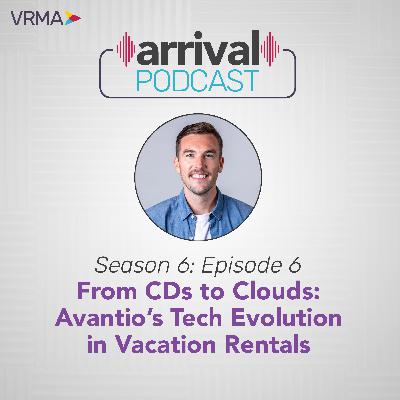
In the latest episode of the VRMA Arrival Podcast, VRMA publications editor Alexa Schlosser interviews Tommy Ciaccio, head of business development for Avantio in the US and Canada. Ciaccio shares Avantio’s journey from its beginnings in Spain to its expansion into North American markets, highlighting their focus on innovation and local expertise.
Avantio, founded 22 years ago in Spain, successfully entered the US and Canadian markets about four years ago. This growth is attributed to hiring local experts who understand regional nuances and regulations.
Airbnb, Vrbo, and Booking.com are key distribution channels. Avantio works closely with these OTAs to drive initial bookings, then focuses on converting them into direct bookings through optimized websites and a native channel manager.
Ciaccio emphasizes the importance of high-quality photos, accurate descriptions, and a seamless, professional website to build trust with guests. Avantio ensures a consistent and secure booking experience that enhances guest confidence.
With the trend toward shorter lead times, Ciaccio highlights the need for dynamic pricing tools and data insights. Leveraging technology partners helps property managers stay competitive and maximize revenue.
AI and data-driven decision-making are set to play crucial roles in the industry. Avantio continues to evolve, adding features like trust accounting and messaging integrations to meet market demands.
Avantio’s “global but local” approach tailors services to different markets by employing local experts, ensuring relevance and effectiveness in diverse regions.
In this episode of the VRMA Arrival podcast, Shahar Goldboim, co-founder and CEO of Boom, discusses how Boom is revolutionizing the property management industry through AI integration. He explains that Boom supercharges property management systems (PMS) by providing comprehensive solutions that integrate AI for business analytics and operations management. Shahar describes the origin of Boom, stemming from his previous company Design VR, and how the AI revolution prompted the development of Boom's AI solutions.
Goldboim highlights the unique value Boom offers by centralizing fragmented solutions within the industry, thus creating a “center of truth” for property managers. This integration allows for efficient handling of tasks, from guest inquiries to maintenance checks, by providing real-time data visualization and KPI tracking. He emphasizes that AI will not replace human touch but will streamline
operations, allowing property managers to focus on enhancing guest experiences. The podcast covers the customization capabilities of Boom’s AI, addressing common misconceptions and concerns about AI implementation, and discusses the future of AI in the property management industry.
On this episode of the VRMA Arrival podcast, we welcomed Breezeway CEO Jeremy Gall to discuss the state and challenges of the short-term vacation rental market. Breezeway is an operations and guest experience platform serving clients in the vacation rental market.
Gall highlighted the market’s robustness and the challenges property managers face with new homeowners’ unrealistic expectations and shorter booking windows. He emphasized the importance of building trust and maintaining relationships with owners by providing personalized services and leveraging technology. He also shared Breezeway’s plans to enhance its operations tools and the significant impact of AI on the industry. Looking ahead, he predicted trends toward increased service emphasis, professionalization, and the importance of the concierge experience for enhancing guest satisfaction and monetization.
In this episode of the VRMA Arrival podcast, VRMA editor Alexa Schlosser interviews Dave Payette, the founder of 365Villas, discussing his journey in founding the company and the influence of his background in technology. Payette shares his experience transitioning from the tech industry to the vacation rental sector and the challenges he faced as a property manager himself.
Key topics covered include:
The evolution of property management technology and the need for comprehensive platforms.
Factors to consider when choosing property management software, such as comprehensiveness, track record, usability, and support.
The importance of maximizing the effectiveness of chosen software through thorough onboarding and continued training.
Trends in the industry, including the shift from short-stay to long-stay rentals, and how property management software can adapt to these changes.
The role of property management software in helping property managers grow their businesses efficiently and effectively.
Common pitfalls property managers may encounter, such as complacency and not aligning technology use with business strategy.
Future trends in property management software, including the potential for AI integration and the development of collaborative social media ecosystems.
Payette also shares his favorite vacation destination, but you’ll have to listen to the episode to hear what it is!

Comments

Download from Google Play

Download from App Store
 United States