


Vedavarsity Sound™
Subscribed: 3Played: 52
Subscribe

© Vedavarsity 2025
Description
Vedavarsity Sound™ is the official podcast initiative of Vedavarsity™, created to extend its mission of preserving and presenting timeless Vedic wisdom. Drawing inspiration from the rich resources available on Vedavarsity.com, this project brings together teachings from revered Acharyas, insights from authentic Vedic texts, and thoughtful discussions on spiritual living.Through concise, meaningful, and spiritually uplifting episodes, Vedavarsity Sound™ seeks to make Vedic education accessible, inspiring, and rooted in the tradition that has guided seekers for generations.
203 Episodes
Reverse

Śrīmad-Bhāgavatam is one of the eighteen Purāṇas, but Srila Vyasdeva wrote it after compiling the essence of the Vedas in the Vedānta-sūtra and also composing the Mahābhārata and Purāṇas. But, one might ask, if the eighteen Purāṇas had already been compiled, does this make Śrīmad-Bhāgavatam the nineteenth Purāṇa?Srila Jiva Goswami explains in Tattva Sandharbha that this is not the case. Śrīmad-Bhāgavatam appeared first to Srila Vyasa in a concise and subtle form, as one of the eighteen Purāṇas. Srila Vyasa composed the Vedāntasūtra on the basis of this first edition of the Bhāgavatam. Later, when He sat in trance in pursuance of Nārada Muni’s order, the expanded form of Śrīmad-Bhāgavatam was revealed to Him as the natural commentary on the Vedānta-sūtra. Śrīmad-Bhāgavatam and the Vedāntasūtra share the same subject, the Absolute Truth, and they describe the same principles of sambandha (the relationship between the soul and God), abhidheya (the process of attaining the supreme goal), and prayojana (the supreme goal, perfect devotion to the Lord). Many ācāryas and scholars wrote later commentaries on the Vedānta-sūtra, but only those that agree with ŚrīmadBhāgavatam—such as those given by Ramanujacarya, Madhvacarya, and Baladeva Vidyabhusana—are bona fide. Suta Goswami alludes to Veda-vyasa’s composing two editions of Śrīmad-Bhāgavatam: sa saṁhitāṁ bhāgavatīṁ kṛtvān ukram ya cātma-jam śukam adhyāpayām āsa nivṛtti-nirataṁ muniḥ “The great sage Vyasadeva, after compiling ŚrīmadBhāgavatam and revising it, taught it to His own son, Sri Sukadeva Goswami, who was already absorbed in self-realization” —Srimad Bhāgavatam1.7.8.Commenting on this verse, Srila Visvanatha Cakravatī Thakura writes, atastadaivapūrva-nirmitasyaivaśrībhāgavatasy ānukramaṇam: “The word anukramya in this verse means that Veda-vyasa compiled a new edition of the already existing Śrīmad-Bhāgavatam.”THE ONENESS OF LORD KRISHNA AND BHAGAVATAMpādau yadīyau prathama-dvitīyautṛtīya-turyau kathitau yad-ūrūnābhis tathā paṣcama eva ṣaṣṭhobhujāntaraṁ dor-yugalaṁ tathānyaukaṇṭhas tu rājan navamo yadīyomukhāravindaṁ daśamaṁ praphullamekādaśo yaś ca lalāṭa-paṭṭaṁśiro ’pi yad dvādaśa eva bhāti“The Bhāgavatam’s First and Second Cantos are Lord Krishna’s feet, and the Third and Fourth Cantos are His thighs. The Fifth Canto is His navel, the Sixth Canto is His chest, and the Seventh and Eighth Cantos are His arms. The Ninth Canto is His throat, the Tenth His blooming lotus face, the Eleventh His forehead, and the Twelfth His head.Our initiatives need your support: https://rzp.io/l/brajsundardasSupport our causePaypal: https://paypal.me/bdpayments?country.x=IN&locale.x=en_GB
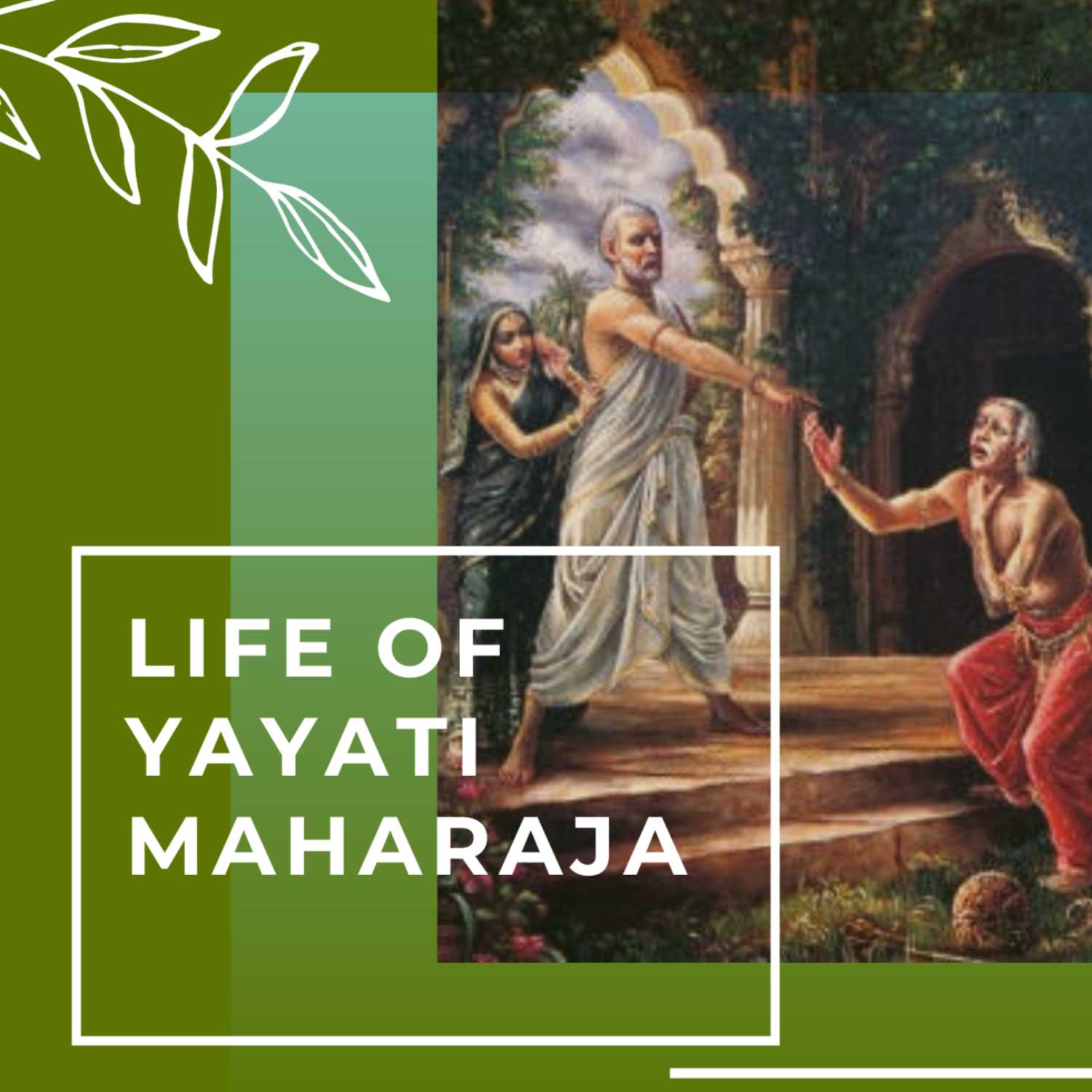
When Nahuṣa, who had six sons, was cursed to become a python, his eldest son, Yati, took sannyāsa, and therefore the next son, Yayāti, was enthroned as king. By providence, Yayāti married the daughter of Śukrācārya. Śukrācārya was a brāhmaṇa and Yayāti a kṣatriya, but Yayāti married her nonetheless. Śukrācārya’s daughter, named Devayānī, had a girlfriend named Śarmiṣṭhā, who was the daughter of Vṛṣaparvā. King Yayāti married Śarmiṣṭhā also. The history of this marriage is as follows. Once Śarmiṣṭhā was sporting in the water with thousands of her girlfriends, and Devayānī was also there. When the young girls saw Lord Śiva, seated on his bull with Umā, they immediately dressed themselves, but Śarmiṣṭhā mistakenly put on Devayānī’s clothes. Devayānī, being very angry, rebuked Śarmiṣṭhā, who also became very angry and responded by rebuking Devayānī and throwing her into a well.Our initiatives need your support: https://rzp.io/l/brajsundardasSupport our causePaypal: https://paypal.me/bdpayments?country.x=IN&locale.x=en_GB
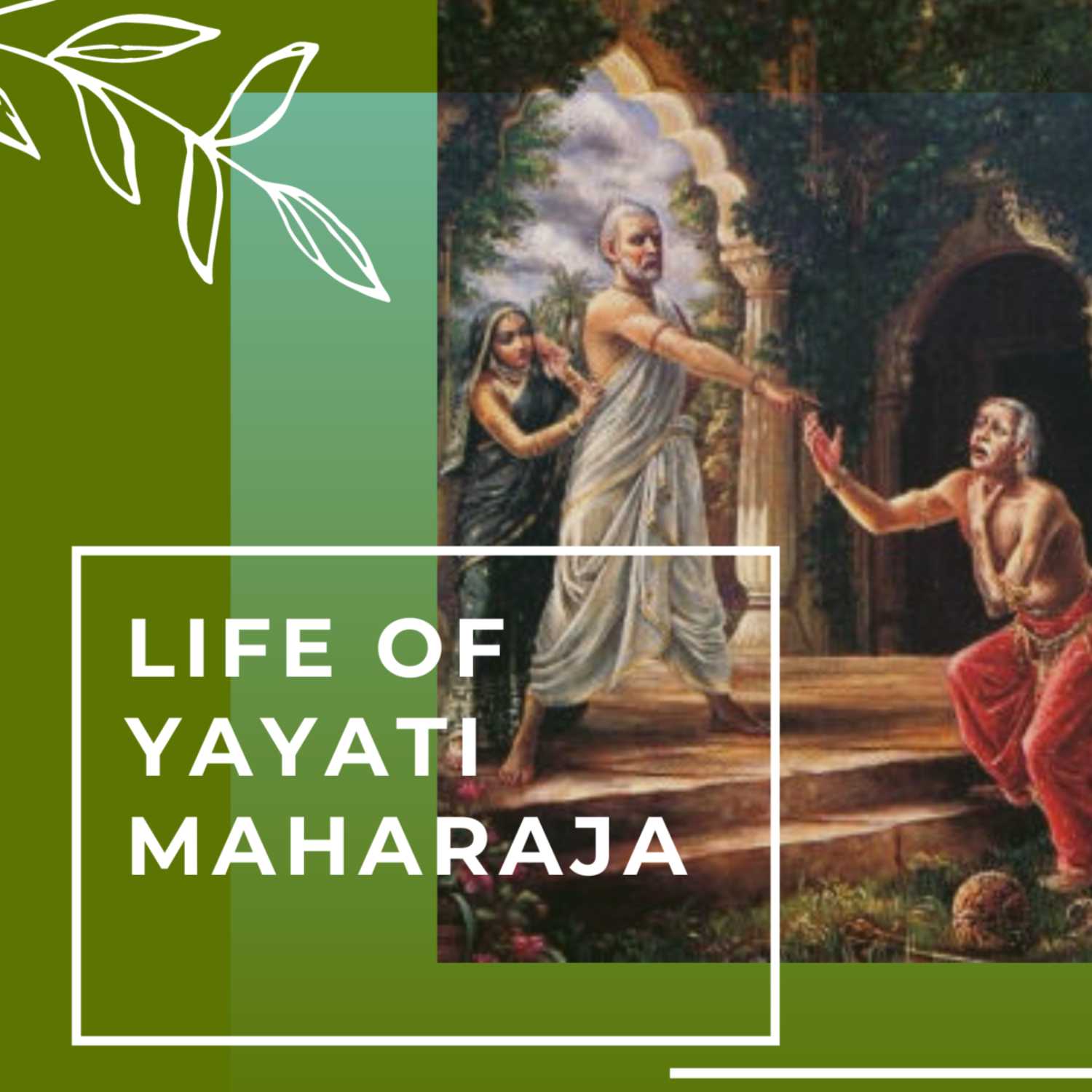
Śukrācārya became angry and cursed Mahārāja Yayāti to become old, but when Yayāti begged Śukrācārya to be merciful to him, Śukrācārya gave him the benediction that he could transfer his old age and invalidity to some young man. Yayāti exchanged his old age for the youth of his youngest son, Pūru.Our initiatives need your support: https://rzp.io/l/brajsundardasSupport our causePaypal: https://paypal.me/bdpayments?country.x=IN&locale.x=en_GB
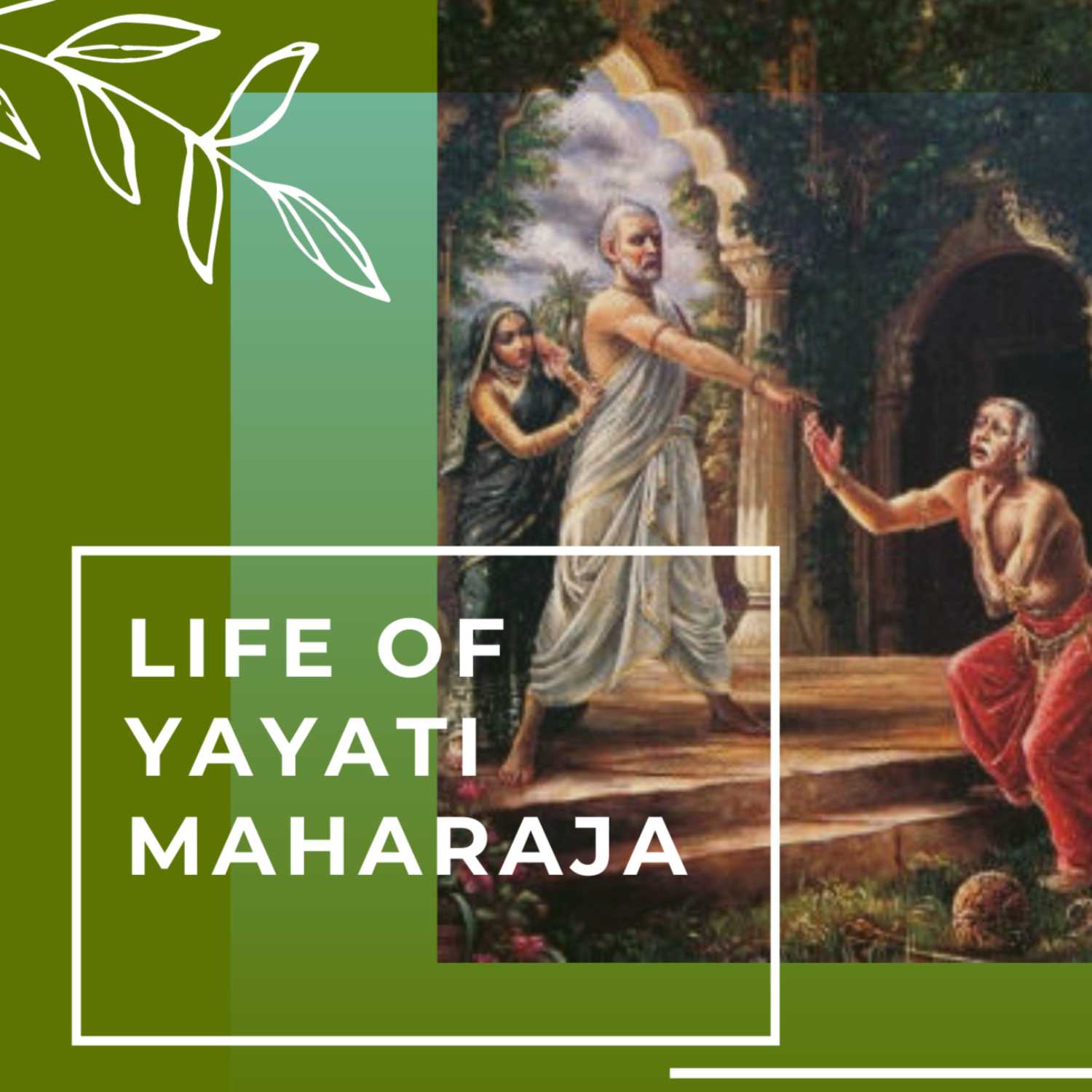
King Yayāti, however, renounced worldly life and divided his property among his sons. He personally adopted the life of a mendicant, or sannyāsī, giving up all attraction to material enjoyment, and engaged himself fully in devotional service to the Lord. Thus he attained perfection. Later, when his beloved wife, Devayānī, was freed from her mistaken way of life, she also engaged herself in the devotional service of the Lord.Our initiatives need your support: https://rzp.io/l/brajsundardasSupport our causePaypal: https://paypal.me/bdpayments?country.x=IN&locale.x=en_GB
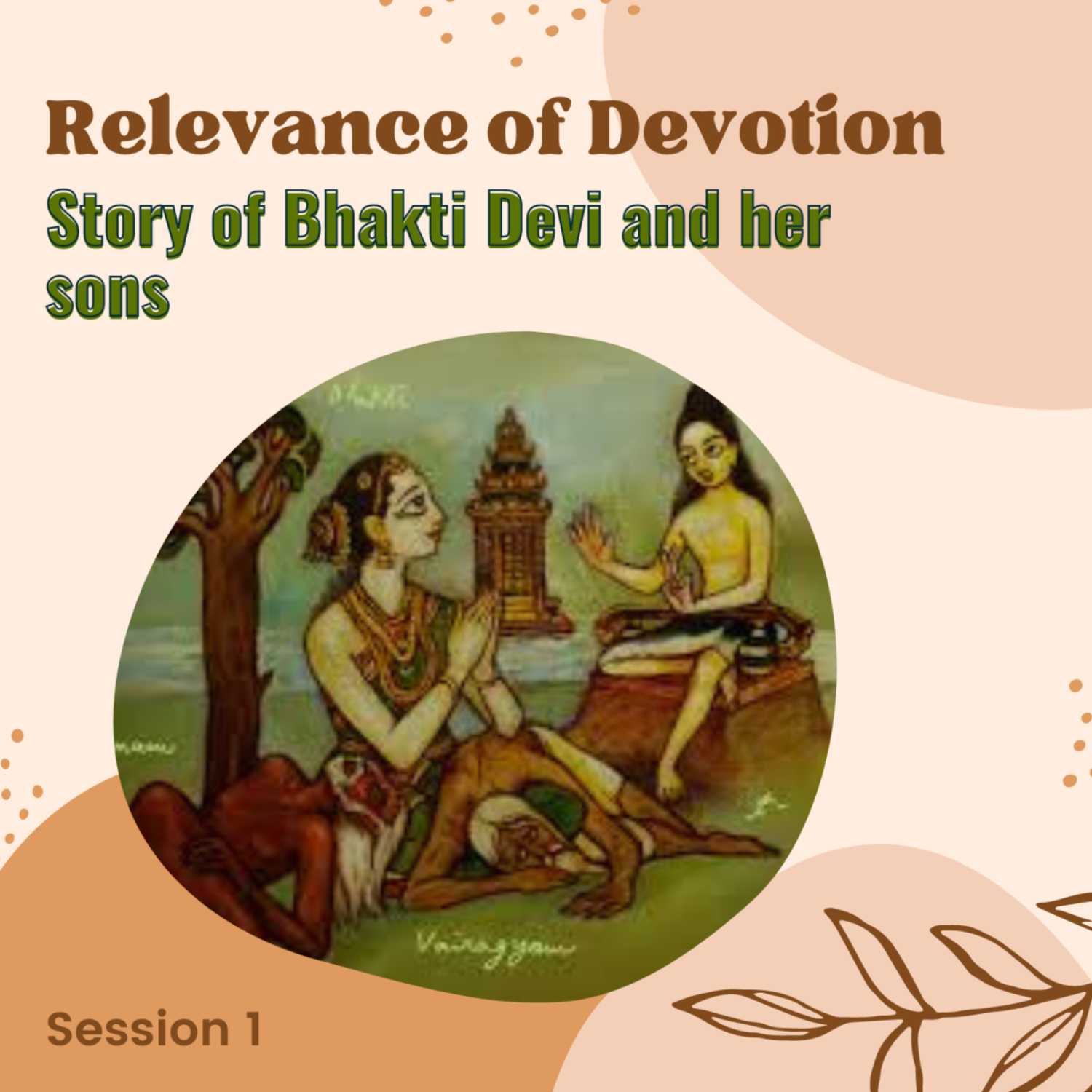
The Shrimad Bhagwat Puran, opens with a story of a mother called, Bhakti and her two sons Gyaan and Vairagya.When Narad Muni came down on Earth thinking it was the first and foremost place in the cosmos. But, after visiting such pilgrim places like Pushkar, Prayag, Kashi, Godavari (Nashik), Haridwar, Kurkshetra, Shrirang, Setubandh and several other pilgrim places he still did not feel peace and contentment anywhere. He realised it was the bane of Kaliyug, the rein of that period in Time, when Truth, Auserity, Purity ( both inward & outward). compassion, giving, etc are nothing and even those who claim to be pious, religious are engaged in the worst of crimes so what to talk of ordinary beings.Our initiatives need your support: https://rzp.io/l/brajsundardasSupport our causePaypal: https://paypal.me/bdpayments?country.x=IN&locale.x=en_GB
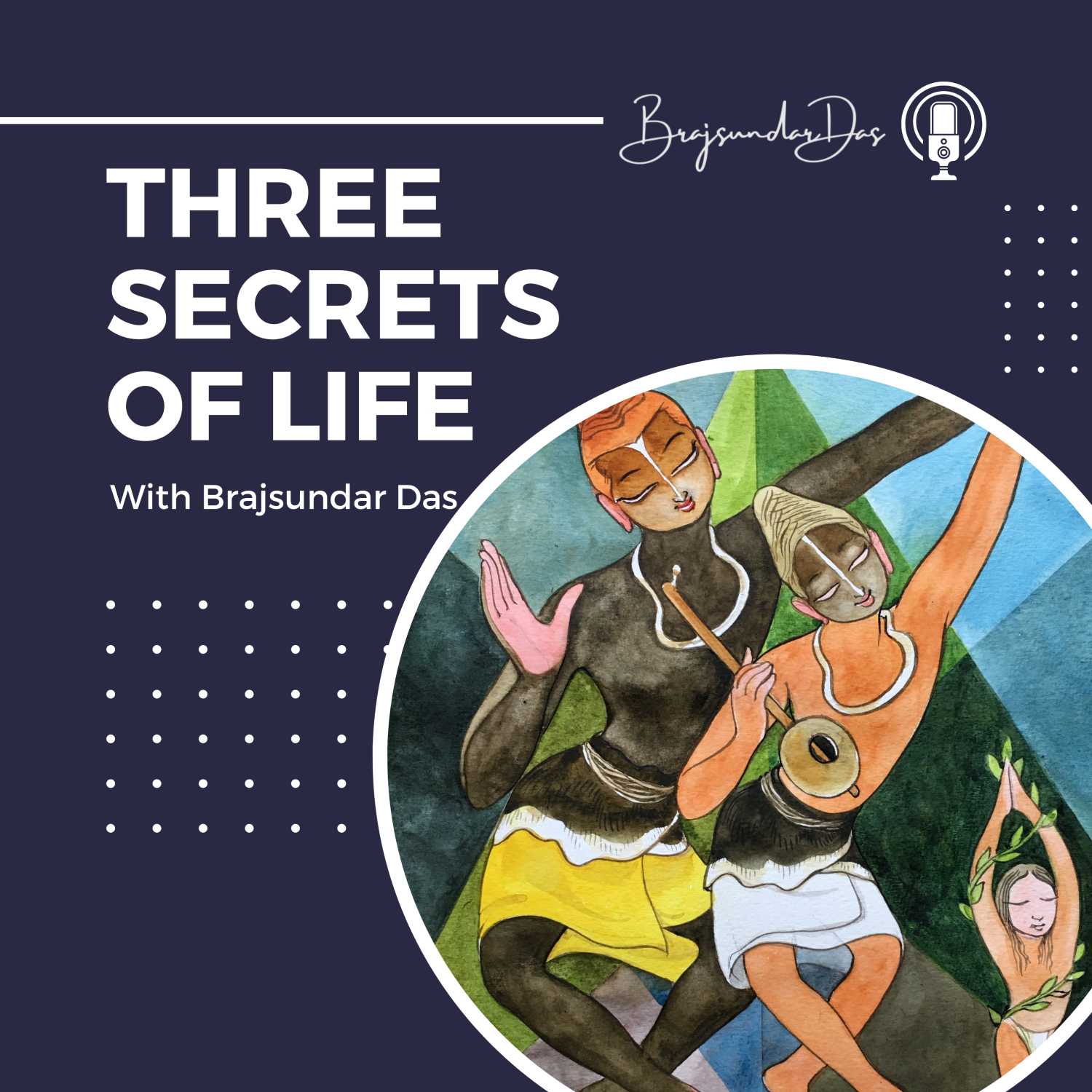
Generally when we find someone more qualified than ourselves, we become envious of him; when we find someone less qualified, we deride him; and when we find someone equal we become very proud of our activities. These are the causes of all material tribulations. The great sage Narada therefore advised that a devotee should act perfectly. Instead of being envious of a more qualified man, one should be jolly to receive him. Instead of being oppressive to a less qualified man, one should be compassionate toward him just to raise him to the proper standard. And when one meets an equal, instead of being proud of one's own activities before him, one should treat him as a friend. One should also have compassion for the people in general, who are suffering due to forgetfulness of Krishna. These important functions will make one happy within this material world.Our initiatives need your support: https://rzp.io/l/brajsundardasSupport our causePaypal: https://paypal.me/bdpayments?country.x=IN&locale.x=en_GB
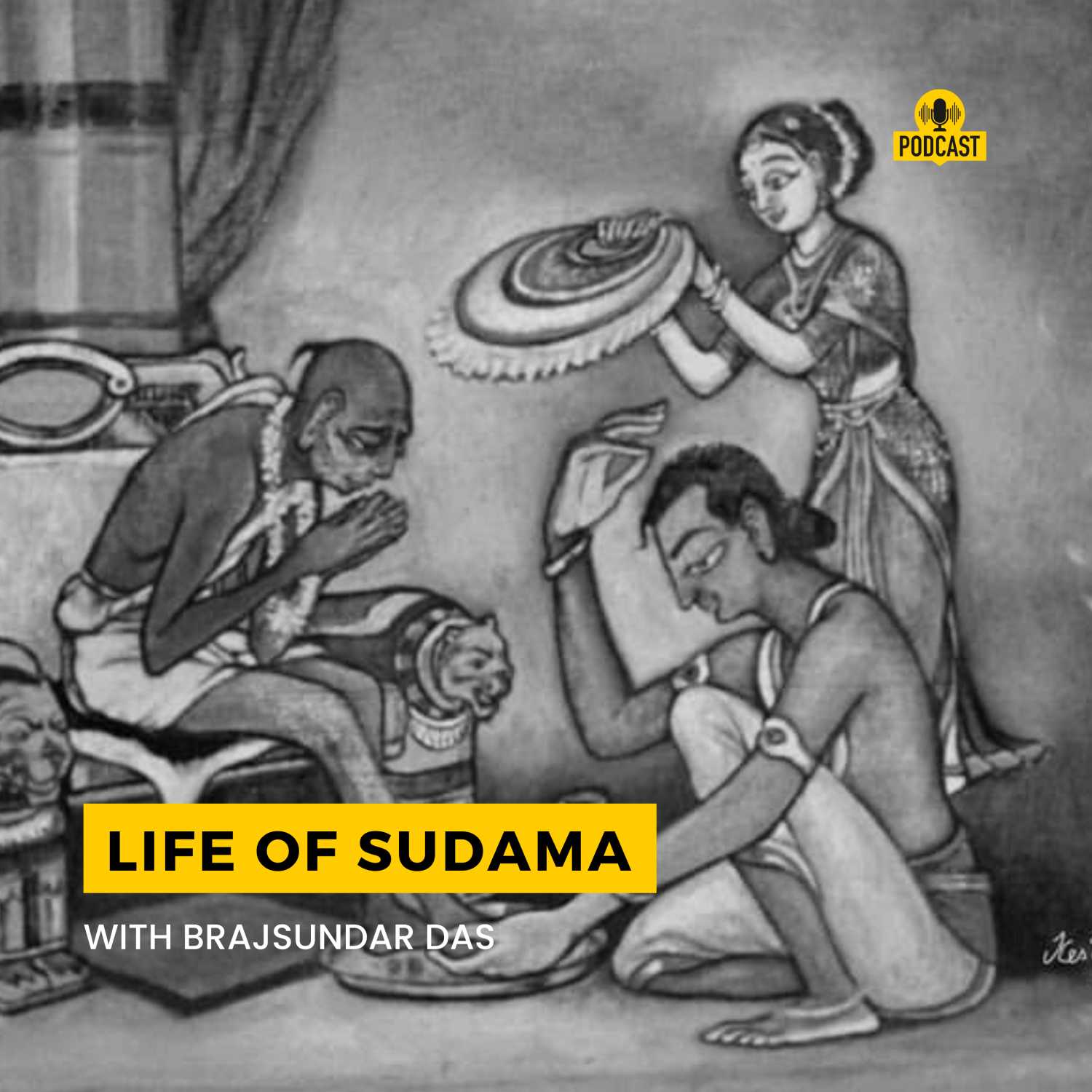
As Sudāmā approached the palace of Lord Kṛṣṇa’s principal wife, Rukmiṇī-devī, the Lord saw him from a distance. Kṛṣṇa immediately rose from His seat on Rukmiṇī’s bed and embraced His friend with great joy. Then He sat Sudāmā down on the bed, washed his feet with His own hands and sprinkled the wash water on His head. After this He presented him with various gifts and worshiped him with incense, lamps and so on. Meanwhile, Rukmiṇī fanned the shabbily dressed brāhmaṇa with a yaktail whisk. All of this astonished the residents of the palace.Lord Śrī Kṛṣṇa then took the hand of His friend, and the two of them reminisced about the things they had done together long ago, while living in the school of their spiritual master. Sudāmā pointed out that Kṛṣṇa engages in the pastime of acquiring an education only to set an example for human society.
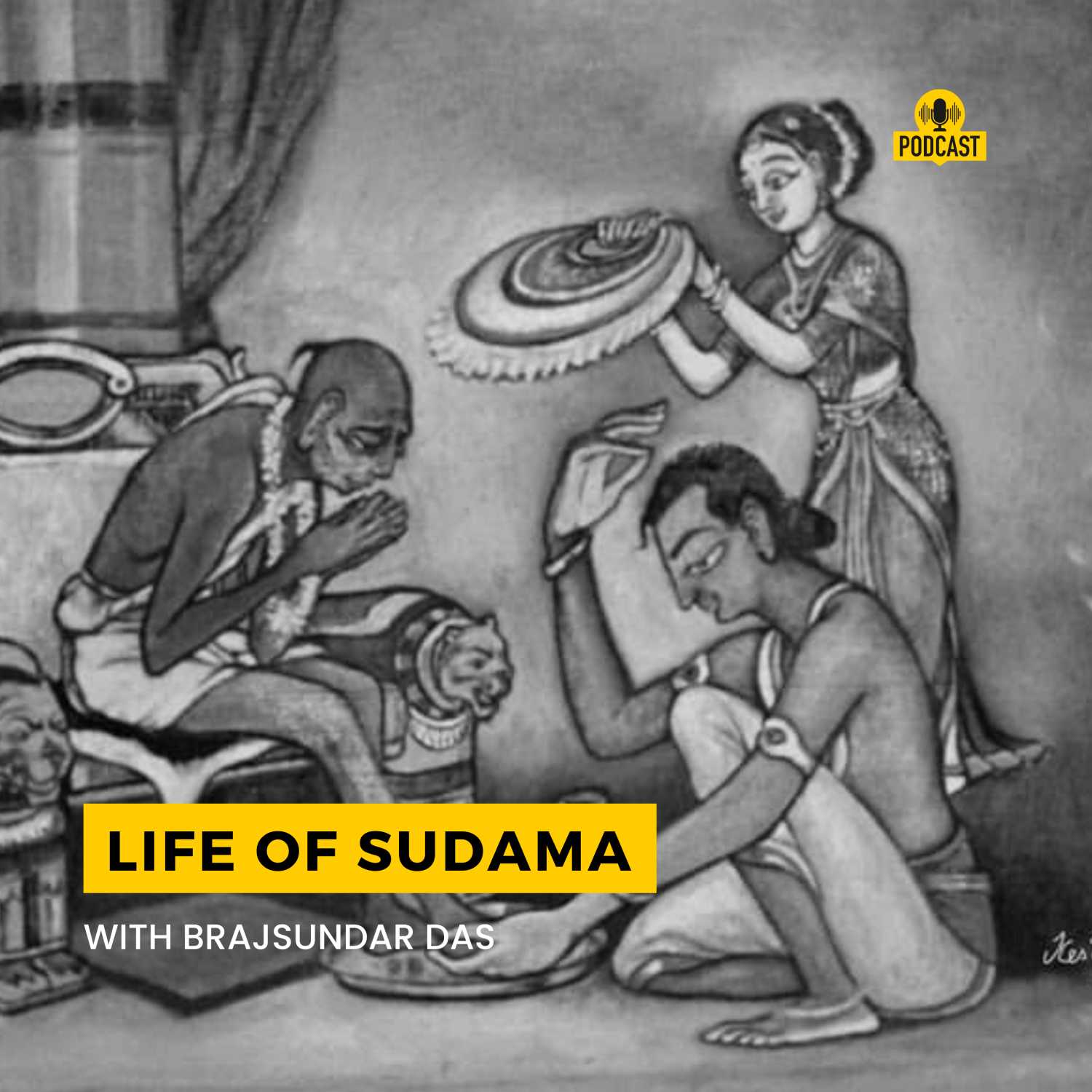
In the course of His loving talks with His friend Sudāmā, Lord Kṛṣṇa said, “My dear brāhmaṇa, have you brought any gift for Me from home? I regard as very significant even the smallest offering from My loving devotee.” But the poor brāhmaṇa was ashamed to present Kṛṣṇa with his meager gift of flat rice. However, since Lord Kṛṣṇa is the Supersoul dwelling in all hearts, He knew why Sudāmā had come to visit Him. So He grabbed the bundle of flat rice Sudāmā was hiding and ate a handful of it with great pleasure.
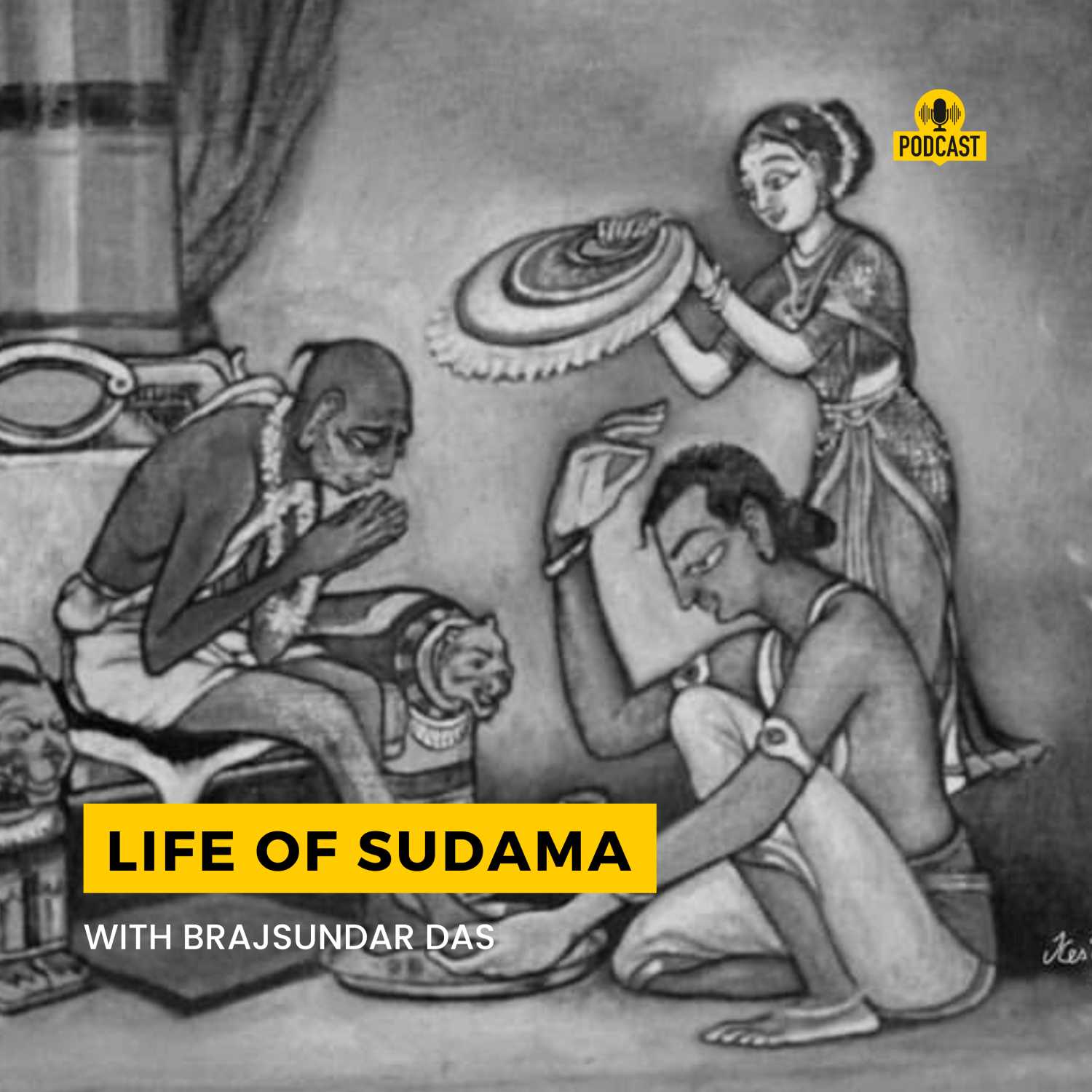
Sudāmā spent that night comfortably in Lord Kṛṣṇa’s palace, and the next morning he set off for home. As he passed along the highway, he thought of how fortunate he was to have been so honored by Śrī Kṛṣṇa. Absorbed in this meditation, Sudāmā arrived at the place where his home used to be — and he was struck with great wonder. Instead of his broken-down hovel, he saw a series of opulent palaces. While he stood astonished, a group of beautiful men and women came forward to greet him with singing and music. The brāhmaṇa’s wife, wonderfully adorned with celestial jewelry, came out of the palace and welcomed him with great love and reverence. Sudāmā entered his home together with her, thinking that this extraordinary transformation must have been due to the Supreme Lord’s mercy on him.
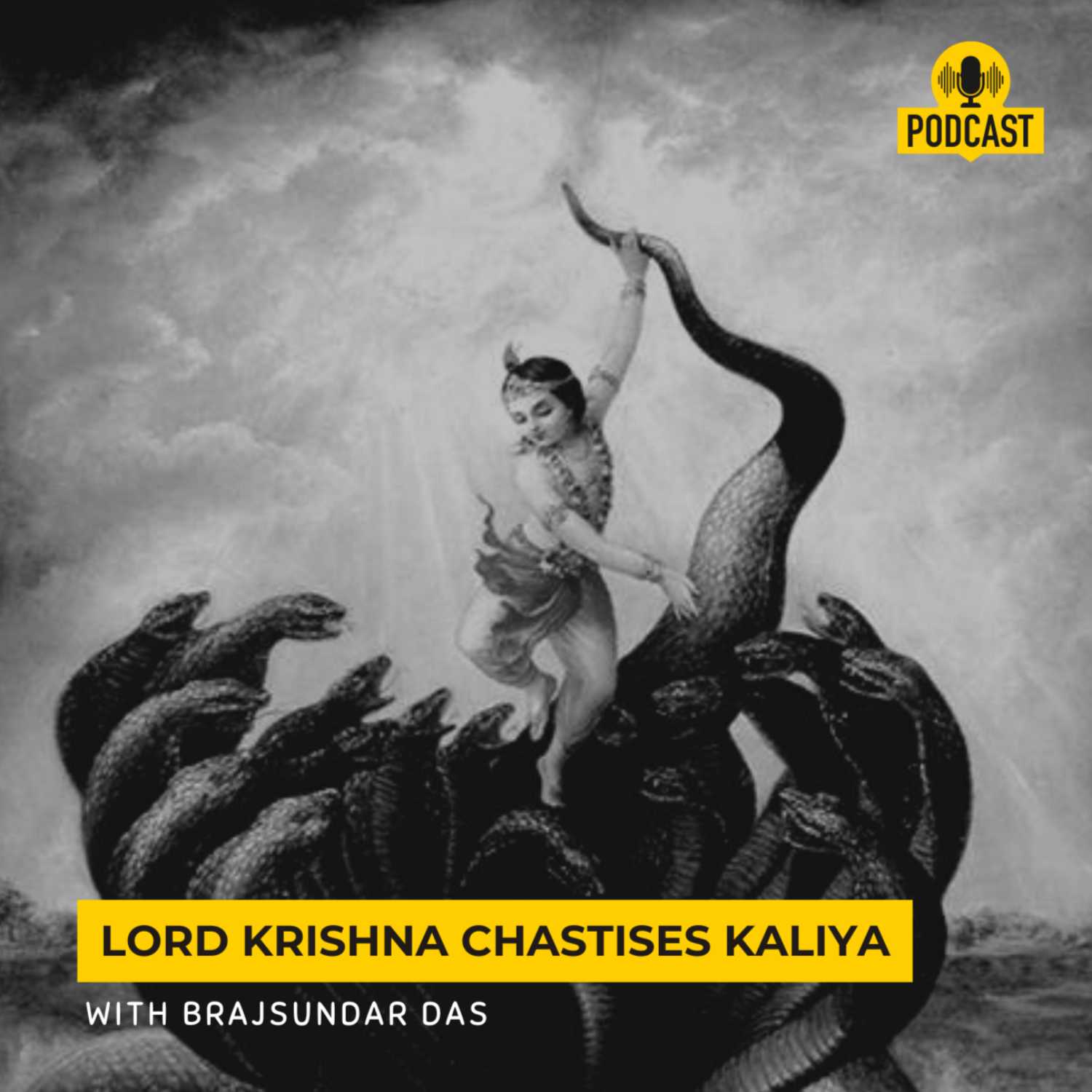
Śukadeva Gosvāmī narrated the story as follows. Within the river Yamunā there was a great lake, and in that lake the black serpent Kāliya used to live. Because of his poison, the whole area was so contaminated that it emanated a poisonous vapor twenty-four hours a day. If a bird happened to even pass over the spot, it would immediately die and fall down into the water. Due to the poisonous effect of the Yamunā’s vapors, the trees and grass near the bank of the Yamunā had all dried up. Lord Kṛṣṇa saw the effect of the great serpent’s poison: the whole river that ran before Vṛndāvana was now deadly.Kṛṣṇa, who advented Himself just to kill all undesirable elements in the world, immediately climbed up into a big kadamba tree on the bank of the Yamunā. The kadamba is a tree bearing round yellow flowers that is generally seen only in the Vṛndāvana area. After climbing to the top of the tree, He tightened His belt cloth and, slapping His arms just like a wrestler, jumped into the midst of the poisonous lake.
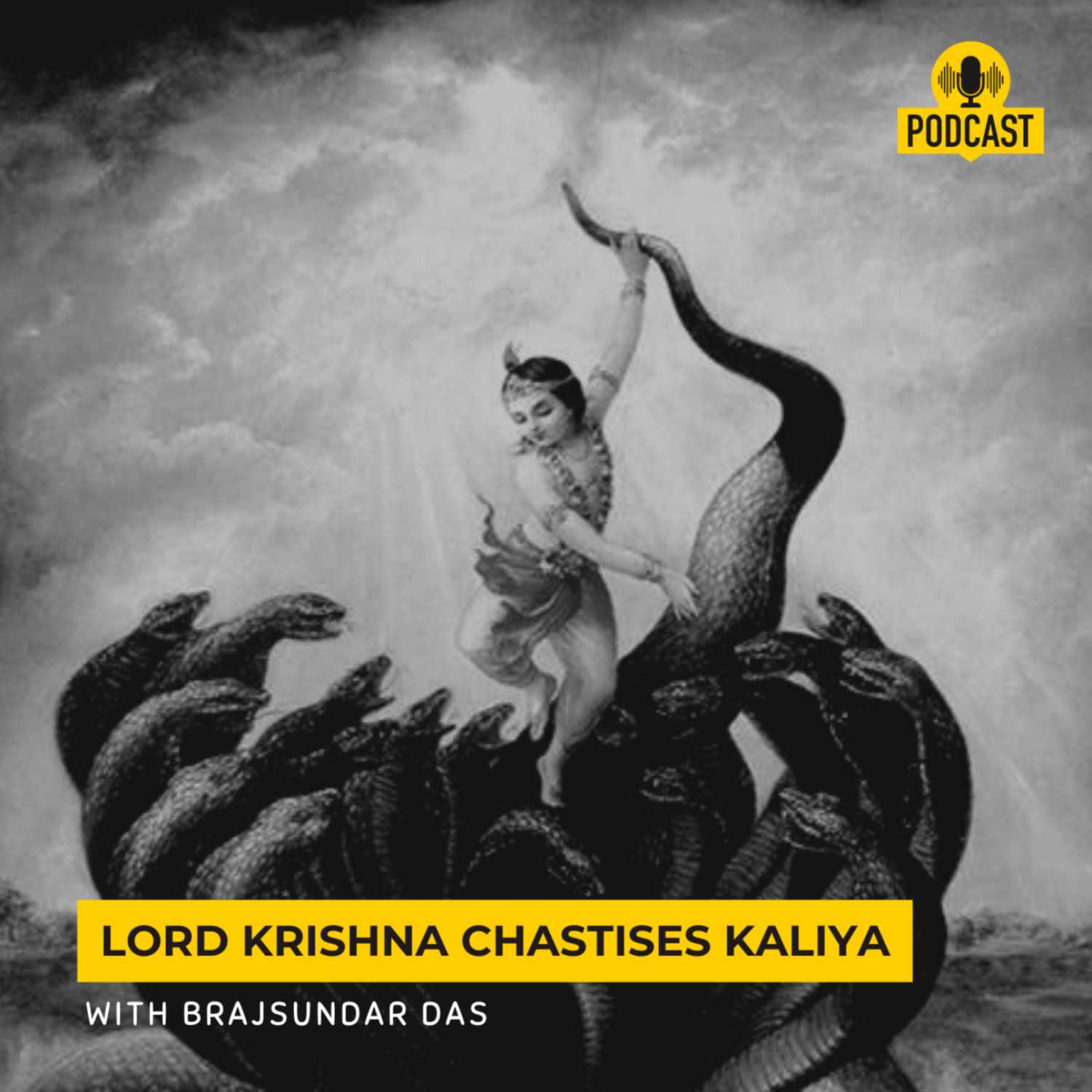
Seeing how very weary Kāliya had become, his wives, the Nāgapatnīs, bowed down at Lord Kṛṣṇa’s lotus feet. Then they offered Him various prayers in hopes of gaining their husband’s freedom: “It is quite fitting that You have brought our cruel husband to this condition. Indeed, by Your anger he has gained great benefit. What piety Kāliya must have amassed in his previous lives! Today he has borne upon his head the dust of the lotus feet of the Personality of Godhead, the attainment of which is difficult for even the mother of the universe, the goddess Lakṣmī. Please kindly forgive the offense Kāliya has committed out of ignorance, and allow him to live.”Our initiatives need your support: https://rzp.io/l/brajsundardasSupport our causePaypal: https://paypal.me/bdpayments?country.x=IN&locale.x=en_GB
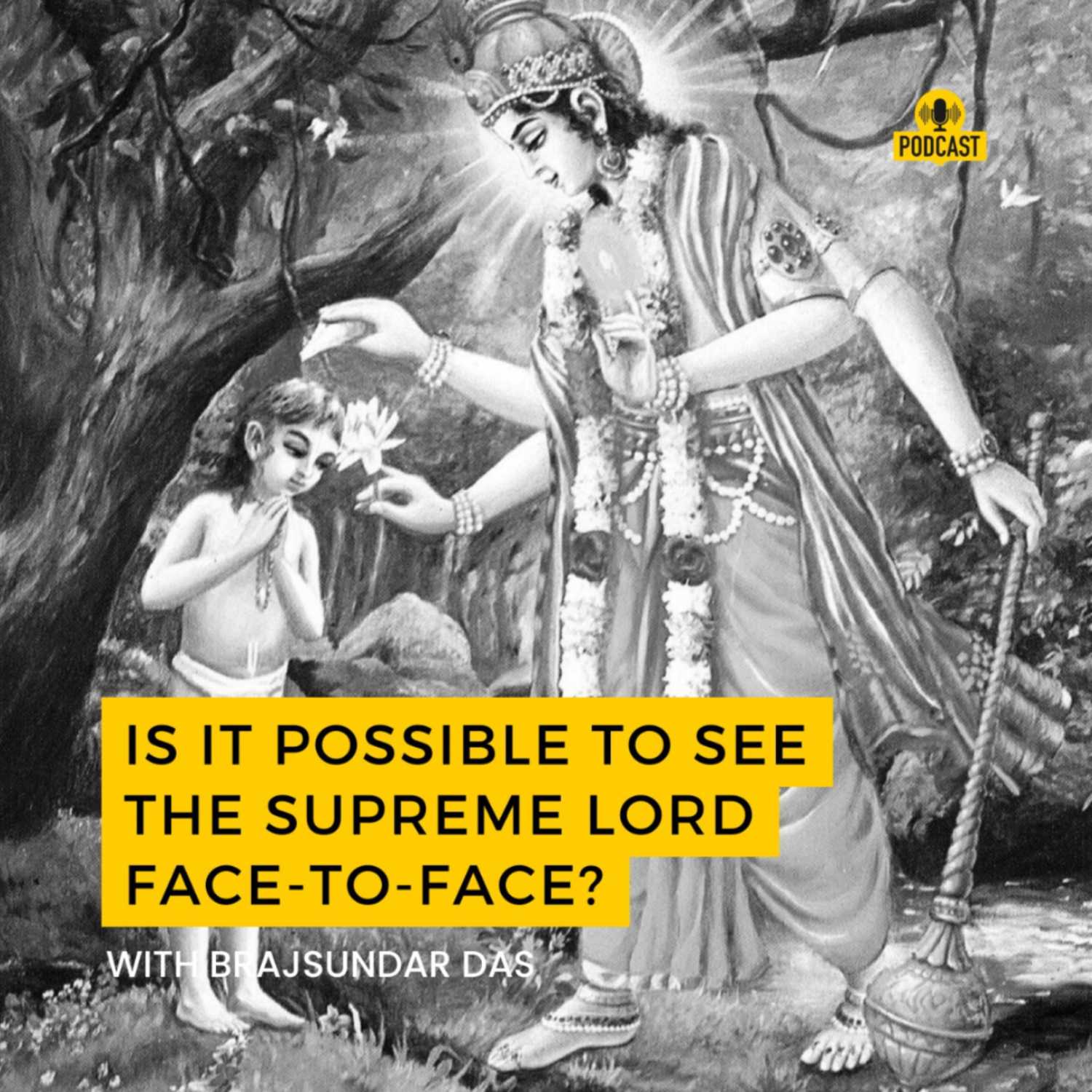
Dhruva Maharaja was born as a son of a great king. The king had two wives, and he begot children by each of them. One day, while Dhruva’s stepbrother was playing on the lap of the king, Dhruva also wanted to play on his father’s lap. We can picture the king, whose name was Uttanapada, seated on the throne in a leisurely moment, in an affectionate mood, with one of the boys on his lap. His boy Dhruva, who was five years old, climbed up on his father’s knee, but his father did not receive him with any particular attention or affection. Moreover, Dhruva’s stepmother came forward and chastised Dhruva. “My dear boy,” she said, speaking loudly so that everyone could hear, “you cannot sit on the lap of your father. Although you are his son, you are disqualified because you have not taken birth in my womb.” Dhruva’s stepmother was the favorite wife of the king, and since the king was more or less henpecked by her, he allowed her to speak out although she was inflicting pain on his little son. ”If you want to sit on your father’s lap,” she went on, humiliating the boy and exploiting her own position as the king’s favorite, “you must first worship the Supreme Personality of Godhead by penances and austerities, and then in your next life you can take birth from my womb. Then it may be possible.” Dhruva burst into tears and ran home, taking shelter of his mother, to whom he blurted out the whole story.Our initiatives need your support: https://rzp.io/l/brajsundardasSupport our causePaypal: https://paypal.me/bdpayments?country.x=IN&locale.x=en_GB
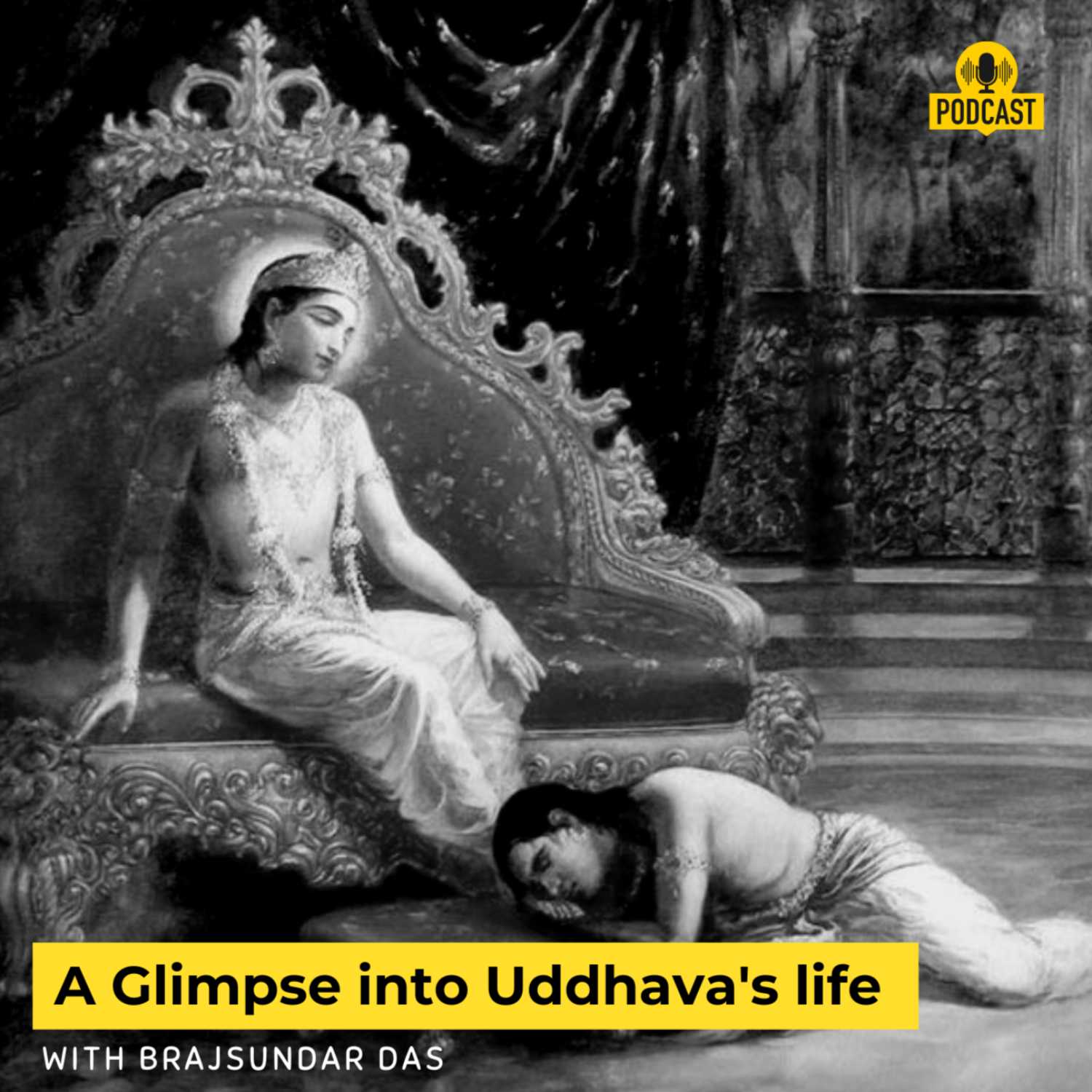
Uddhava was a cousin brother of Lord Krishna and also a student of lord Brihaspati. His guru, Lord Brihaspati said to him that, “the supreme lord Vishnu will incarnate on the earth in your family as your cousin brother".So after knowing it, Uddhava started worshipping him and he was a great devotee of Lord Krishna. He had all knowledge about GOD. He was a gyaani. He knew Bhramgyaan. He thought everything is illusion in this world. Even Love is illusion. He became very much arrogant about his knowledge he had.Our initiatives need your support: https://rzp.io/l/brajsundardasSupport our causePaypal: https://paypal.me/bdpayments?country.x=IN&locale.x=en_GB
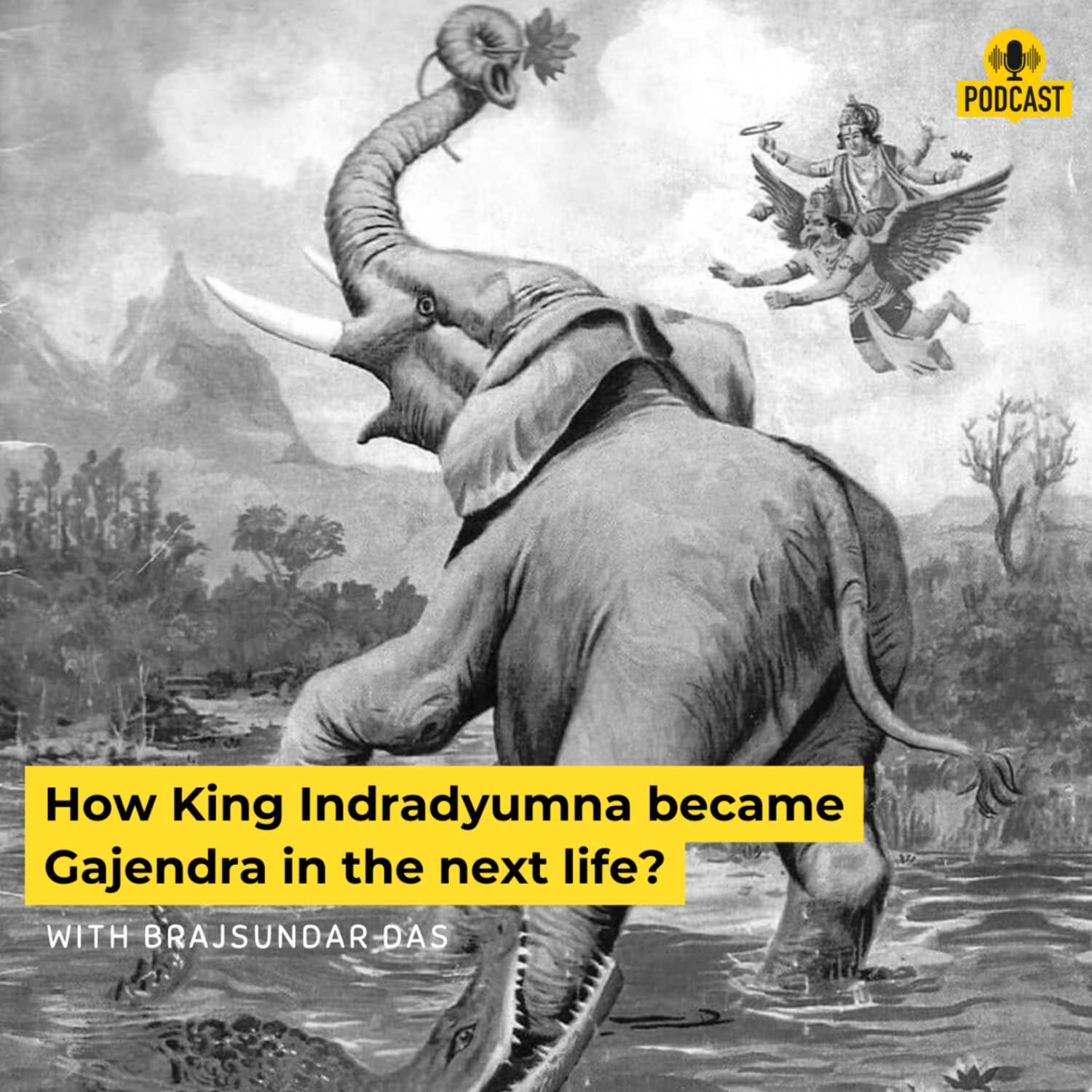
Vishnu informed Gajendra that he, in one of his previous births, had been the celebrated King Indradyumna, a devotee of Vishnu, but due to his disrespect to the great sage Agastya, he had been cursed to be reborn as an elephant.Our initiatives need your support: https://rzp.io/l/brajsundardasSupport our causePaypal: https://paypal.me/bdpayments?country.x=IN&locale.x=en_GB
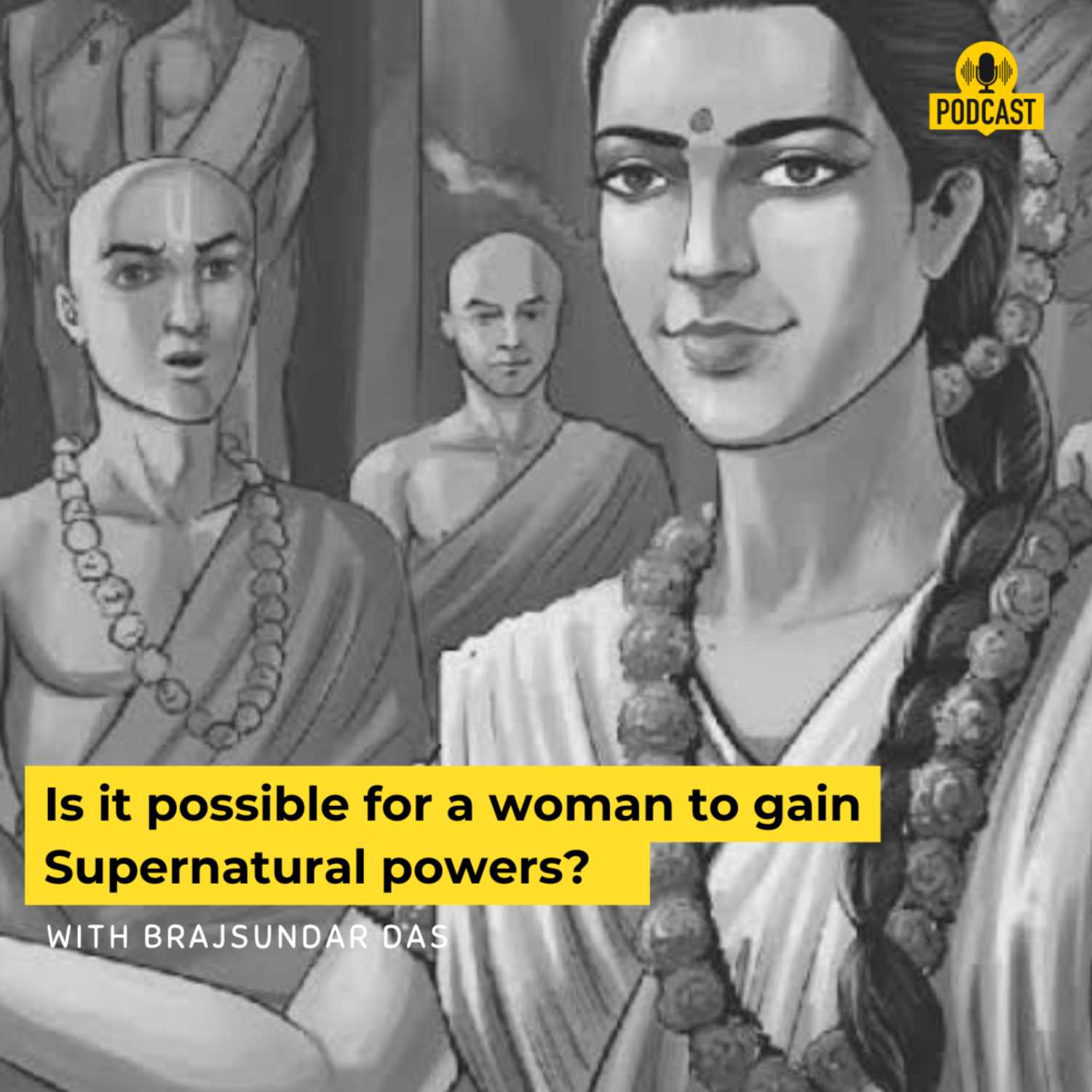
“The wife of a brāhmaṇa suffering from leprosy manifested herself as the topmost of all chaste women by serving a prostitute to satisfy her husband. She thus stopped the movement of the sun, brought her dead husband back to life and satisfied the three principal demigods [Brahmā, Viṣṇu and Maheśvara]..Our initiatives need your support: https://rzp.io/l/brajsundardasSupport our causePaypal: https://paypal.me/bdpayments?country.x=IN&locale.x=en_GB
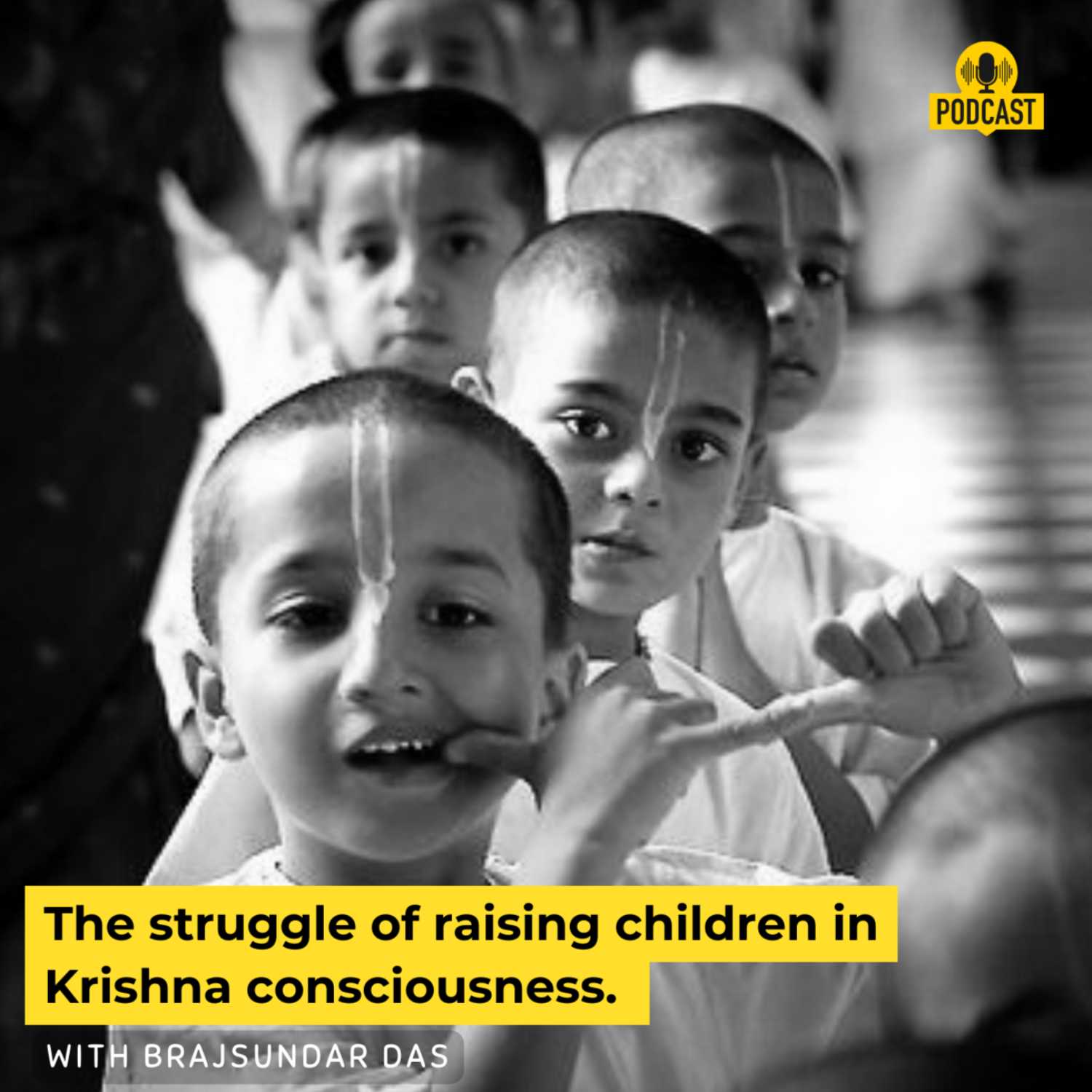
I regularly hear parents complaining that their children don’t listen to them or they do not have basic etiquette while talking to parents or siblings, everything is about their own self.The problem is that we, as parents, are ourselves so busy in so-called `enjoying my life’ that we are also guilty in neglecting our duty of raising our kids properly. In many cases the material life has become so busy, with both parents working hard, children are bound to get neglected. Of course, today the whole atmosphere is polluted with exposure from TV, mobile and now the final nail has been stuck by internet. Most of the digital games to promote hatred and violence in our young children. But all this should mean more care and protection and not less.In my little experience I have found that where both the parents are devotees, children usually come up nicely as both role models are similar. Issues crop up where only one of them, mother or father, is practicing Krishna consciousness. At times children become confused but generally stay grounded and pick up some or many good habits depending upon many factors. Since kids spend most time with Matajis, it becomes more challenging if mothers are not devotees. Any devotee must spend a lot of time with his kids. Sometimes the devotees get so busy in their own sadhana that they forget about sharing love and preach to their own kids, may be because of resistance from the other half. For example: a father must listen and play with kids and in some plays introduce Krishna consciousness. We have to make an effort to change their thinking, their thought process and make them ready to face both material world and progress in spiritual world. But the big problem is where both parents have no idea about spirituality, it is a big gamble for them in today’s environment.Our initiatives need your support: https://rzp.io/l/brajsundardasSupport our causePaypal: https://paypal.me/bdpayments?country.x=IN&locale.x=en_GB
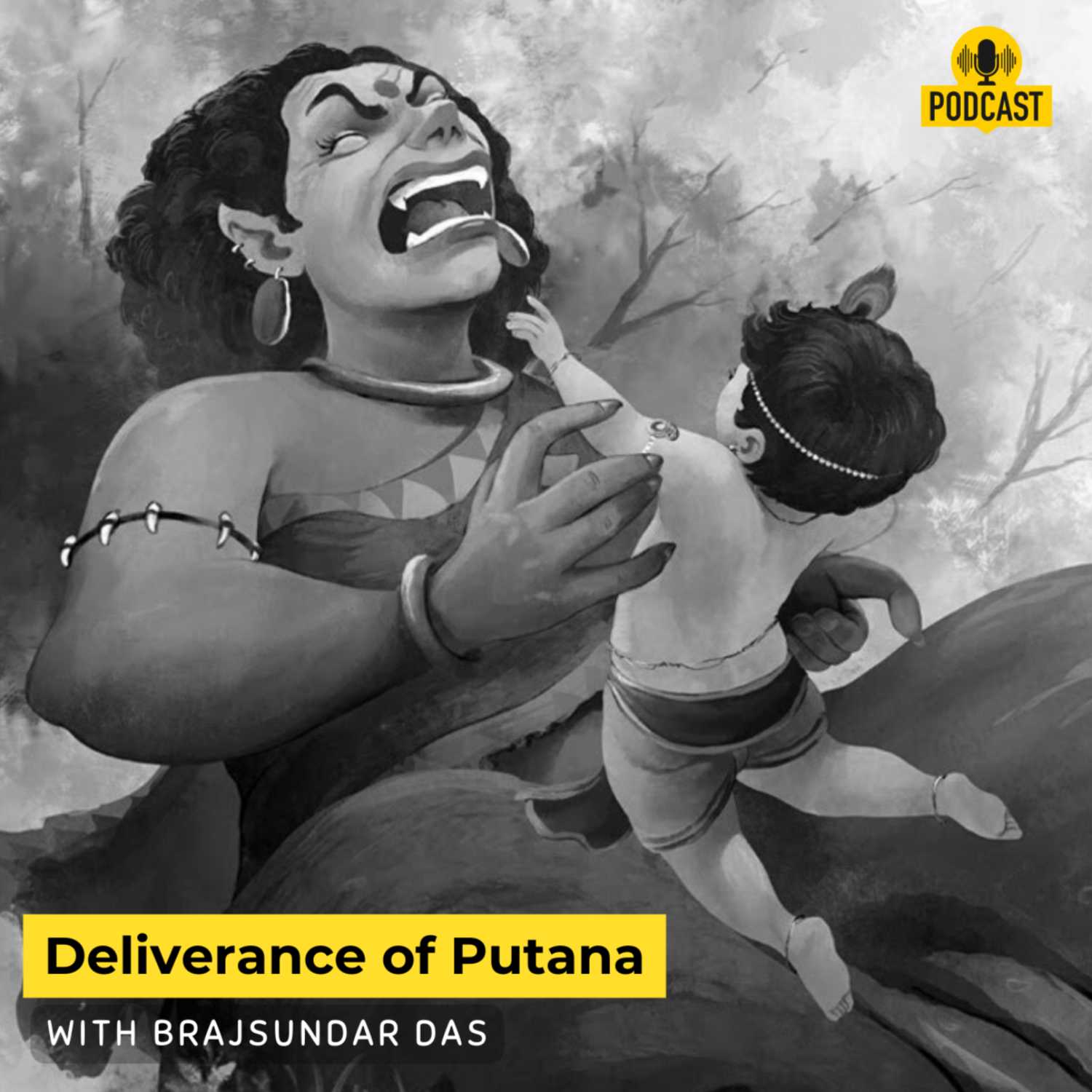
After consulting with his demoniac ministers, Kaṁsa instructed a witch named Pūtanā, who knew the black art of killing small children by ghastly sinful methods, to kill all kinds of children in the cities, villages and pasturing grounds. Such witches can play their black art only where there is no chanting or hearing of the holy name of Kṛṣṇa. It is said that wherever the chanting of the holy name of Kṛṣṇa is done, even negligently, all bad elements – witches, ghosts and dangerous calamities – immediately disappear. And this is certainly true of the place where the chanting of the holy name of Kṛṣṇa is done seriously – especially in Vṛndāvana when the Supreme Lord was personally present. Therefore, the doubts of Nanda Mahārāja were certainly based on affection for Kṛṣṇa. Actually there was no danger from the activities of Pūtanā, despite her powers. Such witches are called khecarī, which means they can fly in the sky. This black art of witchcraft is still practiced by some women in the remote northwestern side of India. They can transfer themselves from one place to another on the branch of an uprooted tree. Pūtanā knew this witchcraft, and therefore she is described in the Bhāgavatam as khecarī.Our initiatives need your support: https://rzp.io/l/brajsundardasSupport our causePaypal: https://paypal.me/bdpayments?country.x=IN&locale.x=en_GB
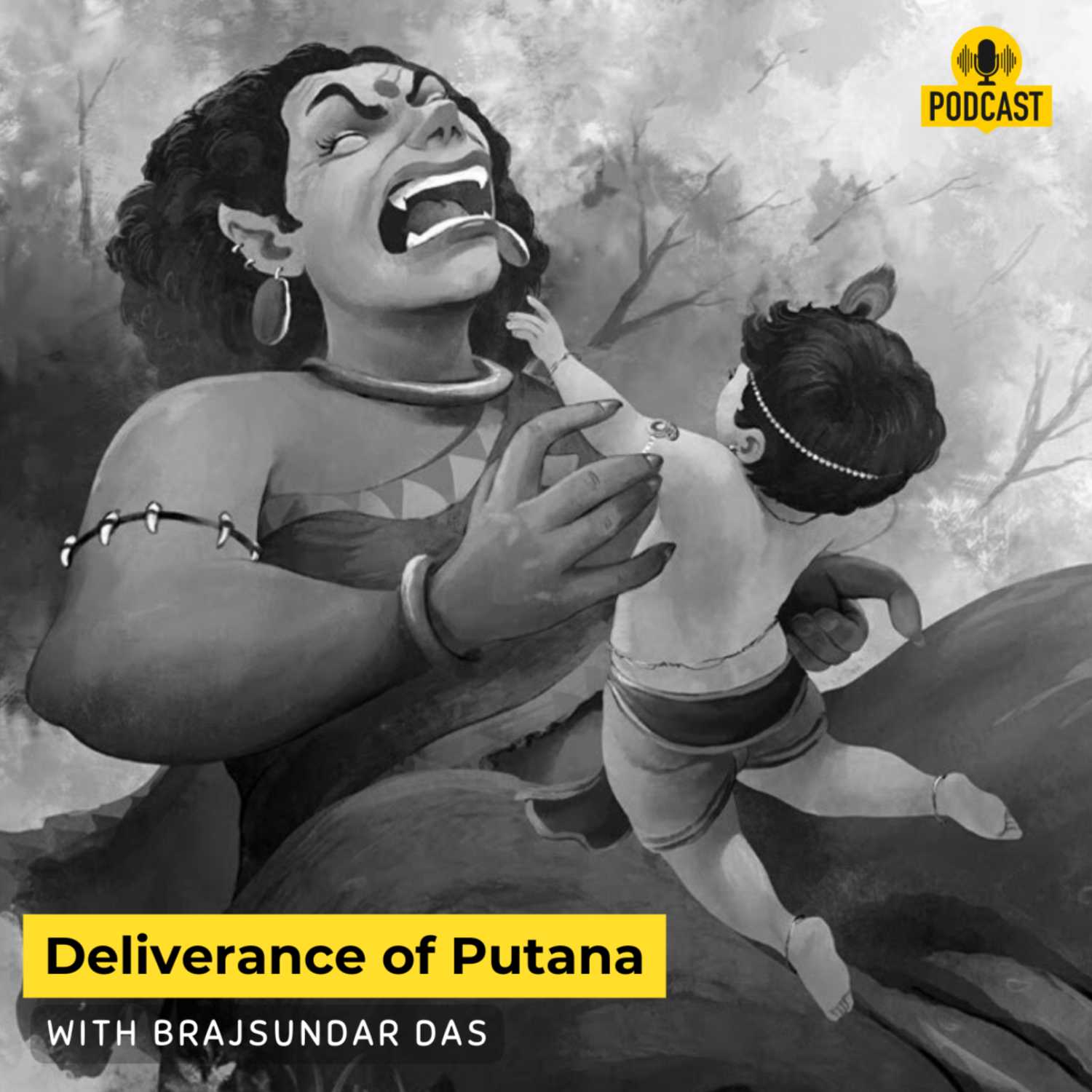
After consulting with his demoniac ministers, Kaṁsa instructed a witch named Pūtanā, who knew the black art of killing small children by ghastly sinful methods, to kill all kinds of children in the cities, villages and pasturing grounds. Such witches can play their black art only where there is no chanting or hearing of the holy name of Kṛṣṇa. It is said that wherever the chanting of the holy name of Kṛṣṇa is done, even negligently, all bad elements – witches, ghosts and dangerous calamities – immediately disappear. And this is certainly true of the place where the chanting of the holy name of Kṛṣṇa is done seriously – especially in Vṛndāvana when the Supreme Lord was personally present. Therefore, the doubts of Nanda Mahārāja were certainly based on affection for Kṛṣṇa. Actually there was no danger from the activities of Pūtanā, despite her powers. Such witches are called khecarī, which means they can fly in the sky. This black art of witchcraft is still practiced by some women in the remote northwestern side of India. They can transfer themselves from one place to another on the branch of an uprooted tree. Pūtanā knew this witchcraft, and therefore she is described in the Bhāgavatam as khecarī.Our initiatives need your support: https://rzp.io/l/brajsundardasSupport our causePaypal: https://paypal.me/bdpayments?country.x=IN&locale.x=en_GB
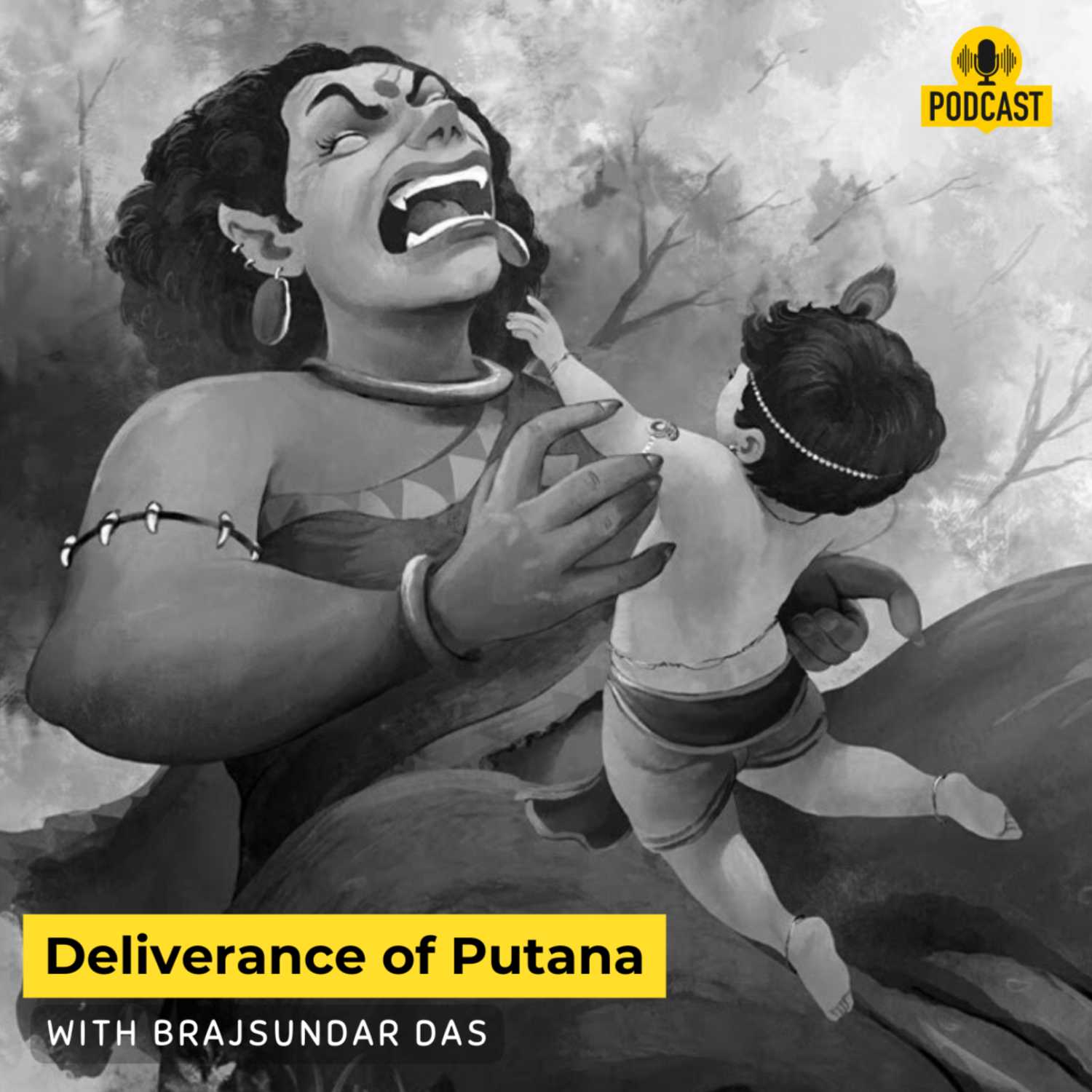
After consulting with his demoniac ministers, Kaṁsa instructed a witch named Pūtanā, who knew the black art of killing small children by ghastly sinful methods, to kill all kinds of children in the cities, villages and pasturing grounds. Such witches can play their black art only where there is no chanting or hearing of the holy name of Kṛṣṇa. It is said that wherever the chanting of the holy name of Kṛṣṇa is done, even negligently, all bad elements – witches, ghosts and dangerous calamities – immediately disappear. And this is certainly true of the place where the chanting of the holy name of Kṛṣṇa is done seriously – especially in Vṛndāvana when the Supreme Lord was personally present. Therefore, the doubts of Nanda Mahārāja were certainly based on affection for Kṛṣṇa. Actually there was no danger from the activities of Pūtanā, despite her powers. Such witches are called khecarī, which means they can fly in the sky. This black art of witchcraft is still practiced by some women in the remote northwestern side of India. They can transfer themselves from one place to another on the branch of an uprooted tree. Pūtanā knew this witchcraft, and therefore she is described in the Bhāgavatam as khecarī.Our initiatives need your support: https://rzp.io/l/brajsundardasSupport our causePaypal: https://paypal.me/bdpayments?country.x=IN&locale.x=en_GB
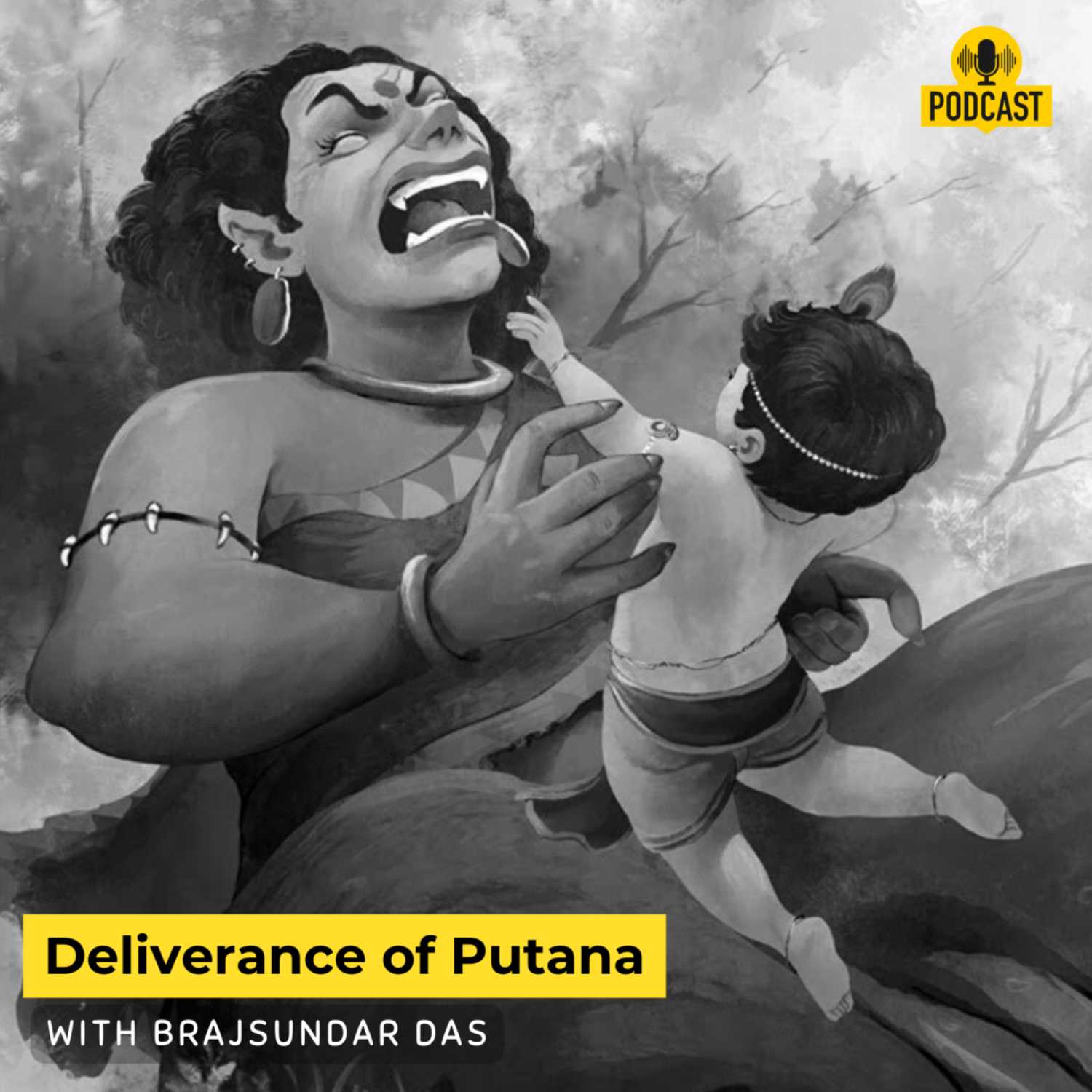
After consulting with his demoniac ministers, Kaṁsa instructed a witch named Pūtanā, who knew the black art of killing small children by ghastly sinful methods, to kill all kinds of children in the cities, villages and pasturing grounds. Such witches can play their black art only where there is no chanting or hearing of the holy name of Kṛṣṇa. It is said that wherever the chanting of the holy name of Kṛṣṇa is done, even negligently, all bad elements – witches, ghosts and dangerous calamities – immediately disappear. And this is certainly true of the place where the chanting of the holy name of Kṛṣṇa is done seriously – especially in Vṛndāvana when the Supreme Lord was personally present. Therefore, the doubts of Nanda Mahārāja were certainly based on affection for Kṛṣṇa. Actually there was no danger from the activities of Pūtanā, despite her powers. Such witches are called khecarī, which means they can fly in the sky. This black art of witchcraft is still practiced by some women in the remote northwestern side of India. They can transfer themselves from one place to another on the branch of an uprooted tree. Pūtanā knew this witchcraft, and therefore she is described in the Bhāgavatam as khecarī.Our initiatives need your support: https://rzp.io/l/brajsundardasSupport our causePaypal: https://paypal.me/bdpayments?country.x=IN&locale.x=en_GB

Comments

Download from Google Play

Download from App Store
 United States