


 Claim Ownership
Vertical
Subscribed: 0Played: 0
Subscribe

© Matt Knight
Description
"Fundings, VCs, News, Podcasts, Data, and (brief) analysis on the technology changing our built world"
verticaltech.substack.com
verticaltech.substack.com
34 Episodes
Reverse
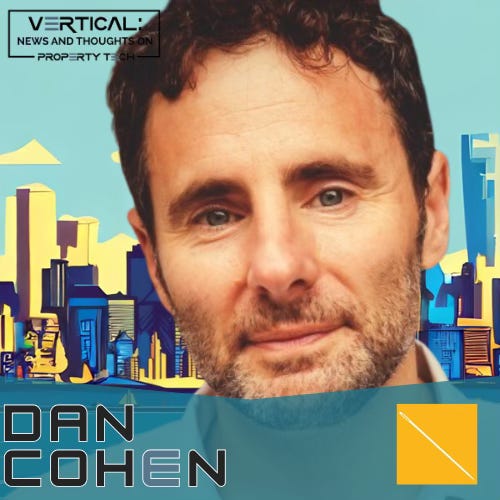
Series: Vertical + The Real Estate HaystackShow NotesSummaryDan Cohen - The Real Estate HaystackDan and Matt return to the concept of “Emperor for a day”. Wishes for CoStar, the ultimate furniture/ fit-out apps for Resi and Multifamily, December planning, how high rates have made transactions and refinancing difficult, aaaand are we seeing early signs of multifamily distress?Special mentions* Company: CoStar, ClaudeAI, Replit, Cursor, Havenly, Appfolio, Facebook, FDIC, Transcript(Disclaimer: Please be advised that this transcript may contain unintentionally confusing, inaccurate, and/or amusing transcription errors.)[00:00:00]Matt Knight: Hey guys, one more episode here with Dan before we end the year. We did our fun jaunt down the Emperor for a Day thread, which is fun, and talked about a few other things on the economy. So enjoy this time with Dan Cohen for one last time in 2026.All right, Dan. Welcome back, brother. Glad to have you here. And, GreatDan Cohen: to be here.Matt Knight: I think maybe what we do to transition from our last two is let’s add a couple of logs on the fire of the emperor for a day thing, and then maybe we can transition to a couple other things. Does that sound all right?Dan Cohen: Yeah, it sounds great. I’m coming in hot today, Matt. I prepared.Matt Knight: Bring it. Yeah. Let’s do it.Dan Cohen: Okay. So one emperor for a day. I have a new role, I’ve been in about a year, where I’m the CIO for a family office that’s based in LA, and we do a ton of research on all kinds of acquisition opportunities, partnership opportunities.And so we make a lot of use of CoStar. [00:01:00] And as I’m also processing our AI strategies and understanding what other family offices do for it I really... I... If I were emperor for a day, I would wave the wand, and I would get CoStar into wherever we are, the 21st century. Because I land on CoStar’s page, and I see no fewer than 25 different opportunities to click on a word that takes me into a whole domain in their website.And then there’s another drop-down menu, and then there’s all kinds of search bars and other things. And what I need is for CoStar to respond to a prompt, now that we’re all getting good at that, to give me the information packaged in the way that I want. I wanna know, we have properties in Commerce here in California.I wanna know what’s happening in that sub-market, what’s happened recently, and I want good comps for our specific properties in Commerce. And then I’d like to know, hey, if we knocked this thing down today and built a new one, what kind of rents would we get? And these [00:02:00] are all research-related questions that CoStar is eminently capable of answering, but it would take a very long time, even for the skilled CoStar researchers, to put together the package that is the answers to the questions that I want.And so I just, I w- I would wave the wand and have CoStar become really AI, much more AI native if possible. I... Is that... How does that land with you? Have you-- Are you a CoStar user?Matt Knight: Oh, I have been, and I’ve been cold called by them asking me my lease comps and I’ve, I’m maybe the only person in America that told them the truth, but I, I...Yeah, actionable, high quality, AI native data. Would you want CoStar to do it? Or would you rather a startup come in and live in their blind spot?Dan Cohen: I just think CoStar has so much existing great data. I’m saying this because I like CoStar a lot. And when, y- they’re-- they combine not just the market level data related to [00:03:00] lease comps, but...and sale comps, but so much good economic analysis, and they do forecasting, which, say what you will it takes some courage to do forecasting, and you have to have economists and other, f- finance people to stand behind that in some way. And so it’s just got such a wealth of data in one place that it seems s- like such a natural use for AI, and you have such a natural customer base to make use of it instead of these, these unending number of menus and click-throughs and, i’m kinda s- I’m kinda-- I look at it and, it’s funny how overnight your perspective on something that you’ve been using for a while can change pretty radically, and I looked at it late last week and I was like, “God, this feels so antiquated all of a sudden.” And that, that’s a testament to the, how fast AI’s come on.But now it just looks old when it didn’t, a year agoMatt Knight: Amen. I actually, I have one for AI if you want me to sprinkle one in here.Dan Cohen: Yeah. Oh my God, Emperor, go ahead.Matt Knight: I wish [00:04:00] everybody in real estate would have a proactive December. Don’t pretend like you’re busy between Thanksgiving and New Year’s, ‘cause you’re not.You can let your FP&A team go do year-end reportings and maybe let your acquisitions team go close out whatever deals, right? But like December is time for planning. Take the month of December and go plan what you should and should not build internally with AI. It will save you and your vendors and your team thousands of hours, right?Understand what you are capable of building, what you should building, what you should be building, and what you absolutely should not ever build. Because I think half the problems I have with I can just build this with Claude over the weekend.” And I’m like, “Great. Building it is one-eighth of the problem.”Updating it and debugging it and making it integrated and putting it in with people’s financial and selling it and, getting a u- an intuitive user interface. That’s technology, right? So to me, having people be proactive about a list. Ma-make a list. “Here’s things I can and should build in-house with [00:05:00] Replit and Cursor and Claude and whatever, and here’s the things that we will never build and we need 30 part- third-party vendors for.”That, that would be my... That’s my Christmas wish. How about that?Dan Cohen: Yeah. I like it, and I really feel like I can understand why it doesn’t exist. My lens is obviously from the ownership perspective. But y- when you said that, it made me think back to this restaurant owner that I know who always says when she’s opening a new restaurant, the, the plan is simple.Plan the work and work the plan. And this idea of planning the work, which is that’s what you do in an operationally, not necessarily intensive, but a sort of normal operating company. Real estate owner, ownership is not really an operating company, and so you don’t easily fold into “Hey, we gotta make, we gotta think about this strategically and roll things out in an orderly way.And we’re gonna be better off at the end of the year if we do that.” So I can kinda understand the cultural divide that keeps what you’re saying, like why you have to wish for it instead of it being a [00:06:00] natural- That’s right. That’s right ... part of the process. I’m emperor. You gotta do it.Report back- You can just every- ... to me at that point. Get in line, everybody. Yep. Everyone. So I like it. All right, I got one more that I like. This is a very real to Dan, w-wish that I have. I’m fifty-two, and we’ve had, my wife and I and our family, we’ve lived in Denver in a home that we owned for many years.But my kids are newly out of the house, and my wife and I are moving to Los Angeles. And so we actually are going back into the renter pool, and we just rented an apartment here. And so I’m experiencing, as a consumer, all this prop tech that this management company for this apartment building has.And a lot of it’s great, and it’s just... It works very well. They’ve got the processes down. But one thing that I wish for, and maybe, Matt, this exists and you’ll tell me and I will have squandered a wish. But, we have furniture in our house. Everybody has some furniture that they have.I wanna be able to take my phone and basically walk through my house and take a movie a video of all the furniture and [00:07:00] have a piece of software log each piece of furniture and its rough dimensions… This is a public episode. If you'd like to discuss this with other subscribers or get access to bonus episodes, visit verticaltech.substack.com/subscribe
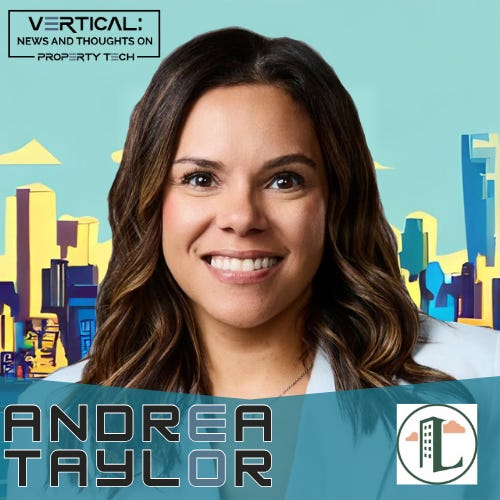
Series: How I Am Building ThisShow NotesSummary: Hosted by Matt Knight, this series is back by popular demand - How I Am Building This. Episode #2 features Andrea Taylor, Founder & CEO - Livsee. Andrea opens up about her path from innovation roles at Morgan Properties, Waterton Residential, and Village Green to launching Livsee in 2025, to address rising rents, soft occupancy, and leasing labor challenges.Check out Episode #1 with Dana Dunford here.Special mentions* Company: Livsee, Morgan Properties, Waterton Residential, Village Green, RealPage, Claude, Astro.Transcript(Disclaimer: Please be advised that this transcript may contain unintentionally confusing, inaccurate, and/or amusing transcription errors.)[00:00:00]Matt Knight: Hey guys, this is a new episode to share with you with Andrea Taylor. I really like her perspective coming from Morgan Properties and now to her own startup. She’s in AI, she’s fundraising. So just thought it would be a unique perspective, especially if you’re a founder out there, a female founder.She’s really got good insights on making the transition from the owner to the startup side. So hope you enjoy this time with Andrea, and, let me know how you like it.Matt Knight: All right. Thanks for being here, friend. I appreciate you taking the time. Glad to have you with us, and I try to do intros, but I’m so bad at them, that I would love for you, if you don’t mind, do yours, and I’ll and then we’ll dig into what you’re building and how it’s going. I’d love to start with either Morgan [00:01:00] or before Morgan, but kinda walk us through kinda how you got to where you are, if you don’t mind.Andrea Taylor: Sounds good. First, thanks for having me, Matt. Excited to be on the pod. My name is Andrea Taylor. I am the founder and CEO of Livsi. We are an agentic AI platform that follows up with prospects and renters, but then we operationalize the chat data into pricing and OPEX, CapEx recommendations, operational recommendations for our multifamily partners which yields more leases, right?Actually listening to what’s happening on the ground. Prior to starting this company, I was with Morgan Properties for several years doing innovation, ancillary services. Prior to that, I was with a group called Waterton Residential out of Chicago. And prior to that, I was with a company called Village Green.And all three roles were similar in the sense that we were doing innovation, figuring out how do we roll out complicated technology into these and fairly risk-averse environments, right? How do you get 100,000 smart locks on these [00:02:00] doors without making sure they don’t all open at the same time, or that the batteries don’t you know, all melt or whatever it is, right?You’re always planning for for the, for risk. And I think that’s really fair because people live in these buildings, and you wanna make sure that they’re well taken care of, which is why I think the industry is so great and I wanted to stay because there’s something really civic about it. So that’s my background, my story, and then in 2025, I launched Livsi because I saw a problem, which is occupancy was down, rents were up, and how could we solve that using the AI that we now all have at our fingertips?Matt Knight: I didn’t know you were at Waterton. That’s, I forgot that.Andrea Taylor: I am.Matt Knight: Tell me about what spurred the move. Before we get into, I kinda wanna get into how the company works and what Livesey is specifically. But tell me what, you’re at Morgan, everybody everywhere is pitching you on all this tech, and, “My smart locks are better than that guy’s smart locks.”Tell us what kind of got you to the founder side of the table.Andrea Taylor: Yeah. I think I was always [00:03:00] fairly entrepreneurial or, at that time, intrapreneurial trying new things and looking at the ROI, against those things. And really what spurred it was a couple of things. One is that I was vetting startups frequently and seeing what was on the market and how technology worked.And, I think something that I wanted to bring to my startup or something I would try to impart on others is that you don’t wanna solve too small of a problem, right? Even if there’s value in it, if it’s just 1% or one iota of the value, then it’s not always worth worth the rollout. And I think people can underestimate how well multifamily does, right?These properties, no matter what asset class they’re in, they can be very lucrative assets. And you really wanna make sure that it’s not an oversimplified solution. That was one thing, and then I was studying the landscape. But when it really hit me was end of ‘24 when I realized rent was outpacing inflation 37%.There was a lot of scrutiny from the regulatory [00:04:00] powers that be around rent. And, even at Morgan Properties, I was balancing, millions of dollars in amenity fees versus, much more than that in rent, and just trying to figure out what is this magic number. And so- What I noticed is there were a couple things that we could do, which was reach out and maximize, reach out to all of our leads, right?You’ve got leasing, you’ve got, for many years it’s been about a 50% turnover in leasing. So even if you’re training and incentivizing and all of that, people still leave. And there’s there’s a lot of layers to this, right? When you look at a labor shortage, does somebody wanna be a leasing agent and deal with the problems that come with just inherently of someone, of dealing with 300 units, like a dog bite from a, to a fire, to a pipe breaking or whatever that is, or do you wanna drive Uber, right?And so you have to think about, competing for talent for in that kind of environment. So meet AI, right? Like now we can finally utilize that. And we’ve got customers where maybe we’re reaching out to 1,000 people and 900 answer, [00:05:00] or 900 don’t answer, 100 do. That’s great. Let AI reach out to 900 people that don’t care, and let’s surface the great ones, to the site team.So I say that we’re not really cutting down on on headcount as much as they’re, we’re providing more value and really optimizing them. And the second piece was that when you look at rent, when rent’s going up you can see concessions all over the place. There was just an article that came out that rent went up 2% nationally, yet 40% of apartments, and this is today, not when I started the company, are offering concessions.So how do we balance that? And that’s when Livvi’s proprietary pricing models come into place. So really what, I was entrepreneurial anyway, and then I came into my own with that, and I was really inspired to start Livvi when I was looking at the balance between rent and occupancyMatt Knight: Okay.Lots of interesting concepts in there, but one of the ones I wanna start with was you talked about problem sizing, and I don’t wanna, I don’t wanna put words in your mouth, but is it fair to say that having done Morgan and having done Waterton, you had a sense for what a big [00:06:00] problem is? Maybe if you’re coming from tech or Apple or Tesla or some tech company and you’re getting into, you got upset with how your leasing was, your apartment, you’re gonna be a prop tech founder, right?You probably know the tech stuff well, but you may not know the real estate operations and hierarchy as well. So is that... am I reaching too far to say that your time at Morgan and Waterton and Village Green sort of taught you hierarchy of problems and what a big problem actually looks like?Andrea Taylor: Absolutely. 100% that’s true. And I think multifamily is incredibly nuanced, right? Because you’ve got re- renters, people who live in the homes. You’ve got people who work at these buildings. You’ve got an entire corporate structure that’s figuring out do they do value add to their buying and selling buildings.And there’s a lot of layers to it, and it’s not always this, product A will make you more money, so you should buy it. That’s oversimplifi- oversimplifying it. ‘Cause if … This is a public episode. If you'd like to discuss this with other subscribers or get access to bonus episodes, visit verticaltech.substack.com/subscribe
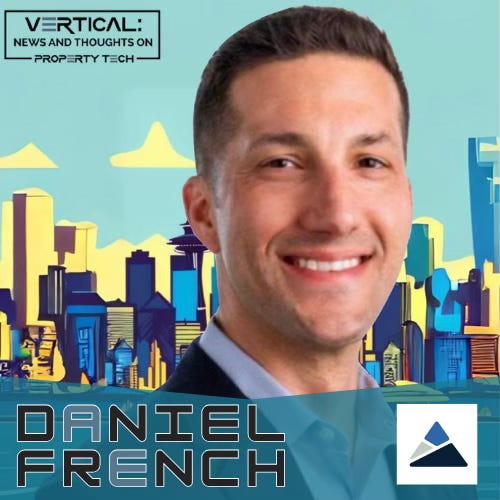
Series: Into the FIRE.Show NotesSummary: Into the FIRE with Stephanie Gubiotti, Advisor - Foundation for Innovation in Real Estate (FIRE) and Daniel French, CEO - Northpoint, on Dan’s journey, scaling Northpoint, SFR vs. Multifamily, Small BTR, and AI’s Future in Property Management.Special mentions* Company: Northpoint, ResProp Management, AppFolio, Zillow, PARCL, Hello Data.* Events: Blueprint.Transcript(Disclaimer: Please be advised that this transcript may contain unintentionally confusing, inaccurate, and/or amusing transcription errors.)[00:00:00]Stephanie Gubiotti: All right. Welcome to another episode of Into the FIRE. I’m Stephanie Gubiotti with Foundation for Innovation in Real Estate. And today I’m super excited, we have Dan French, the CEO of Northpoint Asset Management, and a member of FIRE’s emerging manager community. So at FIRE when we talk about our emerging managers, or we refer to them as EMs, we’re talking about the next generation of real estate owners, investors, developers, fund managers who are building and scaling investment platforms.And our community brings together these leaders to build relationships, share ideas, create connection across the broader real estate system. And Dan brings a really interesting perspective to our community. His career spans real estate investment, operations, and property management, and he has recently stepped into the CEO role at Northpoint.So today we’re gonna talk about Dan’s career journey and what he and the team are building and what he’s seeing across the industry.So [00:01:00] Dan, thank you so much for being here with me.Daniel French: Stephanie, my pleasure. A huge fan of you of your work of Matt Knights, what you guys are achieving at FIRE.I think it’s great for the the industry and great for people that you’re serving. So it’s... Yeah, it’s great to be here.Stephanie Gubiotti: Awesome. So tell me a little bit about how you first got into real estate and what ultimately got you in with Northpoint.Daniel French: Yeah. That was 20 years ago in my brain I’m still 28, but I’m 45 now.So I was investing in in real estate with a small partnership two people that I actually grew up with, and that was about 2004, 2005. We started buying our first small assets. At that time, I thought it was really a big... It was a big deal, for me coming from a working class background.We’re... So we’re buying duplexes and four-unit buildings, and before you knew it, we had 25 or 30 of those. And and we had our... A little portfolio. And so it was going well until it went really [00:02:00] badly, and that was that was the GFC, right? The Great Recession hit us super hard.We’re almost like the poster children for everything you shouldn’t do. Yeah. And so learned a lot of lessons. Learned how to pick your market, learned how to be more downside protected, learned about leverage in real estate and how that can really go against you very fast. Just learned how to operate.So slept in vacant homes after. We wound up taking over property management of those deals because our property managers were so ill-equipped. They, the reporting was terrible. The accounting and bookkeeping was nonexistent. There was fraud and stealing and, just a lot of just bad behavior.So we wound up taking things right over. So I know real estate from the ground up, leasing maintenance, vendor coordination CapEx construction work, handling all that. Even standing for eviction, which is a really sad reality of of property management, residential property management, but it does happen.So I’ve done all that in my past and the... Let me fast-forward here, Stephanie, but the, the, the happier part of my career [00:03:00] came afterward, and that was in 2011. I joined a team as a partner. So it was a, a vertically integrated shop that bought $2 billion of assets across Florida and Texas, and that was that was a really great trade.Obviously I was on the right side of the great financial crisis, and we did very well for our investors and for our our partners, and it was super fun to, to help build that team. I became CEO in 2016 and was there till ‘24 We did a lot of different things. We actually pivoted that business and turned it into a third-party operation as well, where we had massive growth and great success.And then it was just time for me to have a, what I call a glorious exit, and I went on a journey, and that’s when I first really started speaking to you as well, and getting a friendship started with you, and I was exploring different things. And one of those things was private equity. The attention that they were paying to the property management space was really intriguing to me.I think for far too long operations has had not really a seat at the table. And so now [00:04:00] with all this really huge, billion-dollar funds that are coming after the private e- the private equity groups that are coming after property management I really dove into that and sought to understand it and became an operating advisor with one of those groups.And that’s how I came to Northpoint was through my network. So Northpoint is private equity backed. And we’re, historically been a, a single-family rental property management business, but now we’re opening up to multifamily, BTR. And that’s a really long intro, Stephanie, so I’m gonna pause right there.But that is my entire background, and I hope that’s helpful for anyone who’s listening, and it frames it up a little bit for whichever way you wanna go.Stephanie Gubiotti: Yeah. That’s awesome. That’s awesome. So I know before we started recording on this, we were talking a little bit about the differences between single family and multifamily and what you’ve noticed.And really just overall, SFR, BTR, BDR, all of the things, right?Daniel French: Everything.Stephanie Gubiotti: Yeah. [00:05:00] Everything. So what’s one thing that one area has really gotten right that the other hasn’t? Do you see anything in the SFR space?Daniel French: I see a lot. One of the things that attracted me to SFR and I don’t wanna talk down to the folks in the SFR space.They’re amazing. They’re very warm. They welcomed me with with open arms. But in reality when we think of the professional management of it as an asset class and national scale, multifamily has decades of experience more, than SFR. So it’s been around as a professionally managed asset class for far longer.And SFR really emerged out of, the great financial crisis. So afterward in 2010 and going forward, you had the waypoints, the invitation homes, and the progress, and Amherst, and all these different groups that proved you can do it at national scale. But but what I see is that in multifamily the, the rigor from a financial reporting standpoint, at least in the third party space, is much [00:06:00] more disciplined.It’s more, much more well built out. Does that make sense? Like, how you report to owners the, the asset management work you have to do, the budgeting, the CapEx program you have to show. That’s much more... The expectation level’s way higher. Do you know what I mean?Stephanie Gubiotti: Yeah, totally. When you’re dealing with differences in, multifamily assets can be incredibly expensive and there can be a-Very large volume of investment going into that. And, when you’re talking SFR, it’s typically, just much lower much lower stakes, if you will if you’re just doing a one-offDaniel French: Yeah, exactly. Exactly right. And I look at it actually my mental model now is that there’s a B2B channel in SFR, and there’s a B2C channel, right?The B2C, business to consumer that’s really the retail channel when you serve a one-off investor that might own, let’s say, one to three properties. And oftentimes they don’t live near that property, [00:07:00] right? Think about someone who lives in, I don’t know, New York or Boston and has purchased a property in Columbus a single-family rental property.Oftentimes they’re like a cash flow investor, so as long as the asset’s… This is a public episode. If you'd like to discuss this with other subscribers or get access to bonus episodes, visit verticaltech.substack.com/subscribe
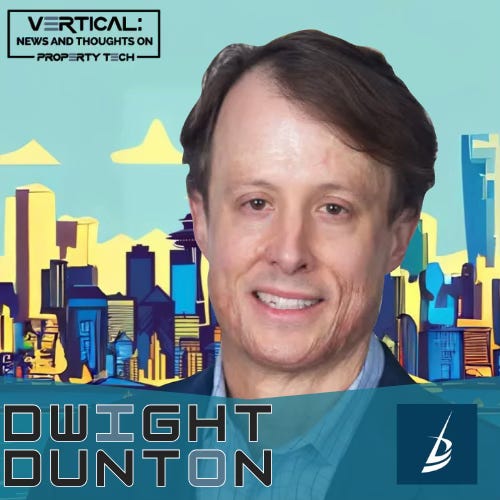
Series: The Alpha GPShow NotesSummary: A deep dive with Dwight Dunton of Bonaventure.Special mentions* Company: Fannie Mae, HUD, Verizon, AT&T, Comcast, Gemini, Grok, Claude, OpenAI, Amazon, Azure (Microsoft), and Google.* People: Eric Sharpe.Transcript(Disclaimer: Please be advised that this transcript may contain unintentionally confusing, inaccurate, and/or amusing transcription errors.)[00:00:00]Matt Knight: Hey guys, kicking off a new series here around innovative and interesting GPs or deal sponsors. People that are fundless sponsors or have a fund and are investing in property around the US and around the world really, that are doing things in a unique, innovative, or maybe just a paranoid way where they think AI’s gonna take their job.And so this first one, we’re gonna have Dwight from Bonaventure. He is in the DC area. Their portfolio, I’ll let him tell you about. But we don’t even talk about AI till two-thirds of the way into it. So just know we talk about lots of other stuff. But this is Dwight from Bonaventure talking about their take on innovation and tech strategy.Hope you enjoyMatt Knight: All [00:01:00] right, Dwight. Glad to have you here, man. Excited to get to know you a little better and have you on the podcast. Thank you for being here. And I think it’s always smart to start with where’d you come from? What is Bonaventure? How did it get started? How long have you guys been around? Give us the key stats, and then we can start chasing rabbits.Dwight Dunton: Yeah. Matt, so excited to be here. Thanks for the invitation. Bonaventure got started because we needed to solve a complex real estate problem. Our family was fortunate to own a piece of a building from the 1960s. Our partners became a huge REIT, and they one day in 1999 told us the property was in a C location and needed $5 million of capital improvements just to keep the lights on, and we didn’t have $5 million.And so that was the birth of Bonaventure, and the rest is historyMatt Knight: What’sDwight Dunton: that lead youMatt Knight: to now? I was gonna say, what’s the portfolio look likeDwight Dunton: and where- yeah. So that, over the last 25 years, what started off as helping one family, our family, has now grown to [00:02:00] about 500 families who are all trying to build long-term wealth.We help them. We have five platforms, about 400 employees, $3 billion of assets under management. So it’s go- grown a lot from that humble beginning.Matt Knight: And you say asset preservation, I think evergreen funds and REITs that are doing dividends. What’s the structure look like? It sounds like it started as a fundless sponsor, but I think you have REITs now.Walk us through if we were to give you capital, what doesDwight Dunton: that look like? Yeah. So I think our kind of investment thesis across all of our different products is that housing is broken in the United States, that where people want to live and the ability to produce housing are disconnected. And from there you have the real estate cycle and the economic cycle creating opportunities, and we seize those opportunities through a variety of different wrappers because we understand that each investor needs slightly different things.So that could be a single asset investment, that could be a development deal, that [00:03:00] could be an OZ fund, it could be, as you mentioned, a perpetual life REIT. We have a REIT that has about $1.3 billion of assets in it. And so again, it’s all about creating alignment around the economic opportunity and helping connect that capital to investors who are building for long-term wealth to afford their long-term dreams.Matt Knight: One of the things I’ve heard about you from our mutual friend Eric, is you have this ability to think from first principles. Like just because something was done one way doesn’t mean we have to do it that way. And so I’ve, one, I’m curious if you think of yourself and your firm that way, and then two, if so, give us an example of that, something that kind of other people may not do or just take for granted that you guys have reimagined.Dwight Dunton: Yeah. I think that’s a good description, but I don’t know that it started off that way. It was simply, I didn’t have any real estate experience when I started the firm, which is crazy to be 25 years old and buy a 378 unit apartment complex, convince Fannie Mae to lend me, I think it was 17 million, and let me start a property [00:04:00] management company.So I, I had no perspective on this is how we do it or you can’t do that because I had no experience. And we brought that forward, which is we challenged everything. When somebody says, “You can’t do that,” we’d really step back and ask why and really get to the root of it, and have found that so many industry conventions were brought about for one good reason, but then have been misapplied for years and years.And so for instance, we became one of the largest borrowers with HUD, and we would go to conferences and people say, “Why would you waste time with HUD? It takes so long.” It takes slightly longer, doesn’t take so long, and if you run it concurrently with your zoning and entitlements and getting your plans done and your permits, it actually adds no time whatsoever.And so the end result is most people have avoided HUD because it, quote, “takes too long.” We found it’s about the same amount of time, but we got these amazing outcomes, which are loans that have l- are gonna last for 40 years. [00:05:00] We reduced our interest rate risk. We had no personal guarantees. And so that’s a, just a simple example of we challenged the convention conventional wisdom of everybody that, quote, “knows what they’re doing in development” and said, “Avoid HUD at all costs.”Matt Knight: Yeah, I don’t think you know this about me. My first job out of college was lending HUD money, doing the 223and 221(4). So I was-Dwight Dunton: Ah.Matt Knight: I was baffled like you, where it’s like, “Look how cheap these rates are. Look at the amortization.” These are... This is great debt, and people are like, “Eh.” Yeah.Dwight Dunton: Well-Matt Knight: “Okay, whatever you want.”Dwight Dunton: And so I... Good for you. You get it. I think what I discovered, because I’m like, people are fairly rational. It seems overly convenient to say it’s too hard. What I figured out was that most people’s business plan in multifamily development is they build buildings, collect fees, and they collect lottery tickets, and those lottery tickets take the form of promotes, and the key is to scratch it off as quickly as possible to see if it has value.If it doesn’t, you move on to the next deal. [00:06:00] And HUD is not compatible with that because there’s the prepayment penalty for 10 years. And so if you’re in the business of collecting fees and lottery tickets, HUD is definitely not the ideal choice. And and that sounds really self-serving to say that to an LP of why you said, I won’t do a HUD loan,” but it sounds way more convenient to an LP to go, “Hey it just takes too long,” versus, “It’s not in the pr- the sponsor’s economic best interest.”That’s what I discovered as to why people have just continued to throw out this misunderstanding that it, quote, “takes too long.”Matt Knight: Yeah. I think that’s fair. And I think there’s another example you guys have of first principles where you were looking at tenants and their experience with internet service providers, and you guys have built something around that, correct?Dwight Dunton: Yeah. That is a great example. So I was walking one of our properties and, I walk behind the buildings, through the buildings. I wanna see everything. I just don’t want the tour that the staff has decided to prepare for the CEO ‘cause our staff [00:07:00] is awesome, and there’s always something that can be improved, and I wanna help discover that ‘cause they’re there every day, and they might miss something.So one day I was walking at one of our properties, and I saw the side of the… This is a public episode. If you'd like to discuss this with other subscribers or get access to bonus episodes, visit verticaltech.substack.com/subscribe
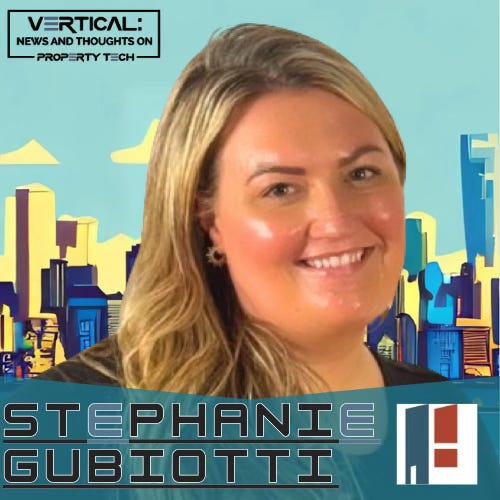
Series: Into the FIRE.Show NotesSummary: Into the FIRE with Stephanie Gubiotti, Advisor - Foundation for Innovation in Real Estate (FIRE) and the 2026 Academia Calendar, the next Emerging Manager call, fall events, and FIRE Summit 2027.Special mentions* Company: RealPage, Cherre, Burns Management, Inman, FIRE, Magic Leap, Oculus (now Meta Quest), Apple.* Events: RealWorld, Blueprint, CREtech, OPTECH, RETCON, HIS, FIRE Summit,* RETTC.* People: Bruce Lohman, Michael Beckerman, Peter Rosecrans, Martin Kelly, Anne Hollander, Paul McCartney.* Universities: Notre Dame, Harvard, MIT, UC Berkeley, Stanford, Emory, UGA, OSU, Princeton.Transcript(Disclaimer: Please be advised that this transcript may contain unintentionally confusing, inaccurate, and/or amusing transcription errors.)[00:00:00]Matt Knight: So first, let me apologize that this podcast is a bit all over the place, but Steph and I get on tangents, and we just keep going because... In our defense, we have a lot happening this fall, and fall is our busiest season. So another episode of Into the Fire with me and Steph, but just understand we will have more to come in the fall with more names and more specifics.But this will give you a bit of an idea of what’s happening, where we’re going, and if you wanna get involved, you wanna help, you wanna support, or you wanna just see us, hit us up ‘cause we’re always down to connect. Enjoy itMatt Knight: We’re looking at fall, planning our trips. Fall tends to be crazy. I don’t know how much you remember from last year, but fall is just bonkers. So [00:01:00] probably good to talk about what’s coming up, what we have planned, and curious how you’re feeling about it here sitting here in year twoStephanie Gubiotti: first, fall is my favorite season. It’s the best, and I’m really excited to get on campus this fall, connect with students. Yes, it’s a busy time, but it’s also really fun, and I enjoy being able to have those bursts of busy. So for me, it’s nice to have this really busy part that we’ll be having for a little bit, and then we’ll get into the lull of the holidays, and then we’ll pick back up again and early next year as well.Matt Knight: I’m into that. And, I’ll just add in for campus, it looks like Cal and Stanford are gonna happen. It looks like MIT and Harvard are gonna happen. Looks like Emory and UGA are gonna happen. And other than that, it’s a bunch of maybes. Do you have an update on OSU, or is that still TBD?Stephanie Gubiotti: OSU is still [00:02:00] TBD.They’re redoing a lot of their programming, so we’re waiting to finalize schedules. So as soon as they get back to us, we can lock in on some of these things.Matt Knight: Yep, and Notre Dame’s out there. Shout out to Bruce if you’re listening. Princeton’s out there. Shout out to Chase if you’re listening. So there’s a bunch.We have, I don’t know, a dozen now schools that are in our radar. And if you’re listening to this, I think w- what you should know is we have free tickets to all these events in the fall for these students, up to a certain number. So if you’re interested in coming, if you’re a student or if you know a student, send them our way ‘cause we have cohorts coming and we can do things with them, and, hopefully they’re over 21.But if not, we’ll figure out something anyway. But, that’s sort of academia for me this fall is a blitzkrieg of basically October events on campusStephanie Gubiotti: Yeah, it is convenient with CREtech being in New York though, so, I’m hoping that we’ll be able to get a good turnout from our student population there.You know, they’ve been very, very generous [00:03:00] with giving us a large portion of ticket allocation for students. So, if you’re a student specifically and able to get to the New York area, let us know.Matt Knight: Yeah, if there’s anyone who cares more about students than us, it’s Beckerman, so shout out to Michael and his team at CREtech, ‘cause they do a great job.Stephanie Gubiotti: Yep.Matt Knight: But speaking of events, we got, Real World coming up in a few weeks. We got Blueprint, CREtech, and Optech in that order, and have all kinds of programming around both, right?Stephanie Gubiotti: Yeah, yeah. I’m excited for you to experience your first Real World or your first software conference for a PMS, so it’ll be fun.Matt Knight: If you say so. I, I’m, I am intrigued enough to fly there and spend my money on it. How about that? I’ve- I’ll see how it goes. Yeah. And I’m excited about RealPage. I think RealPage is doing... I think RealPage is trying really hard to do some cool things, and I think the jury is out on what they will or won’t do, but I love where they’re going.I love that they’re making an effort, you know? And there’s a lot of companies that can, [00:04:00] just be big, and I don’t think Dirk and his team, are satisfied with that. I think they really wanna push the envelope, and I respect that. That’s not an easy thing to do with a company RealPage’s size. So I’m...I was being glib earlier. I am interested in going.Stephanie Gubiotti: Yeah, I think it’s gonna be great. I also... They have some really interesting speakers lined up, and I, I also think their acquisition of Cherre is really fascinating. So anyway, I agree they’re doing cool things. And after that, we’ve got Blueprint, where we’re working with Martin and the Inman team to put together some programming there.We’ll be doing some tours, working on some really fun stuff for our group. Let’s see. Next week coming up soon we’ve got our next emerging manager call, which is super exciting. We should have a pretty good turnout for that one. We continue to grow and scale that group, which is also great.Matt Knight: Yep. Peter Rosecrans of Burns Management out of New York is gonna be our guest speaker, and I’ve personally spoken to a dozen of our EMs in the last week, [00:05:00] and many of them will be on, ‘cause we have lots of new things we’re doing with them.So that’s, that is, seems to beaccelerating more than any of our programs. Our EM program is really picking up, I think.Stephanie Gubiotti: Yeah, I think there’s just such a need for people, especially those small to mid-size operators who really need that level of guidance and support, and just somebody to say, “Hey, don’t spend your precious limited resources trying to solve a problem that we’ve already solved.”SoMatt Knight: Amen to that. Maybe it’s worth updating that I’ve been spending time on comparative tech stacks, just putting people’s tech stacks into a document and saying, “Here’s my PMS, here’s my back office, here’s my tenant screening,” and just showing to where we can compare and contrast and have them compare notes and people that have the same back office or, you know, overlaps or...What’s interesting to me as I’ve started doing this is seeing where AI is replacing vendors. Because a lot of the ones, you’ve seen this, a lot of the ones I’ve started stacking have 40-plus vendors. Yep. And I [00:06:00] wonder if they’re... But a- academically, you wonder if there’s some steady state where we get down to 15 vendors and they’re all AI native and they all do, you know, half a dozen things well.I mean, that’s kind of in the PMS playbook for 20 years, right?Stephanie Gubiotti: Yeah. Yeah, I think so.Matt Knight: Yeah. So anyway, that’s EMs. And like Stephanie said, there’s a lot. We have private tours at these shows. We’re gonna have happy hours. Got some custom intros I know I need to make, but it’s gonna be... We roll out the red carpet at these events, ‘cause there’s only, three of them in the fall, and- YepMaybe RETCON and HIS in the spring. So it’s not a ton of events we do this at, but since everybody’s gonna be there, it just is a great way to, to concentrate everyone in one place for 48 hours, and then we all go back to doing our day jobs.Stephanie Gubiotti: Yeah. Do you wanna talk about some of our Fire City tours that we’ve been chatting about doing?Matt Knight: Sure. Go for it.Stephanie Gubiotti: So… This is a public episode. If you'd like to discuss this with other subscribers or get access to bonus episodes, visit verticaltech.substack.com/subscribe

Comments

Download from Google Play

Download from App Store
 United States