


 Claim Ownership
Vets In Ag Podcast
Subscribed: 13Played: 57
Subscribe

© 2021 AGD Consulting
Description
We explore the stories and insights from the military veteran and supporter communities who are leading the way for vets in agribusiness, agtech, and agri-preneurship. We swap stories, talk ag, and show how grass-roots nature of the ag community can be a natural fit for the military veteran.
60 Episodes
Reverse
That bright orange yolk you're paying a premium for? There's a good chance it's been manipulated. 🥚
Patrick Samuels went from West Point to Army Ranger School then to Special Forces — deploying to Iraq and Tajikistan - running partner force operations. He left the military because he felt he and his men didn't have the autonomy they needed to make a difference. According to Patrick, nobody wanted to actually win.
So he went and built a company where the only limits are the ones he sets.
Sunnyside Egg Co is doing what the rest of the pasture-raised egg industry claims to do — chickens actually outside, year-round, on pasture. No factory barns. No doors the chickens never walk through. No sales reps calling to help "craft the yolk color you want."
Yes, the last part really happens.
Patrick lays it out plainly in this episode: virtually every major pasture-raised egg brand on the shelf is artificially darkening yolks with additives — synthetic pigments, spices, etc — because they know customers associate a dark yolk with a chicken raised outdoors. And less than 15% of "pasture-raised" birds ever actually set foot outside.
The standard says chickens need access to 108 square feet per bird. It doesn't say they have to use it. Inside the barn? The requirement is only 1.2 square feet per bird. Do that math.
Patrick did. And then he built an alternative — starting with 300 chickens in western Kentucky and scaling to 25,000 birds in production across the country, headed for national retail.
And here's where it gets interesting for veterans: the same skill that made him effective as a Green Beret — walking into a foreign community, building trust, recruiting a partner force — is exactly how he builds his farmer network today. His growers are mostly Amish and Mennonite families. He goes to the meeting. He earns the room. He signs the contracts.
From Special Forces to egg company entrepreneur. One more episode that proves the skills transfer — just sometimes to places you wouldn't expect. 🌾
Enjoy!
VetsInAg #veteransagriculture #eggproduction #pasture #pastureraised #eggs #growers #farmers #regenerative #Army #SF #GreenBeret #RangersLeadTheWay #Rangers #Retail #nutrientdensity #WestPoint
She became an archeologist because of her love for exploration and discovery. She became a land conservationist because of the U.S. Army. And somewhere in between, she figured out that the land surrounding a military base might be just as important as what's inside the fence line. 🌱
Coral Eginton grew up in California as an only child before spending years chasing ancient mysteries — from shipwrecks off the coast of Spain to ruins buried in the jungles of the Yucatan. She has a master's in nautical archeology. She's excavated Dutch East India Company wrecks in Australia.
In 2016, she walked onto Fort Irwin in the middle of the Mojave Desert — 65 miles from the nearest gas station — and fell in love with the military world.
She spent years running the federal REPI program (Readiness and Environmental Protection Integration), which is a program design to keep military bases capable of doing their mission by protecting the land around them from incompatible development.
Now she's the Executive Director of Compatible Lands Foundation, a land trust with a singular focus — military readiness and environmental conservation. Their tagline says it best: protecting the lands that protect America.
In this episode, Coral breaks down conservation easements in a way that actually makes sense — what landowners gain, what's in it for the installation, and why protecting your ranch might also be one of the most pro-military things you can do.
Plus: the encroachment problem nobody's talking about. How a city creeping toward a base can silently shrink its ability to train — and cost taxpayers billions.
God's not making any more land. This one's worth your hour.
🎧 Enjoy!
#VetsInAg #veteransagriculture #compatiblelands #militaryreadiness #landconservation #conservationeasement #soundoffreedom #foodsecurity #militaryinstallations #REPI #agland #landprotection
From Marine Corps logistician to champion of regenerative agriculture — Brian Pugh’s journey is one you don’t want to miss.🌱
In this conversation, Brian shares how family gardens, his time in Okinawa’s Blue Zone, and a growing concern for food as medicine led him to leave the service and dive headfirst into healing our food system from the soil up.
He’s now leading the Service to Soil program at Carnation Farms, a SkillBridge initiative helping transitioning veterans gain hands-on experience in regenerative farming, crops, livestock, and building community in ag.
If you’re a veteran curious about farming, interested in soil health, or just love stories of purpose-driven transitions — this one’s for you.
Listen now to hear:
Why regenerative ag is critical for national security & veteran transitions
How one farm is creating real pathways for the next generation of veteran farmers
Breadcrumbs that led Brian from logistics to leading Soil Stewards
Enjoy!
#carnationfarms #ServiceToSoil #VetsInAg #RegenerativeAgriculture #VeteranFarmers #SkillBridge #FoodAsMedicine #MilitaryToFarm #SoilHealth
Today's guests are Barry Taylor and Emma Cashman — the co-founders of the Land At Home Project, a nonprofit built on the simple but evidence-backed premise that veterans need a renewed sense of purpose and America needs new farmers and ranchers.
Barry grew up on a small ranch in rural southeastern Arizona — the kind of place where summers meant fence work and cattle, the kind of work you couldn’t wait to leave until you were old enough to realize what it imparted in you. His career took him through emergency medicine, nursing, and eventually hospital administration before landing him in a civilian consulting role with Navy Medicine Western Region.
Emma grew up in Toronto and a very early age, fell in love with horses. She spent much of her early childhood learning horsemanship before moving to Arizona when she was in college. While finishing her undergraduate degree in nursing, she met her husband who was an active duty airman in the Air Force. She went on to get her master's degree in public health before spending years working across flight medicine and public health at military bases in Italy and San Diego, then ultimately joining Barry at Nav Med West. There, the two of them started connecting the dots between military service and agriculture over coffee while both working as infection prevention and control nurses.
What they landed on is something Emma articulates in a way I’ve never heard described before:
"Agriculture is full of these imperatives — you must get up to feed the animals, there's just no way around that. Coming from a very structured life in the military, where there are lots of things that you must do, and then going to the free-for-all of civilian life can be very challenging. Having an occupation that's full of these imperatives is helpful — it gives structure in a non-rigid way."
In this episode, I want you to listen for a few key themes:
Emma's expert review of the peer-reviewed, evidence-based case for why agriculture and military service are a documented fit — not just intuition, but data;
How Land At Home's three-part model of education, internship, and mentorship was built by studying what other programs were missing; and
A conversation about the One Health framework — and why food security, veteran mental health, and rural community revitalization could actually be the same problem wearing three different hats.
Enjoy!
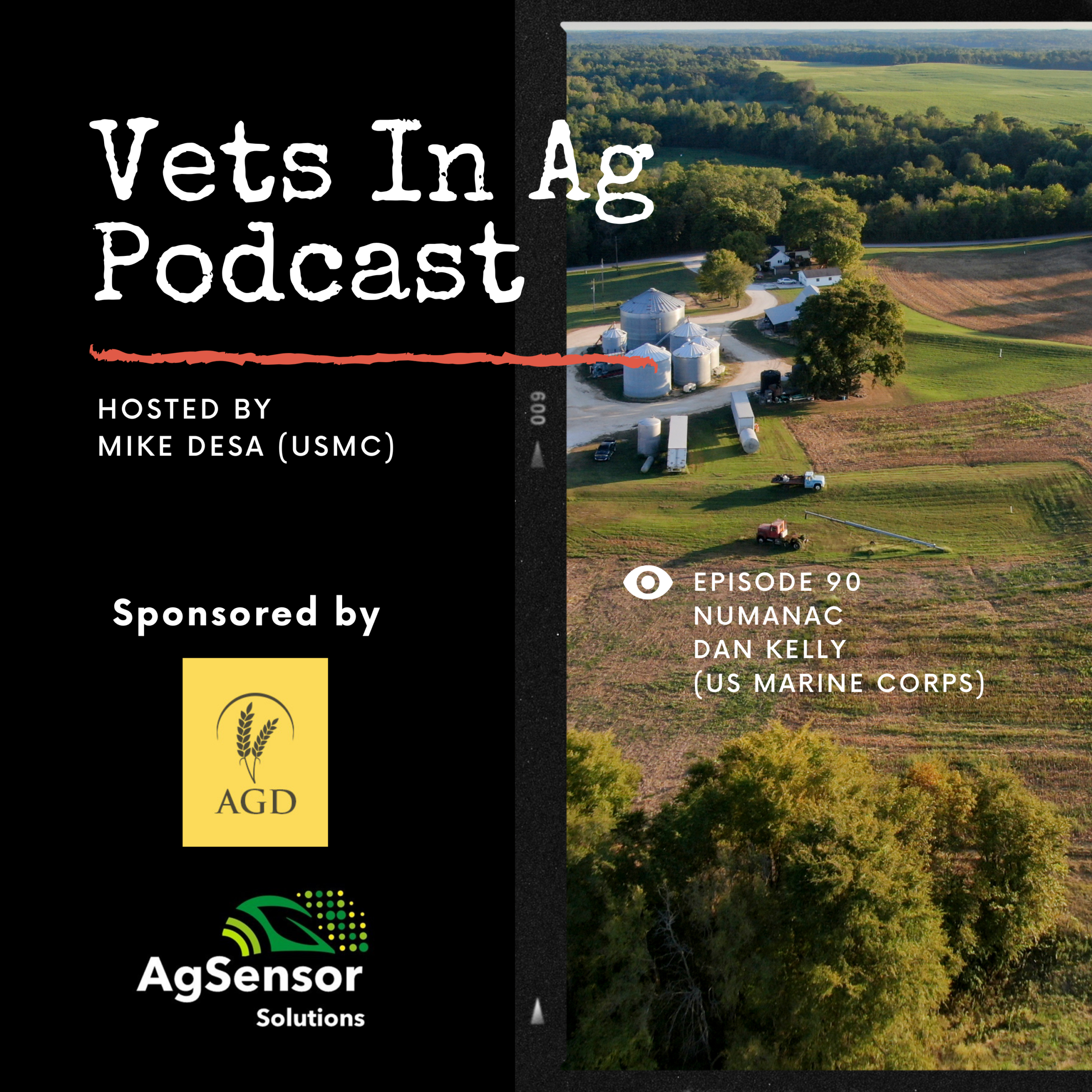
Our guest today is Dan Kelly, a Marine Corps Cobra pilot, architect, entrepreneur, and the co-founder of Numanac, an ag tech company using artificial intelligence and voice-based data collection to help farmers make better decisions and spend less time head down inputting data.
But this conversation goes much deeper than technology.
As Dan puts it,
“There is purpose in the process of building for those who otherwise would not be built for or invested in in a meaningful capacity."
Dan shares how growing up around South Texas agriculture, losing a close friend at a young age, serving as a Marine officer, and studying architecture all shaped a personal mission that still drives him today: building for people who otherwise wouldn't be built for.
From the cockpit of an attack helicopter to the challenges of food security, farm management, and agricultural innovation, Dan's story is ultimately about purpose, service, and the responsibility we have to create opportunities for others.
Enjoy!

Comments

Download from Google Play

Download from App Store
 United States